Wednesday, December 24, 2014

BORN ON THIS DAY: MICHAEL CURTIZ

For some reason, I find it funny that the director of 1954’s White Christmas was actually born on Christmas Eve. Through Curtiz career he directed many of the greatest movies ever put on film. Curtiz was born Kertész Kaminer Manó to a Jewish family in Budapest, Hungary (then Austria-Hungary) on December 24, 1886. Curtiz loved to tell stories and he claimed he had been a member of the Hungarian fencing team at the 1912 Olympic Games. In reality, Curtiz had a conventional middle-class upbringing; he studied at Markoszy University and the Royal Academy of Theater and Art, Budapest, before beginning his career as an actor and director as Mihály Kertész at the National Hungarian Theater in 1912.

Details of his early experience as a director are sparse, and it is not clear what part he may have played in the direction of several early films, but he is known to have directed at least one film in Hungary before spending six months in 1913 at the Nordisk studio in Denmark honing his craft. While in Denmark, Curtiz worked as the assistant director for August Blom on Denmark's first multi-reel feature film, Atlantis. On the outbreak of World War I, he briefly served in the artillery of the Austro-Hungarian Army, but he had returned to film-making by 1915. In that or the following year he married for the first time, to actress Lucy Doraine. The couple divorced in 1923. Curtiz left Hungary when the film industry was nationalized in 1919, during the brief Hungarian Soviet Republic, and soon settled in Vienna. He made at least 21 films for Sascha Films, among them the Biblical epics Sodom und Gomorrha (1922) and Die Sklavenkönigin (1924). The latter, released in the US as Moon of Israel, caught the attention of Jack Warner, who hired Curtiz for his own studio with the intention of having him direct a similar film for Warner Brothers, Noah's Ark, eventually produced in 1928. When he left for the United States, he left behind at least one illegitimate son and one illegitimate daughter.

Curtiz arrived in the United States in 1926 (according to some sources on the fourth of July, but according to others in June). He took the anglicized name "Michael Curtiz". He had a lengthy and prolific Hollywood career, with directing credits on over 100 films in many film genres. During the 1930s, he was often credited on four films in a single year, although he was not always the sole director on these projects. In the pre-Code period, Curtiz directed such films as Mystery of the Wax Museum, Doctor X (both shot in two-strip Technicolor), and The Kennel Murder Case. In the mid-1930s, he began the successful cycle of adventure films starring Errol Flynn that included Captain Blood (1935), The Charge of the Light Brigade (1936), The Adventures of Robin Hood (1938), Dodge City, The Private Lives of Elizabeth and Essex (1939), The Sea Hawk and Santa Fe Trail (1940).


Prime examples of his work in the 1940s are The Sea Wolf (1941), Casablanca (1942) and Mildred Pierce (1945). During this period he also directed the pro-Soviet propaganda film Mission to Moscow (1943), which was commissioned at the request of president Franklin D. Roosevelt in order to aid the wartime effort. Other Curtiz efforts included Four Daughters (1938), Yankee Doodle Dandy (1942), Life With Father (1947), Young Man with a Horn and The Breaking Point (1950).

While Curtiz himself had escaped Europe before the rise of Nazism, other members of his family were not as lucky. His sister's family was sent to Auschwitz, where her husband died. Curtiz paid part of his own salary into the European Film Fund; a benevolent association which helped European refugees in the film business establish themselves in the U.S.

In the late 1940s, he made a new agreement with Warners under which the studio and his own production company were to share the costs and profits of his subsequent films. These films did poorly, however, whether as part of the changes in the film industry in this period or because Curtiz "had no skills in shaping the entirety of a picture". Either way, as Curtiz himself said, "You are only appreciated so far as you carry the dough into the box office. They throw you into gutter next day". The long partnership between director and studio descended into a bitter court battle.


After his relationship with Warners broke down, Curtiz continued to direct on a freelance basis from 1954 onwards and he made many films for Paramount from White Christmas (1954), starring Bing Crosby and Danny Kaye to King Creole (1958), starring Elvis Presley. His final film, The Comancheros, was released six months before his death from cancer on April 10, 1962, aged 75…


Monday, December 22, 2014

MY FIVE FAVORITE CHRISTMAS MOVIES

Awwww...Christmas is almost here. Time to dust off the remote control and watch some holiday movies to get me in the Christmas spirit. I figured I would take a look at my five favorite holiday movies. Before anyone comments or throws burning eggnog on my house, I did not include It's A Wonderful Life on the list. I didn't include it because I have never seen the movie all the way through! However, that is another story for another time...
 
 
                              5. A CHRISTMAS STORY (1983)
I believe this nostalgic film used to be my favorite holiday movie. For years now there has been a marathon on cable channel TBS, and over the past few years I have gotten a little bored of the movie. It is a great comedy, and a great look at Christmas in American in the late 1940s. Like so many movies, when it first came out in 1983 it was a bomb. However, over the last thirty years it has become a beloved holiday classic. From the leg lamp to the line “You’ll shoot your eye out”, the movie has taken on a life of its own. I’ll still watch the movie over the holidays, but I just may not try to watch 24 hours of it in a row anymore.


                                     4. SCROOGED (1988)
Many of the versions of Charles Dicken’s “A Christmas Carol” are dry and dull, so I have always liked this contemporary comedy based on the beloved Christmas story. Bill Murray makes this movie with his funny and charming version of “Ebenezer Scrooge”. The movie is about Christmas and changing your life for the better, but I loved the additional cast in the movie like: Robert Mitchum, John Houseman, and Buddy Hackett, and John Forsythe among others. Bill’s version of Ebenezer works as the head of a television studio, and as the station puts on an ambitious live version of “A Christmas Carol”, Bill Murray is changed through visits from three ghosts. One of the ghosts was played by the funny Carol Kane. It’s a great movie to get rid of the humbugs in anyone!

 
3. ELF (2003)
I don’t really watch Saturday Night Live anymore, but one of the funniest people to come out of that show is Will Ferrell. Early in his movie career, Will made this movie about a human raised as an elf. The elf goes to New York to find his dad. You can imagine what happens next. This movie has truly become a holiday classic, and I never get tired of the movie and can recite many of the lines. I use the line “smiling is my favorite” in my every day conversations I think! A surprising bit of casting was serious actor James Caan as Will’s dad. He is a great part of the movie, as is Bob Newhart as Will’s foster elf father. I am not sure if the movie was intended to become such a part of Christmas, but all I have to do is watch the film once to feel good inside and feel the Christmas spirit.


2. HOLIDAY INN (1942)
Even though I am a supposed fan of classic movies, this is the only truly classic holiday movie to make the list. Like so many holiday classics, this fim was not really intended as a holiday film, and there is very little about Christmas in the movie. The movie did introduce the world to one of the greatest holiday songs of all time “White Christmas”, and really a movie can not get any better with Bing Crosby, Fred Astaire, and Irving Berlin songs in it. The movie was so popular that the Holiday Inn chain of motels and hotels were named after the movie. The song “White Christmas” would go on to be the biggest hit Bing Crosby ever recorded, and it would often be dubbed the most popular song of all time. I like the movie because the great Irving Berlin songs are woven around all of the holidays, and I feel the movie is as watchable in 2014 as it was 72 years ago when it debuted.


 1. NATIONAL LAMPOON’S CHRISTMAS VACATION (1989)
Many holiday movies give you warm and fuzzy feelings on how wonderful the holidays are. This comedy starring Chevy Chase reminds you what Christmas and the holiday season is really like. The movie is not afraid to show you that the holiday season often sucks! I don’t always find Chevy Chase funny, and this movie was pretty much the last good movie he made, but he is great as Clark Griswald. Griswald wants to have a huge family Christmas together like he remembers as a kid. He gets what he wishes for and so much more. From the Christmas tree catching fire to a squirrel running loose in the house to an unwanted family guest that just will not leave, we have all been there. There is a little bit of Clark Griswald in all of us. Of course in the end everything works out, but not until their house is destroyed and a swat team visits them on Christmas Eve! This movie does not paint a beautiful Norman Rockwell painting of Christmas, but it does portray a pretty accurate depiction of what the holidays are like. It is noisy and annoying and tiresome but keep on celebrating the holidays every year. I would not miss it for the world!

Saturday, December 20, 2014

PHOTOS OF THE DAY: THE CLASSIC HOLLYWOOD HOLIDAY SEASON

I love the holiday season with all the sights and sounds of Christmas - especially at this time of the year you actually hear Bing Crosby being played on the radio and in stores. I also love the great old pictures of classic Hollywood stars celebrating the yuletide festivities...

AVA GARDNER

FRED ALLEN and JACK BENNY

JAYNE MANSFIELD

BOB HOPE and DORIS DAY

CAROLE LOMBARD

DEAN MARTIN and FRANK SINATRA and family

Thursday, December 18, 2014

HOLLYWOOD URBAN LEGEND: VERA-ELLEN

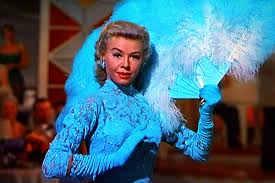
URBAN LEGEND: Vera-Ellen neck had to be covered at all times in the film White Christmas because her neck was ravaged by the effects of anorexia.

STATUS: I would say false.
Vera-Ellen was a popular musical actress during the 1930s, 40s and 50s. She appeared in such legendary musicals as On The Town (1949) and White Christmas (1954).


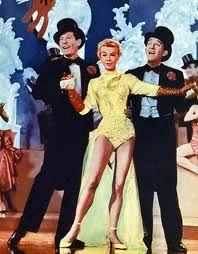
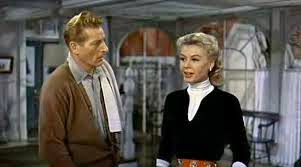
As you might notice, Vera-Ellen’s neck is covered in many pictures. In fact, her neck is covered up in the entirety of White Christmas. Vera-Ellen was an extremely thin woman who died in 1980 (at the age of 61). While never officially diagnosed during her lifetime (heck, the term itself was barely around during her lifetime), Vera-Ellen is alleged to have suffered from anorexia nervosa.
Anorexia nervosa is a mental illness pertaining to a distorted view of how skinny a person is that results in many different effects in people, most specifically, the physical problems of having their body waste away due to their belief that they are too fat.

Vera-Ellen was an EXTREMELY skinny woman for the rest of her life, and biographers of her have made it pretty clear that she suffered from the disease (it was perhaps exacerbated by studio weight requirements, something that afflicted Judy Garland, as well).

While it has not been proven, I do agree that the circumstantial evidence is probably there enough that I would tend to agree that she had SOME sort of eating disorder.


Bill Dennington, a friend of Vera-Ellen, had the following to say on the matter:
"Vera-Ellen was a friend for 20 years until her death. I was in L.A. and had lunch with her 2 weeks prior to her death. If you’ve read David Soren’s book Vera-Ellen: The Magic and The Mystery you would have seen my personal photographs of Vera-Ellen. The photographs were taken in the 60’s and 70’s and she looked fine. All of her life she wore something around her neck, a necklace,a choker, a scarf, a collar, etc., etc. It was her “trademark” like Van Johnson wore red socks. I saw her neck many times it was lovely…..like Audrey Hepburns. Hate that people think of her as “the dancer with anorexia” and not just the FABULOUS DANCER WHO HAS BEEN SO OVERLOOKED !!!!!!!!!!!!"
In any event, to the matter at hand – the story is that Vera-Ellen’s neck had to be covered up in White Christmas because the costumes were designed to cover her neck, which was aged beyond her years due to her eating disorder. If you search around, you’ll get that basic story in lots of places.

However, while I would agree that it seems to be too much of a coincidence that they happened to cover her neck in EVERY shot in White Christmas, I differ about the reason behind it. It may be none of our business what Vera-Ellen was suffering from, but regardless what is not disputed is that she was a wonderful and talented dancer...


RIP: STUART ERWIN JR

Stuart Philip Erwin Jr., a development executive at Universal Studios, among other companies, who was instrumental in bringing shows including “Hill Street Blues,” “Remington Steele” and “St. Elsewhere” to television, died on November 22 after a brief illness at his home in Solana Beach, Calif. He was 82.

Erwin had a long, successful career in the entertainment industry, beginning
as an assistant director on “The Ed Sullivan Show” in New York City, running the advertising division at Ralston Purina in St. Louis, then moving on to long stints as a development executive at Universal Studios, MTM Enterprises and GTG Entertainment.

Erwin was born in Los Angeles, the son of actors Stuart Erwin (1903-1967) and June Collyer (1906-1968). His parents were married for thirty six years. When his father died of a sudden heart attack in 1967, his mother never recovered, and she died of pneumonia a few months later.

After attending Brown University, Stuart Jr served as a lieutenant in the Navy.

During his retirement he remained very active at Brown University and was always a big supporter of the arts.

Stuart Erwin Jr was married to actress Julie Sommars from 1971-1980.

He is survived by his 3rd wife, Diane; his five children; and his six grandchildren. He is also survived by a younger sister Judy Erwin...


Monday, December 15, 2014

70 YEARS AGO: THE DISAPPEARANCE OF GLENN MILLER

It was a cold day on December 15, 1944, when Major Glenn Miller boarded a Noorduyn 'Norseman' C-64 aeroplane. Since joining the war, the great American bandleader's Army Air Force Band had been performing for Allied troops all over England; now he was flying to Paris to make final arrangements to bring his musicians in for a Christmas concert for the Allied troops there.

Glenn Miller was a national darling. The famous Glenn Miller Orchestra, formed in 1938, had soared out of nowhere to incredible success, creating over 70 top ten records in four years, selling over a million records, and dominating the American airwaves. When America was dragged into the war at the end of 1941, Miller decided that he would best serve his country by being in uniform and promptly enlisted. There he was transferred to the Army Air Corps, promoted to the rank of captain1, and given free rein to set up his own wartime band.

Miller's Army Air Force Band would prove to be every bit as successful as his civilian one, despite all the close shaves that had almost wiped them out of air force history. Now that Christmas was approaching and the Allied troops needed every morale boost they could get, Miller was preparing a concert for them at the Olympia.

The original plan was for manager Don Haynes to fly with Miller to Paris; however, fate interceded and sent a Lt Col Norman Baessell his way. Miller had bumped into him at an officers' mess at Milton East near Northampton on 14 December and had struck up a conversation with the officer. Baessell happened to mention that he would be departing for Paris the next day from an RAF airfield at Twinwood Farm2, and upon hearing of Miller's plans, offered him a seat on the plane. Miller gladly accepted, and whiled away the night eating dinner and playing poker with Haynes and Baessell.


The morning of  December 15th found Bedford heavily fogged in. A concerned Haynes called up Baessell to find out if the flight was still on; Baessell assured him that by the time they took off after lunch the fog would be gone.

It was bitterly cold outside when Baessell contacted pilot John Morgan, who confirmed that he would be arriving soon. Miller, who had been waiting in the car with Haynes, quipped that Morgan would fail to locate the field as it was 24° F and 'even the birds were grounded'; he was forced to eat his words minutes later when an aircraft appeared through the dense fog and landed on the airstrip.

The trio left the control tower and drove to the Noordwyn Norseman C-64 on the tarmac where Morgan, waiting for them, apologised for being late. Miller must have had some last minute doubts about flying into the fog in the single-engine plane when he muttered: 'Where the hell are the parachutes?' In a twist of irony Baessell replied: 'What's a matter with you Miller, do you want to live forever?' Charles Lindbergh had made it across the whole Atlantic on one engine; their C-64 would only be going as far as Paris. Miller made no further comment.

Don Haynes watched as the Norseman sped down the runway and took to flight. He was the last person to see them alive.


What had exactly happened to the passengers of the Norseman has been the subject of much speculation for the past half a century. The official report was that the Norseman aircraft had crashed into the channel due to either iced-over wings or engine failure; however, this explanation would prove unsatisfactory for the majority of the populace, thus causing multiple theories and speculations to mushroom over the years.

In 1985 British diver Clive Ward found what seemed to be the remains of the ill-fated Norseman off the coast of France. Aside from the ordinary corrosive effects of the sea, Ward found no damage to the plane and, more interestingly, no signs of the plane's registration number or human remains. This inevitably led to unanswered questions regarding the fates of Miller and the two other officers, and encouraging even more speculation to spread.
Theories have be raised for the last 70 years with everything from Miller dying in a bordello to him dying in a hospital of lung cancer. Even his brother Herb Miller (1912-1987) claimed in 1983 that Miller did not die in a plane crash but of lung cancer in 1945. Herb says Glenn created the story of the plane crash himself because Miller wanted to die a hero and not dying in a bed. While romantic speculations of Miller having been the unfortunate victim of a vicious conspiracy may be appealing to those with rose-tinted glasses, the fact is that his death is far more likely attributed to a series of unfortunate accidents than it is to him having been silenced or the government having covered up an embarrassing situation.


However, we may never know for sure what happened in the final minutes of Miller's life. All we know is that he and his companions had boarded a plane, never to be seen again, and the world of swing music is a much poorer place for his passing…


Saturday, December 13, 2014

TELEVISION REVIEW: BING CROSBY REDISCOVERED

I was born in 1974, so my life was decades after the Great Depression and World War II. However, I learned to appreciate the music of that generation due to a close friendship I had with my Grandfather. He instilled in me a love of great music and more importantly a love of Bing Crosby. Young people today do not really know who Bing Crosby is. People in my generation barely know who he is.

Thankfully PBS television on their "American Masters" program presented a great documentary on Bing called Bing Crosby Rediscovered. The documentary debuted on December 2nd, but it did not air in the Pittsburgh area until December 10th.

Of course the documentary presented the facts that Bing's fans have known for years: Bing Crosby was much more than the White Christmas crooner. Crosby established his name on radio and stage throughout the 1920s. By the early 1930s, he had become a superstar. For more than two decades, his name was at or near the top of record charts, radio ratings and the movie box office. He won an Academy Award as best actor for his performance inGoing My Way (1944). He received an honorary Grammy in 1963. His later career included a series of highly rated TV specials, a format he helped to pioneer.

Half way through the documentary, it gets very interesting as Bing's private life is examined. As the documentary tells it, Crosby and his wife, actress Dixie Lee, were alcoholics, and, although he managed the disease, she did not. She died at age 40 after a battle with ovarian cancer. Crosby wasn’t around much for his family because of work, but when he was present, he was a strict father. Six years after Crosby’s death, son Gary Crosby published the memoir Going My Own Way, which claimed that Bing beat his kids severely. It is a claim that Gary later recanted on his deathbed.

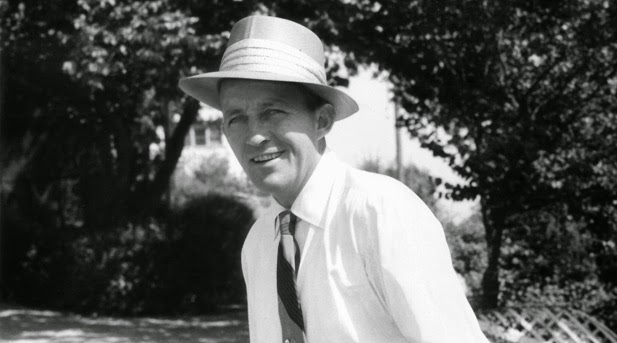
For fans of Bing, the music is all familiar, but what is even more fascinating is some of the photos of Bing Crosby that I have never seen before. Even my wife was amazed at how Bing looked without his toupee. There are even sad pictures of Bing at the funeral of his wife Dixie Lee, deep in mourning. I believe the death of Dixie was a turning point for Bing, both personally and professionally.


The documentary lets viewers draw their own conclusions about Bing Crosby’s personal life.

But the film’s perspective on his professional legacy is clear: He was a landmark entertainer, a technological maverick, a colleague who stood up for pals in need. He came to the aid of such fellow performers as Judy Garland and Mildred Bailey. Back to his sons, there is also audio showing how concerned Bing was with his boys, and how they were basically out of control.

Does Bing Crosby need rediscovered? He certainly does. Without Bing Crosby even many of these so-called singers would not be around today. Bing Crosby may have been the most widely recorded human voice in the history of mankind! The statistics are mind boggling, and although it is hard to cover Bing's career in a 90 minute documentary, Bing Crosby Remembered definitely does Bing justice...

MY RATING: 9 OUT OF 10