Showing posts with label Glenn Miller. Show all posts
Showing posts with label Glenn Miller. Show all posts
Monday, March 1, 2021

Wednesday, September 16, 2015
SINGER SPOTLIGHT: RAY EBERLE

Ray Eberle went on to find success with Miller, deeming the songs for Orchestra Wives, such as the jazz standard "At Last", to be among his favorites as there were songs he could "sink my teeth into, and make a story out of".
He appeared in the Twentieth Century Fox movies, Sun Valley Serenade (1941) and Orchestra Wives (1942).
He made several Universal films, including Mister Big, making a cameo appearance as himself. Eberle mostly sang ballads. From 1940-43 he did well on Billboard (magazine)'s "College Poll" for male vocalist. He also appeared on numerous television variety shows in the 1950s and 1960s.

Ray Eberle sang lead on "Sometime", composed by Glenn Miller in 1939, "Polka Dots and Moonbeams", "At Last", a number 9 chart hit on Billboard in 1942, and "To You", but Miller ran a tight ship and often fired people after one negative incident. Eberle was stuck in traffic one day during a Chicago engagement, and was late for a rehearsal. Miller fired him on the spot, and replaced him in June 1942 with Skip Nelson. Eberle responded by blasting Miller in a trade paper. An angry Miller retorted with his own version of Eberle's firing.
After his departure from Miller, Eberle briefly joined Gene Krupa's band before launching a solo career. He later joined former Miller bandmate Tex Beneke's orchestra in 1970 for a national tour, and reformed his own orchestra later in the decade.
Ray and his wife, Janet (née Young), had two children, Jan and Laurie Eberle. Janet's daughter Nancy Atchison became Nancy Eberle when she married Ray. He had two sons from his second marriage to Joanne Eberle (née Genthon), Ray Eberle Jr. and John Eberle. He also had a grandson, named Tray. Ray Eberle died of a sudden heart attack in Douglasville, Georgia on August 25, 1979, aged 60. He was largely forgotten in 1979, but his big band contributions should never be forgotten...

Monday, December 15, 2014
70 YEARS AGO: THE DISAPPEARANCE OF GLENN MILLER

It
was a cold day on December 15, 1944, when Major Glenn Miller boarded a Noorduyn
'Norseman' C-64 aeroplane. Since joining the war, the great American
bandleader's Army Air Force Band had been performing for Allied troops all over
England; now he was flying to Paris to make final arrangements to bring his
musicians in for a Christmas concert for the Allied troops there.
Glenn
Miller was a national darling. The famous Glenn Miller Orchestra, formed in
1938, had soared out of nowhere to incredible success, creating over 70 top ten
records in four years, selling over a million records, and dominating the
American airwaves. When America was dragged into the war at the end of 1941,
Miller decided that he would best serve his country by being in uniform and
promptly enlisted. There he was transferred to the Army Air Corps, promoted to
the rank of captain1,
and given free rein to set up his own wartime band.
Miller's
Army Air Force Band would prove to be every bit as successful as his civilian
one, despite all the close shaves that had almost wiped them out of air force
history. Now that Christmas was approaching and the Allied troops needed every
morale boost they could get, Miller was preparing a concert for them at the
Olympia.
The
original plan was for manager Don Haynes to fly with Miller to Paris; however,
fate interceded and sent a Lt Col Norman Baessell his way. Miller had bumped
into him at an officers' mess at Milton East near Northampton on 14 December
and had struck up a conversation with the officer. Baessell happened to mention
that he would be departing for Paris the next day from an RAF airfield at
Twinwood Farm2,
and upon hearing of Miller's plans, offered him a seat on the plane. Miller
gladly accepted, and whiled away the night eating dinner and playing poker with
Haynes and Baessell.

The
morning of December 15th found
Bedford heavily fogged in. A concerned Haynes called up Baessell to find out if
the flight was still on; Baessell assured him that by the time they took off
after lunch the fog would be gone.
It
was bitterly cold outside when Baessell contacted pilot John Morgan, who confirmed
that he would be arriving soon. Miller, who had been waiting in the car with
Haynes, quipped that Morgan would fail to locate the field as it was 24° F and
'even the birds were grounded'; he was forced to eat his words minutes later
when an aircraft appeared through the dense fog and landed on the airstrip.
The
trio left the control tower and drove to the Noordwyn Norseman C-64 on the
tarmac where Morgan, waiting for them, apologised for being late. Miller must
have had some last minute doubts about flying into the fog in the single-engine
plane when he muttered: 'Where the hell are the parachutes?' In a twist of
irony Baessell replied: 'What's a matter with you Miller, do you want to live
forever?' Charles Lindbergh had made it across the whole Atlantic on one
engine; their C-64 would only be going as far as Paris. Miller made no further
comment.
Don
Haynes watched as the Norseman sped down the runway and took to flight. He was
the last person to see them alive.

What
had exactly happened to the passengers of the Norseman has been the subject of
much speculation for the past half a century. The official report was that the
Norseman aircraft had crashed into the channel due to either iced-over wings or
engine failure; however, this explanation would prove unsatisfactory for the
majority of the populace, thus causing multiple theories and speculations to
mushroom over the years.
In
1985 British diver Clive Ward found what seemed to be the remains of the
ill-fated Norseman off the coast of France. Aside from the ordinary corrosive
effects of the sea, Ward found no damage to the plane and, more interestingly,
no signs of the plane's registration number or human remains. This inevitably
led to unanswered questions regarding the fates of Miller and the two other
officers, and encouraging even more speculation to spread.
Theories have be raised for the
last 70 years with everything from Miller dying in a bordello to him dying in a
hospital of lung cancer. Even his brother Herb Miller (1912-1987) claimed in 1983 that Miller did not die in a plane crash but
of lung cancer in 1945. Herb says Glenn created the story of the plane crash
himself because Miller wanted to die a hero and not dying in a bed. While
romantic speculations of Miller having been the unfortunate victim of a vicious
conspiracy may be appealing to those with rose-tinted glasses, the fact is that
his death is far more likely attributed to a series of unfortunate accidents
than it is to him having been silenced or the government having covered up an embarrassing
situation. However, we may never know for sure what happened in the final minutes of Miller's life. All we know is that he and his companions had boarded a plane, never to be seen again, and the world of swing music is a much poorer place for his passing…

Saturday, November 16, 2013
HISTORY OF A SONG: AT LAST
Here is another excellent story that was posted on the Geezer Music Club. You can read this story and more excellent stories here. I wanted to share this story because the song "At Last" was my wedding song...
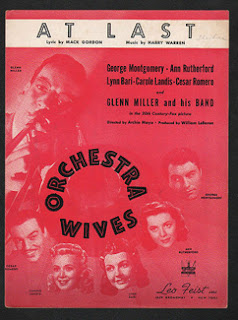
You would be hard-pressed to find a greater connection between a song and a performer than the one shared by the late Etta James and her classic “At Last.” The song earned her a special Grammy Hall Of Fame award, and the feisty singer fiercely fought for her right to perform it even as her health deteriorated in her later years. But it might surprise you to hear that it was not a big seller for her originally. On the other hand, it was a huge hit for the guy who’d introduced it a couple of decades earlier — Glenn Miller.
Originally an instrumental composed by Harry Warren, the song went almost unnoticed as one of several performed by Glenn Miller’s band in the 1941 movie Sun Valley Serenade. But the following year lyrics were added by Mack Gordon, and the band not only issued it as a record (as the ‘B’ side for “I’ve Got a Gal In Kalamazoo”) but also featured it in the new movie Orchestra Wives. The newly-reborn song, complete with vocals by Ray Eberle and Pat Friday (dubbing for actress Lynn Bari in the filmed version), became a Top Ten hit for the band and a favorite for swooning fans.
In the years that followed, it would go on to be performed in various arrangements by countless performers, but none would top the one that occurred in 1960 when a lady named Etta James took ownership of the song...
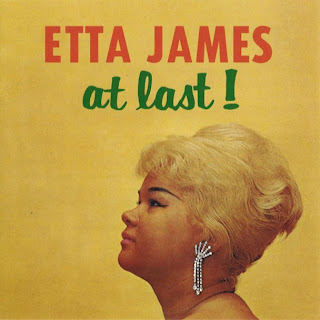

You would be hard-pressed to find a greater connection between a song and a performer than the one shared by the late Etta James and her classic “At Last.” The song earned her a special Grammy Hall Of Fame award, and the feisty singer fiercely fought for her right to perform it even as her health deteriorated in her later years. But it might surprise you to hear that it was not a big seller for her originally. On the other hand, it was a huge hit for the guy who’d introduced it a couple of decades earlier — Glenn Miller.
Originally an instrumental composed by Harry Warren, the song went almost unnoticed as one of several performed by Glenn Miller’s band in the 1941 movie Sun Valley Serenade. But the following year lyrics were added by Mack Gordon, and the band not only issued it as a record (as the ‘B’ side for “I’ve Got a Gal In Kalamazoo”) but also featured it in the new movie Orchestra Wives. The newly-reborn song, complete with vocals by Ray Eberle and Pat Friday (dubbing for actress Lynn Bari in the filmed version), became a Top Ten hit for the band and a favorite for swooning fans.
In the years that followed, it would go on to be performed in various arrangements by countless performers, but none would top the one that occurred in 1960 when a lady named Etta James took ownership of the song...

Wednesday, August 7, 2013
HISTORY OF A SONG: MOONLIGHT SERENADE

Miller’s theme song is one of the most familiar sounds from the big band era, but “Moonlight Serenade” actually evolved from an earlier Miller melody, one that went by the awkward title “Now I Lay Me Down to Weep.” It had been written by Miller around 1935 and over the next few years went through some rewrites, a couple of name changes, and more than one set of lyrics. It finally showed up as an instrumental named “Moonlight Serenade” on the ‘B’ side of Miller’s 1939 recording of “Sunrise Serenade.” It was mostly meant to be a similarly-named complement to the ‘A’ side, but it had something special going for it — and therein lies a story.
Whether you choose to believe the scene from the 1954 movie The Glenn Miller Story doesn’t really matter, because the fact remains that the song did showcase what became known as the Glenn Miller Style — a clarinet-led, sax-driven, amazingly smooth sound that fans absolutely loved. The record became a best-seller and the song would forever be identified with Glenn Miller, but it didn’t take long for some of Miller’s contemporaries to start edging in — a common practice in the big band era. That same year, Count Basie recorded the song but his version had lyrics added, which brings up another interesting story.
Although “Moonlight Serenade” had gone through various sets of lyrics during its stages of evolution, and was occasionally performed as a vocal, it was mostly known as an instrumental. In fact, an earlier scene in The Glenn Miller Story shows him being unhappy at hearing a speeded-up vocal of the song performed in a night club. But it was performed as a vocal from time to time, and in 1965 a lot of publicity was generated by the song’s inclusion on Frank Sinatra’s new album, Moonlight Sinatra. In the years since it’s been recorded by countless artists — as both instrumental and vocal — and has also shown up on dozens of TV and movie soundtracks.

SOURCE
Wednesday, February 6, 2013
RIP: PAUL TANNER

CARLSBAD, Calif. — Paul Tanner, a trombonist with the Glenn Miller Orchestra who later played a space-age instrument on the Beach Boys hit "Good Vibrations," has died at 95.
His stepson, Douglas Darnell, of Youngstown, Ohio, says Tanner died of pneumonia Tuesday morning at an assisted living center in Carlsbad, Calif.
Tanner performed with Miller from 1938 to 1942. During his long career he also worked as a movie studio and ABC musician in California, and performed with stars that included Tex Beneke, Henry Mancini and Arturo Toscanini.
He also helped develop the electro-theramin, a keyboard-style electronic instrument. Tanner provided its eerie sound on several Beach Boys recordings, including "Good Vibrations."
Tanner also was a music professor at UCLA for 23 years and helped write several books.

SOURCE
.
Thursday, May 17, 2012
WHERE ARE THEY NOW: MARION HUTTON

Born in Battle Creek, Michigan, her father, a railroad worker, abandoned the family when Marion was only four-years-old. In order to support her two daughters her mother opened a small speakeasy in their home. Marion and Betty would often perform for the patrons. Trouble with police kept the family on the move, and eventually they ended up in Detroit.
Marion began her professional career with the Vincent Lopez Orchestra in 1938, alongside and overshadowed by her sister. Her career took a turn for the better when Glenn Miller heard the two sisters sing one night in Boston. Though Betty was the one who captured the public's eye Miller thought Marion would be easier to handle, and in September he invited her to join his group.
Marion was well-liked by everyone in Miller's orchestra, both for her vocal talents and for her bright personality. Miller himself loved the girl-next-door aura that she projected. In fact, he briefly changed her name to Sissy Jones!


In the 1960s Marion married Vic Schoen, noted arranger and long-time music director for the Andrews Sisters. The couple eventually settled in Kirkland, Washington, where Marion served as director of Residence XII, an alcoholic treatment center for women, a position she held until her death in 1987. Reportedly at the time of her death Marion was estranged from her sister Betty. They had worked together sporadically during their careers. Marion was more than Betty Hutton's sister, she was a true big band legend...

Friday, April 27, 2012
RIP: PAULA KELLY JR

"I am saddened to report that Paula Kelly Cole (Paula Kelly Jr.) passed away peacefully at 8:25pm (PST), according to her sister, Julie Dickinson Lancaster."
For those of you who did not know Paula, she was the daughter of two of the greatest vocal group singers of all time, Paula Kelly Sr. and Hal Dickinson, founders of The Modernaires. The Modernaires were long associated with the Glenn Miller Orchestra, racking up dozens of hit recordings before embarking on a solo career which took them into radio, television and motion pictures.
Paula Jr. took over her mother's place as lead singer in The Modernaires in the late-'70s, a position she held until just a few months ago when she was sidelined due to surgery on her vocal cords. Sister Julie stepped in to sing lead, and Ginger Berglund was brought on board to fill out the quartet. Paula Jr. became ill about a week ago with a brain aneurysm, followed by other complications, and was removed from life support earlier this afternoon, with family at her bedside...
"I can say will all certainty that Paula was one of the most gracious, cheerful and funny people I've ever had the pleasure of knowing. She was full of enthusiasm for big band music (my kind o' people!), and I enjoyed many conversations with her over the past few months. Her only concern she expressed to me as of late was worrying about not being able to sing again after her surgery. That is no longer a concern of hers, as she is surely singing in an all-star vocal group above!" George Spink
More about Paula;
PAULA KELLY Jr was born in Grove City, PA, the middle daughter of Hal Dickinson and Paula Kelly. Early on she sang in church choirs. Educated in San Fernando Valley, CA schools, she majored in music. Singing with “The Modernaires” from 1966 through 1971 she traveled most of the world learning the lead part from her Mother. Hal, her father passed in 1970 and in 1971 she retired to marry. 1972 brought her a beautiful red haired daughter, Jennifer Holly Cole.
Previously Paula had performed with her two sisters, Julie and Martha in a trio called “The Kelly Sisters”. They made several appearances on the Bob Crosby and Dean Martin television shows. When her Mom, Paula Kelly retired in 1978, the natural replacement was her daughter, Paula Kelly Jr. She was so privileged to have worked with most of the great acts of the 40’s and 50’s. These were her parent’s friends and colleagues.
They were great Entertainers such as, Helen Forrest, Tex Beneke, Helen O’connell, Bob & Ray Eberle, Peter Marshall, Tony Martin, Count Basie, Les Brown, The Mills Brothers, Rosemary Clooney and yes, even Louie Armstrong. “The Modernaires” toured six times in Australia. Three of the tours were with surviving members of the Glenn Miller Orchestra. Billy May, an original, actually took trumpet lessons to do the tour. Among others on the tour were Paul Tanner, Wilbur Schwartz, John Best, Jimmy Priddy, Al Klink and Zeke Zarchy...

SOURCE
Friday, September 23, 2011
THE LAST DAYS OF GLENN MILLER
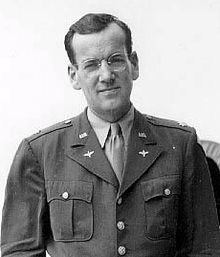
Legendary bandleader Glenn Miller spent his last night alive at Milton Ernest Hall, on the outskirts of Bedford, Bedfordshire. On December 15, 1944, Miller was to fly from the United Kingdom to Paris, France, to play for the soldiers there. His plane (a single-engined UC-64 Norseman, USAAF serial 44-70285) departed from RAF Twinwood Farm in Clapham, Bedfordshire and disappeared while flying over the English Channel. No trace of the aircrew, passengers or plane has ever been found. Miller's status is missing in action.
There are three main theories about what happened to Miller's plane, including the suggestion that he might have been hit by Royal Air Force bombs after an abortive raid on Siegen, Germany. One hundred and thirty-eight Lancaster bombers, short on fuel, jettisoned approximately 100,000 incendiaries in a designated area before landing. The logbooks of Royal Air Force navigator Fred Shaw recorded that he saw a small, single-engined monoplane spiraling out of control and crashing into the water. However, a second source, while acknowledging the possibility, cites other RAF crew members flying the same mission who stated that the drop area was in the North Sea.

Further research by British scholars also seems to indicate that this is the most likely probability, making Miller's death a "friendly fire" incident. In his 2006 self-published book, Clarence B. Wolfe — a gunner with Battery D, 134th AAA Battalion, in Folkestone, England — claims that his battery shot down Miller's plane. Another book by Lt. Col. Huton Downs, a former member of Dwight D. Eisenhower's personal staff, argues that the U.S. government covered up Miller's death. Downs suggested that Miller, who spoke German, had been enlisted by Eisenhower to covertly attempt to convince some German officers to end the war early. The book goes on to suggest that Miller was captured and killed in a Paris brothel, and his death covered up to save the government embarrassment. However the Publishers' Weekly review talks of "breathlessly written suppositions."

When Glenn Miller disappeared, he left behind his wife, the former Helen Burger, originally from Boulder, Colorado, and the two children they adopted in 1943 and 1944, Steven and Jonnie. Helen Miller accepted the Bronze Star medal for Glenn Miller in February 1945.
The Miller estate authorized an official Glenn Miller "ghost band" in 1946. This band was led by Tex Beneke, former lead saxophonist and a singer for the civilian band. It had a make up similar to the Army Air Force Band: it had a large string section. The orchestra's official public début was at the Capitol Theatre on Broadway where it opened for a three week engagement on January 24, 1946. Future television and film composer Henry Mancini was the band's pianist and one of the arrangers. This ghost band played to very large audiences all across the United States, including a few dates at the Hollywood Palladium in 1947, where the original Miller band played in 1941. In a website concerning the history of the Hollywood Palladium, it is noted "[e]ven as the big band era faded, the Tex Beneke and Glenn Miller Orchestra concert at the Palladium resulted in a record-breaking crowd of 6,750 dancers." By 1949, economics dictated that the string section be dropped.
This band recorded for RCA Victor, just as the original Miller band did Beneke was struggling with how to expand the Miller sound and also how to achieve success under his own name. What began as the "Glenn Miller Orchestra Under the Direction of Tex Beneke" finally became "The Tex Beneke Orchestra". By 1950, Beneke and the Miller estate parted ways. The break was acrimonious and Beneke is not currently listed by the Miller estate as a former leader of the Glenn Miller orchestra.

When Glenn Miller was alive, various bandleaders like Bob Chester imitated his style. By the early 1950s, various bands were again copying the Miller style of clarinet-led reeds and muted trumpets, notably Ralph Flanagan Jerry Gray,and Ray Anthony. This, coupled with the success of The Glenn Miller Story (1953),led the Miller estate to ask Ray McKinley to lead a new ghost band. This 1956 band is the original version of the current ghost band that still tours the United States today. The official Glenn Miller orchestra for the United States is currently under the direction of Gary Tole. The officially sanctioned Glenn Miller Orchestra for the United Kingdom has toured and recorded with great success under the leadership of Ray McVay. The official Glenn Miller Orchestra for Europe has been led by Wil Salden since 1990.
Glenn Miller's widow, Helen, died in 1966. Herb Miller, Glenn Miller's brother, led his own band in the United States and England until the late 1980s. Herb's son, John continues the tradition leading a band playing mainly Glenn Miller style music. In 1989, Glenn Miller's daughter Jonnie purchased her father's house where he was born. The Glenn Miller Foundation was created to oversee the subsequent restoration.
The years that Glenn Miller had a hit band was not even a decade, and yet he left a lasting imprint into big band, popular, and jazz music. Sixty seven years after Miller's disappearance his final resting spot is still not known. However, his music lives in...

Thursday, September 1, 2011
GLENN MILLER: THE SUCESSFUL YEARS

In September 1938, the Miller band began making recordings for the RCA Victor, Bluebird Records subsidiary. Si Shribman, a prominent East Coast businessman, began financing the band, providing a much needed infusion of cash. In the spring of 1939, the band's fortunes improved with a date at the Meadowbrook Ballroom in Cedar Grove, New Jersey, and more dramatically at the Glen Island Casino in New Rochelle, New York. The Glen Island date according to author Gunther Schuller attracted "a record breaking opening night crowd of 1800..." With the Glen Island date, the band began a huge rise in popularity. In 1939, TIME magazine noted: "Of the twelve to 24 discs in each of today's 300,000 U.S. jukeboxes, from two to six are usually Glenn Miller's." There were record-breaking recordings such as "Tuxedo Junction" which sold 115,000 copies in the first week. Miller's huge success in 1939 culminated with his band appearing at Carnegie Hall on October 6, with Paul Whiteman, Benny Goodman, and Fred Waring also the main attractions.
From 1939 to 1942, Miller's band was featured three times a week during a quarter-hour broadcast for Chesterfield cigarettes on CBS, first with the Andrews Sisters and then on its own. On February 10, 1942, RCA Victor presented Miller with the first gold record for "Chattanooga Choo-Choo". "Chattanooga Choo Choo" was performed by the Miller orchestra with his singers Gordon "Tex" Beneke, Paula Kelly and the vocal group, the Modernaires. Other singers with this orchestra included Marion Hutton, Skip Nelson, Ray Eberle and to a smaller extent, Kay Starr, Ernie Caceres, Dorothy Claire and Jack Lathrop. Pat Friday ghost sang with the Miller band in their two films, Sun Valley Serenade and Orchestra Wives with Lynn Bari lip synching.

In 1942, at the peak of his civilian career, Miller decided to join the war effort. At 38, Miller was too old to be drafted, and first volunteered for the Navy but was told that they did not need his services. Miller then wrote to Army Brigadier General Charles Young. He persuaded the United States Army to accept him so he could, in his own words, "be placed in charge of a modernized Army band." After being accepted into the Army, Glenn’s civilian band played its last concert in Passaic, New Jersey, on September 27, 1942.

At first placed in the United States Army, Glenn Miller was transferred to the Army Air Force. Captain Glenn Miller served initially as assistant special services officer for the Army Air Forces Southeast Training Center at Maxwell Field, Montgomery, Alabama, in December 1942. He played trombone with the Rhythmaires, a 15-piece dance band, in both Montgomery and in service clubs and recreation halls on Maxwell. Miller also appeared on both WAPI (Birmingham, Alabama) and WSFA radio (Montgomery), promoting the activities of civil service women aircraft mechanics employed at Maxwell.
Miller initially formed a large marching band that was to be the core of a network of service orchestras. Miller's attempts at modernizing military music were met with some resistance from tradition-minded career officers. For example, Miller's arrangement of "St. Louis Blues March", combined blues and jazz with the traditional military march. Miller's weekly radio broadcast "I Sustain the Wings", for which he co-wrote the eponymous theme song, moved from New Haven to New York City and was very popular. This led to permission for Miller to form his 50-piece Army Air Force Band and take it to England in the summer of 1944, where he gave 800 performances...

TO BE CONTINUED...
Sunday, August 14, 2011
GLENN MILLER: THE EARLY YEARS
The official era of the Big Bands was less than ten years from 1936 to 1945, however the music that era created is remembered to this day. There are many talented musicians and leaders of that era, but I do not think any leader is remembered as much as Glenn Miller. Despite his death in 1944, his music is remembered some 70 years later.

Miller was born on a farm in Clarinda, Iowa on March 1, 1904, to Lewis Elmer Miller and Mattie Lou (née Cavender). He went to grade school in North Platte in western Nebraska. In 1915, Miller's family moved to Grant City, Missouri. Around this time, Miller had finally made enough money from milking cows to buy his first trombone and played in the town orchestra. In 1918, the Miller family moved again, this time to Fort Morgan, Colorado, where Miller went to high school. During his senior year, Miller became very interested in a new style of music called "dance band music." He was so taken with it that he formed his own band with some classmates. By the time Miller graduated from high school in 1921, he had decided he wanted to become a professional musician.
In 1923, Miller entered the University of Colorado at Boulder, where he joined Sigma Nu Fraternity, but spent most of his time away from school, attending auditions and playing any gigs he could get, most notably with Boyd Senter's band in Denver. He dropped out of school after failing three out of five classes one semester, and decided to concentrate on making a career as a professional musician. He later studied the Schillinger technique with Joseph Schillinger, under whose tutelage he composed what became his signature theme, "Moonlight Serenade". In 1926, Miller toured with several groups, eventually landing a good spot in Ben Pollack's group in Los Angeles. During his stint with Pollack, Miller wrote several musical arrangements of his own. He also co-wrote his first song, "Room 1411", written with Benny Goodman and released as a Brunswick 78, 4013, credited to Benny Goodman's Boys. In 1928, when the band arrived in New York City, he sent for and married his college sweetheart, Helen Burger. He was a member of Red Nichols's orchestra in 1930, and because of Nichols, Miller played in the pit bands of two Broadway shows, Strike Up the Band and Girl Crazy (where his bandmates included big band leaders Benny Goodman and Gene Krupa).

During the late 1920s and early 1930s, Miller managed to earn a living working as a freelance trombonist in several bands. On a March 21, 1928 Victor session Miller played alongside Tommy Dorsey, Benny Goodman, and Joe Venuti in the All-Star Orchestra, directed by Nat Shilkret. On November 14, 1929,an original vocalist named Red McKenzie hired Glenn to play on two records that are now considered to be jazz classics:"Hello, Lola" and "If I Could Be With You One Hour Tonight". Beside Glenn were clarinetist Pee Wee Russell, guitarist Eddie Condon, drummer Gene Krupa and Coleman Hawkins on tenor saxophone.
In the early-to-mid-1930s, Miller also worked as a trombonist and arranger in The Dorsey Brothers, first when they were a Brunswick studio group (under their own name and providing accompaniment for many of The Boswell Sisters sessions), and finally when they formed an ill-fated co-led touring and recording orchestra. Miller composed the song "Annie's Cousin Fanny" and "Dese Dem Dose" for the Dorsey Brothers Band in 1934 and 1935. In 1935, he assembled an American orchestra for British bandleader Ray Noble, developing the arrangement of lead clarinet over four saxophones that eventually became the sonic keynote of his own big band. Members of the Noble band included future bandleaders Claude Thornhill, Bud Freeman and Charlie Spivak.
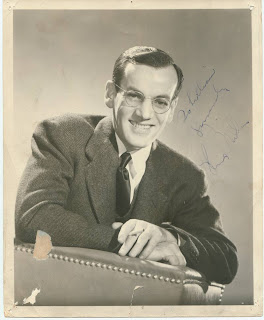
Glenn Miller made his first movie appearance in the 1935 Paramount Pictures release The Big Broadcast of 1936 as a member of the Ray Noble Orchestra performing "Why Stars Come Out at Night". The Big Broadcast of 1936 starred Bing Crosby, George Burns, Gracie Allen, Ethel Merman, Jack Oakie, and Bill "Bojangles" Robinson and also featured other performances by Dorothy Dandridge and the Nicholas Brothers, who would appear with Miller again in two movies for Twentieth Century Fox in 1941 and 1942.
Glenn Miller compiled several musical arrangements and formed his first band in 1937. The band failed to distinguish itself from the many others of the era, and eventually broke up. Benny Goodman said in 1976, "In late 1937, before his band became popular, we were both playing in Dallas. Glenn was pretty dejected and came to see me. He asked, 'What do you do? How do you make it?' I said, 'I don't know, Glenn. You just stay with it."
TO BE CONTINUED...


Miller was born on a farm in Clarinda, Iowa on March 1, 1904, to Lewis Elmer Miller and Mattie Lou (née Cavender). He went to grade school in North Platte in western Nebraska. In 1915, Miller's family moved to Grant City, Missouri. Around this time, Miller had finally made enough money from milking cows to buy his first trombone and played in the town orchestra. In 1918, the Miller family moved again, this time to Fort Morgan, Colorado, where Miller went to high school. During his senior year, Miller became very interested in a new style of music called "dance band music." He was so taken with it that he formed his own band with some classmates. By the time Miller graduated from high school in 1921, he had decided he wanted to become a professional musician.
In 1923, Miller entered the University of Colorado at Boulder, where he joined Sigma Nu Fraternity, but spent most of his time away from school, attending auditions and playing any gigs he could get, most notably with Boyd Senter's band in Denver. He dropped out of school after failing three out of five classes one semester, and decided to concentrate on making a career as a professional musician. He later studied the Schillinger technique with Joseph Schillinger, under whose tutelage he composed what became his signature theme, "Moonlight Serenade". In 1926, Miller toured with several groups, eventually landing a good spot in Ben Pollack's group in Los Angeles. During his stint with Pollack, Miller wrote several musical arrangements of his own. He also co-wrote his first song, "Room 1411", written with Benny Goodman and released as a Brunswick 78, 4013, credited to Benny Goodman's Boys. In 1928, when the band arrived in New York City, he sent for and married his college sweetheart, Helen Burger. He was a member of Red Nichols's orchestra in 1930, and because of Nichols, Miller played in the pit bands of two Broadway shows, Strike Up the Band and Girl Crazy (where his bandmates included big band leaders Benny Goodman and Gene Krupa).

During the late 1920s and early 1930s, Miller managed to earn a living working as a freelance trombonist in several bands. On a March 21, 1928 Victor session Miller played alongside Tommy Dorsey, Benny Goodman, and Joe Venuti in the All-Star Orchestra, directed by Nat Shilkret. On November 14, 1929,an original vocalist named Red McKenzie hired Glenn to play on two records that are now considered to be jazz classics:"Hello, Lola" and "If I Could Be With You One Hour Tonight". Beside Glenn were clarinetist Pee Wee Russell, guitarist Eddie Condon, drummer Gene Krupa and Coleman Hawkins on tenor saxophone.
In the early-to-mid-1930s, Miller also worked as a trombonist and arranger in The Dorsey Brothers, first when they were a Brunswick studio group (under their own name and providing accompaniment for many of The Boswell Sisters sessions), and finally when they formed an ill-fated co-led touring and recording orchestra. Miller composed the song "Annie's Cousin Fanny" and "Dese Dem Dose" for the Dorsey Brothers Band in 1934 and 1935. In 1935, he assembled an American orchestra for British bandleader Ray Noble, developing the arrangement of lead clarinet over four saxophones that eventually became the sonic keynote of his own big band. Members of the Noble band included future bandleaders Claude Thornhill, Bud Freeman and Charlie Spivak.

Glenn Miller made his first movie appearance in the 1935 Paramount Pictures release The Big Broadcast of 1936 as a member of the Ray Noble Orchestra performing "Why Stars Come Out at Night". The Big Broadcast of 1936 starred Bing Crosby, George Burns, Gracie Allen, Ethel Merman, Jack Oakie, and Bill "Bojangles" Robinson and also featured other performances by Dorothy Dandridge and the Nicholas Brothers, who would appear with Miller again in two movies for Twentieth Century Fox in 1941 and 1942.
Glenn Miller compiled several musical arrangements and formed his first band in 1937. The band failed to distinguish itself from the many others of the era, and eventually broke up. Benny Goodman said in 1976, "In late 1937, before his band became popular, we were both playing in Dallas. Glenn was pretty dejected and came to see me. He asked, 'What do you do? How do you make it?' I said, 'I don't know, Glenn. You just stay with it."
TO BE CONTINUED...

Friday, August 20, 2010
MUSICAL MOMENTS: GLENN MILLER
The Glenn Miller Orchestra is one of the most famous of the big band era, and their version of "In The Mood" put them on the map. The musicial world lost a great talent when Miller disappeared (and presumed died) in 1944...
Subscribe to:
Posts (Atom)