Tuesday, February 11, 2014

RIP: SHIRLEY TEMPLE

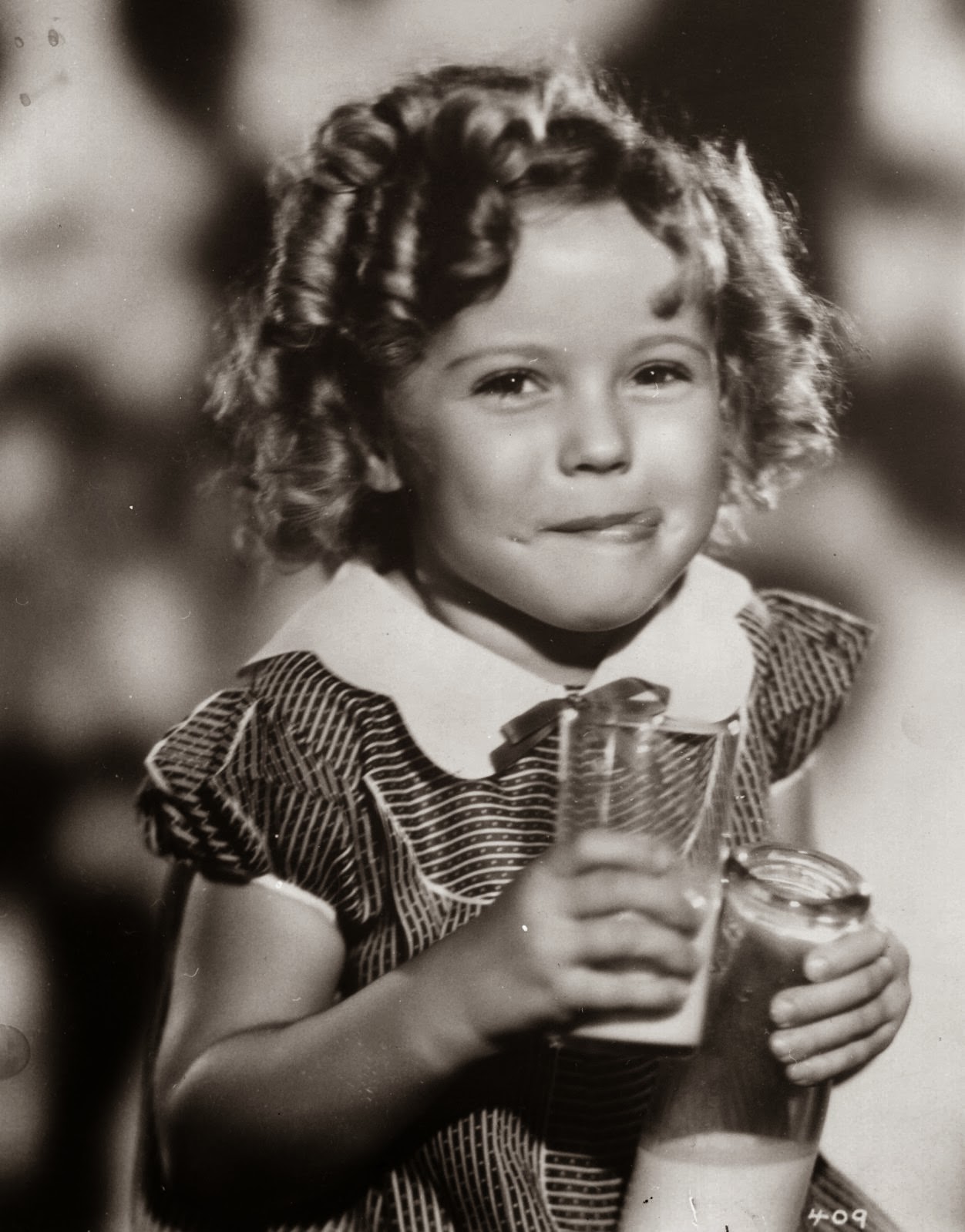
Shirley Temple Black, who as a dimpled, precocious and determined little girl in the 1930s sang and tap-danced her way to a height of Hollywood stardom and worldwide fame that no other child has reached, died on Monday night at her home in Woodside, Calif. She was 85.

Her publicist, Cheryl Kagan, confirmed her death.

Ms. Black returned to the spotlight in the 1960s in the surprising new role of diplomat, but in the popular imagination she would always be America’s darling of the Depression years, when in 23 motion pictures her sparkling personality and sunny optimism lifted spirits and made her famous. From 1935 to 1939 she was the most popular movie star in America, with Clark Gable a distant second. She received more mail than Greta Garbo and was photographed more often than President Franklin D. Roosevelt.

The little girl with 56 perfect blonde ringlets and an air of relentless determination was so precocious that the usually unflappable Adolphe Menjou, her co-star in her first big hit, “Little Miss Marker,” described her as “an Ethel Barrymore at 6” and said she was “making a stooge out of me.”


When she turned from a magical child into a teenager, audience interest slackened, and she retired from the screen at 22. But instead of retreating into nostalgia, she created a successful second career for herself.

After marrying Charles Alden Black in 1950, she became a prominent Republican fund-raiser. She was appointed a delegate to the United Nations General Assembly by President Richard M. Nixon in 1969. She went on to win wide respect as the United States ambassador to Ghana from 1974 to 1976, was President Gerald R. Ford’s chief of protocol in 1976 and 1977, and became President George H. W. Bush’s ambassador to Czechoslovakia in 1989, serving there during the fall of Communism in Eastern Europe.

After winning an honorary Academy Award at the age of 6 and earning $3 million before puberty, Shirley Temple grew up to be a level-headed adult. When her cancerous left breast was removed in 1972, at a time when operations for cancer were shrouded in secrecy, she held a news conference in her hospital room to speak out about her mastectomy and to urge women discovering breast lumps not to “sit home and be afraid.” She is widely credited with helping to make it acceptable to talk about breast cancer.

A statement released by her family said, “We salute her for a life of remarkable achievements as an actor, as a diplomat, and most importantly as our beloved mother, grandmother, great-grandmother and adored wife for fifty-five years of the late and much missed Charles Alden Black.”

Shirley Jane Temple was born in Santa Monica, Calif., on April 23, 1928. From the beginning, she and her mother, Gertrude, were a team (“I was absolutely bathed in love,” she remembered); her movie career was their joint invention. Her success was due to both her own charm and her mother’s persistence.

In “Child Star,” her 1988 autobiography, Mrs. Black said her mother had made a “calculated decision” to turn her only daughter into a professional dancer. At a fee of 50 cents a week, Mrs. Temple enrolled 3-year-old Shirley in Mrs. Meglin’s Dance Studio.

In 1932, Shirley was spotted by an agent from Educational Pictures and chosen to appear in “Baby Burlesks,” a series of sexually suggestive one-reel shorts in which children played all the roles. The 4- and 5-year-old children wore fancy adult costumes that ended at the waist. Below the waist, they wore diapers with oversize safety pins. In these heavy-handed parodies of well-known films like “The Front Page” (“The Runt Page”) and “What Price Glory” (“War Babies”), Shirley imitated Marlene Dietrich, Mae West and — wearing an off-the-shoulder blouse and satin garter as a hard-boiled French bar girl in “War Babies” — Dolores Del Rio. Into adulthood she would make a lasting comedy with "The Bachelor And The Bobby Soxer" with Cary Grant.

On a personal note, Shirley Temple was one of my late Grandfather's favorite movie stars. He was born the same year as Ms. Temple. My Mother even had a Shirley Temple doll growing up. With the death of Shirley Temple it is the end of an era...

Monday, February 10, 2014

ACCIDENTAL OVERDOSES OF CLASSIC HOLLYWOOD

With the recent passing of Phillip Seymour Hoffman of a drug overdose, and the many drug related deaths that have plagued Hollywood in recent years, I wanted to take a look at the drug overdoses that hit classic Hollywood. Accidental death by drug overdose is not something new, but in the older days of Hollywood it was hidden a lot better...


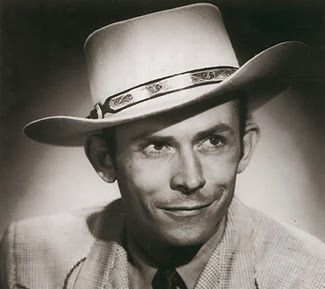
HANK WILLIAMS SR (1923-1953)
Hank was regarded as one of the most significant country music artists, Williams recorded 35 singles (five released posthumously) that would place in the Top 10 of the Billboard Country & Western Best Sellers chart, including 11 that ranked number one. Williams died extremely young of an accidental overdose of morphine and alcohol.

TOMMY DORSEY (1905-1956)
Tommy was an American jazz trombonist, trumpeter, composer, and bandleader of the Big Band era. He had such great vocalists as Frank Sinatra, Jo Stafford, and The Pied Pipers working for his organization at one time or another. Dorsey did not die of a drug overdose exactly but he died of the effects of it. He choked to death while sleeping. He was so sedated on sleeping pills that he was unable to awaken.

MARLYN MONROE (1926-1962)
One of the most famous celebrity cases of drug overdose was that of Marilyn Monroe. Over fifty years after her death, Monroe is still a viable icon of classic Hollywood. Looking back at her film roles in Bus Stop (1956) and Some Like It Hot (1959), she was a great actress as well. Monroe was found dead of a barbiturate overdose. Officially listed as "probable suicide" though several conspiracy theories exist.

DINAH WASHINGTON (1924-1963)
Dinah was an American singer and pianist, who has been cited as "the most popular black female recording artist of the '50sEarly on the morning of December 14, 1963, Washington's seventh husband Lane went to sleep with his wife, and awoke later to find her slumped over and not responsive. Doctor B. C. Ross came to the scene to pronounce her dead. An autopsy later showed a lethal combination of secobarbital and amobarbital, which contributed to her death at the age of 39.


ALAN LADD (1913-1964)
Alan was an American film actor and one of the great celebrities of the 1940s and early 1950s. After this, his fame diminished, though he continued to appear in popular films until his premature death. In November of 1962, Ladd attempted suicide by shooting himself but survived. On January 29, 1964 he was found dead in Palm Springs, California, of an acute overdose of "alcohol and three other drugs", at the age of 50; his death was ruled accidental.

DOROTHY DANDRIDGE (1922-1965)
Dorothy was an American actress and singer. Dandridge was the first black actress to be nominated for an Academy Award for Best Actress. On September 8, 1965, Dandridge was scheduled to fly to prepare for her nightclub engagement at Basin Street East. Several hours after her conversation with Branton ended, Dandridge was found dead by her manager, Earl Mills. Two months later, a Los Angeles pathology institute determined the cause to be an accidental overdose of Imipramine, a tricyclic antidepressant.

SCOTTY BECKETT (1929-1968)
Scotty was an American child actor. He starred in the Our Gang and Rocky Jones, Space Ranger television series. As an adult actor, he continued making movies. On May 8, 1968, he checked into a Hollywood nursing home, needing medical attention after suffering a serious beating. He died two days later at age 38. Although pills and a note were found, no conclusion was made by the coroner as to the exact cause of death; however, some speculate he overdosed on barbiturates or alcohol.

NICK ADAMS (1931-1968)
Nick was noted for his roles in several Hollywood films during the 1950s and 1960s along with his starring role in the ABC television series The Rebel (1959). Decades after Adams' death from a prescription drug overdose at the age of 36, his widely publicized friendships with James Dean and Elvis Presley would stir speculation about both his private life and the circumstances of his death.


JUDY GARLAND (1922-1969)
One of the most famous child stars of all-time, Garland started taking drugs on the set of 1939's The Wizard Of Oz. Her adult life was riddled with suicide attempts and drug overdoses. When Judy died in 1969, she was a shell of her formal self. Garland died of a secobarbital overdose Her death certificate states the overdose was "accidental" however there is speculation it was intentional.

PIER ANGELI (1932-1971)
Pier was an Italian-born television and film actress. Her American cinematographic debut was in the starring role of the 1951 film Teresa, for which she won a Golden Globe Award. Twenty years later, she had been chosen to play a part in The Godfather, but died before filming began of a barbiturate overdose.


ELVIS PRESLEY (1935-1977)
Presley was without a doubt, the king of rock 'n' roll. However, the last years of his life was filled with a very unhealthy lifestyle. The King literally died on the throne (toilet). Presley died of a cardiac arrhythmia. The autopsy found in his system "significant" levels of ethinamate, methaqualone, codeine and different barbiturates, including amobarbital, pentobarbital, and phenobarbital.

These are just some of the accidental drug overdoses of classic Hollywood. Many other classic stars were dimmed by drug overdoses associated with suicides. With all the glamour, fame, and money - it could not buy happiness. It could not buy happiness in the 1930s and 1940s Hollywood, just as it can not buy happiness in 2014. The death of Phillip Seymour Hoffman was not the first fatal drug overdose in Hollywood, and it will not be the last one...

Friday, February 7, 2014

HISTORY OF A SONG: SMILE

I have a lot of favorite songs, but I think one of the most brilliant songs ever written was a song simply titled "Smile". "Smile" is a song based on an instrumental theme used in the soundtrack for the 1936 Charlie Chaplin movie Modern Times. Chaplin composed the music, while John Turner and Geoffrey Parsons added the lyrics and title in 1954. In the lyrics, the singer is telling the listener to cheer up and that there is always a bright tomorrow, just as long as they smile. "Smile" has become a popular standard since its original use in Chaplin's film.

The song, originally sung by Nat King Cole, charted in 1954. Singer Sunny Gale also covered the song, sharing sales with Cole, as shown in the music trade Cashbox. It was also covered by Cole's daughter, Natalie, on her 1991 album, Unforgettable... with Love. Other great versions of the song include recordings done by Jimmy Durante, Dinah Washington, and Dean Martin.

In Britain, rival versions were released by Lita Roza and Petula Clark in 1954. Clark later re-recorded it for her 1968 album The Other Man's Grass Is Always Greener, by which time she was a personal friend of Charlie Chaplin. Jazz guitarist Royce Campbell recorded it on his album, "Get Happy (2007).

Singer Michael Jackson recorded the song for his 1995 double album HIStory: Past, Present and Future, Book I. It was planned to be released as the eighth and final single from the album in 1998 but was canceled days before its release date. Only a few copies from the Netherlands, Germany and South Africa (where the record distribution was started previous to the withdrawal) were saved as the other copies were withdrawn.

The song was also featured extensively in the 1992 biography film Chaplin which starred Robert Downey Jr. Downey also later recorded an updated version of this great song. The song has always spoken to me because it talks about smiling and keeping a happy front even though you may be torn up inside. It has summed up how I felt a lot of times during my life...


Wednesday, February 5, 2014

HOLLYWOOD BEAUTY: ANN-MARGRET

For this new feature, I want to spotlight some of the stunning beauty that was a major part of classic Hollywood. For my first feature I wanted to spotlight Ann Margret. She has been a fixture in Hollywood since the 1960s. Born in 1942, I have had a crush on her since I first saw her in movies. Here are six reasons why I have a crush on her...


Monday, February 3, 2014

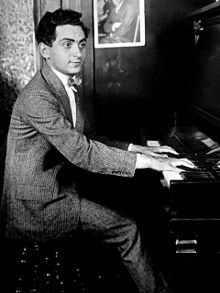
IRVING BERLIN: THE EARLY YEARS


I asked my wife a couple of months ago to name five songs that songrwriting genius Irving Berlin wrote. Sadly, she could only name one song - "God Bless America", and even that impressed me. To anyone born after the assassination of President Kennedy, the name Irving Berlin would unfortunately not mean much, but as a fan of Tin Pan Alley music, Berlin means a lot to me. He was one of the best songwriters America has ever seen. However, even though I pride myself in my knowledge of this great era of music, I admit I did not know much about Irving Berlin's early life. Researching this article got me to learn a lot more about Irving Berlin.

Berlin was born on May 11, 1888, one of eight children of Moses and Lena Lipkin Beilin. There are several possibilities concerning his birth city. It could be Tumen or any one of several villages near the city of Mogilyov, Belarus. His father, a cantor in a synagogue, uprooted the family to America, as did many other Jewish families in the late 19th century. In 1893 they settled in New York City.

They eventually settled on Cherry Street, a "cold-water basement flat with no windows," in the Yiddish Theater District on the Lower East Side, and had a Yiddish-speaking home. His father, unable to find comparable work as a cantor in New York, took a job at a kosher meat market and gave Hebrew lessons on the side, and struggled to support his family. He died a few years later when Irving was thirteen years old. With only a few years of schooling, Irving found it necessary to take to the streets to help support his family He became a newspaper boy, hawking The Evening Journal. On his first day of the job, according to Berlin’s biographer and friend, Alexander Woollcott, the boy “stopped to look at a ship about to put out for China. So entranced was he that he failed to notice a swinging crane, and he was knocked into the river. When he was fished out, after going down for the third time, he was still holding in his clenched fist the five pennies that constituted his first day's receipts, his contribution to the family budget." His mother took jobs as a midwife, and three of his sisters worked wrapping cigars, common for immigrant girls. His older brother worked in a sweatshop assembling shirts.

With few survival skills and little education, he realized that formal employment was out of the question. His only ability was acquired from his father's vocation: singing. He joined with a few other youngsters and went to saloons on the Bowery to sing to customers. These itinerant young singers were common on the Lower East Side. He would sing a few of the popular ballads he heard on the street, hoping that customers would "pitch a few pennies in his direction." As Bergreen notes, "it was in these seamy surroundings that the runaway boy received his real and lasting education." Music became his sole source of income and he emerged culturally from the ghetto lifestyle, learning the "language of the street."

To survive, Berlin began to recognize the kind of songs that appealed to audiences: "well-known tunes expressing simple sentiments were the most reliable." He began plugging songs at Tony Pastor's Music Hall in Union Square and finally, in 1906 when he was 18, working as a singing waiter at the Pelham Cafe in Chinatown.  His first attempt at songwriting was "Marie From Sunny Italy," written in collaboration with the Pelham's resident pianist, Mike Nicholson. The sheet music to this song made history because of a printer's error in the score. The name printed on the cover read: 'I. Berlin.' Interestingly, Berlin never learned to play in more than one key and used a custom-made 1940 Weser Brothers piano with a transposing lever to change keys.


In 1908, at the age of 20, Berlin took a new job at a saloon in the Union Square neighborhood. There, he was able to collaborate with other young songwriters, such as Edgar Leslie, Ted Snyder, Al Piantadosi, and George A. Whiting, and in 1909, the year of the premiere of Israel Zangwill's The Melting Pot, he got his big break as a staff lyricist with the Ted Snyder Company.

From this early position, Hamm writes, his "meteoric rise as a songwriter" in Tin Pan Alley and then on Broadway, began with his first world-famous hit song, "Alexander's Ragtime Band," in 1911. The song was such an astronomical success that Berlin became an overnight songwriting legend. The song was such a success that it was one of the songs played on the ill-fated voyage of the Titanic. For the next almost fifty years Irving wrote the songs that America sang, hummed, and lived their lives through. That is not bad for a poor immigrant who came to America for a better life. Berlin is living proof that the American dream does happen to people...

Sunday, February 2, 2014

RIP: PHILIP SEYMOUR HOFFMAN


There is sad news to report among this generation of future classic stars. Wonderful actor Philip Seymour Hoffman has died at the age of 46. Oscar-winning actor Philip Seymour Hoffman was found dead of an apparent drug overdose — in the bathroom with a hypodermic needle still in his arm — inside a Greenwich Village home on Sunday morning, cops said.

A personal assistant found Hoffman’s body in the apartment at 35 Bethune St. and called 911 around 11:30 a.m, sources said.

Last month, Hoffman, 46, appeared out of it at the Sundance Film Festival at a party for his movie “God’s Pocket,” witnesses told The Post. He seemed “slightly disheveled and pasty” and initially declined interviews while his co-stars, Christina Hendricks and John Slattery, talked to the media, witnesses said.

A rep said at the time, “He needed a minute and didn’t feel like coming down yet.”
Later, Hoffman seemed more relaxed and agreed to do some interviews but would only talk about the movie. He was later spotted at another party chatting to actor Sam Rockwell.


Hoffman had been shooting “The Hunger Games: Mockingjay – Part 2” and was in post-production for a Showtime series “Happyish.” He was also set to direct the movie “Ezekiel Moss” a Depression-era script, which follows a drifter with the ability to communicate with the dead starring Jake Gyllenhaal and Amy Adams.

He was seen in the audience just over a week ago at Broadway’s “Waiting for Godot.”
The “Mission Impossible” star won the Best Actor Oscar for the 2005 film “Capote,” and received three Academy Award nominations as Best Supporting Actor for other flicks.

Hoffman publicly admitted in 2006 that he nearly succumbed to substance abuse after graduating from NYU’s drama school, but got sober in rehab.

“It was all that (drugs and alcohol), yeah. It was anything I could get my hands on…I liked it all,”  he told “60 Minutes” as the time.

Last year, Hoffman reportedly checked himself into rehab again for ten days after relapsing in 2012...


Saturday, February 1, 2014

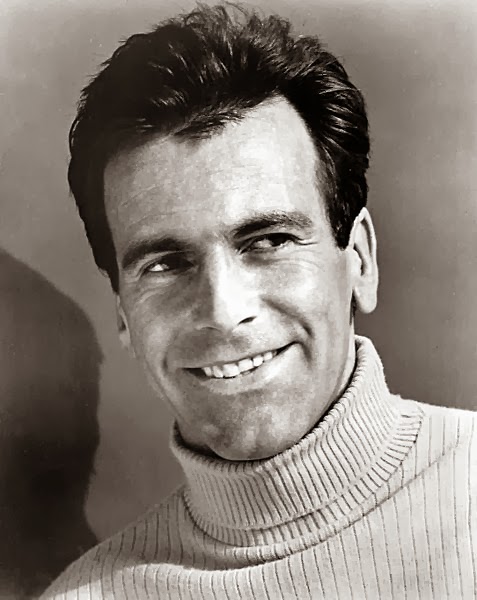
RIP: MAXIMILIAN SCHELL

(CNN) -- Austrian-born actor Maximilian Schell, winner of an Academy Award for his portrayal of a defense lawyer in "Judgment at Nuremberg," has died, his agent, Patricia Baumbauer, said Saturday. He was 83.

Schell died at an hospital in Innsbruck, Austria, with his wife, Iva, at his side, Baumbauer told CNN. "He was died of a quick illness after being treated for pneumonia," Baumbauer said. "My mother was Schell's agent for over 50 years, and when she died four years ago, he remained with the agency. He was like a father to me and knew me my entire life."

Maximilian Schell died in a Austrian hospital with his wife by his side, his agent Patricia Baumbauer said.

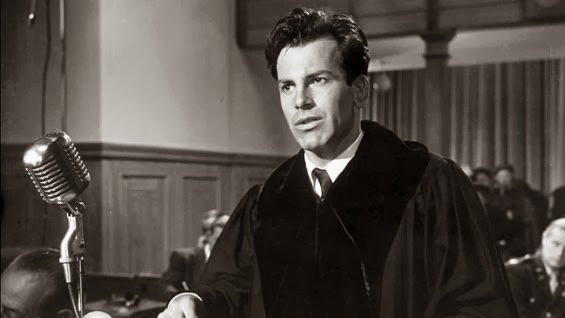
Schell was nominated for an Oscar three times. He won in 1962 for "Judgment at Nuremberg." Schell, one of the most successful German-speaking actors in English-language films, made his Hollywood debut in 1958 in the World War II film "The Young Lions," according to IMDb. In his second Hollywood role, as defense attorney Hans Rolfe in Stanley Kramer's classic "Judgment at Nuremberg," he won the 1961 Academy Award for Best Actor and beat out costar Spencer Tracy for the Oscar, according to IMDb.

He also earned a Golden Globe and the New York Film Critics Circle Award for the role, which brought him international acclaim. Schell's acting eventually won him two more Oscar nominations -- in 1976 for Best Actor for "The Man in the Glass Booth" and in 1978 for Best Supporting Actor for "Julia," according to IMDb. As a director, Schell's 1984 documentary on Marlene Dietrich, "Marlene" was nominated for a Best Documentary Oscar and praised as a masterpiece of the nonfiction genre, according to IMDb. Dietrich allowed herself to be recorded but refused to be filmed, bringing out the most in Schell's talent to penetrate images and uncover reality. Schell was born in Vienna, Austria, on December 8, 1930, and raised in Zurich, Switzerland.


In 2002, he produced his most intimate film, My Sister Maria, a documentary about his sister, noted actress Maria Schell. In the film, he chronicles her life, career and eventual diminished capacity due to illness. The film, made three years before her death, shows her mental and physical frailty, leading to her withdrawing from the world.] In 2002, upon the completion of the film, they both received Bambi Awards, and were honored for their lifetime achievements and in recognition of the film

One of his later roles that American audiences would know would be as Tea Leoni's father in the disaster epic Deep Impact in 1999. In 2007, he played the role of Albert Einstein on the German television series Giganten (Giants), which enacted the lives of people important in German history...