Showing posts with label songwriter. Show all posts

Thursday, June 6, 2024

JEROME KERN AND HIS LAST MUSICAL

Jerome Kern (1885-1945) needs no introduction. Composer of more than seven hundred songs, among them "They Didn't Believe Me," "Look for the Silver Lining," "Who?" "Ol' Man River," "Can't Help Lovin' Dat Man," "Make Believe," "Bill," "Why Was I Born?," "She Didn't Say Yes," "The Song Is You," "Smoke Gets in Your Eyes," "Yesterdays," "All the Things You Are," "I Won't Dance," "The Way You Look Tonight," "A Fine Romance," "Pick Yourself Up," "The Folks Who Live on the Hill," "The Last Time I Saw Paris," "Dearly Beloved," "I'm Old Fashioned," and "Long Ago (and Far Away)," he worked with such renowned lyricists as Oscar Hammerstein II, Otto Harbach, PG. Wodehouse, Dorothy Fields, Johnny Mercer, Ira Gershwin, B.G. DeSylva and Herbert Reynolds in both theater and film. "The first to find a new form of melodic writing unlike that of his predecessors or contemporaries," according to Alec Wilder's American Popular Song (Oxford University Press, 1972), Kern is one of the giants in the pantheon of the Great American Songbook.


The 1946 Twentieth Century-Fox film Jerome Kern's Centennial Summer, produced and directed by Otto Preminger, turned out to be the last project Kern worked on before he died suddenly on 11 November 1945 of a cerebral hemorrhage while walking at the corner of Park Avenue and 57th Street in New York. An "undernourished score" as Stephen Banfield's Jerome Kern (Yale University Press, 2006) puts it, it nevertheless contains the songs "The Right Romance" (lyrics: Leo Robin), "Up with the Lark" (lyrics: Leo Robin), "Centennial" (lyrics: Leo Robin),"In Love in Vain" (lyrics: Leo Robin), "All Through the Day" (lyrics: Oscar Hammerstein II), and "Cinderella Sue" (lyrics: E. Y. Harburg). Another song, "Two Hearts Are Better than One" (lyrics: Johnny Mercer) was published but in the end cut from the film. Other Kern tunes are used, namely "Long Live Our Free America" (lyrics: Leo Robin), "Railroad Song" (lyrics: Leo Robin), as well as Two Dachshunds and various polkas and waltzes as underscoring. Described by Roy Hemming in his The Melody Lingers On (Newmarket Press, 1986) as barely "bearable," Kern's score is not his best. Still, "In Love in Vain" spent thirteen weeks on Your Hit Parade and, according to Billboard's chart information, charted for Margaret Whiting and for Helen Forrest with Dick Haymes; and "AH Through the Day" spent twenty weeks on Your Hit Parade and had three charting records, by Frank Sinatra, Perry Como and Margaret Whiting. Moreover, the songs he composed with Hammerstein, Harburg and Mercer were retrieved from Kern's trunk of old songs after he grew increasingly frustrated with Robin's tardiness in providing lyrics. In the end, the film received two Academy Award nominations: one for best song ("All Through the Day") and one for best score (Alfred Newman).


Jerome Kern's Centennial Summer was Fox's response to the success of MGM's 1944 film Meet Me in St. Louis, whose story, based on a series of short stories by Sally Benson, involves a family with three daughters at the time of the 1904 St. Louis World's Fair. Based on a novel by Albert E. Idell, Jerome Kern's Centennial Summer revolves around a family in Philadelphia in the 1870s at the time of the Centennial International Exposition of 1876. Whereas one of the Smith family daughters in Meet Me in St. Louis falls for the boy next door, two of the Rogers daughters in Jerome Kern's Centennial Summer fall for a Frenchman who has arrived to prepare the French pavilion for the exposition. Just as MGM's The Wizard of Oz (1939) was a response to Disney's Snow White and the Seven Dwarfs (1937), the Meet Me in St. Louis/Centennial Summer couple is an example of a tried-and-true tit-for-tat copycat Hollywood ritual that continues to this day. Both musicals take place before either World War, which makes them endearing reminders of more innocent, happier times...


Saturday, April 10, 2021

THE EARLY YEARS OF COLE PORTER

J.O. Cole was the richest man in Indiana. His father had been a shoemaker, but J.O.--the initials stood for James Omar--went out to California during the Gold Rush and came back a wealthy man to Indiana, where he multiplied his wealth by way of timber and coal and other enterprises. J.O. married Rachel Henton, and when their daughter, Kate Cole, was born in 1862, nothing could be too good for J.O.'s girl. J.O. gave Kate expensive clothes, expensive tastes, and an expensive education that included music and dance.

J.O. naturally expected his Kate to choose a husband from the ambitious world of high-powered businessmen, someone who could take over his financial empire if and when J.O. ever chose to let go of the reins. But Kate Cole had a mind of her own, and the husband she selected was Sam Porter, said to be a weak and ineffectual, although modestly successful, pharmacist from her hometown of Peru, Indiana. One can only speculate, but one can at least suspect that Kate was too much like her father to want to marry a man of her father's stamp, and instead deliberately chose a husband that shecould rule.

J.O. fumed and grumbled, but in the end Kate got her way, and J.O. paid first for the wedding and then for the expensive lifestyle of the wedded couple. And then, on June 9, 1891, in Peru, Indiana, Kate's son, J.O.'s grandson, was born, and they named him Cole Albert Porter.

From the age of six, the little boy studied first violin and then, at age eight, piano, and soon he showed real talent for both. When he decided that he didn't like the violin, he devoted all his energies to the piano, practicing two hours every day. Frequently, his mother Kate would join him at the piano, and together they would make up wicked parodies of the popular songs of the day.


Kate knew that her son had talent, and did everything she could to pave the way for musical fame. Early on, she subsidized the student orchestra at the local music school, making sure that her son, dressed in velvet and lace, was the featured violin soloist. There were rumors that she also took steps to ensure that the local papers gave her son the right reviews. When Cole was ten years old, he began composing music, and his mother paid to have his compositions published and sent copies to family and friends. And when, at age 14, she sent Cole off to the exclusive Worcester Academy in Massachusetts, she decided that people would be more impressed with her son's accomplishments if her son were only twelve instead of fourteen. And so, she made Cole twelve, officially at least, by arranging some small changes in his school records.

When Cole was sent east to boarding school, J.O. was furious. J.O.'s plan was that his grandson would stay in Indiana, learning about the family business empire and preparing to eventually take it over. J.O. was so angry, in fact, that for two years he refused to speak to Kate. But, as always, Kate got her way.


Cole's stay at the Worcester Academy was a successful one. In later years, he remembered one of his instructors there, Dr. Abercrombie, as an important influence. Cole said that Abercrombie taught him about language and meter, and that, in a song, "Words and music must be so inseparably wedded to each other that they are like one." When he graduated from the Academy in 1909, Cole was the class valedictorian.

Next came Yale, and Cole's undergraduate years at Yale were one of the richest periods of his life. He was a huge social success, famous on campus for the songs he was constantly writing and singing. He sang solos with the Yale Glee Club. He wrote football fight songs, some of which continued to be sung long after he left Yale, especially "Bingo Eli Yale" and the "Yale Bulldog Song". And he wrote songs for six full scale musical comedies, produced by the Delta Kappa Epsilon fraternity and by the Yale Dramatic Association. Some of these shows went on tour around the country, and Cole toured with them, reveling in the parties and good fellowship that went with the tours. In all, Cole wrote around 300 songs while he was at Yale. And when he graduated in 1913, his classmates voted him the "most entertaining" member of his class. In his Yale years, Cole made many connections that would be professionally and personally important to him for the rest of his life.


At J.O.'s insistence, Cole then enrolled in Harvard Law School, where he roomed with a young man named Dean Acheson--yes, the Dean Acheson who would become Secretary of State from 1949 to 1953. But Cole had no interest in becoming a lawyer, and his activities continued to be mostly musical. Many of Cole Porter's stories about himself were inventions, but, according to Cole, the Dean of the Law School, Ezra Ripley Thayer, took him aside one day, during Cole's second year at the Law School, and told him, "Don't waste your time--get busy and study music." Whether the advice really came from Thayer or not, Cole took it, and transferred to Harvard's School of Arts and Sciences in 1915, where he studied for a graduate degree in Music. Cole told his mother Kate about the change in career plans, but both of them allowed J.O. to believe that Cole was still earnestly pursuing his Law School degree.

Cole left graduate school in 1916 and moved to New York City, where he lived at the Yale Club. His first show, See America First (1916), lasted for only 15 performances, but the audience was full of prominent socialites, and Cole himself quickly became a familiar figure in social circles in New York.

In July 1917, Cole moved to Paris. The First World War was raging, and Cole invented stories about joining the French Foreign Legion and performing numerous heroic exploits that were duly reported in the press back home and that remained part of Cole's official biography throughout his life. Not a word was true. In fact, Cole was enjoying Paris's fabulous social life, an endless stream of extravagant parties full of international celebrities, members of the minor nobility, cross dressers, artists, and eccentrics, accompanied by alcohol and other drugs, and featuring an assortment of gay and bisexual activity.


Linda Lee Thomas from Louisville, Kentucky, was another prominent socialite in Paris. Divorced from an abusive husband, wealthy, and considered one of the most beautiful women in the world, Linda soon became one of Cole's closest friends. She was older than Cole, and was quite aware of his homosexual preferences and activities. Nevertheless, on December 19, 1919, Cole and Linda were married. Although sex was never a part of their relationship, they truly liked each other, and Linda was deeply dedicated to Cole's career, so, in its own way, their marriage proved a close, successful, and mostly happy one.

Cole and Linda led a glittering social life in Paris, Venice, and the Riviera. Their Paris home had platinum wallpaper and zebra skin chairs. For one extravagant party in Venice they hired 50 gondoliers and a troupe of circus acrobats. For another party, they hired an entire ballet company.

But while his social life was dazzling, Cole's career was moving frustratingly slowly. He studied briefly with the noted French composer Vincent d'Indy. He had a few small successes, contributing songs to such shows as Hitchy-Koo 1919 and the Greenwich Village Follies of 1924. And in 1923 he had a success in Paris with a short ballet called Within the Quota. But Broadway producers had little interest in his work. However, in 1928, Irving Berlin recommended Cole to the producers of a "musicomedy" called Paris, starring Irene Bordoni. Cole wrote five songs for the show, and one of those songs "Let's Do It (Let's Fall In Love)", became Cole's first big success....

Saturday, August 8, 2020

SYLVIA FINE: THE WOMAN BEHIND THE JESTER

From an early age, Sylvia Fine was determined to have a career in the theater business. Extremely gifted and hard working, she started her formal musical training at Brooklyn College at age fifteen. There she studied piano, composition, and general music. Fine was heavily involved in the production of revues and musicals, composing music and lyrics for songs, directing scenes, and playing piano. After graduating in 1933 at age twenty, she spent subsequent years working, often for free, for revues and musicals in New York City.

Although she rarely gave public performances from the 1940s through the end of her life, Sylvia Fine was an accomplished pianist. The early part of her career was a mix of performing and writing for off-Broadway revues. She was often tasked with both coaching the cast in rehearsal and playing for performances. She continued to perform after the 1940s, but only for special events such as charity fundraisers and her PBS show Musical Comedy Tonight.

In April of 1939, Sylvia Fine’s career path changed when she and Danny Kaye worked together on the musical revue Sunday Night Varieties—Fine composing music and playing piano, Kaye serving as a company actor. The show had financial and structural problems causing it to only run for three of its four scheduled performances. However, it marked the beginning of a performance duo that succeeded in nearly every area of the entertainment industry.


Most of Fine’s music was written with Danny Kaye’s unique talents in mind and this early example was one of the lasting successes. Kaye first performed the song, “Anatole of Paris,” about an eccentric milliner who makes outlandish hats for women in 1939 at Camp Tamiment. Soon after, it became the song that closed his act at the nightclub La Martinique in New York City. The song wove its way through his various stage shows, studio recordings, and was even featured in the Samuel Goldwyn film The Secret Life of Walter Mitty (1947).

Danny Kaye and Sylvia Fine first met in a professional setting while working for musical revues; soon after their friendship quickly moved beyond a working relationship. On January 3, 1940, they were married during a vacation in Fort Lauderdale, Florida, just after they closed performances of The Straw Hat Revue in New York. Three years later, Kaye and Fine held a formal wedding in New York City on February 1943 for friends and family. Danny Kaye and Sylvia Fine had only one child, Dena Kaye, born December 17, 1946. Kaye often referred to Dena in his television and stage shows, which allowed him to connect to the audience using a personal story. In the early 1950s, Kaye and Fine created a production company—Dena Productions—named after their daughter. This company co-produced his films and television shows thereafter.


In addition to writing material for Kaye, she also wrote music for two Otto Preminger films: The Moon is Blue (1953) and The Man with the Golden Arm (1955). The Man with the Golden Arm was a departure for Fine who generally wrote music for comedic performance. The film, starring Frank Sinatra, Eleanor Parker, and Kim Novak, was a drama telling the story of a heroine addict’s struggles after being released from prison.

In addition to being a composer, lyricist, and producer, Sylvia Fine was also a scholar of the history of musical theater. In 1972 Fine taught a class on the subject, as a guest lecturer, at the University of Southern California. She later taught a similar course at Yale University. After these engagements, she used her research to create a 1979 PBS special, Musical Comedy Tonight. The show, a history of musical comedy, was narrated by Fine and included live performances by Broadway stars of scenes from musical productions. The special was such a success that two more shows were produced, in 1981 and 1985.

Sylvia Fine Kaye died of emphysema at the age of 78 in her Manhattan apartment in 1991. In the last three years of her life, she had been writing an autobiography, Fine and Danny, about her life with Kaye for Knopf Books .Danny Kaye died of heart failure on March 3, 1987, aged 76, brought on by internal bleeding and complications of hepatitis C. Kaye had quadruple bypass heart surgery in February 1983; he contracted hepatitis C from a blood transfusion...


Friday, December 27, 2019

RIP: JERRY HERMAN

Legendary Broadway songwriter Jerry Herman has died. The author of the hit musicals Hello, Dolly!, Mame and La Cage aux Folles was 88.

Publicist Harlan Boll said Herman was taken to a Miami hospital Thursday night complaining of chest pain and later died of pulmonary complications.

Born July 10, 1931, Herman grew up in Jersey City, N.J. His parents held elaborate costume parties and took him to the theater often. Seeing Irving Berlin's Annie Get Your Gun changed his life, as he told NPR in 1994.

"I walked out of that theater singing all those wonderful Berlin songs and, from that moment on, that's all I wanted to do with my life," he said.

Herman had some modest success on and off-Broadway in the late 1950s and early '60s, but didn't hit the big time until producer David Merrick called him about working on an adaptation of a Thornton Wilder play, The Matchmaker.

"I went home with a script that he had given me to look at," Herman told NPR, "and I wrote four songs over a weekend and came back to his office on Monday morning with four brand new songs and bowled him over, not only with the songs, but with the speed that I had been able to work at. And I got the job!"

Not only did the 1964 show, starring Carol Channing, become a smash hit, it won Herman his first Tony Award. A recording of the title tune by Louis Armstrong knocked the Beatles off the Hit Parade, Herman told the Press in 2000.


"When a man from my publishing company called me and said, 'Louis Armstrong wants to record that,' I laughed," Herman recalled. "I thought it was the silliest idea that I had ever heard! And when I heard the recording, I fell out of my chair, because he turned my 1890s valentine into one of the most famous pop songs of all time!"

Jerry Herman's next show, Mame, starring Angela Lansbury, was another smash. He says he wrote songs for the eccentric character of Auntie Mame in memory of his mother, who passed away when he was a young man.

"It really was very natural material to me, because I had a mother who was a glamorous lady who believed in all the things that Mame believes in. And so, I didn't have to study the subject matter! I grew up with it."

But as the 1960s came to an end, Jerry Herman's kind of bright, gaudy show tunes seemed to go out of style. He suffered several failures in a row. Then, in 1983, he wrote the gay-themed hit La Cage Aux Folles, which won him a second Tony Award.


Shortly after the show opened, Herman's companion, Marty Finkelstein, died of complications from AIDS. And Herman was diagnosed as HIV-positive at a time when that seemed like a death sentence.

Herman was one of the first people to receive the complex cocktail of drugs that has kept so many HIV patients alive, and he helped raise millions of dollars for AIDS research. Co-author Marilyn Stasio says Herman's HIV status spurred him to write his memoirs — and to also set some things straight.

"One thing that really got him mad was he thought people really felt he was putting it on, the optimism and the joy and the happiness and the way he loved life. And he wanted to make it clear that it was true. He did. He loved every minute of life."


Monday, August 15, 2016

LEO ROBIN: THANKS FOR THE MEMORY

In the early 1930s, Harry Warren was the songwriter that helped to shape the musicals in Hollywood. However, by the late 1930s it was the team of Leo Robin  and Ralph Rainger that were writing some of the most memorable songs of the day.  Leo Robin was born on April 6, 1900 in Pittsburgh, Pennsylvania. He studied at the University of Pittsburgh Law School and Carnegie Tech’s drama school. After graduation, he worked as a publicity agent, a newspaper reporter and even as a social worker. However, his first ambition was to be a playwright and in the early 1920’s he moved to New York City to achieve this goal.

In New York, Robin began writing lyrics for songs by various composers. His first success came with the song “Looking Around”, with composer Richard Myers. Robin soon turned his attention to the Broadway stage and with composers like Vincent Youmans, produced Just Fancy, Alley Oop and Hit the Deck.

In 1930, Robin had another hit song featured in the Broadway revue Tattle Tales, entitled “I'll Take an Option on You”, composed by Ralph Rainger. This was the beginning of a great Robin and Rainger team. Under contract with Paramount Studios, Robin and Rainger moved to Hollywood and produced some of the most memorable film scores from the era, including She Done Him Wrong, She Loves Me Not, Shoot the Works, Here is My Heart, The Big Broadcast of 1937, The Big Broadcast of 1938, Waikiki Wedding, Give Me A Sailor and Paris Honeymoon. In 1939, Robin and Rainger left Paramount and signed with 20th Century Fox, where they continued to contribute songs to films.


Robin and Rainger wrote some of the greatest standards from the era, including “Please”, “I Have to Have You”, “Beyond the Blue Horizon”, “June in January”, “I Don’t Want to Make History, I Just Want to Make Love”, “A Rhyme for Love”, “Here Lies Love”, “Give Me Liberty or Give Me Love”, “With Every Breath I Take”, “Here’s Love in Your Eye” and “Blue Hawaii.” In 1938, the pair received the Academy Award for Best Song for “Thanks For the Memory”.

After Rainger’s death in 1942, Robin worked with many other composers including Jerome Kern (“In Love In Vain,”), Arthur Schwartz (“A Gal in Calico,” “A Rainy Night in Rio,” “Oh But I Do”) Harry Warren (“The Lady in the Tutti Frutti Hat,” “Paducah,” “Zing A Little Zong,”), Harold Arlen (“Hooray for Love,” “For Every Man There’s a Woman”).


In 1949 Robin collaborated with July Styne writing the score for the Broadway Musical Gentlemen Prefer Blondes. The production starred Carol Channing and included the songs “Bye Bye, Baby,” “A Little Girl from Little Rock,” and, of course, “Diamonds are a Girl’s Best Friend.” A few years later, Marilyn Monroe would reprise the role in the 1953 movie version.

In the 1950’s, Robin collaborated with Sigmund Romberg on the Broadway musical The Girl in Pink Tights. While in production, Romberg died and the musical was not completed until 1954. Robin’s final collaboration came in 1955 for the film musical My Sister Eileen, another collaboration with Jule Styne. After the score was completed, Robin entered retirement.

Leo Robin died in Woodland Hills, CA on December 29, 1984. He has been gone for over thirty years now but the songs that he had a hand in writing will live on forever...


Friday, July 1, 2016

GEORGE M. COHAN: THAT YANKEE DOODLE DANDY

George M. Cohan is a name that is but an ancient footnote in the history of the entertainment. However, he was one of the first true superstars of entertainment. In an age without computers or facebook or even television, George Cohan became an icon to millions of fans. Cohan was born in 1878 in Providence, Rhode Island, to Irish Catholic parents. A baptismal certificate (which gave the wrong first name for his mother) indicated that he was born on July 3, but Cohan and his family always insisted that George had been "born on the Fourth of July!" George's parents were traveling vaudeville performers, and he joined them on stage while still an infant, first as a prop, learning to dance and sing soon after he could walk and talk.

As a child, Cohan and his family toured most of the year and spent summer vacations from the vaudeville circuit at his grandmother's home in North Brookfield, Massachusetts, where Cohan befriended baseball player Connie Mack. The family generally gave a performance at the town hall there each summer, and Cohan had a chance to gain some more normal childhood experiences, like riding his bike and playing sandlot baseball. Cohan's memories of those happy summers inspired his 1907 musical 50 Miles from Boston, which is set North Brookfield and contains one of his most famous songs, “Harrigan". As Cohan matured through his teens, he used the quiet summers there to write. When he returned to the town in the cast of Ah, Wilderness! in 1934, he told a reporter, "I've knocked around everywhere, but there's no place like North Brookfield."

Cohan began writing original skits (over 150 of them) and songs for the family act in both vaudeville and minstrel shows while in his teens. Soon he was writing professionally, selling his first songs to a national publisher in 1893. In 1901 he wrote, directed and produced his first Broadway musical, "The Governor's Son", for The Four Cohans. His first big Broadway hit in 1904 was the show Little Johnny Jones, which introduced his tunes "Give My Regards to Broadway" and "The Yankee Doodle Boy."


Cohan became one of the leading Tin Pan Alley songwriters, publishing upwards of 300 original songs noted for their catchy melodies and clever lyrics. His major hit songs included "You're a Grand Old Flag," "Forty-Five Minutes from Broadway," "Mary Is a Grand Old Name," "The Warmest Baby in the Bunch," "Life's a Funny Proposition After All," "I Want To Hear a Yankee Doodle Tune," "You Won't Do Any Business If You Haven't Got a Band," "The Small Town Gal," "I'm Mighty Glad I'm Living, That's All," "That Haunting Melody," "Always Leave Them Laughing When You Say Goodbye", and America's most popular World War I song "Over There", which was recorded by Enrico Caruso among others. The latter song reached such currency among troops and shipyard workers that a ship was named "Costigan" after Cohan's grandfather, Dennis Costigan. During the christening, "Over There" was played.

From 1904 to 1920, Cohan created and produced over fifty musicals, plays and revues on Broadway together with his friend Sam Harris, including Give My Regards to Broadway and the successful Going Up in 1917, which became a smash hit in London the following year. His shows ran simultaneously in as many as five theatres. One of Cohan's most innovative plays was a dramatization of the mystery Seven Keys to Baldpate in 1913, which baffled some audiences and critics but became a hit. Cohan further adapted it as a film in 1917, and it was adapted for film six more times, as well as for TV and radio. He dropped out of acting for some years after his 1919 dispute with Actors' Equity Association.


Cohan appeared in 1930 in a revival of his tribute to vaudeville and his father, The Song and Dance Man. In 1932, Cohan starred in a dual role as a cold, corrupt politician and his charming, idealistic campaign double in the Hollywood musical film The Phantom President. The film co-starred Claudette Colbert and Jimmy Durante, with songs by Rodgers and Hart, and was released by Paramount Pictures. He appeared in some earlier silent films but he disliked Hollywood production methods and only made one other sound film, Gambling (1934), based on his own 1929 play and shot in New York City. A critic called Gambling a "stodgy adaptation of a definitely dated play directed in obsolete theatrical technique." It is considered a lost film.

Cohan earned acclaim as a serious actor in Eugene O'Neill's only comedy, Ah, Wilderness! (1933), and in the role of a song-and-dance President Franklin D. Roosevelt in Rodgers and Hart's musical I'd Rather Be Right (1937). The same year, he reunited with Harris to produce a play called Fulton of Oak Falls, starring Cohan. His final play, The Return of the Vagabond (1940), featured a young Celeste Holm in the cast.


 In 1942, a musical biopic of Cohan, Yankee Doodle Dandy, was released, and James Cagney's performance in the title role earned the Best Actor Academy Award. The film was privately screened for Cohan as he battled the last stages of abdominal cancer; Cohan’s comment on Cagney’s performance was, "My God, what an act to follow!"

Cohan died of cancer at the age of 64 on November 5, 1942, at his Manhattan apartment on Fifth Avenue. Although Cohan is mostly remembered for his songs, he became an early pioneer in the development of the "book musical", using his engaging libretti to bridge the gaps between drama and music. More than three decades before Agnes de Mille choreographed Oklahoma!, Cohan used dance not merely as razzle-dazzle, but to advance the plot. Cohan's main characters were "average Joes and Janes" that appealed to a wide American audience..


Monday, April 6, 2015

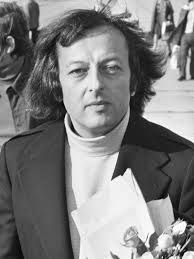
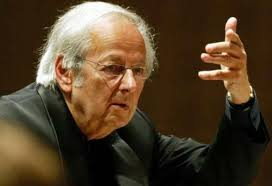
BORN ON THIE DAY: ANDRE PREVIN

One of the most versatile musicians on the planet, André Previn has amassed considerable credentials as a jazz pianist, despite carving out separate lives first as a Hollywood arranger and composer, and then as a world-class classical conductor, pianist, and composer.

Previn was born on this day April 6th in 1929 in Germany. Always fluid, melodic, and swinging, with elements of Bud Powell, Oscar Peterson, and Horace Silver mixed with a faultless technique, Previn didn't change much over the decades but could always be counted upon for polished, reliable performances at the drop of a hat.
              
He started piano lessons in his native Berlin before the Nazi threat forced his family to move to Paris in 1938 and the U.S. the following year. Settling in Los Angeles, the wunderkind Previn began working as a jazz pianist, an arranger for MGM, and a recording artist for Sunset Records while still in high school -- and by his 18th year, his first recordings for RCA Victor had racked up substantial sales. Originally swing-oriented, Previn discovered bop in 1950 just before his induction into the Army. Upon returning to Los Angeles, Previn went into overdrive, gigging as a jazz pianist, scoring films, and playing chamber music. Forming a smooth boppish trio with Shelly Manne and Leroy Vinnegar, Previn scored a huge crossover hit with an album of jazz interpretations of My Fair Lady, which in turn led to a series of likeminded albums of Broadway scores and kicked off an industry trend.

              
By 1962, Previn started to make the transition away from Hollywood toward becoming a full-time classical conductor, dropping his jazz activities entirely. He stayed away from jazz for 27 years, with the exceptions of a handful of sessions with Ella Fitzgerald and classical violinist/dabbler Itzhak Perlman. Indeed, in 1984, he was quoted as saying that jazz was "an expendable art form" for him. But in March 1989, shortly before resigning from the Los Angeles Philharmonic in a dispute with management, Previn returned to jazz with a trio album for Telarc with Ray Brown and Joe Pass, showing that he had not lost an iota of his abilities. Subsequently, he returned frequently to the studio as a jazz pianist for Telarc, Angel, Deutsche Grammophon, and DRG when not freelancing as a conductor or composing classical scores.  During his LSO tenure, he and the LSO appeared on the BBC Television programme André Previn's Music Night. From 1976 to 1984, he was music director of the Pittsburgh Symphony Orchestra (PSO) and, in turn, had another television series with the PSO entitled Previn and the Pittsburgh. He was also principal conductor of the Royal Philharmonic Orchestra from 1985 to 1988...

Thursday, November 20, 2014

FRANK LOESSER: THE UNDERRATED SONG MASTER


When one reads about the great American songwriters, you always read about Irving Berlin or Cole Porter. There are many songwriters who wrote unforgettable songs who are not remembered as much. One such songwriter is the great Frank Loesser. Loessor was born on June 29, 1910 in New York City. He grew up in a house on West 107th Street in Manhattan. His father had moved to America to avoid Prussian military service and working in his family's banking business.  His parents both prized high intellect and culture and thus Loesser was taught musically in the vein of European composers. He was taught piano early by both his father and his older half-brother Arthur Loesser. Loesser did not like his father's posh taste of music and resisted when he wrote his own music and took up the harmonica. He was expelled from Townsend Harris High School, and from there went to City College of New York (even though he had no high school diploma). He was expelled from the CCNY in 1925 after one year for failing every subject except English and gym. After his many various jobs, he decided that he wanted to write in Tin Pan Alley and signed several contracts with music publishers before his contracts were eventually terminated.

His first song credit is listed as "In Love with the Memory of You", with music by William Schuman, published in 1931. Loesser's early lyrics included two hit songs of 1934, "Junk Man" and "I Wish I Were Twins" (both with music by Joe Meyer, and the latter with co-lyric credit to Eddie DeLange). However, they apparently did not help his reputation, and in later years, he never mentioned them. After signing a six-month contract with Universal Pictures, in 1936 he moved to Hollywood with his new wife. After his contract was up, he was offered another contract by Paramount Pictures. His first song credit with Paramount was "Moon of Manakoora" written with Alfred Newman for Dorothy Lamour in the film The Hurricane. He stayed in Hollywood until World War II when he enlisted into the Air Force. In 1948, he sold the rights to a song he wrote in 1944 and performed informally at parties with his then wife Lynn Garland to MGM. The studio included in the 1949 movie Neptune's Daughter, and the song, Baby, It's Cold Outside became a huge hit. Garland was mad at Loesser for selling what she considered "their song" to MGM. He ended up winning the Academy Award for Best Original Song for the song.


His next musical, Guys and Dolls (1950), based on the stories of Damon Runyon, was again produced by Feuer and Martin. It would become Loessor's greatest work. Guys and Dolls became a hit and earned Loesser two Tony Awards. Bob Fosse called Guys and Dolls "the greatest American musical of all time." A film version was released in 1955, and starred Marlon Brando, Jean Simmons, Frank Sinatra, and Vivian Blaine. In 1950, Loesser started his own publishing company Frank Music Corporation. It was created to control and publish his work but eventually supported other writers such as Richard Adler, Jerry Ross, and Meredith Willson.

After working on the film Neptune's Daughter, he wished to write more than one song for a film. His wish was granted in 1952 when he wrote the music and lyrics for the film Hans Christian Andersen. The movie had notable songs such as "Wonderful Copenhagen", "Anywhere I Wander", "Thumbelina", and "Inchworm". He wrote the book, music and lyrics for his next two musicals, The Most Happy Fella (1956) and Greenwillow (1960).

 In 1956, Lynn and Loesser got divorced, and Loesser then began a relationship with Jo Sullivan, who had a leading role in Fella. He wrote the music and lyrics for How to Succeed in Business Without Really Trying (1961), which ran for 1,417 performances and won the 1962 Pulitzer Prize for Drama and for which he received two more Tonys. The last musical of his that was produced, Pleasures and Palaces (1965), closed during out-of-town tryouts. At the time of his death he was working on Señor Discretion Himself, for which he was writing the book, music and lyrics.


Another unproduced musical, Señor Discretion Himself, premiered after his death. He started working on a musical version of the Budd Schulberg short story Señor Discretion Himself in 1966, but stopped working on it after 2 years. A version was presented in 1985 at the New York Musical Theatre Works. With the support of Jo Loesser, a completed version was presented at the Arena Stage, Washington, DC, in 2004, reworked by the group Culture Clash and director Charles Randolph-Wright. When he was asked why he did not write more shows, he responded by saying, "I don’t write slowly, it’s just that I throw out fast." The New York Times confirmed his hard working habits and wrote that Loesser "was consumed by nervous energy and as a result slept only four hours a night, spending the rest of the time working."

Loesser, an avid smoker, died of lung cancer at age 59 in New York City on July 28, 1969. He was survived by his second wife and four children.You may not recognize Frank Loesser by his name like other songwriters, but Loessor wrote some wonderful songs. From World War II songs like "I Don't Want To Walk Without You" to Broadway hits of the 1950s and 1960s, Loesser wrote many of the tunes the country sung and hummmed back then and still do...


Wednesday, September 24, 2014

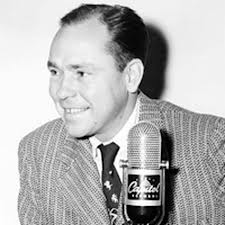
A TRIBUTE TO JOHNNY MERCER

 You may or may not recognize Johnny Mercer’s name, but you almost certainly recognize his songs.

Mercer was the lyricist for more than 1,500 popular songs. His music spans five decades, from the 1920s through the 1960s. He wrote the lyrics to such classics as “Blues in the Night,” “Jeepers Creepers,” “Satin Doll,” “Come Rain or Come Shine,” “That Old Black Magic,” “Autumn Leaves,” “I Wanna Be Around,” “One More for My Baby,” “Skylark,” “Moon River” and “Emily” — to name only a few.

He composed lyrics to melodies written by Hoagy Carmichael, Harold Arlen and Henry Mancini. Along the way, he co-founded Capitol Records, won four Academy Awards, was Bing Crosby’s drinking buddy and had a love affair with Judy Garland.

“Spotlight on Johnny Mercer!” is Camelot Theatre Company’s tribute to America’s greatest lyricist and his incredible life. The production previews Thursday, Sept. 25, opens Friday, Sept. 26, and runs through Oct. 5, at Camelot Theatre, 101 Talent Ave., Talent. Curtain is at 8 p.m. Thursdays through Saturdays and 2 p.m. Sundays. Tickets cost $20 for the preview and $24 for all other performances, with reserved seating available for an additional $2 per ticket. They can be purchased at the box office, online at www.camelottheatre.org or by calling 541-535-5250.

“Spotlight on Johnny Mercer!” stars Laura Derocher, David King-Gabriel and Jade Chavis Watt. Backing them on stage is Steve Fain (bass), Randy Margulies (tenor sax, clarinet and flute), Brent Olstad (keyboard), Randy Scherer (trumpet), Steve Sutfin (percussion) and Michael Vannice (alto sax, alto flute and bass clarinet).

Presila Quinby directs. Charles Cherry wrote the script, music direction is by Olstad, with arrangements by Vannice.

The production features 22 of Mercer’s songs, covering his entire career, with narration connecting them to important events in Mercer’s life. There are well known songs — “the songs that have to be included,” says Quinby — but also some less familiar ones that mark milestones.

“For example, Mercer wrote ‘I Remember You’ for Judy Garland,” Quinby says. “They had an off-and-on romance for years. She was the secret love of his life.”

Quinby says she knew the performers she wanted when “Spotlight on Johnny Mercer!” was chosen for Camelot's 2014 season.

“The singers and musicians were already familiar with Mercer’s music,” Quinby says. “They knew the American Songbook — the musical standards of the '30s, '40s and '50s — and they also knew how to tell a story with a song.”


Over his career, Mercer was nominated for 19 Academy Awards and won four. His first win was for “On the Atchison, Topeka and the Santa Fe” in 1946, written for “The Harvey Girls” starring Judy Garland. His next was in 1951, for “In the Cool, Cool, Cool of the Evening,” written with Hoagy Carmichael. Mercer then won two more Oscars collaborating with Henry Mancini, in 1961 for “Moon River” followed by “Days of Wine and Roses” in 1962.

Mercer was born and raised in Savannah, Ga. He grew up familiar with a wide range of music, from classical to popular to African-American gospels and jazz. He started writing for Tin Pan Alley in the '20s, then for Broadway musicals, and moved to Hollywood in 1935. In the '40s, Mercer had a dozen hit records, singing his own songs. Cherry describes his style as similar to Bing Crosby but with more swing.

“He was sort of a combination of Crosby and Louis Armstrong.”

Cherry says he has wanted to do a show about Mercer for a long time because he feels we don’t honor lyricists the way we do composers or poets. He thinks that when poetry and music are combined, they become an art form that touches us more deeply.

“When Mercer writes about love, he is writing more than a love song,” Cherry says. “He is often writing about that place where love might be waiting for all of us.”

Roberta Kent is a freelance writer living in Ashland. Reach her at rbkent@mind.net...


Monday, February 3, 2014

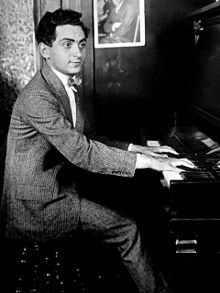
IRVING BERLIN: THE EARLY YEARS


I asked my wife a couple of months ago to name five songs that songrwriting genius Irving Berlin wrote. Sadly, she could only name one song - "God Bless America", and even that impressed me. To anyone born after the assassination of President Kennedy, the name Irving Berlin would unfortunately not mean much, but as a fan of Tin Pan Alley music, Berlin means a lot to me. He was one of the best songwriters America has ever seen. However, even though I pride myself in my knowledge of this great era of music, I admit I did not know much about Irving Berlin's early life. Researching this article got me to learn a lot more about Irving Berlin.

Berlin was born on May 11, 1888, one of eight children of Moses and Lena Lipkin Beilin. There are several possibilities concerning his birth city. It could be Tumen or any one of several villages near the city of Mogilyov, Belarus. His father, a cantor in a synagogue, uprooted the family to America, as did many other Jewish families in the late 19th century. In 1893 they settled in New York City.

They eventually settled on Cherry Street, a "cold-water basement flat with no windows," in the Yiddish Theater District on the Lower East Side, and had a Yiddish-speaking home. His father, unable to find comparable work as a cantor in New York, took a job at a kosher meat market and gave Hebrew lessons on the side, and struggled to support his family. He died a few years later when Irving was thirteen years old. With only a few years of schooling, Irving found it necessary to take to the streets to help support his family He became a newspaper boy, hawking The Evening Journal. On his first day of the job, according to Berlin’s biographer and friend, Alexander Woollcott, the boy “stopped to look at a ship about to put out for China. So entranced was he that he failed to notice a swinging crane, and he was knocked into the river. When he was fished out, after going down for the third time, he was still holding in his clenched fist the five pennies that constituted his first day's receipts, his contribution to the family budget." His mother took jobs as a midwife, and three of his sisters worked wrapping cigars, common for immigrant girls. His older brother worked in a sweatshop assembling shirts.

With few survival skills and little education, he realized that formal employment was out of the question. His only ability was acquired from his father's vocation: singing. He joined with a few other youngsters and went to saloons on the Bowery to sing to customers. These itinerant young singers were common on the Lower East Side. He would sing a few of the popular ballads he heard on the street, hoping that customers would "pitch a few pennies in his direction." As Bergreen notes, "it was in these seamy surroundings that the runaway boy received his real and lasting education." Music became his sole source of income and he emerged culturally from the ghetto lifestyle, learning the "language of the street."

To survive, Berlin began to recognize the kind of songs that appealed to audiences: "well-known tunes expressing simple sentiments were the most reliable." He began plugging songs at Tony Pastor's Music Hall in Union Square and finally, in 1906 when he was 18, working as a singing waiter at the Pelham Cafe in Chinatown.  His first attempt at songwriting was "Marie From Sunny Italy," written in collaboration with the Pelham's resident pianist, Mike Nicholson. The sheet music to this song made history because of a printer's error in the score. The name printed on the cover read: 'I. Berlin.' Interestingly, Berlin never learned to play in more than one key and used a custom-made 1940 Weser Brothers piano with a transposing lever to change keys.


In 1908, at the age of 20, Berlin took a new job at a saloon in the Union Square neighborhood. There, he was able to collaborate with other young songwriters, such as Edgar Leslie, Ted Snyder, Al Piantadosi, and George A. Whiting, and in 1909, the year of the premiere of Israel Zangwill's The Melting Pot, he got his big break as a staff lyricist with the Ted Snyder Company.

From this early position, Hamm writes, his "meteoric rise as a songwriter" in Tin Pan Alley and then on Broadway, began with his first world-famous hit song, "Alexander's Ragtime Band," in 1911. The song was such an astronomical success that Berlin became an overnight songwriting legend. The song was such a success that it was one of the songs played on the ill-fated voyage of the Titanic. For the next almost fifty years Irving wrote the songs that America sang, hummed, and lived their lives through. That is not bad for a poor immigrant who came to America for a better life. Berlin is living proof that the American dream does happen to people...

Friday, November 22, 2013

BORN ON THIS DAY: HOAGY CARMICHAEL

 
It always amazes me when I listen to old music, which I listen to all the time, that someone actually wrote the melody to a beautiful song like "Stardust". It seems like the music was timeless and always around. It was not as we know, but it was written by a genius like Hoagy Carmichael. Today we celebrate the birthday of composer Hoagy Carmichael. He was born on this day in 1899.

Born in Bloomington, Indiana on November 22, Carmichael was the only son of Howard Clyde Carmichael, of Scottish ancestry, and Lida Mary (Robison). He was named Hoagland after a circus troupe "The Hoaglands" who stayed at the Carmichael house during his mother's pregnancy. Howard was a horse-drawn taxi driver and electrician, and Lida a versatile pianist who played accompaniment at silent movies and for parties.

The family moved frequently, as Howard sought better employment for his growing family. At six, Carmichael started to sing and play the piano, easily absorbing his mother's keyboard skills. He never had formal piano lessons. By high school, the piano was the focus of his after-school life, and for inspiration he would listen to ragtime pianists Hank Wells and Hube Hanna. At eighteen, the small, wiry, pale Carmichael was living in Indianapolis, trying to help his family’s income working in manual jobs in construction, a bicycle chain factory, and a slaughterhouse. The bleak time was partly spelled by four-handed piano duets with his mother and by his strong friendship with Reg DuValle, a black bandleader and pianist known as "the elder statesman of Indiana jazz" and "the Rhythm King", who taught him piano jazz improvisation.


Later in 1927, Carmichael’s career started off well. He finished and recorded one of his most famous songs, "Star Dust" (later renamed "Stardust", with Mitchell Parish's lyrics added in 1929), at the Gennett Records studio in Richmond, Indiana, with Carmichael doing the piano solo. The song, an idiosyncratic melody in medium tempo - actually a song about a song - later became an American standard, recorded by hundreds of artists. Shortly thereafter, Carmichael received more recognition when Paul Whiteman recorded "Washboard Blues", with Carmichael playing and singing, and the Dorsey brothers and Bix Beiderbecke in the orchestra. Despite his growing prominence, at this stage Carmichael was still held back by his inability to sight-read and notate music properly, although he was innovative for the time.


Friday, May 17, 2013

LORENZ HART: WHAT DID HE LIVE FOR


Here is an interesting article on the self destructive life of one of the greatest lyricists, Lorenz Hart. Hart is one of my all-time favorite song writers...

Coming from an upper middle-class Jewish American background, lyricist Lorenz Hart known to friends and colleagues as "Larry") was tortured by his diminutive stature and a homosexual orientation he could neither deny nor accept. His brilliant collaboration with heterosexual composer Richard Rodgers brought Hart to the top of his profession. Once there, Hart was too guilt ridden and too frightened to handle the combination of private daring and public tact mastered by Noel Coward and  Cole Porter. Hart opted for a self-destructive path, and the more he tried to suppress his desires, the more they consumed him.

Too insecure to pursue social equals, Hart limited his sexual attentions to chorus boys and male prostitutes – many procured for him by Milton "Doc" Bender, a stage-struck dentist who had been his friend since their college days. Apparently, the opportunistic Bender set aside whatever career he himself had to serve as Hart's hanger-on and procurer. Hart's friends and biographers often suggest that the disreputable Bender was responsible for leading Hart to ruin, but that doesn't make sense. As an intelligent adult who had money, connections and tremendous professional influence, Hart could live life as he chose to. If he slept with men throughout his adult life, common sense suggests that he did so because he was gay, not because a nefarious companion talked him into it. So future historians interested in reality would do well to stop using Bender as an excuse for Hart's homosexual activities. Sexuality does not require an external motivator, and to suggest otherwise is to buy into bigotry masquerading as painfully outdated pop-psychology.

Some of Hart's contemporaries have also suggested that he turned to homosexuality because women rejected him -- which is patent nonsense! Throughout history ambitious women have been all too willing to succumb to homely men who happen to have money and power, and few of those men had Hart's generous spirit or brilliant sense of humor. Plenty of Broadway and Hollywood chorines would have leapt into Hart's bed in hopes of getting a break, and as far as we can tell none of them ever got the chance. Hart peopled his bed with men. Beyond this, it is idiotic to infer Hart somehow chose to be gay. Sexuality is not a matter of choice -- unless of course the people who suggest it is can testify from their own experience that the opposite is true. Who would possibly have chosen to be a homosexual in the repressive atmosphere of the early 20th Century?


Evidence suggests that Hart found little enjoyment in his homosexual liasons. Terrified of intimacy, he would wait for sex partners to fall asleep, then creep out of bed and curl up on the floor of his bedroom closet to get some sleep. In Rodgers & Hart: Bewitched, Bothered and Bewildered. G.P. Putnam's Sons: New York, 1976), several of Hart's acquaintances confirm that he went to private all-male orgies, but strictly as a voyeur. He found watching from the sidelines less stressful than participating.

Hart’s lyrics avoided references to homosexuality. Instead, they abound with expressions of frustrated romance ("Take Him"), isolated courtship ("Quiet Night") and unconventional affection ("My Funny Valentine"). No one expressed the painful side of love like Hart did – for obvious reasons. Beginning in his teens, Hart tried to drown his inner demons in alcohol. By the late 1930s, he was disappearing on drinking binges for days at a time. Composing with him became impossible. When an exasperated Rodgers threatened to begin collaborating with Oscar Hammerstein II, Hart endorsed the idea before heading off to Mexico on yet another spree. (Rodgers had his own serious drinking problems, but they did not effect his work habits until his later years.)

On hand for the opening night of Rodgers and Hammerstein's Oklahoma, Hart was sober and stunned by its unprecedented triumph. He agreed to help Rodgers prepare a revival of A Connecticut Yankee (1943 - 135), giving longtime friend Vivienne Segal the new comic showstopper "To Keep My Love Alive." But by the time the show was in rehearsal, Hart was drinking heavily. He showed up falling-down drunk for the Broadway opening. There are several published versions of what happened next, but at some point Hart started singing along from the rear of the theatre until he was dragged out by bodyguards. After spending the night on his brother's sofa, he disappeared. Days later, he was found sitting on a street curb – drunk, coatless, and soaked to the skin by an icy November downpour. Pneumonia led to his death a few days later. According to a nurse, Hart's last words were, "What have I lived for?" Would it have comforted him to know people would still be singing and celebrating his songs for generations to come...


SOURCE

Friday, March 29, 2013

EDEN AHBEZ: SONGWRITER AND NATURE BOY


There was a boy - a very strange enchanted boy...anyone who is a fan of classic popular music is probably familiar with those lyrics from the song "Nature Boy". The song, written in 1948, was very different compared to the other music being put out of the day. However, what is even more unusual than the song is the mysterious songwriter. Eden Ahbez was born George Alexander Aberle on April 15, 1908. He is often considered the first American hippie, whose lifestyle in California was very influential on the hippie movement. He was known to friends simply as Ahbe.

Living a bucolic life from at least the 1940s, he traveled in sandals and wore shoulder-length hair and beard, and white robes. He camped out below the first L in the Hollywood Sign above Los Angeles and studied Oriental mysticism. He slept outdoors with his family and ate vegetables, fruits, and nuts. He claimed to live on three dollars per week.

Though born in Brooklyn, New York to a Jewish father and a Scottish-English mother, he was adopted in 1917 by a family in Chanute, Kansas and raised under the name George McGrew. During the 1930s, McGrew lived in Kansas City, where he performed as a pianist and dance band leader. He probably also lived in New York City for some time, although little is known of that period of his life.

In 1941, he arrived in Los Angeles and began playing piano in the Eutropheon, a small health food store and raw food restaurant on Laurel Canyon Boulevard. During this period, he adopted the name "eden ahbez," choosing to spell his name with lower-case letters, claiming that only the words God and Infinity were worthy of capitalization. He is also said to have desired the A and Z (alpha and omega), the beginning and the end, in his surname. During this period, he married Anna Jacobsen and had a son. Sadly Anna died of leukemia in 1963, and his son drowned mysteriously at the age of 22 in 1971.

In 1947, at the prompting of Johnny Mercer, Ahbez approached Nat "King" Cole's manager backstage at the Lincoln Theatre in Los Angeles and handed him the music for his song, "Nature Boy." Cole began playing the song for live audiences to much acclaim, but needed to track down its author before releasing his recording of it. Ahbez was discovered living under the Hollywood Sign and became the focus of a media frenzy when Cole's version of "Nature Boy" shot to #1 on the Billboard charts and remained there for eight consecutive weeks during the summer of 1948. Ahbez was covered simultaneously in Life, Time, and Newsweek magazines. Frank Sinatra and Sarah Vaughan later released versions of the song. The melody was also featured in the background of the film The Boy With The Green Hair (1949) which starred Pat O' Brien and Dean Stockwell.


Ahbez continued to supply Cole with songs, including "Land of Love (Come My Love and Live with Me)", which was also covered by Doris Day and The Ink Spots. He also worked closely with jazz musician Herb Jeffries, and, in 1954, the pair collaborated on an album, The Singing Prophet, which included the only recording of Ahbez's four-part "Nature Boy Suite." The album was later reissued as Echoes of Eternity on Jeffries' United National label. In the mid 1950s, he wrote songs for Eartha Kitt, Frankie Laine, and others, as well as writing some rock-and-roll novelty songs. In 1957, his song "Lonely Island" was recorded by Sam Cooke, becoming the second and final ahbez composition to hit the Top 40.

After his only solo record was released in 1960, he began to fade away from the music scene. After the death of his wife and son, Ahbez completely wtihdrew from the public. He hung out in the California desert near Indio and would wander into town for supplies and company, sharing his poems and philosophy. Ahbez kept writing new music and even kept a piano at a local music studio. From the late 1980s until his death, he worked closely with Joe Romersa, an engineer/drummer in Los Angeles. The master tapes, photos, and final works of eden ahbez are in Romersa's possession.

Sadly he died on March 4, 1995, of injuries sustained in a car accident, at the age of 86. Another album, Echoes from Nature Boy, was released posthumously. The music industry in the 1940s and 1950s did not know what to do with Eden Ahbez, but his song "Nature Boy" is as haunting and mysterious in 2012 as it was when it became a surprise hit in 1948. Sometimes the most beautiful music comes out of the strangest places...


Tuesday, February 5, 2013

FORGOTTEN ONES: HARRY BARRIS

The Rhythm Boys was a vocal trio that was far ahead of its time. For the few years the group was in existance, the Rhythm Boys were a very popular feature of the Paul Whiteman Orchestra. There were three members of the trio - with the most famous member being Bing Crosby, of course. However there were two other talented members. One was Al Rinker, who was the brother of blues singer Mildred Bailey, and Harry Barris. Barris was a gifted and talented song writer, who unfortunately faded into obsecurity with the passages of time.

Harry Barris was born in New York City on November 24, 1905. Barris was a professional pianist at 14 and touring with his own group by 17. In 1926 Paul Whiteman, at the suggestion of his violinist Matty Malneck, hired Barris to join the vocal duo of Bing Crosby and Al Rinker, and the Rhythm Boys were born. For the next three years they were featured with Whiteman’s band, which included legendary cornetist Bix Beiderbecke. Bix was prominently featured along with the Rhythm Boys on Whiteman’s successful 1928 recording of Barris’ “Mississippi Mud”. A 1930 feature film on Whiteman and his band, the King of Jazz, was the first film appearance for Crosby and the Rhythm Boys.

In May 1930 the trio joined Gus Arnheim’s popular orchestra, appearing with the group at the prestigious Cocoanut Grove in Los Angeles. It was with Arnheim’s band that Crosby had his first big hit as a soloist, in 1931, with the Barris/Gordon Clifford composition “I Surrender Dear.”


When Bing left to pursue a solo career, Barris married Arnheim vocalist Loyce Whiteman (Paul Whiteman's daughter), and the two toured as a duo. Barris continued to work with a number of bands, but he had developed a drinking problem which caused him to curtail his composing in 1935. Partly due to Crosby’s help, he appeared in small roles in dozens of films, often without credit, as a musician or bandleader, and he entertained troops during WWII along with comedian Joe E. Brown.

Barris wrote a number of early hits for Crosby, including “Wrap Your Troubles in Dreams” with lyrics by Ted Koehler and Billy Moll and recorded by Bing in 1931.

In 1943, after a hiatus of 13 years, The Rhythm Boys were reunited for the last time on the radio program Paul Whiteman Presents.


Barris appeared in 57 films between 1931 and 1950, usually as a band member, pianist and/or singer. In The Lost Weekend (1945), he is the nightclub pianist who humiliates Ray Milland by singing "Somebody Stole My Purse". An unusual change of pace for Barris was his comedy role in The Fleet's In (1942), as a runty sailor named Pee Wee who perpetrates malapropisms in a surprisingly deep voice. Many of the roles Barris had were in Bing movies such as "Birth Of The Blues" (1941),"Holiday Inn" (1942), and "Here Comes The Waves" (1945).

One of Harry Barris' children was Marti Barris (born 1938) who was a singer in the 1950s and even appeared on an early American Bandstand. She also was a regular cast member of "Howdy Doody" playing the character "Peppi Mint." Harry Barris was the uncle of game show host and producer Chuck Barris who, among other things, not only co-created and hosted The Gong Show in the second half of the 1970's but was also the subject of the George Clooney film Confessions of a Dangerous Mind.

Offscreen, Barris successfully composed songs including "Mississippi Mud", "I Surrender, Dear", and "Wrap Your Troubles in Dreams". However, alcohol took over Barris' life in the 1950s. After  failed marriages and even more failed business ventures, Harry died virtually a pauper on December 13, 1962 at the age of 57...