Monday, September 30, 2013

HISTORY OF A SONG: SKYLARK


In 1942 “Skylark” appeared on the pop chart four times. The first recording was by Glenn Miller and His Orchestra featuring vocalist Ray Eberle, and it rose to number seven. All told, the hit recordings were:

Glenn Miller (1942, Ray Eberle, vocal, #7)
Harry James (1942, Helen Forrest, vocal, #11)
Dinah Shore (1942, with Rosario Bourdon and His Orchestra, #5)
Bing Crosby (1942, with John Scott Trotter and His Orchestra, #14)

Hoagy Carmichael originally wrote the composition that would become “Skylark” for a musical about his deceased friend, Bix Beiderbecke. The song’s melody is said to have been based on Beiderbecke solos, at least the phrasing, a claim supported by the composition’s original title, “Bix Lix” (“Bix Licks”). Though the musical did not get produced, Carmichael reworked the composition and passed the melody on to Johnny Mercer who, some months later, called Hoagy and sang him “Skylark.” By that time Carmichael had forgotten he wrote it!

“Skylark” was the second in what Richard Sudhalter in his Carmichael biography Stardust Melody: The Life and Music of Hoagy Carmichael calls Carmichael’s “musical aviary.” First came “Mr. Bluebird” (1935) with lyrics by Carmichael, and finally there was “Baltimore Oriole” (1942) with lyrics by Paul Francis Webster (“I Got It Bad (and That Ain’t Good”).

In his Mercer biography titled Skylark: The Life and Times of Johnny Mercer, Philip Furia explains the yearning expressed in “Skylark” as a voicing of the lyricist’s longing for Judy Garland with whom he had a stormy affair. Mercer told a friend that he wrote “I Remember You” for Garland and that “One for My Baby” (1943) bemoaned her loss.

Johnny Mercer claimed that “Skylark” was not inspired by Percy Bysshe Shelley’s (1792-1822) poem, “To a Skylark,” although the similarities cannot be ignored. Both men were sad geniuses who turned to the skylark for answers: Mercer, with regard to romance queries, “Won’t you tell me where my love can be?” Shelley, with broader concerns, requests, “Teach me half the gladness, That thy brain must know...”


SOURCE

Friday, September 27, 2013

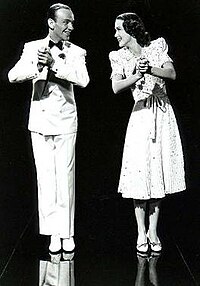
ELEANOR POWELL: QUEEN OF THE TAP

Even though I was born over twenty years after dancer Eleanor Powell's last movie, I have had a crush on her for years. Not only was she a great dancer - not just a great dancer but one of the best female tap dancers, but she was a true beauty as well. She only made a few movies in her short time in Hollywood, but every movie was better because Eleanor was in it. Fred Astaire had many leading ladies and dance partners during his career. He made a string of movies with Ginger Rogers. However, Eleanor Powell was the only female partner who could keep up with Astaire, and at times nearly out dance the famed hoofer.

Eleanor Powell was born on November 21, 1912, in Springfield, Massachusetts. Powell studied ballet at age six and began dancing in Atlantic City nightclubs before she was a teenager. She joined the Co-Optimists dance troupe in New York City in 1928, about the time she began to study tap dancing. The following year she was a headline performer at New York’s prestigious Casino de Paris nightclub, and she made her Broadway debut in the musical Follow Through. She signed a Hollywood contract with Metro-Goldwyn-Mayer, and she first danced onscreen as a featured performer in George White’s Scandals (1935). Within a few years, she ranked as MGM’s top female dancer (with the possible exception of Ginger Rogers), and the studio created lavish screen vehicles tailored specifically to her talents. In such films as Born to Dance (1936), Broadway Melody of 1938 (1937), Rosalie (1937), Honolulu (1939), Broadway Melody of 1940 (1940), and Lady Be Good (1941), Powell exhibited an assertive, athletic style of tap dancing that was unique among female dancers of the era. As Fred Astaire observed, “She ‘put ’em down’ like a man, no ricky-ticky-sissy stuff with Ellie. She really knocked out a tap dance in a class by herself.”

Because of her dominating style and commanding virtuosity, she was not generally cast opposite male dancers—of whom there were few in her league—but rather was placed in roles in which her “independent woman” persona was showcased in solo dance routines. Only Astaire was her onscreen equal; their duet to Cole Porter’s “Begin the Beguine” in Broadway Melody of 1940 (1940) is probably Powell’s best-known dance number. More often, however, her leading men—including Robert Taylor, Robert Young, James Stewart, Jack Benny, and Red Skelton—handled the comedy and drama, leaving Powell to concentrate on all things terpsichorean.


Following Broadway Melody of 1940 Powell was sidelined for many months following a gall stone operation and things changed somewhat for the worse, at least as far as Powell's movie career was concerned. 1941's Lady Be Good gave Powell top billing and a classic dance routine to "Fascinatin' Rhythm", but Robert Young and Ann Sothern were the actual stars of the film. The same happened with Red Skelton in Ship Ahoy (1942) and I Dood It (1943), although in Ship Ahoy her character nonetheless played a central role in the story, and Powell's dance skills were put to practical use when she manages to tap out a morse code message to a secret agent in the middle of a dance routine.

She was signed to play opposite Dan Dailey in For Me and My Gal in 1942, but the two actors were removed from the picture during rehearsals and replaced by Gene Kelly and Judy Garland. Later, production of a new Broadway Melody film that would have paired Powell with Kelly was also cancelled.

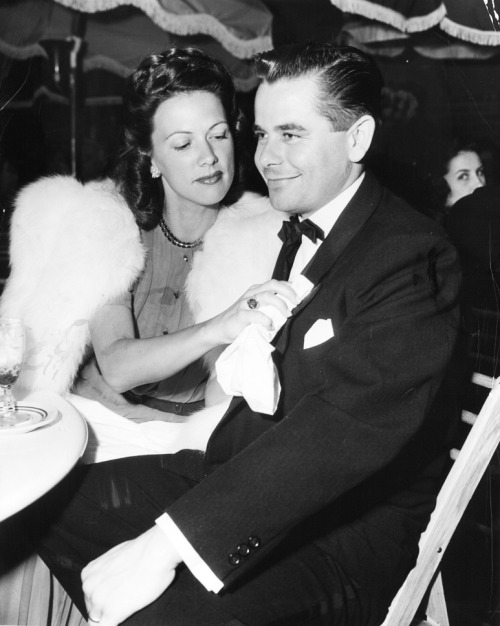
She parted ways with MGM in 1943 after her next film, Thousands Cheer, in which she appeared only for a few minutes to perform a specialty number (as part of an all-star cast), and the same year married Canadian-born lead actor Glenn Ford.


Despite her enormous popularity, Powell appeared in only 14 films during her career and largely retired after her marriage to actor Glenn Ford in 1943. She returned to star in Sensations of 1945 (1944), in which she performed a surreal number, dancing inside a giant pinball machine, and to perform a dance routine in Duchess of Idaho (1950). She hosted a religious television series, The Faith of Our Children, from 1953 to 1955. After her divorce from Ford in 1959, she performed for a few years in musical revues in New York and Las Vegas to great acclaim. In 1965 the Dance Masters of America bestowed upon her the title of World’s Greatest Tap Dancer.

In 1981, Eleanor made a rare appearance at the American Film Institute award ceremony for Fred Astaire. Even though she was almost 70, Powell still hade the beautiful and grace she always had in all of her movies. It is too bad she could not talk Astaire into dancing with her one more time. Around the same time Eleanor was diagnosed with ovarian cancer. She tried fighting the disease and told people "I am going to fight, but my life as always is in God's hands". She would lose the battle on February 11, 1982 in Beverly Hills, California. A great talent was silenced, but her taps will go on forever...


Wednesday, September 25, 2013

BOB HOPE'S ESTATE FOR SALE

Richard Nixon's helicopter once landed on the back lawn so the president could play a round at the nearby Lakeside Golf Club. Lucille Ball and Jack Benny drank and gossiped at the holiday parties in the living room. And the homeowner, Bob Hope, tried out punch lines on his kids in the dining room. For the first time since the long-lived entertainer built his home in a San Fernando Valley walnut grove in 1939, Hope's 5.16-acre Toluca Lake estate goes on the market Monday, at an asking price of $27.5 million, according to the Los Angeles Times. The compound that Hope shared with his wife, Dolores, and their four children has a nearly 15,000-square-foot house, a golf hole, an indoor pool and a manicured rose garden.

The flat, sprawling lot is unusual for the upscale neighborhood and others like it; in Toluca Lake and similar ZIP Codes in Sherman Oaks, Encino, Studio City, Bel-Air, Holmby Hills and Beverly Hills, there are only 22 properties of more than five acres that belong to a single owner, according to a property search conducted by the estate. The comedian and movie star collected real estate and at one point was one of California's largest individual property owners, holding some 10,000 acres in the San Fernando Valley alone. But it was the house at 10346 Moorpark St. that he considered home, according to his daughter, Linda Hope, who still lives a few blocks away.

"The Moorpark house is a very special property in the Valley and something that meant a whole lot to my mother and dad," she said. "They built what for them was kind of a dream house." The sale will mark a major change in the neighborhood that the Hopes helped to shape. The home, which is listed with Jade Mills of Coldwell Banker and Drew Fenton of Hilton & Hyland, has grown and evolved over the years. Architect Robert Finkelhor designed the original English traditional-style main house, and in the 1950s, John Elgin Woolf renovated it in a more contemporary style, using glass to accommodate Dolores' desire to bring the expansive feeling of the grounds inside.

The Hopes left many belongings for their heirs to sort and distribute, a process that has taken years: multiple auctions of items such as Bob's golf cart and Dolores' Chinese porcelain, a sale at St. Charles Borromeo Church and a garage sale at the home that had lines stretching down Moorpark. Another Hope home, in Palm Springs, a modernist estate that architect John Lautner designed to resemble a volcano, went on the market in February with an asking price of $50 million and has yet to find a buyer. "Putting the Moorpark house on the market, in a way it's a light at the end of the tunnel," Linda Hope said. "It's been an occupation for two years at least. Every time we'd open a closet, we'd go, 'Ahh!' " One amusing find, particularly given the Hopes' vast wealth, was bags of quarters — Dolores' winnings from years of playing gin rummy with actor Telly Savalas. The six-bedroom, seven-bathroom main house has been staged for sale with contemporary furnishings, but elements of the Hopes' lifestyle dot the property, including the giant "H" in the iron entry gates.

When Bob Hope traveled, often on one of his 57 tours to entertain the U.S. military, Dolores liked to add a room or two. "When Dad came back, Mother would joke that he'd need a road map to find the bedroom," Linda Hope said. The estate was designed around the particular needs of the Hopes, including privacy, with large trees bordering the grounds, and a 4,000-square-foot front office building for the staff that managed the Hopes' very successful businesses in radio, television, film and real estate. Bob Hope died in 2003 and his wife Dolores died in 2012...

SOURCE

Monday, September 23, 2013

WHAT A CHARACTER: MARJORIE MAIN

My childhood was not always 100% happy, but any memory I have of watching movies or television at a young brinbs back nothing but fond memories. One of those memories is watching "Ma and Pa Kettle" movies on Sunday morning. The movies series would rotate with other movie series like Abbott and Costello and "Blondie". I never get tired of watching Ma and Pa Kettle, and one of the reasons I loved the series was because of its star Marjorie Main.

Born Mary Tomlinson in Acton, Indiana on February 24, 1890, Main attended Franklin College in Franklin, Indiana, and adopted a stage name to avoid embarrassing her father, Samuel J. Tomlinson (married to Jennie L. McGaughey), who was a minister. She worked in vaudeville on the Chautauqua and Orpheum Circuits, and debuted on Broadway in 1916. Her first film was A House Divided in 1931.

Main began playing upper class dowagers, but was ultimately typecast in abrasive, domineering, salty roles, for which her distinct voice was well suited. She repeated her stage role in Dead End in the 1937 film version, and was subsequently cast repeatedly as the mother of gangsters. She again transferred a strong stage performance, as a dude ranch operator in The Women, to film in 1939. Main was signed to a MGM contract in 1940, and stayed with the studio until the mid-1950s. She made six films with Wallace Beery in the 1940s including Barnacle Bill (1941), Jackass Mail (1942), and Bad Bascomb (1946). She played Sonora Cassidy, the chief cook, in The Harvey Girls (1945). The director, George Sidney, says in the comments on the film that Miss Main was a "great lady" as well as a great actress who donated most of her paychecks over the years to the support of a school.

Perhaps her most famous role is that of "Ma Kettle", which she first played in The Egg and I in 1947 opposite Percy Kilbride as "Pa Kettle". She was nominated for an Academy Award for Best Actress in a Supporting Role for the part and portrayed the character in nine more Ma and Pa Kettle films.


By the early 1950s, she had appeared in a majority of MGM musicals, including, Meet Me in St. Louis, The Belle of New York and It's a Big Country. In 1954, Marjorie Main played her last roles for the studio; Mrs. Hittaway in The Long, Long Trailer and Jane Dunstock in Rose Marie. In 1956, Main was well-received as The Widow Hudspeth in the hit film Friendly Persuasion. In 1958, Main appeared twice as rugged frontierswoman Cassie Tanner in the episodes "The Cassie Tanner Story" and "The Sacramento Story" on NBC's western television series, Wagon Train. In the first segment, she joins the wagon train, casts her romantic interest on Ward Bond as Major Adams, and helps the train locate needed horses despite a Paiute threat. George Chandler guest stars as Cleveland McMasters in the first segment. In 1964, she appreared on an episode of Perry Mason.

Main was married to in 1921 to Stanley LeFevre Krebs, who died in 1935. She never had children or even remarried. In 1974, a year before her death, Main attended the Los Angeles premiere of the MGM compilation film That's Entertainment. It was her first public appearance since she retired from films in 1958. At the post-premiere party, she was greeted with cheers of enthusiasm from the crowd of spectators. However at the time she already was quite ill with cancer. She died of lung cancer on April 10, 1975 at St. Vincent's Hospital in Los Angeles, where she had been admitted on April 3, at the age of 85. Her name is listed on her headstone as Mrs. Mary Tomlinson Krebs, with her stage name Marjorie Main underneath...

Friday, September 20, 2013

ASTAIRE'S FORGOTTEN DANCE PARTNERS

Fred Astaire danced with some of the most talented leading ladies from Ginger Rogers to Cyd Charisse. Many people would agree that he never danced with anyone better than Rogers, but Astaire danced with numerous leading ladies over his forty year career in Hollywood. Not every dancer Astaire made a movie with spelled success or are remembered as Ginger Rogers was. After Rogers, Fred Astaire made a lot of movies with different actresses in the early to mid 1940s.


After leaving RKO in 1939, Astaire made his way to Paramount Studios. The studio teamed Astaire with Bing Crosby, and since the men were the stars of 1942′s Holiday Inn, the studio could cast females who weren’t necessarily name above the title types. Thus Marjorie Reynolds (1917-1997) and Virginia Dale (1917-1994) got their chances to dance with the master. Rewatching the movie, Reynolds danced with Astaire better than Dale did. Virginia Dale's main number with the famed dancer was "You're Easy To Dance With". Dale looks like at the most she is making all of her steps, but she looks heavy footed. It is definitely not a comfortable or graceful pair. Astaire does much better with Marjorie Reynolds. Reynolds could not sing a lick, but her dancing is much better than Virginia Dale's attempted moves. Reynolds and Astaire's best number was "Be Careful It's My Heart". It is a graceful and elegant slow dance, I could have seen the dancing duo making another movie together but they never did. However, after this film both actress-dancers returned to B films and faded from public view — although Reynolds had a brief comeback on TV as the wife on the popular Fifties situation comedy, The Life of Riley, starring William Bendix as the bumbling Chester Riley.


At the age of 18, beautiful actress Joan Leslie (born 1925) was paired with Astaire in the film The Sky's The Limit. The score was written by Johnny Mercer, but not much greatness came out of the movie except for the song "One For My Baby". Astaire did a great job on the song, but it became the unofficial anthem of Frank Sinatra in the 1950s. All dances were choreographed by and credited to Astaire alone, another unusual departure for him, as he generally worked with collaborators. What is not unusual is the selection of dance routines, which is the standard Astaire formula of a comic partnered routine, a romantic partnered routine and a "sock" solo, each of which is seamlessly integrated into the plot. Joan Leslie is one of the most beautiful actresses in the 1940s, but she could sing as well as she could dance. The only good dance numbers were the ones that Astaire did on his own.


Lucille Bremer (1917-1996) was an accomplished dancer under contract to MGM. She was a former Radio City Hall Rockette who had been on Broadway, and after signing with the studio was given a big push. She was Judy Garland’s older sister in Meet Me in St. Louis, then given a starring part opposite Astaire in Yolanda and the Thief, released in 1945. She danced with him again in two sequences for The Ziegfeld Follies (1946). But then, after Til the Clouds Roll By, she seemed to fall out of favor with Mayer and producer Arthur Freed. In later years it was reported that after singer Ginny Simms turned down Louis B. Mayer's advances that he turned to Lucille Bremer who became his secret girlfriend for awhile. When she broke up with him, he basically made sure she would never be a huge star. I never thought she danced well with Astaire. Her best dance scene was with Van Johnson in Til The Clouds Roll By, but then again Bremer looked good dancing next to Johnson. In any event it was deemed that she hadn’t scored with the public. Her career languished. Whether it was the studio’s, or Bremer’s decision, her contract wasn’t renewed. She starred in a few non dancing roles, then retired.

After dancing with Joan Caulfield and Olga San Juan in another Bing Crosby film, Blue Skies (1946) Astaire retired from movies yet again. However, he was a work alcoholic and he was coaxed back to working by MGM and an injured Gene Kelly for Easter Parade (1948) with Judy Garland. Throughout the 1950s Fred Astaire kept dancing with new, younger partners. like Vera-Ellen, Jane Powell, Leslie Caron, Audrey Hepburn, and Cyd Charisse. No matter how big, or small their careers might be the women who danced with Fred Astaire on screen are in a class by themselves...


Wednesday, September 18, 2013

LOUIS ARMSTRONG VS. DWIGHT EISENHOWER

Interesting story I found...


On this night in 1957, Louis Armstrong, in his hotel room in Grand Forks, North Dakota, blew his top over the Little Rock Central High School integration crisis, blasting Governor Orval Faubus for being "two-faced" and President Dwight Eisenhower for having "no guts" to let Faubus call in the National Guard in to prevent black students from integrating the high school. "The way they are treating m...y people in the South, the government can go to hell," he barked. "It's getting so bad a colored man hasn't got any country."

Armstrong put his entire career on the line to speak out against injustice as his September 17 North Dakota comments made headlines around the world. However, a recently discovered private reel-to-reel tape owned by Armstrong found the trumpeter venting about Faubus and the Little Rock situation to interviewers on September 8 and September 10. He had spent over a week telling anyone who would listen about the injustice going on in Little Rock but it wasn't until reporter Larry Lubenow of North Dakota ran with Armstrong's September 17 comments that the story blew up.

Armstrong received little support at the time, instead getting more criticism from both the white and black press. Today, his stance is celebrated as a landmark moment in Civil Rights. He knew what he had done. He cut out various clipping about the incident, wrapped them in Scotch tape and stuck them in a scrapbook. This is Armstrong's copy of a Pittsburgh Courier story about his Little Rock comments, containing some of his fiercest comments...


Monday, September 16, 2013

BIG BAND BEAT: PEG LACENTRA

Peg LaCentra, born on April 10, 1910, grew up in Boston. She very briefly attended the New England Conservatory of Music, studying piano. She also attended the Katharine Gibbs Finishing School and the Fenway Academy of Dramatic Art, as her early goal was to become an actress. Before moving to New York in 1931, she was an announcer at Boston radio station WNAC. Once she hit New York, she soon joined NBC as a singer and actress.

While singing with Dick McDonough's Orchestra on "The Mell-O-Roll Ice Cream Show," in 1936, Peg met Artie Shaw, then a sideman with McDonough. Shaw told her he was organizing his own orchestra and needed a singer. She joined Shaw in the summer of 1936, performing at the Lexington Hotel, the Paramount Theater in New York and on recordings. So Peg has the distinction of being Shaw's first vocalist. After Shaw's band broke up about a year later, she sang on radio with Benny Goodman. She and Goodman did not get along, and she quickly rejoined Artie Shaw when he formed another orchestra.

Although a good singer, Peg recorded very little; her recording output is confined to the 1930s. She recorded under her own name and, in addition to Shaw, with the orchestras of Victor Young and Johnny Green. In 1939, she was given her own program on NBC, "The Peg LaCentra Show."

She later appeared in a number of films and episodic TV, particularly dubbing non-singing actresses. The most famous of these are Susan Hayward in Smash-Up: The Story of a Woman (1947) and Ida Lupino in The Man I Love (1947) and Escape Me Never (1947). She appeared (as herself) in the background of Joan Crawford's Humoresque (1946), singing. In 1957, she had a leading role on the television sitcom The Marge and Gower Champion Show, but she did not stay active in show business.


In 1939, Peg married radio actor Paul Stewart, an original member of Orson Welles' "Mercury Theater of the Air." They remained married until his death in 1986. They never had any children. She passed away of a heart attack on June 1, 1996, at her home in Los Angeles. She was 86.

There is a rare LaCentra compact disc out there just dedicated entirely to her Shaw vocals. However, the issue is quite and expensive when you do find it online. Most of my recordings of her come from Artie Shaw's reissues. However, his early band which Peg sang for is largely forgotten. Peg LaCentra never gained the recognition that other Artie Shaw vocalists had like Helen Forrest, but she was a quite capable singer who worked well with the early Shaw band. Like many of the "vocal refrain" singers of the big band era, she is largley forgotten now. However, she was one of the reasons why the big band era was so big...