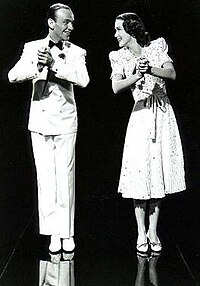
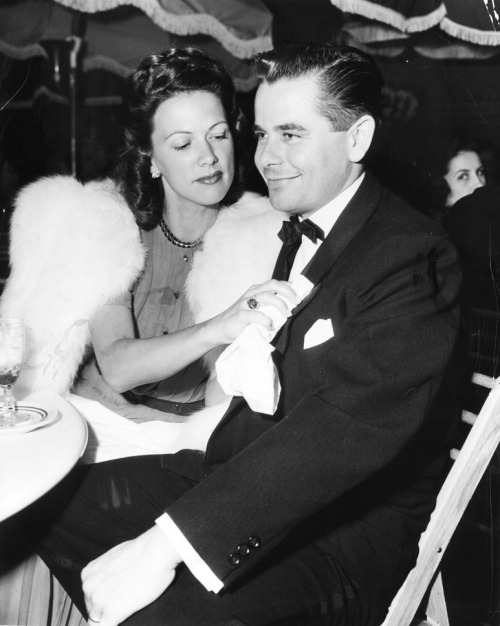
One of the best dancers in Hollywood and one of the most beautiful was the underrated Eleanor Powell. Here are some photos from the past that show her everlasting beauty...
Showing posts with label Eleanor Powell. Show all posts
Sunday, February 15, 2026
Tuesday, June 24, 2014
RECENTLY VIEWED: BROADWAY MELODY OF 1938
I think I say this all of the time when I think of an age of a classic film. I can not believe that the Broadway Melody of 1938 is over 75 years old! I recently watched an old copy I burnt onto DVD from TCM a few years back, and it's another one of those musicals that MGM did that I can watch over and over again. Broadway Melody of 1938 is actually a 1937 musical film, produced by Metro-Goldwyn-Mayer and directed by Roy Del Ruth. The film is essentially a backstage musical revue, featuring high-budget sets and cinematography in the MGM musical tradition. The film stars Eleanor Powell and Robert Taylor and features Buddy Ebsen, George Murphy, Judy Garland, Sophie Tucker, Raymond Walburn, Robert Benchley and Binnie Barnes. The film marks the first substantial role that the talented Judy Garland had on film.
Young horse trainer Sally (Eleanor Powell) befriends Sonny (George Murphy) and Peter (Buddy Ebsen), who have been hired to look after a horse her family once owned. Concerned for the horse's well-being, she sneaks aboard a train taking the horse and its caretakers to New York City. En route she meets talent agent Steve Raleigh (Robert Taylor) who, impressed with her dancing and singing, sets her on the road to stardom and romance blossoms between the two. A subplot involves a boarding house for performers run by Sophie Tucker, who is trying to find a big break for young Judy Garland.
This was the third of the "Broadway Melody" series, and had the working title of Broadway Melody of 1937. When it was released, late in 1937, it was advertised with the tagline So new it's a year ahead!. The film was in production from late February to 20 July 1937, and was released on 20 August. Its initial running time was 115 minutes, compared to the final running time of 110 minutes.
Judy Garland had been under contract to MGM for two years now, and the studio really had no idea what to do with her. I guess this film could be called her break through film. The film appearance paved the way for Garland getting the lead role in The Wizard Of Oz. Judy Garland's number, "You Made Me Love You" has been cited as her first great film success. The song was specially prepared by Roger Edens for Clark Gable's 36th birthday as a present, and Garland sang it at the party given by MGM. Producer Louis B. Mayer was so impressed he ordered that it be included in the next possible musical MGM was producing.
The finale of the film takes place on a giant set upon which neon signs are visible showing the names of famous stage and screen stars. During Sophie Tucker's final number, all of the signs in the background actually change to read "Sophie Tucker" in tribute to her. Like Ethel Merman, Hollywood never knew what to do with Sophie Tucker, and she made only a few films. Personally I think this is her greatest role.
I have not gotten the chance to see many Robert Taylor films, but he definitely had chemistry with Eleanor Powell. Sometimes Taylor seems wooden to me, but in this film the whole cast is excellent. Powell was in my opinion the best dancer of all time, and her biggest mistake was marrying actor Glenn Ford and retiring from movies. The only thing is Eleanor Powell was a such a great dancer that she made her dancing co-stars George Murphy and Buddy Ebsen look like amateurs dancing next to her. The film is excellent to see some of the great stars of the 1930s, and MGM definitely did have more stars than there were in the heavens at that time...
MY RATING: 9 OUT OF 10
Wednesday, April 16, 2014
JIMMY STEWART BLOGATHON: THE MUSICAL SIDE OF JIMMY STEWART
When you think of the wealth of movies that Jimmy Stewart made in his career, you do not consider him a musical star. Anyone who has ever heard him sing would agree with me. However, Jimmy Stewart dimake a handful of musicals during his long and illustrious career which spanned decades. Most of them however we not that well received.
After debuting in a forgotten Spencer Tracy film The Murder Man in 1935, Stewart's next movie was a musical - Rose Marie (1936). The movie was an adaptation of the stage operetta and a starring vehicle for Jeanette MacDonald and Nelson Eddy. Stewart plays the second male lead that tries to steal MacDonald away from Eddy. Jimmy did not sing in this film, but Nelson and Jeanette would introduce the song "Indian Love Call" in the movie. It would be the duo's signature song.
MGM still had no clue what to do with Stewart so they stuck him in another musical right after. In Born To Dance (1936) he was paired with the beautiful Eleanor Powell. The musical score was done by the great Cole Porter, and Stewart was even given the task of introducing the Porter classic "Easy To Love". His voice brought tears to my eyes and not in a good way. Even in the 1974 documentary That's Entertainment Stewart poked fun and his attempt at singing. Thank goodness Eleanor Powell's tap dancing and the Cole Porter score took made audiences forget Stewart's vocal inadequacy.
By the late 1930s, Jimmy Stewart was making a mark for himself as the "every man" of film. His films like You Can't Take It With You and Mr Smith Goes To Washington cemented Stewart's place as a great leading man. However, in 1941 Stewart appeared in two musicals. For the horrible film Pot O Gold, Jimmy was loaned out to United Artists, a studio not known for great musicals. The movie was an adaptation of a popular radio show of the time. The film tells of a couple (Stewart and Paulette Goddard) romantically involved despite family feuds. Stewart and Goddard both were not singers so the musical part of the movie came from Horace Heidt and His Orchestra. Pot O Gold was a bomb, and Stewart later referred to the film as the worst one he ever appeared in.
The other musical Stewart appeared in in 1941 was MGM's lavish musical Ziegfeld Girl. Set in the 1920s, the film tells the parallel stories of three women who become performers in the renowned Broadway show the Ziegfeld Follies. Stewart had no musical numbers in the film. He was the main male lead, playing the boyfriend of a tortured Ziegfeld girl (Lana Turner). Stewart did not need to sing in this film, because it also had the talented musical stars Judy Garland and Tony Martin to make the film one of the best musicals of 1941.
In the 1940s Jimmy steered clear of the musical genre. Other than a humorous song he sang on Bing Crosby's radio show in the late 1940s, Jimmy stayed away from the musical. However, he did make one more musical of note. Not only was it his most profitable musical, but it was one of the greatest musicals of the 1950s. Stewart portrayed big band leader Glenn Miller in The Glenn Miller Story (1954). The film follows big band leader Glenn Miller (1904–1944) (James Stewart) from his early days in the music business in 1929 through to his 1944 death when the airplane he was flying in was lost over the English Channel during World War II. Prominent placement in the film is given to Miller's courtship and marriage to Helen Burger (June Allyson), and various cameos by actual musicians who were colleagues of Miller. Upon release in 1954, The Glenn Miller Story was massively successful at the box office.
In 1954, the film was nominated for three Academy Awards, including Best Screenplay (by Valentine Davies and Oscar Brodney) and Best Score (by Henry Mancini and Joseph Gershenson). The film won the Oscar for Best Sound Recording, by Leslie I. Carey. Jimmy Stewart was definitely no rival to Bing Crosby or Fred Astaire in the musical genre, but it is interesting to look at the musicals the non-musical Stewart made during his career. His acting ability as America's "every man" is what made him one of the biggest stars of classic Hollywood. Again, it was definitely his acting ability and not his musical talent or lack of...
Labels:
blogathon,
Eleanor Powell,
Jimmy Stewart,
Lana Turner,
musicals
Friday, September 27, 2013
ELEANOR POWELL: QUEEN OF THE TAP
Even though I was born over twenty years after dancer Eleanor Powell's last movie, I have had a crush on her for years. Not only was she a great dancer - not just a great dancer but one of the best female tap dancers, but she was a true beauty as well. She only made a few movies in her short time in Hollywood, but every movie was better because Eleanor was in it. Fred Astaire had many leading ladies and dance partners during his career. He made a string of movies with Ginger Rogers. However, Eleanor Powell was the only female partner who could keep up with Astaire, and at times nearly out dance the famed hoofer.
Eleanor Powell was born on November 21, 1912, in Springfield, Massachusetts. Powell studied ballet at age six and began dancing in Atlantic City nightclubs before she was a teenager. She joined the Co-Optimists dance troupe in New York City in 1928, about the time she began to study tap dancing. The following year she was a headline performer at New York’s prestigious Casino de Paris nightclub, and she made her Broadway debut in the musical Follow Through. She signed a Hollywood contract with Metro-Goldwyn-Mayer, and she first danced onscreen as a featured performer in George White’s Scandals (1935). Within a few years, she ranked as MGM’s top female dancer (with the possible exception of Ginger Rogers), and the studio created lavish screen vehicles tailored specifically to her talents. In such films as Born to Dance (1936), Broadway Melody of 1938 (1937), Rosalie (1937), Honolulu (1939), Broadway Melody of 1940 (1940), and Lady Be Good (1941), Powell exhibited an assertive, athletic style of tap dancing that was unique among female dancers of the era. As Fred Astaire observed, “She ‘put ’em down’ like a man, no ricky-ticky-sissy stuff with Ellie. She really knocked out a tap dance in a class by herself.”
Because of her dominating style and commanding virtuosity, she was not generally cast opposite male dancers—of whom there were few in her league—but rather was placed in roles in which her “independent woman” persona was showcased in solo dance routines. Only Astaire was her onscreen equal; their duet to Cole Porter’s “Begin the Beguine” in Broadway Melody of 1940 (1940) is probably Powell’s best-known dance number. More often, however, her leading men—including Robert Taylor, Robert Young, James Stewart, Jack Benny, and Red Skelton—handled the comedy and drama, leaving Powell to concentrate on all things terpsichorean.
Following Broadway Melody of 1940 Powell was sidelined for many months following a gall stone operation and things changed somewhat for the worse, at least as far as Powell's movie career was concerned. 1941's Lady Be Good gave Powell top billing and a classic dance routine to "Fascinatin' Rhythm", but Robert Young and Ann Sothern were the actual stars of the film. The same happened with Red Skelton in Ship Ahoy (1942) and I Dood It (1943), although in Ship Ahoy her character nonetheless played a central role in the story, and Powell's dance skills were put to practical use when she manages to tap out a morse code message to a secret agent in the middle of a dance routine.
She was signed to play opposite Dan Dailey in For Me and My Gal in 1942, but the two actors were removed from the picture during rehearsals and replaced by Gene Kelly and Judy Garland. Later, production of a new Broadway Melody film that would have paired Powell with Kelly was also cancelled.
She parted ways with MGM in 1943 after her next film, Thousands Cheer, in which she appeared only for a few minutes to perform a specialty number (as part of an all-star cast), and the same year married Canadian-born lead actor Glenn Ford.
Despite her enormous popularity, Powell appeared in only 14 films during her career and largely retired after her marriage to actor Glenn Ford in 1943. She returned to star in Sensations of 1945 (1944), in which she performed a surreal number, dancing inside a giant pinball machine, and to perform a dance routine in Duchess of Idaho (1950). She hosted a religious television series, The Faith of Our Children, from 1953 to 1955. After her divorce from Ford in 1959, she performed for a few years in musical revues in New York and Las Vegas to great acclaim. In 1965 the Dance Masters of America bestowed upon her the title of World’s Greatest Tap Dancer.
In 1981, Eleanor made a rare appearance at the American Film Institute award ceremony for Fred Astaire. Even though she was almost 70, Powell still hade the beautiful and grace she always had in all of her movies. It is too bad she could not talk Astaire into dancing with her one more time. Around the same time Eleanor was diagnosed with ovarian cancer. She tried fighting the disease and told people "I am going to fight, but my life as always is in God's hands". She would lose the battle on February 11, 1982 in Beverly Hills, California. A great talent was silenced, but her taps will go on forever...
Eleanor Powell was born on November 21, 1912, in Springfield, Massachusetts. Powell studied ballet at age six and began dancing in Atlantic City nightclubs before she was a teenager. She joined the Co-Optimists dance troupe in New York City in 1928, about the time she began to study tap dancing. The following year she was a headline performer at New York’s prestigious Casino de Paris nightclub, and she made her Broadway debut in the musical Follow Through. She signed a Hollywood contract with Metro-Goldwyn-Mayer, and she first danced onscreen as a featured performer in George White’s Scandals (1935). Within a few years, she ranked as MGM’s top female dancer (with the possible exception of Ginger Rogers), and the studio created lavish screen vehicles tailored specifically to her talents. In such films as Born to Dance (1936), Broadway Melody of 1938 (1937), Rosalie (1937), Honolulu (1939), Broadway Melody of 1940 (1940), and Lady Be Good (1941), Powell exhibited an assertive, athletic style of tap dancing that was unique among female dancers of the era. As Fred Astaire observed, “She ‘put ’em down’ like a man, no ricky-ticky-sissy stuff with Ellie. She really knocked out a tap dance in a class by herself.”
Because of her dominating style and commanding virtuosity, she was not generally cast opposite male dancers—of whom there were few in her league—but rather was placed in roles in which her “independent woman” persona was showcased in solo dance routines. Only Astaire was her onscreen equal; their duet to Cole Porter’s “Begin the Beguine” in Broadway Melody of 1940 (1940) is probably Powell’s best-known dance number. More often, however, her leading men—including Robert Taylor, Robert Young, James Stewart, Jack Benny, and Red Skelton—handled the comedy and drama, leaving Powell to concentrate on all things terpsichorean.
She was signed to play opposite Dan Dailey in For Me and My Gal in 1942, but the two actors were removed from the picture during rehearsals and replaced by Gene Kelly and Judy Garland. Later, production of a new Broadway Melody film that would have paired Powell with Kelly was also cancelled.
She parted ways with MGM in 1943 after her next film, Thousands Cheer, in which she appeared only for a few minutes to perform a specialty number (as part of an all-star cast), and the same year married Canadian-born lead actor Glenn Ford.
Despite her enormous popularity, Powell appeared in only 14 films during her career and largely retired after her marriage to actor Glenn Ford in 1943. She returned to star in Sensations of 1945 (1944), in which she performed a surreal number, dancing inside a giant pinball machine, and to perform a dance routine in Duchess of Idaho (1950). She hosted a religious television series, The Faith of Our Children, from 1953 to 1955. After her divorce from Ford in 1959, she performed for a few years in musical revues in New York and Las Vegas to great acclaim. In 1965 the Dance Masters of America bestowed upon her the title of World’s Greatest Tap Dancer.
In 1981, Eleanor made a rare appearance at the American Film Institute award ceremony for Fred Astaire. Even though she was almost 70, Powell still hade the beautiful and grace she always had in all of her movies. It is too bad she could not talk Astaire into dancing with her one more time. Around the same time Eleanor was diagnosed with ovarian cancer. She tried fighting the disease and told people "I am going to fight, but my life as always is in God's hands". She would lose the battle on February 11, 1982 in Beverly Hills, California. A great talent was silenced, but her taps will go on forever...
Labels:
dancer,
Eleanor Powell,
Fred Astaire,
Glenn Ford
Wednesday, June 12, 2013
AT HOME WITH ELEANOR POWELL
Known as "The Girl from Pennsylvania Avenue", Eleanor Torrey Powell was originally born November 21, 1912, in Springfield, Mass. Her mother, wanting Eleanor to learn to overcome her shyness, placed her in dancing school when she was but 13. She studied Ballet and "Acrobatic Dancing" and was discovered by Gus Edwards dancing in Atlantic City while still a child. Edwards put her in one of his celebrated Children's Reviews. Powell caught "the bug" and set her sites on Broadway. She took 10 lessons in Tap (for $35) and made her Broadway debut in 1928. One year later her "machine-gun footwork" earned her the title "World's Greatest Feminine Tap Dancer".
In 1935 Eleanor Powell "went Hollywood" starring in George White's Scandals. Word has it she so longed for the comfort and serenity of her Crestwood lifestyle, that when MGM approached her about doing another Hollywood film, she demanded a significant increase in wages and star billing. To her surprise, she got both (!).
Eleanor Powell stayed in Hollywood through the late 1930s, making some of the greatest musicals of the era. She became known as the Queen of Tap, and starred opposite Fred Astaire and George Murphy (both in the Broadway Melody series), among other celebrated tappers, although her forte was as a soloist. She made a total of 13 films between 1935 and 1950, giving up life on the "silvery screen" with her marriage to Glenn Ford.
Her fifth film, Broadway Melody of 1938 ( in which she starred opposite Robert Taylor,) found her in the company of another noted Crestwoodian, Robert Benchley.
Powell also had a public television show called "Faith of our Children," in the 1950's based on her Sunday School Classes. Even more than her film career she loved being with children and once said "There's nothing in the word like having a child love you." After her divorce from Ford, Powell started an short but successful night-club career. Eleanor Powell died February 11th, 1982, of cancer.
Eleanor Powell called Crestwood home in the early 1930s. Some old-timers recall with fondness this down-to-earth star of stage and screen. When she was rehearsing at home, the sound of her "tapping" on her home's hardwood floors would resonate throughout the neighborhood. An amateur ornithologist, Ms. Powell could often be found birdwatching along the Bronx River at dawn...
SOURCE
Saturday, June 2, 2012
VIDEO JUKEBOX: I'LL TAKE TALLULAH
For the video of the month, I have picked a great clip from a so-so movie. It is the movie performance of the Tommy Dorsey hit "I'll Take Tallulah" from SHIP AHOY (1942). The musical number features the cast singing the song, which included Red Skelton, Bert Lahr, and the great Eleanor Powell. Powell does some fancy dancing and even joins Buddy Rich in some drumming. Tommy Dorsye recorded the song with a young Frank Sinatra and the Pied Pipers, and you just can't feel down when you watch a number like this. Enjoy...
Saturday, May 29, 2010
LAST APPEARANCES: ELEANOR POWELL
Here is the last public appearance that Eleanor Powell made at a tribute for Fred Astaire in April of 1981. She was already ill, but received a standing ovation. Eleanor Powell died February 11, 1982 of cancer at the age of 69...
Labels:
dancer,
Eleanor Powell,
Fred Astaire,
last appearance
Subscribe to:
Posts (Atom)