Tuesday, July 1, 2014

SINGER SPOTLIGHT: HELEN WARD

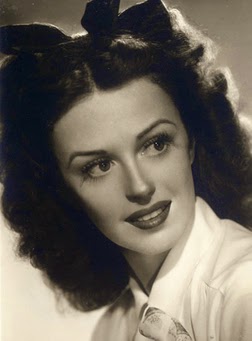
I have a lot of favorite singers, being a music collector I seem to like them all. However, Big Band vocalist Helen Ward holds a special part in my heart as one of my favorites.  Born on September 19, 1913, Ward was taught to sing by her father who played piano. Later, she got singing gigs on the radio, performing on stations at WOR and WNYC. She also was a staff musician at WYNC.

She was singing with Enrique Madriguera's Latin Band in 1934 when the Goodman band was auditioning for an engagement at the Billy Rose Music Hall; she sang with the band at its second audition, and it got the job, although she did not join the Goodman band until a few months later. She also sang with the Goodman band on the radio program ''Let's Dance'' from December 1934 to May 1935; a series of recordings from that program was released by the Circle label a few years ago.
With the Goodman band, she recorded songs including ''Goody Goody,'' ''You Turned the Tables on Me,'' ''It's Been So Long'' and the million-seller ''These Foolish Things.'' She recorded ''All My Life'' and ''Too Good to Be True'' with the Goodman trio. Often, she would be handed the sheet music for a song the same day she performed it.
She and Benny had a brief romance and he came very close to proposing marriage to her in either 1935 or 1936. However, according to Ward in the documentary, Adventures in the Kingdom of Swing, he called it off at the last minute, citing his career. She married financier Albert Marx the following year and left the band.
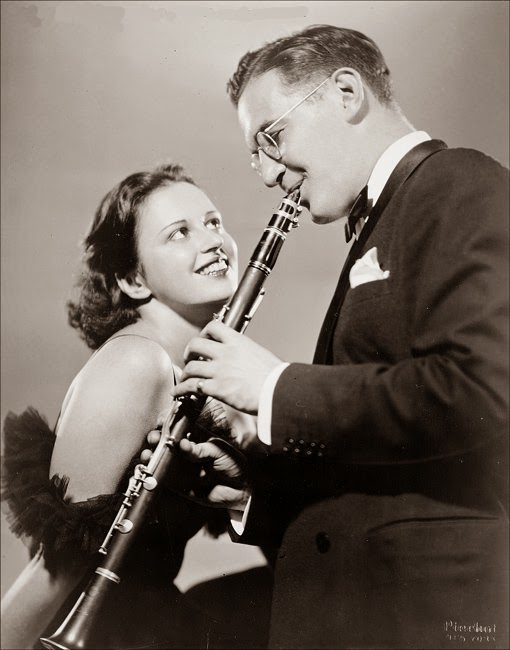
After leaving the Goodman band, Ms. Ward turned to recording, appearing on albums with Teddy Wilson, Gene Krupa, Bob Crosby, Joe Sullivan and Harry James. She toured with the band led by Hal McIntyre in 1942 and 1943, and recorded with Red Norvo, Harry James, Wild Bill Davison and Peanuts Hucko. In 1944 she joined Harry James's band. In 1946-47 she produced musical variety shows on WMGM in New York City.
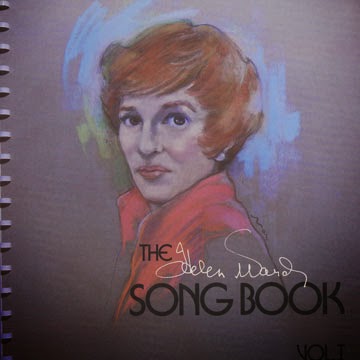
She retired from regular performing in the late 1940's but rejoined Goodman for tours and recordings in 1953, 1957 and 1958. After her marriage to Marx ended, Ward later married the audio engineer William Savory. Savory was part of the team that invented the 33⅓ rpm long-playing record. Ward continued to do sporadic studio work and also worked briefly with Peanuts Hucko. Hucko and Ward issued a terrific album in 1958, which showed the Big Band songbird in fine voice. After that album, Ward pretty much retired. In 1979, she came out of retirement, performing at clubs including the Waldorf-Astoria's Starlight Roof and the Rainbow Room in New York City, and she made ''The Helen Ward Song Book'' (Lyricon) in 1981. That album is a wonderful album. Her voice now resembled jazz singer Lee Wiley. The album is one of my prized possessions, and I recommend any fan of Helen Ward or great jazz singing to try to listen to a copy.
Ward retired completely when her health began to fail. She passed away after a lengthy illness in Virginia on April 21, 1998. She was survived by her husband William Savory who later passed away in 2004. She was also survived by the countless recordings that she left behind…. 
Saturday, June 28, 2014

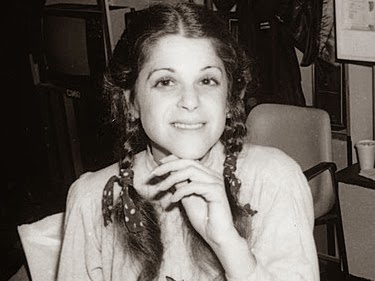
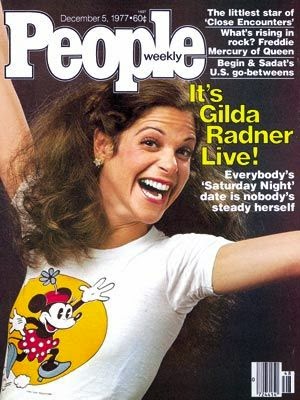
BORN ON THIS DAY: GILDA RADNER

Jerry Lewis once made a comment that there were no funny female comedians, he must never have watched the legendary Gilda Radner. She left this world too soon in 1989 at the age of 42, but in her short life, she made millions of people laugh. Gilda Radner would have been 68 today - June 28th.

Radner was born in Detroit, Michigan, the daughter of Jewish parents Henrietta (née Dworkin), a legal secretary, and Herman Radner, a businessman. She grew up in Detroit with a nanny, Elizabeth Clementine Gillies, whom she called "Dibby" (and on whom she based her famous character Emily Litella), and an older brother named Michael. She attended the University Liggett School in Grosse Pointe. Toward the end of her life, Radner wrote in her autobiography, It's Always Something, that during her childhood and young adulthood she battled numerous eating disorders: "I coped with stress by having every possible eating disorder from the time I was nine years old. I have weighed as much as 160 pounds and as little as 93. When I was a kid, I overate constantly. My weight distressed my mother and she took me to a doctor who put me on Dexedrine diet pills when I was ten years old."

Radner was close to her father, who operated Detroit's Seville Hotel, where many nightclub performers and actors stayed while performing in the city. He took her on trips to New York to see Broadway shows.[As Radner wrote in It's Always Something, when she was twelve her father developed a brain tumor, and the symptoms began so suddenly that he told people his eyeglasses were too tight. Within days he was bedridden and unable to communicate, and remained in that condition until his death two years later.

Radner enrolled at the University of Michigan at Ann Arbor, where she made a lifelong platonic friend of fellow student David Saltman, who wrote a biography of her after her death. Gilda joined him and his girlfriend on a trip to Paris in the summer of 1966. Saltman wrote that he was so affectionate with his girlfriend that they left Radner to fend for herself for much of their sightseeing Twenty years later, when details of Radner's eating disorder were reported in a bestselling book about Saturday Night Live by Doug Hill and Jeff Weingrad, Saltman realized Radner had been in a quandary over the French cuisine, but had no one with whom she could discuss her situation.

In Ann Arbor, Radner began her broadcasting career as the weather girl for college radio station WCBN, but dropped out in her senior year to follow her then-boyfriend, a Canadian sculptor named Jeffrey Rubinoff, to Toronto, Canada. In Toronto, she made her professional acting debut in the 1972 production of Godspell with future stars Eugene Levy, Andrea Martin, Victor Garber and Martin Short.

Afterward, Radner joined the Toronto Second City comedy troupe. Radner was a featured player on the National Lampoon Radio Hour, a comedy program syndicated to some 600 U.S. radio stations from 1974 to 1975. Fellow cast members included John Belushi, Richard Belzer, Chevy Chase, Bill Murray, Brian Doyle-Murray, and Rhonda Coullet. This led to her being hired for the first cast of Saturday Night Live in 1975. She would remain there for five years, and the rest is comic history...

Friday, June 27, 2014

REMEMBERING THE FUNERAL OF JUDY GARLAND

This appeared in the New York Times the day after Judy's funeral. Judy Garland's funeral was on June 27, 1969...


Judy Garland's Funeral Draws Her Colleagues

By LAWRENCE VAN GELDER

While legions of her fans maintained an ardent vigil in the hot and humid streets, colleagues of Judy Garland bade her farewell yesterday in a swift, simple service at the Frank E. Campbell Funeral Home. "Judy's great gift," James Mason said in his eulogy, "was that she could wring tears out of hearts of rock." But there were few tears and seats to spare yesterday in the flower-bedecked room where an estimated 20,000 people had paused between noon Wednesday and 11 A.M. yesterday to peer into the glass-enclosed coffin of their favorite. "She gave so richly and so generously," said Mr. Mason, who had played opposite Miss Garland in "A Star Is Born," "that there was no currency in which to repay her."

Waiting for celebrities outside, pressed against gray police stanchions barring them from the chapel at 81st Street and Madison Avenue, a crowd estimated at 1,300 to 1,500, waited for a renewed glimpse of the celebrities.  From the ranks of show business were Ray Bolger, who played the Scarecrow to Miss Garland's Dorothy in "The Wizard of Oz," and Lauren Bacall, Alan King, Betty Comden and Adolph Green, Johnny Mercer, Paula Wayne, Fred Ebb, Freddie Bartholomew, Otto Preminger and Spyros Skouras; and Harold Arlen, who wrote the song most closely associated with Miss Garland: "Over the Rainbow." Also in attendance were fellow entertainers Frank Sinatra and Bing Crosby, who reportedly helped to pay for the cost of Garland's funeral. Mickey Rooney, who co-starred with Miss Garland in the Andy Hardy films when both were young, appeared briefly at the funeral home, evoking gasps and cheers from the spectators. He was not among the 200 people who remained for the service.

Mayor and Mrs. Lindsay were among the guests, as was Mrs. Patricia Kennedy Lawford.Present, too, were Miss Garland's children, Liza Minnelli and Lorna and Joseph Luft, and Sid Luft, her third husband, and Mickey Deans, her fifth, whom the 47-year-old star married in March.The Rev. Peter A. Delaney of Marylebone Church, London, who officiated at Miss Garland's marriage to Mr. Deans, conducted the 20-minute Episcopal service.


In a departure from custom, friends of the family reported, the service included a reading from one of Miss Garland's favorite Bible passages, I Corinthians, xiii, which begins: "Though I speak with the tongues of men and of angels, and have not charity, I am become as sounding brass, or a tinkling cymbal." Although the press was barred from the actual service, portions of the funeral, including Mr. Mason's eulogy, were audible through a loudspeaker provided by Campbell's in an upstairs room. In 1926, the same concern handles the funeral of Rudolph Valentino, whose death led to a massive display of grief from a desolate public that thronged to the Campbell chapel, then at Broadway and 66th Street. Lois Smith, Miss Minnelli's public relations representative, said that the service yesterday had been intended by Miss Minnelli to convey a "feeling of joy."

Jack French, Miss Garland's musical accompanist, began the funeral with an organ rendition of one of Miss Garland's favorite songs, "Here's to Us," from the Broadway production "Little Me."He ended the service with "The Battle Hymn of the Republic," which the mourners sang. Then, the coffin containing the body of Miss Garland, who died last Sunday in London of an apparently accidental overdose of sleeping pills, was placed in a waiting hearse that headed a cortege of three limousines and a flower car. Under a blanket of yellow roses, the coffin was taken to Ferncliff Cemetery in Hartsdale, N.Y. There it was placed in a crypt where it will remain until a mausoleum is built. Several hundred people were awaiting the arrival of the coffin, and when they lingered about the crypt long after the coffin was emplaced, a policeman told them: "The funeral of Judy Garland is over. We would appreciate you leaving." On Madison Avenue, where the crowd had surged through the barricades as the funeral ended, a few of Miss Garland's fans, clutching flowers, still clustered. "I have nothing else to do right now," said one.


SOURCE

Tuesday, June 24, 2014

RECENTLY VIEWED: BROADWAY MELODY OF 1938

I think I say this all of the time when I think of an age of a classic film. I can not believe that the Broadway Melody of 1938 is over 75 years old! I recently watched an old copy I burnt onto DVD from TCM a few years back, and it's another one of those musicals that MGM did that I can watch over and over again. Broadway Melody of 1938 is actually a 1937 musical film, produced by Metro-Goldwyn-Mayer and directed by Roy Del Ruth. The film is essentially a backstage musical revue, featuring high-budget sets and cinematography in the MGM musical tradition. The film stars Eleanor Powell and Robert Taylor and features Buddy Ebsen, George Murphy, Judy Garland, Sophie Tucker, Raymond Walburn, Robert Benchley and Binnie Barnes. The film marks the first substantial role that the talented Judy Garland had on film.

Young horse trainer Sally (Eleanor Powell) befriends Sonny (George Murphy) and Peter (Buddy Ebsen), who have been hired to look after a horse her family once owned. Concerned for the horse's well-being, she sneaks aboard a train taking the horse and its caretakers to New York City. En route she meets talent agent Steve Raleigh (Robert Taylor) who, impressed with her dancing and singing, sets her on the road to stardom and romance blossoms between the two. A subplot involves a boarding house for performers run by Sophie Tucker, who is trying to find a big break for young Judy Garland.

This was the third of the "Broadway Melody" series, and had the working title of Broadway Melody of 1937. When it was released, late in 1937, it was advertised with the tagline So new it's a year ahead!. The film was in production from late February to 20 July 1937, and was released on 20 August. Its initial running time was 115 minutes, compared to the final running time of 110 minutes.


Judy Garland had been under contract to MGM for two years now, and the studio really had no idea what to do with her. I guess this film could be called her break through film. The film appearance paved the way for Garland getting the lead role in The Wizard Of Oz. Judy Garland's number, "You Made Me Love You" has been cited as her first great film success. The song was specially prepared by Roger Edens for Clark Gable's 36th birthday as a present, and Garland sang it at the party given by MGM. Producer Louis B. Mayer was so impressed he ordered that it be included in the next possible musical MGM was producing.

The finale of the film takes place on a giant set upon which neon signs are visible showing the names of famous stage and screen stars. During Sophie Tucker's final number, all of the signs in the background actually change to read "Sophie Tucker" in tribute to her. Like Ethel Merman, Hollywood never knew what to do with Sophie Tucker, and she made only a few films. Personally I think this is her greatest role.


I have not gotten the chance to see many Robert Taylor films, but he definitely had chemistry with Eleanor Powell. Sometimes Taylor seems wooden to me, but in this film the whole cast is excellent. Powell was in my opinion the best dancer of all time, and her biggest mistake was marrying actor Glenn Ford and retiring from movies. The only thing is Eleanor Powell was a such a great dancer that she made her dancing co-stars George Murphy and Buddy Ebsen look like amateurs dancing next to her. The film is excellent to see some of the great stars of the 1930s, and MGM definitely did have more stars than there were in the heavens at that time...

MY RATING: 9 OUT OF 10


Sunday, June 22, 2014

THE LAST DAYS OF JUDY GARLAND

I was born five years after Judy Garland died, but I grew up in a house with Judy. My mother's favorite musical actress was Judy. She especially loves Garland's 1940s musicals at MGM like Meet Me In St. Louis and The Harvey Girls. My Grandfather was a record hoarder and had every Decca 78rpm that Judy did (unfortunately it was not a lot). So I grew up knowing a lot about Judy Garland. Is she my favorite singer - NO. Is she my favorite actress - NO. However, watching and listening to her work, she was definitely one of the greatest entertainers of all-time. She was taken from the world way too early on June 22, 1969 at the age of 47. Sadly, it does not seem like her last days were full of songs and rainbows.

On March 15th 1969 at Chelsea Register Office on the Kings Road, Judy Garland married a gay discotheque manager and part-time jazz pianist called Mickey Devinko better known as Mickey Deans. After the brief ceremony, which was actually her fifth, Garland said:

           "This is it. For the first time in my life, I am really happy. Finally, I am loved.”

Not that loved, because despite the long celebrity guest-list, not one of Judy’s famous friends made it to the reception held at Quaglino’s the large and expensive restaurant situated in Bury Street just south of Piccadilly. Several hundred people were invited and only fifty made it to the function.

Actually there was one celebrity guest at the wedding – Mickey Deans’ best man, Johnnie Ray. Ray had had hits in the fifties such as Cry and The Little White Cloud That Cried and was famous for the mootable ability to cry on stage earning him the moniker ‘the Nabob of Sob’ or occasionally the ‘Prince of Wails’. In reality, Ray was no close friend of Deans or Garland and the only reason that he was a guest at the wedding was that he was due to open for a brief Scandinavian tour Deans had organised for his new wife four days after the wedding.

After the wedding Garland and Deans rented a small mews house in a Chelsea cul-de-sac called Cadogan Lane. On Saturday 22 June, just three months after their wedding, Judy and Mickey had been watching a BBC documentary on the Royal family but, not untypically, had started to furiously row. Garland ran into the street shouting and screaming (also not untypically) followed not long after by Deans who ran after her. He was unable to find his wife and returned to the house and soon after went to bed.


At around 10.40am the next morning the phone rang for Garland. Deans, initially unable to find her, found the bathroom door locked. He climbed out on to the roof and looking through the window saw Garland motionless on the toilet with her head slumped forward and her hands on her knees. Climbing into the bathroom he found her skin was discoloured and dried blood had dribbled from her mouth and nose. She had been dead for about eight hours.

The Chelsea Coroner, Gavin Thurston wrote “This is a clear picture of someone who had been habituated to barbiturates in the form of Seconal for a very long period of time, and who on the night of June 22nd/23rd perhaps in a state of confusion from a previous dose (although this is pure speculation) took more barbiturate than her body could tolerate.” Garland had been prescribed Seconal, the drug that killed her, off and on, since the fifties. It is a barbiturate derivative medicine that was becoming widely misused in the sixties.

Judy Garland was just 47 years old and $4 million in debt when she died. She was buried in New York and, making an effort this time, guests included Lauren Bacall, James Mason, Cary Grant, Katharine Hepburn, Mickey Rooney, Lana Turner and latterly Bing Crosby and Frank Sinatra who paid all the funeral expenses. Judy, our Dorothy, was gone but her memory has survived for 45 years now. The happiness she had not been able to find during her short time in this world, she had given to her millions of fans through the decades...


Friday, June 20, 2014

JUDY GARLAND: A LIFE IN PICTURES

It is hard to believe that the world lost Judy Garland on June 22, 1969. In that 45 years since her untimely death, the star that was and is Judy Garland never faded, and here are some of the photos of her life...


Reunited with Ray Bolger - 1968


Tuesday, June 17, 2014

MY FIVE FAVORITE JUDY GARLAND MOVIES

My mother is a much bigger Judy Garland movie fan than I am, but being a lover of classical movies I have definitely seen almost every film Judy has made. She was a good actress, much better than she was given credit for, and I came up with my list of my five favorite Judy Garland films. Again, this is only my opinion and personal preference, and it is not based on anything else…


5. A STAR IS BORN (1954)
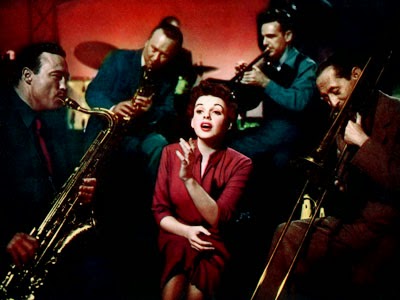
After Judy was fired from MGM in 1950, she never really was a movie star again. After 1950, Garland did continue to make movies, but she made quality and not quantity. One of her best acting of her career was done in 1954’s A Star Is Born. Co-starring with James Mason, Judy played a rising star who gets involved with a fading star (Mason). Garland was nominated for an Oscar, but she unfortunately lost. The famous song from the film was “The Man That Got Away”, but my personal favorite number was “Lose That Long Face”. When the movie came out Warner Brothers edited the film to death, and key scenes were lost, but I believe it has recently been completely restored.

4. EASTER PARADE (1948)
By the time Judy made Easter Parade in 1948, her drug problems were really beginning to come to a head. Her weight went up and down during the filming, and it showed in many of her scenes. However, Judy pulled it together to make this musical classic. with Fred Astaire as her leading man and a boatload of Irving Berlin songs. Even though the age difference between Astaire and Garland was 23 years, they make a great song and dance team. Evergreen Irving Berlin songs included the title song, “I Love A Piano”, and “Shakin The Blues Away”, but Berlin also wrote some new songs like: “A Fella With An Umbrella” and “Better Luck Next Time” – the latter of the songs Garland sang brilliantly.


3. THE WIZARD OF OZ (1939)
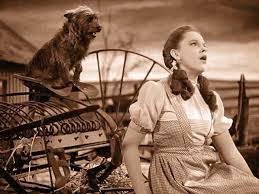
No list of Garland films would be complete without “The Wizard Of Oz”. Judy was the second choice to play Dorothy, after MGM could not get Shirley Temple. The film was not a success when it came out in 1939 – and it would not be until it was shown on television in the 1950s that it would become the classic it is viewed as today. It is hard to add more about this classic, but it was the role that made Judy a star. Sadly, it was reported that Garland began her drug usage while this movie was being made. I am a grown man with children now, but when I watch the scene of Judy singing “Over The Rainbow” on her Kansas farm…I cry like a baby every time.

2. SUMMER STOCK (1950)
MGM ended their relationship with Garland after 1950’s Summer Stock, and it was a big mistake. Again, Garland’s weight fluctuated greatly throughout the movie, but Garland sounded great. She was teamed with Gene Kelly for the third and last time in this film, and like Astaire did in Easter Parade, Kelly helped Garland get through her scenes. Supporting the dynamic duo of musicals were great character stars like: Phil Silvers, Eddie Bracken, and Marjorie Main. The plot of putting on a show at a farm was corny, but the musical numbers made the film great. This movie is one of the first Garland musicals I ever watched on video, so I have a soft spot for the film. Seeing Judy perform “Get Happy” makes the movie worth it alone.


1. FOR ME AND MY GAL (1942)
Judy was going on 20 when she made For Me And My Gal, and it was billed as her first adult role. She was done playing Dorothy and hanging out with Andy Hardy now. Garland played a rising vaudeville star who meets up with a vaudeville ham (played by Gene Kelly in his first movie role). The story takes place during the first World War, so all of the songs are from that era. You would think it would make the movie corny hearing those songs, even in 1942 when the film was made, but it adds some great realism to the movie. For a 1942 musical, there is some real drama in the movie showing some of the horrors of war. The main attraction is Garland who looks and sounds great singing standards like “After You’ve Gone”, “Ballin The Jack”, and “Oh You Beautiful Doll”. Again, the film has a special place in my heart, because I remember my Grandfather telling me it was the first movie he saw in the movie theater was a 13 year old boy. The ending of the movie, is a tearjerker as well, at least to me. For me not being a huge Garland movie fan, a lot of her movies make me cry!