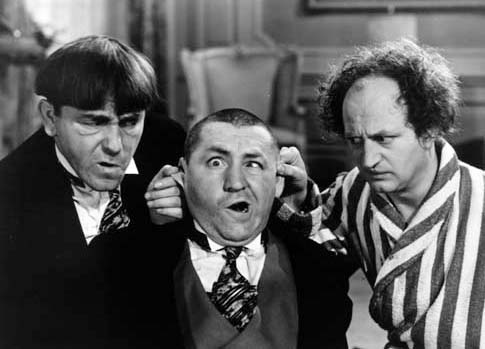
Here are some interesting dates that happened in film history:
July 14, 1908: Edison Company actor D.W. Griffith makes his directing debut with The Adventures of Dollie, the first of over 500 works to come.
July 12, 1912: Adolph Zukor releases a French film, Queen Elizabeth, starring stage star Sarah Bernhardt, in America, giving a new respectability to motion pictures.
July 15, 1932: The Disney Studio releases the first cartoon using the three-color Technicolor process, a Silly Symphony called Flowers and Trees.
July 14, 1933: E.C. Segar's comic strip creation Popeye the Sailor is set afloat in his first film appearance, in Max Fleischer's cartoon short.
July 14, 1937: After her memorable debut appearance in Warners' They Won't Forget, 17-year-old Lana Turner will earn the nickname "the sweater girl."
July 14, 1969: Dennis Hopper and Peter Fonda's low-budget "road" picture, Easy Rider, debuts, and will make a star of Jack Nicholson and spawn a host of imitators.
July 15, 1988: Bruce Willis shoots his way into the pantheon of Hollywood action heroes with the debut of Die Hard.
July 10, 1989: The voice of nearly every major Warner Bros. cartoon character, as well as Heathcliff the cat, Mel Blanc, dies at 80.
July 11, 1989: The portrayer of nearly every major Shakespearean character, as well as Heathcliff in Wuthering Heights, Laurence Olivier, dies at 82.
July 15, 1998: Cameron Diaz sports a unique hair-do in the year's most unlikely hit, the "gross-out" comedy There's Something About Mary.
July 16, 1999: Amid cries of "Is it real?," the $60,000 pseudo-documentary The Blair Witch Project opens to packed houses and will become the top independent film of all time.
SOURCE
Monday, July 11, 2011
Saturday, July 9, 2011
BORN ON THIS DAY: ED AMES
One of the great groups of the 1950s were the Ames Brothers. Unfortunately forgotten now, Ed Ames was the lead singer of that successful group. He was born today - July 9th in 1927. Born in Malden, Massachusetts to Jewish parents who had immigrated from Ukraine, Ed Ames was the youngest of nine children, five boys and four girls.
Ames grew up in a poor household. He attended the Boston Latin School and was educated in Classical and Opera music, as well as literature. While still in high school, the brothers formed a quartet and often won competitions around the Boston area. Three of the brothers later formed the Amory Brothers quartet and went to New York, where they were hired by bandleader Art Mooney. Playwright Abe Burrows helped the brothers along the way, suggesting the siblings change their group's name to the Ames Brothers.
They were first signed on with Decca Records in 1948, but because of the Musician Union's ban, their records from Decca were never released. They signed on with another label, Coral Records, a subsidiary of Decca. They had their first major hit in the 1950s with the double-sided "Ragg Mopp" and "Sentimental Me." The Brothers joined RCA Victor records and continued to have success throughout the 50s with many hits like "It Only Hurts For a Little While," "You, You, You" and "The Naughty Lady of Shady Lane." The brothers made appearances regularly on variety shows, and for a short period of time had their own 15 minute variety show in 1955.
In 1960, The Ames Brothers disbanded, and Ed Ames, pursuing a career in acting, studied at the Herbert Berghoff School. His first starring role was in an Off Broadway production of Arthur Miller's The Crucible, going on to starring performances in The Fantasticks and Carnival!, which was on Broadway. He was in the national touring company of Carnival.
Although Ames is of Ukrainian extraction, his dark complexion led to his being cast regularly as an American Indian. His greatest success as a stage actor came when he played Chief Bromden in the Broadway production of One Flew Over the Cuckoo's Nest, opposite Kirk Douglas.
Talent scouts at 20th Century Fox saw Ed in the production and invited him to play the Native American Mingo on the television show Daniel Boone, with Fess Parker, Patricia Blair, Darby Hinton and Veronica Cartwright.
While playing Mingo on television, Ames developed some skill in throwing a tomahawk. This led to one of the most memorable moments of his career, when he appeared on The Tonight Show Starring Johnny Carson on April 29, 1965. During the course of the show, Ames and Johnny Carson were discussing Ames' tomahawk throwing abilities. When Ames claimed that he could hit a target from across the room, Carson asked Ames if he could demonstrate this skill. Ames agreed, and a wood panel with a chalk outline of a cowboy was brought on to the stage. Ames proceeded to throw the tomahawk, which hit the "cowboy" square in the groin with the handle pointing upward. This led to a very long burst of laughter from the audience. After a moment, Ames proceeded to walk toward the target to retrieve the tomahawk but Carson stopped him and allowed the situation to be appreciated for its humor. Carson ad-libbed, "I didn't even know you were Jewish" and "Welcome to Frontier Bris." Ames then asked Carson if he would like to take a turn throwing, to which Carson replied, "I can't hurt him any more than you did." The clip became a favorite of Carson's own yearly highlight show and subsequently blooper television specials.
Ames recorded under the name "Eddie Ames" while still with the Ames Brothers, releasing the single "Bean Song (Which Way To Boston?)" in 1957.
During the 1960s, Ames returned to singing, this time as a solo artist. He released his first RCA Victor chart single, "Try to Remember," in 1965. The song barely made the charts. A bigger success came in 1967 with "My Cup Runneth Over." The song was both a Pop hit and an Adult Contemporary hit. He had less success on the Pop charts soon after, and only had Adult Contemporary hits with "When the Snow Is On the Roses," "Time Time", "Pete Raids", and "Timeless Love". He did make the Pop Top Twenty one last time in his singing career with the song "Who Will Answer" in 1968.
Ames's distinctive baritone is a regular radio presence during Christmas season, too, thanks to his version of "Do You Hear What I Hear?" Written originally in response to the Cuban Missile Crisis, the song received its best-selling treatment from Bing Crosby in 1962, but Ames' version, recorded a few years later, is in frequent holiday rotation...
Labels:
actors,
Ames Brothers,
birthdays,
Ed Ames,
singers
Thursday, July 7, 2011
CURLY HOWARD: THE TRAGIC STOOGE
Jerome Lester "Jerry" Horwitz, better known by his stage name Curly Howard, was an American comedian and vaudevillian. He is best known as a member of the American slapstick comedy team the Three Stooges, along with his older brothers Moe Howard and Shemp Howard, and actor Larry Fine. Curly is generally considered the most popular and recognizable of the Stooges. He is well known for his high-pitched voice, vocal expressions ("nyuk-nyuk-nyuk!","woo-woo-woo!", and barking like a dog), as well as his inventive physical comedy, improvisations, and athleticism.
An untrained actor and natural comedian, Curly borrowed (and significantly exaggerated) the "woo woo" from "nervous" and soft-spoken comedian Hugh Herbert, but was otherwise an original and inspired performer. Curly's unique version of "woo-woo-woo" was firmly established by the time of the Stooges' second film Punch Drunks in 1934.
By the end of the 1930s, Curly Howard was clearly the star of the Three Stooges. His childlike mannerisms and natural comedic charm made him a hit with audiences, particularly children. He was famous in the act for having an "indestructible" head, which always won out by breaking anything that assaulted it, most notably (fake) saw blades. Having no formal acting training, his comedic skill was entirely spontaneous.
By 1944, Curly's energy began to wane though. Films like Idle Roomers and Booby Dupes present a Curly whose voice was deeper and his actions slower. After the filming of Idiots Deluxe, Curly finally checked himself (at Moe's insistence) into Cottage Hospital in Santa Barbara, California on January 23, 1945 and was diagnosed with extreme hypertension, a retinal hemorrhage and obesity. Curly's ill health forced him to rest, leading to only five shorts released in 1945 (the normal output was six to eight films per year). It is also believed that Howard suffered the first in a series of mild strokes at this time. Moe pleaded with Harry Cohn to allow Howard some time off upon discharge to regain his strength. Cohn would not halt the production of his profitable Stooge shorts and flatly refused Moe's request. Author Michael Fleming stated that "...it was a disastrous course of action."
The first film produced after Curly's stroke was the lackluster If a Body Meets a Body, and his actions and mannerisms were noticeably slower. In the hands of a sympathetic director like novice Edward Bernds, Curly could produce decent work. This was because Bernds painstakingly devised ways that the ailing Stooge could still be the star without actually contributing a great deal. Films like Monkey Businessmen (in which Curly had to be coached by Moe on camera), Micro-Phonies and A Bird in the Head were examples of Bernds factoring in the reality that Curly was no longer in his prime. Other directors, such as Jules White, simply shifted the action to Moe and Larry. Films like Beer Barrel Polecats and Uncivil War Birds were mediocre at best and clearly showed that Curly was suffering.
Two of Jules White's efforts—Three Loan Wolves and Rhythm and Weep—clearly display a sick Curly as indicated by his much slower movements. Ed Bernds, however, was lucky enough to capture the ailing Stooge on an "up" day when filming Three Little Pirates. Curly seemed better and there was some hope that his illness was finally under control. "I guess I should be thankful that Curly was in one of his 'up' periods," Bernds said later."In Three Little Pirates, he was terrific. It was the last flash of the old Curly."
Half-Wits Holiday would be Curly's final appearance as an official member of the Stooges. The film was a remake of the comedy, Hoi Polloi. During filming on May 6, 1946, Curly suffered a severe stroke while sitting in director Jules White's chair while waiting to film the last scene of the day. When Curly was called by the assistant director to take the stage, he did not answer. Moe went looking for his brother: he found Curly with his head dropped to his chest. Moe later stated that Curly's mouth was distorted, and he was unable to speak: all he could do was cry. Moe quietly alerted director Jules White of Howard's situation, leading White to quickly rework the scene to be divided between Moe and Larry. Curly was then rushed to the hospital, where Moe joined him after filming for Half-Wits Holiday wrapped. After being discharged, Curly took up residence at the Motion Picture & Television Country House and Hospital in Woodland Hills, California.
Still not fully recovered from his stroke, Curly met Valerie Newman, whom he married on July 31, 1947. A friend, Irma Leveton, later recalled, "Valerie was the only decent thing that happened to Curly and the only one that really cared about him." Although his health continued to decline after the marriage, Valerie gave birth to a daughter, Janie, in 1948.
Later that year, Curly suffered a second massive stroke, which left him partially paralyzed. He used a wheelchair by 1950 and was fed boiled rice and apples as part of his diet to reduce his weight. Curly's condition failed to improve. Valerie admitted him into the Motion Picture Country House and Hospital on August 29, 1950. After several months of treatment and medical tests, Curly was released, though he would return periodically up until his death.
In February 1951, Curly was placed in a nursing home where he suffered another stroke a month later. In April, he took up residence at the North Hollywood Hospital and Sanitarium.
On January 7, 1952, Moe was contacted on the Columbia set while filming He Cooked His Goose to assist in moving Curly for what would be the last time. Eleven days later, on January 18, Curly died of a massive cerebral hemorrhage; he was 48.
An untrained actor and natural comedian, Curly borrowed (and significantly exaggerated) the "woo woo" from "nervous" and soft-spoken comedian Hugh Herbert, but was otherwise an original and inspired performer. Curly's unique version of "woo-woo-woo" was firmly established by the time of the Stooges' second film Punch Drunks in 1934.
By the end of the 1930s, Curly Howard was clearly the star of the Three Stooges. His childlike mannerisms and natural comedic charm made him a hit with audiences, particularly children. He was famous in the act for having an "indestructible" head, which always won out by breaking anything that assaulted it, most notably (fake) saw blades. Having no formal acting training, his comedic skill was entirely spontaneous.
By 1944, Curly's energy began to wane though. Films like Idle Roomers and Booby Dupes present a Curly whose voice was deeper and his actions slower. After the filming of Idiots Deluxe, Curly finally checked himself (at Moe's insistence) into Cottage Hospital in Santa Barbara, California on January 23, 1945 and was diagnosed with extreme hypertension, a retinal hemorrhage and obesity. Curly's ill health forced him to rest, leading to only five shorts released in 1945 (the normal output was six to eight films per year). It is also believed that Howard suffered the first in a series of mild strokes at this time. Moe pleaded with Harry Cohn to allow Howard some time off upon discharge to regain his strength. Cohn would not halt the production of his profitable Stooge shorts and flatly refused Moe's request. Author Michael Fleming stated that "...it was a disastrous course of action."
The first film produced after Curly's stroke was the lackluster If a Body Meets a Body, and his actions and mannerisms were noticeably slower. In the hands of a sympathetic director like novice Edward Bernds, Curly could produce decent work. This was because Bernds painstakingly devised ways that the ailing Stooge could still be the star without actually contributing a great deal. Films like Monkey Businessmen (in which Curly had to be coached by Moe on camera), Micro-Phonies and A Bird in the Head were examples of Bernds factoring in the reality that Curly was no longer in his prime. Other directors, such as Jules White, simply shifted the action to Moe and Larry. Films like Beer Barrel Polecats and Uncivil War Birds were mediocre at best and clearly showed that Curly was suffering.
Two of Jules White's efforts—Three Loan Wolves and Rhythm and Weep—clearly display a sick Curly as indicated by his much slower movements. Ed Bernds, however, was lucky enough to capture the ailing Stooge on an "up" day when filming Three Little Pirates. Curly seemed better and there was some hope that his illness was finally under control. "I guess I should be thankful that Curly was in one of his 'up' periods," Bernds said later."In Three Little Pirates, he was terrific. It was the last flash of the old Curly."
Half-Wits Holiday would be Curly's final appearance as an official member of the Stooges. The film was a remake of the comedy, Hoi Polloi. During filming on May 6, 1946, Curly suffered a severe stroke while sitting in director Jules White's chair while waiting to film the last scene of the day. When Curly was called by the assistant director to take the stage, he did not answer. Moe went looking for his brother: he found Curly with his head dropped to his chest. Moe later stated that Curly's mouth was distorted, and he was unable to speak: all he could do was cry. Moe quietly alerted director Jules White of Howard's situation, leading White to quickly rework the scene to be divided between Moe and Larry. Curly was then rushed to the hospital, where Moe joined him after filming for Half-Wits Holiday wrapped. After being discharged, Curly took up residence at the Motion Picture & Television Country House and Hospital in Woodland Hills, California.
Still not fully recovered from his stroke, Curly met Valerie Newman, whom he married on July 31, 1947. A friend, Irma Leveton, later recalled, "Valerie was the only decent thing that happened to Curly and the only one that really cared about him." Although his health continued to decline after the marriage, Valerie gave birth to a daughter, Janie, in 1948.
Later that year, Curly suffered a second massive stroke, which left him partially paralyzed. He used a wheelchair by 1950 and was fed boiled rice and apples as part of his diet to reduce his weight. Curly's condition failed to improve. Valerie admitted him into the Motion Picture Country House and Hospital on August 29, 1950. After several months of treatment and medical tests, Curly was released, though he would return periodically up until his death.
In February 1951, Curly was placed in a nursing home where he suffered another stroke a month later. In April, he took up residence at the North Hollywood Hospital and Sanitarium.
On January 7, 1952, Moe was contacted on the Columbia set while filming He Cooked His Goose to assist in moving Curly for what would be the last time. Eleven days later, on January 18, Curly died of a massive cerebral hemorrhage; he was 48.
Labels:
comedian,
Curly Howard,
spotlight,
Three Stooges
Tuesday, July 5, 2011
RIP: ANNA MASSEY
Anna Massey, the award-winning British actor who played innocent victim for both Alfred Hitchcock and Michael Powell, has died from cancer at the age of 73. The news was confirmed in a brief statement from her agent: "Anna Massey CBE passed away peacefully on Sunday 3rd July, with her husband and son by her side."
The daughter of the Hollywood actor Raymond Massey, Anna Massey began her career on stage, picking up a Tony nomination for her turn in The Reluctant Debutante at the age of 18. She made her screen debut in the 1958 crime drama Gideon's Day, directed by her godfather John Ford, and co-starred with Laurence Olivier on the cult 60s thriller Bunny Lake is Missing.
Yet Massey looks set to be best remembered for her roles in two of the most controversial pictures of post-war British cinema. In 1960 she played Helen, the sweet-natured friend of a serial killer in Michael Powell's notorious Peeping Tom. In 1972, she was cast as sacrificial barmaid Babs Milligan in Hitchcock's grubby, London-set thriller Frenzy. Peeping Tom found itself reviled by contemporary critics as "perverted" and "beastly", while Frenzy remains the only Hitchcock film to receive a prohibitive X-certificate in the UK. Today, both films are widely regarded as classics.
In later years Massey acted alongside Christian Bale on The Machinist, Gwyneth Paltrow on Possession and Colin Firth in The Importance of Being Earnest. But her greatest roles arrived via the small screen, where she became a mainstay of the British costume drama. Massey's TV credits include Tess of the d'Urbervilles, Anna Karenina, The Cherry Orchard and Oliver Twist. She won a Bafta for her role as a lonely novelist in the BBC's 1986 adaptation of Hotel du Lac.
Massey is survived by her husband, Uri Andres, and her son, David, from an earlier marriage to the actor Jeremy Brett. She was made a CBE in the 2004 New Year Honours List and published her autobiography, Telling Some Tales, in 2006. The book was frank in documenting her breakup with Brett and her subsequent struggles with stage fright and anorexia. Life, she admitted, became happier when she met her second husband in the 1980s. "I don't want any dramas in my life," she told an interviewer in 2006. "If I'm in a drama, I want to be paid for it."
Massey is believed to have continued working through recent illness and made her final appearance in the 2010 TV series Moving On, scripted by Jimmy McGovern. "I think however old and blind and prune-like one may look, the spirit inside stays young and flirtacious," she once said...
Labels:
actress,
Anna Massey,
deaths,
news,
Raymond Massey
Sunday, July 3, 2011
REMEMBERING: GOD BLESS AMERICA
Even though the Star Spangled Banner has been our national anthem for generations, I personally feel that the song "God Bless America" is more loved and admired. Every 4th of July I try to listen to recordings of the song, and I am filled with a sense of pride for all this country has meant to millions of people.
"God Bless America" is an American patriotic song written by Irving Berlin in 1918 and revised by him in 1938, as sung by Kate Smith (becoming her signature song)."God Bless America" takes the form of a prayer (intro lyrics "as we raise our voices, in a solemn prayer") for God's blessing and peace for the nation ("...stand beside her and guide her through the night...").
Berlin wrote the song in 1918 while serving in the U.S. Army at Camp Upton in Yaphank, New York, but decided that it did not fit in a revue called Yip Yip Yaphank, so he set it aside. The lyrics at that time included the line, "Make her victorious on land and foam, God bless America..." as well as "Stand beside her and guide her, to the right with the light from above."
In 1938, with the rise of Hitler, Berlin, who was Jewish and a first-generation European immigrant, felt it was time to revive it as a "peace song", and it was introduced on an Armistice Day broadcast in 1938 sung by Kate Smith, on her radio show. Berlin had made some minor changes; by this time, "to the right" might have been considered a call to the political right, so he substituted "through the night" instead. He also provided an introduction that is now rarely heard but which Smith always used: "While the storm clouds gather far across the sea / Let us swear allegiance to a land that's free / Let us all be grateful for a land so fair, / As we raise our voices in a solemn prayer."
More than just the dramatic words and melody, the arrangement for Kate Smith's performance was accompanied by full band, progressing into a grand march tempo, with trumpets triple reinforcing the harmonies between stanzas: the dramatic build-up ends on the final exposed high note, which Kate Smith sang in the solo as a sustained a cappella note, with the band then joining for the finale.
The song was a hit; there was even a movement to make "God Bless America" the national anthem of the United States. However, there was strong opposition by conservative southerners as well as conservatives who lived in rural areas where there were no Jews living in it, stating that because Irving Berlin was a foreigner and a Jew, that they would not accept their national anthem to be composed by a member of the minority class Congress would have had to repeal the "Star Spangled Banner" in both houses by two-thirds of the votes.
In 1943, Smith's rendition was featured in the patriotic musical "This is the Army" along with other Berlin songs. The manuscripts in the Library of Congress reveal the evolution of the song from victory to peace. Berlin gave the royalties of the song to the God Bless America Fund for Redistribution to the Boy Scouts of America and the Girl Scouts of the USA. She performed the song on her two NBC television series in the 1950s and in her short-lived The Kate Smith Show on CBS, which aired on CBS from January 25 to July 18, 1960.
Later, from December 11, 1969, through the early 1970s, the playing of Smith singing the song before many of home games of the National Hockey League's Philadelphia Flyers brought it renewed popularity (as well as a reputation for being a "good luck charm" to the Flyers),long before it became a staple of nationwide sporting events. The Flyers even brought Smith in to perform live before Game 6 of the 1974 Stanley Cup Finals on May 19, 1974, and the Flyers won the Cup that day.
To honor the start of the United States Bicentennial, Kate Smith sang "God Bless America" for a national television audience, accompanied by the UCLA Band at the 1976 Rose Bowl.
During this 4th of July, I hope more people will listen to this song and realize that despite its problems and mistakes, the United States Of America is a wonderful place to live in and to enjoy its many freedoms...
"God Bless America" is an American patriotic song written by Irving Berlin in 1918 and revised by him in 1938, as sung by Kate Smith (becoming her signature song)."God Bless America" takes the form of a prayer (intro lyrics "as we raise our voices, in a solemn prayer") for God's blessing and peace for the nation ("...stand beside her and guide her through the night...").
Berlin wrote the song in 1918 while serving in the U.S. Army at Camp Upton in Yaphank, New York, but decided that it did not fit in a revue called Yip Yip Yaphank, so he set it aside. The lyrics at that time included the line, "Make her victorious on land and foam, God bless America..." as well as "Stand beside her and guide her, to the right with the light from above."
In 1938, with the rise of Hitler, Berlin, who was Jewish and a first-generation European immigrant, felt it was time to revive it as a "peace song", and it was introduced on an Armistice Day broadcast in 1938 sung by Kate Smith, on her radio show. Berlin had made some minor changes; by this time, "to the right" might have been considered a call to the political right, so he substituted "through the night" instead. He also provided an introduction that is now rarely heard but which Smith always used: "While the storm clouds gather far across the sea / Let us swear allegiance to a land that's free / Let us all be grateful for a land so fair, / As we raise our voices in a solemn prayer."
More than just the dramatic words and melody, the arrangement for Kate Smith's performance was accompanied by full band, progressing into a grand march tempo, with trumpets triple reinforcing the harmonies between stanzas: the dramatic build-up ends on the final exposed high note, which Kate Smith sang in the solo as a sustained a cappella note, with the band then joining for the finale.
The song was a hit; there was even a movement to make "God Bless America" the national anthem of the United States. However, there was strong opposition by conservative southerners as well as conservatives who lived in rural areas where there were no Jews living in it, stating that because Irving Berlin was a foreigner and a Jew, that they would not accept their national anthem to be composed by a member of the minority class Congress would have had to repeal the "Star Spangled Banner" in both houses by two-thirds of the votes.
In 1943, Smith's rendition was featured in the patriotic musical "This is the Army" along with other Berlin songs. The manuscripts in the Library of Congress reveal the evolution of the song from victory to peace. Berlin gave the royalties of the song to the God Bless America Fund for Redistribution to the Boy Scouts of America and the Girl Scouts of the USA. She performed the song on her two NBC television series in the 1950s and in her short-lived The Kate Smith Show on CBS, which aired on CBS from January 25 to July 18, 1960.
Later, from December 11, 1969, through the early 1970s, the playing of Smith singing the song before many of home games of the National Hockey League's Philadelphia Flyers brought it renewed popularity (as well as a reputation for being a "good luck charm" to the Flyers),long before it became a staple of nationwide sporting events. The Flyers even brought Smith in to perform live before Game 6 of the 1974 Stanley Cup Finals on May 19, 1974, and the Flyers won the Cup that day.
To honor the start of the United States Bicentennial, Kate Smith sang "God Bless America" for a national television audience, accompanied by the UCLA Band at the 1976 Rose Bowl.
During this 4th of July, I hope more people will listen to this song and realize that despite its problems and mistakes, the United States Of America is a wonderful place to live in and to enjoy its many freedoms...
Labels:
God Bless America,
Irving Berlin,
Kate Smith,
remembering,
songwriter
Saturday, July 2, 2011
WHERE ARE THEY NOW: GENE HACKMAN
Gene Hackman was and is one of the greatest actors this generation has seen. However, since 2004 he has not made a film - his last film was the dreadful Welcome To Mooseport with Ray Romano. What is this legendary actor doing now? Will he ever return to movie making?
Gene Hackman has quit the movies. That's not a stop-the-presses scoop. At this point, it's hardly news at all, though it's probably news to you. Two years ago, he went on a book tour to promote Escape from Andersonville, a novel he'd co-written with Daniel Lenihan. In more than one interview, he said that he'd stopped working in the film business. When a reporter from the Raleigh News & Observer asked him to explain his decision, he said he didn't want to "keep pressing" and risk "going out on a real sour note." "I feel comfortable with what I've done," he said.
Yet beyond a few Web sites and wire services, hardly anybody picked up the story or repeated what he'd said. Even now, the fact that one of our most accomplished actors hasn't appeared in a film since 2004, and has said he won't be doing any more, has barely gotten a mention. His agent says it's possible that the right script and director could lure him back, but even if he did return to acting at this point—and, like you, I fervently hope that he does—the nonevent of Hackman's retirement would stand as a strange episode in our recent cultural history. It's a telling, if sad, example of how cavalier we can be with our great artists.
The point isn't that Hackman needs the validation of more trophies: He won plenty, including Oscars for The French Connection and Unforgiven. The point is that our award-season obsessions lead us to undervalue some forms of excellence that can't be toted up in a single role, or divided neatly into categories, or measured against some mythical standard of Oscar worthiness. These virtues, the kind that reveal themselves fully over time, don't have a name, but they do have a face. It's at the top of this page.
Hollywood's habitual bias toward pretty leading men slights the actors who have the range to play all sorts of roles. This, surely, is Hackman's greatest distinction. Good ol' boy Buck Barrow in Bonnie and Clyde. Comically diabolical Lex Luthor in Superman. The blind hermit in Young Frankenstein. The coach in Hoosiers. Saintly cowboys, panicky astronauts, philandering steelworkers, several kinds of president … Like every actor, he had some misfires, and there's no denying that he signed on for some seriously regrettable films. But this side of Meryl Streep—which is to say, here among the mortals—it's hard to think of a contemporary American actor who could convince you he was born to play so many far-flung roles.
As Popeye Doyle, the volcanic, superextroverted cop in The French Connection, he pulled out all the stops, ranting and shouting and raising hell. Three years later, he did the opposite, pulling himself inward to play Harry Caul, the meticulous, introspective eavesdropper in The Conversation. When you've seen one transformation, the other looks doubly impressive.
Not all the reasons why we've taken Hackman for granted lie onscreen. He rarely gives our celebrity culture excuses to blog. (He lives in Santa Fe with his wife, painting and writing his books.) Nor did our youth-obsessed culture ever really see him when he was young. A long, slow start in New York theater meant that by the time he found regular work in the movies, it was as the older, tougher companion of various male ingénues: Warren Beatty, Robert Redford, and Al Pacino (in Scarecrow, a road movie about two drifters that features one of his richest performances).
Yet this late start has ended up working to Hackman's advantage. His characters belong almost entirely to middle age. Because they've been around long enough to experience failure and loss, but not long enough to take it easy, Hackman could play them with a distinctive mix of shadow and light. While some actors congratulate themselves for venturing into the moral gray zone, Hackman has called it home for so long that we've ceased to notice. In his performances, as in life, the good guys aren't always nice guys, and the villains have charm. (Both sorts of roles benefit from Hackman's trademark: a slightly diabolical back-of-the-throat chuckle.) Even in Unforgiven, in which he played the brutal sheriff of a frontier town, little glimmers of humanity emerged. When he told the imprisoned Morgan Freeman about the violent interrogation coming his way, he flashed a look not of menace, but of sympathy.
Hackman has said he's not interested in trading roles like these for what Hollywood seems to offer, a bland diet of "grandfathers and great-grandfathers." So if the acting bug bites again, and his insistence on fresh challenges doesn't waver, maybe he'll return to where he began: the stage. His inner fire and air of regret might equip him for Long Day's Journey Into Night; with his rascally charm, comic intelligence, and wicked streak, he could be a really fine Falstaff.
But if he has truly ended his acting career, he ended strong. I don't mean Welcome to Mooseport, the execrable 2004 comedy in which he wasn't much good (nobody was—nobody could be). The real capstone came three years earlier, in The Royal Tenenbaums. As the patriarch of an eccentric family, he walked into Wes Anderson's blizzard of whimsy and somehow emerged bone-dry. More than that: he gave the story real flesh and blood and emotional punch.
Entering his 81st year, Gene Hackman has has not really retired - yes he has retired from acting, but he has written numerous fiction books with more on the way. I applaud him for doing what is best for him - unfortunately it is not best for us - his fans and his audience...
Gene Hackman has quit the movies. That's not a stop-the-presses scoop. At this point, it's hardly news at all, though it's probably news to you. Two years ago, he went on a book tour to promote Escape from Andersonville, a novel he'd co-written with Daniel Lenihan. In more than one interview, he said that he'd stopped working in the film business. When a reporter from the Raleigh News & Observer asked him to explain his decision, he said he didn't want to "keep pressing" and risk "going out on a real sour note." "I feel comfortable with what I've done," he said.
Yet beyond a few Web sites and wire services, hardly anybody picked up the story or repeated what he'd said. Even now, the fact that one of our most accomplished actors hasn't appeared in a film since 2004, and has said he won't be doing any more, has barely gotten a mention. His agent says it's possible that the right script and director could lure him back, but even if he did return to acting at this point—and, like you, I fervently hope that he does—the nonevent of Hackman's retirement would stand as a strange episode in our recent cultural history. It's a telling, if sad, example of how cavalier we can be with our great artists.
The point isn't that Hackman needs the validation of more trophies: He won plenty, including Oscars for The French Connection and Unforgiven. The point is that our award-season obsessions lead us to undervalue some forms of excellence that can't be toted up in a single role, or divided neatly into categories, or measured against some mythical standard of Oscar worthiness. These virtues, the kind that reveal themselves fully over time, don't have a name, but they do have a face. It's at the top of this page.
Hollywood's habitual bias toward pretty leading men slights the actors who have the range to play all sorts of roles. This, surely, is Hackman's greatest distinction. Good ol' boy Buck Barrow in Bonnie and Clyde. Comically diabolical Lex Luthor in Superman. The blind hermit in Young Frankenstein. The coach in Hoosiers. Saintly cowboys, panicky astronauts, philandering steelworkers, several kinds of president … Like every actor, he had some misfires, and there's no denying that he signed on for some seriously regrettable films. But this side of Meryl Streep—which is to say, here among the mortals—it's hard to think of a contemporary American actor who could convince you he was born to play so many far-flung roles.
As Popeye Doyle, the volcanic, superextroverted cop in The French Connection, he pulled out all the stops, ranting and shouting and raising hell. Three years later, he did the opposite, pulling himself inward to play Harry Caul, the meticulous, introspective eavesdropper in The Conversation. When you've seen one transformation, the other looks doubly impressive.
Not all the reasons why we've taken Hackman for granted lie onscreen. He rarely gives our celebrity culture excuses to blog. (He lives in Santa Fe with his wife, painting and writing his books.) Nor did our youth-obsessed culture ever really see him when he was young. A long, slow start in New York theater meant that by the time he found regular work in the movies, it was as the older, tougher companion of various male ingénues: Warren Beatty, Robert Redford, and Al Pacino (in Scarecrow, a road movie about two drifters that features one of his richest performances).
Yet this late start has ended up working to Hackman's advantage. His characters belong almost entirely to middle age. Because they've been around long enough to experience failure and loss, but not long enough to take it easy, Hackman could play them with a distinctive mix of shadow and light. While some actors congratulate themselves for venturing into the moral gray zone, Hackman has called it home for so long that we've ceased to notice. In his performances, as in life, the good guys aren't always nice guys, and the villains have charm. (Both sorts of roles benefit from Hackman's trademark: a slightly diabolical back-of-the-throat chuckle.) Even in Unforgiven, in which he played the brutal sheriff of a frontier town, little glimmers of humanity emerged. When he told the imprisoned Morgan Freeman about the violent interrogation coming his way, he flashed a look not of menace, but of sympathy.
Hackman has said he's not interested in trading roles like these for what Hollywood seems to offer, a bland diet of "grandfathers and great-grandfathers." So if the acting bug bites again, and his insistence on fresh challenges doesn't waver, maybe he'll return to where he began: the stage. His inner fire and air of regret might equip him for Long Day's Journey Into Night; with his rascally charm, comic intelligence, and wicked streak, he could be a really fine Falstaff.
But if he has truly ended his acting career, he ended strong. I don't mean Welcome to Mooseport, the execrable 2004 comedy in which he wasn't much good (nobody was—nobody could be). The real capstone came three years earlier, in The Royal Tenenbaums. As the patriarch of an eccentric family, he walked into Wes Anderson's blizzard of whimsy and somehow emerged bone-dry. More than that: he gave the story real flesh and blood and emotional punch.
Entering his 81st year, Gene Hackman has has not really retired - yes he has retired from acting, but he has written numerous fiction books with more on the way. I applaud him for doing what is best for him - unfortunately it is not best for us - his fans and his audience...
Friday, July 1, 2011
ROD SERLING'S LIFE HEADED TO FILM
Andrew Meieran and his Bureau of Moving Pictures has acquired rights to make a movie about Rod Serling, the Twilight Zone creator who left behind a remarkable legacy of sci-fi and fantasy work. Stanley Weiser, who wrote Wall Street with Oliver Stone, will script the movie. Serling's widow Carol Serling will be a producer along with Meieran.
Before he became an iconic TV figure, Serling had a life of struggle that included a stint as a paratrooper and member of the demolition squad in the Army during WWII. Stationed in the Philippines, he saw more than his share of death as the US battled the Japanese, and his experiences would inform much of what he would write later. He worked his way into radio and then became a TV writer who found his niche with the CBS series Twilight Zone, a series that elevated scripted television with thought-provoking science fiction tales, each with a great and unexpected plot twist. The segments have influenced a legion of TV and feature writers to this day. If you don't understand the reference "It's a cook book!," you could do worse than go back and watch the original episodes.
Serling hatched another memorable TV anthology series a decade later in Night Gallery. Movies were made from both series, there's a lively Tower Of Terror theme-park ride that incorporates Serling and a haunted hotel, and Serling also co-wrote with Michael Wilson the script for the 1968 sci-fi classic Planet of the Apes, based on the Pierre Boull novel. Serling died at 50, from complications stemming from chain-smoking cigarettes his entire adult life.
"Rod Serling was one of the true visionaries in television history," Meieran said. "He single-handedly broke the mold and established television as a powerful artistic medium capable of changing the world when used wisely." Meieran, who comes from a real estate investment background, (the Edison in downtown LA is his, and he's acquired Clifton's Cafeteria and is restoring it), has wrapped his directing debut. Highland Park stars Danny Glover, Parker Posey and Billy Burke in a drama about a group of lifelong friends whose jobs fall victim to budget cuts. The film's in post-production.
SOURCE
Before he became an iconic TV figure, Serling had a life of struggle that included a stint as a paratrooper and member of the demolition squad in the Army during WWII. Stationed in the Philippines, he saw more than his share of death as the US battled the Japanese, and his experiences would inform much of what he would write later. He worked his way into radio and then became a TV writer who found his niche with the CBS series Twilight Zone, a series that elevated scripted television with thought-provoking science fiction tales, each with a great and unexpected plot twist. The segments have influenced a legion of TV and feature writers to this day. If you don't understand the reference "It's a cook book!," you could do worse than go back and watch the original episodes.
Serling hatched another memorable TV anthology series a decade later in Night Gallery. Movies were made from both series, there's a lively Tower Of Terror theme-park ride that incorporates Serling and a haunted hotel, and Serling also co-wrote with Michael Wilson the script for the 1968 sci-fi classic Planet of the Apes, based on the Pierre Boull novel. Serling died at 50, from complications stemming from chain-smoking cigarettes his entire adult life.
"Rod Serling was one of the true visionaries in television history," Meieran said. "He single-handedly broke the mold and established television as a powerful artistic medium capable of changing the world when used wisely." Meieran, who comes from a real estate investment background, (the Edison in downtown LA is his, and he's acquired Clifton's Cafeteria and is restoring it), has wrapped his directing debut. Highland Park stars Danny Glover, Parker Posey and Billy Burke in a drama about a group of lifelong friends whose jobs fall victim to budget cuts. The film's in post-production.
SOURCE
Subscribe to:
Posts (Atom)