Thursday, May 15, 2014

THE WIT OF DEAN MARTIN

Dean Martin was the Buddha of cool. Maybe Frank Sinatra used his voice more as an instrument, and maybe Bing Crosby was the more prolific of a singer, but Dean Martin was the coolest crooner out there. Through his career Dino said some funny quotesand even insightful at times. Here's a few of them...


"If people want to think I get drunk and stay out all night, let 'em. That's how I got here, you know."

"I've got seven kids. The three words you hear most around my house are 'hello,' 'goodbye,' and 'I'm pregnant."

To those who felt he joked his way through songs during concert and nightclub appearences: "You wanna hear it straight, buy the album."


Upon filing for divorce from his second wife: "I know it's the gentlemanly thing to let the wife file. But, then, everybody knows I'm no gentleman."


On Joey Bishop: "Most people think of Joey Bishop as just a replacement for Johnny Carson. That's NOT true. We in show business know better: we don't think of him at ALL."


On Phyllis Diller: Phyllis is the women of about whom Picasso once said, "Somebody throw a drop cloth over that."


On Frank Sinatra: "In high school, Frank never participated in extra-curricular activities, like nature study, paintings or ceramics. Frank's hobby was a most interesting one: he was an amateur gynecologist."


On James Stewart: "There's a statue of Jimmy Stewart in the Hollywood Wax Museum, and the statue talks better than he does."


On Bob Hope: "As a young boy, Bob didn't have much to say. He couldn't afford writers then."


On Johnny Carson: "Johnny Carson is a comedian who is seen every night in millions of bedrooms all over America...and that's why his last wife left him."


"I'd hate to be a teetotaler. Imagine getting up in the morning and knowing that's as good as you're going to feel all day."


"I can't stand an actor or actress who tells me acting is hard work. It's easy work. Anyone who says it isn't never had to stand on his feet all day dealing blackjack."


On Shirley MacLaine: "Shirley, I love her, but her oars aren't touching the water these days."


[in 1964, upon introducing The Rolling Stones on ABC TVs' "Hollywood Palace"] "I've been rolled when I was stoned."

On Jerry Lewis: "At some point, he said to himself, "I'm extraordinary, like Charles Chaplin". From then on, nobody could tell him anything. He knew it all."


Monday, May 12, 2014

THE LAST DAYS OF THE DORSEY BROTHERS

When Jimmy Dorsey and 17 sidemen strode into New York's Capitol Records studio on Nov. 11, 1956, they had no illusions of bringing back the glory days of the big bands. Theirs was at best a twilight rear guard action, perhaps an act of faith, perhaps an act of defiance, perhaps nothing more than a handful of people who loved the music of their youth saying that music would not surrender simply because today's youth culture had moved on to rock 'n' roll. Certainly Dorsey had no illusions, for by November of 1956 he was not sure he would outlive even the last remnants of big band music.

At 54, he had lung cancer. Still, he wasn't giving up. Just three years earlier he had reunited with his brother Tommy, from whom he had been estranged for 18 years, and that reunion had provided a modest rejuvenation for both their careers at a time when big band players everywhere were struggling. Now Jimmy was getting a shot at something else he hadn't had for a while: a record deal. Harry Carlson, a songwriter, one-time bandleader and now owner of a photography studio in Cincinnati, had started a label of his own, Fraternity Records. After he had a hit with Cathy Carr's "Ivory Tower," he approached Dorsey, whose swing tunes Carlson had loved for years. There is some evidence Carlson was wildly optimistic about this project, that he felt just a few modernizing adaptations would enable the big band sound to compete with Elvis Presley and Little Richard.

He wasn't thinking small. He and Dorsey rounded up four trumpets, four trombones, two alto saxes, two tenor saxes and one baritone, plus piano, guitar, drums and bass - in addition, of course, to Dorsey's own alto. They also brought in the Arthur Malvin Singers, a group intended to conjure the old mellow sound of the Modernaires with a snappier, hipper touch. The session would include four songs: "Sophisticated Swing," a Mitchell Parish/Will Hudson tune; "Mambo en Sax," a Latin-flavored number by one of the hottest lights of the moment, bandleader Perez Prado; "It's the Dreamer in Me," which Dorsey wrote years earlier with Jimmy Van Heusen, and "So Rare," a Jerry Hersey/Jack Sharp song that had been a top-five hit for Guy Lombardo and Gus Arnheim in 1937. Dorsey had played "So Rare" on stage over the years. But for the Fraternity session, perhaps because of his health or because he hadn't been in a studio for a while, he played it a little differently - with more of what musicians called a growl, apparently influenced by the then-popular style of rhythm and blues saxman Earl Bostic.


The band did two takes of "So Rare" and decided to issue the second one. It wasn't the most memorable Jimmy Dorsey song, but it was pleasant enough, and it clearly evoked the musical spirit of yesteryear. In fact, it evoked yesteryear so well that Carlson couldn't find any major pop radio station that would play it. Finally he went back home to Cincinnati, called in some favors, and got enough spins so it drew a little notice - which wasn't all that surprising, as radio still had many deejays with a strong fondness for the big band era. But by the time "So Rare" started to appear on the charts, Jimmy Dorsey's life had further crumbled.

On November 26, 1956  just 15 days after the "So Rare" session, Tommy Dorsey choked to death in his sleep at his home in Greenwich, Conn. - a bad blow for Jimmy, despite the fact he and Tommy had not always gotten along. In the early days, when they'd played in bands together, they were known to settle things with their fists, and their breakup in 1935 was big band legend. Tommy was counting off the tempo to "I'll Never Say 'Never Again' Again" on stage at the Glen Island Casino and Jimmy, working on a hangover, suggested it was too fast. Tommy said, fine, do it your way, picked up his trombone and walked off. For the next 18 years they each fronted enormously successful bands of their own and barely spoke. Still, they were brothers and partners, and it was fine with Jimmy that Tommy led the reunited band, since Tommy liked being the main man and Jimmy didn't.


A few weeks later after Tommy's death, Jimmy entered the hospital for what the newspapers were told was the removal of a "common nonmalignant wart" from his lung. Actually, the doctors had taken out the whole lung, in a desperate and futile attempt to stop the cancer. He returned to playing, but then he collapsed on a bandstand in Wichita and was flown back to Doctors Hospital in New York, where the newspapers were told he had neuritis. When he had to return to the hospital later, the newspapers were told he was visiting his ill mother. In reality, he was looking at the end. Doctors who had ordered him to stop drinking several years earlier told him to go ahead, it didn't matter anymore.

On June 10, 1957, trumpet man Lee Castle visited Jimmy at Doctors Hospital and presented him with a gold record, the fifth of his career. "So Rare" had sold a million copies. Jimmy died two days later. A few days after that, Carlson had Castle reassemble the rest of the band from the Nov. 11 sessions and record eight more sides so he would have enough material to release an album. It yielded only one modest hit, "June Nights. It was the end of the Dorsey brother era as we knew it...


SOURCE

Saturday, May 10, 2014

ON THIS DAY IN MOVIE HISTORY

On this day in movie history we lost one of the greatest film actresses the cinema has ever known. The great Joan Crawford died on this day - May 10, 1977 at the age of 71. Her reputation has been tarnished in recent years, but her talent on film has remained the same...


Friday, May 9, 2014

MY MODERN COMEDY MARATHON

I do not know what went through my head last month. Maybe it was getting all of the movie channels free from my new cable provider, but I got caught up on some of the recent movie comedies that have come out. I do like some modern movies, but not too many. It seems like modern comedies I can relate to more than any present day genre. However, the group of movies I viewed over the last month were not too great. There was no Young Frankenstein or Blazing Saddles in this bunch, but I still wanted to go over these slight movies briefly...


THIS IS THE END (2013)
Of all the comedies I saw, this one was the best. You have to know and get the comedy of Seth Rogen to get this film. Basically, all of these comedy stars play "themselves" at a party when the end of the world happens. I especially like Jonah Hill in this film. He is becoming a favorite of mine, and he has been nominated for an Oscar. The group looked like they had fun making the film, and although the story was far fetched, I laughed a lot.
my rating: 7 out of 10


THE WATCH (2012)
I wanted to laugh at this movie the most, but it wasn't as funny as I thought it would be. I love Vince Vaughn and Ben Stiller together, and there are some great moments, but no laugh out loud spots. The story, another far fetched one, is about a neighborhood watch group that uncovers aliens trying to take over the world. Again, Jonah Hill steals the movies away, but this sci-fi comedy could have been better.
my rating: 6 out of 10


TED (2012)
This comedy I wanted to watch for almost a year, but I kept putting it aside. I shouldn't have wasted my time. I am a fan of Mark Wahlberg, and he is good at comedy (Check out The Other Guys). However, I expected too much of this movie about a man and his talking teddy bear (Seth MacFarlane). The movie was a big disappointment for me.
my rating: 5 out of 10


GROWN UPS 2 (2013)
I don't like Adam Sandler, but I always watch his movies. It is like I'm a battered woman who keeps on going back to an abusive husband. This movie is about grown up friends who deal with their aging as well as their kids getting big. It is a sequel to a somewhat better original comedy. However, the film proves to me there are no good comedy sequels.
my rating: 4 out of 10


THAT'S MY BOY (2012)
Another Adam Sandler movie...why do I do this to myself! In the film he plays an aging bum who has a kid when he was a student with his teacher. The less said about this flop the better. What is the real crime about this film is that James Caan and Susan Sarandon appear in it - what a waste of talent!
my rating: 2 out of 10


THE HANGOVER 3 (2013)
This is a 2nd sequel in a trilogy of comedies. The first one was pretty good, but the second two not so much so. There was exactly one laugh I had watching the whole film, and it was in the beginning. This movie should never have been made. This comedy almost made me cry, because after watching it - it would be 90 minutes of my life I would never get back!
my rating: 2 out of 10

Wednesday, May 7, 2014

THE FREAK: CHAPLIN'S UNFINISHED FILM


Charlie Chaplin is one of my favorite film makers of all time. He was a cinamatic pioneer in the 1910s, and he was a film making genius in the 1920s and 1930s. After he was forced to leave the United States in the 1952, his films changed too. They were darker and more bitter. His final movie, A Countess From Hong Kong (1967) was a box office and critical disappointment. However, it was not supposed to be his last movie. He planned a movie to be made called The Freak.

In 1969, Charlie Chaplin appeared in a special effects department of European film studio, and he was proposing to launch the film career of his youngest daughter 18 year old Victoria Chaplin. He was writing a script based upon the discovery of a young girl in a remote region of the Andes mountains who had been freakishly born with wings. The department at Shepperton had been chosen to create the huge range of effects the film would rely upon.

In 1969 Charlie was already into his 80’s but nevertheless hugely enthusiastic about directing his final film project and launching his youngest daughter’s film career. Unfortunately that enthusiasm was not shared by his wife Oona. She had begun to realise that all the technical matters and other complexities associated with the film would be far too taxing for the eighty year old who, in any event, was no longer in robust good health. On that basis it seems she insisted the project was terminated.

Not much else is known about the proposed film, but this what we do know: The Freak was an unfinished dramatic comedy from Charles Chaplin. The story revolved around a young South American girl who unexpectedly sprouts a pair of wings. She is kidnapped and taken to London, where her captors cash in by passing her off as an angel. Later she escapes, only to be arrested because of her appearance. She is further dehumanized by standing trial to determine if she is human at all.

Chaplin began work in and around 1969 with his daughter Victoria in mind for the lead role. However, Victoria's abrupt marriage and his advanced age proved roadblocks and the film was never made. Chaplin's memoir, My Life in Pictures (1974), describes The Freak as a work still in progress. He also mentioned his intent to make it in an interview on his 85th birthday in 1974. "I mean to make it someday", Chaplin writes in a caption alongside a photograph of Victoria in winged costume published in My Life in Pictures. No footage from the film is known to exist, though brief color footage of Victoria in wings can be seen in Charlie Chaplin - Les années suisses (2003).

The script is currently locked away in Switzerland, and Chaplin estate has instructions that it will never be read. It is such a shame. It could have been one last masterpiece from the great Charlie Chaplin...


Monday, May 5, 2014

WHAT A CHARACTER: PHILIP BAKER HALL

I have seen this actor's face all over the place. Unfortunately, I never knew his name until now. Philip Baker Hall has had numerous great roles, but my personal favorite is as the "library cop" on an episode of Seinfeld.

Hall was born in Toledo, Ohio on September 10, 1931, the son of a factory worker father who was from Montgomery, Alabama. He attended the University of Toledo. As a young man, Hall served in the military, started a family, and became a high school English teacher. In 1961, he decided to become an actor. He moved to New York, enjoying success in Off Broadway and Broadway productions. In 1975, Hall moved to Los Angeles to make a career in television.

Since then, he has had over 200 guest roles on television shows. He starred in many films, including Robert Altman's Secret Honor in which he played the film's only role, Richard Nixon. Hall got his first high-profile film role when Paul Thomas Anderson wrote a role in his film Hard Eight, specifically for Hall. Hall went on to have roles in two of Anderson's subsequent films, Boogie Nights and Magnolia. He also had a minor role as Captain Diel in the Rush Hour trilogy (though his scenes were cut from the theatrical release of Rush Hour 2 and he was uncredited for his scenes in Rush Hour 3).

Additionally, Hall has had roles in Midnight Run, Say Anything..., The Rock, The Truman Show, The Talented Mr. Ripley, Bruce Almighty, You Kill Me, In Good Company, Dogville, The Amityville Horror, The Matador, The Sum of All Fears, The Zodiac and Zodiac. More recently, he had a starring role in the 2006–07 Fox sitcom The Loop and had a guest starring role in The West Wing. Hall also appeared as a guest star in the HBO animated series The Life & Times of Tim. He appeared in the 2010 film, All Good Things.


Hall acted in Seinfeld as Lt. Joe Bookman, the 'library cop' who tracks down Jerry for a long-overdue library book in "The Library". He reprised the role in the May 1998 finale where his character is one of many to testify against Jerry. More recently he has appeared as the crotchety Dr. Morrison, Larry David's physician, on Curb Your Enthusiasm and an equally crotchety neighbor of the Dunphy family on Modern Family. In 2012, he appeared in an episode of Aaron Sorkin's The Newsroom. Hall also appears in a series of humorous Holiday Inn commercials. He is currently starring in I Never Sang for My Father at The New American Theatre in Hollywood. Philip Baker Hall is another character actor that certainly adds character to every role he has. He died in 2022...

Saturday, May 3, 2014

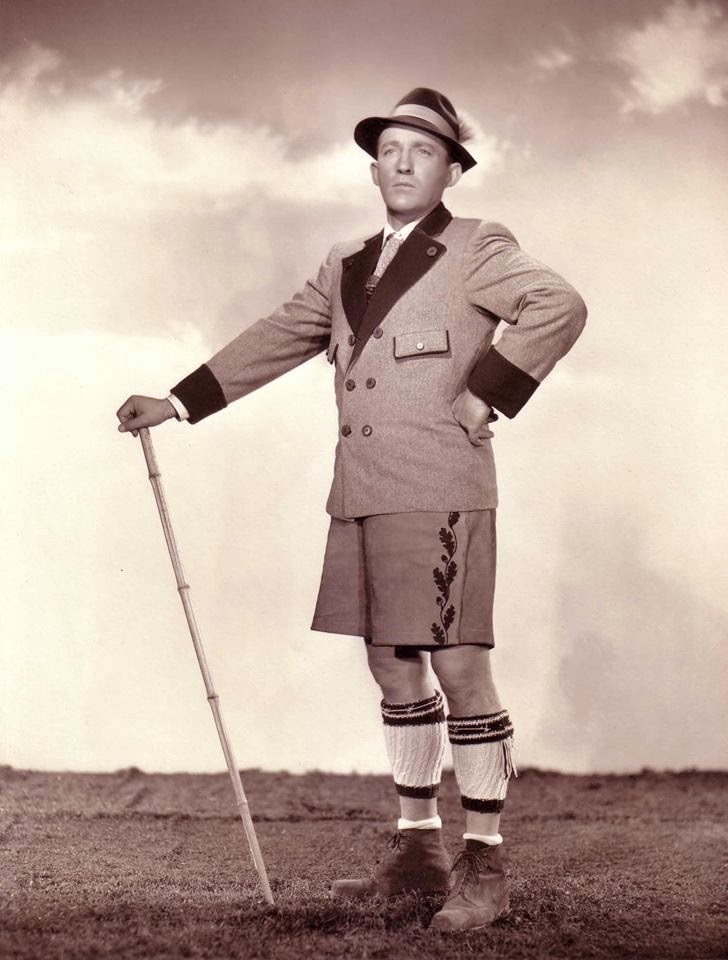
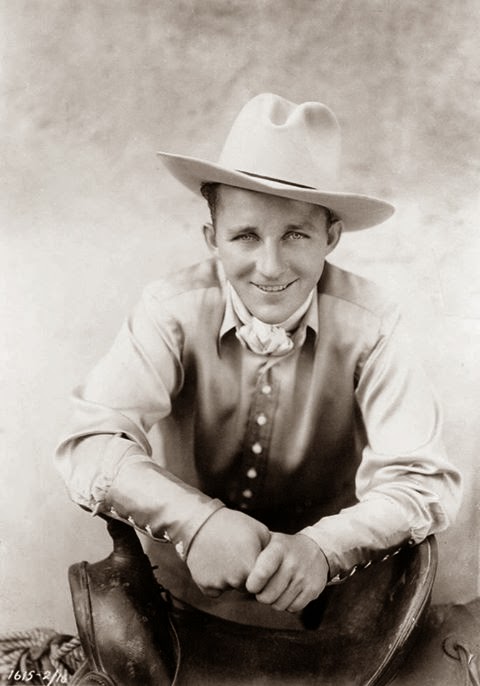
BORN ON THIS DAY: BING CROSBY

Today people mostly remember Bing Crosby as the laid back singer who made the song "White Christmas" a major hit. Some younger people do not even recognize him for that. Bing Crosby though was more than just a Christmas singer. He was a singer who pioneered early popular music in the 1930s, and he was one of the most widely head voices of the 1940s. On this day, May 3rd in 1903 this legend was born.

Crosby was born in Tacoma, Washington, on May 3, 1903 in a house his father built at 1112 North J Street. In 1906, Crosby's family moved to Spokane, Washington. In 1913, Crosby's father built a house at 508 E. Sharp Ave. The house now sits on the campus of Bing's alma mater Gonzaga University and formerly housed the Alumni Association.

He was the fourth of seven children: brothers Larry (1895–1975), Everett (1896–1966), Ted (1900–1973), and Bob (1913–1993); and two sisters, Catherine (1904–1974) and Mary Rose (1906–1990). His parents were Harry Lincoln Crosby (1870–1950), a bookkeeper, and Catherine Helen (known as Kate) (nĂ©e Harrigan; 1873–1964). Crosby's mother was a second generation Irish-American. His father was of English descent; some of his ancestors had emigrated to what would become the U.S. in the 17th century, and included Patience Brewster, the daughter of the Pilgrim leader and Mayflower passenger William Brewster (c. 1567 – April 10, 1644).

In 1910, six-year-old Harry Crosby was forever renamed. The Sunday edition of the Spokesman-Review published a feature called "The Bingville Bugle". Written by humorist Newton Newkirk, The Bingville Bugle was a parody of a hillbilly newsletter filled with gossipy tidbits, minstrel quips, creative spelling, and mock ads. A neighbor, 15-year-old Valentine Hobart, shared Crosby's enthusiasm for "The Bugle" and noting Crosby's laugh, took a liking to him and called him "Bingo from Bingville". Eventually the last vowel was dropped and the nickname stuck.


In 1917, Crosby took a summer job as property boy at Spokane's "Auditorium," where he witnessed some of the finest acts of the day, including Al Jolson, who held Crosby spellbound with his ad libbing and spoofs of Hawaiian songs. Crosby later described Jolson's delivery as "electric".

In 1923, Bing Crosby was invited to join a new band composed of high school students much younger than himself. Al Rinker, Miles Rinker, James Heaton, Claire Pritchard and Robert Pritchard, along with drummer Bing Crosby, formed the Musicaladers, who performed at dances both for high school students and club-goers. However, the group disbanded after two years.

By 1925, Crosby had formed a vocal duo with partner Al Rinker, brother of singer Mildred Bailey. Mildred introduced Al and Bing to Paul Whiteman, who was at that time America's most famous bandleader. Hired for $150 a week, they made their debut on December 6, 1926 at the Tivoli Theatre (Chicago). Their first recording was "I've Got The Girl," with Don Clark's Orchestra, but the Columbia-issued record did them no vocal favors, as it was inadvertently recorded at a speed slower than it should have been, which increased the singers' pitch when played at 78 rpm. Throughout his career, Bing Crosby often credited Mildred Bailey for getting him his first important job in the entertainment business.

Even as the Crosby and Rinker duo was increasing in popularity, Whiteman added a third member to the group. The threesome, now including pianist and aspiring songwriter Harry Barris, were dubbed "The Rhythm Boys". They joined the Whiteman touring act, performing and recording with musicians Bix Beiderbecke, Jack Teagarden, Tommy Dorsey, Jimmy Dorsey, and Eddie Lang and Hoagy Carmichael, and appeared together in a Whiteman movie.


Crosby soon became the star attraction of the Rhythm Boys, and in 1928 had his first number one hit with the Whiteman orchestra, a jazz-influenced rendition of "Ol' Man River". However, Crosby's reported taste for alcohol and his growing dissatisfaction with Whiteman led to the Rhythm Boys quitting to join the Gus Arnheim Orchestra. And the rest as they say is history...