Saturday, June 18, 2011

PHOTOS OF THE DAY: CELEBRITY FATHERS

It is never easy to be a parent. Even as your child grows up, you never stop worrying about them. I can imagine it is even harder for a celebrity father...harder for the parent as well as the child. In honor of Father's Day this weekend, here are some great pictures featuring celebrity fathers of classic Hollywood...


PERRY COMO AND HIS SON


JACK BENNY AND HIS DAUGHTER


JOHN WAYNE AND HIS SON


JIMMY STEWART AND HIS SONS


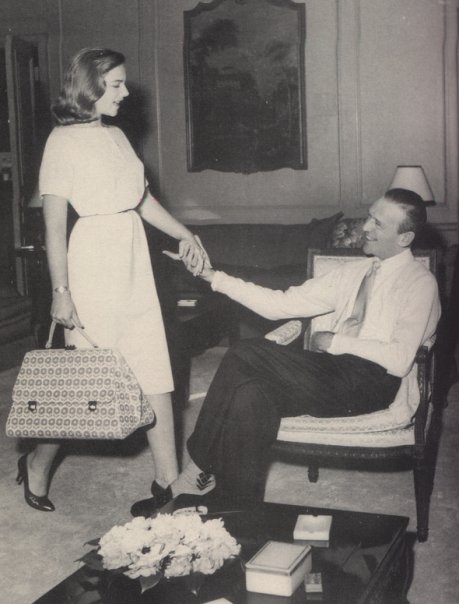
FRED ASTAIRE AND HIS DAUGHTER


HUMPHREY BOGART AND HIS SON

Friday, June 17, 2011

BAD CINEMA: VILLAGE OF THE GIANTS

Last night not much was on television, so my go-to channel is always Turner Classic Movies. They had a movie I had never seen before, and it was so awful I could not turn away. It was amazingly bad. The movie was called Village Of The Giants.

Village of the Giants is a 1965 science-fiction/comedy movie with many elements of the beach party film genre. It was produced, directed and written by Bert I. Gordon, and based loosely on H.G. Wells's book The Food of the Gods. The story revolves mostly around a chemical substance called "Goo", which causes giant growth in living things, and what happens after a gang of rebellious youngsters get their hands on it. The cast was mostly teens, or young actors playing teens, and The Beau Brummels and Freddy Cannon make musical guest appearances.

The movie was a low-budget exploitation film and not a huge hit (released mostly to drive-ins as part of a double bill), but had some notable use of special effects and undoubted sex appeal, and went on to become a cult classic. The movie proved far more successful years later, when released on home video.

The movie's instrumental theme song, by composer and arranger Jack Nitzsche, was originally released as "The Last Race" on Reprise Records, months before the movie appeared.

The Beau Brummels, singers Freddy Cannon and Mike Clifford all make appearances. Cannon enjoyed a string of hits during the Sixties (including "Palisades Park" and "Tallahassee Lassie"), and performs "Little Bitty Corrine" in his signature style (wearing a cardigan sweater in the summertime!), while Mike Clifford (veteran of The Ed Sullivan Show, and later an actor) croons the movie's obligatory slow song, "Marianne". (Clifford is also credited with another song, "Nothing can Stand in my Way", but this does not appear in the film). There was no official soundtrack release for this movie.


Debi Storm completed her role as the Sheriff's daughter in just three days. Vicki London, who played Georgette, is absent from the screen for most of the giant scenes in the movie. Robert Random and Joy Harmon each also appeared in episodes of Gidget, which debuted in the fall of 1965. (Their height remained normal.) Other notable cast members include Beau Bridges (big brother of Jeff Bridges, son of "Seahunt" and "Airplane" Lloyd Bridges and an A-list actor in his own right), "Ronny" Howard, Academy Award winning director, actor and producer, Johnny Crawford (Chuck Connors son in "The Rifleman)and Toni Basil, choreographer (The Lockers), dancer, actress and one hit wonder ("Ricky").


The cat appearing in this film was named Orangey (later renamed Minerva), and Village of the Giants was the second time he played the role of a cat larger than a human, the first being Scott Carey's (actor Grant Williams) pet in The Incredible Shrinking Man (1957). His most famous roles were as "Rhubarb" in the film Rhubarb (1951) and the cat in Breakfast at Tiffany's (1961).

In January 1994, Village of the Giants was featured as an episode of Mystery Science Theater 3000 (episode 523). The episode was dedicated in memoriam to the recently deceased Frank Zappa.

I can't believe I watched the whole movie, but I did. I actually recommend this movie to anyone who wants to say they saw one of the worst movies of all time...

MY BAD RATING: 5 OUT OF 10

Wednesday, June 15, 2011

DEAN MARTIN CONTEST RESULTS


To honor the great Dean Martin in June in celebration of his birthday, I sponsored a little contest to raise awareness for this crooning legend. While participation was not what as much as I thought it would be, thank for everyone who entered!

The winner is Mike Hannan! His favorite Dino song is "Please Don't Talk About Me When I'm Gone". He has won a privately made Dean Martin CD:

Dean Martin: The Television Years
1- OL MAN RIVER
2- I’M IN THE MOOD FOR LOVE
3- A REAL LIVE GIRL
4- SONG MEDLEY
5- ALWAYS
6- NOBODY BUT A FOOL
7- THINGS
8- I’M GONNA CHANGE EVERYTHING
9- A MARSHMELLOW WORLD
10- SONG MEDLEY
11- SONG MEDLEY
12- BABY FACE
13- A HUNDRED YEARS FROM TODAY
14- WHERE OR WHEN
15- I’M GONNA SIT RIGHT DOWN AND WRITE MYSELF A LETTER
16- SONG MEDLEY
17- THREE COINS IN THE FOUNTAIN
18- BLUE MOON
19- SONG MEDLEY
20- YOUNG AT HEART
21- WHAT’S YESTERDAY
22- WHEN THE RED RED ROBIN COMES BOBBIN ALONG
23- MACK THE KNIFE
24- BYE BYE BLACKBIRD
25- L-O-V-E
26- AS TIME GOES BY

Congrats again Mike!

THE VERY FIRST FILM AWARDS


Classic Hollywood: Film academy to screen Photoplay Magazine Medal of Honor winners
by Susan King

It may seem hard to believe now, but there were awards given out in Hollywood before the Oscars came along.

Nine years before the first Academy Awards were handed out in 1929, the movie fan publication Photoplay magazine created the first motion picture awards. Unlike the Oscars, which are voted on by the members of the Academy of Motion Picture Arts and Sciences, the Photoplay Magazine Medal of Honor winner was selected by readers.

All the surviving winners of the medal of honor from 1920 to 1928 will be screened Monday evenings during the academy's "Summer of Silents" at the Samuel Goldwyn Theater. Besides the award-winner, the Monday-evening programs (there is no screening on July 4) will feature live music accompaniment, special guests and shorts from that year.

The series kicks off Monday evening with the 1920 melodrama "Humoresque," based on a Fannie Hurst story about a young violinist from the Jewish slums who becomes a success due to the help of his mother. (The 1946 remake turned the tale into an ill-fated love story.) Also screening is Buster Keaton's comedy classic, "One Week." Film historian Cari Beauchamp, the biographer of "Humoresque" screenwriter Frances Marion, will introduce the film and there will be live accompaniment by pianist Michael Mortilla and violinist Nicole Garcia.

Other films in the festival include the 1922 Douglas Fairbanks classic "Robin Hood"; the seminal 1923 western "The Covered Wagon"; King Vidor's World War I epic "The Big Parade," which will be presented by academy Honorary Award recipient Kevin Brownlow; the rarely seen 1926 adventure 'Beau Geste"; and the 1927 Frank Borzage romance "Seventh Heaven." Film historian and preservationist Brownlow will also introduce a bonus screening of Keaton's 1927 masterwork, "The General."


"There is a preservation element to the festival," said academy programmer Randy Haberkamp. "'The Covered Wagon's' full-length version doesn't exist anymore. And the 1924 winner, 'Abraham Lincoln,' only exists in fragments."

SOURCE

Monday, June 13, 2011

DEBBIE REYNOLDS AUCTIONS COLLECTION


Debbie Reynolds to auction immense collection of Hollywood memorabilia
by Olivia Allin

Debbie Reynolds is holding an auction of her immense collection of Hollywood memorabilia on June 18.

Debbie Reynolds glad Elizabeth Taylor is no longer in pain. The actress spent 50 years accumulating and preserving her collection of costumes and items featured in classic films from Hollywood's golden age in hopes of one day opening a museum.

"That's kind of sad because for 40 years, Debbie has tried relentlessly to open up a museum, and you know what? No one ever came to her rescue," Joseph Maddalena, president of the auction company Profiles in History, told OnTheRedCarpet.com special correspondent George Pennacchio of KABC Television. "She is going on 80 and she says she is done."

Profiles in History will be holding the auction over 10 days, beginning on June 18. The items have already garnered interest from around the world. The auction catalog can be downloaded on the company's website.

Some of the items going up for auction include a test pair of Judy Garland's ruby slippers from "The Wizard of Oz," Charlie Chaplin's bowler hat and the iconic white dress Marilyn Monroe wore in "The Seven Year Itch," which is expected to fetch up to $2 million.


"This represents what's left of Hollywood," Maddalena said. "If it wasn't for Debbie saving these things, there would be nothing left of the history of Hollywood. She literally saved the past."

The collection will be on display for free through June 17 at the Paley Center for Media in Beverly Hills, California.

Reynolds starred in classic films such as "Singin' in the Rain" in 1952 and "The Unsinkable Molly Brown" in 1964. She also played Bobbi Adler on the comedy series "Will & Grace" and voiced Nana Possible on the animated series "Kim Possible" several years ago.

The actress was married to actor Eddie Fisher until 1959, when he went on to marry her friend Elizabeth Taylor, who died in March.

She and Fisher, who died last year at age 82, have a son, Todd Fisher, and daughter, "Star Wars" actress Carrie Fisher.

SOURCE

Saturday, June 11, 2011

FORGOTTEN ONES: GEORGE JESSEL


George Jessel. The name is buring among the ruins of 1920s vaudville, and many people will not even remember what George Jessel was famous for. Jessel, along with Al Jolson and Eddie Cantor, made up a trio of vaudville and broadway stars that not only made up a part of entertainment in those early years, but they were entertainment.

George Jessel, born on April 3, 1898 was an American illustrated song "model," actor, singer, songwriter, and Academy Award-winning movie producer. He was famous in his lifetime as a multitalented comedic entertainer, achieving a level of recognition that transcended his limited roles in movies. He was widely known by his nickname, the "Toastmaster General of the United States" for his frequent role as the master of ceremonies at political and entertainment gatherings.

His most famous comedy skit was called "Hello Mama" or "Phone Call from Mama", which portrayed a one-sided telephone conversation. In 1919 he produced his own solo show, "George Jessel's Troubles" and appeared in his first motion picture, the silent movie The Other Man's Wife. He co-wrote the lyrics for a hit tune, "Oh How I Laugh When I Think How I Cried About You", and performed in several successful comedy stage shows in the early 1920s. In 1921 he recorded a hit single, "The Toastmaster". He sometimes appeared in blackface in his vaudeville shows.


In 1925, he emerged as one of the most popular leading men on Broadway with the starring role in the stage production of The Jazz Singer. The success of the show prompted Warner Bros. -- after their success with Don Juan (1926) with music and sound effects only—to adapt the The Jazz Singer as the first "talkie" with dialogue and to cast Jessel in the lead role. However, when the studio refused his salary demands, Jessel turned down the movie role, which was eventually played by Al Jolson. According to Jessel during an interview around 1980, Warners still owed Jessel money for earlier roles and lacked enough funds to produce this movie with a leading star. Jolson, the biographical inspiration for the movie, became the movie's main financial backer.

His next movie role was in 1926 in Private Izzy Murphy. Whereas Jolson's film career skyrocketed after the 1927 release of The Jazz Singer, Jessel remained in smaller movie roles, often intended for audiences fond of Jewish and other "ethnic" humor.

In the middle 1940s, he began producing musicals for 20th Century Fox, producing 24 films in all in a career that lasted through the 1950s and 1960s. At the same time he became known as a host on the banquet circuit, famous for his good-natured wit aimed at his fellow celebrities. In 1946, he was one of the founding members of the California branch of the Friars Club. (A recording exists of an example of his "blue" work in front of a stag audience, although it was actually recorded at a roast hosted by the Friars' rival, the Masquers Club.) He also traveled widely overseas with the USO entertaining troops. As he grew older, he wrote eulogies for many of his contemporaries in Hollywood. He wrote three volumes of memoirs, So Help Me (1943), This Way, Miss (1955), and The World I Lived In (1975).

In the early 1950s he performed on the radio in The George Jessel Show, which became a television show of the same name from 1953 to 1954.

Jessel was the emcee on the short-lived The Comeback Story, a 1954 reality show on ABC in which mostly celebrities shared stories of having overcome adversities in their personal lives. He was replaced as emcee by Arlene Francis, but the program soon folded.

Thereafter, Jessel guest starred on NBC's The Jimmy Durante Show. In 1968 he starred in Here Come The Stars, a syndicated variety show. Jessel also appeared as himself in Valley of the Dolls in 1968. His attempt to extend his career was undermined, however, by a perception that his style of comedy was outdated, as well as by his outspoken support of the American entry into the Vietnam War and of conservative political causes.

On the other hand, he often crossed the era's stereotypical political lines with his support for the Civil Rights movement and criticism of racism and anti-Semitism.[citation needed] His outspokenness regarding his political opinions could sometimes get him into trouble. In 1971, while being interviewed by Edwin Newman on The Today Show on NBC, he repeatedly referred to The New York Times as "Pravda", the house organ of the Communist Party in the Soviet Union, and was ejected from the show.


Famous in his youth for his affairs with starlets, he also became known for keeping company with a wide assortment of younger show girls, even into his old age. By the late 1960s he had gained a reputation as being overly self-indulgent in reminiscing about former companions who were little known by younger audiences. Walter Winchell once said of him, "That son of a bitch started to reminisce when he was eight years old." In response, Jessel stated that "I have a funeral speech ready for Winchell. I hope it starts in fifteen minutes." He had achieved a somewhat iconic status, representing a Hollywood of yore, such that he extended his career by playing himself, rather than characters, as in the camp movie version of Valley of the Dolls (1968).

His last movie role was in Diary of a Young Comic in 1979. He also appeared as himself as an interviewed witness in the 1981 movie Reds. He entertained American military forces in Europe in 1972.

Jessel died of a heart attack on May 23, 1981 at the age of 83 in Los Angeles and was interred in the Hillside Memorial Park Cemetery in Culver City, California...

Friday, June 10, 2011

MOVIE SHOWCASE: THE TOWERING INFERNO

One of my happiest younger memories was on a lazy Sunday I would put in a long movie and just lay and get so sucked into a movie. One such movie that I remember watching is THE TOWERING INFERNO. THE TOWERING INFERNO was a 1974 American action disaster film produced by Irwin Allen featuring an all-star cast led by Steve McQueen and Paul Newman.

A co-production between Twentieth Century-Fox and Warner Bros. (this was the first film to be a joint venture from two major Hollywood studios), it was adapted by Stirling Silliphant from a pair of novels, The Tower by Richard Martin Stern and The Glass Inferno by Thomas N. Scortia and Frank M. Robinson, and was directed by John Guillermin, with Allen himself directing the action sequences.

After the success of The Poseidon Adventure, Warner Bros. bought the rights to The Tower for $390,000. Eight weeks later, Irwin Allen discovered another novel, The Glass Inferno, and bought the rights for $400,000 for 20th Century Fox. The productions were combined, with a budget of $14 million ($58 million adjusted for inflation 1974-2005). Each studio paid half the production costs. 20th Century Fox had the United States domestic box office receipts while Warner Bros. would distribute the film in all foreign territories around the world.


Stirling Silliphant, who won an Oscar for his adaptation of In the Heat of the Night, combined the novels into a single screenplay. Silliphant took seven characters from each and combined the plots. In The Tower, a bomb in the utility room of a 150-floor tower (the world's tallest) causes a power surge which sets a janitor's closet on fire; the escape from the top floor is by breeches buoy to the adjacent 110-story North Tower of the World Trade Center, and is only partially successful. More than a hundred partygoers die in the restaurant on the top floor. In The Glass Inferno, an electrical spark sets the janitor's closet in a 60-story tower on fire; the escape from the top floor is by helicopter, and everyone left in the restaurant escapes.

The 57 sets and four camera crews were records for a single film on the Twentieth Century Fox lot. At the end of filming of principal photography on September 11, 1974 only eight of those 57 sets were left standing. William Creber is credited as Production Designer of the film and under his direction, Dan Goozee from the Fox art department designed the final look of the Glass Tower itself.

Small parts played by actors who appeared in The Poseidon Adventure, which Irwin Allen also produced, include John Crawford, Erik Nelson, Elizabeth Rogers, Ernie Orsatti, and Sheila Matthews, who played the mayor's wife 'Paula Ramsay'. She would later become Irwin Allen's wife and remained so until his death in 1991. Jennifer Jones' role of 'Lisolette Mueller', her last before retiring from acting, was originally offered to Olivia de Havilland. The fireman in the scenic elevator was played by Paul Newman's son, Scott.

In the initial stages of the film's development, the fire chief's role was relatively minor – the architect was the hero. Fire Chief Mario Infantino was to be played by Ernest Borgnine, and Steve McQueen was to play the leading role of architect Doug Roberts. However McQueen requested the fire chief's role, so it was suitably revised and augmented. Paul Newman was cast as the architect.


McQueen, Newman, and William Holden all wanted top billing. Holden was refused, no longer in the league of McQueen and Newman. To provide dual top billing, the credits were arranged diagonally, with McQueen lower left and Newman upper right. Thus, each appeared to have "first" billing. McQueen is mentioned first in the film's trailers. In the cast list rolling from top to bottom at the end of the film, McQueen and Newman's names were arranged diagonally as at the beginning. As a consequence Newman's name is fully visible first here. This was the first time "staggered but equal" billing was used. It had been discussed for the same actors when McQueen was to play the Sundance Kid in Butch Cassidy and the Sundance Kid. McQueen was eventually replaced by Robert Redford, who took second billing.

In the 2010 biography by AE Hotchner titled Paul and Me, reference is made to the commotion caused by Steve McQueen due to his apparent displeasure at having a lesser part. McQueen discovered that Paul Newman had twelve more lines than he did, something that was soon changed. According to the book, Newman's salary from the movie totalled $12 million.


The movie also marked the last acting role for the great Jennifer Jones. She is wooed in the film by the legendary Fred Astaire, who was nominated for an Oscar for his role. The film was nominated for a total of eight Oscars and it went on to win three. More importantly, THE TOWERING INFERNO would become the father of all future disaster movies, and as a young teenager I became engrossed with the actors in this all-star movie from Steve McQueen and Paul Newman to William Holden and Robert Wagner. Even though it is a tragic movie, as most disaster movies are, the film is good clean fun to watch on a lazy Sunday...