Wednesday, December 10, 2014

SINGER SPOTLIGHT: HARRY BABBITT

 
Here is another wonderful article from The Geezer Music Club. This one is on vocalist Harry Babbitt. I had the pleasure of seeing Babbitt in concert in 1988. He was a wonderful entertainer even then. For more great articles from The Geezer Music Club, please see SOURCE

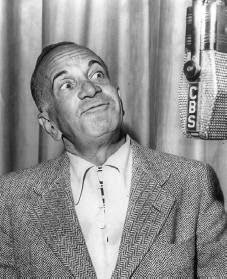
From Crooning To Cartoons – ‘Handsome’ Harry Babbitt Although our mental image of a big band era crooner is of a suave, velvet-voiced charmer who could purr into the microphone while the ladies swooned, it wasn’t always like that. Harry Babbitt, who could certainly fill the bill as a traditional crooner – his boss, bandleader Kay Kyser, usually introduced him as ‘Handsome Harry’ – was sometimes called upon for something a little different. Like doing Woody Woodpecker’s maniacal laugh.Kyser’s outfit could generate some solid music but it was also known for novelties, so when a special new song came along in the late 1940s Babbitt was enlisted to help. The St. Louis native had been with the band for a decade by then (minus a couple of years of WWII military service) and was an important part of the popular band’s many activities, including its numerous movie appearances.

He’d also sung on many of the hits, like “Who Wouldn’t Love You,” but he was just as good with whimsical songs like “Three Little Fishies.” So when “The Woody Woodpecker Song” came along he was ready to tackle it. Songstress Gloria Wood actually did most of the conventional singing in the song, but it was Babbitt’s crazy-sounding woodpecker laugh that sold it. The record became a best-seller for the band and led to the song’s use in later cartoons, which made it a part of every kid’s memories of those days. (Including mine.) As for Babbitt, he eventually built up quite a list of hit records with the band, with songs like “I’ll Get By,” and “How Are Things in Glocca Morra?” among his best. But he also had a lot of fun with other novelty pieces like his best-seller “All I Want for Christmas Is My Two Front Teeth.” (Another record I remember being around our house.) By the 1960s he was ready for something else, and he spent a couple of decades in private business. However, when Kyser died in 1985 Babbitt bought the rights to his musical legacy and for many years led a reconstituted outfit on tour. He eventually retired for good and died at age 90 in 2004...


Sunday, December 7, 2014

AL JOLSON AND WORLD WAR II

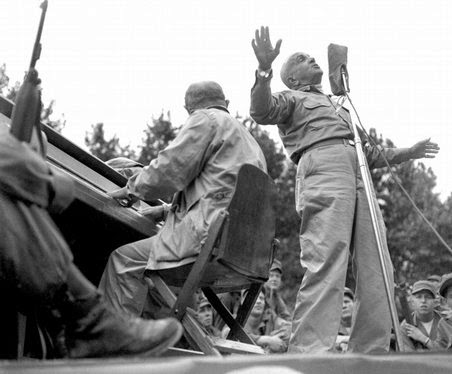
Al Jolson was one of the greatest entertainers for the good part of two decades. However, by 1940 he was a faded star. Audiences swooned singers such as Bing Crosby and newcomer Frank Sinatra. Even though he was forgotten, Jolson lobbied to entertain the troops overseas and in June of 1942 arrangements were made to send him to Alaska, via Seattle and Washington. As Al reported in a dispatch to Variety: “We arrived in Anchorage at 9:10 p.m., Anchorage time, and stayed at the Westward Hotel. When they told me to observe the blackout regulations and put my lights out I had to laugh, for in this part of Alaska at midnight you can thread a needle on Main Street. We gave two performances in Anchorage, each for an audience of 1,500 soldiers. Each show lasted an hour and I almost wore out the knees of my pants singing ‘Mammy’.

Al didn’t mention that rumours had swept the camp at Anchorage that Lana Turner was coming. “No she wasn’t - it was Dorothy Lamour,” some one else had said. When Jolson arrived on stage the soldiers’ disappointment expressed itself in the silence.

“Hello boys - I’m Al Jolson. You’ll see my name in the history books.” One soldier laughed, then another. Al told a joke, and another, and the laughter grew. He chatted about home, told them what he thought of Hitler and Hirohito and the laughter spread all round. Someone called for a song. Al gave them what they asked for and he was swamped by whistling applause. Al Jolson had found a new audience; and the soldiers had discovered Al Jolson.

Jolson: “Don’t you feel well, son?”
Soldier: “Oh, yessuh, Mista Jolson. It was on’y when you got to singin’ about Dixie. Well, Mista Jolson, it jest kinda got me - thass all . . . You know Mista Jolson, dis heah Arctic Ocean is an awful long way f’m tu-tty miles t’other side of Bummin’ham, Alabama.”

“Until now,” Al reported to Variety, “the transporting of our small piano had been an overture to an aspirin tablet, but from here on in it became a major headache. In order to entertain all the boys detailed in the vicinity of Anchorage, it became necessary to give shows in foxholes, gun emplacements, dugouts, to construction groups on military roads, in fact, any place where two or more soldiers were gathered together, it automatically became a Winter Garden for me and I gave a show. Imagine carting the piano to these locations. Sometimes it was by truck, once on a side car and once on a mule pack.”


It was during the Alaskan tour that one young soldier called out: “Kiss my wife for me when you get back to New York, will yer Al?”

“I’ll do better than that,” Al called back. “I’ll take her out to dinner. What’s her name?”

After writing her name down with her telephone number, he called out: “Any more?”

Everyone shouted at once and Al wrote down as many names as he could.

“I’ll call them all when I get back,” he said. And he did, informing mothers, wives and girlfriends that their loved ones were in fine shape. Jolson spent time talking to the servicemen, establishing a relationship, till his arrival in a jeep was always met by a collective: “Hiya, Al!”

Stopping soldiers in the street, Jolson would say: “My name’s Jolson. Do you wanna hear me sing?”

‘Next Town Reilly’ was a one man Department of Morale Boosting. “Those guys wouldn’t exactly be immune to a shapely dish once in a while, too,” Al told the USO, “whether she could sing or not.”

Jolson: “We woulda brought Lana Turner but she’s busy with the Second Front.”


In July 1942 Jolson and Fried toured all the US bases in the Caribbean before the USO flew them, along with actress Merle Oberon and singer Patricia Morison, to England and Northern Ireland. Singing whatever was wanted, wherever he wanted, even to troops on street corners, he enjoyed every round of applause. He told servicemen what he had told their fathers about English beer: “It should have been put back into the horse.”

The troupe had been scheduled to appear at the London Palladium with Ben Lyon and Bebe Daniels but Merle Oberon refused to appear. “We are here to entertain the troops, not the general public,” she said. Jolson was furious and announced he was returning to the United States - alone. “I just feel that I could better on my own than I could as a member of a troupe,” Jolson explained to the New York Times. “If I want to crowd in an extra show for defence workers in factories, I’d be able to do it.”

Jolson hadn’t ‘gone over’ as well as he hoped with some of the English audiences and as he sat depressed in the bar of the Savoy Hotel, Ralph Reader walked in whistling ‘Keep Smiling at Trouble’.

“English, English!” he excitedly greeted Ralph and they reminisced about their days at the Winter Garden. “They were great days, English, great days,” he said with a tear in his eye.

New York Times: “There were few jokes in his talk. The comedian was playing a straight part . . . For, like many other comedians, at heart, Jolson is serious and sentimental.”
New Yorker: “We’ve just heard from a soldier who was fortunate enough to be on hand at one of the entertainments presented before the troops in Ireland by Jolson and some of the other performers from the States. Jolson, our soldier reports, concluded the entertainment with what was obviously considered to be the best number in his repertoire. It was ‘Brother Can You Spare a Dime?’ - and Jolson gave it, as the people say, everything. No other happening in recent weeks has given us such a sense of this significant moment in history.”

‘The Colgate Show Starring Al Jolson’, a weekly radio show that CBS signed Jolson to do, ran until June 1943. Usually opening the show with an up-tempo number like ‘The Yankee Doodle Blues’, or “I’m Sitting On Top of the World’, he usually ended with a sentimental ballad like ‘Sonny Boy’. The show’s female vocalist was Jo Stafford and the musical director was Gordon Jenkins.

Gordon Jenkins commenting on Judy Garland and Frank Sinatra: “Neither one, I have to tell you, had the electricity that Al had.”


In July 1943, Al left on an overseas tour to entertain the troops. Since Martin Fried had been drafted, Al needed a pianist to accompany him and asked his friend Harry Akst. At their first stop, Georgetown, British Guiana, Al found he couldn’t reach the high notes at the close of ‘Swanee’. In a panic, he was ready to give up the whole tour. Harry had to convince him that he didn’t have to cash in on high finishes - Crosby didn’t. “They died with vaudeville,” Harry explained.


The new Al Jolson voice was born - not so light and breezy but deeper and more mellow.

Jolson had already cancelled his thirteen Colgate radio shows programmed for the fall when he suddenly began to feel bad. In an emergency flight, Al and Harry flew home to Miami Beach on 21 September 1943. Less than two weeks later while standing in a hotel lobby in New York, Jolson suddenly collapsed. Jolson woke up in a hospital bed to find he had picked up malaria from overseas and it had turned into pneumonia. His temperature reached 105F and doctors had to contact a military hospital for the proper serum before he began to recover. “No more overseas tours for you,” the doctors told him. After recuperating in Miami he went back to work playing himself in a film biography of George Gershwin called Rhapsody in Blue.

In October, Al and Harry began another tour of army hospitals. Winding up in Florida, they then drove up to New York, before driving west playing to a string of hospitals en route to California. By the time they reached Los Angeles, Al was complaining of feeling run down. Suddenly struck down by severe chest pains, Al was rushed into the Cedars of Lebanon Hospital. Malaria had struck again and this time with a malignant strain to it.

The Warner brothers, Harry and Jack, were gravely concerned and requested General Arnold, head of the Army Air Services, to fly two of his top physicians to Los Angeles. Because of Al’s tremendous war work the request was granted. The doctors saved his life but had to remove parts of two ribs and cut a malignant slice out of his left lung. Not allowed any visitors for a week, Jolson told his nurse: “I’ll never sing again.” Fortunately for soldiers and the world, Jolson would sing again...


Thursday, December 4, 2014

MOVIES THAT HAVE CHANGED MY LIFE

Movies affect everyone in different ways. Casual movie viewers are different than movie buffs, because the movies do not seem to affect them as much as they do to the true movie lover. Every movie lover has watched movies that have changed their lives. I recently turned 40 (ugh), and I have almost been a movie lover since then. I have a lot of movies that have had a profound influence on my life. Here are five films off the top of my head that have remained me with through my growing up:


1.    THE FACE BEHIND THE MASK (1941)
This is a little known B-movie put out by Columbia Pictures. Starring the great Peter Lorre, the film tells the story of a meek immigrant that just wants to live the American dream. That American Dream for Lorre becomes a nightmare when the tenement he found a place to live in catches fire and severely deforms him. No one will help him as society views him as a monster. He joins a gang and rises in their ranks quickly. When Lorre becomes rich from his gangster dealings, he has a doctor construct a mask to hide his burn scares. As Lorre becomes movie involved in murder, stealing, and underhanded dealings – the little shy immigrant he once was disappears, until he meets a blind girl (played expertly by Evelyn Keyes).  Keyes makes Lorre come alive again, and he realizes she loves him for what is on the inside and not the outside. He tries to leave the gang, but he faces dire consequences. The movie is short, but the story of the shy immigrant has always tugged at my heart strings. I think about this movie at least once a month. It has never been released on DVD, but I have a great copy from TCM, who shows it maybe every other year. It is really a tender and sad story.
 

2.    JAWS (1975)
Although this movie is on the borderline of a classic and a modern movie, I grew up with the movie, and it has been a part of my life for a long time. This Steven Spielberg masterpiece is also my favorite movie of all-time. I have watched the movie 75-100 times, but I have to admit if I watch it in a dark room at the right time, it still scares me. When I first saw the movie as a child it terrified me. For a good five years or so after watching the movie, I could not have my arms or legs dangle off of my bed for fear that a shark would come and bite me! This film is a great example of the type of horror movies I love. I love a movie where you don’t see the monster – at least right away. The mechanical shark during film production kept on breaking, so Spielberg had to create scenes without the shark. Thank goodness is broke so much. Because of the problem with the production, the movie created the suspense and the terror without seeing the shark. The movie, the theme song, and the terror of the movie has never left me.


3.    ROOMMATES (1995)
Growing up, I had a close relationship with my Grandfather. For a long time, until I met my wife, he was my best friend. When my Parents were emotionally and physically not there – my Grandfather was. This little known 1995 film starring Peter Falk and DB Sweeney has affected me more than any other film. The movie is about a grandfather (played by Falk) who has to raise his grandson after his daughter and son in law are killed. The movie spans several years as the grandfather and grandson grow up together.The grandson gets older and never forgets his grandfather. When he gets married, his grandfather is right there. When the grandson’s wife (played by a young Julianne Moore) is killed, Peter Falk steps in to help with his great grandson. I remember seeing this movie with my Mom and Stepfather.   Whenever I would go to the movies with them, I would dissect and review the movies on the way home. At the end of this movie, I cried for fifteen minutes straight on the way home. When the movie came out on DVD, we had my Grandparents over and all watched it together. My Grandfather even had a tear in his eye. My Grandfather died in 2002, and although I have this movie on DVD I have only watched the movie those two times. It affected me that much. 

 
4.    THE COUNTRY GIRL (1954)
Anyone who knows me, know I am a huge Bing Crosby fan. My Grandfather instilled in me a love of the music and movies of the era of golden Hollywood. My Grandfather never liked this film, because he liked his Bing Crosby as a carefree crooner. I thought this film was amazing, because it showed Bing’s range as an actor. He was amazing in this role as the down on his luck entertainer who lets booze destroy his marriage and career after the death of his son (played by a young Jon Provost). Grace Kelly played his wife and won an Oscar for her role as the emotionally tired wife. The scenes with Bing and his son are touching, and I never fail to tear up after the scene where his son dies. He is walking happily with his son, when a photographer wants to take a picture of Bing. He lets go of his son’s hand to pose for a picture briefly, but his sons runs into traffic and is killed. It is amazing the pain Bing conveys in his eyes and the anguish he feels as he blames himself through the years. The movie has an optimistic ending, but in the back of my head I can’t keep thinking that the story was not over. I can’t picture ever being able to recover after the death of a young child. Seeing Bing in this film makes me hope I never have to.


5.    WORDS AND MUSIC (1948)
One of my favorite musicals is this so-called biography of composer Richard Rodgers and lyricist Lorenz Hart. It is not a great musical, and as a biography there is not much fact in the film, but the idea of the movie and the music has always stuck with me. The majority of my favorite songs were written by Rodgers and Hart like: “My Funny Valentine”, “Spring Is Here”, “You Are Too Beautiful”, “My Romance”, “My Heart Stood Still”, and “He Was Too Good To Be True” – among countless others. The film showcased the music as well as the lives of the composers. Rodgers was played by Tom Drake, and Lorenz Hart was played expertly by Mickey Rooney. In the movie, Hart is portrayed as a lonely and sad man who never finds love. In real life, Hart was an alcoholic who could not come to terms with his homosexuality, and he literally died in the gutter in 1943. I wish they would make a movie on Lorenz Hart’s life now, because they could show everything about Hart’s life that they were too afraid to show in 1948. The movie is not great, but the story and talent of Lorenz Hart is timeless...

Tuesday, December 2, 2014

HISTORY OF A SONG: MOON RIVER

It is hard to believe that this year will mark ten years of maritial bliss for me. For our wedding song we had Etta James’ “At Last”. However, a song that probably means even more to me is the number we used for our closing – Andy Williams’ recording of “Moon River”. The song is one of my favorite songs from the 1960s.

“Moon River” is a song composed by Henry Mancini with lyrics written by Johnny Mercer. It received an Academy Award for Best Original Song for its first performance by Audrey Hepburn in the 1961 movie Breakfast at Tiffany's.  It also won Mancini the 1962 Grammy Award for Record of the Year and Mercer the Grammy Award for Song of the Year.[  Since its original performance, the song has been covered by many other artists.

It became the theme song for Andy Williams, who first recorded it in 1961 and performed it at the Academy Awards ceremonies in 1962. He sang the first eight bars at the beginning of his eponymous television show and named his production company and venue in Branson, Missouri after it. Williams' version never charted, except as an LP track, which he recorded for Columbia in a hit album of 1962. Cadence Records' president Archie Bleyer disliked Williams' version, as Bleyer believed it had little or no appeal to teenagers.

The song's success was responsible for relaunching Mercer's career as a songwriter, which had stalled in the mid-1950s because rock and roll replaced jazz standards as the popular music of the time. The song's popularity is such that it has been used as a test sample in a study on people's memories of popular songs. Comments about the song have noted that it is particularly reminiscent of Mercer's youth in the Southern United States. An inlet near Savannah, Georgia, Johnny Mercer's hometown, was named Moon River in honor of him and this song.


"Moon River" was a hit single for Jerry Butler in late 1961, reaching number 11 on the Billboard Hot 100 chart in December, two weeks before Mancini's recording reached the same spot. Meanwhile across the Atlantic, South African singer Danny Williams had a hit version of the song that reached number one in the UK in the final week of 1961. Although Andy Williams never released the song as a single, his LP Moon River and Other Great Movie Themes, released in the spring of 1962, was certified Gold in October 1963 for sales grossing over $1 million.


Countless singers have recorded the songs through the generations. Andy William’s version is my favorite, but other great versions have been recorded by Louis Armstrong, Perry Como, Patti Page, and even by composer Johnny Mercer. Mercer recorded it on his last album “My Huckleberry Friend” in 1974. The song had different meaning when it was written for Audrey Hepburn, but to me it is a song about two people who have found each other, who fall in love, and who choose to face the world together. At least that is what happened to me ten years ago…


Sunday, November 30, 2014

BORN ON THIS DAY: VIRGINIA MAYO


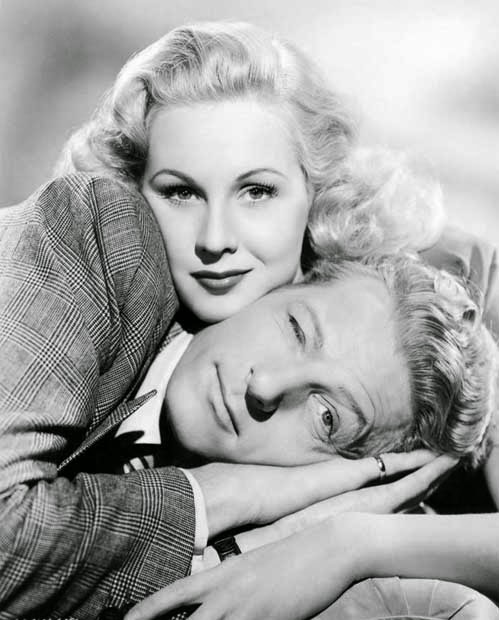
On this last day of November we celebrate what would have been the 94th birthday of actress Virginia Mayo. For a long time, I did not appreciate her as an actress, but taking a second look at her films, I realize she was a better actress than she was given credit for. Mayo was born Virginia Clara Jones on November 30, 1920 in St. Louis, Missouri, she was the daughter of newspaper reporter Luke and wife Martha Henrietta (née Rautenstrauch) Jones. Her family had roots running back to the earliest days of St. Louis, including great-great-great grandfather Captain James Piggott, who founded East St. Louis, Illinois in 1797. Young Virginia's aunt operated an acting school in the St. Louis area, which she began attending at age six. She was also tutored by a series of dancing instructors engaged by her aunt.

Following her graduation from Soldan High School in 1937, Virginia landed her first professional acting and dancing jobs at the St. Louis Municipal Opera and in an act with six other girls at the Hotel Jefferson. Impressed with her ability, her brother-in-law, vaudeville performer Andy Mayo, recruited her to appear in his act "The Mayo Brothers". Jones toured the American vaudeville circuit for three years serving as ringmaster and comedic foil for "Pansy the Horse" as the Mayo brothers performed in a horse suit. In 1941 Jones, now known by the stage name Virginia Mayo, got another career break as she appeared on Broadway with Eddie Cantor in Banjo Eyes.

In the early 1940s Virginia Mayo's talent and striking beauty came to the attention of movie mogul Samuel Goldwyn, who signed her to an acting contract with his company. One of her first films was the 1943 hit Jack London, which starred her future husband Michael O'Shea. Other roles soon followed as she became a popular actress who personified the dream girl or girl-next-door image in a series of films. A beneficiary of the Technicolor film process, it was said that audiences—particularly males—would flock to theaters just to see her blonde hair and classic looks on-screen. Her first starring role came in 1944 opposite comedian Bob Hope in The Princess and the Pirate. Remaining in the comedy genre, Mayo had several popular on-screen pairings with dancer-actor Danny Kaye, including Wonder Man (1945), The Kid from Brooklyn (1946), and The Secret Life of Walter Mitty (1947).


Going against previous stereotype, Mayo accepted the supporting role of unsympathetic gold-digger Marie Derry in William Wyler's drama The Best Years of Our Lives (1946). Her performance drew favorable reviews from critics as the film also became the highest-grossing film inside the United States since Gone with the Wind. At the zenith of her career, Mayo was seen as the quintessential voluptuous Hollywood beauty. It was said that she "looked like a pinup painting come to life". According to widely published reports from the late 1940s, the Sultan of Morocco declared her beauty to be "tangible proof of the existence of God."

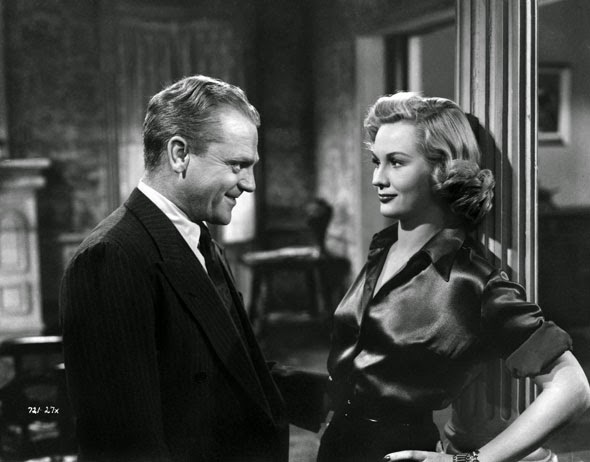
She would continue a series of dramatic performances in the late 1940s in films like Smart Girls Don't Talk (1948). Virginia Mayo was a constant fixture in the movie theaters in 1949 as she co-starred in many movies all released that year. Among them were Flaxy Martin, opposite Joel McCrea in the western Colorado Territory, co-starred with future President Ronald Reagan in The Girl from Jones Beach, and with comedian Milton Berle in Always Leave Them Laughing. Mixing drama with comedy roles all year, Mayo received rave reviews for her performance alongside James Cagney and Edmond O'Brien in 1949's White Heat and received equally impressive reviews for her co-starring with George Raft in Roy Del Ruth's Red Light that same year. In a later interview Mayo admitted she was frightened by Cagney as the psychotic gunman in White Heat because he was so realistic. I think that is what made Virginia Mayo so popular; every role she was in – she made seem so realistic as well…


Friday, November 28, 2014

A SUICIDE IN OZ

 
One of the most endearing films of all-time was 1939's The Wizard Of Oz. For over three generations, the film has been a beloved class of children and adults alike. I wanted to do some research into one of the more interesting rumors about the movie. There is a rumor that a jilted munchkin commited suicide, and it appeared in the film print. The so-called "munchkin suicide" scene occurs at the very end of the Tin Woodsman sequence, as Dorothy, the Scarecrow, and the Tin Woodsman head down the road on their way to the Emerald City.

The sequence begins with Dorothy and the Scarecrow trying to pick fruit from the talking apple trees, encompasses their discovery of the rusted tin man and their encounter with the Wicked Witch of the West (who tries to set the Scarecrow on fire), and ends with the trio heading off to Oz in search of the Wizard. To give the indoor set used in this sequence a more "outdoors" feel, several birds of various sizes were borrowed from the Los Angeles Zoo and allowed to roam the set. (A peacock, for example, can be seen wandering around just outside the Tin Woodsman's shack while Dorothy and the Scarecrow attempt to revive him with oil.) At the very end of this sequence, as the three main characters move down the road and away from the camera, one of the larger birds (often said to be an emu, but more probably a crane) standing at the back of the set moves around and spreads its wings. No munchkin, no hanging — just a big bird.


The unusual movement in the background of the scene described above was noticed years ago, and it was often attributed to a stagehand's accidentally being caught on the set after the cameras started rolling (or, more spectacularly, a stagehand's falling out of a prop tree into the scene). With the advent of home video, viewing audiences were able to rewind and replay the scene in question, view it in slow-motion, and look at individual frames in the sequence (all on screens smaller and less distinct than those of theaters), and imaginations ran wild. The change in focus of the rumor from a hapless stagehand to a suicidal munchkin (driven to despair over his unrequited love for a female munchkin) seems to have coincided with the heavy promotion and special video re-release of The Wizard of Oz in celebration of its 50th anniversary in 1989: someone made up the story of a diminutive actor who, suffering the pangs of unrequited love for a female "little person," decided to end it all right there on the set, and soon everyone was eager to share this special little film "secret" with others. Since (grossly exaggerated) tales of munchkin lechery and drunken misbehavior on the "Oz" set had been circulating for years (primarily spread by Judy Garland herself in television talk show appearances), the wild suicide story had some seeming background plausibility to it. (Other versions of the rumor combined elements from both explanations, such as the claim that the strange figure was actually a stagehand hanging himself.)

The logistics of this alleged hanging defy all credulity. First of all, the forest scenes in The Wizard of Oz were filmed before the Munchkinland scenes, and thus none of the munchkin actors would yet have been present at MGM. And whether one believes that the figure on the film is a munchkin or a stagehand, it is simply impossible that a human being could have fallen onto a set actively being used for filming, and yet none of the dozens of people present — actors, directors, cameramen, sound technicians, light operators — noticed or reacted to the occurrence. (The tragic incident would also had to have been overlooked by all the directors, editors, film cutters, musicians, and others who worked on the film in post-production as well.) That anyone could believe a scene featuring a real suicide would have been left intact in a classic film for over seventy years is simply incredible...


Wednesday, November 26, 2014

BOOK REVIEW: BOB HOPE - ENTERTAINER OF THE CENTURY

I haven't read a biogrpahy as engrossing as Richard Zoglin’s revelatory new biography of Bob Hope in a long time. It makes staggering claims for its subject. Is it enough to say that “for the way he marketed himself, managed his celebrity, cultivated his brand and converted his show business fame into a larger, more consequential role for himself on the public stage, Bob Hope was the most important entertainer of the century”? No, it’s not. Mr. Zoglin adds that “one could argue, without too much exaggeration, that he was the only important entertainer.”
I may not agree that Bob Hope was the entertainer of the century - from a century that boasted such entertainers as Al Jolson, Bing Crosby, Elvis Presley, and The Beatles, but Hope was important to comedy, as well as the soldiers during World War II. Hope was the Jim Carrey, Will Ferrell, and Steve Carell of his day - but by the time his last special aired in 1998, he was an aging relic.
Even though the author does admire his subject, he does not gloss over some controversal subjects like Hope's many affairs or the fact that Hope and Bing Crosby did not like each other much. The book is a balanced piece of literature that exposes the good and the bad of Bob Hope.
This unabashedly ambitious book also makes much of Hope as inspiration, public citizen and inventor of the stand-up comedy monologue, the kind he delivered when hosting the Academy Awards, which he did more than anyone else has. “No one ever looked better in a tuxedo,” Mr. Zoglin hyperbolizes about that.

Why, then, is Mr. Hope so seldom thanked for all he contributed to American life? Why do stand-up comics forget to mention him as the great pioneer? Lenny Bruce, whose name is as acceptable for them to drop as Hope’s is not, once supposedly spotted Hope in his audience and followed him into the parking lot, asking Hope to put him on NBC. Hope thought Bruce brilliant, but he knew how to deflect him. “Lenny,” he said, according to The San Diego Union, “you’re for educational TV.”
   
How did Hope start in vaudeville, entertain his way through the changing show business styles of the 20th century, become all-powerful and then ignored? It’s a great, forgotten story, and Mr. Zoglin provides a definitive version. Sure, it’s hyperbolic at times, and even defensive about Hope’s bad judgment once it starts to torpedo him. But Mr. Zoglin sees a great, gifted performer who gave the world endless amounts of hilarity, generosity and showbiz savvy. And it seems to pain him viscerally when Hope casts a shadow over his own achievements. This book is so enveloping that it’s hard not to share some of that pain.
If he had ended his career before Vietnam he would have been a beloved American hero. But Hope lived past his 100th birthday and kept performing long past the point at which he could be funny. His vehement, conservative politics were held against him by angry protesters during the Vietnam era, and his efforts to acknowledge the differences between that war and World War II fell flat: From then on, he became unfunny and out of touch. On Woodstock: “Since the dawn of man, that’s the most dandruff that was ever in one place.” On AIDS: “Have you heard? The Statue of Liberty has AIDS. Nobody knows if she got it from the mouth of the Hudson or the Staten Island Ferry.”
How could nostalgists miss him when he wouldn’t go away? Every big birthday meant a stiff, codgery NBC tribute to Bob Hope. Talented young performers didn’t want to be seen on these things, and more and more of his contemporaries were ailing or dead. Movie art houses declined to give Bob Hope films the treatment they gave the Marx Brothers, although Mr. Zoglin’s book may help correct that oversight. And his family members remain involved in trying to burnish his legacy and bring back the best of what he achieved. Mr. Zoglin’s fascinating book is a big contribution to their cause...


MY RATING: 9 OUT OF 10