Wednesday, April 30, 2014

THE SON OF PHIL HARRIS

Comedian and bandleader Phil Harris had a long and happy marriage to screen beauty Alice Faye for over fifty years. That marriage produced two daughters as well, but did you know Phil Harris was married before, and he had an adopted son? Here is the brief and forgotten story of Phil Harris Jr.

In 1927, Phil Harris was an up and coming bandleader. The son of two circus performers, Harris's first work as a drummer came when his father, as tent bandleader, hired him to play with the circus band. Harris began his music career as a drummer in San Francisco, forming an orchestra with Carol Lofner in the latter 1920s and starting a long engagement at the St. Francis Hotel. The partnership ended by 1932, and Harris led and sang with his own band, now based in Los Angeles. Phil Harris also played drums in the Henry Halstead Big Band Orchestra during the mid-1920s. Phil met and married Austrailan actress Marcia Ralston in 1927. He was 23 and she was 21. Eight years into the marriage they adopted a newborn son. Ralston was unable to have children. The newborn son, born on March 18,1935,they named Phil Jr did not help the marriage, and they divorced three years later in 1940.

Not much else is known about Phil Harris Jr, and supposedly he went to live with his mother and rarely saw his father. Alice Regan, the daughter of Phil and Alice Faye, said that Phil Jr was a troubled child and adolescence while growing up, and he did not straighten up until he got older.

There is a story I discovered about Phil Jr from September 5, 1950 when he was 15. Phil Jr. was picked up in the lobby of a San Francisco hotel at 3 a.m. after he disappeared from St. Mary’s College High School in Albany. Although he disappeared from school late Monday, news of the disappearance was not made public until the boy was found in the lobby of the Sir Francis Drake Hotel in San Francisco by San Francisco police and juvenile officers. According to Upton, Harris Sr, enrolled his son in the school at Hopkins Court and Albina Avenue Monday and the two then went to see the sights in San Francisco. They returned to the school late in the afternoon and had dinner. Harris then returned to San Francisco. A short time after he arrived at the Sir Francis Drake Hotel, school authorities notified him his son had disappeared. The father notified Oakland and Berkeley authorities and decided to remain in San Francisco to await news. When his son had not been found yesterday, he surmised that the boy may have decided to go back to Southern California and took a train for his home in Encino. Upton said young Harris told him he ran away “just on an impulse,” and had gone to movies and slept in hotel lobbies since he disappeared. He had about $5 in change in his pockets when officers found him in the morning.


I also came in contact with someone that worked with Phil Harris Jr while I was doing my research. He had this to say about the forgotten offspring: "I worked with Phil Harris Junior for many years. He was an Air Traffic Controller. I know he worked at Denver, but I worked with him for many years at the Fort Worth Air Route Traffic Control Center. He was a manager there, then worked with new systems. We worked many project together till all hours and used to eat together. I enjoyed working with him, but he was a character. Then he went to be the assistant manager at New York, but later returned to Fort Worth and I once again worked with him. He didn't talk about his father ever, but did mention being with his mother when he was pretty young. She was doing a part and everyone brought him ice cream and other goodies. He had two children, both girls. He married a second time, then retired. He died while on vacation. I think he was is Ireland at the time. I was glad he was happily married and enjoying himeself. He could be hard to work with at times, but we worked well together and I miss him."

Phil Harris Jr's mother Marcia Ralston died in 1988 at the age of 82. Phil Sr died in 1995 at the age of 91. Phil Jr himself died in on March 13 2001, five days before his 66th birthday of a sudden heart attack. Survivors included his wife, Joan C. Harris; daughters and sons-in-law,Catherine and Keith Kupiec of Carrollton and Deborah and BrentAnderson of Fort Worth; sisters, Phyllis Middleton of Arcadia, Mo.and Alice Reagan of New Orleans, La.; and grandchildren, Tiffany and Sean Kupiec and Danielle Anderson.

At the time, as an employee of the FAA, he was working on a joint project with NASA building a research center near DFW Airport in the Dallas-Fort Worth area. That building was completed and has been dedicated to the memory of Phil Harris, Jr! His wife Joan and his daughters were at the dedication in 2004.

Hopefully even though Phil Jr was forgotten to the public, hopefully in his private life he found peace, success, and prosperity that every offspring of a child deserves...

WRITER'S NOTE: I tried for months to find a picture of Phil Harris Jr, but I have had no luck. If someone finds a picture, please send it on to me. Thanks!


Friday, April 25, 2014

THE DRAMATIC SIDE OF JACKIE GLEASON

Most comedians eventually yearn and try to make the transition to dramatic films. Some do it with success like Bill Murray, but others only have moderate success in dramatic movies. Jackie Gleason only had moderate success as a dramatic actor, but I personally believe he had the talent to become a fine actor. Gleason's acting was not restricted to comedic roles.

He had also earned acclaim for live television drama performances in The Laugh Maker (1953) on CBS's Studio One and William Saroyan's The Time of Your Life (1958), which appeared as an episode of Playhouse 90 (a television anthology series).

He was nominated for a Best Supporting Actor award for his portrayal of Minnesota Fats in The Hustler (1961). (In his 1985 appearance on The Tonight Show, Gleason told Johnny Carson that he had played pool frequently since childhood, utilizing those experiences in The Hustler.) Gleason followed that up with a well-received role as a beleaguered boxing manager in the movie version of Rod Serling's Requiem for a Heavyweight (1962). Gleason also played a world-weary army sergeant in Soldier in the Rain (1963), in which he received top billing over Steve McQueen.

He wrote, produced and starred in Gigot (1962), a box-office flop in which he plays a poor, mute janitor who befriends and rescues a prostitute and her small daughter. The film's script formed the basis for the television film The Wool Cap (2004), starring William H. Macy in the role of the mute janitor; the television film received modestly good reviews.

During the 1980s, Gleason earned positive reviews playing opposite Laurence Olivier in the HBO dramatic two-man special, Mr. Halpern and Mr. Johnson (1983). He also gave a memorable performance as wealthy businessman U.S. Bates in the comedy The Toy (1982) opposite Richard Pryor. Although the movie itself was critically panned, Gleason and Pryor's performances were praised.

Gleason delivered one more critically acclaimed performance as an infirm, acerbic and somewhat Archie Bunker-like character in the Tom Hanks comedy-drama Nothing in Common (1986). The film proved to be Gleason's final film role, since he was suffering from colon cancer, liver cancer, and thrombosed hemorrhoids during production. “I won’t be around much longer”, he told his daughter at dinner one evening after a day of filming. Gleason kept his medical problems private, although there were rumors that he was seriously ill. A year later, on June 24, 1987, Gleason died at his Florida home. Gleason was no Sir Laurence Olivier, but he was a genius in every genre he tackled...


Monday, April 21, 2014

HEALTHWATCH: GLEN CAMPBELL

Glen Campbell has been moved into a care facility three years after being diagnosed with Alzheimer's disease, People.com reports.

"He was moved to an Alzheimer's facility last week," a family friend told the title. "I'm not sure what the permanent plan is for him yet. We'll know more next week."

The singer, whose "Rhinestone Cowboy" topped the charts in 1975, had been suffering from short-term memory loss in recent years. He was diagnosed with Alzheimer's disease in early 2011.
The 78-year-old Grammy winner and his wife Kim initially shared the news of his illness back in 2011 because he’d hoped to give a series of goodbye concerts, in conjunction with an album "Ghost on the Canvas,” which was released later that year.

"Ghost on the Canvas” (Surfdog), Campbell’s 61st studio album, was expected to be his last. It wasn’t. A brand new collection of recordings from the legendary singer, "See You There" (Surfdog) was released last December. With Campbell’s health apparently in decline, it’s increasingly likely the collection will be the final studio recording of the Arkansas native's career.
The latest health setback comes just days before the documentary of that final tour, titled “Glen Campbell... I'll Be Me,” gets its world premiere April 18 at the 2014 Nashville Film Festival.

Campbell was named both CMA Entertainer and Male Vocalist of the Year in 1968, and was inducted into the Country Music Hall of Fame in 2005. The veteran performer has sold more than 45 million albums over the course of his career...

SOURCE
  

Friday, April 18, 2014

PHOTOS OF THE DAY: CLASSIC HOLLYWOOD AND EASTER

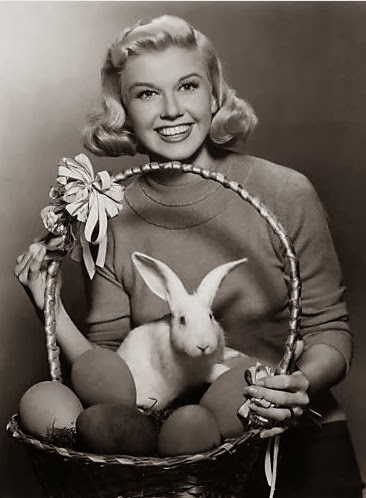
I've written it before, and I will write it again - there is just something beautiful in the photographes of classic Hollywood. Were the stars more beautiful? Where the photographers more talented? Whatever it is, I never get tired of looking at these vintage pictures. Here are some pictures of classic Hollywood stars celebrating Easter...

DORIS DAY (BORN 1924)
VERA-ELLEN (1921-1981)

LILLIAN HARVEY (1906-1968)

SHARON TATE (1943-1969)


SHIRLEY TEMPLE (1928-2014)

IDA LUPINO (1918-1995)


Wednesday, April 16, 2014

JIMMY STEWART BLOGATHON: THE MUSICAL SIDE OF JIMMY STEWART

When you think of the wealth of movies that Jimmy Stewart made in his career, you do not consider him a musical star. Anyone who has ever heard him sing would agree with me. However, Jimmy Stewart dimake a handful of musicals during his long and illustrious career which spanned decades. Most of them however we not that well received.

After debuting in a forgotten Spencer Tracy film The Murder Man in 1935, Stewart's next movie was a musical - Rose Marie (1936). The movie was an adaptation of the stage operetta and a starring vehicle for Jeanette MacDonald and Nelson Eddy. Stewart plays the second male lead that tries to steal MacDonald away from Eddy. Jimmy did not sing in this film, but Nelson and Jeanette would introduce the song "Indian Love Call" in the movie. It would be the duo's signature song.


MGM still had no clue what to do with Stewart so they stuck him in another musical right after. In Born To Dance (1936) he was paired with the beautiful Eleanor Powell. The musical score was done by the great Cole Porter, and Stewart was even given the task of introducing the Porter classic "Easy To Love". His voice brought tears to my eyes and not in a good way. Even in the 1974 documentary That's Entertainment Stewart poked fun and his attempt at singing. Thank goodness Eleanor Powell's tap dancing and the Cole Porter score took made audiences forget Stewart's vocal inadequacy.

By the late 1930s, Jimmy Stewart was making a mark for himself as the "every man" of film. His films like You Can't Take It With You and Mr Smith Goes To Washington cemented Stewart's place as a great leading man. However, in 1941 Stewart appeared in two musicals. For the horrible film Pot O Gold, Jimmy was loaned out to United Artists, a studio not known for great musicals. The movie was an adaptation of a popular radio show of the time. The film tells of a couple (Stewart and Paulette Goddard) romantically involved despite family feuds. Stewart and Goddard both were not singers so the musical part of the movie came from Horace Heidt and His Orchestra. Pot O Gold was a bomb, and Stewart later referred to the film as the worst one he ever appeared in.


The other musical Stewart appeared in in 1941 was MGM's lavish musical Ziegfeld Girl. Set in the 1920s, the film tells the parallel stories of three women who become performers in the renowned Broadway show the Ziegfeld Follies. Stewart had no musical numbers in the film. He was the main male lead, playing the boyfriend of a tortured Ziegfeld girl (Lana Turner). Stewart did not need to sing in this film, because it also had the talented musical stars Judy Garland and Tony Martin to make the film one of the best musicals of 1941.

In the 1940s Jimmy steered clear of the musical genre. Other than a humorous song he sang on Bing Crosby's radio show in the late 1940s, Jimmy stayed away from the musical. However, he did make one more musical of note. Not only was it his most profitable musical, but it was one of the greatest musicals of the 1950s. Stewart portrayed big band leader Glenn Miller in The Glenn Miller Story (1954). The film follows big band leader Glenn Miller (1904–1944) (James Stewart) from his early days in the music business in 1929 through to his 1944 death when the airplane he was flying in was lost over the English Channel during World War II. Prominent placement in the film is given to Miller's courtship and marriage to Helen Burger (June Allyson), and various cameos by actual musicians who were colleagues of Miller. Upon release in 1954, The Glenn Miller Story was massively successful at the box office.


In 1954, the film was nominated for three Academy Awards, including Best Screenplay (by Valentine Davies and Oscar Brodney) and Best Score (by Henry Mancini and Joseph Gershenson). The film won the Oscar for Best Sound Recording, by Leslie I. Carey. Jimmy Stewart was definitely no rival to Bing Crosby or Fred Astaire in the musical genre, but it is interesting to look at the musicals the non-musical Stewart made during his career. His acting ability as America's "every man" is what made him one of the biggest stars of classic Hollywood. Again, it was definitely his acting ability and not his musical talent or lack of...

Monday, April 14, 2014

DORIS DAY AT 90

With reports of ill health, it is rare to see a new picture of screen star Doris Day. However, she made a rare appearance in Carmel, California for her 90th birthday, and here are the pics...


Just like beloved Betty White, 92 - Doris devotes her time to animal rights and founded the Doris Day Animal Foundation in 1978.
Affectionately nicknamed the 'Dog Catcher of Beverly Hills,' the Calamity Jane actress even held a charity doggie fashion show Thursday at her hotel, Cypress Inn.

Doris Day has officially been retired since the late 1980s...

Saturday, April 12, 2014

DIAMONDS & GOLD BLOGATHON: BING CROSBY AS DR. COOK

Bing Crosby was one of the biggest movie stars of all-time. He was the number one box office draw from 1945 to 1949. After his contract with Paramount Studios was over in 1956, Bing moved away from making movies and concentrated on raising his second family. However, even in Bing's "golden years" he did make an occasional movie. One of his last screen appearances was in the television movie Dr Cook's Garden on ABC television in 1971. Bing was 68 at the time the movie came out.

Dr. Cook's Garden was originally a Broadway play written by Ira Levin. It premiered on Broadway in 1967 with a cast including Burl Ives and Keir Dullea. George C. Scott was meant to direct but was replaced during rehearsals by Levin. When the play was made for television Bing took over the Burl Ives roles as a seemingly friendly elderly doctor. Frank Converse plays the young doctor that looks up to Bing, and a young Blythe Danner plays Bing's secretary and Converse's love interest. Originally airing as the ABC "Movie of the Week", Dr. Cook's Garden seems more relevant with the passage of time with the real world bringing us Doctor Kevorkian types in the decades since.

Der Bingle is a kindly G.P. in a Greenfield, arguably the most beloved person in this idyllic area. How idyllic? The town boats a very low crime rate and few unpleasant citizens. Greenfield is about to host recent medical school graduate Converse, returning to visit high school sweetheart Danner and mentor Crosby. The budding young doctor is pleasantly surprised by his home town's evolution into a paradise---and increasingly concerned about the number of abrupt, mysterious deaths occuring in heavenly Greenfield. Crosby's Dr. Cook is calm and rationalizing as his describes the thought he puts into his decisions, and admits that marking the "R" is always difficult for him. His unfailing composure adds creepiness that helps make up for the missing uncertainty and almost raises this otherwise average tale into the must-see category.


Two decades before Alec Baldwin brazenly declared himself God in Malice, Crosby let actions speak louder than his downright humble words possibly could, giving us a thriller more than interesting enough to watch despite its deficiencies. By 1971, Bing was no longer the leading man who made Dorothy Lamour or Mary Carlisle swoon with the notes of his beautiful voice. At an age now when many people were retired, Bing could pick and choose what movies he wanted to make. I am glad he picked the role of Dr. Cook. Some of the dialogue is as dated as a 1971 television movie, but I think Bing should have done more dramas. He definitely had the acting chops to do so. The ending of the movie is completely different than the ending of any other Bing Crosby movie, and Dr. Cook's Garden proved that Bing still had "IT" at the age of 68...