Thursday, July 17, 2014

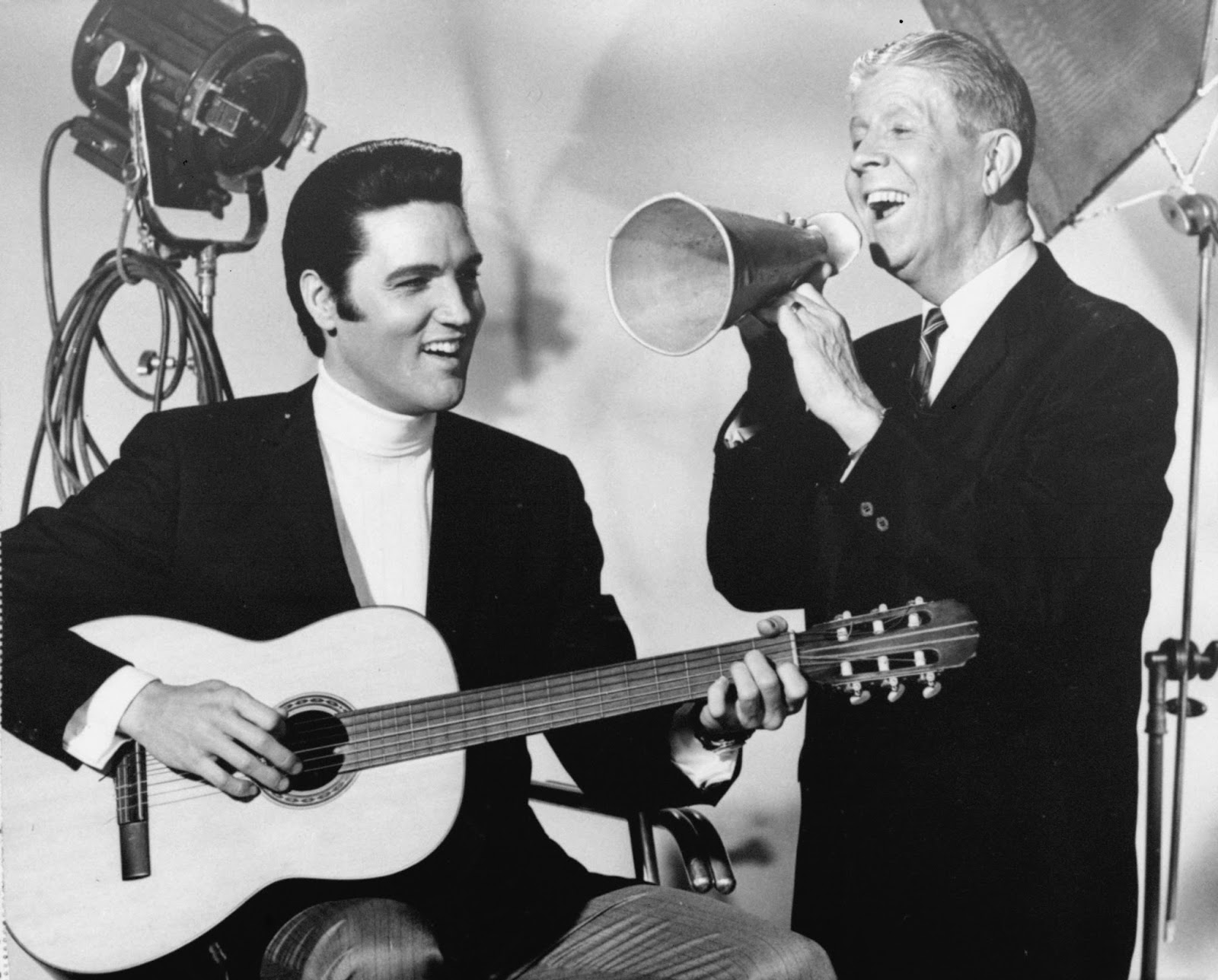
RIP: ELAINE STRITCH

Actress Elaine Stritch, star of Broadway hits including “Elaine Stritch at Liberty” and “Show Boat,” who was nominated for multiple Tonys and Emmys, winning three of the latter, has died. She was 89.

Stritch, an atypical star of stage and screen known for her association with Stephen Sondheim, quickly gained a reputation for the worldly, acerbic wit that often defined her characters. In her one-woman show “Elaine Stritch at Liberty,” Stritch talked candidly about battling the bottle and her colorful, albeit destructive, love life.

Her role as the drunk yet lucid Claire in “A Delicate Balance” earned her a 1996 Tony nomination for best actress. Roles in “Bus Stop,” “Sail Away” and “Company” snagged her three other noms while “Elaine Stritch at Liberty” won her the 2002 award for special theatrical event.

On television, Stritch was memorable late in her career for her recurring role on NBC’s “30 Rock” as the crusty, goofy mother to Alec Baldwin’s character, drawing five nominations for the role and winning in 2007. She was also impressive as a fierce but notably ethical defense attorney on two episodes of “Law & Order,” winning an Emmy for the role in 1993. A P.A. Pennebaker documentary of her “At Liberty” stage show won several Emmys in 2004, including for her the award for outstanding individual performance in a variety program.
 
Stritch did not restrict her candor to the stage, once telling Variety’s Army Archerd that she “flipped over Rock Hudson — and we all know what a bum decision that turned out to be,” referring to her failed romance with the closeted actor. These gritty, honest revelations contributed to the unique style Stritch brought to her work.

Born in Detroit, Stritch ironically attended finishing school before landing the abrasive, tough-as-nails roles for which she became known. She studied acting at the New School’s Dramatic Workshop with Marlon Brando and once said of performing: “There are a lot of things I do that I don’t want to, but I have to. It’s truly an emotional need for me to perform.” This necessity was reflected in her career, which spanned several decades and two oceans, leading her to stages in London’s West End and dozens of appearances on the small and silver screen.


On TV, she racked up credits in the episodic anthologies of the 1950s, appeared on “The Ed Sullivan Show,” starred in a TV series version of “My Sister Eileen” in 1960-61, starred in the U.K. sitcom “Two’s Company” in the late ’70s and had a role on “The Ellen Burstyn Show” in 1986-87.

Film credits include the 1957 film adaptation of Ernest Hemingway’s “A Farewell to Arms,” Woody Allen’s 1987 film “September,” the Robin Williams comedy “Cadillac Man,” Allen’s “Small Time Crooks” and romancer “Autumn in New York.” She also starred alongside Jack Lemmon and Walter Matthau in 1997's "Out To Sea", and as Jane Fonda's mother in "Monster In Law" in 2005.

Stritch made her stage debut at New York’s New School in 1944. The actress understudied Ethel Merman for “Call Me Madam” while simultaneously appearing in the 1952 revival of “Pal Joey”; later she starred in the national tour of “Call Me Madam.”

Her professional relationship with Sondheim lasted decades. She made famous Sondheim’s sneeringly witty tune “The Ladies Who Lunch” in 1970’s “Company,” sang his enduring “I’m Still Here” in her 2002 solo show and performed in a 2010 revue of his tunes called “At Home at the Carlyle: Elaine Stritch Singin’ Sondheim…One Song at a Time.” The actress appeared in Garth Drabinsky’s smash hit “Show Boat” in 1994 and in Edward Albee’s play “A Delicate Balance” in 1996.

In 2010 Stritch replaced Angela Lansbury as Madame Armfeldt in “A Little Night Music” on Broadway. The actress was profiled in the 2013 feature documentary “Elaine Stritch: Shoot Me”...
RECENTLY VIEWED: OZ, THE GREAT AND POWERFUL

There are not many new movies that I have wanted to see. Spending over $10 for an overblown and overhyped CGI movie does not interest me. However, I did want to see this year's Oz, The Great And Powerful. I was amazed that I caught it on the Starz movie channel already, and I did not have to leave the house or spend $5 for a bag of candy to see it! Oz the Great and Powerful is a 2013 American 3D fantasy adventure film directed by Sam Raimi, produced by Joe Roth, and written by David Lindsay-Abaire and Mitchell Kapner. The film stars James Franco as Oscar Diggs, Mila Kunis as Theodora, Rachel Weisz as Evanora, and Michelle Williams as Glinda. Zach Braff, Bill Cobbs, Joey King and Tony Cox are featured in supporting roles.

The film is based on L. Frank Baum's Oz novels, and also pays homage to the 1939 MGM film, The Wizard of Oz. Set 20 years before the events of the original novel, Oz the Great and Powerful focuses on Oscar Diggs, who arrives in the Land of Oz and encounters three witches: Theodora, Evanora and Glinda. Oscar is then enlisted to restore order in Oz, while struggling to resolve conflicts with the witches and himself. Oz the Great and Powerful is set in the year 1905, 20 years before the events of the original novel The Wonderful Wizard of Oz. The film features several artistic allusions and technical parallels to the books and the 1939 film.


The film's opening sequence is presented in black and white. When Oscar is caught up in the tornado, the audio transitions from monaural to surround sound. Fading into color when Oscar arrives in Oz; additionally, the aspect ratio gradually widens from 4:3 Academy ratio to 2.35:1 widescreen. As in the 1939 film, Glinda travels in giant bubbles, and the Emerald City is actually emerald; in the novel, characters wear tinted glasses to make it appear so. The iconic green look of the Wicked Witch of the West is closer to her look in the classic film, as the Witch is a short, one-eyed crone in the novel.

The Wicked Witches are portrayed as sisters, an idea which originated in the 1939 film. Several actors who play Oz characters make cameos in the Kansas segments, such as Frank, Oscar's assistant whom he refers to as his "trained monkey" (Frank's "Oz" counterpart is the winged monkey Finley) and a young girl in a wheelchair who serves as the Kansas counterpart to China Girl (in Kansas, Oscar is unable to make the wheelchair-bound young girl walk, and gets a chance to do so when he repairs China Girl's broken legs). Another character, Annie (Michelle Williams), informs Oscar that she has been proposed to by a John Gale, presumably hinting at Dorothy Gale's parental lineage. Other referenced characters include the Scarecrow, who is built by the townspeople as a scare tactic and the Cowardly Lion, who is frightened away by Oscar after attacking Finley. Similarly, various other races of Oz are depicted besides the Munchkins; the Quadlings, the china doll inhabitants of Dainty China Country, and the Winkies (who went unnamed in the classic film). Similarly, Glinda is referred to by her title in the novel (the Good Witch of the South), unlike the 1939 film, where her character's title is "Good Witch of the North" (due to her character being merged with the Good Witch of the North). Theodora's tears leave scars on her face, reflecting her weakness to water. Also, Oz is presented as a real place as it is in the novel, and not a dream as the 1939 film presents.


Oz, The Great And Poweful is a beautiful film to watch, and the whole movie is enjoyable. I am not a big fan of actor James Franco, and he always looks high to me, but he was believable in his role. The actress that stole the movie away in my book is the beautiful Mila Kunis. Kunis really channeled her inner witch as well as a tiny bit of Margaret Hamilton, who played the with in the 1939 film. I think personally that she made the movie. Although a lot of friends I know took their children to see the film, I don't think it is a family film. There are some adult storylines, but movie is definitely worth seeing. The movie is missing Judy Garland and the innocence of the 1939 movie, but it is still a great story...

MY RATING: 7 OUT OF 10

Tuesday, July 15, 2014

WHAT A CHARACTER: JOHN MCGIVER


You may not recognize the name John McGiver, but you probably know the face. He was in countless movies and televison shows throughout the years. John Irwin McGiver was born on November 5, 1913 and was an American character actor who made more than a hundred appearances in television and motion pictures over a two-decade span from 1955 to 1975.

The owl-faced, portly actor with the mid-Atlantic accent was known for his performances as the kindly Tiffany's salesman in Breakfast at Tiffany's (1961); the honorable but ill-fated Senator Thomas Jordan in the original film version of The Manchurian Candidate (1962); and as religious fanatic Mr. O'Daniel in the film Midnight Cowboy (1969). He also appeared on many TV shows and commercials, including a Baggies spot in the 1960s, as well as the first of a popular series of commercials for the American Express charge card ("Do you know me?").

McGiver was born the son of Irish immigrants. He received a B.A. in English from Fordham University in 1938 and master's degrees from Columbia University and Catholic University. He was an English teacher before he enlisted in the U.S. Army in 1942 and served as an officer in the U.S. Army's 7th Armored Division in Europe during World War II. His stage career also began before the war, when he was an actor-director in New York's Irish Repertory Theater. He continued to teach English and speech at Christopher Columbus High School in the Bronx, working occasionally in off-Broadway plays, until 1955, when he became a full-time actor.

In 1959, McGiver appeared in the episode "The Assassin" of NBC's espionage drama Five Fingers, starring David Hedison. In 1962, he appeared as Gramps in the episode "The Seventh Day of Creation" of the NBC medical drama about psychiatry, The Eleventh Hour, starring Wendell Corey and Jack Ging. He appeared on the Alfred Hitchcock Presents episodes "Six People No Music", "Fatal Figures" and the Twilight Zone episode "Sounds and Silences". He also played a butterfly collector in a 1966 episode of Gilligan's Island (season 3, episode 7, Man With A Net). In 1971 he guest starred in Alias Smith and Jones with Pete Duel and Ben Murphy (season 1, episode 8, 'A Fistful of Diamonds').

Between 1963 and 1964, McGiver appeared in five episodes of The Patty Duke Show as J.R. Castle, who was Martin Lane's boss at the fictional newspaper The Chronicle. In the 1964–1965 television season, McGiver played the widower Walter Burnley, the head of the complaint department of a fictitious Los Angeles department store in the CBS sitcom Many Happy Returns. His costars included Elinor Donahue, Mark Goddard, Mickey Manners, and Elena Verdugo.

McGiver died of a heart attack on September 9, 1975 in West Fulton at age 61. His remains were cremated. McGiver was married to Ruth Schmigelsky from 1947 until his death; they had ten children. Also surviving were the memorable roles McGiver had throughout his remarkable career...


Saturday, July 12, 2014

PHOTOS OF THE DAY: EVEN MORE ODD PAIRINGS

This is the third addition of this series. I love featuring different pairings of movie stars in pictures that you are used to seeing together. There always seems to be different photos that I discover:


ELVIS PRESLEY and RUDY VALLEE

CHARLIE CHAPLIN and AL JOLSON


MICHAEL JACKSON and FRED ASTAIRE


EDDIE CANTOR, JUDY GARLAND, GEORGE JESSEL

MARY TYLER MOORE and JIMMY DURANTE

GROUCHO MARX and JAYNE MANSFIELD


Wednesday, July 9, 2014

HARRY JOLSON: THE FORGOTTEN JOLSON

Although Al Jolson was considered the greatest entertainer of all time, there are very few snippets of information about Al Jolson's brother, Harry. Harry Jolson was born in 1882. A few years older than Al, he preceeded Al into show business, and following his older brother to New York provided Al Jolson's initial entry into the world of entertainment. Harry Jolson was the fourth and child of Moses Reuben and Naomi (Cantor) Yoelson; his four siblings were Rose, Etta, another sister who died in infancy, and of course Asa (aka Al Jolson).

In 1891, his father, who was qualified as a rabbi and cantor, moved to New York to secure a better future for his family. By 1894, Moses Yoelson could afford to pay the fare to bring Naomi and his four children to America. By the time they arrived, he had found work at the Talmud Torah Synagogue in the Southwest Waterfront neighborhood of Washington, D.C., where the family was reunited. Hard times hit the family when his mother, Naomi, died in late 1894.

According to several sources, the boys entertained together on the streets of Washington, DC, providing the nascent chemistry for their early stage acts. In 1929, Harry Jolson appeared in the film The Voice of Hollywood, in a short comedy routine, with Lola Lane.

Through their lives, their careers diverged and intersected. Harry often played a venue after Al, Al would hire Harry as his manager, some say to keep him off the stage. Some reports say that Harry had a better voice than Al; the paucity of recordings of Harry and the performance records of the brothers would belie that supposition.

Whatever animosity there was seemed to dim following Al Jolson's passing, with Harry Jolson appearing on a television program in tribute to his later brother, and recording a eulogy to "my brother Al." In 1948, Harry's wife Lillian died at the age of 58 of a heart ailment, and he was never the same. His brother Al died in 1950. Three years after Al Jolson passed away, his older brother, Harry, left us, as well. In contrast to the elaborate Jolson gravesite, Harry's grave has but a simple marker...


Saturday, July 5, 2014

BIG BAND BEAT: HAL KEMP

When you read about the icons of the Big Band era you immediately think of leaders such as Glenn Miller, Benny Goodman, and Tommy Dorsey. However, the Big Band era is filled of talented musicians and leaders that really contributed to make the era what it was. Band leader Hal Kemp was one of those supreme talents. Hal Kemp was born on March 27, 1904 and he developed his love of music while in college.

At the University of North Carolina at Chapel Hill he formed his own campus jazz group, the Carolina Club Orchestra. The band recorded for English Columbia and Perfect/Pathé Records in 1924-5. 

This first group toured Europe in the summer of 1924 under the sponsorship of popular bandleader Paul Specht. Kemp returned to UNC in 1925 and put together a new edition of the Carolina Club Orchestra, featuring classmates and future stars John Scott Trotter, Saxie Dowell, and Skinnay Ennis. In 1926, he was a member of the charter class of the Alpha Rho chapter of Phi Mu Alpha Sinfonia music fraternity, installed on the Carolina campus in February of that year. In 1927 Kemp turned leadership of the Carolina Club Orchestra over to fellow UNC student Kay Kyser and turned professional. He and Kyser remained close friends for the remainder of Kemp's short life. Hal's band was based in New York City, and included Trotter, Dowell, and Ennis, and a few years later trumpeters Bunny Berigan and Jack Purvis joined the group. The sound was 1920s collegiate jazz. Kemp once again toured Europe in the summer of 1930. This band recorded regularly for Brunswick, English Duophone, Okeh and Melotone Records.
In 1932, during the height of the Depression, Kemp decided to lead the band in a new direction, changing the orchestra's style to that of a dance band (often mistakenly referred to as "sweet"), using muted triple-tonguing trumpets, clarinets playing low sustained notes in unison through large megaphones (an early version of the echo chamber effect), and a double-octave piano.


One of the main reasons for the band's success was arranger John Scott Trotter. Singer Skinnay Ennis had difficulty sustaining notes, so Trotter came up with the idea of filling in these gaps with muted trumpets playing staccato triplets. This gave the band a unique sound, which Johnny Mercer jokingly referred to as sounding like a "typewriter". The saxes often played very complex extremely difficult passages, which won them the praise of fellow musicians. Vocalists with the band during the 1930s included Ennis, Dowell, Bob Allen, Deane Janis, Maxine Gray, Judy Starr, Nan Wynn, and Janet Blair. During the 1930s, Kemp recorded for Brunswick, Vocalion and RCA Victor Records. Hal's band was one of the most popular bands in the 1930s, and was often featured performing on the radio. The band also appeared in numerous motion-picture short subjects, and they were featured in the 1938 RKO film, Radio City Revels.


On December 19, 1940, while driving from Los Angeles to a booking in San Francisco, his car collided head-on with a truck. Kemp broke a leg and several ribs, one of which punctured a lung. He developed pneumonia while in the hospital and died two days later. Art Jarrett took on leadership of Kemp's orchestra in 1941, but the band never reclaimed it status that it had with Hal Kemp…


Thursday, July 3, 2014

HISTORY OF A SONG: BALLAD FOR AMERICANS

During this 4th of July season, now more than ever, we need to listen to songs that really spotlight how great our Country was and could still be. One such composition is the beautiful “Ballad For Americans”. The song is actually a patriotic cantata with lyrics by John La Touche and music by Earl Robinson.

Originally titled "The Ballad for Uncle Sam", it was written for a WPA theatre project called Sing for Your Supper. The show opened on April 24, 1939. Congress abolished the Project on June 30, 1939. 

The “Ballad of Uncle Sam” had been performed 60 times.Producer Norman Corwin then had Robinson sing “Ballad of Uncle Sam” for the CBS brass. CBS was impressed and hired Paul Robeson to perform the song. Corwin retitled the song “Ballad for Americans.” Robeson and Robinson rehearsed for a week. On Sunday, November 5, 1939, on the 4:30 pm CBS radio show The Pursuit of Happiness, Robeson sang “Ballad for Americans” (Time, November 20, 1939). Norman Corwin produced and directed, Mark Warnow conducted, Ralph Wilkinson did the orchestration (in Robeson's key), and Lyn Murray handled the chorus. Robeson subsequently began to perform the song, beginning with a repeat on CBS on New Year’s Eve. Robbins Music Corporation published the sheet music.

Victor Records decided to record and release the song. Robinson recommended the American People’s Chorus for the recording and he re-rehearsed them in Robeson’s key. (Robinson had written the song to the key of E.) Nathaniel Shilkret conducted the recording. Time Magazine mentioned the album on the May 6, 1940 issue. On May 14, 1940, a full page ad for the records (a four-sided album on 78 rpm records) appeared in the New York Daily News. Each side of the album ended with the lyrics “You know who I am.” By the end of 1940, the album had sold more than 40,000 copies.

On July 6, 1940, Bing Crosby recorded the song for Decca. It became a huge hit for Decca and rivaled Paul Robeson’s version of it. Bing’s version is a scaled down version, along with more wording to fit his personality. Decca released the song as a two doubled sided blue label 78rpms. MGM then included the song as the finale of the 1942 movie Born to Sing (choreographed by Busby Berkeley and sung by Douglas McPhail). Jules Bledsoe, James Melton and others also performed the song. Lawrence Tibbett performed it on NBC for the Ford Hour. The British premiere was in September 1943 with the London Symphony Orchestra conducted by Hugo Weisgall.


In the 1940 presidential campaign it was sung at both the Republican National Convention (by baritone Ray Middleton) and that of the Communist Party. Its popularity continued through the period of World War II — in autumn 1943, 200 African American soldiers performed the piece in a benefit concert at London's Royal Albert Hall. After the war, Robeson transferred from Victor to Columbia Records. Victor responded by withdrawing Robeson’s Ballad from their catalogue. In 1966, Vanguard Records released Robeson’s recording on a 331⁄3 rpm record. It has been periodically revived, notably during the United States Bicentennial (1976).

Invoking the American Revolution (it names several prominent revolutionary patriots and quotes the preamble of the Declaration of Independence), and the freeing of the slaves in the American Civil War (there is a brief lyrical and musical quotation of the spiritual "Go Down Moses"), as well as Lewis and Clark, the Klondike Gold Rush, and Susan B. Anthony, the piece draws an inclusive picture of America: 

"I'm just... an Irish, Negro, Jewish, Italian, French and English, Spanish, Russian, Chinese, Polish, Scotch, Hungarian, Swedish, Finnish, Canadian, Greek and Turk and Czech and double-check American — I was baptized Baptist, Methodist, Congregationalist, Lutheran, Atheist, Catholic, Orthodox, Jewish, Presbyterian, Seventh-day Adventist, Mormon, Quaker, Christian Scientist — and lots more."

If you want to listen to what America is and should be listen to Bing’s version and the other versions of “Ballad For Americans.” It will give you a lump in your throat and pride in your country. God bless America…