Saturday, November 12, 2011
BORN ON THIS DAY: GRACE KELLY
Grace Kelly, a true Hollywood princess, was born on this day - November 12, 1929. Grace Kelly was born in Philadelphia to John Brendan "Jack" Kelly, and his wife, Margaret Katherine Majer. The newborn was named after her father's sister, who had died at a young age. She was raised Catholic, and was of Irish and German descent. Before her marriage, Majer studied physical education at Temple University and later became the first woman to head the Physical Education Department at the University of Pennsylvania. Jack Kelly was a local hero as a triple Olympic-gold-medal-winning sculler, and became wealthy as his construction company became the largest such enterprise on the East Coast. Registering as a Democrat, he obtained the party's nomination for mayor in the 1935 election and lost by the closest margin for any Democrat in the city's history. In later years, he served on the Fairmount Park Commission and, during World War II, was appointed by President Roosevelt as National Director of Physical Fitness.
When Grace was born, the Kellys already had two children, Margaret Katherine, known as Peggy (June 13, 1925 – November 23, 1991) and John Brendan, Jr., known as Kell (May 24, 1927 – May 2, 1985). Another daughter, Elizabeth Anne, known as Lizanne (June 25, 1933 – November 24, 2009), was born three and a half years after Grace.
At Margaret's baptism in 1925, Jack Kelly's mother, Mary Costello Kelly, expressed her disappointment that the baby was not named Grace in memory of her last daughter, who had died young. Upon his mother's death the following year, Jack Kelly resolved that his next daughter would bear the name and, three years later, with the arrival of Grace Patricia in November 1929, his late mother's wish was honored.
Following in his father's athletic footsteps, John Jr. won in 1947 the James E. Sullivan Award as the country's top amateur athlete. Also, similar to his father's gold medals in rowing at the 1920 and 1924 Summer Olympics, he competed in the sport at the 1948, 1952 and the 1956 Summer Olympics in Melbourne where, on November 27, seven months after his sister's Monaco wedding, he won a bronze medal, which he gave to her as a gift of the occasion. He also served as a city councilman, and Philadelphia's Kelly Drive is named for him.
Two of Grace Kelly's uncles were prominent in the arts; her father's eldest brother, Walter C. Kelly (1873–1939), was a vaudeville star whose nationally known act The Virginia Judge was filmed as a 1930 MGM short and a 1935 Paramount feature, and another older brother, George Kelly (1887–1974), estranged from the family due to his homosexuality, became renowned in the 1920s as a dramatist, screenwriter and director with a hit comedy-drama, The Show Off in 1924–25, and was awarded the 1926 Pulitzer Prize for Drama for his next play, Craig's Wife.
Living in Manhattan's Barbizon Hotel for Women, a prestigious establishment which barred men from entering after 10 pm, and working as a model to support her studies, Kelly began her first term the following October. A diligent student, she would use a tape recorder to practice and perfect her speech. Her early acting pursuits led her to the stage, most notably a Broadway debut in Strindberg's The Father alongside Raymond Massey. At 19, her graduation performance was as Tracy Lord in The Philadelphia Story.
Television producer Delbert Mann cast Kelly as Bethel Merriday, an adaptation of the Sinclair Lewis novel of the same name, in her first of nearly sixty live television programs. Success on television eventually brought her a role in a major motion picture. Kelly made her film debut in a small role in the 1951 film Fourteen Hours. She was noticed during a visit to the set by Gary Cooper, who subsequently starred with her in High Noon. Cooper was charmed by Kelly and said that she was "different from all these actresses we've been seeing so much of." However, her performance in Fourteen Hours was not noticed by critics, and did not lead to her receiving other film acting roles. She continued her work in the theater and on television, although she lacked "vocal horsepower" and would likely not have had a lengthy stage career. Kelly was performing in Colorado’s Elitch Gardens when she received a telegram from Hollywood producer Stanley Kramer, offering her a co-starring role opposite Gary Cooper in High Noon.
And the rest they say is Hollywood history...
Thursday, November 10, 2011
RECENTLY VIEWED: SOME LIKE IT HOT
The movie Some Like It Hot (1959) is one of the great classic comedies of all-time, so it almost pointless to write a review of the film. However, I recently watched it on TCM, and even though this film is over fifty years old it is still one of the finest comedies Hollywood ever produced. I watched the film as I was going to sleep in bed, and needless to say I stayed up to the very end of the movie. I just had to!
The film is a remake by Wilder and I. A. L. Diamond of a 1935 French movie, Fanfare d'Amour, from the story by Robert Thoeren and Michael Logan, which was itself remade in 1951 by German director Kurt Hoffmann as Fanfaren der Liebe. However, both the French and German films were without the gangsters that are an integral part of the plot of Some Like It Hot. Wilder's working title for his film was Fanfares of Love, then Not Tonight, Josephine before he decided on Some Like It Hot as its release title.
Two struggling musicians, Joe and Jerry (Tony Curtis and Jack Lemmon), witness what looks like the Saint Valentine's Day massacre of 1929. When the Chicago gangsters, led by "Spats" Colombo (George Raft), see them, the two flee for their lives. They escape and decide to leave town, taking a job that requires them to disguise themselves as women, playing in an all-girl musical band headed to Florida.
Calling themselves Josephine and Geraldine (later Jerry changes his pseudonym to Daphne), they join the band and board a train. Joe and Jerry both become enamored of "Sugar Kane" (Marilyn Monroe), the band's vocalist and ukulele player, and struggle for her affection while maintaining their disguises. In Florida, Joe woos Sugar by assuming a second disguise as a millionaire named "Junior", the heir to Shell Oil, while mimicking Cary Grant's voice. An actual millionaire, Osgood Fielding III (Joe E. Brown), becomes enamored of Jerry in his Daphne guise. One night Osgood asks Daphne out to his yacht. Joe convinces Daphne to keep Osgood ashore while he goes on the yacht with Sugar. That night Osgood proposes to Daphne who, in a state of excitement, accepts, believing he can receive a large settlement from Osgood immediately following their wedding ceremony.
When the mobsters arrive at the same hotel for a conference honoring "Friends of Italian Opera", Spats and his gang see Joe and Jerry. After several humorous chases (and witnessing yet another mob murder, this time of Spats himself and his crew), Jerry, Joe, Sugar, and Osgood escape to the millionaire's yacht. Enroute, Joe reveals to Sugar his true identity and Sugar tells Joe that she's in love with him regardless. Joe tells her that he is not good enough for her, that she would be getting the "fuzzy end of the lollipop" yet again, but Sugar loves him anyway. Jerry, for his part, tries to explain to Osgood that he cannot marry him, launching into a range of objections from insisting that he can't get married in his mother's dress ("We are not built the same way,") to the tearful confession that he can "never have children." Osgood dismisses them all and remains determined to go through with the marriage. Finally, exasperated, Jerry removes his wig and shouts, "I'm a man!", only for Osgood to override this final revelation by uttering the film's memorable last line, "Well, nobody's perfect."
That last line not only makes the movie, but is one of the greatest lines in cinema history. The whole cast was out of this world. Tony Curtis and Jack Lemmon do look a lot like women, but you almost forget they are men when they are dressed in drag. Marilyn Monroe was a little heavier in this film, and sadly she would be dead three years later, but she was wonderful in it. The supporting cast of Pat O'Brien and George Raft also gives the movie an authentic feel of the 1930s to it. All in all there is nothing bad I can say about this film. Even though I have it on DVD, I am so happy I caught it again on television...
my rating: 10 out of 10
The film is a remake by Wilder and I. A. L. Diamond of a 1935 French movie, Fanfare d'Amour, from the story by Robert Thoeren and Michael Logan, which was itself remade in 1951 by German director Kurt Hoffmann as Fanfaren der Liebe. However, both the French and German films were without the gangsters that are an integral part of the plot of Some Like It Hot. Wilder's working title for his film was Fanfares of Love, then Not Tonight, Josephine before he decided on Some Like It Hot as its release title.
Two struggling musicians, Joe and Jerry (Tony Curtis and Jack Lemmon), witness what looks like the Saint Valentine's Day massacre of 1929. When the Chicago gangsters, led by "Spats" Colombo (George Raft), see them, the two flee for their lives. They escape and decide to leave town, taking a job that requires them to disguise themselves as women, playing in an all-girl musical band headed to Florida.
Calling themselves Josephine and Geraldine (later Jerry changes his pseudonym to Daphne), they join the band and board a train. Joe and Jerry both become enamored of "Sugar Kane" (Marilyn Monroe), the band's vocalist and ukulele player, and struggle for her affection while maintaining their disguises. In Florida, Joe woos Sugar by assuming a second disguise as a millionaire named "Junior", the heir to Shell Oil, while mimicking Cary Grant's voice. An actual millionaire, Osgood Fielding III (Joe E. Brown), becomes enamored of Jerry in his Daphne guise. One night Osgood asks Daphne out to his yacht. Joe convinces Daphne to keep Osgood ashore while he goes on the yacht with Sugar. That night Osgood proposes to Daphne who, in a state of excitement, accepts, believing he can receive a large settlement from Osgood immediately following their wedding ceremony.
When the mobsters arrive at the same hotel for a conference honoring "Friends of Italian Opera", Spats and his gang see Joe and Jerry. After several humorous chases (and witnessing yet another mob murder, this time of Spats himself and his crew), Jerry, Joe, Sugar, and Osgood escape to the millionaire's yacht. Enroute, Joe reveals to Sugar his true identity and Sugar tells Joe that she's in love with him regardless. Joe tells her that he is not good enough for her, that she would be getting the "fuzzy end of the lollipop" yet again, but Sugar loves him anyway. Jerry, for his part, tries to explain to Osgood that he cannot marry him, launching into a range of objections from insisting that he can't get married in his mother's dress ("We are not built the same way,") to the tearful confession that he can "never have children." Osgood dismisses them all and remains determined to go through with the marriage. Finally, exasperated, Jerry removes his wig and shouts, "I'm a man!", only for Osgood to override this final revelation by uttering the film's memorable last line, "Well, nobody's perfect."
That last line not only makes the movie, but is one of the greatest lines in cinema history. The whole cast was out of this world. Tony Curtis and Jack Lemmon do look a lot like women, but you almost forget they are men when they are dressed in drag. Marilyn Monroe was a little heavier in this film, and sadly she would be dead three years later, but she was wonderful in it. The supporting cast of Pat O'Brien and George Raft also gives the movie an authentic feel of the 1930s to it. All in all there is nothing bad I can say about this film. Even though I have it on DVD, I am so happy I caught it again on television...
my rating: 10 out of 10
Tuesday, November 8, 2011
HEALTHWATCH: ANDY WILLIAMS
Andy Williams had a a sad announcement to make at his Moon River Theater in Missouri on Saturday.
"I do have cancer of the bladder," the "Most Wonderful Time of the Year" singer said, according to the Branson Tri-Lakes News. "But that is no longer a death sentence. People with cancer are getting through this thing. They're kicking it, and they're winning more and more every year. And I'm going to be one of them."
Williams' announcement was met with a round of cheers and applause, and the singer thanked the audience for their support during his "time of need."
"I really had missed this an awful lot," said the singer, who will not perform at his theater during the holiday season.
Williams promised the crowd that he will recover quickly, as he plans to return to the stage in 2012, which marks his 75th year in the entertainment industry.
"I'll be coming back here next year, in September and October," he said. "I'm going to do the shows I've planned to do."
Williams has been married to Debbie Meyer since 1991. He has three children with his first wife, Claudine Longet; they divorced in 1975...
SOURCE
"I do have cancer of the bladder," the "Most Wonderful Time of the Year" singer said, according to the Branson Tri-Lakes News. "But that is no longer a death sentence. People with cancer are getting through this thing. They're kicking it, and they're winning more and more every year. And I'm going to be one of them."
Williams' announcement was met with a round of cheers and applause, and the singer thanked the audience for their support during his "time of need."
"I really had missed this an awful lot," said the singer, who will not perform at his theater during the holiday season.
Williams promised the crowd that he will recover quickly, as he plans to return to the stage in 2012, which marks his 75th year in the entertainment industry.
"I'll be coming back here next year, in September and October," he said. "I'm going to do the shows I've planned to do."
Williams has been married to Debbie Meyer since 1991. He has three children with his first wife, Claudine Longet; they divorced in 1975...
SOURCE
Sunday, November 6, 2011
THE SOCIETY OF SINGERS
Singers helped to add romance, glamour, and style to the big bands. But unless they also played an instrument, they usually received the least pay.
"Bob Eberly was a good friend of mine," trombonist Vincent Lopez Jr., son of the famous pianist - bandleader, said to me recently. "I remember we were talking onetime . . . about all these television stations were reproducing recordings of originals, saying, alright, 'Here's Tangerine with Bob Eberly," and so forth. And I said, 'Do you get any residuals for this?' He said, 'No! If we did, we'd be millionaires . . . we'd go off the road with the Jimmy Dorsey band, we'd go to New York, and we would record, literally, five or six cuts a day . . . I got $35 a record . . . that was a lot of money to me. So it was a one-shot deal, whether the record sold one or a million and one, I still got $35.'"
Of course, there was no retirement plan or health insurance for singers like Eberly.
"It's sad," Lopez Jr. observed, "because here's people of stature, that are recognizable names from 'the big band era,' from the heyday of that music, and they're penniless or terminally ill in the hospital, such as Bob was. I remember, his niece, Jan, and I were working with the band (I forget where-the-hell we were working at), and I said something about Bob being in the hospital and she said, 'Yeah, he's in Sloan-Kettering.' Of course, he was dying from lung cancer at the time. She said, 'He got a visitor the other night.' I said, 'really? Who was that?' She said, 'Frank Sinatra walked into the room after one of his shows, walked into Bob's room, and said, 'Bob, I know that you and I were both with different bands and we never really met up with each other through the business, but don't worry about the hospital bills. It's taken care of.' I thought that was a helluva thing, and I never really cared that much for Frank Sinatra [laughs] but I just thought it was a helluva thing. From what I understand . . . he had done a lot of things like that."
Witnessing the plight of Eberly, other singers began to worry about ending up in the same way, and wondered who would take care of them?
So in March 1984, a group of songbirds formally organized to help themselves, incorporating as The Society of Singers, to assist professional singers who face financial, medical, family or other crises. ("SOS," as the organization refers to itself, defines a singer as someone who has earned a living being a singer for at least five years.) Services are financial aid, case management and referrals, housing, scholarships, and community outreach.
Among the founding members were Gilda Maiken, one of The Skylarks, a vocal group which performed with Harry James' band in 1949, and Ginny Mancini, wife of composer - pianist Henry Mancini and once part of the Mello-Larks, a group that sang with the Tex Beneke/Glenn Miller Orchestra in 1946-47.
Bea Wain, featured vocalist with Larry Clinton during 1937-39, volunteered her time and talents with The Society from the start. She's still active, and when I spoke with her over the phone recently, I asked her about it.
"I'm now in Los Angeles," she said. "And a lot of the singers are around here, that I knew."
Many of them had settled down or retired to the West Coast. Sadly, a number have since died.
"There were a few singers that were down on their luck, they were hungry," she recalled.
Assistance from The Society is strictly confidential, though some gave permission for their plights to be told. One was Ella Mae Morse, who recorded Cow Cow Boogie with Freddie Slack's band in 1942. Although that hit disc was one of Capitol Records' first big money-makers, Ella Mae, years later, was having a tough time making ends meet.
"[She] was working in Sears, a Sears store," Wain said. "She had to get a job."
Another was Bonnie Lou Williams, a vocalist with Tommy Dorsey's orchestra in 1944-45, who, according to an SOS release, later "became terminally ill, and while unable to pay her medical bills, she was served with an eviction notice compounding her humiliation."
Mancini, Maiken, and the others said they had to do something about people like Morse.
Wain took a moment to tell me about Ginny Mancini. "You know, she is now heir to remarkable music, I mean Henry's songs," she commented. "There's a lot, a lot of money in royalties there. She's a woman that has the money and does the right thing with it, which is really wonderful."
The bulk of the Society's present operating capital is raised through memberships, which begin at $50.
"You don't have to be a singer to be a member of The Society of Singers," Wain noted. "You just have to pay the dues."
More funding comes from benefit affairs and showcases held every eightteen or so months. The first such major event, in 1989, presented honors to Ella Fitzgerald, and thereafter The Society named the award for her. As part of that year's program, Wain, Martha Tilton, Helen Forrest, Kay Starr, Helen O'Connell, Kitty Kallen, Fran Warren, and The Clark Sisters were featured in a special tribute, "The Ladies Who Sang With the Bands."
One-time band vocalists Frank Sinatra, Peggy Lee, Joe Williams, Tony Martin, and Rosemary Clooney were among those to receive an "Ella" award in the years following.
"We have wonderful affairs," Wain observed. ""The people love the singers, everybody loves the singers. It's a really good group and we help a lot of people."
For more information, view The Society of Singers website: SOCIETY OF SINGERS
SOURCE
"Bob Eberly was a good friend of mine," trombonist Vincent Lopez Jr., son of the famous pianist - bandleader, said to me recently. "I remember we were talking onetime . . . about all these television stations were reproducing recordings of originals, saying, alright, 'Here's Tangerine with Bob Eberly," and so forth. And I said, 'Do you get any residuals for this?' He said, 'No! If we did, we'd be millionaires . . . we'd go off the road with the Jimmy Dorsey band, we'd go to New York, and we would record, literally, five or six cuts a day . . . I got $35 a record . . . that was a lot of money to me. So it was a one-shot deal, whether the record sold one or a million and one, I still got $35.'"
Of course, there was no retirement plan or health insurance for singers like Eberly.
"It's sad," Lopez Jr. observed, "because here's people of stature, that are recognizable names from 'the big band era,' from the heyday of that music, and they're penniless or terminally ill in the hospital, such as Bob was. I remember, his niece, Jan, and I were working with the band (I forget where-the-hell we were working at), and I said something about Bob being in the hospital and she said, 'Yeah, he's in Sloan-Kettering.' Of course, he was dying from lung cancer at the time. She said, 'He got a visitor the other night.' I said, 'really? Who was that?' She said, 'Frank Sinatra walked into the room after one of his shows, walked into Bob's room, and said, 'Bob, I know that you and I were both with different bands and we never really met up with each other through the business, but don't worry about the hospital bills. It's taken care of.' I thought that was a helluva thing, and I never really cared that much for Frank Sinatra [laughs] but I just thought it was a helluva thing. From what I understand . . . he had done a lot of things like that."
Witnessing the plight of Eberly, other singers began to worry about ending up in the same way, and wondered who would take care of them?
So in March 1984, a group of songbirds formally organized to help themselves, incorporating as The Society of Singers, to assist professional singers who face financial, medical, family or other crises. ("SOS," as the organization refers to itself, defines a singer as someone who has earned a living being a singer for at least five years.) Services are financial aid, case management and referrals, housing, scholarships, and community outreach.
Among the founding members were Gilda Maiken, one of The Skylarks, a vocal group which performed with Harry James' band in 1949, and Ginny Mancini, wife of composer - pianist Henry Mancini and once part of the Mello-Larks, a group that sang with the Tex Beneke/Glenn Miller Orchestra in 1946-47.
Bea Wain, featured vocalist with Larry Clinton during 1937-39, volunteered her time and talents with The Society from the start. She's still active, and when I spoke with her over the phone recently, I asked her about it.
"I'm now in Los Angeles," she said. "And a lot of the singers are around here, that I knew."
Many of them had settled down or retired to the West Coast. Sadly, a number have since died.
"There were a few singers that were down on their luck, they were hungry," she recalled.
Assistance from The Society is strictly confidential, though some gave permission for their plights to be told. One was Ella Mae Morse, who recorded Cow Cow Boogie with Freddie Slack's band in 1942. Although that hit disc was one of Capitol Records' first big money-makers, Ella Mae, years later, was having a tough time making ends meet.
"[She] was working in Sears, a Sears store," Wain said. "She had to get a job."
Another was Bonnie Lou Williams, a vocalist with Tommy Dorsey's orchestra in 1944-45, who, according to an SOS release, later "became terminally ill, and while unable to pay her medical bills, she was served with an eviction notice compounding her humiliation."
Mancini, Maiken, and the others said they had to do something about people like Morse.
Wain took a moment to tell me about Ginny Mancini. "You know, she is now heir to remarkable music, I mean Henry's songs," she commented. "There's a lot, a lot of money in royalties there. She's a woman that has the money and does the right thing with it, which is really wonderful."
The bulk of the Society's present operating capital is raised through memberships, which begin at $50.
"You don't have to be a singer to be a member of The Society of Singers," Wain noted. "You just have to pay the dues."
More funding comes from benefit affairs and showcases held every eightteen or so months. The first such major event, in 1989, presented honors to Ella Fitzgerald, and thereafter The Society named the award for her. As part of that year's program, Wain, Martha Tilton, Helen Forrest, Kay Starr, Helen O'Connell, Kitty Kallen, Fran Warren, and The Clark Sisters were featured in a special tribute, "The Ladies Who Sang With the Bands."
One-time band vocalists Frank Sinatra, Peggy Lee, Joe Williams, Tony Martin, and Rosemary Clooney were among those to receive an "Ella" award in the years following.
"We have wonderful affairs," Wain observed. ""The people love the singers, everybody loves the singers. It's a really good group and we help a lot of people."
For more information, view The Society of Singers website: SOCIETY OF SINGERS
SOURCE
Labels:
Bea Wain,
big band,
Bob Eberle,
Ella Mae Morse,
Ginny Mancini,
Henry Mancini,
singers
Friday, November 4, 2011
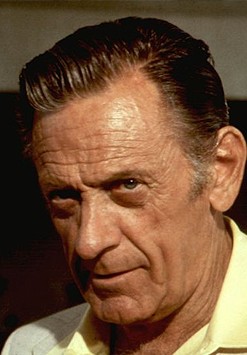
THE LAST DAYS OF WILLIAM HOLDEN
It is hard to believe that William Holden has been dead now for 30 years. Holden was one of the greatest actors of our times. He burst onto the scene with his role in Golden Boy in 1939. He followed that film up with a screen version of the movie of Our Town. By the 1950s, he was starring in hit after hit like: Sunset Boulevard (1950), The Country Girl (1954), Picnic (1955), and The Bridge on the River Kwai (1957) to name a few. Despite the fame and winning an Academy Award in 1954, William Holden faced a lifelong battle with drinking and alcoholism.
The years of his drinking started taking its toll on Holden's chiseled looks by the 1960s. Despite being relatively young still, he was considered Hollywood old school and began losing roles to younger stars like Steve McQueen and Paul Newman. This in turn caused Holden to drink more. He did continue to make some good movies like: The Wild Bunch (1969), The Towering Inferno (1974), and his last movie S.O.B. (1981). However, by that time he was no longer the handsome leading man of movies.
In 1981, Holden was living in Santa Monica, California, on Ocean Avenue. He was partial owner of the building at #535. The Shorecliff Towers. Holden's apartment was on the fourth floor, number 43. He was notoriously private. Even neighbors of many years only received a quick nod from the elusive actor. He also had the habit of disappearing for many days, without notice. That's why it took so long for someone to find him.
According to the autopsy report, Holden was last known to be alive about one week beforehand, when he spoke to his girlfriend Stephanie Powers on the telephone. She indicated that he was drinking, but seemed his normal self and was without complaints.
On Monday November 16, 1981, the building manager, Bill Martin, let curiosity get the best of him. He hadn't seen Holden in many days, and became very concerned, so he let himself in, via the passkey. As we all know, curiosity killed the cat, and Mr. Martin was sure taught a lesson that day.
From the report: "All the lights were off, except for the television, so they used flashlights to get around. Holden was found in a robe and shirt, on the floor. The robe was folded back and beneath the body, with the right arm placed through the sleeve, and the left arm "wadded up" and beneath the body, suggesting that he may have been attempting to dress himself. Examination revealed an apparent laceration on his forehead approximately 3 inches in length. Holden’s doctor showed up and theorized that he provably started vomiting blood, and possibly lacerated the lower portion of his esophagus.
On the scene they found an empty vodka bottle in the trash can, along with 4 beer bottles and a partially full bottle of vodka on the kitchen sink. There was a large quantity of blood surrounding the body as well as all over the bedding and blankets." From the condition of his body, it was decided that he had been dead for at least 4 days.
According to the medical examiner, Holden had tripped on a throw rug and hit his head on the nightstand. The scary part is that he hit it so hard, that it jammed into the wall, and left an indentation of two or three inches into the plaster. There were 8 bloody Kleenex's found next to his body, and a working telephone just inches away from him. The examiner reckoned that Holden didn't comprehend the seriousness of his injury, tried to stop the bleeding himself, and passed out from blood loss. He was probably dead within 15 minutes.
William Holden was only 63...
The years of his drinking started taking its toll on Holden's chiseled looks by the 1960s. Despite being relatively young still, he was considered Hollywood old school and began losing roles to younger stars like Steve McQueen and Paul Newman. This in turn caused Holden to drink more. He did continue to make some good movies like: The Wild Bunch (1969), The Towering Inferno (1974), and his last movie S.O.B. (1981). However, by that time he was no longer the handsome leading man of movies.
In 1981, Holden was living in Santa Monica, California, on Ocean Avenue. He was partial owner of the building at #535. The Shorecliff Towers. Holden's apartment was on the fourth floor, number 43. He was notoriously private. Even neighbors of many years only received a quick nod from the elusive actor. He also had the habit of disappearing for many days, without notice. That's why it took so long for someone to find him.
According to the autopsy report, Holden was last known to be alive about one week beforehand, when he spoke to his girlfriend Stephanie Powers on the telephone. She indicated that he was drinking, but seemed his normal self and was without complaints.
On Monday November 16, 1981, the building manager, Bill Martin, let curiosity get the best of him. He hadn't seen Holden in many days, and became very concerned, so he let himself in, via the passkey. As we all know, curiosity killed the cat, and Mr. Martin was sure taught a lesson that day.
From the report: "All the lights were off, except for the television, so they used flashlights to get around. Holden was found in a robe and shirt, on the floor. The robe was folded back and beneath the body, with the right arm placed through the sleeve, and the left arm "wadded up" and beneath the body, suggesting that he may have been attempting to dress himself. Examination revealed an apparent laceration on his forehead approximately 3 inches in length. Holden’s doctor showed up and theorized that he provably started vomiting blood, and possibly lacerated the lower portion of his esophagus.
On the scene they found an empty vodka bottle in the trash can, along with 4 beer bottles and a partially full bottle of vodka on the kitchen sink. There was a large quantity of blood surrounding the body as well as all over the bedding and blankets." From the condition of his body, it was decided that he had been dead for at least 4 days.
According to the medical examiner, Holden had tripped on a throw rug and hit his head on the nightstand. The scary part is that he hit it so hard, that it jammed into the wall, and left an indentation of two or three inches into the plaster. There were 8 bloody Kleenex's found next to his body, and a working telephone just inches away from him. The examiner reckoned that Holden didn't comprehend the seriousness of his injury, tried to stop the bleeding himself, and passed out from blood loss. He was probably dead within 15 minutes.
William Holden was only 63...
Wednesday, November 2, 2011
RIP: BERYL DAVIS
Beryl Davis, British Singer With Big Bands, Dies at 87
By PAUL VITELLO
Beryl Davis, a British singer who was beloved in England for carrying on with her cabaret performances during the bombing of London in World War II, and who later performed with Frank Sinatra and the big bands of Benny Goodman and Glenn Miller, died on Friday in Los Angeles. She was 87. The cause was complications of Alzheimer’s disease, said a family spokesman, Greg Purdy.
Ms. Davis, the daughter of the British bandleader Harry Davis, began her professional career early. She performed with her father’s band at 8 and sang with the jazz guitarist Django Reinhardt and his Quintet of the Hot Club of France at 12, traveling with a chaperon. (In between, when she was 9, she won the 1934 All Britain Tap Dancing Championship.)
When the German air force began its blitz in 1940, Ms. Davis’s clear, pure singing style at the front of a jazz group that included the pianist George Shearing and the violinist Stéphane Grappelli, was already familiar to BBC listeners, and to London clubgoers.
She later said leaving the city had never occurred to her. “We just learned to handle the pressure,” she told Richard Grudens for “Jukebox Saturday Night,” his 1999 book about the big-band era. “I would have to be down at the BBC, who had me under contract, at odd hours of the night. Bombs would be dropping, and you just did your best to dodge them.”
She added, “If you didn’t dodge them, well, that was that, you know.”
Ms. Davis was a national star by the time she began singing with some of the American big bands passing through London on tours and performing for the troops. A booking on Dec. 12, 1944, with the Glenn Miller Army Air Force Band at the Queensbury Club, came to haunt her. She sang the Bing Crosby wartime hit “I’ll Be Seeing You.”
After the show, she recalled, as Miller left, “he patted me on the shoulder, and he said, ‘Good show, kid. I’ll be seeing yuh.’ ” A small plane carrying Miller to Paris took off from the outskirts of London three days later, and was never seen again.
Ms. Davis made “I’ll Be Seeing You” her signature song, and often dedicated it to Miller’s memory.
Beryl Davis was born on March 16, 1924, in Plymouth, Devon, in southwestern England, to Harry and Queenie Davis. Her sister, Lisa, became an American television and film actress.
As a singer, she told interviewers, she modeled herself on Ella Fitzgerald, and, partly because of the American accent and swing phrasing she picked up imitating Fitzgerald’s style, Bob Hope invited her to Hollywood in 1947 to be a regular on his radio show. She later sang with Benny Goodman and Vaughn Monroe, and became a familiar voice on the radio shows of Milton Berle, Ed Sullivan, Red Skelton, Abbott and Costello, and others.
Her recording career in the United States never took off, but in 1954 she formed a gospel quartet with three friends from church: her fellow big-band singer Connie Haines and the actresses Jane Russell and Rhonda Fleming. Calling themselves the Four Girls, they had a hit in 1954 with their version of “Do, Lord, Remember Me.”
Ms. Davis continued to sing in nightclubs throughout her life. In the 1970s she became a regular performer on Princess Line cruise ships.
Ms. Davis’s marriage to Peter Potter, a radio personality whose family name was Moore, ended in divorce. In addition to her sister, she is survived by three children, Bill Moore, Merry Moore and Melinda Moore Garber, and two grandchildren.
SOURCE
By PAUL VITELLO
Beryl Davis, a British singer who was beloved in England for carrying on with her cabaret performances during the bombing of London in World War II, and who later performed with Frank Sinatra and the big bands of Benny Goodman and Glenn Miller, died on Friday in Los Angeles. She was 87. The cause was complications of Alzheimer’s disease, said a family spokesman, Greg Purdy.
Ms. Davis, the daughter of the British bandleader Harry Davis, began her professional career early. She performed with her father’s band at 8 and sang with the jazz guitarist Django Reinhardt and his Quintet of the Hot Club of France at 12, traveling with a chaperon. (In between, when she was 9, she won the 1934 All Britain Tap Dancing Championship.)
When the German air force began its blitz in 1940, Ms. Davis’s clear, pure singing style at the front of a jazz group that included the pianist George Shearing and the violinist Stéphane Grappelli, was already familiar to BBC listeners, and to London clubgoers.
She later said leaving the city had never occurred to her. “We just learned to handle the pressure,” she told Richard Grudens for “Jukebox Saturday Night,” his 1999 book about the big-band era. “I would have to be down at the BBC, who had me under contract, at odd hours of the night. Bombs would be dropping, and you just did your best to dodge them.”
She added, “If you didn’t dodge them, well, that was that, you know.”
Ms. Davis was a national star by the time she began singing with some of the American big bands passing through London on tours and performing for the troops. A booking on Dec. 12, 1944, with the Glenn Miller Army Air Force Band at the Queensbury Club, came to haunt her. She sang the Bing Crosby wartime hit “I’ll Be Seeing You.”
After the show, she recalled, as Miller left, “he patted me on the shoulder, and he said, ‘Good show, kid. I’ll be seeing yuh.’ ” A small plane carrying Miller to Paris took off from the outskirts of London three days later, and was never seen again.
Ms. Davis made “I’ll Be Seeing You” her signature song, and often dedicated it to Miller’s memory.
Beryl Davis was born on March 16, 1924, in Plymouth, Devon, in southwestern England, to Harry and Queenie Davis. Her sister, Lisa, became an American television and film actress.
As a singer, she told interviewers, she modeled herself on Ella Fitzgerald, and, partly because of the American accent and swing phrasing she picked up imitating Fitzgerald’s style, Bob Hope invited her to Hollywood in 1947 to be a regular on his radio show. She later sang with Benny Goodman and Vaughn Monroe, and became a familiar voice on the radio shows of Milton Berle, Ed Sullivan, Red Skelton, Abbott and Costello, and others.
Her recording career in the United States never took off, but in 1954 she formed a gospel quartet with three friends from church: her fellow big-band singer Connie Haines and the actresses Jane Russell and Rhonda Fleming. Calling themselves the Four Girls, they had a hit in 1954 with their version of “Do, Lord, Remember Me.”
Ms. Davis continued to sing in nightclubs throughout her life. In the 1970s she became a regular performer on Princess Line cruise ships.
Ms. Davis’s marriage to Peter Potter, a radio personality whose family name was Moore, ended in divorce. In addition to her sister, she is survived by three children, Bill Moore, Merry Moore and Melinda Moore Garber, and two grandchildren.
SOURCE
Labels:
Beryl Davis,
big band,
deaths,
news,
singers
FORGOTTEN ONES: BETTY CLOONEY
Rosemary Clooney was one of the most adored vocalists of the 20th century, and her brother Nick Clooney is a famous broadcaster and the father of actor George Clooney. Many people forget though that there was another sibling who started out in the big bands with Rosemary. Unfortunately, she died young and in the shadows of her famous sister, but Betty Clooney deserves to be remembered.
Betty Clooney was born in April of 1931 in Maysville, Kentucky. She and her older (by three years) Rosemary, loved to sing as kids and became an important part of their grandfather's political campaigns for mayor of their hometown. Soon the Clooney family moved to Cincinnati, Ohio where the girls continued to vocalize. In their teens they went to radio station WLW for an audition and were successful where they remained on the staff of the station for two years in 1945 and 46. One day they were heard by bandleader Tony Pastor. The bandleader originally hesitated on hiring both sisters, but soon relented and so The Clooney Sisters hit the road with the Pastor band. They appeared in a movie short with the Pastor Orchestra in 1947. The Clooney Sisters recorded a number of songs for Columbia with the Tony Pastor Band like "The Secretary Song", "I'm My Own Grandpa" and "If I Had A Million Dollars".
After three years of this, Betty decided to return home to Cincinnati while Rosie got a call from New York to do a recording session with Columbia Records. Rosie hit the big time nationally with her first record "Come On-A My House" while Betty concentrated on local jobs near home. She was the vocalist on Ruth Lyons "50-50 Club" and had her own shows called "Teen Canteen" and "Boy Meets Girl". Soon she had a number of national network television offers-at first with Robert Q. Lewis on CBS radio and television, and "Van Camp's Little Show". Then, subbing for her sister on "Songs For Sale" with Steve Allen, and then the "Morning Show" with Jack Paar for CBS. Betty Clooney made some recordings for the Cincinnati based King Records label who usually concentrated on R & B and country music. Memorable recordings included "Anyone Can Fall In Love" and "Faithful". Betty also recorded for RCA's subsidiary label "X".
Betty Clooney performed at the Starlight Roof of the Waldorf-Astoria Hotel in the earky fifties and had a regular spot on the Gary Moore television show for CBS. She met and later married Pupi Campo, bandleader on CBS television in the early fifties. In her spare time away from music she began a horse breeding farm back in Kentucky. In the mid nineteen fifties Betty recorded for Coral Records a subsidiary label of Decca Records. The two Clooney Sisters also made a couple of recordings for Columbia with "I Still Feel The Same About You", and their best known tune "Sisters" on in 1954. She appeared with sister Rosemary on the Lux Variety Show in 1957.
Soon after during the later nineteen fifties Betty Clooney called it a singing career and concentrated on raising a family and tending to her four children. She returned to daytime television for a time in the early sixties on NBC's Today Show with John Chancellor and Hugh Downs. After a number of years out of the spotlight, Betty and Rosemary made a few guest appearances on brother Nick Clooney's television variety show on Cincinnati television. There was talk of a reunion tour with the Clooney Sisters, but that was never to be as Betty Clooney passed away from a cerebral hemorrhage in July of 1976. She was only 45 years old. In her memory Rosemary and Nick Clooney established the Betty Clooney Foundation in 1983 and the Betty Clooney Center in Long Beach, California, which opened in 1988. Both are dedicated to treatment for traumatic brain injuries.
Unfortunately, there is not much available for the listener to enjoy the musical memories of Betty Clooney. However, there is one CD called "Sisters" from England on the Sepia label, which features Betty on 14 tracks (less on the U.S. version) plus a live performance by Rosemary at the London Palladium in 1955. You will get to hear Betty on her own and in a couple of duets with Bill Darnell. Right now it is the only source readily available.
Betty Clooney will always remain in the shadow of her more recognized sister in the history of American pop music. Betty was married to one person her whole life, Cuban band leader Pupi Campo, and they had four successful children together. If a music listener discovers the music of Betty Clooney, they will find someone more than just Rosemary's sister, because Betty was a competent and excellent singer in her own way...
Betty Clooney was born in April of 1931 in Maysville, Kentucky. She and her older (by three years) Rosemary, loved to sing as kids and became an important part of their grandfather's political campaigns for mayor of their hometown. Soon the Clooney family moved to Cincinnati, Ohio where the girls continued to vocalize. In their teens they went to radio station WLW for an audition and were successful where they remained on the staff of the station for two years in 1945 and 46. One day they were heard by bandleader Tony Pastor. The bandleader originally hesitated on hiring both sisters, but soon relented and so The Clooney Sisters hit the road with the Pastor band. They appeared in a movie short with the Pastor Orchestra in 1947. The Clooney Sisters recorded a number of songs for Columbia with the Tony Pastor Band like "The Secretary Song", "I'm My Own Grandpa" and "If I Had A Million Dollars".
After three years of this, Betty decided to return home to Cincinnati while Rosie got a call from New York to do a recording session with Columbia Records. Rosie hit the big time nationally with her first record "Come On-A My House" while Betty concentrated on local jobs near home. She was the vocalist on Ruth Lyons "50-50 Club" and had her own shows called "Teen Canteen" and "Boy Meets Girl". Soon she had a number of national network television offers-at first with Robert Q. Lewis on CBS radio and television, and "Van Camp's Little Show". Then, subbing for her sister on "Songs For Sale" with Steve Allen, and then the "Morning Show" with Jack Paar for CBS. Betty Clooney made some recordings for the Cincinnati based King Records label who usually concentrated on R & B and country music. Memorable recordings included "Anyone Can Fall In Love" and "Faithful". Betty also recorded for RCA's subsidiary label "X".
Betty Clooney performed at the Starlight Roof of the Waldorf-Astoria Hotel in the earky fifties and had a regular spot on the Gary Moore television show for CBS. She met and later married Pupi Campo, bandleader on CBS television in the early fifties. In her spare time away from music she began a horse breeding farm back in Kentucky. In the mid nineteen fifties Betty recorded for Coral Records a subsidiary label of Decca Records. The two Clooney Sisters also made a couple of recordings for Columbia with "I Still Feel The Same About You", and their best known tune "Sisters" on in 1954. She appeared with sister Rosemary on the Lux Variety Show in 1957.
Soon after during the later nineteen fifties Betty Clooney called it a singing career and concentrated on raising a family and tending to her four children. She returned to daytime television for a time in the early sixties on NBC's Today Show with John Chancellor and Hugh Downs. After a number of years out of the spotlight, Betty and Rosemary made a few guest appearances on brother Nick Clooney's television variety show on Cincinnati television. There was talk of a reunion tour with the Clooney Sisters, but that was never to be as Betty Clooney passed away from a cerebral hemorrhage in July of 1976. She was only 45 years old. In her memory Rosemary and Nick Clooney established the Betty Clooney Foundation in 1983 and the Betty Clooney Center in Long Beach, California, which opened in 1988. Both are dedicated to treatment for traumatic brain injuries.
Unfortunately, there is not much available for the listener to enjoy the musical memories of Betty Clooney. However, there is one CD called "Sisters" from England on the Sepia label, which features Betty on 14 tracks (less on the U.S. version) plus a live performance by Rosemary at the London Palladium in 1955. You will get to hear Betty on her own and in a couple of duets with Bill Darnell. Right now it is the only source readily available.
Betty Clooney will always remain in the shadow of her more recognized sister in the history of American pop music. Betty was married to one person her whole life, Cuban band leader Pupi Campo, and they had four successful children together. If a music listener discovers the music of Betty Clooney, they will find someone more than just Rosemary's sister, because Betty was a competent and excellent singer in her own way...
Labels:
Betty Clooney,
forgotten,
Rosemary Clooney,
singers
Subscribe to:
Posts (Atom)