Monday, July 18, 2016

ANN MILLER: THE LATER YEARS

Ann Miller was one of the most celebrated dancers in the history of the American Musical. By the late 1950s though, as the era of Hollywood musicals waned, Miller's career in films declined. Following her appearance in Hit the Deck (1955), Miller left the movies behind to become a nightclub performer. Over the following decades she also made frequent appearances on television variety programs, including The Ed Sullivan Show and The Hollywood Palace, wearing bouffant brunette wigs and heavy eye makeup. This so-called Nefertiti look became Miller's trademark on- and offstage for many years and coincided with her growing interest in spirituality and reincarnation; she later expressed the belief that she had once been the ancient Egyptian queen Hatshepsut.

In 1969 Miller returned to the Broadway stage in the title role of Mame, a musical based on the film version of Patrick Dennis's semiautobiographical novel Auntie Mame. The role had been originated by Angela Lansbury to great acclaim, but Miller's performance, which featured singing as well as dancing, earned even more lavish praise from critics. Moreover it was credited with helping to spark a tap-dancing revival.

After Mame ended, Miller resumed her work in nightclubs and on television, interspersed with appearances in touring companies of Can-Can, Panama Hattie, and Hello, Dolly!, and a musical version of the Noël Coward play Blithe Spirit. She also appeared in a memorable television commercial in 1972, dancing on top of a giant Heinz soup can. Four years later she was discovered by a new generation of moviegoers when MGM released That's Entertainment, Part II, featuring clips of Miller and other dancers and singers in studio musicals of the past.


In 1979 Miller made a triumphant return to Broadway in the musical revue Sugar Babies, in which she costarred with Mickey Rooney. The show was an enormous hit with both audiences and critics; it played in New York for nearly three years and then toured the country. At age fifty-six Miller was delighted to find herself a glamorous Broadway showgirl both on- and offstage, experiencing at last a sustained stardom that had eluded her in Hollywood. Both Miller and Rooney earned Tony Award nominations in 1980 for their performances in Sugar Babies.


Miller returned briefly to the stage in 1998, when she performed in a revival of Stephen Sondheim's musical Follies at the Paper Mill Playhouse in Millburn, New Jersey. She made her last screen appearance in 2001, playing a dramatic role as the manager of an apartment complex in Mulholland Drive. Miller spent the final decades of her life at homes in Beverly Hills, California, and Sedona, Arizona. She died in Los Angeles after being hospitalized following a fall at her home in Beverly Hills. Shortly before her death she reportedly converted to Roman Catholicism.

Miller was married--briefly, in each case--three times: to Reese Milner (1946-1947), William Moss (1958-1961), and Arthur Cameron (1961-1962). Her first two marriages ended in divorce; the third was annulled. She and Milner had a daughter who was born prematurely and died shortly after birth; Miller later claimed that Milner had beaten her during her pregnancy, at one point pushing her down a flight of stairs and breaking her back. All three of Miller's husbands demanded that she give up her career as a condition of marriage, which may have accounted in part for the brevity of the unions. She was also romantically involved with the movie producer Louis B. Mayer and the hotel tycoon Conrad Hilton...


Friday, July 15, 2016

MARILYN MONROE - THE SINGER

Here is a great article, from my friend and fellow blogger at the Geezer Music Club...


If your memories of Marilyn Monroe as a singer mostly consist of her breathy rendition of “Happy Birthday, Mr. President” offered up to Jack Kennedy or brassy numbers like “Diamonds Are A Girl’s Best Friend,” then you might be surprised to hear that there is a movement afoot to reexamine her vocalizing. According to a recent article in the New York Times, many experts are taking another listen to some of the material she left behind, and it appears that her singing — like her acting — was much better than she was given credit for during her lifetime.

One thing is certain. She took music seriously, spending a lot of time with voice coaches and also studying the greats, like Ella Fitzgerald. In fact, she helped pave the way for Ella to appear in previously restricted clubs, and the two became very good friends. In later years Ella always gave her credit for helping further her career.

Even in Marilyn’s early movies she often found opportunities to sing, and although pros like Marni Nixon occasionally dubbed a few notes here and there, most of what we heard was the star’s real voice. She continued to sing in a surprising number of movies through the years, and those performances demonstrated a voice that varied widely but had real talent behind it.

Like most singers (and non-singers too) her voice became a little huskier as she grew older, but she could carry a tune and deliver the goods. Her most noticeable characteristic to my ear is that she was often tentative, especially in the early passages of standards like “A Fine Romance” and “When I Fall In Love.” She was at her best when she set the tone early and stayed with it, as with “River Of No Return,” which was released as a single and did very well.

But she was still Marilyn Monroe, and in a quote from Collier’s Magazine in 1954, she spelled it out like this: “I won’t be satisfied until people want to hear me sing without looking at me. Of course, that doesn’t mean I want them to stop looking.”


SOURCE

Monday, July 11, 2016

STEVE LAWRENCE: LIFE WITHOUT EYDIE

In discussing Steve Lawrence and Eydie Gorme, Frank Sinatra once said, “Steve and Eydie represent all that is good about performers and the interpretation of a song . . . they’re the best.”

High praise indeed from the “Chairman of the Board” himself. In the mid 1990s the husband and wife singing duo of Steve Lawrence and Eydie Gorme toured with “Old Blue Eyes.”

Lawrence was born Sidney Liebowitz, in Brooklyn on July 8, 1935. Eydie Gorme was born Edith Gormezano in the Bronx on Aug. 16, 1928.

While singer Tony Bennett was able to introduce himself to a new generation of fans and reinvent himself in the mid 1990s after appearing on episodes of MTV Unplugged, Steve & Eydie still never attempted a crossover or reinvention; instead they remained dedicated to their prime audience – the cocktail generation raised on the music of the Rat Pack.

During a phone conversation we had with him in the 1990s, Lawrence had a few things to say about Bennett’s transformation.

“I think we could bring the same to the show that Tony did – that is, he’s doing what he’s always done and that’s the way to go,” Lawrence told us. “You don’t abandon one audience in an attempt to capture another. A few of our colleagues have done that and it’s proven to be a big mistake.”

Outside of occasional appearances on The Dean Martin Show back in the 1960s; the closest Lawrence came to attaching his star – even for the briefest of moments – to anything remotely considered hip or topical was when he appeared as agent Maury Sline in the 1980 hit film, The Blues Brothers starring John Belushi and Dan Aykroyd.


Their stylish act consisted of married couple comic banter, but the centerpiece always remained the music. Lawrence, the easygoing crooner with the rich baritone, and Gorme, the belter with the big, brassy voice, covered the musical landscape with hits from the masters: George Gershwin, Cole Porter, Irving Berlin and Jerome Kern.

In October 2010, Steve and Eydie reached a career milestone when they celebrated their 50th anniversary as a popular singing duo. They were married in Las Vegas in 1957. Joe E. Lewis attended the ceremony wearing Chinese pajamas and Paul Newman and Joanne Woodward, who were married there the same day, were witnesses.

Steve and Eydie began their careers as members of the cast of Steve Allen’s original Tonight Show. While starring with Allen, their individual recording careers flourished with such hits as “Blame It on the Bossa Nova” for Eydie and “Go Away Little Girl” for Steve. Steve and Eydie share a Grammy for the album, We’ve Got Us, and Eydie won a second Grammy for her solo recording of “If He Walked Into My Life.”

“We’re no different than anyone else,” said Lawrence. “Our disagreements run the gamut from professional to personal. In fact, one of the best shows we ever did came on the heels of a fight we had. I can’t recall what precipitated it. We walked out on stage and we were so hostile to each other. The more venomous it became, the more the audience loved it. When the show was over we were cleansed. It was actually cathartic.”


Steve and Eydie had two sons, one tragically died in 1986 at the age of 23 after knee surgery from a fall in a softball game. The young man, Michael, had experienced a mild heart condition as a teenager. Overcome with grief, the couple didn’t perform for a year.

On Aug. 10, 2013 the singing team was silenced forever when Gorme passed away just shy of her 85th birthday.

Since then, Lawrence, for the most part, has been absent from live performances and public appearances are rare.

When discussing the prospect of retirement at the time of our interview, he said, “Retirement is a decision based on a lot of different emotional levels. We’re sometimes the best ones to know and sometimes we’re the last ones to know. When you can no longer reach certain notes; when you are physically not strong enough to transmit that needed energy to an audience; these are all tell-tale signs along the professional highway that it might be time.”

Friday, July 8, 2016

HEALTHWATCH: TONY BENNETT

Tony Bennett is one of the last singers of a bygone generation. His peers included Frank Sinatra, Bing Crosby, Perry Como, and other great crooners. Bennett, reaching 90, has maintained a pretty busy schedule. However, in the last few months his health has come into question. Tony was set to perform in my hometown of Pittsburgh on July 9.

Officials announced Thursday evening that singer Tony Bennett’s performance scheduled for this Saturday at Heinz Hall in Pittsburgh has been canceled. According to a press release, Bennett, 89, has the flu, which has temporarily prevent him from touring for the next few days. However, sources say that age is finally catching up to the crooner. Many people say his health just is not what it used to be, and he should slow down his hectic pace.

The release said refunds are available at point of purchase, and that the performance would not be rescheduled, which is also a ref flag to more serious health issues...


Monday, July 4, 2016

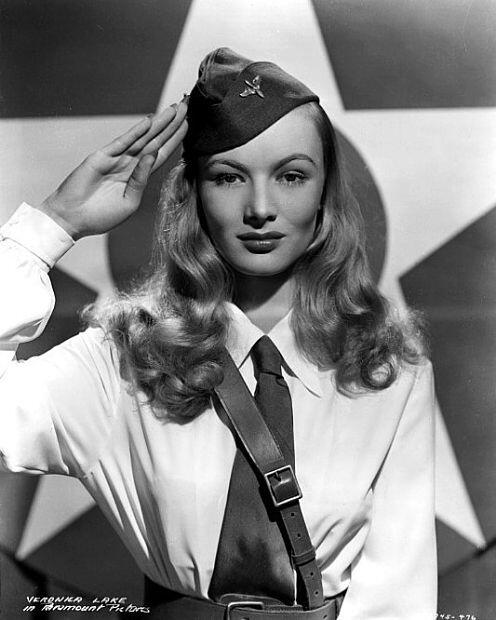
PHOTOS OF THE DAY: CLASSIC PATRIOTIC HOLLYWOOD

What present Hollywood is missing in its stars is a sense of patriotism. Classic Hollywood really rallied about the country, especially during World War II. On this 4th of July, I thought I would take a look at some of the patriotic pictures from classic Hollywood...

Ann Miller (1923-2004)

Ava Gardner (1922-1990)


Claudette Colbert (1903-1996)


Colleen Moore (1899-1988)


Cyd Charisse (1922-2008)

Veronica Lake (1922-1973)


Friday, July 1, 2016

GEORGE M. COHAN: THAT YANKEE DOODLE DANDY

George M. Cohan is a name that is but an ancient footnote in the history of the entertainment. However, he was one of the first true superstars of entertainment. In an age without computers or facebook or even television, George Cohan became an icon to millions of fans. Cohan was born in 1878 in Providence, Rhode Island, to Irish Catholic parents. A baptismal certificate (which gave the wrong first name for his mother) indicated that he was born on July 3, but Cohan and his family always insisted that George had been "born on the Fourth of July!" George's parents were traveling vaudeville performers, and he joined them on stage while still an infant, first as a prop, learning to dance and sing soon after he could walk and talk.

As a child, Cohan and his family toured most of the year and spent summer vacations from the vaudeville circuit at his grandmother's home in North Brookfield, Massachusetts, where Cohan befriended baseball player Connie Mack. The family generally gave a performance at the town hall there each summer, and Cohan had a chance to gain some more normal childhood experiences, like riding his bike and playing sandlot baseball. Cohan's memories of those happy summers inspired his 1907 musical 50 Miles from Boston, which is set North Brookfield and contains one of his most famous songs, “Harrigan". As Cohan matured through his teens, he used the quiet summers there to write. When he returned to the town in the cast of Ah, Wilderness! in 1934, he told a reporter, "I've knocked around everywhere, but there's no place like North Brookfield."

Cohan began writing original skits (over 150 of them) and songs for the family act in both vaudeville and minstrel shows while in his teens. Soon he was writing professionally, selling his first songs to a national publisher in 1893. In 1901 he wrote, directed and produced his first Broadway musical, "The Governor's Son", for The Four Cohans. His first big Broadway hit in 1904 was the show Little Johnny Jones, which introduced his tunes "Give My Regards to Broadway" and "The Yankee Doodle Boy."


Cohan became one of the leading Tin Pan Alley songwriters, publishing upwards of 300 original songs noted for their catchy melodies and clever lyrics. His major hit songs included "You're a Grand Old Flag," "Forty-Five Minutes from Broadway," "Mary Is a Grand Old Name," "The Warmest Baby in the Bunch," "Life's a Funny Proposition After All," "I Want To Hear a Yankee Doodle Tune," "You Won't Do Any Business If You Haven't Got a Band," "The Small Town Gal," "I'm Mighty Glad I'm Living, That's All," "That Haunting Melody," "Always Leave Them Laughing When You Say Goodbye", and America's most popular World War I song "Over There", which was recorded by Enrico Caruso among others. The latter song reached such currency among troops and shipyard workers that a ship was named "Costigan" after Cohan's grandfather, Dennis Costigan. During the christening, "Over There" was played.

From 1904 to 1920, Cohan created and produced over fifty musicals, plays and revues on Broadway together with his friend Sam Harris, including Give My Regards to Broadway and the successful Going Up in 1917, which became a smash hit in London the following year. His shows ran simultaneously in as many as five theatres. One of Cohan's most innovative plays was a dramatization of the mystery Seven Keys to Baldpate in 1913, which baffled some audiences and critics but became a hit. Cohan further adapted it as a film in 1917, and it was adapted for film six more times, as well as for TV and radio. He dropped out of acting for some years after his 1919 dispute with Actors' Equity Association.


Cohan appeared in 1930 in a revival of his tribute to vaudeville and his father, The Song and Dance Man. In 1932, Cohan starred in a dual role as a cold, corrupt politician and his charming, idealistic campaign double in the Hollywood musical film The Phantom President. The film co-starred Claudette Colbert and Jimmy Durante, with songs by Rodgers and Hart, and was released by Paramount Pictures. He appeared in some earlier silent films but he disliked Hollywood production methods and only made one other sound film, Gambling (1934), based on his own 1929 play and shot in New York City. A critic called Gambling a "stodgy adaptation of a definitely dated play directed in obsolete theatrical technique." It is considered a lost film.

Cohan earned acclaim as a serious actor in Eugene O'Neill's only comedy, Ah, Wilderness! (1933), and in the role of a song-and-dance President Franklin D. Roosevelt in Rodgers and Hart's musical I'd Rather Be Right (1937). The same year, he reunited with Harris to produce a play called Fulton of Oak Falls, starring Cohan. His final play, The Return of the Vagabond (1940), featured a young Celeste Holm in the cast.


 In 1942, a musical biopic of Cohan, Yankee Doodle Dandy, was released, and James Cagney's performance in the title role earned the Best Actor Academy Award. The film was privately screened for Cohan as he battled the last stages of abdominal cancer; Cohan’s comment on Cagney’s performance was, "My God, what an act to follow!"

Cohan died of cancer at the age of 64 on November 5, 1942, at his Manhattan apartment on Fifth Avenue. Although Cohan is mostly remembered for his songs, he became an early pioneer in the development of the "book musical", using his engaging libretti to bridge the gaps between drama and music. More than three decades before Agnes de Mille choreographed Oklahoma!, Cohan used dance not merely as razzle-dazzle, but to advance the plot. Cohan's main characters were "average Joes and Janes" that appealed to a wide American audience..


Monday, June 27, 2016

FINAL RESTING PLACES: CLARA BOW

 
Known as the 'It Girl,' she is considered America's first "Sex Symbol". Born to poverty in Brooklyn, New York, she won a photo beauty contest that launched her film career in 1922. She was "discovered" while working at a Coney Island Hot Dog stand run by Nathan Handwerker, who would later find fame in his own right as the founder of Nathan's Franks. 

The silent movie, "It" (1927), made her a household name ("It" refers to "sex appeal"). She often played a young, frisky, openly sensual, rebellious girl in many of her movies, yet this role probably defined the attitude of society at that time, and it made her a star. She was the definitive "Flapper" of the 1920s. Probably one of the more overworked and underpaid actresses in the industry, she made 58 films between 1922 and 1933. Unlike many Hollywood stars, she did not flaunt her wealth, but lived on par with the middle class, living in a small 7 room house in Beverely Hills. 


Her sexual liaisons and extremely public private life were legendary, and in 1928 she had a torrid affair with director Victor Fleming that made headlines continuously. In 1927, she had the female lead role in Wings the first Oscar winning "Best Picture." With the coming of sound movies in 1929, her thick Brooklyn accent lost her many fans, and her career waned. 

Adding to her problems were gambling debts, unpaid IRS taxes, embezzlement by her secretary, and several sensational public court battles involving divorce and alienation of affection between several husbands and wives. In 1931, she married film cowboy Rex Bell, and retired from making films in 1934. She became a doting mother of two boys, settling down and never making another movie. She died at age 60 of a heart attack, in Los Angeles, California. The marker on her crypt marker her birth year as 1907, but she was born in 1905...