Tuesday, April 12, 2016

Sunday, April 10, 2016
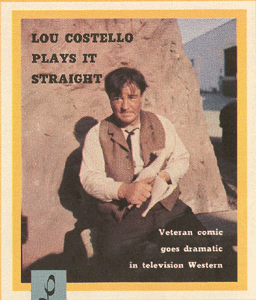
THE LAST ROLE OF LOU COSTELLO

Howard Christie was now producing Wagon Train for television and a story came up which he felt was right for Dad. He had seen the General Electric Theater episode and felt Dad had the ability todo a beautiful job in a straight acting role. The story was "The Tobias Jones Story," in which Dad played the role of a drunk. Howard very capably describes the situation:
" ... From the moment Lou walked on that sound stage at Universal to do 'Tobias Jones,' there was never any sign of nervousness. He threw every ounce of himself into that part and did a brilliant job as the hopeless drunk, a character named Tobias Jones, accused of murdering a man on a wagon train. He was magnificent."
Harry Von Zell, Dad's old friend who had been the announcer on the Fred Allen Show, was the
official writer for Dad's segment of Wagon Train. He describes a scene which shows just how
dramatic my father could get:

"There was one scene between Lou and the little girl (Beverly Washburn) that runs maybe ten minutes. She's trying to reason with Tobias, reaching into this man to try and bring him out of his funk. Prior to the scene being shot, the makeup lady came over with her tear-producing glycerine to
make him able to cry in the scene. I went over to her and said, 'Why don't we rehearse Lou first
without the glycerine? He might be uncomfortable thinking you have to give him something to produce the tear effect.' She agreed.
"When it came time to shoot, Lou was crying crocodile tears. That little girl reached him so much and
so impressively, he was actually crying real tears. After the show aired, Lou gave Beverly Washburn
all the credit. He inisted it was the little girl who brought out that dramatic quality in him. I don't think it ever occurred to him for one minute that he already had that quality inside him."
Because of the great notices he received for his performance, he was approached by a producer to
star him in a dramatic play on Broadway--but that never took place. Dad's last acting role was now
behind him....
Friday, April 8, 2016
Thursday, April 7, 2016
THE SINGING SIDE OF JIMMY DURANTE

When the New Orleans Jazz style swept New York by storm in 1917 with the arrival of the Original Dixieland Jazz Band. Durante was part of the audience at Reisenweber's on Columbus Circle. Durante was very impressed with the band and invited them to play at a club called the Alamo in Harlem where Jimmy played piano. The band was soon the hottest thing in show business and Durante had his friend Johnny Stein assemble a group of like-minded New Orleans musicians to accompany his act at the Alamo. They billed themselves as "Durante's Jazz and Novelty Band". In late 1918 they recorded two sides for Okeh under the name of the New Orleans Jazz Band, they re-did the same two numbers a couple of months later for Gennett under the name of Original New Orleans Jazz Band, and in 1920 the same group recorded again for Gennett as Jimmy Durante's Jazz Band.

In 1921, Durante collaborated with an African-American songwriter by the name of Chris Smith on the songs "Let's Agree To Disagree" and "Daddy, Your Mama Is Lonesome For You" which were recorded by Mamie Smith. Durante went on to record with several White Jazz bands in the early 1920s including The Original Memphis Five, Ladd's Black Aces, Bailey's Lucky Seven and Lanin's Southern Serenaders. Jimmy was a solid Ragtime and Jazz piano player, but soon gravitated towards vaudeville as the 1920s wore on. He became part of a comedy music team called "Clayton, Jackson and Durante". By the end of the decade the team was very popular on Broadway and Durante got a role in a play called "Jumbo" which made him a star. In the early 1930s he started to get roles in movies, and became popular on radio and eventually became one of the most popular entertainers in America. On his radio show he joked that he was working on a symphony, but he wouldn't call it "Rhapsody In Blue" or anything like that. He would call it "Inka Dinka Doo". In 1934 he recorded a novelty song with this title and it became his signature tune.

Durante would make records throughout the 1940s and 1950s for such record labels as MGM and Decca, but it was not until late in his career that his singing career really reached its peak. In 1963, Durante recorded an album of pop standards, September Song. The album became a best-seller and provided Durante's re-introduction to yet another generation, almost three decades later. From the Jimmy Durante's Way of Life album, came the gravelly interpretations of the song "As Time Goes By", which accompanied the opening credits of the romantic comedy hit, Sleepless in Seattle, while his version of "Make Someone Happy" launched the film's closing credits. Both are included on the film's best-selling soundtrack. Durante also recorded a cover of the well known song I'll Be Seeing You, which became a trademark song on his 60's TV show. This song was also featured in the 2004 film The Notebook.
Jimmy Durante was a funny and talented man, but listen to his records (especially the ballad albums of the 1960s), and one will discover how sensitive and wonderful of a man he actually was...

Tuesday, April 5, 2016
FIVE UNUSUAL THINGS ABOUT DON KNOTTS
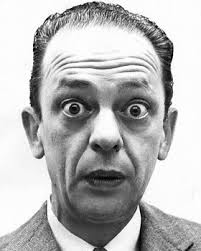
The lovable Don Knotts passed away from lung cancer in 2006 with his best buddy and co-star,Andy Griffith, by his side. The actor was best known for his role as Barney Fife in “The Andy Griffith Show,” but he has also given his talents in other projects as well such as Disney’s “The Apple Dumpling Game” and of course, the fun-loving landlord in the 1980’s comedy, “Three’s Company.” No matter what role he took on, Don Knotts always made us laugh. He had a way about him that was unique and a pleasure to watch. Here are five things that you may not have known about this lovable funny man.
1. His Real Name is Jesse
We all know him as Don Knotts, but his real name is actually Jesse Donald Knotts. That was how he was known to his close friends and family. He was born in Morgantown, W. Va. and seemed to love comedy when he was quite young.
2. He started out as a Ventriloquist
In his early days growing up, Knotts decided to try out ventriloquism and seemed to be quite good at it. His wooden companion’s name was Danny. However, he didn’t make a long career out of it as he loved comedy so much that he ended up doing that instead. We are so glad that he did.
3. He Was a Ladies Man
You wouldn’t think that Don Knotts would be a chick magnet but it seems that he was quite a ladies man, according to his daughter, Karen Knotts. Even though he was married three times during his full life, his daughter says that he wowed the ladies in between those marriages.
4. He and Andy Griffith Used to Add Their Own Lines
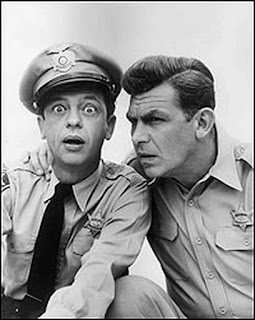
Some of the classic quips back and forth between Sheriff Andy Taylor and his deputy, Barney Fife, were quite natural. The pair got together to add in their own lines into the show and it worked perfectly. Comedy and humor seemed to come so natural to them that their talent showed on screen.
5. His Legacy Lives On
The legacy of Don Knotts is still going strong thanks to his daughter. Karen Knotts has taken to the road to share some of her special memories of her dad. The intimate show is called “Tied Up in Knotts” as she reminisces about her childhood and also growing up with the beloved actors of “The Andy Griffith Show."


1. His Real Name is Jesse
We all know him as Don Knotts, but his real name is actually Jesse Donald Knotts. That was how he was known to his close friends and family. He was born in Morgantown, W. Va. and seemed to love comedy when he was quite young.
2. He started out as a Ventriloquist
In his early days growing up, Knotts decided to try out ventriloquism and seemed to be quite good at it. His wooden companion’s name was Danny. However, he didn’t make a long career out of it as he loved comedy so much that he ended up doing that instead. We are so glad that he did.
3. He Was a Ladies Man
You wouldn’t think that Don Knotts would be a chick magnet but it seems that he was quite a ladies man, according to his daughter, Karen Knotts. Even though he was married three times during his full life, his daughter says that he wowed the ladies in between those marriages.

4. He and Andy Griffith Used to Add Their Own Lines
Some of the classic quips back and forth between Sheriff Andy Taylor and his deputy, Barney Fife, were quite natural. The pair got together to add in their own lines into the show and it worked perfectly. Comedy and humor seemed to come so natural to them that their talent showed on screen.
5. His Legacy Lives On
The legacy of Don Knotts is still going strong thanks to his daughter. Karen Knotts has taken to the road to share some of her special memories of her dad. The intimate show is called “Tied Up in Knotts” as she reminisces about her childhood and also growing up with the beloved actors of “The Andy Griffith Show."

Sunday, April 3, 2016
THE WIT OF STAN LAUREL
Stan Laurel (1890-1965) not only was a part of one of the funniest comedy teams of all-time, but his quiet wit was brilliant. Here are some of his timeless quotes through the years...

Humor is the truth; wit is an exaggeration of the truth.
You can lead a horse to water, but a pencil must be led.
I had a dream that I was awake and I woke up to find myself asleep.
If you had a face like mine, you'd punch me right on the nose, and I'm just the fella to do it.
If any of you cry at my funeral, I'll never speak to you again!
A friend once asked me what comedy was. That floored me. What is comedy? I don't know. Does anybody? Can you define it? All I know is that I learned how to get laughs, and that's all I know about it. You have to learn what people will laugh at, then proceed accordingly.
What business do we have telling people who to vote for? They probably know more about it than we do.
Just before he died, Laurel told his nurse he would like to go skiing. The nurse said "Are you a skier, Mr Laurel?". He replied, "I'm not, but I'd rather be doing that than having these needles stuck in me". A few minutes later he died.


Humor is the truth; wit is an exaggeration of the truth.
You can lead a horse to water, but a pencil must be led.
I had a dream that I was awake and I woke up to find myself asleep.
If you had a face like mine, you'd punch me right on the nose, and I'm just the fella to do it.
If any of you cry at my funeral, I'll never speak to you again!
A friend once asked me what comedy was. That floored me. What is comedy? I don't know. Does anybody? Can you define it? All I know is that I learned how to get laughs, and that's all I know about it. You have to learn what people will laugh at, then proceed accordingly.
What business do we have telling people who to vote for? They probably know more about it than we do.

Friday, April 1, 2016
STAR FRIENDS: JACK BENNY AND FRED ALLEN

On one Christmas program Allen thanked Benny for sending him a Christmas tree, but then added that the tree had died. "Well, what do you expect," quipped Allen, "when the tree is in Brooklyn and the sap is in Hollywood." Benny in his eventual memoir (Sunday Nights at Seven) and Allen in his Treadmill to Oblivion later revealed that each comedian's writing staff often met together to plot future takes on the mock feud. If Allen zapped Benny with a satirisation of Benny's show ("The Pinch Penny Program"), Benny shot back with a parody of Allen's early favourite, Town Hall Tonight. Benny's parody? "Clown Hall Tonight." And their playful sniping ("Benny was born ignorant, and he's been losing ground ever since") was also advanced in the films Love Thy Neighbor and It's in the Bag!.

At this point a professional pressing-iron was wheeled on stage, to press Benny's suit properly. It didn't matter that Benny was still in the suit. Allen instructed his aides to remove Benny's suit, one item at a time, ending with his trousers, each garment's removal provoking louder laughter from the studio audience. As his trousers began to come off, Benny howled, "Allen, you haven't seen the end of me!" At once Allen shot back, "It won't be long now!" Benny was profoundly shaken by Allen's sudden death from a heart attack in 1956. In a statement released on the day after Allen's death, Benny said, "People have often asked me if Fred Allen and I were really friends in real life. My answer is always the same. You couldn't have such a long-running and successful feud as we did, without having a deep and sincere friendship at the heart of it."

Subscribe to:
Posts (Atom)