Monday, January 2, 2012

MICKEY ROONEY: FROM SILENTS TO TALKIES

Mickey Rooney: All Singing! All Dancing! All Terrific!!!
BY JAY STEINBERG

The skill and professionalism honed onstage since he could walk, combined with an inimitable exuberance, made this diminutive Brooklynite Hollywood's hottest draw over his adolescence, and a welcome screen presence throughout a career that continues to infinity. The son of vaudevillians who divorced when he was four, Joseph Yule Jr. was doggedly pushed by his mother, who brought him to Southern California in search of film opportunities for the boy. He was only seven when he received his name-making opportunity, cast as pugnacious Mickey McGuire in a series of shorts based on the then-popular Toonerville Trolley comic panel. Though his mother unsuccessfully lobbied to legally change his name to that of the character, he adopted his familiar stage name instead, and would make over four dozen Mickey McGuire comedies over the ensuing eight years, which added into his lifetime output, totaled his appearances before the cameras at more than 300 times.

As the series wound down, Mickey signed with MGM, and began receiving supporting roles in features for the studio like his role as young Blackie in Manhattan Melodrama (1934) with Clark Gable and William Powell.

On loan to other majors, notably as Puck in Warner's version of Shakespeare's A Midsummer Night's Dream, at an amazing weekly salary of $500, he rubbed shoulders with some of the studio's top players, James Cagney, Olivia deHavilland, Dick Powell and Joe E. Brown. That same year he continued in small parts: in Little Pal with Ralph Bellamy and his role got slightly bigger in Ah, Wilderness, Eugene O'Neill's sweet-natured comedy. In 1936, he started to carry his weight in roles that suited him such as Little Lord Fauntleroy and in The Devil Is a Sissy, both in support of MGM's popular child star, Freddie Bartholomew.

His star rose in 1937 when he was cast in the MGM B-movie, A Family Affair, as small-town teen Andy Hardy. The response to the gentle middle-American farce spurred a string of immensely popular (and immensely profitable) low-budgeters following the travails of Andy and his family. In 1938, he went Out West with the Hardys and had some man-to-man talks with his on-screen dad in Judge Hardy and Son (1939). The prominence of Mickey's roles in the studio's A output grew as a result, as evidenced by his appearance in major motion pictures like Captains Courageous, in which he played Lionel Barrymore's son along side of Spencer Tracy, Melvin Douglas, but again in Bartholomew's shadow; Hoosier Schoolboy, also in '37, offered him a better role albeit at a lesser studio, Monogram Pictures. Thoroughbreds Don't Cry was his first teaming with Judy Garland, and the two struck up a friendship that would last a lifetime.

He got his biggest break in Boys Town (1938) when he shared top billing with Tracy. It was truly a role tailor-made for Rooney as he showed his dramatic talent, holding his own as misunderstood kid Whitey Marsh. Tracy won the Best Actor Academy Award as Father Flanagan and MGM followed it up with a sequel, Men of Boy's Town in 1941; As the lead star of The Adventures of Huckleberry Finn (1939) he got into one scrap after another as Mark Twain's young adventurer. When he was top-billed as Young Tom Edison in 1940, he convinced audiences he actually was the character.

MGM also re-teamed him with their other emerging adolescent star, Judy Garland, in a well-received series of black-and-white musicals kicked off by Busby Berkeley directing them in Babes in Arms, which garnered him his first Best Actor Oscar nomination, and became the first teenager in history to be nominated for that honor. Next, Mick and Judy's high school band was out to nab an award in Paul Whiteman's national radio contest, in Strike Up the Band (1940).


Rooney and Garland were together again in Babes on Broadway (1941), and this time they're out to put on a show on the Great White Way. And, Rooney is sent to a small private school to mend his Girl Crazy (1943) ways but once he sees Garland, it's love at first sight in this musical-comedy based on the Gershwin Broadway hit. As a telegram delivery boy during WWII, he matched wits with Frank Morgan and James Craig in The Human Comedy, recieving his second Academy Award nomination, and remaining a personal favorite of his films. Sprinkled between these major films, he put in his time into the Andy Hardy films as the public wanted more like: Andy Hardy Meets Debutante (1940); and Life Begins for Andy Hardy (1941).

National Velvet paired him with Elizabeth Taylor in 1944 and another lifelong friendship began. It was Rooney's final project before he put in for his WWII service; the 26-year-old Bronze Star winner returned to find his career transitioning all-too-quickly to character parts. His early itinerary included a final Hardy film, Love Laughs at Andy Hardy (1946); Killer McCoy (also in '46) finds Rooney giving a stunning performance as a feisty boxer in a knockout remake of MGM's 1938's The Crowd Roars; and a last pairing with Garland along with a host of MGM musical stars in Words and Music (1947), loosely based on the lives of songwriters Richard Rogers (Tom Drake) and Lorenz Hart (Rooney). He was comfortable with co-star Gloria DeHaven in Summer Holiday, the remake of O'Neill's comedy turned into a musical, also in '47.

Through the '50s, the work was always there to be had, although the quality fluctuated; notables included the high-torque drama The Big Wheel (1949), Mick is determined to follow in his racer dad's tracks leading to tragedy and hard lessons learned. In Quicksand (1950), Rooney is a young man who commits a minor criminal act that slowly, inexorably draws him into a quagmire of crime and self-destruction. Also in '50, with thanks to nationwide interest in a new sport seen on the early days of television during the late '40s and early '50s, he entered the world of roller derby quite convincingly in The Fireball, as a big-time skater-with an ego to match-until he's stricken with polio. Marilyn Monroe had an early role as a derby groupie attracted to Rooney, and Pat O'Brien plays, of all things, a caring priest.

My Outlaw Brother (1951) followed and brought Mick into the Western genre and in Off Limits (1953) Mick was back in the fighting game, this time strictly for laughs with Bob Hope and Marilyn Maxwell. Bridges At Toko-Ri (1954) found him in the Korean War listed as 4th billing after co-stars William Holden, Grace Kelly and Fredric March; as well as his eponymous NBC sitcom, also known as Hey, Mulligan (1954-1955). The Bold And The Brave (1956) and Baby Face Nelson (1957) followed and he found time to do the final movie in the Francis the Talking Mule series, Francis in the Haunted House at Universal when Donald O'Connor refused to do another one; Mick made himself available to TV, and his Emmy-nominated work on the Playhouse 90 episode The Comedian is a standout. In the upbeat wartime comedy, Operation Mad Ball (1957), he's a very resourceful supply sergeant co-starred with Jack Lemmon and Ernie Kovacs. And as it was inevitable, he made the final appearance as Andy Hardy in 1958's Andy Hardy Comes Home.

The '60s were notable for his copious TV work marked by Requiem for a Heavyweight, his well-received turn as Anthony Quinn's trainer. In 1961 he appeared in two movies: King of the Roaring 20s had him second billed as crooked Arnold Rothstein's equally crooked partner and caused a lot of talk when he got all the politically incorrect laughs as Audrey Hepburn's Japanese neighbor in Breakfast at Tiffany's, but it was mostly TV work that kept him going.


In 1963, he got a chance to work with Spencer Tracy again in Stanley Kramer's riotous comedy classic, It's a Mad Mad Mad Mad World, and was a demolitions expert in Roger Corman's The Secret Invasion in '64, along with Stewart Granger and Raf Vallone. He starred opposite Lex Barker and Walter Slezak in 24 Hours to Kill (1964), then ied his hand at another TV series simply called Mickey (1964-1965) and wanting to keep working, he found himself hamming it in a "guest" starring appearance in How to Stuff a Wild Bikini (1965). TV work became his most marketable commodity and he continued to be called upon for both live action and animated shows and was happy to lend his voice to the now classic family animated hit, Santa Claus Is Coming t Town (1970).

The '70s were marked by colorful character roles. In Pulp (1972), in which he managed to be second billed, he's a kooky agent helping Michael Caine write his memoirs. Also in '72, he starred in the hilarious Evil Roy Slade, along with some the era's most competent comedy performers, following with yet another animated movie to become a classic, The Year Without aSanta Claus. It might have been his sincere appearance as co-host in MGM's That's Entertainment (1974) that brought him to the public eye but he never lacked for work afterwards.

Continuing into the '80s with his Tony-nominated Best Actor run in the Broadway revue Sugar Babies with another lifelong friend from his days at MGM, Ann Miller. In 1981, he appeared as a mentally handicapped man in his Emmy-winning effort telefilm Bill, followed two years later with a sequel, Bill On His Own. And in 1983, he got a standing ovation when he received his 1983 Lifetime Achievement Oscar. Full of Rooneyisms, he once said, "There may be a little snow on the mountain, but there's a lot of fire in the furnace!"

The years that followed continued to be full with bountiful episode, TV movie and animation work, personal appearances and tours, and the occasional big-screen opportunity such as Babe: Pig in the Big City (1998); 2006's Night at the Museum, in which he plays one of the bad guys trying to foil Ben Stiller; and a cameo in 2011's The Muppets.


Being in the spotlight is never easy and Mick had his ups and downs but it's his honesty and great resilience that have endeared him to his legions of fans around the world. Mickey holds the record for being in the movie business longer than any other actor: as of 2011, he was still going strong at 85 years in films -- and is the only surviving movie star to have been in silent films and continued to perform into the 21st century...

SOURCE

Friday, December 30, 2011

THE PASSING SCENE OF 2011

Two of the sure things in life are taxes and death, and sadly with each passing year we seem to lose talented and gifted entertainers. These great people in front of and behind the scenes have all left lasting imprints in our lives and should not be forgotten. Here are some (not all) of the great people in entertainment that we lost in 2011...

Elizabeth Taylor

Actress Elizabeth Taylor died of heart failure at the age of 79. In the 1940s, she became one of MGM's leading child stars. By the 1950s she graduated into more mature roles and eventually became a leading sex symbol. Her personal life was often more exciting that her movies.

Actress Susannah York died at the age of 72. She was a gifted actress that appeared in such films as Tom Jones and Superman. She died after a long battle with bone marrow cancer.

Singer Georgia Carroll died at the age of 91. She was the widow of bandleader Kay Kyser, whom she met when she was a vocalist with the band. She also was a model and socialite.

Actor David Nelson died of colon cancer at the age of 74. He was the son of Ozzie and Harriet Nelson who appeared on the Adventures of Ozzie and Harriet, which was a television fixture in the 1950s and 1960s.

Singer Margaret Whiting died at the age of 86. She was one of the most successful girl singers of the 1940s. The daughter of songwriter Richard Whiting, she had numerous record hits such as "A Tree In The Meadow" and "Moonlight In Vermont".

Actress Anne Francis died at the age of 80. She was a huge television actress, who starred in the series Honey West. She also made her mark on such television shows as The Twilight Zone and movies like The Forbidden Planet.

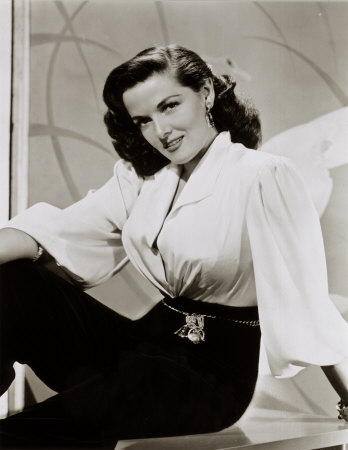
Actress Jane Russell died at the age of 89. Discovered by Howard Hughes, she was one of the leading sex symbols of the 1940s and 1950s. She appeared in such great films as The Outlaw, The Paleface, and Gentlemen Prefer Blondes. She died of resipatory illnesses.

Betty Garrett

Actress Betty Garrett died at the age of 91 from an aneurysm. She started out in MGM musicals of the 1940s like Words And Music with Mickey Rooney and On The Town with Gene Kelly and Frank Sinatra. Married to black listed actor Larry Parks, she emerged as a television star in the 1970s on All In The Family and Laverne & Shirley.

Actor Farley Granger died at the age of 84. He was a well respected actor in such films as Strangers On The Train and The Rope. Granger came out as a homosexual after the studio system of Hollywood ended.

Songwriter Hugh Martin died at the age of 96. Probably he most beloved song was Have Yourself A Merry Little Christmas which he wrote for Judy Garland in the MGM musical Meet Me In St. Louis (1944).

Screenwriter Madelyn Pugh died at the age of 90. She was the writer for all three of Lucille Ball's television series - I Love Lucy, The Lucy Show, and Here's Lucy. She was was the producer on the series Alice.

Bandleader Orrin Tucker died at the age of 100. He was one of the last surviving big band leaders of the big band era (1936-1945). His famous hit was Oh Johnny, which he recorded with vocalist Wee Bonnie Baker in 1939.

Jackie Cooper

Actor Jackie Cooper died at the age of 88. He was a child star who appeared in classic movies such as The Champ (1931) and the Our Gang series of shorts. He also acted into adulthood, appearing as the newspaper editor in the Superman movie series with Christopher Reeves.

Actress Edith Fellows died at the age of 88. She started out as a child star appearing with Bing Crosby in Pennies From Heaven (1936). She was one of the first child stars to fight for independent rights against her mother.

Actor Peter Falk died at the age of 83, after a long battle with dementia. He was most known for his television role in the Columbo series. However, he was a gifted actor who appeared in such films as A Pocketful Of Miracles, Robin And The Seven Hoods, and The Princess Bride.

Actor James Arness died at the age of 88. He was the brother of actor Peter Graves, who passed away in 2010. Arness was best known from the television series Gunsmoke, which he starred in for twenty years.

Singer Ross Barbour died at the age of 82 of lung cancer. He was one of the founding members of the Four Freshmen. He was also the last original surviving member.

Actor Francesco Quinn died of a heart attack at the age of 48. He was an Italian born American actor in films such as Platoon. Francesco was also the son of actor Anthony Quinn.

Actor Jack Garner died at the age of 84. He was the older brother of James Garner. While Jack did not receive the fame his brother did, he appeared with his brother on television in The Rockford Files, and on the screen in My Fellow Americans (1995).

Cliff Robertson

Actor Cliff Robertson died at the age of 88. He won wide acclaim for playing President John F. Kennedy in the film PT 109 (1963), and in later years he played the uncle in the Spiderman movie series.

Actress Mary Fickett died at the age of 83 of dementia. She had a long career on the soap opera All My Children. In films she played Bing Crosby's ex-wife in the tense drama Man On Fire (1957).

Silent screen actress Barbara Kent died at the age of 103. She was one of the last adult actresses in silent films. She left movies in 1935 and refused to give interviews later in life.

Actress and author Judy Lewis died at the age of 76. She acted on television on the soap opera General Hospital. Judy also was the secret love child of Loretta Young and Clark Gable. Young kept the secret of who her father was for years. Judy later wrote a book about her life which exposed the truth.

Musician Tony Martin Jr died at the age of 60. He was the only child of dancer Cyd Charisse and singer Tony Martin. Tony Jr had been in increasing poor health due to a car accident. His mother Cyd Charisse died in 2008.

Actor Harry Morgan died at the age of 96. He was a legendary television actor whose career spanned decades. Morgan was best known for his television roles on Dragnet and Mash, but he also appeared on radio during its golden age and movies as well.

Singer Russ Carlyle died at the age of 96. He never became a famous vocalist like other band singers of the day, but he was a dependable vocalist who sang with the Blue Barron Orchestra from 1936 to 1941.

Dolores Hope (with Bob Hope)

Singer Dolores Hope died at the age of 102. She was the widow of Bob Hope. They met while she was a young vocalist and were married from 1934 until Bob's death in 2003. Dolores resumed her singing career in the 1980s and 1990s.

Child star Sybil Jason died at the age of 84. She was a child actress in the early days of the talkies and appeared alongside some of the greats like: Kay Francis in I Found Stella Parish (1935), Al Jolson in The Singing Kid (1936), and Pat O'Brien and Humphrey Bogart in The Great O'Malley (1937).

Author Arthur Marx died at the age of 89. He was the son of Groucho Marx, and Arthur was very controversial and open in his books he wrote on the actors he knew, including his father as well as Bob Hope and Mickey Rooney.

Singer Lucy Ann Polk died at the 84. She was a big band singer that was famous for replacing Doris Day in the Les Brown Orchestra. Polk stayed with Les Brown through the mid 1950s. Polk had a great jazz style but only made three solo records before retiring from the music industry.

These entertainers, personalities, and icons in their respective fields are gone now, but hopefully they will never be forgotten...

Wednesday, December 28, 2011

RIP: TARZAN'S CHEETAH

Cheetah, a chimpanzee who starred alongside Tarzan in the franchise films of the early 1930s, died Saturday. He had experienced kidney failure earlier that week, and was thought to be 80 years old.

Cheetah, also known as Cheetah-Mike, acted as Tarzan's comic sidekick "Cheeta" and was one of several chimpanzees who appeared in the films of 1932 to 1934, with Johnny Weissmuller in the starring role.

Around 1960, after living on Weissmuller's estate, Cheetah retired to Suncoast Primate Sanctuary in Palm Harbor, Fla.

"It is with great sadness that the community has lost a dear friend and family member," the sanctuary announced this week on its website. Chimpanzees live an average of 45 years in the wild, and captive chimps have an average lifespan of 60 years.

While at the sanctuary, Cheetah enjoyed watching sports on television, listening to nondenominational Christian music, and occasionally throwing poop when he was feeling disgruntled.

"He was very outgoing," outreach director Debbie Cobb tells PEOPLE. "He always loved to laugh and to make other people laugh. He was the first chimp I've ever seen shed a tear when another animal died."

Cobb, who has been affiliated with the sanctuary since she was a child, has known Cheetah for 51 years, and says she will miss "not being around him everyday." The sanctuary has been raising funds to construct a medical building dedicated to Cheetah. "We're going to make sure that Cheetah's memory lives on forever," Cobb says.

Actress Mia Farrow, whose mother, Maureen O'Sullivan, starred as Jane in the Tarzan films, took to Twitter to remember the animal.

"Cheetah the chimp in Tarzan movies died this week at 80," she wrote. "My mom, who played Jane, invariably referred to Cheetah as 'that bastard.'"

"He loved women," Cobb says. "He loved life, everything about it."

SOURCE

Tuesday, December 27, 2011

ROMAN HOLIDAY WRITER CREDIT RESTORED

Blacklisted writer Dalton Trumbo, who wrote the screenplay for the classic film "Roman Holiday," starring Audrey Hepburn, had his credit restored by a Hollywood writers group on Monday, reversing history 58 years after the film's release. Trumbo, the writer behind the original story for the 1953 film starring Hepburn and Gregory Peck, was part of the Hollywood Ten, a group of industry writers and directors who were accused of being Communist sympathisers by the US House of Representatives' Committee on un-American Activities.

The Ten and others were blacklisted in the late 1940s and '50s by Hollywood film studios concerned that hiring them would be bad for business. The blacklist ruined many careers and some writers, like Trumbo, used surrogates for their work.

"It is not in our power to erase the mistakes or the suffering of the past," Writers Guild of America West President Chris Keyser in a statement. "But we can make amends, we can pledge not to fall prey again to the dangerous power of fear or to the impulse to censor, even if that pledge is really only a hope. And, in the end, we can give credit where credit is due."

The WGA is a trade organisation that represents film, TV and other writers, and it regularly decides issues on screenwriting credit when, and if, disputes arise.

Following his blacklisting, Trumbo moved to Mexico to work anonymously and used fellow screenwriter Ian McClellan Hunter as a frontman for his writing in Hollywood. Hunter, whose name appears on the credits for "Roman Holiday," submitted Trumbo's script and collected the studio's payment on his behalf.

Chris Trumbo and Tim Hunter, sons of both screenwriters, approached the WGA in 2010 to propose that Dalton Trumbo be recognised as the original writer of "Roman Holiday."

The WGA found evidence supporting their claims and although the credited writers of the film are no longer alive, the guild made an attempt to reverse history.

"The WGA has not undone the hurt, but it has, at last and at least, told the truth. That fact is a tribute to the friendship of two fathers and then two sons and to a thing we can hold on to, which is that the friendship was stronger than and outlived the hate," said Keyser.


SOURCE

Sunday, December 25, 2011

MY FIVE FAVORITE CLASSIC MOVIES I SAW IN 2011

For as long as I have been watching classic movies, I am amazed at the amount of movies I still haven't seen. Turner Classic Movies is one of the most prized things in my life (next to my wife and child), and the channel is constantly introducing me to new classic movies that I have never seen before. Here are the best classic movies I saw in 2011:


5. HERE IN MY HEART (1934)
For the longest time, this Bing Crosby movie was the Holy Grail of his movies. It was nearly impossible to get a copy of the film - other than than a fifth generation or so video copy. MCA/Universal recently released the elusive film as part as a five film release of Bing's movie. The movie is not great, but Bing is in fine voice and this was the second time Crosby was paired up with opera singer Kitty Carlisle. All of Bing's films in the early 1930s were light on plot but still enjoyable to watch.

4. BIG BOY (1930)

It is rare to see an Al Jolson movie on television, for the most part they are not even readily available on DVD. However, TCM surprised me when they showed this film in 2011. The movie is 81 years old but it looks about 100 years old. Jolson appeared in the whole movie in blackface. He plays a farm hand who becomes a jockey. The film may be offensive to some people because of the blackface, but to see Jolson perform even on film is to see a real genius work. He was one of the greatest entertainers of all time.


3. SHIP OF FOOLS (1965)
This movie I caught on TCM one day when I was home sick. I am not a huge Vivien Leigh fan, but I could not stop watching the film. Directed by the great Stanley Kramer, he weaves the stories of the passengers that all on this boat together very effortlessly. Joining Leigh on this voyage was the great Jose Ferrer and almost equally talented Lee Marvin. The movie would mark the last screen appearance of Viven Leigh, and she died two years after the film was made. This is the perfect movie to watch on a lazy afternoon. The movie starts slow, but it is engrossing until the end.

2. SINNER'S HOLIDAY (1930)
This film I caught by accident when I set my DVD recorder to the wrong time. Even though the film is over 80 years old, it was really an interesting movie to watch. The stars of the film were forgotten stars Grant Withers and Evalyn Knapp but the true stars of the film were young actors by the name of James Cagney and Joan Blondell. The story goes that Al Jolson saw the broadway show of this film and immediately bought the rights. He sold the rights back to Warner Brothers - only if they cast Cagney and Blondell in the roles they originated on broadway. The rest they say is history.


1. THE LAST TIME I SAW PARIS (1954)
Here is another movie I caught on TCM by accident. I am a huge fan of Van Johnson, but I always shied away from this movie thinking it was a typical 1950s soap opera film. However, the movie caught my attention, and even though it was like a soap opera at some parts, there were some definite surprises that I did not see coming. In addition to Van Johnson the cast boasted some great stars like Elizabeth Taylor, Donna Reed, Eva Gabor, and a young Roger Moore in his film debut. I never expected to pick this film as my personal find of 2011, but it is a great movie that I would love to see again.

Friday, December 23, 2011

SEX SYMBOLS OF THE CINEMA: ONES I MISSED

Any fellow blogger knows that there is only so much space to write your thoughts and ideas. With my series on the sex symbols of the cinema, I was only picking four actresses for each decade. That is not a lot, and there were stars that I missed and did not profile that I should have. Here are some of the great sex symbols that did not get recognized:


JEAN HARLOW (1911-1937)
Not putting Jean Harlow on the original list was the biggest mistake of the series. Harlow was sex on film in the 1930s. Unfortunately, Jean died way too young. She was more than a sex symbol though. Harlow was amazing to see in "Dinner At Eight" (1934), and every role she was in, she made the movie that much better. She not only had great sex appeal, she had great comedic timing.

CAROLE LOMBARD (1908-1942)
I always considered Carole Lombard a great comedic actress more than a sex symbol, but like Harlow I think she was both. Also like Jean Harlow, Carole died too young. Lombard made some great movies like "Made For Each Other" (1939) and "To Be Or Not To Be"(1942) - and even in corny movies like "We're Not Dressing" (1934), Lombard was funny and sexy as well.


JANE RUSSELL (1921-2011)
Jane Russell was basically the brunette answer to Betty Grable and Marilyn Monroe. Russell made the bustline famous in movies, but despite being a sex symbol she was talented as well. Russell was a good singer as well and as an actress she easily could act alongside the likes of Bob Hope, Robert Mitchum, and Clark Gable.

BRIGITTE BARDOT (BORN 1934)
Even though I pride myself a movie fan, I have never seen a Brigitte Bardot movie. I only know her from seeing her animal activism in recent years, but she was a great beauty. She left the entertainment industry in 1973, but Bardot made over 40 films that really revolutionized how sex symbols were looked at. She took sex in the industry to a whole new level.


SOPHIA LOREN (BORN 1934)
Sophia Loren is one of the few women who can make being in her 70s sexy. Loren, like Bardot, started out at the beginning of the new sexual revolution in the film industry. Her first film was "Aida" (1953) and she went on to seduce audiences and co-stars like Frank Sinatra, John Wayne, and Cary Grant. She remains one of the most beautiful active working classic actresses in the business.

Do you have any other sex symbols that we should have profiled? Who else did we miss? I would love to keep revisiting this topic from time to time on my blog. I want to thank everyone who read and commented on this series, and thank you to all of the movie sex symbols who made writing this series so easy...

Wednesday, December 21, 2011

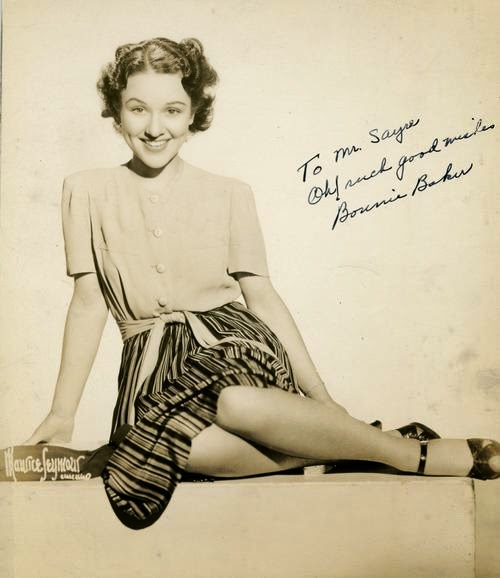
WHERE ARE THEY NOW: WEE BONNIE BAKER

The big band era is just a distant memory now. The bandleaders of that era are all gone, as well as a good bit of the singers. One singer that was pretty much different than all the rest was Wee Bonnie Baker. Bonnie Baker was an American jazz and popular music singer, often credited as Wee Bonnie Baker. Her biggest hit was "Oh Johnny, Oh!" which she recorded with the Orrin Tucker Orchestra in 1939.

She was born in Orange, Texas on April 1, 1917; most sources give her birth name as Evelyn Nelson although, at the time of her death, her family gave it as Evelyn Underhill. She joined Orrin Tucker's band as a vocalist in 1936, after Louis Armstrong suggested that Tucker recruit her. Tucker gave her the stage name "Wee" Bonnie Baker on account of her height, about 4 foot 11 inches; she later changed her name legally to Bonnie Baker. Her girlish voice, described as "like a tiny silver bell, soft but tonally true", was used on a version of the 1917 song "Oh Johnny, Oh!", written by Abe Olman and Ed Rose. Released on Columbia Records, it became hugely popular in 1940, reaching no. 2 on the pop chart, and reportedly selling over a million copies. She also had success with the songs "You'd Be Surprised", "Billy", "Would Ja Mind", and "Especially For You".


After leaving the Tucker orchestra in 1942, she continued with a solo career, singing with the USO (United Service Organizations) during World War II, and appearing regularly on the radio show Your Hit Parade. She also sang with other bands, and married jazz guitarist Bill Gailey. In 1948, she recorded a novelty song, "That's All Folks!", as a duet with Mel Blanc playing the character Daffy Duck. She also voiced the cartoon character Chilly Willy in the 1950s. She released an album, Oh Johnny!, with orchestra conducted by Wilbur Hatch, on Warner Bros. Records in 1956. After moving to Florida in 1958, she continued to sing in clubs with her husband, until she suffered a heart attack in 1965.


She died in Fort Lauderdale, Florida in August 11, 1990 at the age of 73. Band leader Orrin Tucker outlived his famous vocalists by over 20 years. Tucker died on April 9, 2011 at the age of 100...