Friday, May 13, 2022
A TRIBUTE TO DORIS DAY: THREE YEARS LATER
It has been a quick three years since Doris Day died. She is still missed...

Sunday, May 8, 2022
MOVIE REVIEW: THE STAR MAKER - PART TWO

Like most Bing movies of the day, the audience was not there for the plot but the music. Bing got to sing some older Gus Edwards composed songs like “If I Was A Millionaire”, “Sunbonnet Sue”, “In My Merry Oldsmobile”, and my personal favorite “School Days”. I taught my 8-year-old daughter to sing the song when she was five, and she still sings it now! Most if the songs that Gus Edwards wrote were written around the turn of the century, so they were pretty old when this movie was coming out in 1939. Some more contemporary songs were written for the film as well by Johnny Burke and Jimmy Van Heusen like: “Go Fly A Kite”, “A Man and His Dream”, “An Apple for The Teacher”, and my favorite song of the film “Still the Bluebird Sing” which is pretty forgotten today. Bing recorded these new songs for Decca, and his biggest hit was “An Apple for The Teacher” which he recorded as a duet with Connee Boswell.

The cast was great as well in The Star Maker. Bing’s leading lady as mentioned earlier was Louise Campbell. Campbell did not have much to do in the movie but frown when Bing made bad decisions. Louise never became a big star and only made movies for a decade between 1937 and 1947 before retiring from movies. Character actor and comic crabby Ned Sparks is a great comic foil in the movie, and he appeared with Bing earlier at MGM in 1933’s Going Hollywood. Some other great character actors appear in the film like Laura Hope Crews, Thurston Hall, Billy Gilbert, and Clara Blankdick – who would be appearing that year as Aunt Em in MGM’s The Wizard Of Oz. The Star Maker also tried to make a star out of newcomer Linda Ware. Billed third, Paramount was hopeful that Linda be their answer to Universal’s Deanna Durbin. Linda Ware was likeable in the movie, but she was involved in a custody case between her parents which would ruin any chances she had for stardom. She made a total of two movies, and then faded into obscurity.
The New York Times was tougher with its reviews than Variety: “The Star Maker,” the new Bing Crosby film at the Paramount, was inspired (to employ a euphemism) by the career of Gus Edwards, a show-minded Pied Piper who used to swing around the old vaudeville circuits followed by precocious little song and dance teams — the girls in sunbonnets, the boys in newsies’ tatters — who grew up, or at least some of them did, to become Walter Winchell, George Jessel, Eddie Cantor and Mervyn LeRoy...There isn’t much more to the picture. Mr. Crosby sings in his usual lullaby manner and hasn’t many good lines to play with. Ned Sparks sneaks away with a comic scene or two as the child-hating press agent who has to tell bedtime stories and spins a grim whopper about the mean old wolf who gobbled up the little kiddies... But it is all, if Mr. Edwards will pardon us, too much like a Gus Edwards revue and far too much of that."

Variety was far more positive. "Film is first-class entertainment, a lively combination of the conventional backstage story, which is played for comedy angles, and film musical technique, that is up to best standards...Audiences will quickly and cheerfully respond to the gayety [sic] which pervades the film. . . . It’s the Gus Edwards repertoire of pop tunes which gives the film zest and the feeling that yesterday is worth remembering. ‘School Days’ is recreated in an elaborate production number, including an interpolation when Crosby, speaking directly from the screen to the film audience, invites and obtains a spirited if somewhat vocally uncertain choral participation.”
Sure, The Star Maker bore little resemblance to the life of Gus Edwards, but film biographies of the 1930s and 1940s were not made to accurately portray their subject, they were made to entertain. This film definitely is entertaining. From the first moment of the film when Bing is singing “Jimmy Valentine” to the orphans to the end of the film when Bing is singing “Still the Bluebird Sing” on radio with his kid stars, the 94-minute movie is extremely entertaining. In the beginning of the film, I was tired of Bing being the lazy non-working husband, but Bing always worked well with children, and in this movie he surrounds himself with dozens of them. This movie is not on video or DVD, so it is hard to come by other than a bootleg copy. However, the full fill is available for free on You Tube as of this writing. Do yourself a favor and check out this whimsical and fun musical that Bing ended the decade of the 1930s with! I’m glad I had the opportunity to watch The Star Maker again...

Sure, The Star Maker bore little resemblance to the life of Gus Edwards, but film biographies of the 1930s and 1940s were not made to accurately portray their subject, they were made to entertain. This film definitely is entertaining. From the first moment of the film when Bing is singing “Jimmy Valentine” to the orphans to the end of the film when Bing is singing “Still the Bluebird Sing” on radio with his kid stars, the 94-minute movie is extremely entertaining. In the beginning of the film, I was tired of Bing being the lazy non-working husband, but Bing always worked well with children, and in this movie he surrounds himself with dozens of them. This movie is not on video or DVD, so it is hard to come by other than a bootleg copy. However, the full fill is available for free on You Tube as of this writing. Do yourself a favor and check out this whimsical and fun musical that Bing ended the decade of the 1930s with! I’m glad I had the opportunity to watch The Star Maker again...
MY RATING: 10 out of 10

Thursday, May 5, 2022
MOVIE REVIEW: THE STAR MAKER - PART ONE


His wife convinces him to go on a job interview finally, and as he is walking to the interview, he sees young children performing on the streets. Instantly Bing gets the idea to create a vaudeville act around the children. He brings all these children home without even going on his job interview. Bing tries to get an audition with a stage producer (Thurston Hall) but is unable to. Bing’s wife Mary is tired of him not getting anywhere so she takes it upon herself to hide in the car of the stage producer and talk to him. The producer is so impressed with Bing’s wife that he gives Bing and his kids a chance. On opening night, they sing the great song “Go Fly A Kite”. Bing and his troupe are a success. However, that is not enough for Bing. He is always thinking bigger and bigger!
Bing forms a production company and hires a publicity manager (Ned Sparks), who hates children. They get the idea to tour the country in a train and audition and set up acts all around the country. However, as Bing is reaching the apex of his career as a kiddie show producer, the Children’s Welfare Society gets involved. They will not allow children under twelves of age to perform after 10pm. The Society gets all his shows shut down, but Bing realizes he can use radio to showcase the talent of the children without the interference of the welfare group...

Bing forms a production company and hires a publicity manager (Ned Sparks), who hates children. They get the idea to tour the country in a train and audition and set up acts all around the country. However, as Bing is reaching the apex of his career as a kiddie show producer, the Children’s Welfare Society gets involved. They will not allow children under twelves of age to perform after 10pm. The Society gets all his shows shut down, but Bing realizes he can use radio to showcase the talent of the children without the interference of the welfare group...
TO BE CONTINUED...

Tuesday, May 3, 2022
Sunday, May 1, 2022
THE UNHEARD TAPES OF MARILYN MONROE

In an exclusive clip from “The Mystery of Marilyn Monroe: The Unheard Tapes,” the Hollywood icon talked about dating DiMaggio before they tied the knot in 1954.
“I saw him for around a year and a half, two years, and we married,” Monroe said in the clip, which showed her and the baseball legend smiling and climbing into their car after saying “I do” at San Francisco City Hall.
Monroe also hinted at issues in their relationship that led them to divorce just nine months after they wed.
“He understood some things about me, and I understood some things about him,” she said. “We based our marriage on it. And I say some things.”
Even after their divorce, DiMaggio reportedly felt affection for Monroe, and for years after her death in 1962, he had red roses delivered regularly to her grave.

After divorcing DiMaggio, Monroe married playwright Arthur Miller in 1956; they announced plans to divorce in 1960, two years before she died at age 36.
“The Mystery of Marilyn Monroe: The Unheard Tapes,” streaming April 27 on Netflix, features previously unheard recordings of people who knew Monroe personally, including director John Huston and her “Gentlemen Prefer Blondes” co-star Jane Russell, as well as lesser-known figures from her inner circle, such as the family of her psychiatrist.
The documentary’s director, Emma Cooper, says that hearing intimate tapes of people who knew Monroe gave her a more nuanced understanding of the legendary star.
“I thought that she was this one-dimensional character. I just absolutely adore her in a way that I didn’t before. She’s just an extraordinary icon. She’s a much more relatable woman than anybody has really given her credit for,” Cooper said in a Netflix interview. “She’s not just the person that stands on the air vent and looks pretty ditzy. There is a lot of pain and there’s a lot of strength in her. I’m completely obsessed with her.”

Sunday, April 24, 2022
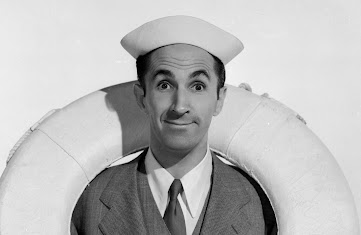
WHAT A CHARACTER: BEN BLUE

In 1930, Blue toured with the "Earl Carroll Vanities". Blue left the band to establish himself as a solo comedian, portraying a bald-headed dumb-bell with a goofy expression. Producer Hal Roach featured him in his "Taxi Boys" comedy shorts, but Blue's dopey character was an acquired taste and he was soon replaced by other comedians. Later in the 1930s he worked at Paramount Pictures, notably in The Big Broadcast of 1938, and later at Metro-Goldwyn-Mayer, in films such as Easy to Wed. One of my favorite roles he had was as Gene Kelly's buddy in the 1942 MGM musical For Me And My Gal.

In 1951, Blue began concentrating on managing and appearing in nightclubs in Hollywood, California and San Francisco. He once appeared in a Reno, Nevada nightclub called the Dollhouse where he lost $25,000 to its owner, Bill Welch. Blue and Maxie Rosenbloom owned and performed in Hollywood's top nightclub in the 1940s called "Slapsie Maxie's." Again, in the 1960s he opened a nightclub in Santa Monica, California, called "Ben Blue's". It quickly became the "in" place and night after night was packed with top celebrities. Ben closed the club three years later because of health problems. Blue made the cover of TV Guide's June 11, 1954 Special Issue along with Alan Young, headlining an edition featuring that season's summer replacement shows. He also made appearances in TV shows such as The Jack Benny Program and The Milton Berle Show.
In 1964 he was indicted by a federal grand jury on six counts of tax evasion for the non-payment of more than $39,000 (approximately $325,000 today) in income taxes from the nightclub he operated, the Merry‐Go‐Round, in Santa Monica, California. The case was contested for five years, before he pled no contest to a single count of evading corporate tax. He was fined $1,000, with the payment suspended.

He also had a recurring role in Jerry Van Dyke's television series Accidental Family in 1967. His film roles included many cameo appearances. In It's a Mad, Mad, Mad, Mad World (1963), his role was the pilot of the Standard J-1 biplane that flew Sid Caesar and Edie Adams, and he played Luther Grilk, the town drunk, in The Russians Are Coming, the Russians Are Coming (1966). His other film appearances included small roles in The Busy Body (1967), A Guide for the Married Man (1967) and Where Were You When the Lights Went Out? (1968). He made one of his last television appearances in Land of the Giants in 1969. He was also seen the following year in the Dora Hall vanity syndicated television special, "Once Upon a Tour". Blue died in Hollywood, California on March 7, 1975. He may never have starred in a movie, but he made many movies better because he was a part of them...

Thursday, April 21, 2022
RIP: ROBERT MORSE

Writer-producer Larry Karaszewski, who serves as a VP on the board of governors for the Academy of Motion Picture Arts and Sciences, tweeted news of Morse’s death on Thursday.
“My good pal Bobby Morse has passed away at age 90,” he wrote. “A huge talent and a beautiful spirit. Sending love to his son Charlie & daughter Allyn. Had so much fun hanging with Bobby over the years – filming People v OJ & hosting so many screenings (How To Succeed, Loved One, That’s Life).”
Morse was Emmy nominated five times for playing the sage Bertram Cooper, the senior partner at the advertising firm that was the focus of AMC’s prestigious series “Mad Men,” from 2007 to 2015. In 2010, he shared the SAG Award that “Mad Men” won for outstanding performance by an ensemble in a drama series.
The eccentric Bert Cooper was known for his bow ties and his collection of Japanese art and architecture; while at times he seemed indifferent to the business affairs at Sterling Cooper, he could be crafty and manipulative when necessary. Cooper died the night of the first moon landing — and that 2014 episode afforded Morse the opportunity to show off his singing and dancing skills in a fantasy number, imagined by Jon Hamm’s Don Draper, to the tune of “The Best Things in Life Are Free.”

“The opportunity to shine in the spotlight that Matt Weiner gave me — it was an absolute love letter. Christmas and New Year’s, all rolled into one,” Morse told the New York Times.
Morse also won an Emmy in 1993 for a PBS “American Playhouse” adaptation of Morse’s one-man show “Tru,” about Truman Capote.
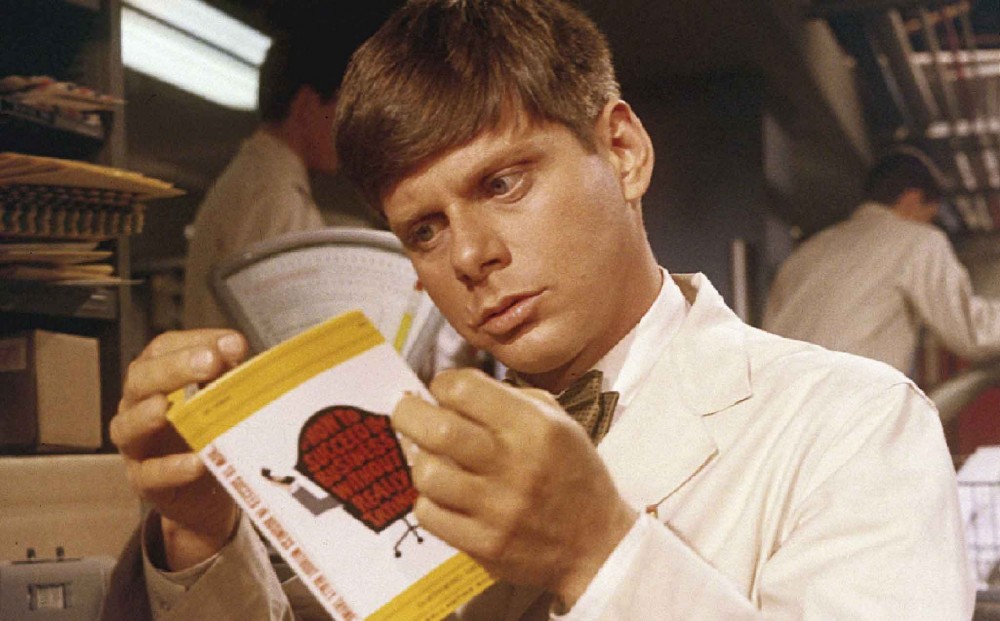
Morse, known for his impish, gap-toothed grin, became a star on Broadway in the musical comedy “How to Succeed in Business Without Really Trying,” for which he won his first Tony, as best actor in a musical, in 1962. The enormous hit ran for more than 1,400 performances and was adapted for the big screen in a 1967 film in which Morse reprised his starring role of J. Pierpont Finch.

Reviewing the movie, Variety said: “Plot concerns window-washer Morse who, by superior instinct for advancement and survival, becomes a top exec in (Rudy) Vallee’s company in a matter of days. He becomes so big that former well-wishers plot his downfall. The pixie-like Morse is excellent, with both voice and facial expressions right on target all the time.” Morse not only sang but danced in the musical; later, in reviewing the actor’s performance in “Tru,” Frank Rich of the New York Times said, “Mr. Morse kicks a loose-limbed leg as high and friskily as he did when joining Bob Fosse’s hoedown for the ‘Brotherhood of Man’ finale in ‘How to Succeed.’ “
The actor won his second Tony for the one-man show “Tru,” in which he played Truman Capote, appearing on Broadway for 297 performances in 1989-1990. Makeup man Kevin Haney, whose credits include the movies “Altered States” and “Wolfen,” turned Morse into the bloated mass that Capote became before he died in 1984.
“With his mad shopping-bag woman’s cackle and darting lounge lizard’s tongue, Mr. Morse so eerily simulates the public Capote of the pathetic waning years that he could be a Capote robot,” wrote Frank Rich. “One is glad to have met up with this actor again, is impressed by his command of his technique and his audience, and is moved by the courage that has allowed him to return to a Broadway stage in so unlikely a vehicle.”
Morse appeared in a number of other movies in the 1960s, including Tony Richardson’s satire of the funeral industry “The Loved One” (1965), also starring Jonathan Winters. Variety said: “Robert Morse as the poet who falls in love with the lady cosmetician (later promoted to embalmer) while making arrangements for his uncle’s interment, plays it light and airy, like a soul apart.”

In 1967, in addition to the “How to Succeed” adaptation, Morse starred with Walter Matthau in the comedy “A Guide for the Married Man,” in which Morse’s character tries to convince Matthau’s married man to keep an affair secret from his wife, and his points are illustrated in skits that featured a large number of celebrities.
(According to a 2014 article in Playbill, “How to Succeed in Business Without Really Trying” and “A Guide for the Married Man” served as inspirations for Matthew Weiner when he created “Mad Men.”)
Morse starred opposite Doris Day in the 1968 film comedy “Where Were You When the Lights Went Out?”
In 1968-69 Morse starred with E.J. Peaker in the innovative ABC musical comedy series “That’s Life,” in which the story of how a young couple met, fell in love, and married was told through a series of monologues, sketches, and song and dance routines. He earned his first Emmy nomination for his work on the series.
The actor starred in the Disney comedy “The Boatniks” (1970), and made a few guest appearances on series including “Love, American Style” and “Fantasy Island” during the 1970s; in the 1980s he guested on shows including “The Dukes of Hazzard” and “Murder, She Wrote.”

Morse was among the performers on Marlo Thomas’ celebrated “Free to Be … You and Me” children’s album in 1972.
In 1987 he starred in a Cannon Films version of “The Emperor’s New Clothes,” with Sid Caesar as the Emperor and Morse playing the Tailor.
He was featured in ABC’s 1993 series “Wild Palms” and was a series regular on Steven Bochco’s brief-running CBS hospital drama “City of Angels,” starring Blair Underwood, in 2000.
Morse was born in Newton, Massachusetts. He served in the U.S. Navy during the Korean War. A drama teacher in high school inspired him to become an actor, and after graduating he headed to New York City’s prestigious Neighborhood Playhouse, where his older brother, Richard, was already studying acting. He also studied with Lee Strasberg. He made his stage debut in 1949 production of “Our Town” in New Hampshire.
He made his Broadway debut in 1955 in “The Matchmaker,” the Thornton Wilder play that would serve as the basis for the musical “Hello, Dolly!” (Ruth Gordon starred as Mrs. Dolly Gallagher Levi); he played Barnaby Tucker. After appearing in an uncredited role in the 1956 film “The Proud and Profane,” starring William Holden and Deborah Kerr, the young actor made his credited big-screen debut two years later in the film adaptation of “The Matchmaker,” starring Shirley Booth. The New York Times said, “Robert Morse does a fine stint in re-creating his stage role as his wide-eyed, fellow adventurer.”
In 1959 he earned his first Tony nomination, for best featured actor in a play, for the original hit comedy with music “Say, Darling,” in which he spoofed the director Harold Prince. The next year he earned another Tony nomination, for best actor in a musical, for “Take Me Along,” which was also nominated for best musical and drew nominations for Jackie Gleason and Walter Pidgeon.
After “How to Succeed in Business Without Really Trying,” which ran from 1961-65, Morse starred in the original musical comedy “Sugar,” based on the classic Billy Wilder comedy “Some Like It Hot.” It ran for 505 performances in 1972-1973. In 1976, he appeared in the musical “So Long, 174th Street,” whose source material was a book by Carl Reiner.
Morse did not return to Broadway until he appeared in “Tru” in 1989-90, and he did not appear on the Rialto again after that. In 1995, however, he starred in a Canadian production of “Show Boat”; in 2002 he played the Wizard in the San Francisco run of the musical “Wicked” but was replaced by Joel Grey when it opened on Broadway; in 2014, he appeared onstage at Vassar’s Powerhouse Theater as part of the cast of Christopher Gattelli’s dance ensemble piece “In Your Arms.”
Morse was twice married, the first time to “West Side Story” actress Carole D’Andrea from 1961 until their divorce in 1981.
He is survived by second wife Elizabeth Roberts, whom he married in 1989; three daughters by D’Andrea, Andrea Doven, Hilary Morse and Robin Morse, all actresses; and two children by Roberts, son Charles Morse and daughter Allyn Morse...

Subscribe to:
Posts (Atom)