Another great star has been gone for one year now. It's hard to believe...
Showing posts with label Robert Morse. Show all posts
Showing posts with label Robert Morse. Show all posts
Thursday, April 20, 2023

Friday, December 30, 2022
THE PASSING SCENE OF 2022
As we bid this year a fond farewell, we can not help but also say goodbye to the entertainers and icons that we have lost in 2022...
 |
| Angela Lansbury |
Entertainer ANGELA LANSBURY died at the age of 96 on October 11th. She was a star of stage, screen, and television for 80 years. To escape the Blitz, she moved to the United States in 1940, studying acting in New York City. Proceeding to Hollywood in 1942, she signed to MGM and obtained her first film roles, in Gaslight (1944), National Velvet in 1944, and The Picture of Dorian Gray (1945), earning her two Academy Award nominations and a Golden Globe Award. She appeared in eleven further MGM films, mostly in minor roles, and after her contract ended in 1952 she began supplementing her cinematic work with theatrical appearances. Although largely seen as a B-list star during this period, her role in the film The Manchurian Candidate (1962) received widespread acclaim and is often cited as one of her career-best performances, earning her a third Academy Award nomination. Moving into musical theatre, Lansbury finally gained stardom for playing the leading role in the Broadway musical Mame (1966), which won her her first Tony Award. She reached a new audience as Jessica Fletcher on TV's Murder She Wrote from 1984 to 1996. She also moved into voice work, contributing to animated films like Disney's Beauty and the Beast (1991) and Don Bluth's Anastasia (1997). She toured in a variety of international productions and continued to make occasional film appearances such as Nanny McPhee (2005) and Mary Poppins Returns (2018). Her last work was a cameo appearance in Rian Johnson's 2022 detective drama Glass Onion: A Knives Out Mystery.
Singer LORETTA LYNN died at the age of 90 on October 4th. In a career which spanned six decades in country music, Lynn released multiple gold albums. She had hits such as "You Ain't Woman Enough (To Take My Man)", "Don't Come Home A-Drinkin' (With Lovin' on Your Mind)", "One's on the Way", "Fist City", and "Coal Miner's Daughter". In 1980, the film Coal Miner's Daughter was made based on her life. Loretta suffered a stroke in 2017 and broke her hip in 2018. She released her last album in 2021.
Actress ESTELLE HARRIS died on April 2nd at the age of 93. She was best known as George Costanza's mother on the television show Seinfeld from 1992 to 1998. Estelle also provided the voice of Mrs. Potato Head in the Toy Story cartoon franchise. She did not start acting until her children was grown up, and her first role was in 1977. Her last role was in 2019's Toy Story 4.
Singer BOBBY RYDELL died at the age of 79 on April 5th of pneumonia. He was a singer and actor who mainly performed rock and roll and traditional pop music. In the early 1960s he was considered a teen idol. His most well-known songs include "Wild One" and "Volare". In 1963 he appeared in the musical film Bye Bye Birdie as Ann-Margret's love interest. In the 1980s, he joined a trio called The Golden Boys with fellow former teen idols Frankie Avalon and Fabian Forte and he continued to tour up until his death.Comedian LOUIE ANDERSON died of cancer at the age of 68 on January 21st. Anderson created the cartoon series Life with Louie and wrote four books, including Hey Mom: Stories for My Mother, But You Can Read Them Too, which was published in 2018. He was the initial host of the third revival of the game show Family Feud from 1999 to 2002. For his performance on the FX comedy television series Baskets, Anderson received three consecutive Primetime Emmy Award for Outstanding Supporting Actor in a Comedy Series nominations and won once in 2016. Anderson performed a stand-up show called Louie: Larger Than Life in Las Vegas, Nevada, from 2003 through 2012.Louie's last role was in 2021's Coming 2 America with Eddie Murphy.
 |
| Sidney Poitier |
Actor SIDNEY POITIER died on January 7th at the age of 94. In 1964, he won the Academy Award for Best Actor, becoming the first Black male and Bahamian actor to win the award. He received two further Academy Award nominations, ten Golden Globes nominations, two Primetime Emmy Awards nominations, six BAFTA nominations, eight, and one Screen Actors Guild Awards nomination. Poitier was one of the last surviving major stars from the Golden Age of Hollywood cinema, and after the death of Kirk Douglas in 2020, was the oldest living and earliest surviving male Academy Award winner until his own death in 2022. He continued to break ground in three successful 1967 films which dealt with issues of race and race relations: To Sir, with Love; Guess Who's Coming to Dinner, and In the Heat of the Night. He retired from acting in 1997, but continued to be involved in the cinema and in his homeland of the Bahamas.
Actor CARLTON CARPENTER died on January 31st at the age of 95. Carpenter signed with MGM in 1950, where he starred in a bunch of supporting roles. He he made eight films in three years: Father of the Bride, Three Little Words, Summer Stock, Two Weeks With Love, Vengeance Valley, Fearless Fagan (his one-of-two leading roles there), Sky Full of Moon (his other leading role there) and Take the High Ground!. He gained fame when teamed in 1950 with Debbie Reynolds in Three Little Words and Two Weeks with Love. In a guest sequence in Three Little Words, they perform “I Wanna Be Loved by You” as vaudeville players Dan Healy and Helen Kane, with Reynolds dubbed by Kane. In Two Weeks with Love, where they have featured roles, their duet "Aba Daba Honeymoon" was the first soundtrack recording to become a top-of-the-chart gold record, reaching number three on the Billboard chart. He worked as a stage actor through 2015.Actress PAT CARROLL died of pneumonia on July 30th at the age of 95. She was known for voicing Ursula in The Little Mermaid and for appearances in CBS's The Danny Thomas Show, ABC's Laverne & Shirley, and NBC's ER. Carroll was an Emmy, Drama Desk, and Grammy Award winner, as well as a Tony Award nominee. She largely retired from acting in 2014.
Actress and singer OLIVIA NEWTON-JOHN died of cancer at the age of 73 on August 8th. She was a four-time Grammy Award winner whose music career included five number-one hits and many other Top Ten hits on the Billboard Hot 100, and two number-one albums on the Billboard 200. In 1978, Newton-John starred in the musical film Grease, which was the highest-grossing musical film at the time and whose soundtrack remains one of the world's best-selling albums. It features two major hit duets with co-star John Travolta: "You're the One That I Want"—which is one of the best-selling singles of all time—and "Summer Nights". She made a handful of movies, and she is considered one of the great recording artists of the 2nd half of the 20th century.
Comedian GILBERT GOTTFRIED died on April 12th of muscular dystrophy at the age of 67. His persona as a comedian featured an exaggerated shrill voice and emphasis on crude humor. His numerous roles in film and television include voicing the parrot Iago in the Aladdin animated films and series, Digit LeBoid in Cyberchase, Kraang Subprime in Teenage Mutant Ninja Turtles, and the Aflac Duck. He appeared in the critically panned but commercially successful Problem Child in 1990. Gottfried hosted the podcast Gilbert Gottfried's Amazing Colossal Podcast (2014–2022), which featured discussions of classic movies and celebrity interviews, most often with veteran actors, comedians, musicians, and comedy writers.
Actor LESLIE JORDAN died on October 24th at the age of 67 in a car crash. Leslie was on countless TV shows and movies. His television roles included Lonnie Garr on Hearts Afire (1993–1995), Beverley Leslie on Will & Grace (2001–2006, 2017–2020), for which he won the Primetime Emmy Award for Outstanding Guest Actor in a Comedy Series in 2006, several characters in the American Horror Story franchise (2013–2019), Sid on The Cool Kids (2018–2019), and Phil on Call Me Kat (2021–2022). In theater, he played Earl "Brother Boy" Ingram from Sordid Lives, and also portrayed the character in the popular cult film of the same name.
Child star and voice actor PETER ROBBINS died at the age of 65 on January 25th of suicide. At the age of nine, Robbins provided the voice of Charlie Brown, whom he considered to be his childhood hero, in one television documentary, six Peanuts television specials and one movie from 1963 to 1969, including the film A Boy Named Charlie Brown and the television specials A Charlie Brown Christmas and It's the Great Pumpkin, Charlie Brown. At the age of fourteen, Robbins was replaced by younger child actors in the Peanuts specials produced after the 1960s, but his trademark scream of "AUGH!!", first used in It's the Great Pumpkin, Charlie Brown, continued to be used in later specials for Charlie Brown and other Peanuts characters. Peter suffered from mental illness and was arrested numerous times and jailed from 2015 to 2019.
Actor RAY LIOTTA died at the age of 67 on May 26th. His best-known roles include Shoeless Joe Jackson in Field of Dreams (1989), Henry Hill in Goodfellas (1990) and Tommy Vercetti in the video game Grand Theft Auto: Vice City (2002). His other roles included Ray Sinclair in Something Wild (1986), for which he received a Golden Globe nomination, as well as starring in Unlawful Entry (1992), Cop Land (1997), Hannibal (2001), Blow (2001), John Q (2002), Identity (2003), Observe and Report (2009), Killing Them Softly (2012), The Place Beyond the Pines (2012), and Marriage Story (2019), as well as the drama series Shades of Blue (2016–2018). Ray was currently shooting a movie in the Dominican Republic when he passed away in his sleep.
 |
| Robert Morse |
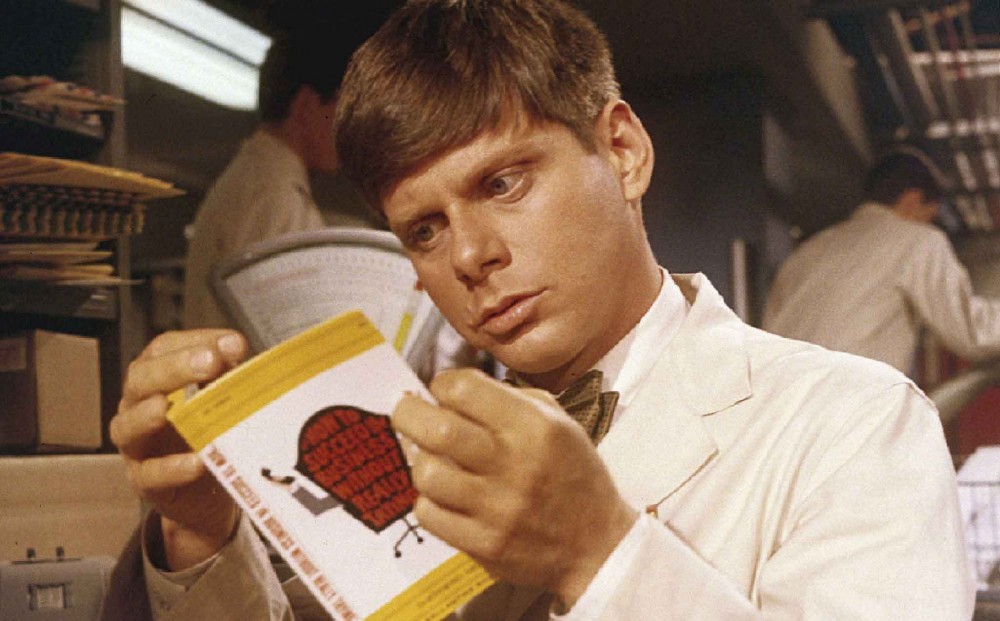
Actor ROBERT MORSE died at the age of 90 on April 20th. He best known as the star of both the 1961 original Broadway production, for which he won a Tony Award, and the 1967 film adaptation of How to Succeed in Business Without Really Trying, and as Bertram Cooper in the critically acclaimed AMC dramatic series Mad Men (2007–2015). He won his second Tony Award for playing Truman Capote in the 1989 production of the one-man play Tru. He reprised his role of Capote in an airing of the play for American Playhouse in 1992, winning him a Primetime Emmy Award. Robert made his last movie and television appearances in 2019.
Singer JONI JAMES died on February 20th at the age of 91. Signed at MGM records in the early 1950s, James had numerous hit records like: "Why Don't You Believe Me?" (No. 1 in 1952) "Have You Heard?" (No. 4 in 1953) "Your Cheatin' Heart" (No. 2 in 1953) "Almost Always" (No. 9 in 1953) "My Love, My Love" (No. 8 in 1953) "How Important Can It Be?" (No. 2 in 1955) and "You Are My Love" (No. 6 in 1955) as well as sixteen other Top 40 hits from 1952 to 1961. She left the music scene in the mid 1960s, but returned to performing in the 1990s.
Actress LOUISE FLETCHER died at the age of 88 on September 23rd. She was best known for her portrayal of Nurse Ratched in One Flew Over the Cuckoo's Nest (1975), which earned her an Academy Award for Best Actress, a BAFTA Award, and a Golden Globe Award. She was also well-known for her recurring role as the Bajoran religious leader Kai Winn Adami in the television series Star Trek: Deep Space Nine (1993–99), as well as for her role as Helen Rosemond in the movie Cruel Intentions (1999). She was nominated for two Emmy Awards for her roles in the television series Picket Fences (1996) and Joan of Arcadia (2004). Her final role was as Rosie in the Netflix series Girlboss (2017).
Comedian BOB SAGET died at the age of 65 on January 9th. His acting roles included Danny Tanner on the sitcom Full House (1987–1995), its sequel Fuller House (2016–2020), and the voice of narrator Ted Mosby on the sitcom How I Met Your Mother (2005–2014). From 1989 to 1997, he was the original host of America's Funniest Home Videos. Saget was also known for his adult-oriented stand-up comedy, and his 2014 album That's What I'm Talkin' About was nominated for the Grammy Award for Best Comedy Album. He passed away in his hotel room where he was performing in Orlando, Florida.
Comedian BOB SAGET died at the age of 65 on January 9th. His acting roles included Danny Tanner on the sitcom Full House (1987–1995), its sequel Fuller House (2016–2020), and the voice of narrator Ted Mosby on the sitcom How I Met Your Mother (2005–2014). From 1989 to 1997, he was the original host of America's Funniest Home Videos. Saget was also known for his adult-oriented stand-up comedy, and his 2014 album That's What I'm Talkin' About was nominated for the Grammy Award for Best Comedy Album. He passed away in his hotel room where he was performing in Orlando, Florida.
Actress MARSHA HUNT died on September 7th at the age of 104. She was blacklisted by Hollywood film studio executives in the 1950s during McCarthyism. She appeared in many films, including Born to the West (1937) with John Wayne, Pride and Prejudice (1940) with Greer Garson and Laurence Olivier, Kid Glove Killer (1942) with Van Heflin, Cry 'Havoc' (1943) with Margaret Sullavan and Joan Blondell, The Human Comedy (1943) with Mickey Rooney, Raw Deal (1948) with Claire Trevor, The Happy Time (1952) with Charles Boyer, and Dalton Trumbo's Johnny Got His Gun (1971). She appeared in a documentary of her life that was made in 2014.
 |
| Olivia Newton-John |
Actor WILLIAM HURT died of prostate cancer on March 13th at the age of 71. Hurt garnered three consecutive nominations for the Academy Award for Best Actor, for Kiss of the Spider Woman (1985), Children of a Lesser God (1986), and Broadcast News (1987), winning for the first of these. After playing character roles in the following decade, Hurt earned his fourth Academy Award nomination for his supporting performance in David Cronenberg's crime thriller A History of Violence (2005). His later career films roles include turns in A.I. Artificial Intelligence (2001), The Village (2004), Syriana (2005), The Good Shepherd (2006), Mr. Brooks (2007), Into the Wild (2007), Robin Hood (2010), and the Marvel Cinematic Universe films, in which he portrayed Thaddeus Ross.
Actor JAMES CAAN died at age of 82 on July 6th. After early roles in Howard Hawks's El Dorado (1966), Robert Altman's Countdown (1967) and Francis Ford Coppola's The Rain People (1969), he came to prominence playing Sonny Corleone in Coppola's The Godfather (1972) – a performance which earned him Academy Award and Golden Globe nominations for Best Supporting Actor. He reprised his role in The Godfather Part II (1974). Caan gained acclaim for his portrayal of Brian Piccolo in the 1971 television movie Brian's Song for which he received a Primetime Emmy Award for Outstanding Lead Actor in a Limited Series or Movie nomination. Caan received Golden Globe Award nominations for his performances in the drama The Gambler (1974), and the musical Funny Lady (1975). He remained a popular actor in films like Misery (1989) and Elf (2003). He continued making movies until the end of his life.
 |
| Louise Tobin |
Actor TONY DOW died of cancer at the age of 77 on July 27th.Tony was an actor, film producer, director and sculptor. He portrayed Wally Cleaver in the iconic television sitcom Leave It to Beaver from 1957 to 1963. From 1983 to 1989, Dow reprised his role as Wally in a television movie and in The New Leave It to Beaver. He largely retired from acting in the 1990s, but he directed many TV shows.
Actress KIRSTIE ALLEY died on December 5th at the age of 71 of cancer. Her breakout role was as Rebecca Howe in the NBC sitcom Cheers (1987–1993), for which she received an Emmy Award and a Golden Globe in 1991. From 1997 to 2000, she starred as the lead in the sitcom Veronica's Closet, earning additional Emmy and Golden Globe nominations. Throughout the 1980s and 1990s, Alley appeared in various films, including Look Who's Talking (1989) and its two sequels (1990–1993), It Takes Two (1995), Deconstructing Harry (1997), For Richer or Poorer (1997), and Drop Dead Gorgeous (1999). She won her second Emmy Award in 1994 for the television film David's Mother. Her last appearance was on TV's "The Masked Singer" in 2022.
Thursday, April 21, 2022
RIP: ROBERT MORSE

Writer-producer Larry Karaszewski, who serves as a VP on the board of governors for the Academy of Motion Picture Arts and Sciences, tweeted news of Morse’s death on Thursday.
“My good pal Bobby Morse has passed away at age 90,” he wrote. “A huge talent and a beautiful spirit. Sending love to his son Charlie & daughter Allyn. Had so much fun hanging with Bobby over the years – filming People v OJ & hosting so many screenings (How To Succeed, Loved One, That’s Life).”
Morse was Emmy nominated five times for playing the sage Bertram Cooper, the senior partner at the advertising firm that was the focus of AMC’s prestigious series “Mad Men,” from 2007 to 2015. In 2010, he shared the SAG Award that “Mad Men” won for outstanding performance by an ensemble in a drama series.
The eccentric Bert Cooper was known for his bow ties and his collection of Japanese art and architecture; while at times he seemed indifferent to the business affairs at Sterling Cooper, he could be crafty and manipulative when necessary. Cooper died the night of the first moon landing — and that 2014 episode afforded Morse the opportunity to show off his singing and dancing skills in a fantasy number, imagined by Jon Hamm’s Don Draper, to the tune of “The Best Things in Life Are Free.”

“The opportunity to shine in the spotlight that Matt Weiner gave me — it was an absolute love letter. Christmas and New Year’s, all rolled into one,” Morse told the New York Times.
Morse also won an Emmy in 1993 for a PBS “American Playhouse” adaptation of Morse’s one-man show “Tru,” about Truman Capote.
Morse, known for his impish, gap-toothed grin, became a star on Broadway in the musical comedy “How to Succeed in Business Without Really Trying,” for which he won his first Tony, as best actor in a musical, in 1962. The enormous hit ran for more than 1,400 performances and was adapted for the big screen in a 1967 film in which Morse reprised his starring role of J. Pierpont Finch.

Reviewing the movie, Variety said: “Plot concerns window-washer Morse who, by superior instinct for advancement and survival, becomes a top exec in (Rudy) Vallee’s company in a matter of days. He becomes so big that former well-wishers plot his downfall. The pixie-like Morse is excellent, with both voice and facial expressions right on target all the time.” Morse not only sang but danced in the musical; later, in reviewing the actor’s performance in “Tru,” Frank Rich of the New York Times said, “Mr. Morse kicks a loose-limbed leg as high and friskily as he did when joining Bob Fosse’s hoedown for the ‘Brotherhood of Man’ finale in ‘How to Succeed.’ “
The actor won his second Tony for the one-man show “Tru,” in which he played Truman Capote, appearing on Broadway for 297 performances in 1989-1990. Makeup man Kevin Haney, whose credits include the movies “Altered States” and “Wolfen,” turned Morse into the bloated mass that Capote became before he died in 1984.
“With his mad shopping-bag woman’s cackle and darting lounge lizard’s tongue, Mr. Morse so eerily simulates the public Capote of the pathetic waning years that he could be a Capote robot,” wrote Frank Rich. “One is glad to have met up with this actor again, is impressed by his command of his technique and his audience, and is moved by the courage that has allowed him to return to a Broadway stage in so unlikely a vehicle.”
Morse appeared in a number of other movies in the 1960s, including Tony Richardson’s satire of the funeral industry “The Loved One” (1965), also starring Jonathan Winters. Variety said: “Robert Morse as the poet who falls in love with the lady cosmetician (later promoted to embalmer) while making arrangements for his uncle’s interment, plays it light and airy, like a soul apart.”

In 1967, in addition to the “How to Succeed” adaptation, Morse starred with Walter Matthau in the comedy “A Guide for the Married Man,” in which Morse’s character tries to convince Matthau’s married man to keep an affair secret from his wife, and his points are illustrated in skits that featured a large number of celebrities.
(According to a 2014 article in Playbill, “How to Succeed in Business Without Really Trying” and “A Guide for the Married Man” served as inspirations for Matthew Weiner when he created “Mad Men.”)
Morse starred opposite Doris Day in the 1968 film comedy “Where Were You When the Lights Went Out?”
In 1968-69 Morse starred with E.J. Peaker in the innovative ABC musical comedy series “That’s Life,” in which the story of how a young couple met, fell in love, and married was told through a series of monologues, sketches, and song and dance routines. He earned his first Emmy nomination for his work on the series.
The actor starred in the Disney comedy “The Boatniks” (1970), and made a few guest appearances on series including “Love, American Style” and “Fantasy Island” during the 1970s; in the 1980s he guested on shows including “The Dukes of Hazzard” and “Murder, She Wrote.”
(According to a 2014 article in Playbill, “How to Succeed in Business Without Really Trying” and “A Guide for the Married Man” served as inspirations for Matthew Weiner when he created “Mad Men.”)
Morse starred opposite Doris Day in the 1968 film comedy “Where Were You When the Lights Went Out?”
In 1968-69 Morse starred with E.J. Peaker in the innovative ABC musical comedy series “That’s Life,” in which the story of how a young couple met, fell in love, and married was told through a series of monologues, sketches, and song and dance routines. He earned his first Emmy nomination for his work on the series.
The actor starred in the Disney comedy “The Boatniks” (1970), and made a few guest appearances on series including “Love, American Style” and “Fantasy Island” during the 1970s; in the 1980s he guested on shows including “The Dukes of Hazzard” and “Murder, She Wrote.”

Morse was among the performers on Marlo Thomas’ celebrated “Free to Be … You and Me” children’s album in 1972.
In 1987 he starred in a Cannon Films version of “The Emperor’s New Clothes,” with Sid Caesar as the Emperor and Morse playing the Tailor.
He was featured in ABC’s 1993 series “Wild Palms” and was a series regular on Steven Bochco’s brief-running CBS hospital drama “City of Angels,” starring Blair Underwood, in 2000.
Morse was born in Newton, Massachusetts. He served in the U.S. Navy during the Korean War. A drama teacher in high school inspired him to become an actor, and after graduating he headed to New York City’s prestigious Neighborhood Playhouse, where his older brother, Richard, was already studying acting. He also studied with Lee Strasberg. He made his stage debut in 1949 production of “Our Town” in New Hampshire.
He made his Broadway debut in 1955 in “The Matchmaker,” the Thornton Wilder play that would serve as the basis for the musical “Hello, Dolly!” (Ruth Gordon starred as Mrs. Dolly Gallagher Levi); he played Barnaby Tucker. After appearing in an uncredited role in the 1956 film “The Proud and Profane,” starring William Holden and Deborah Kerr, the young actor made his credited big-screen debut two years later in the film adaptation of “The Matchmaker,” starring Shirley Booth. The New York Times said, “Robert Morse does a fine stint in re-creating his stage role as his wide-eyed, fellow adventurer.”
In 1959 he earned his first Tony nomination, for best featured actor in a play, for the original hit comedy with music “Say, Darling,” in which he spoofed the director Harold Prince. The next year he earned another Tony nomination, for best actor in a musical, for “Take Me Along,” which was also nominated for best musical and drew nominations for Jackie Gleason and Walter Pidgeon.
In 1987 he starred in a Cannon Films version of “The Emperor’s New Clothes,” with Sid Caesar as the Emperor and Morse playing the Tailor.
He was featured in ABC’s 1993 series “Wild Palms” and was a series regular on Steven Bochco’s brief-running CBS hospital drama “City of Angels,” starring Blair Underwood, in 2000.
Morse was born in Newton, Massachusetts. He served in the U.S. Navy during the Korean War. A drama teacher in high school inspired him to become an actor, and after graduating he headed to New York City’s prestigious Neighborhood Playhouse, where his older brother, Richard, was already studying acting. He also studied with Lee Strasberg. He made his stage debut in 1949 production of “Our Town” in New Hampshire.
He made his Broadway debut in 1955 in “The Matchmaker,” the Thornton Wilder play that would serve as the basis for the musical “Hello, Dolly!” (Ruth Gordon starred as Mrs. Dolly Gallagher Levi); he played Barnaby Tucker. After appearing in an uncredited role in the 1956 film “The Proud and Profane,” starring William Holden and Deborah Kerr, the young actor made his credited big-screen debut two years later in the film adaptation of “The Matchmaker,” starring Shirley Booth. The New York Times said, “Robert Morse does a fine stint in re-creating his stage role as his wide-eyed, fellow adventurer.”
In 1959 he earned his first Tony nomination, for best featured actor in a play, for the original hit comedy with music “Say, Darling,” in which he spoofed the director Harold Prince. The next year he earned another Tony nomination, for best actor in a musical, for “Take Me Along,” which was also nominated for best musical and drew nominations for Jackie Gleason and Walter Pidgeon.
After “How to Succeed in Business Without Really Trying,” which ran from 1961-65, Morse starred in the original musical comedy “Sugar,” based on the classic Billy Wilder comedy “Some Like It Hot.” It ran for 505 performances in 1972-1973. In 1976, he appeared in the musical “So Long, 174th Street,” whose source material was a book by Carl Reiner.
Morse did not return to Broadway until he appeared in “Tru” in 1989-90, and he did not appear on the Rialto again after that. In 1995, however, he starred in a Canadian production of “Show Boat”; in 2002 he played the Wizard in the San Francisco run of the musical “Wicked” but was replaced by Joel Grey when it opened on Broadway; in 2014, he appeared onstage at Vassar’s Powerhouse Theater as part of the cast of Christopher Gattelli’s dance ensemble piece “In Your Arms.”
Morse was twice married, the first time to “West Side Story” actress Carole D’Andrea from 1961 until their divorce in 1981.
He is survived by second wife Elizabeth Roberts, whom he married in 1989; three daughters by D’Andrea, Andrea Doven, Hilary Morse and Robin Morse, all actresses; and two children by Roberts, son Charles Morse and daughter Allyn Morse...

Monday, October 20, 2014
RECENTLY VIEWED: HOW TO SUCCEED IN BUSINESS...

The film was produced by United Artists and directed by David Swift, with original staging by Bob Fosse. The cast includes Robert Morse and Rudy Vallee (reprising their original Broadway roles), Michele Lee, Anthony Teague, Tucker Smith (in an uncredited role), and Maureen Arthur. The film marks the debut of Lee, who later appeared in the popular 1980s television series Knots Landing.
J. Pierpont Finch buys a book How to Succeed in Business, describing in step-by-step fashion how to rise in the business world. The ambitious young window cleaner follows its advice carefully. He joins the "World-Wide Wicket Company" and begins work in the mailroom. Soon, thanks to the ethically-questionable advice in the book, he rises to Vice-President in Charge of Advertising, making sure that each person above him gets either fired or moved or transferred within the company. Finch begins to fall in love with Rosemary Pilkington, a secretary at the company. Finch finds out that the president of the company, J. B. Biggley, has made advances towards Hedy LaRue, a beautiful but incompetent woman the company has hired. Finch uses this information to assist his climb on the corporate ladder. Biggley's annoying nephew, Bud Frump, also takes advantage of the situation and tries to get to the top before Finch.

All of Rosemary's songs (including "Happy To Keep His Dinner Warm" and "Paris Original") were cut from the movie version. To make up for this "I Believe In You" was given to her for the movie. In the stage play, she does not sing this to him, and the first time it is heard is during the scene where Finch sings it to himself in the executive washroom, but she does a brief reprise of the song after this scene. In the film, she sings the full version in an earlier scene, making Finch's washroom version the reprise.
The scene featuring Robert Morse skipping & dancing down the street on his way to work (immediately after the "Old Ivy" fight song duet with Rudy Vallee) was filmed on location in New York City using hidden cameras and a small earpiece to cue Morse on his timing. The various amused & astonished passersby were not extras, but rather were New Yorkers reacting genuinely to someone dancing to his own tune.

Tony Curtis, who was over 40 at the time, campaigned to get the Robert Morse role, and Dick Van Dyke was briefly considered, but Robert Morse made the movie. Sure, he was not a wonderful singer or dancer, but he is Finch. I can not really picture anyone else doing the role, although the Broadway show has been revived countless times. Another high point of the movie was Rudy Vallee. Vallee, who was a top crooner in the 1920s and 1930s until Bing Crosby surpassed him in popularity, was perfect as well as the clueless company president. It was really the last important role that Vallee had in his career.
My favorite song in the film is one that is barely ever mentioned: "Brotherhood Of Man" was basically the finale of the film where the whole company joins Robert Morse singing. A song that my son and daughter like is "It's Been A Long Day". I guess they like the repetitiveness of the song lyrics, but it is catchy. Do yourself a favor and watch How To Succeed In Business Without Really Trying. It's a harmless 1967 romp, and I guarantee you'll be tapping your feet and almost wishing you worked in an office...

MY RATING: 9 OUT OF 10
Subscribe to:
Posts (Atom)