Thursday, August 13, 2015

FORGOTTEN ONES: NORA MARTIN

There are so many vocalists, especially from the World War II era. Many of them never received fame, and after the war they retired to a more relaxed lifestyle. One such singer was vocalist Nora Martin. She performed with Eddie Cantor and appeared with him in the 1944 movie Hollywood Canteen, but she left Hollywood behind. As you'll read though she did not remain idle though.

Nora Martin was born March 31, 1921, in St. Helens. Her father was a logger and her mother tended a small farm and three children. That simple beginning did not foretell what would become a very dynamic and productive life. As a young girl she realized that God had given her a great voice, "so as to make people happy," she wrote. She sang locally for events, including President Roosevelt at the opening of Timberline Lodge. One evening she appeared at a local talent contest wearing a buckskin outfit and in the audience was Stephen M. Janik, a part time talent scout for NBC Radio. Recognizing her five octave range and perfect pitch, he signed her to a contract. A few years later with Stephen as her manager, Nora went off to Hollywood and starred in Western movies with Gene Autry, John Wayne and other cowboys. She played the dance hall singer with a heart of gold.

As WWII began, the famous radio star Eddie Cantor signed Nora to a five year contract to take over for Dinah Shore on his national radio program. During the war years she sang on the Cantor show from New York, made hundreds of appearances before returning soldiers, at military bases and hospitals. Her touring show was called "Time to Smile" which is what she brought to the soldiers. In addition, she made many appearances throughout the country selling war bonds on stage with Eddie Cantor, Bob Hope, John Wayne, Les Paul and her own group, "Pals of the Golden West." In one such 24-hour bond sale event, she raised $38 million. In 1946 she was awarded a citation for her service by the U.S. War Department.


As the war wound down Nora and Stephen wanted to return to Portland and did so after V-E Day and V-J Day. They moved into Laurelhurst and joined All Saints Parish and school. They had two sons, Stephen T. in 1947 and Robert M. in 1949. Nora was a devoted mother and wife and Hollywood was in the distant past. The symbols of that life were left in the attic, except for the time she sang with Frank Sinatra to raise money for the Portland Police Assistance League and for other charities. As her sons went off to school, Nora was involved in many church, PTA and community service activities, the beginning of a growing scope of community involvement. Nora faced a challenge in 1960 when she was diagnosed with breast cancer that required radical treatment. She overcame that challenge and took that experience as a direction from God to help others similarly challenged. She joined the American Cancer Society (ACS) and went public with her story about cancer, which was not common in those days. She became the first woman to be President of the Oregon Division of the ACS.

In the early '70s she developed the "Reach to Recovery Program," to help women to recover from breast cancer surgeries; established an early detection center at Good Samaritan Hospital, one of only seven in the nation; and in 1977 represented Oregon at the National Human Values and Cancer Conference. Finally, she established ACS thrift shops, not only to raise money but also to offer education. Nora received the "Order of the Red Sword," which is the ACS National Volunteer Award. In addition to her ACS work, during the decades after her own recovery, she was an officer of the YWCA, chaired the women's division of the National Conference of Christians and Jews, was an officer of the Assistance League, taught catechism to deaf children for several years, helped develop the Providence Nursery for severely impaired children, served as President of the Holy Name Auxiliary, and was a member of the West Hills Symphony Auxiliary.


In her later years she was a very active member of the International Chapter P.E.O. Sisterhood that provides college scholarships to women in need. As a doting mother she took great joy in the accomplishments of her family, including attending four Harvard graduations. The following two awards bracket her decades of work for the community. In 1963 the Oregon Journal named Nora as one of the first 10 "W omen of Accomplishment" and 32 years later, in 1995, Nora was named one of six women awarded the "White Rose," saluting Women of Achievement. In her last decade Nora had to deal with numerous medical and mobility issues. She never complained and always had a bright spirit. She was buoyed by her countless friends. Her door was always open and usually a friend would be there visiting, talking about current events and families and not dwelling in the past. She had hoped to make 95 years, but 92 and 10 months was a great run. In one of her last journal entries she wrote, "The joy of giving is truly the joy of living." "Life is about friends-everyday angels." Nora died on January 30, 2014. Nora's husband Stephen M. Janik predeceased her Feb. 14, 1979. Nora is survived by her sons, Stephen T. Janik and Robert M. Janik; five grandchildren, Matthew, Michelle, Aimee, Jacqueline and Thomas; and 13 great-grandchildren...


Tuesday, August 11, 2015

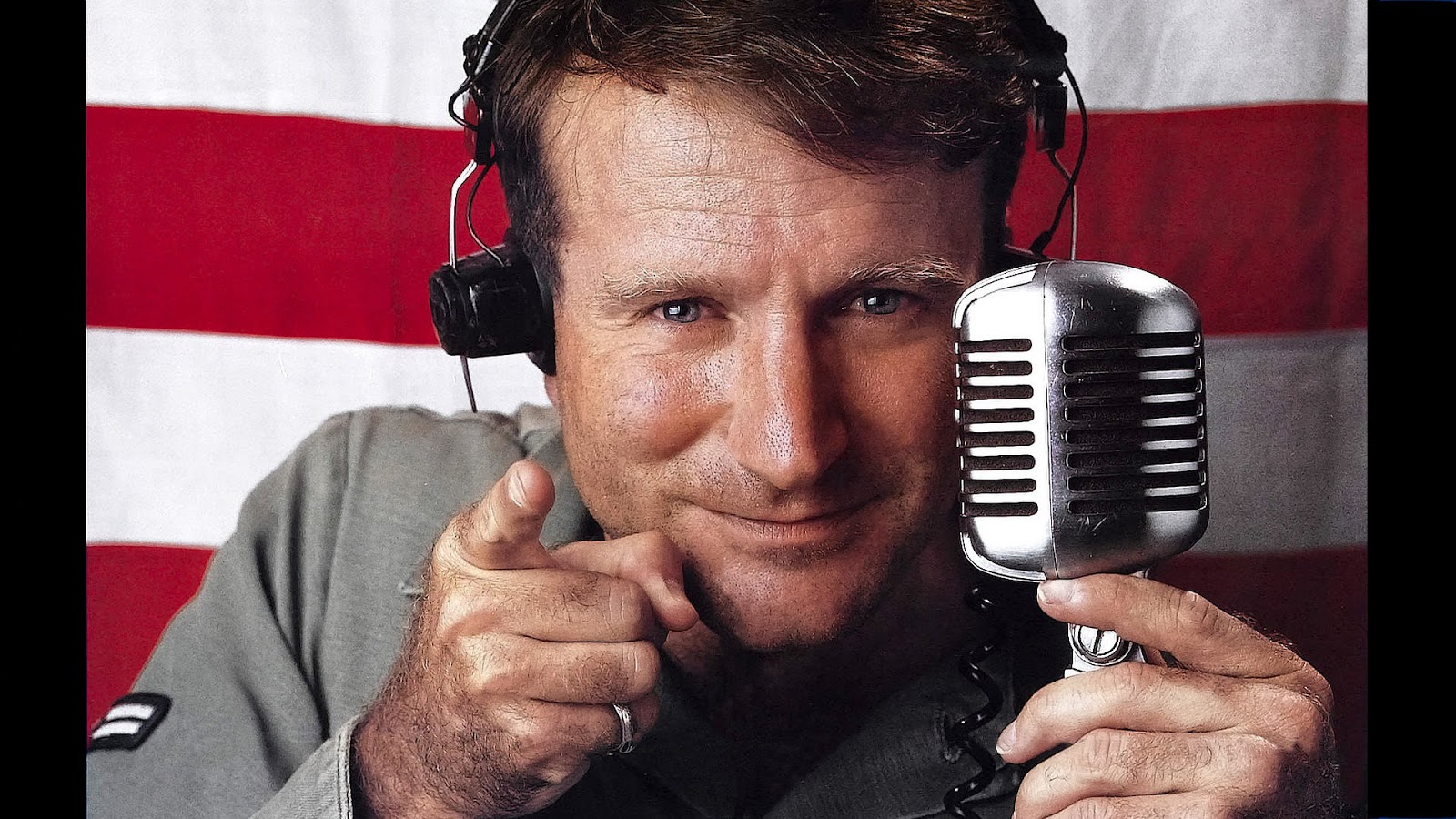
ROBIN WILLIAMS: ONE YEAR LATER


I never thought the death of Robin Williams would affect me that much. I saw many of his movies growing up in the 1980s and 1990s, but in recent years I have not thought about him that much. However, he appeared in so many great movies that I can watch over and over again like: Good Morning Vietnam, The Bird Cage, One Hour Photo, Jumanji, and so many others.

It has been one year now since his death, and I want to take this time to remember Robin Williams. I do not want to remember or think about the dispair or the way he died, but I want to think of all the joy he gave me and stills continue to. It has been one year since Robin Williams died - but his memory will never die. I wish he would have realized that when he was still alive.

He was and is a comedic genius...


Friday, August 7, 2015

THE DAY THE CLOWN CRIED UNEARTHED

One of the most notorious, unreleased films ever made, Jerry Lewis' Holocaust drama "The Day The Clown Cried" has long been the subject of rumor and speculation. Even Lewis himself, who has long been sitting on the only copy of the movie, has veered in recent interviews from being "embarrassed" to "proud" of the effort in which he plays a German circus clown arrested by the Gestapo after mocking Hitler, and who is eventually forced by the Nazis to perform and help lead Jewish children to concentration camp gas chambers. But he has long held he would never show the movie (which was plagued by production and financial woes) publicly, though he thinks if he had a chance to tweak it, maybe it could work.

"I think about this a lot. If I could pull certain specific elements from the project, and give me these three or four elements that I can do what I want with, if I hired Lincoln Center one night, for a specific audience, and give me one week shooting to let me shoot a beginning to that, a beginning to that, and a beginning to that and let me show that…. Whoooo-weeeee! It would be fucking wonderful to think about," he said in 2013, adding: "What I would shoot would be strictly as a marketing presentation tool for that night and it would all be thrown away after that night."

Well, that's not happening, but Lewis is making the picture available for future generations. The LA Times reveals that the Library Of Congress has just received a collection of Lewis' work from the man himself, including "The Day The Clown Cried." But there's one caveat: Lewis made the Library agree not to screen the movie for ten years.

So, the wait will continue, but it looks like this little piece of movie history will finally come to light in a decade...


Wednesday, August 5, 2015

HEALTHWATCH: HELEN REDDY

Singer Helen Reddy has been diagnosed with dementia and has moved into a Los Angeles nursing facility, interrupting what she hoped to be a career comeback, Lead Stories has learned exclusively.

Reddy, 73, rose to fame with her 1972 smash "I Am Woman," which became an anthem for the growing women's movement in the United States.

While one source says the progressive illness is in its early stages, marked by Reddy "asking same question every few minutes," another source suggested the symptoms were more advanced. She would forget where she put something and then suspect someone stole it, the second source said.

Reddy became a resident of the Motion Picture and Television Fund's Samuel Goldwyn Center for Behavioral Health in Woodland Hills, California, in June, both sources confirmed.

Reddy had been attempting a comeback this year, but her failing health forced her to cancel a concert planned for August 11 in San Diego. Her management kept the real reason secret, announcing that the show was "cancelled due to a scheduling conflict."


She did perform at the Orleans Hotel in Las Vegas for several nights in January. She earned great reviews for the Vegas shows.

"I am really in a very, very happy place," Reddy told a radio interviewer in January.

Reddy, who co-wrote "I Am Woman," earned a best female pop vocal performance Grammy for the record. She followed up with a dozen Top 40 hits over the next five years, including "Leave Me Along," "Angie Baby," and "You and Me Against the World."

A native of Australia, Reddy was helpful in launching the singing career of Olivia Newton-John.

She put her career on hold for more than a decade to return to Australia in 2002 to help care for ailing family members. She decided to return to the United States and the concert stage in 2012 after realizing she still had her voice when she sang for her sister's 80th birthday...

Tuesday, August 4, 2015

RIP: COLEEN GREY

Coleen Gray, the dark-haired beauty who stood out in such film noir thrillers as Kiss of Death,Nightmare Alley and Kansas City Confidential, has died. She was 92.

Gray, who also starred opposite John Wayne in Howard Hawks’ Red River (1948) and played crook Sterling Hayden’s attractive accomplice in Stanley Kubrick’s The Killing (1956), died Monday of natural causes at her home in Bel Air, longtime friend David Schecter told The Hollywood Reporter.

“My last dame is gone. Always had the feeling she'd be the last to go,” Eddie Muller, founder and president of the Film Noir Foundation, wrote on Facebook. They collaborated on his 2001 book,Dark City Dames: The Wicked Women of Film Noir.

Gray was “introduced” to audiences in Henry Hathaway’s Kiss of Death (1947) as Nette, the girlfriend and future wife of ex-con Nick Bianco (Victor Mature), who battles psychopathic killer Tommy Udo (Richard Widmark) in a bid to go straight once and for all.

The Nebraska native then segued to a role as scheming carnival barker Tyrone Power’s aide inNightmare Alley (1947), then appeared as Wayne’s sweetheart Fen in Red River.

In Kansas City Confidential (1952), Gray portrayed the law-school daughter of a former cop (Preston Foster) who engineers a bank heist by framing a delivery man played by John Payne. (Gray and Payne’s characters fall for each other in the movie, and they were romantically linked offscreen as well.)


Gray also starred in the Frank Capra horse picture Riding High (1950), where her scene with Bing Crosby and Clarence Muse singing “Sunshine Cake” was the favorite film moment of her career.

She played a nurse femme fatale in The Sleeping City (1950) opposite Richard Conte, was manhandled by a creature in The Vampire (1957) and discovered the secret to immortality (but not without consequences) in The Leech Woman (1960).

Gray spent much of the 1960s on television, with guest-starring roles on such shows as Rawhide,Alfred Hitchcock Presents, 77 Sunset Strip, Mister Ed, Perry Mason and Family Affair.

Later, on the NBC drama McCloud, she played the wife of police chief Peter B. Clifford (J.D. Cannon) in a few episodes.


She was born Doris Bernice Jensen on Oct. 23, 1922, in Staplehurst, Neb. At age 7, she and her family moved to Hutchinson, Minn., and she studied drama at Hamline University in St. Paul, Minn.

With only $26 to her name, she took a Greyhound bus to Hollywood. She enrolled at USC and then drama school and starred in the play Brief Music. She was seen by an agent and signed with Fox, where she made her movie debut for the studio in State Fair (1945).

In 1949, Gray starred on Broadway in Leaf and Bough with Charlton Heston.
Gray was married three times, the first to screenwriter, producer and future TV director Rod Amateau and the last to biblical scholar Joseph “Fritz” Zeiser, who died in 2012 (they were together for more than 30 years). Survivors include her daughter Susan, son Bruce, stepsons Rick and Steve and several grandchildren.

A memorial service at Bel Air Presbyterian Church is being planned...

Monday, August 3, 2015

ON THE ROAD WITH BING & BOB

One of the most enduring comic teamings was that of singer Bing Crosby and  comedian Bob Hope. Bing and Bob met briefly for the first time on the streets of New York in the summer of 1932. In December, both performed at the Capitol Theater in New York, as the newspaper ad to the right reveals. There for the first time Crosby and Hope performed together, doing an old vaudeville routine that included two farmers meeting on the street.

They did not work together again until 1938, when Bing invited Bob to guest on his radio program and to appear with him at the opening of the Del Mar race track north of San Diego. The boys reprised some old vaudeville routines that proved quite amusing to the celebrity audience. One of the attendees was the production chief of Paramount Pictures. He began searching for a movie vehicle for Hope and Crosby. He dusted off an old script intended originally for Burns and Allen, then later Jack Oakie and Fred MacMurray, and, now, Hope and Crosby. The tentative title was "Road to Mandalay," but the destination was eventually changed to Singapore.

To add a love interest to the movie one of the leading Paramount stars, Dorothy Lamour, was written into the script. Dorothy had appeared with Bob in "The Big Broadcast of 1938," but had never appeared in a film with Bing. Dorothy was known for her sultry singing voice and the skimpy South Sea outfits called sarongs that she wore in a couple of her movies. Although "The Road to Singapore" turned out to be the least zany of the Road pictures, the chemistry of the stars turned it into a blockbuster hit.


The Road films became a new musical-comedy genre to which many imitators would be compared, almost invariably unfavorably. The characters played by Bing and Bob were con-men who openly acknowledged to the audience that they knew they were in a motion picture. They defied Paramount to have them killed because they had a contract to do another picture. As the series progressed even the bad guys got wise to the action. For example, the patty-cake routine that Bing and Bob used to escape trouble didn't always work because the bad guys, too, had seen the previous picture. The Road to Utopia employed a movie critic who intervenes from time to time to evaluate the movie for the audience, even suggesting when it would be best to go for popcorn, usually, of course, while Crosby was singing.

At the series outset Dorothy Lamour was nearly as big a star as Crosby and Hope, but as the series unfolded her star progressively dimmed, in the end leaving her only a brief appearance in the final Road flic. By the 1960s Lamour had retired from show business to devote more time to her family in Baltimore. Crosby wanted Brigitte Bardot to play the female lead in "Road to Hong Kong," but in the end had to settle for Joan Collins. An 8th road picture was to be filmed in 1978. It had been tentatively called "Road to the Fountain of Youth" and would have reunited Bing, Bob and Dorothy. Before the new adventure could begin Bing died suddenly of a heart attack in Spain...


Saturday, August 1, 2015

PHOTOS OF THE DAY: EDDIE CANTOR AND HIS FAMILY

Eddie Cantor was one of those rare vaudeville performs that loved his family. He not only loved them but he cherished them. He was married to his wife Ida from 1914 until her death in 1962. Together they had five daughters: Marjorie (1915-1959), Natalie (1916-1997), Edna (1919-2003), Marilyn (1921-2010), and Janet (born 1927). Here are some great family shots...