Friday, October 3, 2014

THE WALKING DEAD: A MODERN CLASSIC

When it comes to television series, it seems like I always come late to the party. I love The Dean Martin Show, The Twilight Zone, and The Jack Benny Show, but they all aired well before I was born. I am a fan of the comedy series Seinfeld, but I did not watch the show until the final episode aired in May of 1998. My family joked me that in a couple years maybe I will discover I Love Lucy! I have recently discovered a television series that just ended its 4th season. I did not think I would like it, but now I am addicted to the AMC series The Walking Dead. Amazingly the show is still on, and will air its new season in October of 2014. Based on the comic book series of the same name, The Walking Dead tells the story of a small group of survivors living in the aftermath of a zombie apocalypse. The first season mostly takes place in the Atlanta metropolitan area, and the second through fourth seasons in the surrounding countryside of northern Georgia, as the survivors search for a safe haven away from the shuffling hordes of predatory "walkers" or "biters" (as the zombies are referred to in the show), who devour any living thing they catch, and whose bite is infectious to humans. The plot focuses primarily on the dilemmas the group faces as they struggle to maintain their humanity during the day-to-day challenges of surviving in a hostile world. This includes battling the zombie hordes, coping with casualties, and dealing with predatory human survivors.

The group is led by Rick Grimes, who was a sheriff's deputy  before the zombie outbreak. At every turn they are faced with the horror of the walking zombies, the changing dynamic of their group, and hostility from the scattered remains of a struggling human populace who are focused on their own survival now that society's structures have collapsed.


The Walking Dead premiered on October 31, 2010, on the cable television channel AMC in the United States. It premiered internationally during the first week of November 2010 on Fox International Channels. Based on its reception, AMC renewed the series for a second season of 13 episodes, which premiered on October 16, 2011. Two episodes into the second season, AMC announced that the show would return for a third season of 16 episodes, which began airing on October 14, 2012. On December 21, 2012, AMC renewed The Walking Dead for a fourth season of 16 episodes, which premiered on October 13, 2013. On October 29, 2013, AMC renewed it for a fifth season.
The series has been well received and has been nominated for many awards, including the Writers Guild of America Award and the Golden Globe Award for Best Television Series – Drama. he series has also attained strong Nielsen ratings, surpassing various records for a cable series, including viewership of 16.1 million for its season four premiere, making it the most-watched drama series telecast in basic cable history.

I was not sure I would like the series when I first watched it. Next to rats and death, I think I am most afraid of zombies, but it really only took me a few episodes before I realized the show was more than zombies. Its success is due to the character development. The zombies are second to the characters, and in some episodes one can forget about the zombies entirely. I am thankful I discovered this show while it was still on, and I recommend The Walking Dead. It is definitely a modern “classic”…


Wednesday, October 1, 2014

NEW BETTE MIDLER CD: IT'S THE GIRLS

For her first studio album in eight years, Bette Midler is revisiting some of the vocalists who shaped her the most -- girl groups -- on It’s The Girls, due Nov. 4 via Warner Bros. Records (Nov. 17 in the UK via East West Records/Warner Music UK.)
The album spans seven decades of famous girl groups, from ‘30s trios The Boswell Sisters (the title track) and The Andrews Sisters (“Bei Mir Bist Du Schön”) to ‘90s R&B legends TLC (wait til you hear Midler’s cabaret take on “Waterfalls.”)
Midler’s longtime collaborator Marc Shaiman (Hairspray) handles production.
“I have loved the sound of females harmonizing since I was a kid; I always sang along. Didn't we all?” Midler tells Billboard. “I think the idea that you could become part of the group was the thing that endeared me to the girl groups. You weren't just singing along, you were THERE!”
As fashions in music have changed, Midler says, some of the songs had to evolve -- hence the country-fied take on The Supremes’ “You Can’t Hurry Love” that appears on It’s The Girls. “Since this is a kind of overview of girl groups, I wanted to re-arrange some of the really popular songs and put a new spin on them; 'Can't Hurry Love" being the most extreme example,” Midler says.
“The Boswell Sisters was the first girl group record I ever owned,” she continues. “A friend of my parents gave it to them, and I played it to death. They killed. They are nearly forgotten today. The '60s were the height of girl-group frenzy, so there were a lot of songs to chose from, but from the '90s on, my favorites were TLC and Destiny's Child. ‘Waterfalls’ was a heartbreaker, especially if you were a mom, and it had a big effect on me. I never thought I would have the nerve to sing it, but we had an idea for it that works, and I am so glad I took the chance.”
Though she’s teased retirement from the road over the years, a new tour is in the works, too, a spokeswoman for Midler teases.
Adds Midler of revisiting the many eras of girl groups, “All in all, there is such a rich and emotional history to this music, it's a joy to dust it off and take another listen...So Bette Midler!”
It’s The Girls Track List: 
1. BE MY BABY
Originally performed by The Ronettes
2. ONE FINE DAY
Originally performed by The Chiffons
3. BEI MIR BIST DU SCHÖN
Originally performed by The Andrews Sisters
All Vocals by Bette Midler
4. BABY IT'S YOU
Originally performed by The Shirelles
All Vocals by Bette Midler
5. TELL HIM
Originally performed by The Exciters
6. HE'S SURE THE BOY I LOVE (duet with Darlene Love)
Originally performed by The Crystals
7. MR. SANDMAN
Originally performed by The Chordettes
8. COME AND GET THESE MEMORIES
Originally performed by Martha & The Vandellas
9. TOO MANY FISH IN THE SEA
Originally performed by The Marvelettes
10. TEACH ME TONIGHT
Originally performed by The DeCastro Sisters
11. WATERFALLS
Originally performed by TLC
12. YOU CAN'T HURRY LOVE
Originally performed by The Supremes
13. GIVE HIM A GREAT BIG KISS
Originally performed by The Shangri-Las
14. WILL YOU STILL LOVE ME TOMORROW
Originally performed by The Shirelles
15. IT'S THE GIRL
Originally performed by The Boswell Sisters
All Vocals by Bette Midler
The Andrews Sisters

Monday, September 29, 2014

JERRY LEWIS AT 88

“It’s a nice feeling to know so many people still want to come and see this old Jew on stage.” Jerry Lewis says.

We didn’t really think the King of Comedy would go gently into the night, did we? That the Nutty Professor would just fade away after 83 years of making us laugh?

Forget it. This is Jerry Lewis we’re talking about. He started working at 5 and hasn’t stopped since. There’s no quit in this guy.

Next month, the 88-year-old comedian will be coming to L.A. to appear at the Saban Theatre in Beverly Hills (the old Wilshire Theatre) for a 2½-hour show that may last all night. It all depends on the audience, Lewis says. When they run out of questions for him, he’ll go home.

“I’m sitting here preparing for the show like it’s a 15-week engagement,” he quips last week from his office in his 10,000-square-foot home just off the Las Vegas strip — a six minute drive to the nearest black jack and craps table.

“I love to gamble,” says the man whose whole life has been one big gamble.

The word is Lewis is a tough interview. He doesn’t suffer fools lightly. His record for the shortest sit-down with a reporter is under one minute. An out-of-town entertainment writer asked him what he was doing in Vegas?

Lewis shot back, “I’ve lived here for 36 years, schmuck.” End of interview. Next time do your homework, pal.


People are going to be paying good money to sit in that theater, and I’m going to be perfect,” he says, opening a red, loose-leaf binder of old film clips from his days with Dean Martin, along with jokes, songs, and skits he’ll be performing.

“I’m too old for pratfalls anymore but I promise the audience will be absolutely enthralled at how quietly I sit,” he jokes.

His voice is strong, his patented funny faces still get a laugh, and his jokes are timeless. The only concession to age is a pair of earphones he wears during the interview to amplify sound.
“I did a concert three weeks ago, and a woman gets up and says ‘what do you say to the fact that I want to just hug you and rub you all over me?’

“I said ‘I’m in room 713.’ ” Bada-boom. 


He still feels deep regrets about never finishing the job he had for 61 years hosting the MDA telethon and raising more than $2.6 billion to find a cure for muscular dystrophy. He wants to do a 21-hour telethon for the Wounded Warriors program, and Lewis claims he has big name stars like George Clooney and Billy Crystal ready to help. Also, Lewis is currently writing a one-man show that he hopes to take to Broadway.

As always, he’ll be nervous standing in the wings before the show at the Saban on Oct. 10, but the minute he walks on stage and hears that applause the nerves are gone.

“My dad used to say if you don’t get nervous, you don’t care,” Lewis says. “When I hear that first applause, my heart spreads across my chest, and I’m as happy as a pig in s..t!

We didn’t really think the King of Comedy would go gently into the night, did we?


SOURCE

Friday, September 26, 2014

GIGOT: A 1962 REVIEW

One of the great forgotten gems of the cinema was 1962's Gigot. The film starred Jackie Gleason, and it was not successful during it's theatre release. However, in recent years the film has gotten a cult following. Here is the original review by Bosley Crowther. It appeared in the NY Times on September 28, 1962...

THERE'S a vast lot of Jackie Gleason to pour out the pathos, when he does — and he does, to a point of saturation, in "Gigot" (pronounced "Gee-go"), which came to the Music Hall yesterday. Playing a huge, shabby Parisian who lives alone in a basement in Montmartre and communicates with his taunting neighbors in clumsy pantomime because he is mute, Mr. Gleason fairly opens the faucets that are connected to the mammoth reservoir of his own simple sentimentality and lets the syrup gush. Grubby, dirty and unshaven, he wallows around in this film, a well set-up prey for practical jokers, who treat him like the village idiot. His small eyes blink in solemn sadness, his pudgy hands fumble helplessly and his great, baggy frame droops resignedly when the cruel people make fun of him. His only true companion is a voracious cat that visits his hovel every morning and gets a dish of milk from him.

Then one night he finds, out in a rainstorm, a fallen woman and a soggy little girl. He takes them home to his dismal basement and generously takes care of them. Well, you can imagine what this leads to. The woman scorns and badgers him, but the little girl comes to love him, after he has won her with a lot of show-off stunts. And this leads to his wanting to keep them so intensely and desperately that he steals money to buy them fine dresses and to wine and dine them at the local bistro.

 
Is this beginning to sound a little like an old Charlie Chaplin film? If it is, we strongly imagine that's exactly what Mr. Gleason would have it do. For it is evident that his characterization of a lonely, unspeaking vagabond, who hungers for social acceptance and the warmth of somebody's love, is modeled after Chaplin, and the script that John Patrick has prepared (from a story provided by Mr. Gleason) is cut precisely to the pattern of a Chaplin film. But, unfortunately, Mr. Gleason, for all his recognized comic skill when it comes to cutting broad and grotesque capers, as he does now and then, does not have the power of expression or the subtleties of physical attitude to convey the poignant implications of such a difficult, delicate role.

His man is a ponderous, steamy figure whose maunderings are soggy and gross—and made only more so in the close-ups that Gene Kelly, who directed, has generously employed. (Remember, Chaplin was slight and graceful and always had a dauntless, dapper air.) His pantomimic exhibitions have little variety. His ways of looking pathetic are blunt and monotonous. What's more, there is too much of him. Mr. Gleason is virtually the whole show. Katherine Kath as the woman he shelters and Diane Gardner as her little girl are apt but confined in their performing. Their roles are stereotypes. (It is remarkable how much the youngster looks like Jackie Coogan in Chaplin's "The Kid.") Jacques Marin as a practical joker and Gabrielle Dorziat as the tenant of the house in which Mr. Gleason has his hovel are most expressive as real Parisians. True, there is a fast burst of morbid humor and sweet sentiment at the end, but it is awfully late in coming. A lot of moisture has by now gone down the drain...
 
SOURCE

Wednesday, September 24, 2014

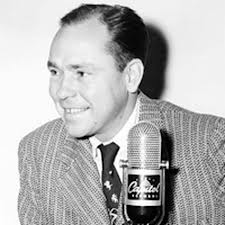
A TRIBUTE TO JOHNNY MERCER

 You may or may not recognize Johnny Mercer’s name, but you almost certainly recognize his songs.

Mercer was the lyricist for more than 1,500 popular songs. His music spans five decades, from the 1920s through the 1960s. He wrote the lyrics to such classics as “Blues in the Night,” “Jeepers Creepers,” “Satin Doll,” “Come Rain or Come Shine,” “That Old Black Magic,” “Autumn Leaves,” “I Wanna Be Around,” “One More for My Baby,” “Skylark,” “Moon River” and “Emily” — to name only a few.

He composed lyrics to melodies written by Hoagy Carmichael, Harold Arlen and Henry Mancini. Along the way, he co-founded Capitol Records, won four Academy Awards, was Bing Crosby’s drinking buddy and had a love affair with Judy Garland.

“Spotlight on Johnny Mercer!” is Camelot Theatre Company’s tribute to America’s greatest lyricist and his incredible life. The production previews Thursday, Sept. 25, opens Friday, Sept. 26, and runs through Oct. 5, at Camelot Theatre, 101 Talent Ave., Talent. Curtain is at 8 p.m. Thursdays through Saturdays and 2 p.m. Sundays. Tickets cost $20 for the preview and $24 for all other performances, with reserved seating available for an additional $2 per ticket. They can be purchased at the box office, online at www.camelottheatre.org or by calling 541-535-5250.

“Spotlight on Johnny Mercer!” stars Laura Derocher, David King-Gabriel and Jade Chavis Watt. Backing them on stage is Steve Fain (bass), Randy Margulies (tenor sax, clarinet and flute), Brent Olstad (keyboard), Randy Scherer (trumpet), Steve Sutfin (percussion) and Michael Vannice (alto sax, alto flute and bass clarinet).

Presila Quinby directs. Charles Cherry wrote the script, music direction is by Olstad, with arrangements by Vannice.

The production features 22 of Mercer’s songs, covering his entire career, with narration connecting them to important events in Mercer’s life. There are well known songs — “the songs that have to be included,” says Quinby — but also some less familiar ones that mark milestones.

“For example, Mercer wrote ‘I Remember You’ for Judy Garland,” Quinby says. “They had an off-and-on romance for years. She was the secret love of his life.”

Quinby says she knew the performers she wanted when “Spotlight on Johnny Mercer!” was chosen for Camelot's 2014 season.

“The singers and musicians were already familiar with Mercer’s music,” Quinby says. “They knew the American Songbook — the musical standards of the '30s, '40s and '50s — and they also knew how to tell a story with a song.”


Over his career, Mercer was nominated for 19 Academy Awards and won four. His first win was for “On the Atchison, Topeka and the Santa Fe” in 1946, written for “The Harvey Girls” starring Judy Garland. His next was in 1951, for “In the Cool, Cool, Cool of the Evening,” written with Hoagy Carmichael. Mercer then won two more Oscars collaborating with Henry Mancini, in 1961 for “Moon River” followed by “Days of Wine and Roses” in 1962.

Mercer was born and raised in Savannah, Ga. He grew up familiar with a wide range of music, from classical to popular to African-American gospels and jazz. He started writing for Tin Pan Alley in the '20s, then for Broadway musicals, and moved to Hollywood in 1935. In the '40s, Mercer had a dozen hit records, singing his own songs. Cherry describes his style as similar to Bing Crosby but with more swing.

“He was sort of a combination of Crosby and Louis Armstrong.”

Cherry says he has wanted to do a show about Mercer for a long time because he feels we don’t honor lyricists the way we do composers or poets. He thinks that when poetry and music are combined, they become an art form that touches us more deeply.

“When Mercer writes about love, he is writing more than a love song,” Cherry says. “He is often writing about that place where love might be waiting for all of us.”

Roberta Kent is a freelance writer living in Ashland. Reach her at rbkent@mind.net...


Monday, September 22, 2014

FORGOTTEN ONES: FRANK FONTAINE

I first noticed a goofball type of clown on one of Jackie Gleason's old variety shows. He talked and looked crazy. He was hilarious, and then one day I was at the flea market and I found an LP featuring this clown singing beautifully and I could not believe it. The clown as well as the wonderful singer was the forgotten Frank Fontaine. Born on April 19, 1920 in Cambridge, Massachusetts, he is best known for his appearances on television shows of the 1950s and 1960s, including The Jackie Gleason Show, The Jack Benny Show, and The Tonight Show.

One of his earliest appearances was on the radio show, The Jack Benny Program. During an episode which aired on April 9, 1950, Fontaine played a bum (named "John L. C. Silvoney") who asked Benny for a dime for a cup of coffee. The smallest coin Benny had to offer was a fifty-cent piece, so he gave it to him. The story Benny told about this event became a running gag during later shows. Fontaine's goofy laugh and other voice mannerisms made a hit with the audience, and Benny brought him back for several more radio shows between 1950 and 1952. He also made a cameo appearance in Here Comes The Groom (1951), which starred Bing Crosby.

He also later appeared in several of Benny's television shows. On The Jackie Gleason Show, he played the character Crazy Guggenheim during Gleason's "Joe The Bartender" skits. His trademark was a bug-eyed grin and the same silly laugh he had done on Jack Benny's radio show. At the end of his Guggenheim sketch, he would usually sing a song, demonstrating a surprisingly good singing voice In 1963, he released the album Songs I Sing on the Jackie Gleason Show, which collected some of these songs and reached number one on Billboard magazine's Top LP's chart in 1963. 


Despite the comparisons with Gleason and Red Skelton, Fontaine never accomplished what they did and made a career of hosting a variety show doing a multitude of characters of his own creation. People only wanted one—the one with the wheezy laugh he developed as a teenager during the Depression. Being boxed in must have grated on him after awhile. He expanded a bit on the Gleason show by interrupting his Crazy schtick for a song in a straight baritone, popular (if not schmaltzy) with some, but oddly jarring to others. Frank seems to have worked steadily but ran into money troubles. In 1971, he filed for bankruptcy and his 12-room house was put up for auction to pay an almost half-million-dollar tax bill. He was $850,000 in debt. 

Frank Sinatra and others came to his rescue with a benefit show. His health wasn’t good. He had been hospitalized in 1970 after collapsing following a lengthy performance on the Jerry Lewis telethon. In 1977, he lay unconscious in hospital after what may have been a heart attack. And then the following August, he had just finished his fourth encore before a crowd of 3,000 in Spokane and had accepted a $25,000 cheque to be donated to heart research when he dropped to the boards backstage. He died there of a heart attack on August 4, 1978...


Saturday, September 20, 2014

RIP: POLLY BERGEN

Polly Bergen, an actress, singer and businesswoman who won an Emmy in 1957 for her portrayal of the alcoholic torch singer Helen Morgan and was nominated for another 50 years later for her role on the television show “Desperate Housewives,” died on Saturday at her home in Southbury, Conn. She was 84.

Her publicist, Judy Katz, confirmed her death, but did not specify a cause.

Ms. Bergen’s career highlights included a chilling turn as the menaced wife of a lawyer (Gregory Peck) stalked by a psychopathic convict (Robert Mitchum) in the 1962 film “Cape Fear,” five years as a panelist on the CBS game show “To Tell the Truth” and a Tony-nominated performance as a gritty former showgirl in the 2001 revival of the Stephen Sondheim musical “Follies.”

The song Ms. Bergen performed in that show, “I’m Still Here,” could well have served as her own defiant anthem.

As a teenager, she began her career singing hillbilly songs on the radio and quickly found roles in movies. Her early credits include the 1949 western “Across the Rio Grande,” in which she played a saloon singer, and three films in which she appeared with Dean Martin and Jerry Lewis.

She made her Broadway debut in the 1953 revue “John Murray Anderson’s Almanac” in a cast that also featured Hermione Gingold, Billy De Wolfe and Harry Belafonte. Determined to make an impression as a vocalist, Ms. Bergen overexerted herself, injured her throat and had to leave the show and undergo surgery.

She was less than thrilled with the quality of the movies she was offered as a contract player in Hollywood, although there were a few exceptions, including “Cape Fear” and “The Caretakers” (1963), in which she convincingly played an inmate in a mental institution ruled by a dictatorial nurse played by Joan Crawford. She also had roles in several light comedies, including “Move Over, Darling” (1963), with Doris Day and James Garner, and “Kisses for My President” (1964), in which she starred as the nation’s first female president.


Ms. Bergen made a number of popular recordings, beginning with “Little Girl Blue” in 1955, and was a familiar presence on television. She was on “To Tell the Truth” from 1956 to 1961, and she hosted her own variety series on NBC in the late 1950s.

In the mid-1960s, she began selling a line of Polly Bergen Cosmetics, which she eventually sold to Fabergé, and followed that with Polly Bergen Jewelry and Polly Bergen Shoes. She soon became a successful entrepreneur as well as the author of three advice books: “Fashion and Charm” (1960), “Polly’s Principles” (1974) and “I’d Love to, But What Will I Wear?” (1977). She was also an advocate for women, especially on the subject of reproductive rights.

Ms. Bergen was plagued by physical problems that kept her from singing for more than 30 years. In 2000, she began a cautious return. When she appeared in New York at Feinstein’s at the Regency, Stephen Holden of The New York Times wrote that her performance “was, in a word, great.” She returned to Broadway the following year in “Follies.” In an interview with The Times before the show opened, she expressed her delight at once again being able to do “that which gives me so much joy.”

After “Follies,” Ms. Bergen appeared in an Off Broadway revival of “Cabaret” in 2002; in the short-lived two-character drama “Six Dance Lessons in Six Weeks” on Broadway in 2003, with Mark Hamill as her co-star; and in a number of television shows, including ABC’s “Commander in Chief” and “Desperate Housewives.” Her work on the latter earned her a nomination as outstanding guest actress in a comedy series. She also appeared in an episode of “The Sopranos” as the mistress of Tony Soprano’s late father.

Ms. Bergen is survived by two daughters, Kathy Lander and Pamela Fields; a son, Peter Fields; and three grandchildren...