Wednesday, October 12, 2011

SHIRLEY MACLAINE RECEIVES AFI LIFETIME AWARD

Oscar winning actress Shirley MacLaine will be honored with the American Film Institute's Lifetime Achievement Award, the group announced on Sunday.

MacLaine, 77, will be presented with the prestigious honor from the Los Angeles-based U.S. film arts and education institute on June 7 in a ceremony to be broadcast later on TVLand, AFI said in a statement. She will be the award's 40th recipient.

"Shirley MacLaine is a powerhouse of personality that has illuminated screens large and small across six decades," Howard Stringer, chairman of AFI's board of trustees, said in a statement.

"From ingenue to screen legend, Shirley has entertained a global audience through song, dance, laughter and tears, and her career as writer, director and producer is even further evidence of her passion for the art form and her seemingly boundless talents."

MacLaine, who won a best actress Oscar in 1984 for "Terms of Endearment," is also an outspoken activist, writer and believer in reincarnation and extra-terrestrial beings. Her views have won her both respect and a good measure of ribbing.

She made her Hollywood debut at age 19 with Alfred Hitchcock in "The Trouble With Harry."

MacLaine was first nominated for an Academy Award for best actress in 1958, for "Some Came Running." Nominations for "The Apartment" in 1960, "Irma La Douce" in 1963 and "The Turning Point" in 1977 followed, before she finally won in 1984.

Last year's AFI honoree was Morgan Freeman. MacLaine's half-brother, Warren Beatty, received the award in 2008. Director John Ford was the first AFI honoree in 1973.


SOURCE

Monday, October 10, 2011

WHERE ARE THEY NOW: ELEANOR PARKER

Growing up I can remember my grandfather saying that my grandmother looked like Eleanor Parker. Although I can not see the resemblance, both women were extremely beautiful. Parker was an actress that could change her look with every role or every movie she made. It is sad that she left Hollywood so soon, and she has not made hardly any appearances since. Now at the age of 89, Parker is a mysterious figure of Hollywood history - a beautiful woman who has lived her post-Hollywood life on her own terms.

Eleanor's first role was Nurse Ryan in Soldiers in White in 1942. By 1946, she had starred in Between Two Worlds, Hollywood Canteen, Pride of the Marines, Never Say Goodbye, and Of Human Bondage. She broke the champagne bottle on the nose of the California Zephyr train, to mark its inaugural journey from San Francisco, California on March 19, 1949.

In 1950, she received the first of three nominations for the Academy Award for Best Actress for Caged, in which she played a prison inmate. For this role, she won the 1950 Volpi Cup for Best Actress at the Venice Film Festival. She was also nominated for the Oscar in 1951 for her performance as Kirk Douglas's wife in Detective Story and again in 1955 for her portrayal of opera singer Marjorie Lawrence in the Oscar-winning biopic Interrupted Melody. She followed Detective Story by playing a fiery actress in love with Stewart Granger's swashbuckling nobleman in Scaramouche. Parker then performed with Charlton Heston as a 1900s mail-order bride in George Pal's The Naked Jungle.


That same year, Parker appeared in Otto Preminger's film adaptation of the National Book Award-winner The Man With The Golden Arm, in which she plays Zosh, the supposedly invalid wife of a morphine addicted, would-be jazz drummer Frankie Machine (Frank Sinatra). In 1956, she was billed above the title alongside Clark Gable for the Raoul Walsh-directed western comedy The King and Four Queens. A year later, she starred in another W. Somerset Maugham novel, a remake of a The Painted Veil in the role originated by Greta Garbo, released as The Seventh Sin. She also appeared in Home from the Hill, A Hole in the Head and Return to Peyton Place. Possibly her most famous screen role is as Baroness Elsa Schraeder, the second female lead in the 1965 Oscar-winning smash hit The Sound Of Music.

She played an alcoholic widow in Warning Shot in 1966; a love-starved talent scout in the all-star but unsuccessful The Oscar; and a rich, alcoholic estranged wife in An American Dream. From then on, her big screen roles were fewer, and television would occupy more of her energies.

In 1963, Parker appeared in the NBC medical drama about psychiatry The Eleventh Hour in the episode "Why Am I Grown So Cold?" for which she was nominated for an Emmy Award as Outstanding Single Performance by an Actress in a Leading Role. In 1964, she appeared in the episode "A Land More Cruel" on the ABC drama about psychiatry, Breaking Point. In 1968, she portrayed a sultry spy in How to Steal the World -- a film originally shown as a two-part episode on NBC's The Man from U.N.C.L.E.. In 1969-70 she starred in the television series Bracken's World, for which she was nominated for a 1970 Golden Globe Award as Best TV Actress - Drama. She also appeared in several made-for-television movies, including "Ghost Story: Half a Death," (1973) where she plays a wealthy matron who must reconcile the lives of her two daughters in a suspense-thriller.


Parker has also starred in a number of theatrical productions, including the Lauren Bacall role in musical Applause. In 1976, she quit the Circle in the Square Theatre revival of Pal Joey during previews. She wrote the preface to the book "How Your Mind Can Keep You Well," a meditation technique developed by Roy Masters.

By the mid 1980s Eleanor was completely leaving Hollywood behind. She made an appearance on "Murder She Wrote" in 1986 and one final movie called "Dead on the Money" in 1991. Now twenty years later, Eleanor Parker lives in quiet retirement in Palm Springs. She has done a few radio interviews in 2009 and 2010, but she refuses to make public appearances. Eleanor left the Hollywood scene years ago to live the life she wanted. Doing that is more important than any Hollywood party or movie premiere...

UPDATE: Eleanor Parker passed away at the age of 91 on December 9, 2013. You can read more about it here.
.

Saturday, October 8, 2011

RIP: ROGER WILLIAMS

Roger Williams, Pianist Known for Sentimental Songs, Dies at 87
by Dennis Hevesi

Roger Williams, the pianist whose lush versions of familiar tunes like “Autumn Leaves” and “Born Free” became hit recordings in the 1950s and ’60s and who continued to perform in concerts into his 80s, died on Saturday at his home in Los Angeles. He was 87. The cause was complications of pancreatic cancer, his former publicist Rob Wilcox told The Associated Press.

Seven singles by Mr. Williams made it onto the Billboard Top 40, perhaps the best known of which — and the one that brought him stardom — was “Autumn Leaves.” Over his long career he recorded more than 100 albums, among them “Roger Williams Plays Your All-Time Favorites” and “The Greatest Popular Pianist.”

Mr. Williams “virtually transformed the piano into a harp,” Joseph Lanza, a music historian, wrote in 1994 in his book “Elevator Music,” adding that he “cultivated a flair for making dramatic sweeps from classical to jazz to country to soft rock-and-roll.”

He performed on stages across the United States, from Carnegie Hall to the Hollywood Bowl, and headlined for many years at the MGM Grand and the Tropicana in Las Vegas. Nine presidents, including Harry S. Truman and George W. Bush, brought him to the White House to provide soothing sounds for dinner guests.

Certainly “Autumn Leaves” was among his most soothing, with its cascading arpeggios evoking falling leaves. Mr. Williams’s instrumental version of that 1940s song, originally known as “Les Feuilles Mortes” (“The Dead Leaves”), with music by Joseph Kosma and French lyrics by Jacques Prévert (Johnny Mercer wrote the English lyrics), was No. 1 on the Billboard singles chart for four weeks in 1955 and stayed in the Top 40 for 26 weeks.


Accompanied by orchestra and chorus, Mr. Williams captured the expanse of the African savanna with his version of the theme from the 1966 movie “Born Free,” about a lioness raised as a pet in Kenya, and the No. 7 spot during the record’s 14 weeks in the Top 40 in 1966. His other Top 40 hits were “Wanting You” (1956); “La Mer,” or “Beyond the Sea” (1956); “Almost Paradise” (1957); “Till” (1957); and “Near You,” which reached the Top 10 in 1958.

In 1960, Mr. Williams was honored with a star on the Hollywood Walk of Fame.

When he performed at Philharmonic Hall in New York in 1970, Robert Sherman of The New York Times wrote of his “sumptuous piano settings” and noted that he “held his large audience enthralled” by playing one old favorite after another. “The concert’s promise of ‘Easy Listening,’ ” Mr. Sherman concluded, “was faithfully kept.”

Though his musicality was apparent even when he was a toddler, he was not always Roger Williams.

He was born Louis Jacob Weertz in Omaha on Oct. 1, 1924, and grew up in Des Moines, the only child of Frederick and Dorothea Weertz. His father was a Lutheran minister who had once been a professional boxer; his mother was a music teacher. (It was only after the founder of Kapp Records, David Kapp, signed him to a contract in 1954 that he changed his name, at Mr. Kapp’s insistence.)

“I could play ‘Home Sweet Home’ on the harmonica when I was 3,” Mr. Williams told The Daily Mirror in 1955. By the time he was in high school he was proficient on 12 other instruments. “Everything but the oboe and bassoon,” he said, “but I finally settled for what I liked best — the piano.”

Mr. Williams graduated from Idaho State University in 1949, earned a master’s degree in music from Drake University in Des Moines a year later and then came to New York to study at the Juilliard School, where the renowned jazz pianist Teddy Wilson took him under his wing.

At Mr. Wilson’s urging, he competed on Arthur Godfrey’s “Talent Scouts” in 1952, and won. That led to many nightclub bookings and his first album for Kapp, which did not sell very well. Then came his hit single, “Autumn Leaves.”

What followed was a meandering path through many of the most nostalgia-inducing melodies of the last half of the 20th century, among them “A Time for Us,” “The Impossible Dream,” “On a Clear Day,” “Hello, Dolly!” “Raindrops Keep Fallin’ on My Head” and “Lara’s Theme” from “Dr. Zhivago.”

He is survived by two daughters, Laura Fisher, of Carmel, Calif., and Alice Jung, of New York; and five grandchildren.

Mr. Williams was unabashed about his inclination for sentimentality.


“If a song’s lyrics say, ‘I love you,’ then I mean just that when I play the notes,” he told The Christian Science Monitor in 1970. “The audience, live or at home, can sense if an artist really means what he plays. I purposely choose music which is warm and which I know I can get across. I know myself.”

Friday, October 7, 2011

TO BE OR NOT TO BE: JACK BENNY IN HOLLYWOOD

Everyone knows about the comedic talents of Jack Benny. His radio and television show made audiences laugh from the 1930s to his death in 1974. Benny had great timing and skill with any entertaining he did, so it was natural that he would try his hand at acting in movies. Like many radio comedians of the day, Hollywood did not know what to do with Jack Benny at first. While Benny never became another Spencer Tracy or Cary Grant, his contribution to film should not be overlooked though.

One of Benny's first roles was in the Academy Award-winning The Hollywood Revue of 1929. The early talkie film basically had Benny as the master of ceremonies. His talent was definitely wasted in the film, and MGM did not quite know what to do with the up and coming comedian. MGM wouldcast him in a different role as the bad guy agent and the benign nemesis for Eleanor Powell and Robert Taylor in Broadway Melody of 1936. However, Benny's movies in the 1930s did not use him effectively.

The 1940s saw Benny making some excellent contributions to film. In 1942, Benny starred in one of his greatest movies To Be Or Not To Be, which was directed by the great Ernest Lubitsch. The movie was about a troupe of actors in Nazi-occupied Warsaw who use their abilities at disguise and acting to fool the occupying troops. Lubitsch had never considered anyone other than Jack Benny for the lead role in the film. He had even written the character with Benny in mind. Benny, thrilled that a director of Lubitsch's caliber had been thinking of him while writing it, accepted the role immediately.


For Benny's costar, the studio and Lubitsch decided on Miriam Hopkins, whose career had been faltering in recent years. The role was designed as a comeback for the veteran actress, but Hopkins and Benny did not get along well, and Hopkins left the production. Lubitsch was left without a leading lady until Carole Lombard, hearing his predicament, asked to be considered. Lombard had never worked with the famous director and yearned to have an opportunity. Lubitsch agreed and Lombard was cast. The film also provided Lombard with an opportunity to work with friend Robert Stack, whom she had known since he was an awkward teenager. The film was shot at United Artists, which allowed Lombard to say that she had worked at every major studio in Hollywood.

To Be or Not To Be, now regarded as one of the best films of Lubitsch's, Benny's and Lombard's careers, was initially not well-received by the public, many of whom could not understand the notion of making fun out of such a real threat as the Nazis. It was said that, during the premiere, Benny's own father walked out of the theater early in the film, disgusted that his son was in a Nazi uniform, and vowed not to set foot in the theater again. Benny convinced him otherwise and his father ended up loving the film.


Benny's next film work was the charming George Washington Slept Here. It was based on the 1940 play of the same name by Moss Hart and George S. Kaufman, adapted by Everett Freeman, and was directed by William Keighley. The movie starred Benny and Ann Sheridan as Bill and Connie Fuller, New Yorkers who purchase a dilapidated farmhouse where, according to rumors, George Washington spent the night.

In 1945, Jack would make a movie that would become forever associated with him, and it would become an endless joke for the rest of his life. The Horn Blows At Midnight also starred Alexis Smith and Guy Kibbee. The plot is interesting enough: Athanael (Jack Benny), the third trumpet player in the orchestra of a late night radio show sponsored by Paradise Coffee (motto: "It's Heavenly"), falls asleep listening to the announcer, who is doing his best to prove it is "the coffee that makes you sleep." Athanael dreams he is an angel (junior grade) and a trumpeter in the orchestra of Heaven. Due to the praise of his girlfriend Elizabeth (Alexis Smith), the assistant of the deputy chief of the department of small planet management (Guy Kibbee), he is given the mission of destroying planet 339001 (Earth) and its troublesome inhabitants by blowing the "Last Trumpet" at exactly midnight, signaling the end of the world.


After making The Horn Blows At Midnight, Benny would never star in a movie again - although he was offered many roles. He enjoyed making cameo appearances in such movies as: Somebody Loves Me (1952), Beau James (1957), It's A Mad, Mad, Mad World (1963), and A Guide For The Married Man (1967). At the young age of 80, Benny was planning a return to movies in 1974 to star in "The Sunshine Boys". Benny was forced to withdraw when he was diagnosed with pancreatic cancer. Before he died Benny recommended his friend and fellow real-life vaudevillian veteran Burns, who had not been in a film since 1939, for the role. Burns' Academy Award-winning role revived his career and redefined his popular image as a remarkably active old comedy star.

With the popularity of Jack Benny's radio and television career, his film work is largely overlooked. Movies might have failed to capture his personality completely, but the roles Benny did take were enjoyable and memorable. What we need in films and television for that matter today is a Jack Benny. His personality made people feel better and laugh in times that were hard and trying...

Tuesday, October 4, 2011

MY GRANDFATHER, JOHN WAYNE

My Granddaddy John Wayne
By David Kerr

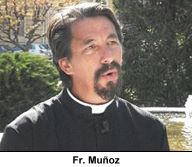
Rome (CNA/EWTN News) -- John Wayne, for many, was a Hollywood legend who symbolized true masculinity and American values. To Fr. Matthew Muñoz, he was simply “granddaddy.”

“When we were little we’d go to his house and we’d simply hang out with granddaddy and we’d play and we’d have fun: a very different image from what most people have of him,” Fr. Muñoz told CNA on a recent visit to Rome.

Fr. Muñoz was 14 years old when his grandfather died of cancer in 1979. In his lifetime, “The Duke” won three Oscars, the Congressional Gold Medal and was posthumously awarded the Presidential Medal of Freedom. Of all those achievements, though, Fr. Muñoz is most proud of just one – his grandfather’s conversion to the Catholic faith.

“My grandmother, Josephine Wayne Saenz, had a wonderful influence on his life and introduced him to the Catholic world,” said 46-year-old Fr. Muñoz, a priest of the Diocese of Orange. “He was constantly at Church events and fundraisers that she was always dragging him to and I think that, after a while, he kind of got a sense that the common secular vision of what Catholics are and what his own experience actually was, were becoming two greatly different things.”


Fr. Muñoz’s grandparents married in 1933 and had four children, the youngest of whom – Melinda – is his mother. The couple civilly divorced in 1945 although, as a Catholic, Josephine did not re-marry until after John Wayne’s death. She also never stopped praying for her husband’s conversion – a prayer that was answered in 1978.

“He was a great friend of the Archbishop of Panama, Archbishop Tomas Clavel, and he kept encouraging him and finally my granddaddy said, 'Okay, I’m ready.'”

As a result of a change in Panamanian leadership, Archbishop Clavel was exiled from his native land in 1968. Three years later, Cardinal Timothy Manning, then the Archbishop of Los Angeles, invited Archbishop Clavel to Orange County, where he served as pastoral leader to half of Orange County's 600,000 Latinos.

By the time of Wayne's request, however, Archbishop Clavel was too ill to make the journey to the film star's residence.

“So Archbishop Clavel called Archbishop McGrath,” Fr. Muñoz said, explaining that Archbishop McGrath was the successor to Archbishop Clavel in the Archdiocese of Panama.

“My mom and my uncle were there when he came. So there’s no question about whether or not he was baptized. He wanted to become baptized and become Catholic,” Fr. Muñoz said. “It was wonderful to see him come to the faith and to leave that witness for our whole family.”

Fr. Muñoz also said that his grandfather’s expressed a degree of regret about not becoming a Catholic earlier in life, explaining “that was one of the sentiment he expressed before he passed on,” blaming “a busy life.”

Prior to his conversion to Catholicism, though, John Wayne’s life was far from irreligious.

“From an early age he had a good sense of what was right and what is wrong. He was raised with a lot of Christian principles and kind of a 'Bible faith' that, I think, had a strong impact upon him,” said Fr. Muñoz, recalling that his grandfather often penned handwritten notes to the Almighty.

“He wrote beautiful love letters to God, and they were prayers. And they were very childlike and they were very simple but also very profound at the same time,” Fr. Muñoz said. “And sometimes that simplicity was looked at as naivety but I think there was a profound wisdom in his simplicity.”

Fr. Muñoz summed up the hierarchy of his grandfather’s values as “God coming first, then family, then country.” It’s a triumvirate he sees repeatedly reflected in his grandfather’s films. He believes those values are much needed in Hollywood today and, if “the Duke” were still here, he’d be leading the charge.

“My grandfather was a fighter,” Fr. Muñoz said. “I think there would be a lot of things he’d be disappointed and saddened over. But I don’t think he would lose hope. I think he would look at the current time as a moment of faith. People are in crisis and they’re looking for something more meaningful, more real.”


“So I think he would look at the situation and say – don’t get discouraged!” said Fr. Muñoz. “I think he would say get involved. Don’t go hiding in a shell and getting on the defensive from Hollywood. Get involved and be an agent for the good. I think he would do that. That’s what he did in his time.”

SOURCE

Sunday, October 2, 2011

RECENTLY VIEWED: THE TIME MACHINE

As a young boy first getting interested in older movies, I always enjoyed the film The Time Machine. The Morlocks always scared the heck out of me - and years later they still do. The Time Machine also was one of the first movies I bought on DVD in the late 1990s. Even though I have it in my collection, I watched the film again when Turner Classic Movies just recently aired it.


On January 5, 1900, four friends arrive for a dinner in a town in the south of England, but their host, H. George Wells (Rod Taylor), is absent. As requested, they begin without him, but then George staggers in, exhausted and disheveled. He begins to recount his adventures since they last met on New Year's Eve, 1899.

A week earlier, George discusses time as "the fourth dimension" with friends, among them David Filby (Alan Young) and Dr Philip Hillyer (Sebastian Cabot). He shows them a tiny machine that he claims can travel in time, stating that a larger version can carry a man "into the past or the future". When activated, the device blurs, then disappears. Most of his friends dismiss it as a trick; Filby, on the other hand, warns George that if it is not a trick, it is not for them "to tempt the laws of Providence." They agree to meet again next Friday.


George heads to his laboratory and sits in his full-scale model. He pushes the lever forward and watches time pass at an accelerated rate. To his amusement, he observes the changing of women's fashions on a mannequin in the window of a shop across the street. He stops at September 13, 1917 when his house is boarded up. He breaks some boards away and walks inside, where he mistakes a man in uniform for David. It turns out to be David's son James, who informs George that his father had "died in the war", and that they have been at war with Germany since 1914. He tells him that an Inventor lived across the road who disappeared around the turn of the century, and that his father refused to liquidate it, feeling sure the inventor would return some day.

George then travels to June 19, 1940, into the midst of "a new war", which he briefly stops in as his machine is buffeted from side to side, in which course his house is hit and destroyed while he is travelling. George's next stop is August 18, 1966, in a metropolis featuring skyscrapers and an elevated monorail. There is a plaque to his house at the site. However, he is puzzled to see people hurrying into a fallout shelter amid the blare of air raid sirens. An older, grey-haired James Filby tells him to get into the shelter, but seems to remember him, before warning him that "the mushrooms will be sprouting." James spots an atomic satellite zeroing in and flees into the shelter. An explosion turns the sky red and lava floods down the street, after the nuclear explosion causes a volcano to erupt (nature is reacting to man's abuse of technology). Modern civilization is destroyed in a nuclear holocaust. George restarts the machine just in time to avoid being incinerated, but the lava covers the machine, then cools and hardens, forcing George to travel far into the future until it erodes away.

He stops the machine on October 12, 802,701, next to a low building with a large sphinx on top. George explores the seemingly idyllic pastoral paradise and finds a great hall. He feels alone and wonders whether humanity still exists, until he hears voices, and spots young adults by a river. A woman is drowning, but the others are indifferent. George rescues her, but is surprised by her lack of gratitude or other emotion. She calls herself Weena (Yvette Mimieux) and her people the Eloi.


As night falls, and the Eloi head into a large building where there is food unlike that in his time, George is surprised to find out that the Eloi have no government, no laws, and no civilization to speak of. Curious, he asks to see their books, but when he finds the books all covered in dust and so rotted by mold that they crumble at his touch, he becomes outraged. He returns to where he had left his time machine, but it has been dragged into the sphinx-building, behind locked metal doors. Weena follows George and insists they go back, for fear of "Morlocks" at night. A bizarre creature covered with long coarse white hair jumps out of the bushes, seizes Weena to prevent her from crying out, and tries to drag her off, but George rescues Weena and wards the beast off with fire. Dazed and shaken, Weena informs him that the hideous creature was one of the Morlocks.

The next day, Weena shows George what appear to be domed well-like air-shafts in the ground. She then takes him to an ancient museum, where the "talking rings" (flat shiny metal rings that can play a recorded message when they are stood vertically on edge and spun like a top) tell of a centuries-long nuclear war/holocaust. It ended after 326 years; by then the atmosphere had become too polluted for humanity to easily survive. One group of survivors remained underground in the shelters and evolved into the Morlocks, while the other group, which became the Eloi, returned to the surface. George starts climbing down a shaft, but turns back when a siren begins blaring (it is the same air-raid sirens heard in the far past during the nuclear war) from atop the sphinx-building. Weena and the rest of the Eloi walk with a slow emotionless trance-like stride across the land like herded livestock (George remarks that the Eloi are "nothing but fatted cattle to the Morlocks"), and complacently file through the now-open doors of the building, conditioned to walk into the doors, drawn in by the siren. When the siren stops, the doors close, trapping Weena and others inside. The Eloi tell George that the sirens mean "all clear", but they have no idea what it means (it originally meant shelter from a nuclear raid; but now used to lure the Eloi to the Morlocks).

To rescue Weena, George climbs down a shaft and enters the subterranean caverns. In one chamber, he finds human bones and realizes that the Morlocks eat the Eloi. Discovering that the Morlocks are sensitive to light, George uses matches to keep them at bay, eventually fashioning a makeshift torch from a thick wooden stick and some tufts of shedded Morlock hair. A Morlock knocks it away, and a Morlock starts overpowering George, but one of the Eloi summons up the courage to beat the Morlock to death, thus showing that the Eloi are not yet entirely docile. They come to their senses and begin the reawakening that George spoke about to Weena the night before in front of the sphinx. George tells the Eloi to start setting fire to material in the cave, driving off the Morlocks, then leads the Eloi up the shafts to safety. Under his direction, they drop dry dead tree branches into the shafts to feed the fire. There is a series of explosions as each of the domed wells spurts fire one by one and sinks into the ground, and then the entire area caves in, crushing and suffocating most of the Morlocks below.


The next morning, George finds the sphinx-building in charred ruins and the doors to the building open again, with his time machine sitting just inside the entrance. He goes to retrieve his machine, but the doors close behind him and he is attacked by the remaining Morlocks. He knocks one against the wall, killing it. In the faint light of the still-smouldering fires, George manages to activate the machine and escape, first a little farther into the future, accidentally, which he realises when he sees the dead Morlock becoming a skeleton, then back to January 5, 1900.

George's friends scoff at his story and leave; only Filby believes him. He shows a flower from the future, which Filby says could not have bloomed in the winter. Filby turns back and hears the machine being activated, but by the time he reaches the laboratory, George is already leaving on his time machine. Filby tries to break the door down but is too late to prevent his friend from escaping back into the future. He realises George moved the machine inside, so he can appear outside the Sphinx where Weena will be. The housekeeper, Mrs. Watchett (Doris Lloyd), notes that George took three books with him, probably to help the Eloi rebuild their civilization. Filby asks Mrs. Watchett which three books she would have taken to restart a civilization, and then he leaves with the hope (which is maintained by his son, as previously seen) that George may yet return, as "he has all the time in the world."


Even though the computer graphics of the 1960 did not amount to much. The film is visually interesting. A remake was made in 2002 which is very watchable, but it misses something this 1960 film had. The Time Machine is a great movie to watch on a lazy Sunday afternoon. I remember doing it, probably 20 years ago - watching it today on another lazy Sunday afternoon brings back great memories...

my rating: 9 out of 10

Saturday, October 1, 2011

BORN ON THIS DAY: WALTER MATTHAU

Everyone remembers Walter Mathhau from the series of comedies he made with Jack Lemmon in the 1990s which capped his long career. However, Matthau was a great actor, and he was born on this day! Matthau was born Walter John Matthow in New York City's Lower East Side on October 1, 1920, the son of Rose (née Berolsky; from Lithuania), who worked in a sweatshop, and Milton Matthow, an electrician and peddler (from Russia), both Jewish immigrants. His surname has often incorrectly been listed as Matuschanskayasky (see below for a detailed discussion). As a young boy, Walter attended a Jewish non-profit sleepaway camp, Tranquillity Camp, where he first began acting in the shows the camp would stage on Saturday nights. He also attended Surprise Lake Camp. His high school was Seward Park High School.

During World War II, Matthau served in the U.S. Army Air Forces with the Eighth Air Force in England as a B-24 Liberator radioman-gunner, in the same 453rd Bombardment Group as James Stewart. He reached the rank of staff sergeant and became interested in acting. He took classes in acting at the Dramatic Workshop of The New School in New York with the influential German director Erwin Piscator. He often joked that his best early review came in a play where he posed as a derelict. One reviewer said, "The others just looked like actors in make-up, Walter Matthau really looks like a skid row bum!" Matthau was a respected stage actor for years in such fare as Will Success Spoil Rock Hunter? and A Shot in the Dark. He won the 1962 Tony Award for Best Featured Actor in a play.

In 1952, Matthau appeared in the pilot of Mr. Peepers with Wally Cox. For reasons unknown he used the name Leonard Elliot. His role was of the gym teacher Mr. Wall. In 1955, he made his motion picture debut as a whip-wielding bad guy in The Kentuckian opposite Burt Lancaster.


Matthau appeared as a villain in subsequent movies, such as 1958's King Creole (in which he is beaten up by Elvis Presley). That same year, he made a western called Ride a Crooked Trail with Audie Murphy and Onionhead starring Andy Griffith and Erin O'Brien, which was a flop. Matthau had a featured role opposite Griffith in the well received drama A Face in the Crowd, directed by Elia Kazan. Matthau also directed a low-budget 1960 movie called The Gangster Story. In 1962, he was a sympathetic sheriff in Lonely are the Brave, which starred Kirk Douglas. He appeared opposite Audrey Hepburn in Charade, which also starred Cary Grant.

Appearances on television were common too, including two on ABC's police drama, Naked City, as well as the 1963 episode "A Tumble from a Tall White House" of The Eleventh Hour. He appeared eight times between 1962 and 1964 on The DuPont Show of the Week and as Franklin Gaer in 1964 in the episode "Man Is a Rock" on Dr. Kildare. Lastly, he starred in the syndicated crime drama Tallahassee 7000, as a Florida-based state police investigator, in the 1961-1962 season.

In 1965, a plum comedy role came Matthau's way when Neil Simon cast him in the hit play The Odd Couple playing the slovenly sportswriter Oscar Madison opposite Art Carney as Felix Unger. Matthau would later join Jack Lemmon in the movie version. Also in 1965, he played detective Ted Casselle in the Hitchcockian thriller Mirage, with Gregory Peck and Diane Baker, a film directed by Edward Dmytryk, based on a novel by Howard Fast.

He achieved great film success in a 1966 comedy as a shyster lawyer called "Whiplash Willie" Gingrich starring opposite Lemmon in The Fortune Cookie, the first of numerous collaborations with Billy Wilder, and a role that would earn him an Oscar for Best Supporting Actor. Filming had to be placed on a five-month hiatus after Matthau suffered a heart attack.

Matthau was visibly banged up during the Oscar telecast, having been involved in a bicycle accident, nonetheless he scolded actors who had not bothered to come to the ceremony, especially the other major award winners that night: Elizabeth Taylor, Sandy Dennis and Paul Scofield.

Oscar nominations would come Matthau's way again for 1972's Kotch, directed by Lemmon, and 1975's The Sunshine Boys, another Simon vehicle transferred from the stage, this one about a pair of former vaudeville stars. For the latter role he won a Golden Globe award for Best Actor in a Musical or Comedy.

Sadly, Matthau passed away on July 1, 2000...