Thursday, April 30, 2015

UNIVERSAL'S MONSTER MOVIES TO RISE AGAIN

  
Mummy 1932 Wolfman Split - H 2014
 
Noah Hawley, the creator of the Fargo television series, Aaron Guzikowski, the scribe behind the gritty Hugh Jackman and Jake Gyllenhaal movie Prisoners, and Ed Solomon, the veteran screenwriter behind Men in Black and Now You See Me, have joined Chris Morgan and Alex Kurtzman to act as a writers collective for Universal Studios' cinematic monster universe.
The plan is for these "Monster Men" to act akin to Pixar's brain trust, or more aptly, like a well-oiled television writers room, where all will have a hand in each other's movies and offer help as needed as they work on a model of serialized storytelling.

As part of the move, Guzikowski will take the lead writing The Wolfman, a new take on the classic werewolf tale that will hopefully relaunch a franchise and also weave in with the movies of the other monster characters. Hawley and Solomon have yet to take point on projects as the plan is still unfolding.

Morgan and Kurtzman, notable scribes in their own right, are producing the monster movies.

The Mummy will be the first movie out of the monster universe gate, with Kurtzman behind the camera and a June 24, 2015, release date. Other planned movies revolve around the characters of Dracula, Frankenstein, the Invisible Man, the Bride of Frankenstein and vampire hunter Van Helsing.

It’s not clear what the order for the movies will be nor what stages of development the projects are in, although Universal has staked out Friday, April 21, 2017, for its second monster franchise film.

Wolfman is one of the studio’s legacy characters. His first screen appearance was in 1941’s The Wolf Man, directed by George Waggner with Lon Chaney Jr. as the man who is cursed to howl at the full moon and Claude Rains as his father.


Several lesser movies followed. The character made a splashy return in 2010 with Benicio Del Toro in the title role, Emily Blunt as his love interest and Anthony Hopkins as his father. The pricey picture was plagued with production problems and whined its way to only $61 million domestically.

Plot details for the revamp are being kept locked in a kennel.

Guzikowski also wrote Contraband, the hit action movie starring Mark Wahlberg that Universal distributed. He is in production of season two of his Sundance channel show The Red Road, which stars Jason Momoa....

SOURCE

Monday, April 27, 2015

THE SHORT BUT TALENTED LIFE OF BOBBY VAN

Here is a great biography on dancer and entertainer Bobby Van. It was written by Gary Brumburgh on the Internet Movie Data Base website. I wrote an article on Van almost five years ago, but this is better than I could ever do...


Triple-threat performer singer, dancer and actor Bobby Van was the epitome of the breezy, exuberant song-and-dance man who could enliven any film he was put into. Unfortunately, he caught the tail end of MGM's musical reign during the 1950s. Alas, the visions of Gene Kelly and Donald O'Connor come more readily to mind when one reflects on the "Golden Age" of musicals but Bobby was a charming colleague.

The entertainer was born Robert Jack Stein on December 6, 1928 in The Bronx, New York. Living most of his early youth backstage (his parents were vaudevillians), Bobby made his stage bow at the ripe old age of four, when he became a scene-stealing part of his parents' act. Bobby attended New York City schools growing up and took a special interest in music classes. His early interest focused on the trumpet, but a last-minute song-and-dance job as a replacement at a Catskill Mountains resort where he and his band were playing a gig ultimately changed his destiny. A natural on stage, he also told jokes and did impressions. World War II interrupted his nascent career but he eventually regained his momentum and started appearing regularly in nightclub, on radio and TV.


Bobby earned some Broadway attention in the musical "Alive and Kicking" and in the revival of "On Your Toes," both in 1950. In 1952 he married musical actress Diane Garrett, who abruptly retired (they adopted a son, Peter, in 1959). That year was a banner one for Bobby professionally for he had joined the MGM ranks and was now appearing in movies. He partnered up with Debbie Reynolds in Skirts Ahoy! (1952) and had a minor part in the glossy Mario Lanza vehicle Because You're Mine (1952), which featured him in a dance solo. Bobby went on to "second lead" status the following year with Small Town Girl (1953) starring Jane Powell, which featured his famous "hopping" dance sequence, then to film star as the boyish high school swooner in the warm and winning The Affairs of Dobie Gillis (1953). Best of all, he showed off his exceptional dancing prowess in the musical classic Kiss Me Kate (1953) in which he, Tommy Rall and then-dancer Bob Fosse stopped the show with their breathtaking footwork in the "From This Moment On" number. Although this MGM film should have put him on the movie map, it ended up being his swan song. Bobby would not make another film for over a decade.

With the "Golden Age" of MGM now officially a part of his past, Bobby was forced to look elsewhere for work. He kept a lower profile but remained busy in night clubs and worked as a choreographer, staging the musical numbers for two of Jerry Lewis' movie vehicles: The Ladies Man (1961) and It's Only Money (1962). He appeared regularly again on the screen (the smaller screen, that is) with a recurring role in the short-lived TV series Mickey (1964) starring old MGM pal Mickey Rooney. The two stars later worked together in night clubs.


Divorced in the early 1960s from musical actress Diane Garrett, Bobby married another performer, singer/comedienne Elaine Joyce, in 1968. The lovely couple appeared frequently together on such game shows as Tattletales (1974) and Match Game 73 (1973). Game shows actually became a steady line of work for Bobby, and he wound up hosting a few of his own, including Showoffs (1975), The Fun Factory (1976) and Make Me Laugh (1979). On stage he was rejuvenated again when he co-starred in the successful revival of "No, No, Nanette" (1971) on Broadway starring Susan Watson and Tony winner Helen Gallagher. Bobby himself was nominated for a Tony and went on to hoof it up in the original musical "Doctor Jazz" (1975), as well as the more established "Mack and Mabel" (1975), "Anything Goes" (1977) and "Dames at Sea" (1978). In 1977 wife Elaine bore him a baby girl, Taylor.

Sadly, in 1979 Bobby was diagnosed with a malignant brain tumor. Although he underwent surgery to remove the tumor, the cancer came back. Ever the trouper, the "show went on" as he valiantly continued to perform despite his illness. He made his fourth and last appearance as host of the "Mrs. America Pageant" in June 1980. Bobby passed away a little more than a month later on July 31, 1980, at age 51. He is buried at Mt. Sinai Memorial Park in Burbank, California...


SOURCE

Friday, April 24, 2015

SINGER SPOTLIGHT: EDYTHE WRIGHT

Tommy Dorsey always had the best vocalists in his orchestra. From Frank Sinatra to Jo Stafford, he definitely knew talent. One of his best vocalists of the 1930s was the great Edythe Wright. Pretty much forgotten today, Wright brightened up many of Dorsey's records of that era with her phrasing and confidence in her singing.

Edythe Wright was born in Bayonne, New Jersey, the youngest child of Harrison Burr Wright and Hanna(h) Heffernan on August 16, 1914 In the 1910 census Hannah and her children are listed as living in Leonia (Bergen County, New Jersey at the home of Harold Chase who is married to Hannah's sister Helen. Chase was a baseball player for the New York Yankees who eventually was scarred by allegations of throwing games and illegal betting.  Edythe Wright is listed as being born in 1915 and the 1920 census lists Hannah as a widow so presumably Harry has died.

Further research is needed to document Edythe's activities between 1930 and 1935 and determine exactly how she became known to Tommy Dorsey. A February 8, 1938 article in MIT's newspaper The Tech says, "She hails from New Brunswick, New Jersey, where, prior to graduation, she was a leader in high school amateur theatricals and athletics." In Bandstand Edythe states that she went to St. Peter's Parochial School and St. Peter's High School (closed 2007) in New Brunswick before transferring to New Brunswick High School where she graduated in 1933. From there she spent time running a coffee shop with her sister (which one is unstated), studied drama at the New Jersey College for Women at New Brunswick (now a part of Rutgers) and spent her summers at Sea Girt, New Jersey. During the summer of 1935 she was asked by bandleader Frank Dailey to fill in for his vocalist Nancy Flake during an engagement at the Asbury Park Casino. She was heard by Tommy Dorsey's agent and despite her supposed dislike of being a band vocalist and lack of formal musical training, accepted a permanent job with Dorsey. She was twenty-one years old.


Edythe Wright's career spanned from September 1935 through September 1939, and she made 121 studio recordings (of which 120 were issued on 87 discs) with Tommy Dorsey's Orchestra/Clambake Seven/California Ramblers, several recordings under a pseudonym for transcription purposes, was a fixture on radio (Jack Pearl Show, Raleigh-Kool), contributed arrangements to the Dorsey band. However, in September 1939 she left the Dorsey band and was immediately replaced by Anita Boyer and then Connie Haines. It was also reported that she had an affair with Dorsey, and his wife demanded she leave the band,

Evidence exists that Edythe did at least one broadcast for the Ellery Queen radio series (#148 "The Frightened Star") broadcast on July 14, 1940 with a rebroadcast in October 1943. She apparently spent the war years in California and returned to New York/New Jersey in 1950 to manage Sy Oliver (advertised in Variety). Oliver at that time was affiliated with Decca Records.


Somewhere along the way she married John T. Smith. The date of the wedding is unknown. According to the U.S. Census of 1920 Smith was born in 1919 and resided in Milburn Township. The 1930 census lists his residence as Sea Girt. According to his U.S. Army file, he enlisted in the Army on October 6, 1941 and was assigned to Fort Dix with the rank of private. His civilian occupation(s) are listed as "Motorcycle Mechanic or Packer, High Explosives (Munitions worker, ammunition) or Toolroom Keeper or Stock Clerk or Stock Control Clerk". He served as a combat engineer in Alaska during World War II. Smith died in June 1981.

During the 1950s she was apparently a Democratic Committee woman from Wall Township, New Jersey and according to friend Rose Shiffman directed amateur theatricals at the Chadwick Beach Club in the early 1960s. Her residence was 10 Pershing Avenue in Manasquan, New Jersey. She died from pancreatic cancer at the Point Pleasant Hospital on October 27, 1965. She left behind her husband and son as well as three brothers and three sisters. She was 51 years old...gone too soon, but her memory and the melody of her voice lingers on....


Wednesday, April 22, 2015

RECENTLY VIEWED: THE ROAD TO BALI

I am not sure the name of the channel, but now that I switched cable providers, I get a nostalgia channel that shows some old movies and television shows. A few weeks ago they aired “The Colgate Comedy Hour” with Dean Martin and Jerry Lewis, and the other night while going to bed I got to watch The Road to Bali again. The Road to Bali is a 1952 comedy directed by Hal Walker and starring Bing Crosby, Bob Hope, and Dorothy Lamour. Released by Paramount Pictures on November 1, 1952, the film is the sixth of the seven Road to … movies. It was the only such movie filmed in Technicolor and was the first to feature surprise cameo appearances from other well-known stars of the day.

George (Bing Crosby) and Harold (Bob Hope), American song-and-dance men performing in Melbourne, Australia, leave in a hurry to avoid various marriage proposals. They end up in Darwin, where they take jobs as pearl divers for a prince. They are taken by boat to an idyllic island on the way to Bali, Indonesia. They vie for the favours of exotic (and half-Scottish) Princess Lala (Dorothy Lamour), a cousin of the Prince (Murvyn Vye). A hazardous dive produces a chest of priceless jewels, which the Prince plans to claim as his own.

After escaping from the Prince and his henchmen, the three are shipwrecked and washed up on another island. Lala is now in love with both of the boys and can't decide which to choose. However, once the natives find them, she learns that in their society, a woman may take multiple husbands, and declares she will marry them both. While the boys are prepared for the ceremony, both thinking the other man lost, plans are changed. She's being unwillingly wed to the already much-married King (Leon Askin), while the boys end up married to each other.

Displeased with the arrangement, a volcano god initiates a massive eruption. After fleeing, the three end up on yet another beach where Lala chooses George over Harold. An undaunted Harold conjures up Jane Russell from a basket by playing a flute. Alas, she, too, rejects Harold, which means George walks off with both Lala and Jane. A lonesome Harold is left on the beach, demanding that the film shouldn't finish and asking the audience to stick around to see what's going to happen next.


Among the celebrities who made token "gag" appearances in this film are bandleader Bob Crosby (Bing's brother), Humphrey Bogart, by way of a clip from The African Queen, Jerry Lewis, Dean Martin, and Jane Russell, as her character from the 1952 film Son of Paleface. The cameo by Martin and Lewis was part of a 'comedy trade' whereby they made an appearance in this movie while Hope and Crosby appeared in Martin and Lewis's Scared Stiff the following year. Martin and Lewis also made films for Paramount at the time.

The movie is in public domain due to it not being registered properly by Paramount, Bing Crosby Enterprises, and Bob Hope Productions. The three companies co-financed the film. As a result, there have been at least a dozen DVD releases from a variety of companies over the years. However, both CPT successor Sony Pictures Television and what is now Fremantle Media hold ancillary rights to this film, and official video releases have been issued under license from Fremantle Media (and its predecessor companies All-American Television and Pearson Television), the most recent DVD and HD-DVD releases coming from BCI Eclipse.

By the time this Road movie was made, Bing and Bob were beginning to look long in the tooth to play swinging bachelors. The storyline on the film was flimsy at best, but it provided the backdrop for the singing of Bing Crosby, the laughs of Bob Hope, and the beauty of Dorothy Lamour. Bing and Bob sang a lot of duets in the film, but the best of their vocal pairings was the opening number “Chicago Style”. Bing sings one love song “To See You Is to Love You”, which is not the best song, but Crosby was in fine voice. It is great to see the trio in technicolor, and despite the movies failings I have a soft spot for this film. The Road to Bali was the first of the Road movies I saw growing up. So if you want to have a fun trip, by all means join Bing and Bob for this Road trip. You will not be disappointed…

MY RATING: 7 OUT OF 10


Sunday, April 19, 2015

THE LAST DAYS OF ELAINE STRITCH

If only Elaine Stritch could have secretly attended her own funeral like Tom Sawyer, she would have witnessed a standing ovation.

In early 2013, the legendary Broadway star abandoned her longtime home of New York for Birmingham, Mich., where she underwent surgery a year later for stomach cancer, a diagnosis she never publicly revealed. After she died in July of 2014 at 89, she was buried at a small service in Chicago alongside her husband, the actor John Bay.

The priest delivered an unconventional eulogy, especially when he started to warble “I Feel Pretty,” one of her signature covers from “West Side Story.” He ended his remarks by asking the attendees to give Stritch a round of applause. “We stood up and clapped,” recalls Chiemi Karasawa, the director of “Elaine Stritch: Shoot Me,” who spent two years trailing—and later befriending—the grand dame. “He wanted us to acknowledge her as a performer, because that’s how she wanted to be acknowledged. I thought it was touching he picked up on that.”

The pastor learned all about Stritch, whose prolific career spanned the stage (“Sail Away,” “Company”), films (“Romance & Cigarettes,” “September”) and television (“One Life to Live,” “30 Rock”), by viewing the documentary on the plane ride to the service. “That’s how he got to know who she was,” Karasawa says over a recent lunch with Variety at New York’s Lambs Club. “And that’s something you wouldn’t expect—to go to a funeral and have the priest come over and congratulate you on your movie.”

During those final hours, Stritch had her TV tuned all day and night to Turner Classic Movies. With her eyes closed, she’d fire off her zingers. “Who is that, Garbo?” Stritch barked. “Great looking broad. [Beat] Boring as hell.” Even in her frail state, Stritch wanted another shot at show business. “I could not believe in her condition, she just wished she could be acting again,” Karasawa says. “She was never going to let go of her opportunity to perform.”

Karasawa once asked the Stritch what else she wanted from life. “I’d really like an award,” Stritch told her. For what? “I don’t know,” Stritch huffed. “I just want another award for something!” Appropriately enough, “Elaine Stritch: Shoot Me” is being campaigned this Oscar season in the best documentary category. The film has recently been screened at industry gatherings hosted by D.A. Pennebaker, John Turturro, R.J. Cutler, Chris Hegedus and Rachel Grady. “I loved the documentary,” says director George C. Wolfe, who is helping organize a Broadway tribute for Stritch next week. “I thought it was thrilling—it captured her ferocity and vulnerability.”


Karasawa, a seasoned script supervisor and Oscar-nominated doc producer (2008’s “The Betrayal”), had never directed a film when she set about making the movie in 2010. She got the idea from her midtown hairdresser, who also did Stritch’s hair, and started scheduling appointments at the same time so they’d bump into each other. It took four months of courting before Stritch called Karasawa’s office at 2 a.m.—“God knows what she was doing at 2 a.m.”—and left a message declaring, “I really want to get started and do this thing.”

It was Stritch’s suggestion for Karasawa to take the director’s chair. “I pitched this idea to Elaine, ‘We’re going to find a fancy director with some kind of success,’” Karasawa remembers. “She looked at me like I was an idiot, and asked, ‘Well, why don’t you do it?’” Stritch didn’t care about her lack of experience. “Surely you can pull this thing off,” Stritch told Karasawa. “Plus, I don’t want to meet anybody else. I’ve already gotten to know you.”

Funding for the documentary, which cost $500,000, was cobbled together by a string of private financiers. Karasawa shot Stritch for 300 hours, but after she maxed out her American Express card, she set up an Indiegogo campaign in early 2013 to raise funds for post-production. When Alec Baldwin, who played Stritch’s son on “30 Rock,” heard about their efforts, he donated $50,000 and invited the director over for an interview. The film also features testimonials about Stritch from Tina Fey, James Gandolfini, Cherry Jones and Hal Prince.

Despite the glowing reviews, Stritch wasn’t pleased the first time she saw “Elaine Stitch: Shoot Me.” Karasawa had the idea that she would sneak Stritch into a screening room at NYU, and let her secretly watch the movie with a small crowd. Of course, Stritch made so much of a racket when they rolled her in (“Hello gang!” and “I can’t see a goddamn thing!”) that everybody was aware of her presence, and suppressed their laughter, which Stritch mistook for them not liking the movie.


“She sat down and gave me this whole addendum for what I need to change—to make it better and funnier and more wardrobe,” Karasawa says, explaining that Stritch was mad that she wore the same fur coat for most of her scenes. “She basically criticized it from top to bottom. She had never experienced herself onscreen as anything but a performer. Here she was playing herself.”

It was a role that made her so uncomfortable, she briefly stopped talking to Karasawa. But all was forgiven following the film’s Tribeca Film Festival premiere in April 2013, where 500 enthusiastic New Yorkers erupted in applause. “As I’m walking her down to the front podium, Elaine said, ‘See the changes I suggested really worked!’” Karasawa says. “I hadn’t changed a thing.”

Karasawa has been in full Elaine mode the last few weeks, cutting clips for the Broadway memorial service on Nov. 17. When she misses her friend, she listens to the dozens of voice messages that Stritch left her. In one she plays over lunch, Stritch calls her up with a rant about wanting the documentary to sell for millions, a delayed membership to a country club and a caretaker who complains about giving her a bath. Then she ends her monologue with a kiss. “Love you,” Stritch says, sounding motherly.

Stritch used to say she was frightened by death. “She didn’t want to be alone,” Karasawa says. “She didn’t want there to be nothing.” But she was at peace when her time came. Karasawa leaned over and told her how much she would miss her. “I miss me too,” Stritch responded. It was her way of saying goodbye...


SOURCE

Friday, April 17, 2015

THE SECRETS OF GENE KELLY


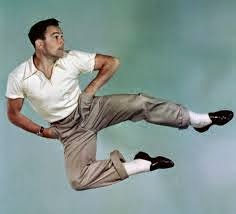
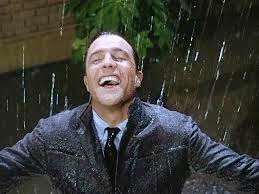
Gene Kelly did have a 103-degree fever when he filmed the iconic dance sequence in the 1952 MGM movie musical “Singin’ in the Rain,” but milk was not added to the puddles.

And the taps were dubbed later–with Kelly dubbing his taps as well as Debbie Reynolds’, said Patricia Ward Kelly, who married the dancer-choreographer in 1990, when she was 31 and he was 77. He died in 1996.

Patricia Ward Kelly said her husband wanted to be remembered for his work behind the camera, as a choreographer, director, writer and producer, as much as for his performances on screen, including in “An American in Paris” in 1951.

“He wanted to be known for changing the look of dance on film,” she said.

She shows clips of dances he choreographed and performed at her tribute shows she gives all around the country like the "Alter Ego” number from “Cover Girl” in 1944 where he dances with himself through a double exposure of the film. The double exposure technique had never been tried before. “It was an incredible feat,” said Patricia Ward Kelly.

The dancing and the camera movements in that number were synchronized with the musical beat as was a number in the 1945 movie “Anchors Aweigh” where Gene Kelly danced with the cartoon character Jerry the mouse. Twenty-four drawings of the mouse were needed for every second of the dance.

“Cover Girl” was a turning point in Gene Kelly’s career because MGM never loaned him out to another studio again. He also gave up the idea of returning to Broadway, deciding instead to dedicate himself to a career in Hollywood.

Patricia Ward Kelly said the problem with showing dance on film is that it is two-dimensional. To combat that, Gene Kelly choreographed his dancers so they were constantly moving toward the camera and he kept the dances shorter than they would have been on stage. He also used light and color to add a sense of a third dimension.


She said Gene Kelly insisted that the full figures of his dancers be filmed, rather than allowing the camera to focus only on the feet or arms. He would cut the film on a dancer’s turn so the audience would be less aware of it.

Patricia Ward Kelly said that when her husband was asked to name his favorite dance partner, he often would say Jerry the mouse “because he showed up on time and worked his little tail off.”
He thought the best all-around dancer was Vera-Ellen and the best tapper was Eleanor Powell while Donald O’Connor was the most unsung, said Patricia Ward Kelly.

She said Gene Kelly choreographed his dances to show off his partners, whether Debbie Reynolds, Frank Sinatra or Olivia Newton-John.

He was classically trained in ballet and had studied modern dance in New York with Martha Graham and others. But he took his inspiration from sports, including hockey, his favorite, she said.


He also was trying to create “a particular American style of dance,” so he preferred to choreograph to music by American writers, such as Cole Porter, Richard Rodgers and Lorenz Hart, and Irving Berlin.

Gene Kelly also helped spur the use of Technicolor film in low light after he urged his co-director on the 1949 movie of “On the Town,” Stanley Donen, to shoot the last scene as daylight was fading because the Navy ship they were using was about to pull away from the Brooklyn Navy Yard.

Technicolor film previously had been used only with very bright lights, and the camera operators agreed to shoot the last scene of “On the Town” only under protest, Patricia Ward Kelly said.

She said she met Gene Kelly in 1985, when he was narrator on a television special that she was writing. When they met, she had not heard of the performer.

He brought her to California to work on his memoirs, and they married five years later.
She described taking dance lessons so she would be prepared to keep up with her husband but said he usually pretended to have an injured leg when they attended events that included dancing. They did dance together at home on New Year’s Eve. “He was the epitome of romance,” she added...


SOURCE

Wednesday, April 15, 2015

THE THREE STOOGES: THE FINAL YEARS

 
After Shemp Howard died of a sudden heart attack in 1955, the remaining Stooges, Moe and Larry kept the act alive, recruiting comedian Joe Besser as the third Stooge. This, as any Stooge fan will tell you, was the beginning of the end. Besser was never happy as a Stooge and, wary of what had happened to Curly, had a clause in his contract forbidding Moe from hitting him.

By now, Columbia was the only studio in town producing shorts, and in 1957, with television taking over the market, the department was shut down. In December of ’57, the studio declined to renew the Stooges’ contract and, after 23 years’ service, they were unceremoniously fired. A few weeks later, Moe returned to the studio to say goodbye to some old friends. He was refused entry by a security guard. Shortly afterwards, amid negotiations for a live tour, Joe Besser left the act.

By rights, this should have been the end of the road. But, in a supremely ironic twist of fate, the Stooges were actually on the brink of a major comeback. In 1958 Columbia offered a package of 78 Curly-era shorts for TV broadcast. Picked up by a number of networks across the US, they were an instant hit, particularly with children, and soon all 190 Stooge shorts were in circulation and drawing huge audiences. Suddenly the Stooges were in big demand, and Moe and Larry once again revived the act with Joe ‘Curly-Joe’ DeRita stepping into the breach. With Moe and Larry now getting on in years, this was the Stooges’ last hurrah. But it was, in many ways, a triumphant one. From 1959 to 1965 they made a series of feature films in the classic Stooge vein, including the infamous Snow White And The Three Stooges (which is not nearly as bad as people would have you believe — well, not quite). They also recorded 41 live wraparound segments for The New Three Stooges cartoon series. In 1969, Moe, Larry and Curly-Joe shot a pilot for a proposed TV show called Kook’s Tour, a Stooge-style travelogue. It was not to be. In January 1970, Larry Fine suffered a debilitating stroke, ending his career. Longtime Stooge co-star Emil Sitka was contracted to replace him, but no footage was ever shot with Sitka as a Stooge.


In December 1974, Larry suffered another stroke and, the following month, he died at the age of 72. With near unbelievable fortitude, Moe vowed the Stooges would soldier on, approaching veteran Ted Healy-era Stooge Paul ‘Mousie’ Garner. Tragically, while negotiating a number of movie projects, Moe was diagnosed with terminal lung cancer. He died on May 4, 1975.

However, The Three Stooges live on. In the States it’s impossible to get through a week, a day even, without encountering a Stooge reference — images, clips, signature lines (“Calling Dr. Howard, Dr. Fine, Dr. Howard” from 1934’s Men In Black crops up continually in films and on TV), catchphrases (“I’m a victim of soicumstance!” etc), noises (particularly Curly’s trademark “nyuk, nyuk, nyuk, nyuk, nyuk!” and “woo, woo, woo!”), even sound effects — the Stooges’ ‘frying pan’ is a classic for the ages, still famously used by Vic & Bob. The Stooges are all gone now but their memories and comedy will live on forever...


SOURCE