Saturday, May 12, 2012

PHOTOS OF THE DAY: CLASSIC HOLLYWOOD MOTHERS

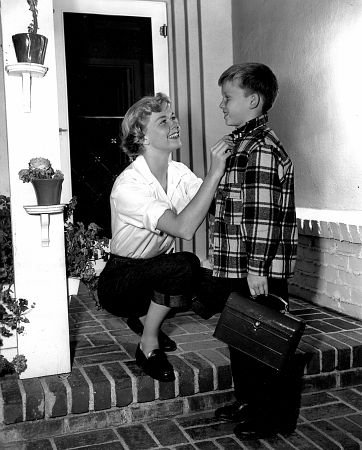
Not only does April showers bring May flowers but it also brings Mother's Day! In this modern age of the working mother, it is hard to get quality time with your children all of the time. However, classic Hollywood stars were doing it decades earlier. Thankfully not every Hollywood child turned out like Christina Crawford or Gary Crosby. Here are some of the happier pictrues of classic Hollywood mothers and their children...

DOROTHY LAMOUR AND SON


RITA HAYWORTH AND DAUGHTER


VERA LYNN AND DAUGHTER


DORIS DAY AND SON


BETTY GRABLE AND DAUGHTERS


BETTY HUTTON AND DAUGHTER

Thursday, May 10, 2012

MOVIE REVIEW: ROAD TO UTOPIA

Many classic comedies do not transfer to modern audiences. Society changes and what is deemed as funny to one generation may not be be considered humorous to another one. One classic comedy team that I think is still as funny today as it was yesterday is the team of Bing Crosby and Bob Hope. Over a twenty year period, Bing and Bob made seven "Road" movies, and what keeps their humor timeless is they were just having fun. It seemed like there was no script and their jokes were just made up right there. That was the joy of the Crosby-Hope movies.

Most of the Road movies consisted of Bing and Bob fighting over Dorothy Lamour on some remote island. However, I think the bets movie os the series is one that does not take place on an island at all - it takes place in Alaska of all places! Road to Utopia, filmed in 1943 but not released until 1946, is the fourth film of the "Road to …" series.

After the credits we see Sal and Chester Hooton, (Lamour and Hope) an old married couple. They are visited by an equally old Duke Johnson (Crosby) and the three reminisce about their previous adventure in the Klondike.

The film flashes back to the turn of the century. A man is murdered and two thugs, McGurk (Nestor Paiva) and Sperry (Robert Barrat), steal a map to a gold mine. The map and mine belonged to a man named Van Hoyden and the dying man tells Sal (Van Hoyden's daughter) the mine is in Alaska and to find a man named Ace Larson. Sal manages to get on the last boat to Alaska before McGurk and Sperry.

To evade the police, the thugs duck into a theater, where Duke and Chester are performing vaudeville. They proceed to work the crowd with a "ghost scam" into to "gambling" their money in hope of doubling it. As the police find the thugs, they escape onstage and reveal Chester hiding under the table with the crowd's money. Duke and Chester are forced to flee the angry mob.

As Duke divides their money, Chester is fed up with having to jump from town to town. Duke convinces him to head north to Alaska to prospect for gold. Chester refuses on the grounds that every time Duke gets a "great idea", Chester is the one that gets the runaround. He even pulls out a black book with a list of every time Duke has taken advantage of him. Chester then takes all the money and tells Duke to go on without him.

As McGurk and Sperry get on the boat bound for Alaska, Duke and Chester prepare to part ways. As they bid a solemn goodbye, and picking each others pocket, Duke steals the money. Chester waves goodbye until he sees Duke counting the money and changes boats at the last moment. He's about to throttle Duke when he realizes the boat has left the dock, for Alaska. In Duke's cabin, Chester takes the money back and goes to put it in a safe, which turns out to be a porthole. With no money to pay for passage, they are forced to scrub the deck and shovel coal.

Sal arrives in Alaska and meets with Ace Larson (Douglass Dumbrille), a saloon owner and friend of her father. Instead of going to the police, Larson assures Sal that he'll take care of things. He gives her a job performing in his saloon, an act which infuriates Larson's girlfriend, Kate (Hillary Brooke). Larson tells Kate how he really plans to take Sal's gold mine for the two of them and passionately kisses her.

While doing housekeeping duties in a cabin, Chester finds the map to the gold mine. As the thugs enter behind them, Duke and Chester realize they've found the Van Hoyden map and the occupants are the killers. They overpower the thugs and take their place(and their beards) to get off the boat, only to find the entire town is terrified of the real thugs. Thinking they can get anything they want, Duke and Chester adopt the tough persona and head to the saloon. They argue over who gets to hold the map and decide to tear it in half and each man keep his for safe keeping.


While enjoying "free" champagne and lots of dancing girls, they see Sal's singing routine and are both instantly smitten. Thinking they are McGurk and Sperry, Sal plays up to both of them and sends a note to Chester. She doubts they are the real killers, but Ace's lackey, Lebec, reminds her that the map is the most important thing and to get it at all costs.

Chester(as Sperry) falls head over heels for Sal and confides in her about the map, even telling her how Duke hid his half in his hat. Sal sends him away but tells him to return at midnight. Meanwhile, Duke receives a note from Sal, and thinking he's McGurk, Sal plays up to him, allowing Lebec to take his hat and the map. She also sends him away telling him to return at midnight. Duke and Chester are at first shocked to be on a date with the same woman, but the night is cut short when the real McGurk and Sperry burst into the hotel. As they make a hasty exit, Sal learns she only gave half of the map to Ace. Duke and Chester manage to escape by dog sled.


Meanwhile, Ace is furious to only have half a map, and sends Kate to the get the other half, with Lebec as a backup plan. Kate tries to pull the "stranded girl in the snow" routine to attract Duke and Chester, but is interrupted by Sal's arrival. The four of them head to a nearby cabin. Kate tells Sal that they need to get the other half or the men will be killed.

After a failed attempt to get the map, Sal gets "McGurk" (Duke) to reveal "Sperry" (Chester) has hidden his half in his undershirt. She plays to "McGurk" and tells him that "Sperry" wants to steal his half and they should run away together. Duke then reveals his true identity and says he'll take care of "Sperry" as Kate walks in. Sal, now realizes how much she loves Duke, refuses to go along with the plan. But Kate warns her that only Ace can keep them from being killed and the only way to get to him is to give up the map. Sal reluctantly agrees to steal the map while the men sleep, and the two girls leave the next morning with Lebec. Duke and Chester are confronted by the real McGurk and Sperry and they realize the girls had stolen the map. They still manage to escape and the after a merry chase through the mountains head back to town.


Sal tells Ace she'll only give up the map if he refuses to kill Duke and Chester, but instead he forms a posse to dispose of them. Somehow they managed to steal the map back, rescue Sal, scare away the mob and get rid of McGurk and Sperry. They escape by dog sled with the mob after them but the sled overturns. The ice splits, leaving Sal and Chester on one side, and Duke on the side of the mob. He throws them map, wishes them well and turns to face the mob.

The movie flashes back into the present with aged Duke telling Sal and Chester how he escaped the mob. He is then surprised to hear Chester and Sal have a son. They call for him, and ironically he bears a striking resemblance to Duke. Chester looks into the camera and says, "We adopted him."

The film is the only Road to … film without a real place in its title though Alaska with its gold mines is referred to as "Utopia" several times in the film. Bob Hope, Bing Crosby and Dorothy Lamour starred, as they did in all but one of the series. The film is also the only "Road" film that did not take place in contemporary times though the film begins and ends with the cast made up to look older who flashback to the past.


As a “narrator”, humor essayist Robert Benchley provides some wry commentary that is interspersed throughout the movie. Benchley's drinking, already a problem ruined his health, and Benchley died in a New York hospital on November 21, 1945 before the movie was released.

There are also jabs at Paramount Pictures (the studio that originally released the film) and a reference to Frank Sinatra, not to mention many instances of "breaking the fourth wall" and general wackiness. In her autobiography, Dorothy Lamour said that the release of Road to Utopia may have been delayed by Paramount to not jeopardize the public's and Academy Awards committee's acceptance of Crosby as Best Actor for playing a priest in Going My Way.


If you want to watch a fun movie and are a fan of just good comedy, I recommend Road To Utopia. Watching Bing Crosby and Bob Hope at the top of their careers are definitely a type of utopia for me at least...

my rating: 10 out of 10

Tuesday, May 8, 2012

AMPAS CELEBRATES GENE KELLY'S 100TH BIRTHDAY

The Academy of Motion Picture Arts and Sciences will present a two-night celebration of the life and career of legendary dancer, director and choreographer Gene Kelly on the 100th anniversary of his birth.

Film clips, personal remembrances and an exploration of the technology Kelly used to change the look of dance on film will be featured on consecutive evenings: Thursday, May 17, at 7:30 p.m. at the Samuel Goldwyn Theater in Beverly Hills, and Friday, May 18, at 7:30 p.m. at the Linwood Dunn Theater in Hollywood. Both programs will be hosted by Kelly’s widow, film historian Patricia Ward Kelly.

Kelly is perhaps best known for his remarkable dancing, but his talents extended to many different aspects of filmmaking. His work behind the camera, as an innovative director and choreographer, has had a lasting influence on the way that dance is filmed. On screen, he was the proverbial triple-threat as an actor and singer as well as a dancer.

“A Centennial Tribute to Gene Kelly” on May 17 will showcase Kelly’s charisma and creativity, his unique use of props (mops, sheets of newspaper, roller skates) and environments (a rain-drenched street, a creaky old barn), and his extraordinary athleticism in films like “Living in a Big Way” and “The Pirate.” His beloved classics “An American in Paris” and “Singin’ in the Rain” will be discussed along with later directorial efforts such as “Invitation to the Dance” and “Hello, Dolly!”, with insightful commentary on Kelly’s creative process.

“Gene Kelly: Choreography and the Camera” on May 18, presented by the Academy’s Science and Technology Council, will take a more in-depth look at how Kelly’s contributions helped change the look of dance on film.

Even during the height of his career, Kelly frequently encountered technical barriers and studio resistance in his efforts to build dance numbers into the structure of film and bring the dance, quite literally, into the streets. The program will discuss how he overcame those obstacles and will also explore the innovative ways that he used cinematography, animation and sound to create some of his most iconic scenes.

In 1951 the Academy presented Kelly with an Honorary Award (an Oscar® statuette) for “his versatility as an actor, singer, director and dancer, and specifically for his brilliant achievements in the art of choreography on film.” Kelly had previously received a Best Actor nomination for his role in “Anchors Aweigh” (1945).

Tickets to “A Centennial Tribute to Gene Kelly” and “Gene Kelly: Choreography and the Camera” are available for purchase. Tickets for each evening are $5 for the general public and $3 for Academy members and students with a valid ID, and may be purchased by mail, at the Academy box office (8949 Wilshire Boulevard, Monday through Friday, 9 a.m. to 5 p.m.), or online at www.oscars.org. Doors open at 6:30 p.m.

Ticketed seating is unreserved. In the event that tickets are sold out, a standby line will form on the day of the event, and names will be taken when the Box Office opens at 5 p.m.

The Samuel Goldwyn Theater is located at the 8949 Wilshire Boulevard in Beverly Hills. The Linwood Dunn Theater is located at 1313 Vine Street in Hollywood...


SOURCE

Sunday, May 6, 2012

RIP: GEORGE LINDSEY

George Lindsey, Andy Griffith Show Costar, Dies
By Stephen M. Silverman

George Lindsey, best remembered for his role of Goober Pyle – cousin of Gomer Pyle – on CBS's rural sitcom The Andy Griffith Show, died Sunday morning in Nashville, where he lived, after a lengthy hospitalization, reports The Tennessean. He was 83.

Andy Griffith, 85, said in a statement that accompanied the Lindsay family's announcement of the death, "George Lindsey was my friend. I had great respect for his talent and his human spirit."

Griffith also said the two often spoke by phone. "Our last conversation was a few days ago. We would talk about our health, how much we missed our friends who passed before us and usually about something funny. I am happy to say that as we found ourselves in our 80s, we were not afraid to say, 'I love you.' That was the last thing George and I had to say to each other. 'I love you.' "

An Alabama native who was raised by his grandparents, Lindsey got the acting bug at 14 when he saw a performance of the musical Oklahoma!. He was a school athlete who also displayed a sharp sense of humor, and he went to college to become a teacher, according to the Tennessean.

While in the Air Force stationed in Orlando, Fla., he met and, in 1955, married Joyanne Herbert, and they had two children. The marriage lasted until 1991.

Before his long TV career, which also included another comic stint on CBS's Hee Haw, Lindsey studied acting in New York and played in stage productions there.

His survivors, the newspaper reports, include son George Lindsey, Jr., daughter Camden Jo Lindsey Gardner, two grandsons and his companion of many years, Anne Wilson...

SOURCE

FORGOTTEN ONES: NORMAN BROOKS

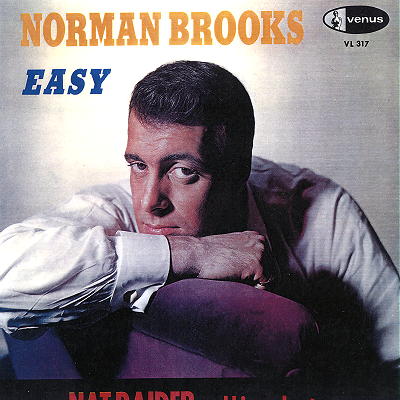
The voice of Al Jolson was one of the most unique voices ever recorded. When he died in 1950, the entertainment industry lost a great talent. Even though the showmanship and the charisma of Jolson has never been duplicated, there have been singers that sound a lot like Al Jolson. One such entertainer that gained fame in the 1950s and 1960s was Norman Brooks.

Born in Montreal, Canada to Lebanese parents on August 19, 1926 Brooks possessed a voice naturally similar to that of Al Jolson. Brooks began his career in his late teens, singing in the Jolson style in Montreal nightclubs, often in duet with his sister Annie (who as Anne Brooks later sang in Canadian and US nightclubs). During his career he has returned frequently to Jolson routines, but he also has sung in a more personal style. By the early 1950s he had moved from clubs to theatres - eg, the Seville in Montreal and the Casino Theatre in Toronto. He made two 78s for Canadian Victor at this time.

In 1953 he went to New York where he appeared in nightclubs and recorded 'Hello Sunshine,' a substantial hit that year for Zodiac, a label established expressly for Brooks. He was a popular nightclub and TV performer in the USA during the 1950s and 1960s, appearing, for example, for 44 weeks 1959-60 at The Sands Hotel, Las Vegas. He also performed frequently in Canadian nightclubs and on CBC TV, and was host for CTV's 'Musical Showcase' in 1966. He appeared in 1975 on Broadway in The Magic of Jolson and subsequently sang and played piano in New York nightclubs and continued to tour. He performed in 1979 at PDA.


Brooks' other recordings include singles for Zodiac and for RCA's 'X' label, LPs of Jolson material for Spin-O-Rama, Coronet, Diplomat, and Sutton, and LPs of pop songs - some his own - for Verve, Sure, Promenade and Venus (see Kinkle's Encyclopedia of Popular Music and Jazz for details). Brooks played Jolson in the The Best Things in Life Are Free (1956) and had dramatic roles in The Block (1963) and Ocean's Eleven (1965).

Norman Brooks was showcased in four motion pictures. In the 1956 feature film "The Best Things In Life Are Free" he played Jolson and sang "Sonny Boy." A second filmsaw Norman on stage singing " I'm Gonna Live Til I Die " with sister Ann in the popular best ever casino heist in the 1960 film "Ocean's Eleven." Then audiences heard Norman singing "I'm Sittin' On Top Of The World" so remarkably in the 1983 Woody Allen film "Zelig" that it hard to distinguish Norman's rendition to that of "Jolie" himself. Norman also played "Brand" a non vocal role, in the 1964 Tony Orlando film "The Block."

In the 1970s and 1980s, when the Jolson style of entertainment fell out of style, Brooks became another forgotten relic of a bygone era. Lung problems forced him to pretty much retire. He died on September 14, 2006 at the age of 78. Not only was another voice of Jolson silenced then, but Norman Brooks was a great talent all his own...

Friday, May 4, 2012

CLASSIC STARS AND TODAY'S MOVIES


LOS ANGELES – The TCM Classic Film Festival took over the heart of Hollywood last month, highlighting decades-old movies and celebrating stars from the entertainment industry’s beloved Golden Era. So what is the special ingredient in classic films from “Cabaret” to “The Thief of Bagdad” to “Singin’ in the Rain” that's missing today?

“I wish they would clean up some of the movies, make them a little more wholesome,” Debbie Reynolds told reporters. “I think the American public wants that, so we should give it to them.”

Linda Gray, best known for her role as the Sue Ellen Ewing in the prime time soap “Dallas,” said that today’s scripts often don't develop characters and their relationships very well.

“We are used to everything being so fast – next, next, next – so it is lovely for younger people to be able to see the magnitude and magic of old Hollywood films,” she explained. “Films for me they have been all about relationships. I think they spent more time expanding those relationships back then.”

"I wish they would clean up some of the movies, make them a little more wholesome" says Debbie Reynolds.

Woody Allen’s longtime collaborator Tony Roberts misses the Old Hollywood studio system and how it functioned to establish iconic stars.

“In the old studio system [actors and actresses] signed up for seven years or five years, and they made a lot of movies each year. They could still make bad movies, yet they still got parts, because they had a contract and they learned on the job,” he said. “Nowadays, if you are lucky enough to get one or two pictures under your belt, that could be the end of you – and you never grew, you never got that comfortable being a character in front of the camera.”

Roberts said it was this stability that enabled screen stars to really shine.

“When you think of the old actors and the movies they made each year, they finally had a chance to be great when they got a great script. You can't remember 80 pictures, but you remember five or four because they were good scripts and knew what to do with them,” he said. “That's what is missing today.”

As for Liza Minnelli, who was feted alongside co-star Joel Grey for her work in “Cabaret” during the festival, embracing all that is new is what keeps her motivated to keep on entertaining the masses.

“Some of what is coming out is brilliant today,” she added. “Something (exciting) will always happen tomorrow, you have got to stay curious. Luckily, my phone always rings.”

SOURCE

Thursday, May 3, 2012

BORN ON THIS DAY: BING CROSBY

Today people mostly remember Bing Crosby as the laid back singer who made the song "White Christmas" a major hit. Some younger people do not even recognize him for that. Bing Crosby though was more than just a Christmas singer. He was a singer who pioneered early popular music in the 1930s, and he was one of the most widely head voices of the 1940s. On this day, May 3rd in 1903 this legend was born.

Crosby was born in Tacoma, Washington, on May 3, 1903 in a house his father built at 1112 North J Street. In 1906, Crosby's family moved to Spokane, Washington. In 1913, Crosby's father built a house at 508 E. Sharp Ave. The house now sits on the campus of Bing's alma mater Gonzaga University and formerly housed the Alumni Association.

He was the fourth of seven children: brothers Larry (1895–1975), Everett (1896–1966), Ted (1900–1973), and Bob (1913–1993); and two sisters, Catherine (1904–1974) and Mary Rose (1906–1990). His parents were Harry Lincoln Crosby (1870–1950), a bookkeeper, and Catherine Helen (known as Kate) (née Harrigan; 1873–1964). Crosby's mother was a second generation Irish-American.[16] His father was of English descent; some of his ancestors had emigrated to what would become the U.S. in the 17th century, and included Patience Brewster, the daughter of the Pilgrim leader and Mayflower passenger William Brewster (c. 1567 – April 10, 1644).

In 1910, six-year-old Harry Crosby was forever renamed. The Sunday edition of the Spokesman-Review published a feature called "The Bingville Bugle". Written by humorist Newton Newkirk, The Bingville Bugle was a parody of a hillbilly newsletter filled with gossipy tidbits, minstrel quips, creative spelling, and mock ads. A neighbor, 15-year-old Valentine Hobart, shared Crosby's enthusiasm for "The Bugle" and noting Crosby's laugh, took a liking to him and called him "Bingo from Bingville". Eventually the last vowel was dropped and the nickname stuck.


In 1917, Crosby took a summer job as property boy at Spokane's "Auditorium," where he witnessed some of the finest acts of the day, including Al Jolson, who held Crosby spellbound with his ad libbing and spoofs of Hawaiian songs. Crosby later described Jolson's delivery as "electric".

In 1923, Bing Crosby was invited to join a new band composed of high school students much younger than himself. Al Rinker, Miles Rinker, James Heaton, Claire Pritchard and Robert Pritchard, along with drummer Bing Crosby, formed the Musicaladers, who performed at dances both for high school students and club-goers. However, the group disbanded after two years.

By 1925, Crosby had formed a vocal duo with partner Al Rinker, brother of singer Mildred Bailey. Mildred introduced Al and Bing to Paul Whiteman, who was at that time America's most famous bandleader. Hired for $150 a week, they made their debut on December 6, 1926 at the Tivoli Theatre (Chicago). Their first recording was "I've Got The Girl," with Don Clark's Orchestra, but the Columbia-issued record did them no vocal favors, as it was inadvertently recorded at a speed slower than it should have been, which increased the singers' pitch when played at 78 rpm. Throughout his career, Bing Crosby often credited Mildred Bailey for getting him his first important job in the entertainment business.

Even as the Crosby and Rinker duo was increasing in popularity, Whiteman added a third member to the group. The threesome, now including pianist and aspiring songwriter Harry Barris, were dubbed "The Rhythm Boys". They joined the Whiteman touring act, performing and recording with musicians Bix Beiderbecke, Jack Teagarden, Tommy Dorsey, Jimmy Dorsey, and Eddie Lang and Hoagy Carmichael, and appeared together in a Whiteman movie.


Crosby soon became the star attraction of the Rhythm Boys, and in 1928 had his first number one hit with the Whiteman orchestra, a jazz-influenced rendition of "Ol' Man River". However, Crosby's reported taste for alcohol and his growing dissatisfaction with Whiteman led to the Rhythm Boys quitting to join the Gus Arnheim Orchestra. And the rest as they say is history...