Showing posts with label Al Jolson. Show all posts

Saturday, September 26, 2026

THE EULOGY OF AL JOLSON

Comedian George Jessel gave the eulogy for Al Jolson's funeral in October of 1950. They were lifelong friends, and Jessel's words were well said...


A BREEZE FROM San Francisco Bay and the life of the greatest minstrel that America has ever known is in the balance. A turn of a card -- a telling of a gag -- and within a few moments, a wife, a legion of friends, and a nation are broken-hearted. So it was and so, alas, it is the passing from this earthly scene of Al Jolson. And the voice that once put majesty into the American popular song must from now on come from a disc instead of the heart, from whence it came.

Oh, my friends, I know it is the purpose of the speaker at times like these to voice lofty phrases of consolation about a life full lived and a happy conclusion to a great career. But I, contemporary of Al's, find myself too shocked and torn within to say that all is well, and I dare not lie from this sacred platform to say that I, and we, must rejoice in the fact that now he is at peace. It would be far from the truth, and I would need the spiritual strength of a rabbi, a minister, and a priest combined to do so. The human flesh and the frailty of human nature seem to be the sad order of the day as far as I am concerned.

It will take a long time for the people in my business who have been wounded by this event to become reconciled that this dynamic bundle of energy with its God-given talent that called itself Al Jolson is at peace. The very humanly emotional heart of the theatrical business does not heal so easily, and the tears that must fall from the eyes of the many who miss him already cannot be halted by the spoken word. No, the word will not take the place of his song.


And not only has the entertainment world lost its king, but we cannot cry, "The King is dead -- long live the King!" For there is no one to hold his scepter. Those of us who tarry behind are but pale imitations, mere princelings. And American Jewry suffers as well and I must psychologically inform you of the great inspiration that Al was to the Jewish people in the last forty years. For in 1910 the Jewish people who emigrated from Europe to come here were a sad lot. Their humor came out of their own troubles. Men of thirty-five seemed to take on the attitude of their fathers and grandfathers, they walked with stooped shoulders. When they sang, they sang with lament in their hearts and their voices, always as if they were pleading for help from above, And the older they got, the more they prayed for the return to Jerusalem. Or yearned for the simple little villages where they spent their childhood. And the actors, even the great ones, came on the stage also playing characters like their fathers. Vaudeville and the variety and the musical-comedy stage and the legitimate theater had Ben Welch and Joe Welch, monologists with beards and shabby clothes telling humorous stories that had a tear behind them. Likewise did this happen in legitimate theater. David Warfield in The Auctioneer and many others in plays bewailing the misfortunes that had happened to the Jew. And then there came on the scene a young man, vibrantly pulsing with life and courage, who marched on the stage, head high with the authority of a Roman emperor, with a gaiety that was militant, uninhibited, and unafraid, and told the world that the Jew in America did not only have to sing in sorrow but could shout happily about Dixie, about the Night Boat to Albany, about coming to California, about a girl in Avalon. And when he cried "Mammy" it was in appreciation, not in lament. Jolson is the happiest portrait that can ever be painted about an American of the Jewish faith. Jolson was synonymous with victory at the race track, at the ball game, at anything that he participated in, he would say, "I had the winner, ha, ha, why didn't you ask me?" This was not in bravado alone: this was the quintessence of optimism. Whatever you're in, whatever game you play, feel like you are the winner.

The history of the world does not say enough about how important the song and the singer have been, from the days of old when a man first sang "Yankee Doodle" on the streets of Boston or the soldier in France who first sang "The Marseillaise." But history must record the name Jolson, who in the twilight of his life sang his heart out in a foreign land, to the wounded and to the valiant. I am proud to have basked in the sunlight of his greatness, to have been part of his time, and to have only a few days ago -- this last Sunday night -- hugged him and said, "Good night, Asa, take care of yourself." And now, my friends, I find my faith in good coming back to me. I feel strengthened in heart and mind -- and I would lay my sackcloth and ashes aside and therefore say to my fellow mourners and the little lady who bears Al's name that I am thankful to God that there was and there is an Al Jolson. And I have faith that he will never die in the hearts of people. No, no. No such blot will ever fall on the fair charter of American memories. Baruch adenoi. Praise the Lord. Good night, Al.


Thursday, October 23, 2025

THE LAST DAYS OF AL JOLSON

Seventy five years ago...Al Jolson, Harry Akst and Martin Fried arrived in San Francisco on October 23, 1950, taking an afternoon flight from Los Angeles. Jolson was scheduled to appear as a guest on the Bing Crosby Radio Show and after booking into St. Francis Hotel they had a seafood dinner at Fisherman's Wharf.

On returning to their hotel, they played cards for a while before Jolson said: "I'm feeling a bit tired. Think I'll just have a lie down . . . Do Jolie a favour, Marty, willya? Call room service and get me some bicarbonate of soda - I have a little indigestion."

Harry decided to call for the house doctor. There were two, but both were on call. Remembering a name his physician had given him, Al told Harry: "Look up Dr. Kerr and ask him to come over."

Dr. Kerr answered the call: "It'll take some time to get there."

"You don't understand, doctor. This is Al Jolson and it's an emergency," said Harry.

Jolson waved his hands: "You crazy bastard! You want everybody to read in the papers tomorrow morning that Al Jolson had to get a doctor for indigestion?" T

he doctor heard and assured him: "Don't worry, I'll be there in half an hour."


Al turned to his friend, "Harry, I'm not going to last." Harry recalled, "My heart jumped. I looked down and saw he had been taking his pulse. I said: 'Al, don't talk that way. It'll pass. It's nothing but indigestion.'"

The hotel nurse arrived first. "Don't tell me this is the patient . . ." she started cheerfully - Al was still tanned from Palm Springs.

"Nurse," said Al, "I've got no pulse."

She took his wrist: "You've got a pulse like a baby."

The house physician also arrived about the same time as Dr. Kerr. "I'm a little embarrassed about this, gentlemen," Jolson said as the two doctors got ready to examine him.

First they asked him what he had done that day and what he had eaten. "Pull up a couple of chairs and let's talk," Jolson told them. Two chairs were brought and Dr. Kerr told him how much he admired him: "I saw you in London in 1929."

Al joked: "You know, President Truman only had one hour with General MacArthur. I had two."

Suddenly Al reached for his pulse. "Oh, I'm going," he said sadly, before sinking back on his pillow, his eyes closed. The World's Greatest Entertainer, Al Jolson, born Asa Yoelson only 64 years before, was gone...


Tuesday, October 24, 2023

STORY BEHIND THE PHOTO: AL JOLSON

Here is a new photo I discovered of the funeral procession of Al Jolson. He died on October 23, 1950 at the age of 64. Photograph caption dated October 26, 1950 reads, "The casket bearing the body of the mammy singer is shown arriving at the temple. The 10 active pallbearers were Harry Brand, Harry Cohn, Harry Akst, Martin Fried, Louis Epstein, Nathan Kramer, Arthur Stebbins, Johnson Steinberg, Maurice Aroff and Al Goetz, some of the singer's closest friends."


Friday, April 24, 2020

AL JOLSON: BURIED UNDER BLACKFACE

Here is an interesting article I found on the internet. I did not write it myself, but it is an interesting take on Jolson...

On a Sunday night in September 1918, the great operatic tenor Enrico Caruso stepped onstage at the Century Theater in New York to perform as part of a special program put on by the Army Tank Corps Welfare League. Caruso dazzled the audience with his rendition of Italian war songs, before launching into a surprising finale, the patriotic tune "Over There," which left the audience in a state of frenzy.

Who could follow this performance by the greatest singer of his day? The composer of "Over There," George M. Cohan, was also part of the program, but even he must have feared the prospect of matching this version of his most famous song. But one daring soul bounded out from off stage, looked impishly at the audience and confidently told the crowd: "Folks, you ain't heard nothin' yet." This single line, proclaimed by the 32-year-old Al Jolson, brought down the house, and before long the audience had all but forgotten about the great Caruso, as it responded to the man who was already being billed as "The World's Greatest Entertainer."

Almost a decade later, Jolson used the same line as part of his historic performance in "The Jazz Singer," a film that signaled the transition from silent to sound motion pictures. Here, Jolson's quip served as more than just personal boasting; it was a symbolic proclamation of the promising future of "talking" motion pictures. What a glorious future it was destined to be: everything about Hollywood movies turned out bigger and brasher than even Jolson could have imagined at the time.

But Al Jolson's own future would be far more problematic.Close to seventy years after his death, on Oct. 23, 1950, one expects few memorials and public events to commemorate it. The man who was once the most popular entertainer in America certainly lives on in the public imagination, but increasingly as an egregious symbol of political incorrectness. Jolson was no saint, as all but his most ardent defenders are quick to admit. Even during his lifetime, he was deprecated for a host of vices, from selfishness to overweening pride. But with the passing years, these diminish in comparison to his chief transgression: his persistent use of the burnt-cork makeup commonly known as blackface.


If blackface has its shameful poster boy, it is Al Jolson. Many other 20th-century performers from Shirley Temple to Bing Crosby donned the makeup for various roles, but Jolson adopted it as a core part of his public persona. From vaudeville to the cinema, Jolson brought his minstrel makeup kit with him. Although he frequently performed without burnt cork, it is the image of Jolson's black face and white-gloved outstretched palms that lives on in popular memory.

Jolson deserves better. His performances included less race-baiting and hate-mongering than any given hour with Chris Rock or Howard Stern, relying instead on his electric stage presence and sheer enthusiasm for pleasing his fans. Even his biggest detractors granted that Jolson, the supposed egomaniac, saved his kindest, gentlest moods for his moments onstage. He truly had little knack for the ridicule, irony and sarcasm that racist humor requires for its effect.

Instead, Jolson aimed to make each of his shows into a lovefest, lavishing his audiences with affection and giving them everything, even if he stinted in his off-stage relations with family and friends. Jolson himself was aware of this contrast between his private life and his public persona, and it even became an important theme of his most famous performance in "The Jazz Singer" and the later autobiographical film, "The Al Jolson Story."

Although Jolson did not star in the latter film, he did supply the vocal track, to which the actor Larry Parks lip-synced his part. Even at this late age Jolson was 60 when the film was released he showed that he had lost none of his magic. The scenes in which Jolson sings overshadow the rest of the film. The later Jolson had developed a deep resonance in the lower part of his range, perhaps to compensate for his inability to belt out high notes as he had in earlier years. Audiences responded with enthusiasm to the film, which proved to be the highest-grossing movie in one of Hollywood's most memorable years outdistancing other 1946 releases like "It's a Wonderful Life," "The Big Sleep," "The Best Years of Our Lives," "Notorious" and "The Postman Always Rings Twice."


These late-career achievements only make us wish all the more that we were better able to evaluate Jolson in his prime. His finest work from his early career may be legendary, but like most legends it comes to us mostly by word of mouth, with little documentation to give it substance. Jolson's career in "talking movies" did not begin until he was 41 years old. Unlike today's stars, who draw on every tool of art and science to resist the ravages of time, Jolson looks very much middle-aged in his films, with a receding hairline and an unhealthy pallor to his potato-shaped face. At first glance, it's hard to understand his appeal based on his paltry looks and meager acting skills. But his performance is lackluster only until his singing scenes, when Jolson's features light up and he exudes an almost boyish charm. He looks years younger when he sings, his body seems charged with an unnatural vitality, and his reputation for being the greatest entertainer of his day suddenly seems credible.

These few scenes provide us with our closest glimpse of the Jolson who captivated Broadway, who dazzled London and who left behind ardent admirers in virtually every city where he appeared onstage in his prime years. When the Imperial, on 59th Street across from Central Park, was renamed in his honor in 1921, Jolson created a sensation on opening night, called back by the audience for no fewer than 37 curtain calls. An account from a 1916 newspaper describes another Jolson success: "I have never heard such cheering and such genuine enthusiasm given to a performer or a performance in all my experience as a theatergoer, which covers a period of more than 20 years. To be exact, Mr. Jolson stopped the show three times, and in each instance a scene was delayed and the audience simply wouldn't allow the performance to proceed. Mr. Jolson had to plead with the audience. Some of the people in the audience stood up, cheered and threw hats in the air simultaneously during the second act."

Jolson went to great lengths to maximize the impact of his stage appearances. He demanded that a long runway be constructed, allowing him to move into the midst of the audience. He did not hesitate to change the course of a performance to satisfy the crowd's demands, sometimes singing on into the night, long after the show was supposed to be finished. Above all, he used every resource his body could muster to deepen the impression he made, orchestrating his face, his eyes, his limbs, his voice to amplify the intended effect. The vibrato of his voice, for instance, is so often accompanied by a tremulous motion of his body. His gestures were sometimes so dramatic that they have become almost inseparable from our image of Jolson: the out-stretched arms, palms facing outward, the genuflection on one knee in front of his fans.


Despite these virtues, Jolson was in many ways an unlikely choice to lead the cinema into the modern age. An indifferent actor, he was at his worst when reciting dialogue a limitation that became painfully obvious in films that, after all, were distinguished for being "talkies." His gesticulations and movements were far better suited for the stage, where Jolson could project to the back row. In contrast he lacked the subtle modulations and nuances that bring vitality to close-up camera work. He was too old to play the romantic lead roles that, then as now, are the building blocks of Hollywood stardom. most of all, his long-standing use of blackface made Jolson seem like the last representative of the 19th century, not a harbinger of the brave new world of multimedia entertainment.

But even here, the matter is more complex than first meets the eye. In some respects, "The Jazz Singer" is daringly forward-looking. This story, which matches Jolson's own biography in many respects, tells of a young singer, Jack Robin, forced to decide between applying his talents to the synagogue, where his family had served as cantors for many generations, or to the stage as a popular entertainer. Yes, the acting is melodramatic and over- drawn, but the underlying themes of the anguish of assimilation, the complex emotions of ethnic pride, the conflict between tradition and modern ways are far deeper than the ones Hollywood routinely treats these days. And these issues have lost none of their pointedness at the dawn of the 21st century.

The irony is, of course, that Jolson is most derided for his insensitivity to issues of race and ethnicity. In fact, his career was distinguished by a more heartfelt understanding of these matters than the vast majority of his contemporaries. Even in the cinematic scenes most lambasted, for instance when Jolson sings "My Mammy" in blackface toward the close of "The Jazz Singer," the symbolic resonance is more open-ended than the stereotyped image might suggest. The scene comes when Robin is singing to his own mother, Sara, who sits in the audience, and deals more directly with the issue of Jewish assimilation and the family tensions it creates than with any attempt to demean blacks a theme that, in fact, plays no part in "The Jazz Singer."


Was Jolson a racist? Although he was guilty of many faults, Jolson showed no overt signs of ethnic hatred. Indeed, the songwriter and performer Noble Sissle, a longtime partner of the ragtime pioneer Eubie Blake, recalled Jolson's unprompted act of kindness after a Hartford restaurant refused to serve the two black musicians. A local newspaper mentioned the incident, and, Sissle later recalled: "To our everlasting amazement, we promptly got a call from Al Jolson. He was in town with his show and even though we were two very unimportant guys whom he'd never heard of until that morning, he was so sore about that story he wanted to make it up to us." The next evening, Jolson treated Sissle and Blake to dinner, insisting that "he'd punch anyone in the nose who tried to kick us out."

Jolson's own reasons for adopting blackface were more prosaic. After struggling as a young man to make his mark in vaudeville, Jolson tried the burnt-cork makeup, almost out of desperation, in late 1904. A fellow performer had counseled him that wearing blackface was like putting on a mask one looked, and even felt, more like a performer. The advice proved tremendously helpful: Jolson was energized by the new look; his stage demeanor became markedly more spontaneous, and audiences responded with enthusiasm. From that time on, Jolson continued to use burnt-cork makeup, perhaps not through any desire to degrade blacks, but simply to enhance the theatrical qualities of his performances.

Such justifications, however, make scant headway in today's atmosphere of greater sensitivity to matters of race and ethnicity. In an age when even "Huckleberry Finn" can be castigated as a racist work, one can hardly expect Al Jolson's reputation to be rehabilitated any time soon. Indeed, what Jolson intended may be interesting to the scholar or psychologist, but what his use of burnt cork represented to the mass public is a larger issue. Blackface evokes memories of the most unpleasant side of racial relations, and of an age in which white entertainers used the makeup to ridicule black Americans while brazenly borrowing from the rich black musical traditions that were rarely allowed direct expression in mainstream society. This is heavy baggage for Al Jolson. True, he was the comeback kid of his day. His cinema career revitalized his flagging popularity in the late 1920's, just as "The Al Jolson Story" brought him back into the limelight 20 years later. Even after his death, Jolson somehow managed to keep center stage, commemorated in a huge monumental grave site within eyesight of the 405 Freeway in Los Angeles, dazzling thousands of commuters daily with a six- pillar structure towering over a 120-foot waterfall. Here, one finds an almost life-size statue of Jolson down on one knee with palms outspread, almost as if he is imploring motorists to give him one more chance. Perhaps they will some day, but for the time being Jolson promises to be remembered less for his talent, and more for his makeup...


SOURCE

Wednesday, May 24, 2017

EDDIE CANTOR REMEMBERS AL JOLSON

This great rememberance of Al Jolson was written by his long time friend Eddie Cantor. It was published shortly after Jolson's death on this day - October 23rd in 1950...

I was in Mobile, Alabama, when I first got the shocking news from an NBC official in New York that Al Jolson was dead of a heart attack. The telephone operator who put the call through to me was sobbing hysterically. The elevator operator who took me downstairs couldn’t control his tears. The taxi driver who drove me to the NBC studios to do a special memorial broadcast kept mumbling to himself, “Why did he have to go?”

The attendants and technicians at the studio were all red-eyed from weeping. None of these people had ever met Al Jolson personally. Yet, because Jolie was a man of the people, because he seemed to know and love everyone who had ever heard the sound of his voice, the grief over his passing was universal.

Jolie had human frailties, just as any other man. I say this in all sincerity and with my heart full of love for the man we all knew as “The King.” Jolie’s great heart, his wonderful, almost child-like spirit, and his overflowing love of humanity overshadowed everything else.

He never forgot his nearness to the people and his nearness to his God. Those of us who kidded him the most loved him the most. Whenever the gang – Jack Benny, George Jessel, George Burns and Jolie – used to gather at my house, there was never a night when we didn’t get together to sing “Mammy.” But there was never anybody who could sing “Mammy” like Jolson could.

We all looked upon him with envy because we could never hope to reach his stature, but he was also an inspiration to all his contemporaries. He was six acts of top billing rolled into one and for anyone to compete with him was like watching a midget in a sideshow trying to touch the giant’s head. To call him the biggest hunk of entertainer in show business was an understatement. He was the only entertainer who was his own lighting and his own scenery.


Jolie always loved to play jokes and get ‘em to laugh. I remember one time when I was playing opposite him in Chicago. We both lived in the Belmont Hotel in Chicago’s North Side and we used to meet after our shows and kid each other and lie to one another about the take at the box-office that night. We spent hours with each other every night for five months and I never had so much fun in all my life. The newspapers kept trying to cook up a phony feud between us but neither one of us took it seriously.

Then one day, I came down with pleurisy and my doctor advised me to close my show and take a rest.

“I can’t, Doc,” I told him. “Then all the newspapers will say, ‘Jolson drives Cantor out of town!’ ”

Sick as I was, I kept on going night after night. But then finally, I got so weak I couldn’t even walk out on the stage and so I closed the show and left for New York. Imagine my amazement when I got off the train, picked up the New York Times and read this headline on the theatrical page: “Jolson closes his show immediately after Cantor closes his show!” It turned out that Jolie had been sicker than I was, but he’d kept going only because he didn’t want the newspapers to say: “Cantor drives Jolson out of town!”

Jolie brought joy to more people than any other man alive. He was more than an actor or a singer or an entertainer – he was an experience. We kidded him about his age but he was ageless. I still cannot believe and refuse to accept the fact that he is gone. He has left his footprints on the sands of time and he will be alive to all of us just as long as we can turn on a record and hear his God-given voice that never fails to bring a strangely comforting catch in the throat, and a feeling of goodness to the heart.

from “The Real Story of Al Jolson” 1950, Spectrolux Corp.


Wednesday, October 26, 2016

FINAL RESTING PLACES: AL JOLSON

Hillside Memorial Park is home to the spectacular memorial to singer Al Jolson, located on the right as you pass through the main gates, just past the administrative offices. You literally can't miss it.

Jolson, the son of immigrants, first sang in front of an audience as a child in the synagogue where his father was a cantor. Jolson later performed with a circus, then in nightclubs and in vaudeville, often in blackface make-up. He quickly rose to stardom on Broadway. His first film appearance was in "Mammy's Boy" (1923), written and directed by D. W. Griffith, but the film was never completed. Jolson next appeared in "A Plantation Act" (1926), wearing overalls and blackface, and singing three songs on the accompanying soundtrack. This film was thought to be lost for many years until it turned up, mislabeled, in the 1990s in the Library of Congress.

Jolson's next film appearance made history. In the mid-1920s, the Warner Bros. studio was making plans for the first film with synchronized sound. Up to this point, silent films were usually accompanied by an organist or other musicians in each theater. As an experiment, Warner Bros. added a musical score, performed by the New York Philharmonic orchestra, to "Don Juan" (1926), starring John Barrymore. The score was recorded on discs and synchronized with the film projectors. After an overwhelmingly positive audience response, Warner Bros. paid $50,000 for the rights to a popular Broadway play about a singing rabbi called "The Jazz Singer." Though George Jessel starred in the play, the Warners hired Jolson for the film version, and decided to record the performers actually singing instead of just adding music later to the film. "The Jazz Singer" was basically planned as a silent film, with occasional musical performances. During the filming, Jolson prefaced a song with the statement, "Wait a minute, wait a minute. You ain't heard nothing yet!" -- the first spoken words in a film. When "The Jazz Singer" (1927) was released, the "talking picture" was born. With the expensive sound equipment -- and Jolson's $75,000 salary -- "The Jazz Singer" cost $500,000 to make, but netted $3 million in profits.


Despite the financial and critical success of "The Jazz Singer," other studios were slow to embrace the new technology. Even Warner Bros. didn't completely abandon their silent films. But Jolson had become an international sensation. He followed "The Jazz Singer" with appearances in "The Singing Fool" (1928), "Sonny Boy" (1929), "Say It With Songs" (1929), "Big Boy" (1930), "Mammy" (1930) and "Hallelujah, I'm a Bum" (1933). Though a talented singer and entertainer, Jolson left something to be desired as an actor. When audiences grew tired of his thematic films, Jolson returned to the stage and radio performances. Jolson returned to the screen, playing himself, in the George Gershwin biography, "Rhapsody In Blue" (1945).

When Columbia decided to make his biography the following year, Jolson was forced to take a screen test to see if he would be able to play himself. When the decision was made that the 59-year-old Jolson was probably too old for the film, which focused on Jolson's early career, the part was given to Larry Parks. Jolson recorded the songs for the film, with Parks lip-synching, but Jolson did appear as himself on screen in some long shots of stage performances. "The Jolson Story" (1946) was a huge success, and Parks was nominated for an Academy Award as Best Actor. Columbia released a sequel, "Jolson Sings Again" (1949), with Parks again in the title role, and Jolson again supplying the vocals, as well as making a brief appearance in the film.

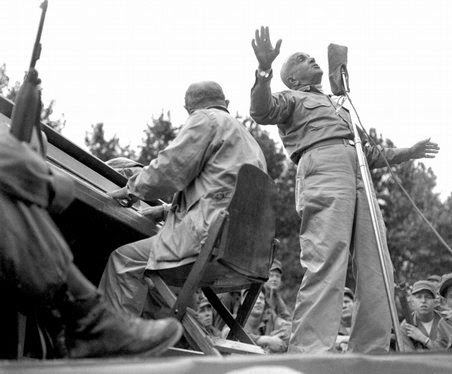
During World War II and the Korean War, Jolson also kept busy entertaining U.S. troops around the world. Shortly after returning from a trip to Korea on October 23, 1950, Jolson was playing gin rummy with friends in the St. Francis Hotel in San Francisco when he suffered a fatal heart attack. Jolson died in Room 1221 at the hotel -- the same room where Virginia Rappe was allegedly attacked by comedian Roscoe "Fatty" Arbuckle in September 1921.


An estimated 20,000 people showed up at Temple Israel on Hollywood Boulevard for Jolson's funeral services. George Jessel delivered a memorable eulogy -- despite the fact that Jolson had once told his wife that he specifically didn't want Jessel to speak at his funeral. Jolson was first buried at Beth Olam Cemetery, a small Jewish cemetery that was part of Hollywood Memorial Park, until a more appropriate burial site could be prepared. Jessel, Jack Benny and Eddie Cantor were among Jolson's pallbearers -- and all would eventually join him at Hillside Memorial Park.

Jolson's widow, Erle, purchased a plot at Hillside for $9,000, and paid another $75,000 for the monument, which was designed by architect Paul Williams. The six-pillar marble structure is topped by a dome, next to three-quarter-size bronze statue of Jolson, eternally resting on one knee, arms outstretched, apparently ready to break into another verse of "Mammy." The inside of the dome features a huge mosaic of Moses holding the tablets containing the Ten Commandments, and identifies Jolson as "The Sweet Singer of Israel" and "The Man Raised Up High."


Erle said Jolson once told her that he wanted to be buried near a waterfall, so the cemetery management provided the 120-foot, blue-tiled cascade of water. There was some public discussion at the time whether Jolson's monument was a little too much, a little too ostentatious, even for the man who described himself as "The World's Greatest Entertainer." A columnist for the Los Angeles Mirror newspaper wrote that the memorial was in bad taste. But others have said the memorial was an appropriate match for Jolson's healthy ego.

It's also interesting to note the memorial for Jolson, who often performed in blackface, was designed by one of the first well-known black architects in southern California. Though Paul Williams was best known for designing homes for celebrities -- his client list included Lon Chaney, Lucille Ball and Desi Arnaz, Bert Lahr, Tyrone Power, Barbara Stanwyck, Zsa Zsa Gabor and Frank Sinatra -- he also designed the spider-shaped building at the center of Los Angeles International Airport, the Knickerbocker Hotel in Los Angeles, and the Pearl Harbor Memorial in Honolulu, HI.

Jolson's body was moved to Hillside on Sept. 23, 1951, nearly a year after his death, and another memorial service was held. This time, Jack Benny delivered the eulogy...

Monday, May 9, 2016

CELEBRITY ADS: AL JOLSON

In 1928, Al Jolson was considered the greatest entertainer in the world, and justifiably so. His role in the first talkie The Jazz Singer (1927) revolutionized the movie industry. Here is an advertisement from 1928 (the year my Grandfather was born) as Jolie is promoting Lucky Strike cigarettes. I love how the advertisement says no throat irritation and no cough. Are they even allowed to make Lucky Strikes anymore?!?!?!  If you look closely, Jolson was also starring in his next movie The Singing Fool...


Monday, August 24, 2015

THE SILENCE AFTER SOUND: HOLLYWOOD'S LAST SILENT MOVIES

Here is an excellent story I found about the death of silent movies. It is much better than anything I could write...


October 6, 1927 remains one of the most decisive days in the history of pop culture. It changed the course of an industry, the expectations of the public, and forever altered the form of an art.The event was the first public presentation of Warner Bros.’ The Jazz Singer starring Al Jolson—which was the first film to feature talking sequences. While experiments with sound dated back to the earliest days of cinema, it wasn’t until the introduction of Vitaphone (in which sound was recorded on a disc and then synchronized with the projector for proper playback) in 1926 that sound seemed a distinct possibility. Vitaphone’s trial run was synchronized musical accompaniment to the otherwise silent Don Juan, as well as several short subjects that featured lip-synced dialogue. Don Juan proved that a huge orchestra was no longer necessary to provide a symphonic score to a motion picture: now even the smallest theaters had the potential to wow audiences with the sounds of a full orchestra. The days of the silent picture accompanist were now numbered. But it was The Jazz Singer that really spelled the end of an era. Even though the movie was still only part-talkie and was largely silent with intertitles, it showed exhibitors and producers that audiences craved talking and singing and crying and laughing. They wanted sound pictures.

It was now up to the industry to catch up, and decide how to make “talkies” an economically viable reality. Fox’s introduction of Movietone (a sound-on-film process that replaced the necessity of synchronizing projection with a disc) only further cemented the industry’s investment in sound picture production. However, as historian Lewis Jacobs describes, there was still plenty to work out.

The entire industry, now in a panic, rushed into the production of sound pictures, hoping to make up for lost time… Major companies at first tried to play the game from all sides. Their production schedules included part-talkies, all-talkies, sound films, and silent films, the common supposition being that eventually the talkie would merely share the screen with the silent movie. But as time went on and more theaters were wired for sound, it became apparent that the talkies were entirely supplanting the “silents.”


The switchover from silent to sound in the American film industry, which began in late 1927, was primarily complete by 1929 (though even in that year silent pictures continued to be produced, though at a heavily reduced rate). And while the transition took longer overseas (as late as 1936 Yasujrio Ozu was still making silent films in Japan), the dominance of Hollywood in the world market assured that sound would soon become an international phenomenon.

All of which begs to ask, what happened on American screens in 1928? It was a pivotal year in the transition, an entire year in which silent and sound pictures shared theater marquees, and when both were viable commercial artforms. Though silents would still exist in 1929, their era was not just numbered—it was practically over. And while Charlie Chaplin would continue to make two silent films in the 1930s (City Lights and Modern Times), both are certainly anomalies and do not represent the dominant trends in the industry (and were also produced by his independent company and not by major Hollywood studios). Thus 1928 was truly a special year, in which the innovators of an art were able to continue making pictures with a clear end in sight.

How did filmmakers – actors, directors, writers, and all the other professionals that comprise a movie crew – respond to the silent screen’s last call? One thing is for certain: the silent cinema was far from dead. It was thriving with innovation, artistry, and entertainment. Moreover, the artform was still continuing to grow. With the influx of German émigrés such as F.W. Murnau and Paul Leni, expressionism was reinvigorating Hollywood and cinematography. Filmmakers as varied as Frank Borzage, John Ford, King Vidor, and Paul Fejos, were taking expressionism and, more than just giving it their own spin, were turning it into an fully American style that would come to dominate Hollywood production for the next several decades.

1928 also marks a division, of sorts, between two different eras of Hollywood idols. Many of the craftsmen behind the scenes continued to have successful careers well into the sound era, particularly directors such as Ford, Vidor, and Borzage. Sadly, Murnau and Leni suffered untimely deaths – Leni in 1929 of blood poisoning, and Muranu in 1931 in a car accident – that cut short their careers. As it is, we can only speculate of the heights they could have attained, had they the opportunity to continue making movies.


The faces of the silent screen, however, would be noticeably different. Lillian Gish, Douglas Fairbanks, Mary Pickford, Louise Brooks, and even Charlie Chaplin—these were the first generation of Hollywood royalty. But after the coming of sound, their careers would be severely diminished, at least on-screen. Chaplin’s productivity halted to a couple films per decade; Gish worked mainly on the stage, and later on television, returning to the cinema only on rare occasions; Pickford and Brooks gave up after a few sound picture, as did Fairbanks. Comedians such as Buster Keaton, Harold Lloyd and Harry Langdon were still active into the talking era, however their status was marginal compared their hay days in the 1920s. Other actors, however, such as Greta Garbo, Joan Crawford, and Gary Cooper (to name only a few) would continue successfully into the sound era.

Did the “talkies” kill the “silents”? In some ways, yes, the rivalry is as simple as that. Hollywood has always been an industry, and it always goes in the direction of profit. When “talkies” promised increased revenue, that’s where producers invested their time and money. But in other ways, the “talkies” never killed the “silents” because silent cinema never truly died. While some of the personnel were not able to make the transition, others certainly did. And while it took some years for sound technology to catch up to the sophistication of the camera, once it became a tool rather than a hindrance, the camera began to move with the same grace it did during the silent era. But most important, silent cinema never died because we still have the films. That so many are still lost and will never be recovered is an undeniably tragedy, but those do survive continue to astound, entertain, and inspire viewers some eighty years later…


SOURCE


Saturday, March 21, 2015

ROSE OF WASHINGTON SQUARE: A 1939 REVIEW

Buried in a year of releases with Gone With The Wind and The Wizard Of Oz, Rose Of Washington Square has always been a favorite musical of mine. Here is the New York Times review as it appeared on May 6, 1939...


Twentieth Century-Fox Strolls Down Melody Lane in 'Rose of Washington Square,' at the Roxy

Twentieth Century-Fox's latest tour down Melody Lane has come to the Roxy under the blushing title "Rose of Washington Square," the Rose being neither Al Jolson nor Tyrone Power (as we had feared), but Alice Faye, who flowers lushly in the cabarets and flounces of the post-war years.

Obviously designed as a thematic sequel to "Alexander's Ragtime Band," the picture makes much the same capital of its sentimentally evocative score, its nostalgic reminders of the speakeasy era, its delicate reminder that the Nineteen Twenties already have become a "costume period."


Bearing the usual prefatory denial of any factual basis, the film tells the story of the loyal Ziegfeld star who married a thief and confidence man, stuck by him through his disgrace and poured all her love and faith into the song "My Man," which she sobbed out each night from the Ziegfeld stage. Miss Faye doesn't resemble Fannie Brice; she doesn't sing "My Man" as well, either. If she did, of course, it would have been just too coincidental.

Nunnally Johnson, who wrote the script, has not succeeded in giving it appreciable dramatic power. Miss Faye's heartbreak never seems to be much deeper than her make-up. Mr. Power's Bart Clinton, an almost equally superficial study in weak criminality, is not afforded a single scene by which his ultimate romantic regeneration can satisfactorily be explained. Mr. Jolson, playing himself and doing it extremely well, is the only member of the starring trio whose performance has warmth and vitality.
Atmospherically, however, the picture has interest. Mr. Jolson's singing of "Mammy," "California, Here I Come" and others is something for the memory book. So is Miss Faye's full-mouthed chanting of "The Vamp," "Rose of Washington Square," "I'm Just Wild About Harry" and a few others. Mr. Johnson would have been wiser, we believe, to have built his tale about Mr. Jolson's career. The picture was at its best when the Mammy specialist held the spotlight...


SOURCE

Wednesday, March 11, 2015

RIP: ALBERT JOLSON - SON OF JOLSON

Albert Jolson, a Nashville recording studio owner and the son of legendary entertainer Al Jolson and Erle Galbraith Jolson, died March 4 in Nashville following a two-month battle with pneumonia. He was 67.

Jolson, known to family and close friends as “Jolie,” created Al Jolson Enterprises and shortly thereafter opened a recording studio and music publishing business. In 1988, he purchased a large recording studio from Monument Records. The studio, named Masterlink Studio, was a staple on Music Row for decades. Moreover, Jolson expanded his recording business duplicating audio cassettes and later compact discs. After he retired, he sold his company in 2012.

Upon his mother’s death in 2004, Jolson gained the rights to Al Jolson’s legendary Decca Records recordings, which are now housed at MCA.

Asa Albert Jolson, was born in California and lived with his mother and father in Encino until Al Jolson’s sudden death in 1950 following a strenuous tour of Korea and Japan entertaining U.N. troops. Two months later, President Harry Truman posthumously awarded Al Jolson the Medal for Merit. On behalf of President Truman, Secretary of Defense George C. Marshall, awarded Erle Jolson and their son, Asa Albert, the Medal for Merit in a small ceremony in Marshall’s Washington, D.C., office.

In 1951 Jolson’s mother, Erle, married playwright, Oscar-winning screenwriter and co-studio head of RKO Pictures Norman Krasna. In 1959, Norman and Erle and their children moved to Switzerland. While Krasna busied himself writing the screenplay to Fox’s 1960 Marilyn Monroe starrer “Let’s Make Love,” Jolson was schooled at Ecole Nouvelle in Lausanne followed by the College de Leman in Versoix. He later attended the American College of Switzerland in Leysin where he studied business.

In 1969 Jolson was involved in a car accident in the Swiss Alps that nearly cost him his life. He remained in a coma for six months. Following a decade of painstaking therapy, Jolson relocated to Nashville, where he studied sound engineering at Belmont University.

Jolson donated all of Al Jolson’s memorabilia to the Tennessee State Museum. In 2013 they opened a small exhibit at the War Memorial titled “You Ain’t Heard Nothin’ Yet. Al Jolson Entertains American Troops.”

Jolson is survived by a daughter, Katharine; a granddaughter; two sisters; and a brother.


Sunday, December 7, 2014

AL JOLSON AND WORLD WAR II

Al Jolson was one of the greatest entertainers for the good part of two decades. However, by 1940 he was a faded star. Audiences swooned singers such as Bing Crosby and newcomer Frank Sinatra. Even though he was forgotten, Jolson lobbied to entertain the troops overseas and in June of 1942 arrangements were made to send him to Alaska, via Seattle and Washington. As Al reported in a dispatch to Variety: “We arrived in Anchorage at 9:10 p.m., Anchorage time, and stayed at the Westward Hotel. When they told me to observe the blackout regulations and put my lights out I had to laugh, for in this part of Alaska at midnight you can thread a needle on Main Street. We gave two performances in Anchorage, each for an audience of 1,500 soldiers. Each show lasted an hour and I almost wore out the knees of my pants singing ‘Mammy’.

Al didn’t mention that rumours had swept the camp at Anchorage that Lana Turner was coming. “No she wasn’t - it was Dorothy Lamour,” some one else had said. When Jolson arrived on stage the soldiers’ disappointment expressed itself in the silence.

“Hello boys - I’m Al Jolson. You’ll see my name in the history books.” One soldier laughed, then another. Al told a joke, and another, and the laughter grew. He chatted about home, told them what he thought of Hitler and Hirohito and the laughter spread all round. Someone called for a song. Al gave them what they asked for and he was swamped by whistling applause. Al Jolson had found a new audience; and the soldiers had discovered Al Jolson.

Jolson: “Don’t you feel well, son?”
Soldier: “Oh, yessuh, Mista Jolson. It was on’y when you got to singin’ about Dixie. Well, Mista Jolson, it jest kinda got me - thass all . . . You know Mista Jolson, dis heah Arctic Ocean is an awful long way f’m tu-tty miles t’other side of Bummin’ham, Alabama.”

“Until now,” Al reported to Variety, “the transporting of our small piano had been an overture to an aspirin tablet, but from here on in it became a major headache. In order to entertain all the boys detailed in the vicinity of Anchorage, it became necessary to give shows in foxholes, gun emplacements, dugouts, to construction groups on military roads, in fact, any place where two or more soldiers were gathered together, it automatically became a Winter Garden for me and I gave a show. Imagine carting the piano to these locations. Sometimes it was by truck, once on a side car and once on a mule pack.”


It was during the Alaskan tour that one young soldier called out: “Kiss my wife for me when you get back to New York, will yer Al?”

“I’ll do better than that,” Al called back. “I’ll take her out to dinner. What’s her name?”

After writing her name down with her telephone number, he called out: “Any more?”

Everyone shouted at once and Al wrote down as many names as he could.

“I’ll call them all when I get back,” he said. And he did, informing mothers, wives and girlfriends that their loved ones were in fine shape. Jolson spent time talking to the servicemen, establishing a relationship, till his arrival in a jeep was always met by a collective: “Hiya, Al!”

Stopping soldiers in the street, Jolson would say: “My name’s Jolson. Do you wanna hear me sing?”

‘Next Town Reilly’ was a one man Department of Morale Boosting. “Those guys wouldn’t exactly be immune to a shapely dish once in a while, too,” Al told the USO, “whether she could sing or not.”

Jolson: “We woulda brought Lana Turner but she’s busy with the Second Front.”


In July 1942 Jolson and Fried toured all the US bases in the Caribbean before the USO flew them, along with actress Merle Oberon and singer Patricia Morison, to England and Northern Ireland. Singing whatever was wanted, wherever he wanted, even to troops on street corners, he enjoyed every round of applause. He told servicemen what he had told their fathers about English beer: “It should have been put back into the horse.”

The troupe had been scheduled to appear at the London Palladium with Ben Lyon and Bebe Daniels but Merle Oberon refused to appear. “We are here to entertain the troops, not the general public,” she said. Jolson was furious and announced he was returning to the United States - alone. “I just feel that I could better on my own than I could as a member of a troupe,” Jolson explained to the New York Times. “If I want to crowd in an extra show for defence workers in factories, I’d be able to do it.”

Jolson hadn’t ‘gone over’ as well as he hoped with some of the English audiences and as he sat depressed in the bar of the Savoy Hotel, Ralph Reader walked in whistling ‘Keep Smiling at Trouble’.

“English, English!” he excitedly greeted Ralph and they reminisced about their days at the Winter Garden. “They were great days, English, great days,” he said with a tear in his eye.

New York Times: “There were few jokes in his talk. The comedian was playing a straight part . . . For, like many other comedians, at heart, Jolson is serious and sentimental.”
New Yorker: “We’ve just heard from a soldier who was fortunate enough to be on hand at one of the entertainments presented before the troops in Ireland by Jolson and some of the other performers from the States. Jolson, our soldier reports, concluded the entertainment with what was obviously considered to be the best number in his repertoire. It was ‘Brother Can You Spare a Dime?’ - and Jolson gave it, as the people say, everything. No other happening in recent weeks has given us such a sense of this significant moment in history.”

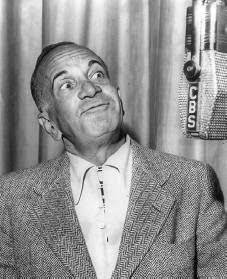
‘The Colgate Show Starring Al Jolson’, a weekly radio show that CBS signed Jolson to do, ran until June 1943. Usually opening the show with an up-tempo number like ‘The Yankee Doodle Blues’, or “I’m Sitting On Top of the World’, he usually ended with a sentimental ballad like ‘Sonny Boy’. The show’s female vocalist was Jo Stafford and the musical director was Gordon Jenkins.

Gordon Jenkins commenting on Judy Garland and Frank Sinatra: “Neither one, I have to tell you, had the electricity that Al had.”


In July 1943, Al left on an overseas tour to entertain the troops. Since Martin Fried had been drafted, Al needed a pianist to accompany him and asked his friend Harry Akst. At their first stop, Georgetown, British Guiana, Al found he couldn’t reach the high notes at the close of ‘Swanee’. In a panic, he was ready to give up the whole tour. Harry had to convince him that he didn’t have to cash in on high finishes - Crosby didn’t. “They died with vaudeville,” Harry explained.


The new Al Jolson voice was born - not so light and breezy but deeper and more mellow.

Jolson had already cancelled his thirteen Colgate radio shows programmed for the fall when he suddenly began to feel bad. In an emergency flight, Al and Harry flew home to Miami Beach on 21 September 1943. Less than two weeks later while standing in a hotel lobby in New York, Jolson suddenly collapsed. Jolson woke up in a hospital bed to find he had picked up malaria from overseas and it had turned into pneumonia. His temperature reached 105F and doctors had to contact a military hospital for the proper serum before he began to recover. “No more overseas tours for you,” the doctors told him. After recuperating in Miami he went back to work playing himself in a film biography of George Gershwin called Rhapsody in Blue.

In October, Al and Harry began another tour of army hospitals. Winding up in Florida, they then drove up to New York, before driving west playing to a string of hospitals en route to California. By the time they reached Los Angeles, Al was complaining of feeling run down. Suddenly struck down by severe chest pains, Al was rushed into the Cedars of Lebanon Hospital. Malaria had struck again and this time with a malignant strain to it.

The Warner brothers, Harry and Jack, were gravely concerned and requested General Arnold, head of the Army Air Services, to fly two of his top physicians to Los Angeles. Because of Al’s tremendous war work the request was granted. The doctors saved his life but had to remove parts of two ribs and cut a malignant slice out of his left lung. Not allowed any visitors for a week, Jolson told his nurse: “I’ll never sing again.” Fortunately for soldiers and the world, Jolson would sing again...


Thursday, September 4, 2014

HISTORY OF A SONG: SWANEE

Despite all his later accomplishments, this career-making hit for Gershwin would remain the biggest hit of his entire life. Written on a train ride with Caesar one New York afternoon as a parody of Stephen Foster's "Old Folks at Home", it was introduced in the Broadway revue Demi-Tasse. The song had little impact in its first show, but not long afterwards Gershwin played it at a party where Al Jolson heard it. Jolson then put it into his show Sinbad, already a success at the Winter Garden Theatre, and recorded it for Columbia Records in January 1920. "After that," said Gershwin, "Swanee penetrated the four corners of the earth.".

The song was charted in 1920 for 18 weeks holding No. 1 position for nine. It sold a million sheet music copies, and an estimated two million records. It became Gershwin's first hit and the biggest-selling song of his career; the money he earned from it allowed him to concentrate on theatre work and films rather than writing further single pop hits. Arthur Schwartz said: "It's ironic that he never again wrote a number equaling the sales of Swanee, which for all its infectiousness, doesn't match the individuality and subtlety of his later works."
Jolson recorded the song several times in his career, and performed it in the movies The Jolson Story (1946), Rhapsody in Blue (1946), and Jolson Sings Again (1949). For the song's performance in The Jolson Story, Jolson, rather than actor Larry Parks, appeared as himself, filmed in long shot. Although usually associated with Jolson,

Swanee" has been recorded by many other singers...
Recorded By: Al Jolson (numerous times)
Judy Garland (numerous times)
Bing Crosby (numerous times)
Buddy Clark (on radio)
Jaye P. Morgan
Rufus Wainwright
The Temptations


Saturday, July 12, 2014

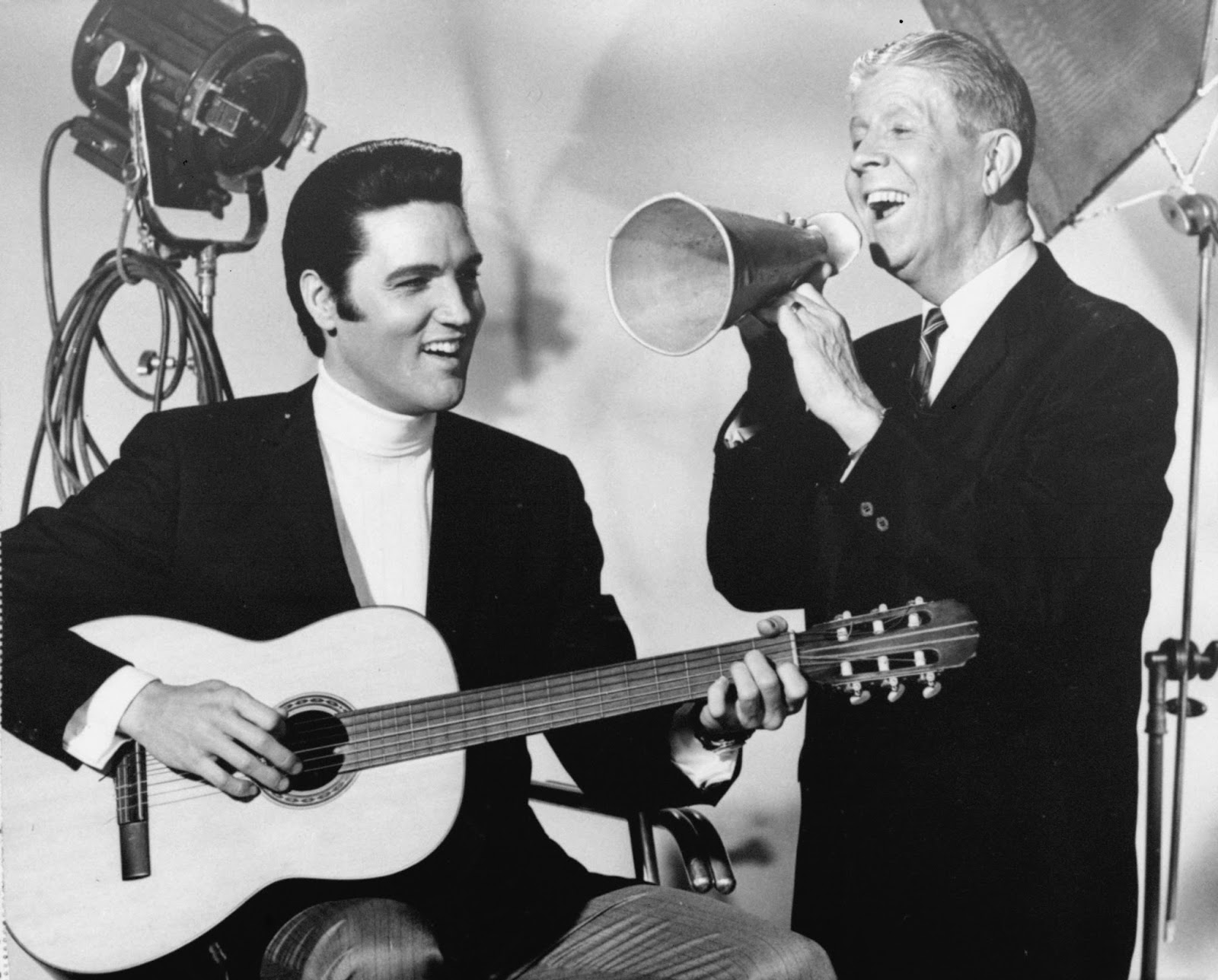
PHOTOS OF THE DAY: EVEN MORE ODD PAIRINGS

This is the third addition of this series. I love featuring different pairings of movie stars in pictures that you are used to seeing together. There always seems to be different photos that I discover:


ELVIS PRESLEY and RUDY VALLEE

CHARLIE CHAPLIN and AL JOLSON


MICHAEL JACKSON and FRED ASTAIRE


EDDIE CANTOR, JUDY GARLAND, GEORGE JESSEL

MARY TYLER MOORE and JIMMY DURANTE

GROUCHO MARX and JAYNE MANSFIELD


Wednesday, July 9, 2014

HARRY JOLSON: THE FORGOTTEN JOLSON

Although Al Jolson was considered the greatest entertainer of all time, there are very few snippets of information about Al Jolson's brother, Harry. Harry Jolson was born in 1882. A few years older than Al, he preceeded Al into show business, and following his older brother to New York provided Al Jolson's initial entry into the world of entertainment. Harry Jolson was the fourth and child of Moses Reuben and Naomi (Cantor) Yoelson; his four siblings were Rose, Etta, another sister who died in infancy, and of course Asa (aka Al Jolson).

In 1891, his father, who was qualified as a rabbi and cantor, moved to New York to secure a better future for his family. By 1894, Moses Yoelson could afford to pay the fare to bring Naomi and his four children to America. By the time they arrived, he had found work at the Talmud Torah Synagogue in the Southwest Waterfront neighborhood of Washington, D.C., where the family was reunited. Hard times hit the family when his mother, Naomi, died in late 1894.

According to several sources, the boys entertained together on the streets of Washington, DC, providing the nascent chemistry for their early stage acts. In 1929, Harry Jolson appeared in the film The Voice of Hollywood, in a short comedy routine, with Lola Lane.

Through their lives, their careers diverged and intersected. Harry often played a venue after Al, Al would hire Harry as his manager, some say to keep him off the stage. Some reports say that Harry had a better voice than Al; the paucity of recordings of Harry and the performance records of the brothers would belie that supposition.

Whatever animosity there was seemed to dim following Al Jolson's passing, with Harry Jolson appearing on a television program in tribute to his later brother, and recording a eulogy to "my brother Al." In 1948, Harry's wife Lillian died at the age of 58 of a heart ailment, and he was never the same. His brother Al died in 1950. Three years after Al Jolson passed away, his older brother, Harry, left us, as well. In contrast to the elaborate Jolson gravesite, Harry's grave has but a simple marker...