
Showing posts with label Bob Hope. Show all posts
Showing posts with label Bob Hope. Show all posts
Wednesday, March 11, 2026
STORY BEHIND THE PHOTO: 1998 EMMY AWARDS
Here is a very rare appearance by the Mount Rushmore of television comedy. On September 13, 1998 Milton Berle, Sid Caesar, and Bob Hope appeared together on the Emmy Awards telecast. At the time Milton Berle was 90, Bob Hope was 95, and Sid Caesar was a young 76. Berle passed away first in 2002, Hope in 2003, and Sid lived until 2014...


Thursday, June 5, 2025
BING CROSBY AND BOB HOPE: FRIENDS OR RIVALS?

When Bob went out to Hollywood in 1937, he got friendly again with Crosby on the Paramount lot and they became good friends. They entertained together at [the] Del Mar racetrack, where Bing was a part owner and Paramount executives saw their act onstage together and said, "Hey, these guys might work together in a movie."
So they geared up a movie that ended up being called Road to Singapore. This came out in early 1940 and it was just terrific. It was the highest-grossing film for 1940 in a year with a lot of big Hollywood films, and the audience responded instantly to the chemistry of the two of them on-screen together. They were relaxed, informal — they seemed to be friends authentically, not just movie characters. The movie was so much fun that it launched a series.

They were friends and they loved working together, but they were not close friends. They were very different personality types. ... Bob was someone who loved being famous and loved being out there as a star and he loved talking to fans and he was basically a happy guy. Bing was much more ambivalent about his stardom, I think. He was more reclusive. He didn't like the Hollywood scene; he moved up to Northern California halfway through his career. He didn't like showing up at things. There was a famous Friars Club Roast for Bob Hope in the late '40s and every major comedy star — from Milton Berle, George Jessel, etc. — were there. ... And [Bing] didn't show up. I think that bothered Bob a little bit.
I think there was a slight bit of resentment there. I think also Bob envied Bing in the early years, particularly. Bing was more successful and Bing was a smart businessman. Bob learned a lot from him. I think that there was a little bit of a rivalry. Like so many movie pairings, they were great on the screen but offscreen it might have been another story. They were friendly, but when Bing died in 1977, I do not think Bob Hope was one of his close friends, although Bing's wife Kathryn did invite Bob Hope to his funeral. Bing preferred the friendship of Phil Harris. With Harris, Bing could be himself. With Bob Hope, Bob always needed to have an audience and be "on". Bing did not need that...

Tuesday, December 24, 2024
PHOTOS OF THE DAY: ANOTHER CLASSIC HOLLYWOOD CHRISTMAS
I hope everyone is having a cool Yule this year! I love these classic Hollywood Christmas pictures. It was truly a glamourous time in Hollywood...
 |
| Carole Lombard |
 |
| Bob Hope & Doris Day |
 |
| Jackie Gleason |
 |
| Piper Laurie |
 |
| Tony Bennett |

Other classic Hollywood Christmas:
Saturday, November 25, 2023
THE BOX OFFICE STARS: 1950
As we entered a new decade in 1950, movie audiences were beginning to change as well. Who they were going to see on the movie screen was changing as well. Here are the biggest box office draws in 1950...

1. JOHN WAYNE
2. BOB HOPE
3. BING CROSBY
4. BETTY GRABLE
5. JAMES STEWART
6. ABBOTT/COSTELLO
7. CLIFTON WEBB
8. ESTHER WILLIAMS
9. SPENCER TRACY
10. RANDOLPH SCOTT
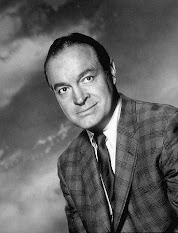


2. BOB HOPE
3. BING CROSBY
4. BETTY GRABLE
5. JAMES STEWART
6. ABBOTT/COSTELLO
7. CLIFTON WEBB
8. ESTHER WILLIAMS
9. SPENCER TRACY
10. RANDOLPH SCOTT


Saturday, August 19, 2023
THE BOX OFFICE STARS: 1949
After five years at the top of the box office powerhouses, Bing Crosby was dethroned as king of the box office in 1949 by none other than Bob Hope!

Here are the top box office stars of 1949...
1. Bob Hope2. Bing Crosby
3. Abbott & Costello
4. John Wayne
5. Gary Cooper
6. Cary Grant
7. Betty Grable
8. Esther Williams
9. Humphrey Bogart
10. Clark Gable


Wednesday, June 7, 2023
THE CHILDREN OF BOB HOPE

Comedian Bob Hope and his wife Dolores were married for decades. They were married in 1934 and remained married until Bob's death in 2003 - an impressive 69 years together. The couple never had any biologicial children together, but they did adopt four children that you might not know too much about...
 |
| Linda Hope |
LINDA HOPE (born in 1933)
Linda Hope is the eldest daughter of Bob and Dolores Hope. She is the producer of the Emmy Award–winning TV special Bob Hope: The First 90 Years. She also wrote My Life in Jokes, a collection of jokes honoring her father’s one hundredth birthday. Linda produced his TV shows for over twenty years, ran Hope Enterprises, and has spent the last two decades perpetuating her father’s legacy. Originally married in 1969, Linda in recent years came out as a lesbian. In 2012, Linda held a garage sale at her father's estate in order to give his fans some momentos of her father's life. In 2020 Linda published another book of memories of Bob Hope titled Dear Bob: Bob Hope's Wartime Correspondence with the G.I.s of World War II, which one numerous publishing awards in 2021.

 |
| William Hope |
WILLIAM HOPE (born in 1937)
Not much is know about Bob and Dolores's second adoptive child. His profession has been listed as an actor, although his roles are not many. According to his IMDb profile, William is known for That Certain Feeling, This Is Your Life (1955), and The Bob Hope Christmas Special (1969). William Kelly Francis Hope has lived a private life off publicity. His whereabouts as of 2022 are not known.
 |
| Anthony (Tony) Hope |
ANTHONY HOPE (1940-2004)
Sadly, Bob and Dolores' third adopted child passed away in 2004 from s a stroke. Known as Tony, he made a try at politics in 1986, entering the California Congressional race to fill the seat vacated by Representative Bobbi Fiedler, a Republican. Despite name recognition, Mr. Hope was beaten in the primary. Mr. Hope served in several federal roles. President Gerald R. Ford appointed him to the Overseas Private Investment Corporation, President Jimmy Carter named him to the Government Management Improvement Council and President Ronald Reagan appointed him to the Grace Commission, which was formed to find waste and fraud in the federal government. The first President George Bush appointed Mr. Hope as chairman of the gaming commission, which oversees the gambling enterprises of American Indian tribes. He was well known and liked in D.C. politics. |
| Nora Hope |
NORA HOPE (born in 1946)
Like her older brother William, Nora (Eleanora) has mostly stayed out of the limelight. William and Nora were adopted by the Hopes in the same year, 1946. She married her high school sweetheart Samuel Boyd McCullagh Jr in 1969, but later divorced him. (He passed away in 2021 after a long illness).
Despite Bob Hope being away from his family for long periods of time, and reports of his many infedelities from the 1930s until the 1990s, there has been no "daddy dearest" books, and from all accounts the children had a happy life. I guess this gives hope (no pun intended) for other children of Hollywood royalty!

Sunday, April 30, 2023
FRANCES LANGFORD: THE GI NIGHTINGALE - PART TWO

Her showstoppers with Hope were “Embraceable You,” “You Made Me Love You,” and “I’ll Be Seeing You.” There was always lots of jostling and lots of wolf-whistling when Langford appeared, but when she began singing everyone went completely still and silent. Hope said, “She knows just how much sex to pour and still be dignified.”
Langford and Hope’s troupe had some other close calls. In the summer of 1943, Hope brought his troupe to a very-recently liberated North Africa and Sicily through the USO Camp Shows Division, which was established to bring entertainment directly to those fighting overseas. The entertainers experienced what it was like to take cover in basements and in foxholes during bombing raids. After witnessing a harrowing Luftwaffe raid on Bizerte from a ditch outside of town, Hope joked that “When it was over, she helped me crawl out and get to the car. I don’t think she carried me, but knowing Frances, she probably tried.”
One columnist referred to Langford as a “one woman blitz” and said that she acted as a sort of “Fairy Godmother” to the GIs. Indeed she was called “Mother Langford” by Hope and by the other members of the troupe, even though she was ten years younger than Hope. In summer 1944, when the troupe toured the Pacific, they were joined by another female member, Patty Thomas. Langford took on the role of older sister and friend. They stayed very close for the remainder of their lives.

During the war, Langford, like Hope and Colonna, wrote about her travels. Purple Heart Diary was Langford’s column for Hearst newspapers, in which she recounted episodes from her visits to wounded troops in hospitals across the country. In 1951, the column was turned into a film, starring Langford. Even though Langford performed hundreds of shows during the war all over the world in a variety of settings, the bedside and wardroom performances in military hospitals became her signature appearances. Although emotionally taxing, this work was extremely gratifying. She often recounted how she would sneak away after a song to cry, always wanting to remain calm and cheerful to her audiences.
From 1946-1951, Langford starred with Don Ameche as part of the verbal sparring married duo, The Bickersons, a popular radio comedy. She later left Hollywood, returning to her native Florida, where she opened a Polynesian club and marina in Jensen Beach. When Langford married her third husband in 1994, Patty Thomas served as her Matron of Honor. Langford died in Florida on July 11, 2005 at age 92. Her voice would live on in the memories and imaginations of a million GIs....
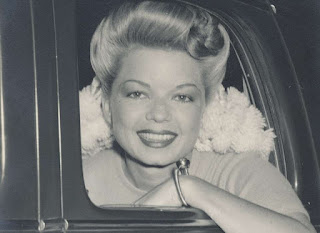
From 1946-1951, Langford starred with Don Ameche as part of the verbal sparring married duo, The Bickersons, a popular radio comedy. She later left Hollywood, returning to her native Florida, where she opened a Polynesian club and marina in Jensen Beach. When Langford married her third husband in 1994, Patty Thomas served as her Matron of Honor. Langford died in Florida on July 11, 2005 at age 92. Her voice would live on in the memories and imaginations of a million GIs....
THE END

Sunday, April 23, 2023
FRANCES LANGFORD: THE GI NIGHTINGALE - PART ONE

Frances Langford was a core member of Hope’s troupe. She joined him on his first performance for troops at March Field in California in May 1941, then toured with him on his initial long overseas tour in the summer of 1943, and then again in 1944.
By the time Langford joined up with Hope, she was already an established star and vocalist. Langford was born in Florida in 1913. Like Hope, she began her career in vaudeville and then followed it up with radio performances. Her rich tone was perfectly suited for love songs, including her signature, “I’m in the Mood for Love.” She debuted the tune in the 1935 film comedy, Every Night at Eight, in which she plays a young singer working with a bandleader, Tops Cardona.

In 1942, Hope assembled a troupe to undertake a tour for those he called “God’s Frozen People,” in Alaska and the Aleutians. Langford was always at the top of the list. Flying in military transports was risky, accommodations spartan, and they weren’t quite sure what to expect when they arrived at their destinations, but she was game.
On the first trip to Alaska and the Aleutian Islands, Frances was the only female member of the group. At some of the larger stops, like Fairbanks, Frances would bunk in the nurses' quarters. But at other places along the tour, there were no accommodations for women and these had to be improvised. Frances showed an adventurous streak on this Alaskan trip as well. The flights were often through ice and snow storms. During one flight from Cordova to Anchorage, the pilot ordered everyone to put on their parachutes and lifebelts. Frances wrote, “This thrilled me more than anything for I’ve always had a desire to make a parachute jump and it really looked like the time had come. Bob and Jerry [Colonna] were really surprised when they saw how excited I was. They thought I would be scared to death and probably pass out completely.” Although the pilot successfully landed the plane, Langford described it as one of the most thrilling experiences of her life...

On the first trip to Alaska and the Aleutian Islands, Frances was the only female member of the group. At some of the larger stops, like Fairbanks, Frances would bunk in the nurses' quarters. But at other places along the tour, there were no accommodations for women and these had to be improvised. Frances showed an adventurous streak on this Alaskan trip as well. The flights were often through ice and snow storms. During one flight from Cordova to Anchorage, the pilot ordered everyone to put on their parachutes and lifebelts. Frances wrote, “This thrilled me more than anything for I’ve always had a desire to make a parachute jump and it really looked like the time had come. Bob and Jerry [Colonna] were really surprised when they saw how excited I was. They thought I would be scared to death and probably pass out completely.” Although the pilot successfully landed the plane, Langford described it as one of the most thrilling experiences of her life...
TO BE CONTINUED...

Friday, October 14, 2022
TIME MAGAZINE REMEMBERS BING CROSBY - PART TWO

The effect was just what the Crosby sound needed. In earlier work he sang with much jazzier effects. An artist in search of a personal style, he listened hard to Al Jolson, Mildred Bailey and Louis Armstrong. Finally Bing developed that mellifluous tone, a mere phrase of which causes millions of Americans to imagine the gold of the day meeting the blue of the night. Here was the voice that has sold more records than any other on earth save that of Elvis.

There was also the voice, suddenly made famous on radio, that inspired Hollywood to cast Crosby in the feature picture (Paramount's) The Big Broadcast that was to launch the flip side of Bing's career. In the movies as onstage, Crosby seemed always to come on singing happy, upbeat, don't-worry songs that the trouble-weary public loved during the Depression. He scored successees in such movies as Pennies from Heaven and Waikiki Wedding, but it was as the lazy, goodhearted ne'er-do-well in Sing You Sinners, in 1938, that he found the casual acting mode the public relished.
Crosby's biggest critical success was Country Girl, but his personal favorite among his movies was High Society (1956). It found him singing and dancing with Frank Sinatra at an "elegant swellegant" party and playing a concertina and crooning True Love, as only the first crooner could croon, to not-yet-royal Grace Kelly. Unlike many stars, Crosby surrounded himself with other big talents. He worked with Fred Astaire in Holiday Inn (in which he sang White Christmas), with Ethel Barrymore in Just for You and with Ingrid Bergman in Bells of St. Mary's.

Crosby's biggest critical success was Country Girl, but his personal favorite among his movies was High Society (1956). It found him singing and dancing with Frank Sinatra at an "elegant swellegant" party and playing a concertina and crooning True Love, as only the first crooner could croon, to not-yet-royal Grace Kelly. Unlike many stars, Crosby surrounded himself with other big talents. He worked with Fred Astaire in Holiday Inn (in which he sang White Christmas), with Ethel Barrymore in Just for You and with Ingrid Bergman in Bells of St. Mary's.

It may be absurd to attribute modesty to anyone in the egomaniacal world of show biz. Yet a certain diffidence adhered to Crosby even as a celebrity. In his artistry, he owned the natural jazzman's gift of blending with, rather than blaring against, an ensemble of fellow performers -- a knack never used better than in the scatty and mellow duets (Gone Fishin, for one) that he recorded with Armstrong. A similar trait made his private life seem actually private in contrast to the typical Hollywood star's. He had his troubles, heartbreak at times in his first marriage to hard-drinking Dixie Lee, who died of cancer in 1952, and again in dealing with his four sons with a penchant for mischief. In 1957 he married Kathryn Grant, 30 years younger than he, and started another family. Crosby never claimed to be an exemplary singer or exemplary anything else, and once he attributed his good reputation to his practice of admitting his sins only to the "father confessor."
He had slowed down in recent years but had proclaimed an intent never to retire completely: "I'll keep singing as long as they'll have me." A grieving Bob Hope noted that the two old Roadsters, along with Dorothy Lamour, had just finished working up plans to try one more for the Road. The film, said Hope, was to be called The Road to the Fountain of Youth...

He had slowed down in recent years but had proclaimed an intent never to retire completely: "I'll keep singing as long as they'll have me." A grieving Bob Hope noted that the two old Roadsters, along with Dorothy Lamour, had just finished working up plans to try one more for the Road. The film, said Hope, was to be called The Road to the Fountain of Youth...
REST IN PEACE- BING CROSBY 1903-1977

Sunday, April 17, 2022
THE BOX OFFICE STARS: 1944
Even with World War II raging on, America still loved going to the movies. It was a form of escape for an otherwise bleak world. In 1944, Bing Crosby was crowned king of the box office - a title he would hold for the next 5 years! Here are the top box office stars of 1944...

TOP BOX OFFICE STARS - 1944
1. Bing Crosby2. Gary Cooper
3. Bob Hope
4. Betty Grable
5. Spencer Tracy
6. Greer Garson
7. Humphrey Bogart
8. Abbott & Costello
9. Cary Grant
10. Bette Davis


Sunday, February 20, 2022
THE BOX OFFICE STARS: 1943
Continuing our look at the biggest box office stars of each year, we go to 1943 now. World War II was still raging on, and Betty Grable was the biggest box office star of the year!

BOX OFFICE STARS OF 1943:
1. Betty Grable
2. Bob Hope
3. Abbott and Costello
4. Bing Crosby
5. Gary Cooper
6. Greer Garson
7. Humphrey Bogart
8. James Cagney
9. Mickey Rooney
10. Clark Gable


Monday, April 27, 2020
STAR FRIENDS: BOB HOPE AND MARILYN MAXWELL

"I don't like Bob being away so much but I trust him absolutely," Dolores told Hollywood gossip columnist Louella Parsons. "Our marriage is stronger than ever."
Only a handful of Bob Hope's closest friends knew that Dolores was living in a make-believe world.
Her husband had fallen in love with another woman and for the next ten years was to conduct a secret love affair under the very noses of the media without a word of it being made public. Hope, then 47, had met 28-year-old dark-haired Marilyn Maxwell at MGM where she was on a five-year contract, but she hardly noticed him — she was having an affair with Frank Sinatra!
When that ended in January 1950 she re-met Bob Hope when he asked her to appear in a huge charity gala he was organising at the Hollywood Bowl. Despite being married to Beverly Hills restaurateur Andy McIntyre, Marilyn was captivated by the wisecracking star. Soon they were meeting in secret and when Hope was looking for a co-star for his latest movie comedy, The Lemon Drop Kid, he chose Marilyn Maxwell.
Soon afterwards, Marilyn confided to her hairdresser: "I'd marry Bob and I think he'd marry me, but Dolores is a strict Catholic and would never let him go.

"Their happy marriage is a sham. I know Bob loves me and is only happy with me. I don't mind staying in the shadows so long as it means we can be together."
In April 1951, after making My Favourite Spy, Hope and Marilyn Maxwell sailed for Europe on the liner Queen Mary for a promotional tour. This time gossip got back to Dolores who phoned her husband in London furious that he was publicly humiliating her. "Marilyn Maxwell is just an actress I work with," Bob Hope told her. When we're not working I never see her. Which was a little wide of the truth: the next day the couple flew for a holiday in Ireland when, according to Bob Home's long-time secretary Jean Greenberg, Hope asked Marilyn to marry him.
"She turned him down. She knew that Dolores would never give him a divorce. She also feared that if it was known that she was breaking up what was regarded as a fairytale Hollywood marriage, the big studios would never employ her again."
Added Jean Greenberg: "Bob and Dolores might appear happy together in public, but in fact they hadn't slept together in years."

In 1954 Marilyn Maxwell, who had divorced Andy McIntyre, married writer/producer Jerry Davis in 1954. But that didn't stop her passionate affair with Bob Hope. He provided her with a secret love-nest in Hollywood's Holmby Hills where they met several times a week.
By now, according to close friends, Hope had several times asked his wife for a divorce and she had refused. She had told him: "I don't care what you get up to in private. All I ask is that you don't humiliate me in public. People think we are happily married and I want that to continue."
Hope would organise private dinner parties for himself and Marilyn Maxwell in the luxurious Hollywood offices of his production company. Food would be delivered from Romanoff's, Hollywood's top restaurant, and served on silver dishes. Then the waiters would leave and Hope and his mystery guest would enjoy a sumptuous meal.
Said Romanoff's boss Kart Niklas: "Bob would never say who he was entertaining but we always knew it was Marilyn Maxwell. It was a ritual that went on for years.
Friends said that Marilyn was the great — and secret — love of Bob Hope's life. He always hoped that one day they would be married but on March 21, 1971 that dream was shattered for good.
At 49, Marilyn Maxwell was found dead in her Beverly Hills home, apparently of natural causes. Hollywood friends like Hope, Frank Sinatra, and Bing Crosby all paid for her funeral expenses...

Wednesday, November 6, 2019
BOB HOPE: THE EARLY YEARS


Bob Hope was born in a suburb of London on May 29, 1903. The family of William and Avis Hope lived in many places in England, wherever stonecutter William Hope could find work. In 1906, William followed two of his brothers to Cleveland, Ohio, and the rest of his family came in 1908.

In the early 1920s, Bob Hope dreamed that he and his Cleveland girlfriend, Mildred Rosequist, would achieve the success of the dancing sensations of the 1910s, Vernon and Irene Castle.Bob Hope's first tours in vaudeville were as half of a two-man dancing team. The act appeared in “small time” vaudeville houses where ticket prices were as low as ten cents, and performances were “continuous,” with as many as six shows each day. Bob Hope, like most vaudeville performers, gained his professional training in these small time theaters.
Within five years of his start in vaudeville Bob Hope was in the “big time,” playing the expensive houses where the most popular acts played. In big time vaudeville there were only two shows performed each day—the theaters were called “two-a-days”—and tickets cost as much as $2.00 each. The pinnacle of the big time was New York City's Palace Theatre, where every vaudevillian aspired to perform. Bob Hope played the Palace in 1931 and in 1932. And the rest was comedy history...

Friday, July 27, 2018
THE LAST DAYS OF BOB HOPE

Hope was a hit in every possible entertainment medium. He was a star in Vaudeville, a hit on the Broadway stage, and had long-running #1 radio shows. Hope starred in almost 70 movies and shorts, including the classic and beloved seven "road pictures" he made with Bing Crosby over a 22-year span from 1940 to 1962.
His television specials began in 1950 and ran for over 40 years on NBC. In their heyday, these shows garnered some of the highest ratings in television history.
Hope hosted the Academy Awards a record 18 times and is still generally acknowledged as the best-ever Oscar host by all who remember his hilarious hosing chores.
But perhaps most important and significant was Hope's ever-present willingness to entertain the American troops in four different wars.

Hope was a self-confessed ham, always needing and craving the applause and the spotlight. But after an incredibly successful career, unlike other comedy notables, including Lucille Ball and Johnny Carson, Hope just didn't know when to "get off the stage.” His health had been deteriorating and by the early 1990's, his once hilarious, sharp monologues had become ordeals, lessened by Bob's slower reflexes and delivery, and his slightly slurred speech. Nonetheless, he kept booking gigs and making appearances.
By the time of his 90th birthday, on May 29, 1993, NBC was presented with a challenge. A big celebration was clearly called for, but Bob's eyesight and hearing were so bad he could no longer carry the show on his own. The network put on a lavish three-hour ceremony in which Hope was largely a bystander.
To help him follow what was going on, Hope was given a small microphone to wear in his ear, so that his daughter Linda, who was sitting in the control room, could brief him on who was there and what was happening.
The special came off well, and did well in the ratings- it would have been a perfect "farewell" event, but Hope refused to retire. He refused to leave NBC, who obviously couldn't "fire" a national institution. He continued to do his specials on the network.

His specials -now mostly shunted to low-viewership on Saturday nights- were getting the worst ratings of his career. His family tried to coax Hope into retirement. In 1995, he planned a trip to Europe to celebrate and entertain in honor of the fiftieth anniversary of V-E day. His wife Dolores threw up her hands, “We're doing this one,” she stated firmly, "but this has got to be the last.”
Hope's last NBC special “Laughing with the Presidents,” aired on November 23, 1996. The special came off without embarrassment and Bob Hope began his "golden" years of very well-deserved (if not desired) retirement.
Besides his fading hearing and eyesight, signs of dementia were now showing. In his few public appearances, at various dinners and ceremonial events, Hope seemed disoriented and confused. His short term memory was spotty and he had trouble recognizing people.
At home, Bob settled into a comfortable routine. He still slept late, as always, waking up between 10 and 11 AM. His caretaker, J. Dennis Paulin, would read to him from the morning L.A. Times. Large-print editions were made of business documents that he needed to see.
Hope loved to watch Jeopardy! on TV (with headphones, so he could hear).
He had always loved taking late night walks, and still did, but now they were indoors, up and down the aisles of the local Von's supermarket in Toluca Lake. Paulin would let him take the wheel of his golf cart and play and drive the five blocks to lakeside to play a few holes of his beloved golf. Afterwards, he would go to the clubhouse for a fake brandy alexander.
In 1996, after a lifetime of dilatory churchgoing, Hope acceded to his devout wife's wishes and was baptized into the Catholic Church.

Reports of his failing health occasionally made the tabloids, along with unsympathetic photos of his stooped frame and red-rimmed eyes, accompanied by the usual headlines of Bob Hope's "tragic last days.”
He made a few trips to Washington for events honoring him- including a visit to the White House, where President Clinton signed a congressional resolution making Hope the first honorary veteran of the US Armed Forces. In 2000, he he was proudly present for the opening of the Bob Hope Gallery of Entertainment at the Library of Congress.
Bob lingered on for three more years- bedridden most of the time- but brought out by Dolores in a wheelchair for family get-togethers, He was, by now, almost completely blind.
On May 29, 2003, he celebrated his one hundredth birthday (he received over 2,000 birthday cards from everyone from President George W. Bush to Queen Elizabeth). Thirty-five states proclaimed his birthday "Bob Hope Day.”
Bob Hope died a few weeks later, on July 27, 2003, at the ripe old age of 100.
His last words were, fittingly, quite humorous. Towards the end, when his wife Dolores asked him where he wanted to be buried, the amazing Bob Hope quipped, “Surprise me.”

Subscribe to:
Posts (Atom)