Showing posts with label Kim Novak. Show all posts

Friday, April 20, 2018

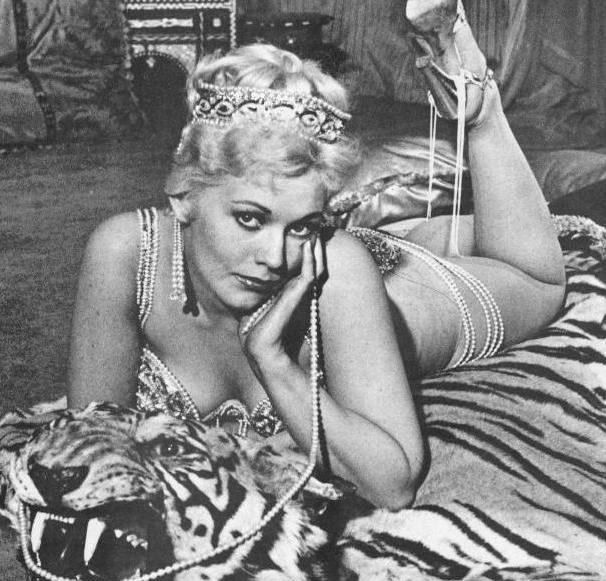
HOLLYWOOD LOVE: SAMMY DAVIS JR AND KIM NOVAK

In 1957, Sammy Davis Jr. was a rising star. He’d just completed an acclaimed performance in Mr. Wonderful on Broadway and had a popular nightclub act with his father and uncle called the Will Mastin Trio. It was a strong comeback from a car accident three years earlier, when a pipe went through Davis’s eye, permanently blinding him. For the rest of his life, he would wear a glass eye.

The accident, however did nothing to curtail Davis’s charisma and sex appeal. Hollywood starlet Kim Novak certainly noticed him. She was about to film Hitchcock’s Vertigo when she saw Davis perform in a Chicago nightclub. Though they didn’t speak much at the time, Davis wanted to get to know the actress. His friends Tony Curtis and Janet Leigh obliged by inviting both of them to a party at their house. Soon afterward, there was a blind item in a gossip column: “Which top female movie star (K.N.) is seriously dating which big-name entertainer (S.D.)?”


This bit of idle gossip was far from harmless. An affair between Novak and Davis had the potential to destroy both of their careers. In 1957, interracial marriage was illegal in half the states. Most Americans were against it. A Gallup poll from 1958 showed that only 4 percent of Americans approved of interracial marriage. On top of that, the United States Supreme Court had only recently ordered the desegregation of public schools, and the showdown in Little Rock, Arkansas, over the integration of the city’s Central High School would occur the following year. The national atmosphere was fraught with racial tension.

As a black man, Davis had been stopped from dating white women before, but this time was different. Novak was a movie star. That year, newspapers were calling her “the hottest female draw at the box office” thanks to films like The Man with the Golden Arm and Pal Joey. Columbia Pictures was grooming her to replace Rita Hayworth, who studio head Harry Cohn disliked. As the latest Hollywood sex goddess, Novak was potentially worth millions.

When he saw the gossip item, Davis called Novak to apologize for putting her in an awkward position with the studio. According to his autobiography Sammy, Novak replied, “The studio doesn’t own me!” and invited him over for spaghetti and meatballs. Soon after, they were dating.


Their affair continued for most of 1957. Davis and Novak were aware of the risks they were taking, but that, it seems, made the relationship more exciting. “She hadn’t thought about me anymore than I had thought about her—until it was forbidden,” Davis wrote in his autobiography. “Then we became conspirators, drawn together by the single thing we had in common: defiance.”

Arthur Silber, a close friend and companion of Davis, often chauffeured the couple to a rented beach house in Malibu. They went to great length to hide their relationship—Davis would sometimes lie on the floor of the car under a blanket to avoid being seen with Novak.

“It was like we were in the FBI or something,” Silber says in an interview. “I would drop him off in front of her house in Beverly Hills and we would set up a time or a day for me to pick him up.” Davis also had a private phone line installed at the Sands Hotel in Las Vegas where he worked so he could talk to Novak without the hotel switchboard listening in.

In December, Novak went home to Chicago for the holidays while Davis stayed in Las Vegas. He missed Novak so much that he found a replacement for his act and flew overnight to see her and meet her parents.


Irv Kupcinet of the Chicago Sun-Times heard about the visit and mentioned it in his column. Gossip heated up. There was a rumor Davis and Novak had taken out a marriage license. “Kim Novak is about to become engaged to Sammy Davis Jr. and Hollywood is aghast,” reported The London Daily Mirror. When Columbia Studio head Harry Cohn found out, he became enraged that his star—who he regarded as property he’d invested in—was dating a black man.The next morning, while flying to Los Angeles, he had the first of several heart attacks that would soon kill him.

By all accounts, Cohn was a ruthless studio chief who admired Benito Mussolini and had ties to the Chicago mob. He even wore matching ruby “friendship rings” with gangster Johnny Roselli. There are various accounts of what happened next, but what’s clear is that Cohn took out a mob hit on Davis. Gangster Mickey Cohen found Davis’s father and passed on the threat. Silber was there when Davis received the phone call, and he begged Davis to break up with Kim Novak. Sadly, Sammy called Kim Novak, and they both agreed to end the relationship. It was a sad end to a beautiful romance and another example of how racism destroyed lives and relationships...

Tuesday, December 8, 2015

GUEST REVIEW: PAL JOEY

To celebrate 100 years of Frank Sinatra, guest reviewer Bruce Kogan is back to take a look at one of my favorite Sinatra musicals - 1957's Pal Joey...

In his career Frank Sinatra did two film adaptions of Rodgers and Hart musicals. The first was Higher and Higher which was his first feature film speaking part. Pal Joey was the second and it is probably the greatest show Rodgers and Hart ever did.

When it debuted on Broadway in 1941 it got good, but not great reviews. But everyone loved the Rodgers and Hart score. Bewitched, Bothered and Bewildered and I Could Write a Book were the big hits of the show and were retained for the film.

Pal Joey may have been ahead of its times. It was revived in 1951 and ran twice as long as it did in its original production. The reviews were far better. To say this is unusual is putting it mildly.

On Broadway, Joey Evans who we would now call a lounge lizard was played by Gene Kelly and in the revival by Harold Lang. The part really fit Sinatra perfectly. But the role had to be changed from a dancing part to a singing part. I believe that was the reason for the interpolation of other Rodgers and Hart songs in the film.


And Sinatra sings some good ones in Pal Joey. Added in for the filmgoers listening pleasure are There's A Small Hotel, I Didn't Know What Time It Was, and The Lady is a Tramp, the last one becoming a Sinatra standard in his live concerts. Movie singing don't get too much better than this.

Frank is an ambitious man of rather low morals who is caught between rich widow Rita Hayworth and ingenue Kim Novak. He loves Kim, but Rita can give him financial security. These are the kind of people that populate the John O'Hara world, very real and not too noble.


Although a few years later Frank Sinatra sang a concert version of Bewitched, Bothered and Bewildered with a hundred piece orchestra for his Reprise record label, it is in fact a woman's song as is My Funny Valentine. Rita does Bewitched as well as Zip. The latter song is a tribute number to Gypsy Rose Lee as Rita plays an ex-stripper. My Funny Valentine is done by Kim Novak.

When I say done, both ladies mouthed the words, but the vocals were dubbed as they always were for Ms. Hayworth. And I guess that had to be because both Hayworth and Novak could never have had the parts done by the best of vocalists.

As Pal Joey came to the screen in 1957 along with The Joker is Wild, my favorite Sinatra film, I've always picked that year as the year Old Blue Eyes was at the height of his career. His acting is impeccable and his singing, some of the best he ever did on screen...

BRUCE'S RATING: 9 OUT OF 10
MY RATING: 10 OUT OF 10


Wednesday, November 27, 2013

25 MOVIES I AM THANKFUL FOR

I love making lists of almost anything, not only classic movies! For Thanksgiving this year, I wanted to make a list of the movies I am thankful for. Now, they are not necessarily my favourite movies - a few are though. They are just movies I am thankful that I have seen. They are in no particular order...


THE FACE BEHIND THE MASK (1941)
GIGOT (1962)
SOLDIER IN THE RAIN (1964)
JAWS (1975)
CHAPLIN (1992)
YOUNG FRANKENSTEIN (1974)
WHITE HEAT (1949)
THE BOY WITH THE GREEN HAIR (1949)
THE TOWERING INFERNO (1974)
FRANKENSTEIN (1931)
KING KONG (1933)
THE COUNTRY GIRL (1954)
THE GREEN MILE (1999)
IT'S A MAD MAD MAD MAD WORLD (1963)
BLAZING SADDLES (1974)
VERTIGO (1958)
THE MUSIC MAN (1961)
LIMELIGHT (1952)
THE SOUND OF MUSIC (1964)
LIFE (1999)
FORREST GUMP (1994)
SUPERMAN (1978)
STAR WARS (1977)
NATIONAL LAMPOON'S CHRISTMAS VACATION (1989)
THE WIZARD OF OZ (1939)


Thursday, March 7, 2013

KIM NOVAK AT 80


She was the accidental superstar. Fifties and Sixties film icon Kim Novak rarely grants interviews these days but she gave a doozy to Turner Classic Movies' Robert Osborne for Kim Novak: Live from the TCM Classic Film Festival. The hour-long chat, filmed before a live audience, will air on TCM, followed by four of the star's top films: Picnic (1955), The Man with the Golden Arm (1955), Bell, Book and Candle (1958) and Of Human Bondage (1964). Novak, still fantastically gorgeous at 80, had a meteoric rise in the business: She went from being a Chicago refrigerator model known as "Miss Deepfreeze" in 1953 to major film star in two short years.

By 1956, she was considered the top box-office star in the world. Novak gave it all up just as quickly, moving from Hollywood to Oregon where she now paints up a storm — she works mostly in watercolors — and lives with her husband of 37 years, veterinarian Robert Malloy.   Though Osborne is, as always, the consummate gentleman, no topic is off limits in his gab session with Novak — not even her alleged affair with Sammy Davis, Jr. that scandalized Hollywood — and the result is one of the most poignant, cathartic, tearful confessionals ever. TV Guide Magazine had a follow-up talk with Novak to find out what triggered the waterworks.  

TV Guide Magazine: We've watched a million stars be interviewed on TV but don't recall any becoming as emotional as you did during your talk with Osborne. At one point you almost have a mini-breakdown. What brought that on?
Novak: I'm an emotional person. I haven't done that many interviews over the years and, I figure, if I'm going to do it, I better give it my all — or don't do it at all. I guess I broke down a bit when we touched on something that feels rather incomplete in my life. Unfinished business, perhaps.  


TV Guide Magazine: You admit to having regrets about the way you retreated from Hollywood, that maybe you should have stayed and battled for quality roles the way other stars did. Are those regrets occasional and fleeting, or do they really haunt you?
Novak: I feel my life is complete because of my art, my painting. But, by the same token, I think I owed my fans more than I gave them. Perhaps I cheated the people who appreciated me and supported me by not sharing more of myself. But what can I say? I took the path that was before me. I'm not the type to clear the trees to make a path. [Laughs] I'm a tree lover! I guess the sad part for me is that the longer I've been out of the business, the better prepared I am to be an actress. I have been so fully living my life, learning the lessons of life, and growing so much as a person and as an artist, that I would be a much better actress now. But I did what I did. I thought I was doing it the right way.

TV Guide Magazine: Yet you left your fans with so many terrific films. Do you find some consolation in that?
Novak: I do. Still, I don't feel I ever reached my potential as an actress. I certainly didn't try to promote myself. I'm not a pushy person so there's always that turmoil for me — do you wait for something to happen or do you make something happen? I've always believed that if something is meant to be, it just works out. Yet I would see other actors fighting for themselves, fighting for the great roles. Which is right? Are you supposed to push the door open or do you wait for an open door? My choice was to move away from Hollywood but I always thought that if a role was really right for me, it would somehow come to me wherever I was.  

TV Guide Magazine: Would you do it differently if you could go back in a time machine?
Novak: [Laughs] Probably not! I never intended to be an actress. I never dreamed of it, never even thought about it. I became one because I was discovered. It literally just happened, as if by magic. I was still in junior college when I visited a movie studio in Hollywood with a friend — we'd both been in San Francisco on a summer modeling job — and I was asked to do a walk-on in the Jane Russell movie The French Line. Soon after, I was placed under contract at Columbia and given starring roles. So it all seemed like destiny, but then my destiny changed when [Columbia chief] Harry Cohn died and the roles coming to me were no longer good ones. They were silly roles in stupid scripts of no value. Beach movies! Or the same-old-same-old glamour parts that offered little that was interesting in the way of character. I left and went into the real world to paint characters that were far more fascinating and satisfying than the ones I was being asked to play.  


TV Guide Magazine: Which of your films do you think shows your greatest potential?
Novak: The early ones with the great scripts. Harry Cohn knew how to buy the most wonderful material. Perhaps Picnic is the one. The work of [playwright] William Inge brought out the best in me. The problem was, Harry Cohn was a dictator. He did everything at that studio! And when he died, it was like the head was cut off. The people who were left behind didn't know how to find a good script. I didn't want to go down the drain, so I ventured out on my own. And, after a while, I had to physically remove myself from town. Nowadays, you can live out of town — anywhere in the world, really — and your team will keep you in the game and make sure you survive. That wasn't the case back then.

TV Guide Magazine: What were your thoughts when you heard your movie Vertigo was picked as the greatest film of all time in Sight & Sound's poll of international film critics? It dethroned Citizen Kane!
Novak: [Laughs] I was just so grateful to be alive to witness it! And, of course, I was wishing Jimmy Stewart and Alfred Hitchcock could have been around, as well. They were both such magnificent men. How much that would have meant to both of them! Back when we made the film, none of us could have imagined it would have such longevity or acclaim. For all my misgivings about my life and choices in Hollywood, seeing Vertigo voted No. 1 made me think that maybe my trip was really worth it. Maybe I did have a certain amount of value.  

TV Guide Magazine: Seriously? You really needed convincing?
Novak: Oh, sometimes I do. Sure. Sometimes I'll catch a movie on TV — something that's beautifully acted and directed — and I'll cry my eyes out thinking, "I wish I'd done that one!" But then it passes. The next day I'll go out in nature and paint a picture and be truly excited.  

TV Guide Magazine: What's the perfect day for Kim Novak?
Novak: It would include painting, of course, and riding my horse and being with animals. I would be outdoors exploring new territory, experiencing the camaraderie of creatures that know you, that let you in and share their appreciation of life. Then there's more joy in taking all that and expressing it in imagery on canvas. I'm lucky enough to live on a river, where there's always something wonderful and new coming along with the flow. Sure, I have my regrets sometimes, but when I look at life, and the river flowing, I feel nothing but joy in knowing that I've chosen the right path — and I didn't need to cut down any trees to do it...
 
  SOURCE


Thursday, September 13, 2012

PHOTOS OF THE DAY: STARS AND THEIR CARS

Nothing captures the essence of the 1930s and 1940s than classic Hollywood and classic cars. Both had so much style in those days. Like classic Hollywood, classic cars had so much character and individuality. Here are just a few pictures of the classic stars with their classic cars:


BING CROSBY AND HIS NEW CADILLAC IN 1947


KIM NOVAK WITH HER CADILLAC IN 1957


CLARA BOW ON A 1919 MOON IN 1926


JOAN CRAWFORD WITH HER NEW 1932 CADILLAC


SOPHIA LOREN ON HER MERCEDES IN THE LATE 1950s


JEAN HARLOW AND HER 1934 CADILLAC

Friday, May 4, 2012

CLASSIC STARS AND TODAY'S MOVIES


LOS ANGELES – The TCM Classic Film Festival took over the heart of Hollywood last month, highlighting decades-old movies and celebrating stars from the entertainment industry’s beloved Golden Era. So what is the special ingredient in classic films from “Cabaret” to “The Thief of Bagdad” to “Singin’ in the Rain” that's missing today?

“I wish they would clean up some of the movies, make them a little more wholesome,” Debbie Reynolds told reporters. “I think the American public wants that, so we should give it to them.”

Linda Gray, best known for her role as the Sue Ellen Ewing in the prime time soap “Dallas,” said that today’s scripts often don't develop characters and their relationships very well.

“We are used to everything being so fast – next, next, next – so it is lovely for younger people to be able to see the magnitude and magic of old Hollywood films,” she explained. “Films for me they have been all about relationships. I think they spent more time expanding those relationships back then.”

"I wish they would clean up some of the movies, make them a little more wholesome" says Debbie Reynolds.

Woody Allen’s longtime collaborator Tony Roberts misses the Old Hollywood studio system and how it functioned to establish iconic stars.

“In the old studio system [actors and actresses] signed up for seven years or five years, and they made a lot of movies each year. They could still make bad movies, yet they still got parts, because they had a contract and they learned on the job,” he said. “Nowadays, if you are lucky enough to get one or two pictures under your belt, that could be the end of you – and you never grew, you never got that comfortable being a character in front of the camera.”

Roberts said it was this stability that enabled screen stars to really shine.

“When you think of the old actors and the movies they made each year, they finally had a chance to be great when they got a great script. You can't remember 80 pictures, but you remember five or four because they were good scripts and knew what to do with them,” he said. “That's what is missing today.”

As for Liza Minnelli, who was feted alongside co-star Joel Grey for her work in “Cabaret” during the festival, embracing all that is new is what keeps her motivated to keep on entertaining the masses.

“Some of what is coming out is brilliant today,” she added. “Something (exciting) will always happen tomorrow, you have got to stay curious. Luckily, my phone always rings.”

SOURCE

Monday, April 23, 2012

KIM NOVAK AND MENTAL ILLNESS

For a time in the 1950's and 1960’s she was a major Hollywood movie star and famous around the world. She appeared on screen with the some of the biggest names in movies, starring in such films as Hitchcock’s classic “Vertigo,” “Pal Joey” and “Picnic.”

One day at the zenith of her career she turned her back on Hollywood and left show business. Now former actress and movie star Kim Novak reveals she was mentally ill at that time.

Novak told an audience at the TCM (Turner Classic Movies) Classic Film Festival Friday that during those days she was suffering from a bipolar disorder and sometimes now regrets her decision to leave Hollywood in the late 1960s at the height of her fame, according to a new report in the Los Angeles Times.

The report says Novak was teary-eyed at times and emotional when she told Turner Classic Movies host Robert Osborne before an audience of about 300 people at the Avalon in Hollywood that she was actually suffering from mental illness when she made those movies saying, "I'm bipolar ... but there's medicine you can take for this now," Novak said. "I was not diagnosed until much later. I go through more of the depression than the mania part."

Novak is now 79 years old. She was in Los Angeles to have her handprints and footprints enshrined in the forecourt at the famous Grauman's Chinese Theatre on Saturday.

The former actress, who lives in Oregon with her husband, an equine veterinarian, and their five horses said her father suffered from depression and she had a difficult childhood in Chicago which oddly prepared her, in a way, for Hollywood.

"I was used to having conflict in the home, so having conflict on a set ... felt normal," she said.


Perhaps due to her illness Novak was branded as “difficult” by studio executives who tried to micro manage her image up to and including stopping a friendship with a major black star at the time, Sammy Davis Junior.

Finding the emotional pressures of Hollywood too much to handle she moved to Big Sur to paint, according to the report.

She has acted a bit since then but her career never regained its early success...

SOURCE

Sunday, April 15, 2012

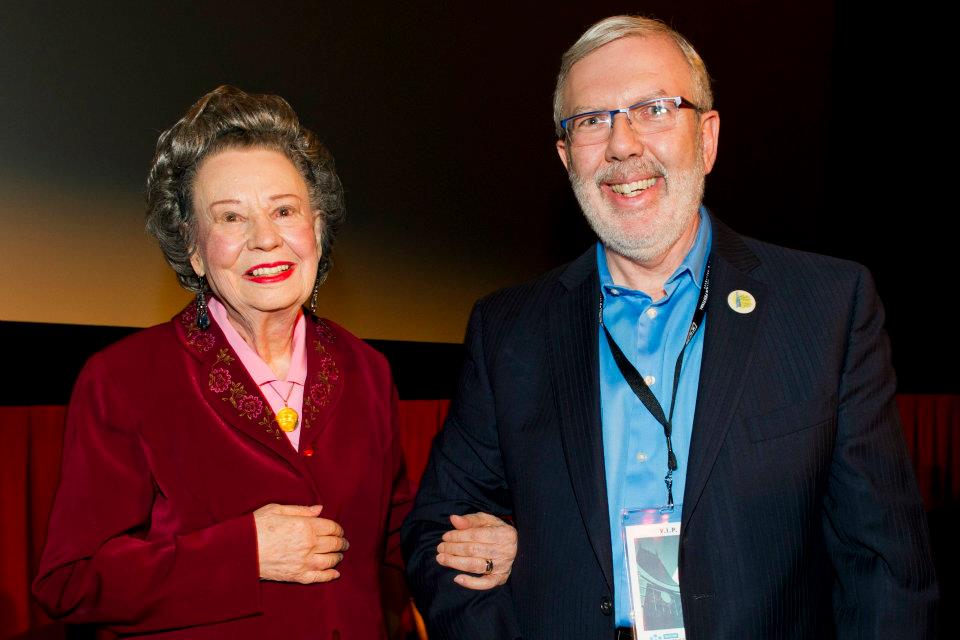
2012 TCM FESTIVAL IN PICTURES: PART TWO

The stars keep coming for the TCM festival. As a little side note, TCM has turned 18 years old. I don't know what we did before the channel started...


KIM NOVAK


PEGGY MONTGOMERY with LEONARD MALTIN


RHONDA FLEMING


DEBBIE REYNOLDS


MARGE CHAMPION with LEONARD MALTIN


MEL BROOKS

Monday, December 20, 2010

SPOTLIGHT ON WILLIAM HOLDEN


William Holden was one of the biggest box office draws of the 1950s. A combination of good looks and acting ability made him a sought after actor. However, personal demons derailed his career in the 1960s and caused him to have a tragic end in 1981.

Holden, eldest of three sons (brothers were Robert and Richard), was born William Franklin Beedle, Jr. in O'Fallon, Illinois on April 17, 1918, the son of Congregationalist parents Mary Blanche (née Ball), a schoolteacher, and William Franklin Beedle, Sr., an industrial chemist. Holden's first starring role was in Golden Boy (1939), in which he played a violinist turned boxer. That was followed by the role of George Gibbs in the film adaptation of Our Town.

After Columbia Pictures picked up half of his contract, he alternated between starring in several minor pictures for Paramount and Columbia before serving as a 2nd lieutenant in the United States Army Air Forces during World War II, where he acted in training films. Beginning in 1950, his career took off when Billy Wilder tapped him to star as the down-at-the-heels screenwriter Joe Gillis who is taken in by faded silent-screen star Norma Desmond (Gloria Swanson) in Sunset Boulevard, for which Holden earned his first Best Actor Oscar nomination.

With Gloria Swanson in Sunset BoulevardFollowing this breakthrough film, he played a series of roles that combined good looks with cynical detachment, including a prisoner-of-war entrepreneur in Stalag 17 (1953), for which he won the Academy Award for Best Actor, a pressured young engineer/family man in Executive Suite (1954), an acerbic stage director in The Country Girl (1954), a conflicted jet pilot in the Korean War film The Bridges at Toko-Ri (1954), a wandering braggart in Picnic (1955), a dashing war correspondent in Love Is a Many-Splendored Thing (1955), an ill-fated prisoner in The Bridge on the River Kwai (1957) and a WWII tug boat captain in The Key (1958).

He also played a number of sunnier roles in light comedy, such as the handsome architect pursuing virginal Maggie McNamara in the controversial Production Code-breaking The Moon is Blue (1953), as Judy Holliday's tutor in Born Yesterday (1950), as a playwright captivated by Ginger Rogers' character in Forever Female (1953) and as Humphrey Bogart's younger brother, a playboy, in Sabrina (1954), which also starred Audrey Hepburn.

Holden starred in his share of forgettable movies — which he was forced to do by studio contracts — such as Paris When It Sizzles (1964), also co-starring Audrey Hepburn. By the mid-1960s, his roles were having less critical and commercial impact. According to the Los Angeles County Coroner's autopsy report, on November 12, 1981, Holden was alone and intoxicated in his apartment in Santa Monica, California, when he slipped on a throw rug, severely lacerated his forehead on a teak bedside table, and bled to death. Evidence suggests he was conscious for at least a half hour after the fall but may not have realized the severity of the injury and did not summon aid, or was unable to call for help. His body was found four days later.

Holden dictated in his will that the Neptune Society cremate him and scatter his ashes in the Pacific Ocean. No funeral or memorial service was held, per his wishes.

Friday, September 17, 2010

SPOTLIGHT ON KIM NOVAK


The beautiful and talented Kim Novak was born Marilyn Pauline Novak in Chicago, Illinois, to Joseph and Blanche Novak. Her father was a second-generation Czech immigrant while her mother had a Bohemian background. Her father worked as a dispatcher on the Chicago, Milwaukee and St. Paul Railroad and both her parents had been teachers.

While attending David Glasgow Farragut High School, she won a scholarship to the Art Institute of Chicago. After leaving school, she began a career modeling teen fashions for a local department store. She later received a scholarship at a modeling academy and continued to model part-time. She worked as an elevator operator, a sales clerk and a dental assistant.

After a job touring the country as a spokesman for a refrigerator manufacturer, "Miss Deepfreeze", Novak moved to Los Angeles, where she continued to find work as a model.

The 20-year-old actress began with an uncredited role in The French Line (1954). Eventually, she was seen by a Columbia Pictures talent agent and filmed a screen test. Novak was signed to a six-month contract, and the studio changed her first name to Kim. Novak debuted as Lona McLane that same year in Pushover opposite Fred MacMurray and Philip Carey, and played the femme fatale role of Janis in Phffft! opposite Judy Holliday, Jack Lemmon, and Jack Carson. Novak's reviews were good . People were eager to see the new star, and she received an enormous amount of fan mail.

After playing Madge Owens in Picnic (1955) opposite William Holden, Novak won a Golden Globe Award for Most Promising Newcomer and for World Film Favorite. She was also nominated for the British BAFTA Film Award for Best Foreign Actress. That same year she played Molly in The Man with the Golden Arm with Frank Sinatra. In 1957 she worked with Sinatra again for Pal Joey, which also starred Rita Hayworth, and starred in Jeanne Eagels with Jeff Chandler. She was on the cover of the July 29, 1957, issue of Time Magazine. That same year, she went on strike, protesting her salary of $1,250 per week.

In 1958, Novak starred in the Alfred Hitchcock-directed classic thriller Vertigo, playing the roles of a brunette shopgirl, Judy Barton, and a blonde woman named Madeleine Elster.

Today, the film is considered a masterpiece of romantic suspense, though Novak's performance has received mixed reviews. Critic David Shipman thought it "little more than competent", while David Thomson sees it as "one of the major female performances in the cinema". Hitchcock, rarely one to praise actors, dismissed Novak in a later interview. "You think you're getting a lot," he said of her ability, "but you're not." In that same year, she again starred alongside Stewart in Bell, Book and Candle, a comedy tale of modern-day witchcraft that did moderately well at the box office.


In 1960, she co-starred with Kirk Douglas in the critically acclaimed Strangers When We Meet also featuring Walter Matthau and Ernie Kovacs. In 1962, Novak produced her own movie, financing her own production company in association with Filmways Productions. Boys' Night Out, in which she starred with James Garner and Tony Randall. It was received mildly well by critics and the public. She was paired with Lemmon for a third and final time that year in a mystery-comedy, The Notorious Landlady.

In 1964 she played the vulgar waitress Mildred Rogers in a remake of W. Somerset Maugham's drama Of Human Bondage opposite Laurence Harvey, and starred as barmaid Polly, "The Pistol" in Billy Wilder's Kiss Me, Stupid with Ray Walston and Dean Martin. Both films were critically panned. After playing the title role in The Amorous Adventures of Moll Flanders (1965) with Richard Johnson, Novak took a break from Hollywood acting. She continued to act, although infrequently, taking fewer roles as she began to prefer personal activities over acting.

Her comeback came in a dual role as a young actress, Elsa Brinkmann, and an early-day movie goddess who was murdered, Lylah Clare, in producer-director Robert Aldrich's The Legend of Lylah Clare (1968) with Peter Finch and Ernest Borgnine for MGM. The movie did not do well . After playing a forger, Sister Lyda Kebanov, in The Great Bank Robbery (1969) opposite Zero Mostel, Clint Walker, and Claude Akins, she stayed away from the screen for another four years. She then played the role of Auriol Pageant in the horror anthology film Tales That Witness Madness (1973), which also starred Joan Collins. She starred as veteran showgirl Gloria Joyce in the made-for-TV movie The Third Girl From the Left (1973), and played Eva in Satan's Triangle (1975). She was featured in the 1977 western The White Buffalo with Charles Bronson, and in 1979 she played Helga in Just a Gigolo co-starring David Bowie.

In 1980, Novak played Lola Brewster in the mystery/thriller The Mirror Crack'd, based on the story by Agatha Christie and co-starring Angela Lansbury, Tony Curtis, Rock Hudson and Elizabeth Taylor. She and Taylor portrayed rival actresses. She made occasional television appearances over the years. She co-starred with James Coburn in the TV-movie Malibu (1983) and played Rosa in a revival of Alfred Hitchcock Presents (1985) opposite Melanie Griffith. From 1986 to 1987, the actress was a cast member of the television series Falcon Crest during its fourth season, playing the mysterious character Kit Marlowe (the stage name rejected at the start of her career). She co-starred with Ben Kingsley in the 1990 film The Children.

Her most recent appearance on the big screen to date came as a terminally ill writer with a mysterious past in the thriller Liebestraum (1991), opposite Kevin Anderson and Bill Pullman. However, owing to battles with the director over how to play the role, her scenes were cut . Novak later admitted in a 2004 interview that the film was a mistake.

Novak has not ruled out further acting. In an interview in 2007, she said that she would consider returning to the screen "if the right thing came along. I wish it would...