Showing posts with label Ava Gardner. Show all posts

Wednesday, August 21, 2024

HOLLYWOOD BEAUTY: AVA GARDNER

 va Gardner (1922-1990) was a stunning beauty. I can just look at these old photographs of her all day. It would be safe to say that she was one of the most beautiful women in Hollywood history. Here is the evidence...


Monday, February 1, 2021

THE HORRORS OF CLASSIC HOLLYWOOD

Hollywood isn’t all that glamorous, actors say all the time. There’s no privacy. The tabloids invent whatever sells. Sitting in makeup chairs every day. Getting ripped apart on social media.

But there’s no arguing, today’s celebrities face less stigma, get paid more, and have greater autonomy than film’s first stars — especially women.

In the early days of silent cinema, actors were ashamed to be seen in films. Movies were middle class, low-brow diversions, whereas theater was the respected art of the wealthy. But as more people ventured to the movies, they started demanding to know the people appearing on screen. Who was that woman trapped in a train car? Who was that handsome cowboy?

Movie producers didn’t have a good answer. Most of these actors didn’t have catchy names or dramatic backgrounds. They weren’t exactly marketable.

Then producer Carl Laemmle spread a rumor that actress Florence Lawrence had been killed in a streetcar accident. Shortly, he corrected the rumor and announced that, by the way, she would be starring in an upcoming film of his. He had promoted the first movie star.

Such a scheme formed the backbone of the industry’s new “star system,” the process of discovering, creating, and exploiting actors for profit. Women in particular got the brunt of the pressure; everything from their salaries to their bodies were tightly regulated.

In the 1920s major studios sent scouts to spot promising young talent and contract them for years of work. They would invent exciting actor backstories for the press, and mold their identities into roles that might define them for a lifetime. (Shirley Temple was the adorable pipsqueak before she was cast out.) Studios would even change actors’ names. (MGM held a contest to let the public vote on Joan Crawford’s name. She hated it, said it reminded her of crayfish. Later she was labelled “box office poison.”)

We know Judy Garland as leading lady in The Wizard of Oz, but for the most part her studio gave her girl-next-door parts. She was the yearning gal pal, the ugly duckling searching for love. She simply wasn’t as beautiful as her counterparts — Ava Gardner and Elizabeth Taylor.


Born Frances Ethel Gumm, she changed her name to Judy Garland while touring with her two older sisters in their vaudeville act. Then MGM spotted her in 1935.

Struck by her singing voice and stage presence, MGM offered her a contract and immediately put her to work. In 1937 they paired Garland with Mickey Rooney in a series of Andy Hardy teenage musicals; as planned, she played the girl next door.

With strict contracts, morality clauses, and minimal child labor laws, studio bosses were able to push child stars at breakneck pace. Garland worked six days per week, sometimes 18-hour shifts of constant singing and dancing to pump out as many movies as possible. To keep her energy up and force her weight down, studios plied her with “pep pills,” amphetamine uppers to keep her perky and alert all day. When she couldn’t sleep, they supplied sleeping pills.

“After four hours they’d wake us up and give us the pep pills again,” said Garland. She was using throughout the filming of Wizard of Oz.

In 1941, at age 19, Garland married composer David Rose. MGM did not approve, and ordered her back to work within 24 hours of the wedding. When she became pregnant, her mother Ethel worked with the studio to arrange for an abortion. She was innocent little Dorothy, after all. The public wasn’t ready to see her as a mother, a grown-up.

Meanwhile, MGM manipulated Garland’s publicity. When she gained weight, she was made to take more speed, while press reps told magazines she ate like a truck driver. Her persona was not her own, and she was given little time to discover herself outside the movies.

Hers was not an isolated case. The star system invented many leading stars, and subsequently dropped them when their popularity waned or left them for broke.


Child star Shirley Temple was discovered in 1932, after which she was cast in a series of sexually suggestive “Baby Burlesks,” in which babies act out flirtatious bar and dance scenes. When they misbehaved, studio employees would lock children in windowless sound rooms with nothing but a block of ice to sit on. In her autobiography Child Star, Temple wrote, “Its lesson of life, however, was profound and unforgettable. Time is money. Wasted time means wasted money means trouble.”

From 1935 to 1939, Temple was the most popular movie star in the country. She made a startling 23 films during the Depression.

But after her 1940 film The Blue Bird tanked, Fox dropped her from the studio at 12 years old. Months later, MGM picked her up. During her first visit, producer Arthur Freed invited her into his office, unzipped his pants, and exposed his genitals to Temple. She giggled and he threw her out.

When her golden hair turned brown as a teenager, she became, to the public, “an unremarkable teenager,” wrote historian David Thompson. She retired in 1950 after almost 50 films.

Remarkably, for a child actor under such pressure, Temple’s life was relatively stable. She died in 2014, aged 85.

Judy Garland was not so fortunate.

In 1944, Garland began work on Meet Me in St. Louis. By the end of filming she had called in sick 16 days. Her increasing reliance on “bennies,” amphetamines the studios had hooked her on, was becoming a problem. Her absence was costing the studio money.

They tightened her leash. “If Metro [MGM] had protected her and often catered to her, it had also imprisoned her. Inside those walls she would forever remain the ugly duckling of her early teens,” wrote Vanity Fair in 2000.


In 1947, work on The Pirate had to be postponed until February. The songs Garland had pre-recorded were scrapped — she sounded too feeble. When she did appear for filming, she seemed to be sleepwalking, staring off into space, like she didn’t know where she was. When she was on uppers, she acted paranoid or hallucinated.

“The studio became a haunted house for me,” Garland said later. “Every day when I went to work it was with tears in my eyes, resistance in my heart and mind.”

Meanwhile, MGM’s accountants were calculating every minute Garland called in sick or sought help at psychiatric clinics. Those filming delays would come out of her paycheck. At one point, she owed $100,000.

Studio head Louis B. Mayer flew Garland to Boston where she checked into a hospital and learned to eat and sleep again. MGM loaned her the money for the stay.

Three months and three meals per day later, Garland returned to Hollywood healthier and plump. Too plump for the studio. They ordered her to lose weight. So Garland turned to what she had been taught: fasting and more pills.

When she missed more days filming Summer Shock, she was suspended from MGM one last time. Later, Garland would slice her neck with a piece of glass. Though a minor flesh wound, the tabloids got a hold of the story. “JUDY GARLAND CUTS THROAT OVER LOST JOB,” headlined The Los Angeles Mirror. Garland was officially damaged goods.

Though she would make a brief comeback in the 1960s singing her most beloved songs on the publicity circuit, she was financially unstable and still reliant on the daily cocktail of uppers and downers. Garland ultimately died from a barbiturate overdose in 1969, at age 47.


Her one-time costar Mickey Rooney, who got hooked on the same drugs in the 1930s, said of Garland, “They seemed to want her to pass away, and no one wanted to heal her.” He called her “the greatest talent that ever trod the boards.”

Ultimately, the star system would be dismantled by a series of high-profile lawsuits. Actors like Bette Davis sued studios beginning in the 1930s, in attempts to free themselves from uncompromising contracts. Marilyn Monroe walked out on filming The Seven Year Itch until Fox fixed her contract demands. Finally, Shirley MacLaine’s successful 1959 lawsuit marked the end of the star system era.
 

By this time, the stigma around drugs, mental health, and women’s behavior was beginning to loosen. Actors began to market themselves as individuals and control their own image. If they found themselves the center of a scandal, it was due to paparazzi, a bad publicist, or these days, computer hackers.

In the past decade, Hollywood made an average of 300 to 400 films per year. In the studio era it was 700. The top earning actor in 1937 took home $370,000 per year ($6.2 million adjusted for 2016). Today’s highest paid actor, Dwayne “The Rock” Johnson, raked in $64 million.

Through it all, most Depression-era actors withstood the long studio hours and managed to avoid crippling addiction. Others were young victims who knew no alternative...

Thursday, June 21, 2018

PHOTOS OF THE DAY: SUMMER WITH CLASSIC HOLLYWOOD

On this first day of summer I wanted to take a look at how some of the classic Hollywood stars celebrated the fun and the sun that is summer. As always, the classic stars always looked great...


Ann Sheridan

Eartha Kitt


Gene Kelly


Bing and Dixie Lee Crosby


Sammy Davis Jr and Maria Stinger


Ava Gardner

Monday, July 4, 2016

PHOTOS OF THE DAY: CLASSIC PATRIOTIC HOLLYWOOD

What present Hollywood is missing in its stars is a sense of patriotism. Classic Hollywood really rallied about the country, especially during World War II. On this 4th of July, I thought I would take a look at some of the patriotic pictures from classic Hollywood...

Ann Miller (1923-2004)

Ava Gardner (1922-1990)


Claudette Colbert (1903-1996)


Colleen Moore (1899-1988)


Cyd Charisse (1922-2008)

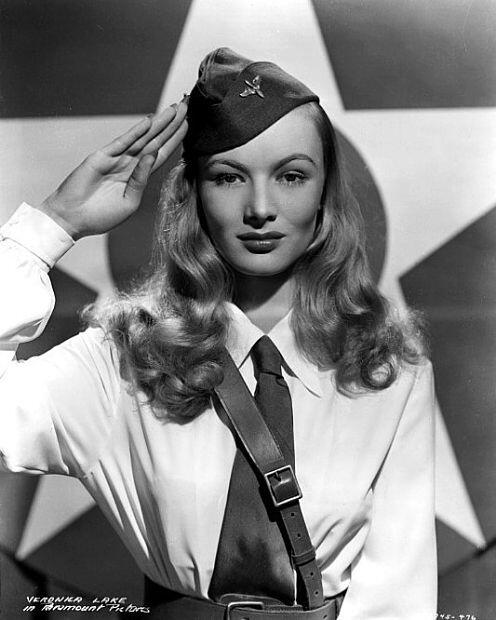
Veronica Lake (1922-1973)


Saturday, December 20, 2014

PHOTOS OF THE DAY: THE CLASSIC HOLLYWOOD HOLIDAY SEASON

I love the holiday season with all the sights and sounds of Christmas - especially at this time of the year you actually hear Bing Crosby being played on the radio and in stores. I also love the great old pictures of classic Hollywood stars celebrating the yuletide festivities...

AVA GARDNER

FRED ALLEN and JACK BENNY

JAYNE MANSFIELD

BOB HOPE and DORIS DAY

CAROLE LOMBARD

DEAN MARTIN and FRANK SINATRA and family

Friday, April 11, 2014

MICKEY ROONEY: A LIFE IN PICTURES

The death of Mickey Rooney is the greatest blow to classic Hollywood since the death of Elizabeth Taylor. It is so hard to capture a career like Mickey Rooney's in a blog entry, but I wanted to capture his life in pictures. He was one of the greatest stars that Hollywood would ever know...


with Judy Garland

With Ava Gardner

With Elizabeth Taylor

With Spencer Tracy


With Sammy Davis Jr.


Monday, December 16, 2013

HOLLYWOOD LOVE: FRANK SINATRA AND AVA GARDNER

Not all Hollywood love stories come out with a happy ending - the majority of them do not. However, one of the most volatile and yet loving relationships actaully ended up in divorce and heart break. That relationship was the one between crooner Frank Sinatra and the beautiful actress Ava Gardner.

One night in 1948 Sinatra stood on the terrace of his ­Hollywood bachelor penthouse with his best friend, the songwriter Sammy Cahn, looking down over Sunset Strip. Frank's marriage to his childhood sweetheart Nancy was breaking up - it had been since he first rose to fame in the Tommy Dorsey Orchestra during World War II. His movie career was fading, and his records were not selling that much anymore.

‘Do you know that Ava Gardner lives down there?’ said Cahn, pointing to a little house nestled into the trees.

Cupping his hands to his mouth, he yelled ‘Ava … Ava Gardner!’ his big voice carrying far into the quiet evening. ‘We know you’re down there. Hello, Ava.’

The two men roared with laughter. And then a miracle. Down below, a curtain was drawn, a window opened and Ava stuck her head out. She knew exactly who it was. Sinatra’s voice was unmistakable. She grinned and waved. Was it an accident that they ran into each other a few days later, in front of her place? And then again in the street? Frank wasn’t usually keen on walking but suddenly he was getting out a lot. The third time, they both began laughing as he said hello.

He had met her, he remembered, when she was an 18-year-old starlet newly arrived in Hollywood and Mickey Rooney, no less, was madly in love with her. Though she was smokingly sexy, she was just a kid, Sinatra thought at the time, too young for him. He met her again and danced with her in a nightclub when he was with Lana, and she — at 23, divorced from both Rooney and her second husband, the band leader Artie Shaw — was with the ­billionaire tycoon Howard Hughes.


Then ­Sinatra’s friend Peter Lawford brought her to one of his parties. Dark haired with a white fur stole on her wide ­shoulders, he noticed how she prowled with the easy grace of a tigress. So began one of Hollywood’s ­legendary pairings of alpha male and female.

That night they went out drinking. Despite her stupendous looks, she had no confidence and alcohol, consumed in quantity, made her forget her deep self-doubt and feel glamorous, ­intelligent, desirable — a person worthy of the ­attentions of Frank Sinatra. She had always had a thing for ­musicians but he was in a different league. His voice had a quality, she said, ‘I’d only heard in two other people — Judy Garland and Maria Callas. It made me want to cry for happiness, like a beautiful sunset or a boys’ choir singing Christmas carols’.


Ava Gardner told the Press that she was the happiest girl in the world in 1951 when they got married but Ava's marriage to Frank was doomed from the start. Both had titanic appetites, for food, drink, cigarettes, diversion, companionship and sex. Both loved jazz. Both were politically ­liberal. Both ­distrusted sleep, fearing it as death’s mirror. Both hated being alone. Like him, she was infinitely restless and easily bored. In both, this tendency could lead to casual cruelty to others —and to each other. They quarrelled ­constantly. Friends whose house the lovers met in recalled how Ava would scream at Frank and he would slam the door and storm downstairs. Ava had trouble with intimacy.

When a man fell in love with her, she ­reciprocated for a little while, then she began to torment him. For Frank, the similarities with his bullying mother — who used to beat him but whose approval he constantly craved — were scary and exciting. In their constant battles, jealousy was their emotional ammunition. Frank could trigger it in her with the blink of an eye, so conditioned was he to ­scanning any crowded party for ­gorgeous girls. She was convinced he was ­cheating on her, even when he wasn’t.

t if it was hard work being married to Ava Gardner, it was just as tough being married to Frank Sinatra. It didn’t help that Frank’s career was on a downward spiral at the time — records not selling, films flopping — while hers was very much on the up. As a foul-mouthed facsimile of his mother, she was the dominant one in the ­relationship. As a sexual volcano, she ruled him in bed. And to top it all off, she was paying the bills while he struggled. The combination was corrosive.


They were forever breaking up, then getting back together. They would throw each other’s clothes, books and records out of the windows. The police had to be called more than once. The gossip columns had a field day, ­following their every move, tracking the time they spent together and apart. Increasingly she signed up for work that took her away from him. In Europe — while Frank was back in the U.S. ­making From Here To Eternity, the film that would put his career back on track — she was pursuing Spain’s best-known bullfighter, Luis Miguel Dominguín, four years her junior.

And leave him is what Ava did, blaming his ­infidelities. Later, she would say: ‘I was ­happier married to Frank than ever before. If I’d been ­willing to share him with other women we could have been happy.’ But, in reality, the break-up was her ­decision. They separated in October 1953 and divorced in 1957.


It was like the lyrics of a song he recorded soon after: ‘I could have told you she’d hurt you/She’d love you a while, then desert you.’ He sang it with all the pain and ­sadness of one who knew...


SOURCE

Saturday, December 10, 2011

SEX SYMBOLS OF THE CINEMA: 1940s

Even though the 1940s saw horrific suffering with World War II, the movies tried to remaine wholesome and innocent. Soldiers were seeing lost limbs and blood and carnage, but they were not allowed to see much of a sexual nature in films. It was too shocking for them to see Jane Russell's cleavage or Betty Grable's stocking clad legs. Many of the films of the early 1940s had a patriotic tone to them, and what better way to show your patriotism than by showing off beautiful girls. The sex symbols of the 1940s, in my opinion were drop dead beautiful. During World War II, these sex symbols made the soldiers have something to fight for, and after the war it gave them something to come home to. There were countless beauties in the movies during the 1940s, but here are a few of the most popular:


RITA HAYWORTH (1918-1987)
My personal favorite beauty of classic Hollywood, Rita Hayworth started as a teenage dancer, whose partner was her father. In the 1930s, they were billed as a couple - which in itself is creepy, but it did get her noticed by studio executives. A complete make-over including plastic surgery, changed her from Margarita Cansino to Rita Hayworth. Her beauty was literally breath taking, and she became a favorite of soldiers during World War II. When her most famous movie, Gilda, came out in 1946 the movie poster was censored due to a slight hint of her cleavage in the picture. It is amazing what was censored then as compared to now. Rita's life was a difficult one - from failed marriages to genius Orson Welles and singer Dick Haymes to suffering from Alzheimer's disease, Hayworth did not have it easy. She deserved better.


BETTY GRABLE (1916-1973)
She herself said she could not sing and was not particularly beautiful, but Betty Grable was the ultimate pin up girl for soldiers during World War II. Her seductive picture looking over her soldier was one of the most popular images of the war years. Yes, she was not the best singer or dancer, but from 1943 to 1950 she was one of the most popular female box office draws. She not only had a beauty about her, but she also seemed like an average girl that you could take to a dance or have a beer with. I think that was more sexy than anything to the soldiers during the war and after when they were coming home. Betty Grable was America to these soldiers who were giving their lives for their country.


AVA GARDNER (1922-1990)
If Betty Grable was the girl next door, then Ava Gardner was the girl from the other side of the tracks. She started in movies for MGM in the early 1940s, but I feel she really made her mark in film noir movies of the late 1940s. Her come hither look heated up the screen as never before. Like Rita Hayworth though, she did not have a very happy life. She was married to such famous men as bandleader Artie Shaw and singer Frank Sinatra, and her later years were filled with many health problems. When she died in 1990, she was reportedly penniless, so ex husband Frank Sinatra paid for her whole funeral. However, to see Ava Gardner in a movie is to experience pure sexuality as never before.


LANA TURNER (1921-1995)
Another MGM alumni, Lana Turner was called "The Sweater Girl" because obviously she could fill a sweater better than anyone! During World War II, Turner became a popular pin-up girl due to her popularity in such films such as Ziegfeld Girl (1941), Johnny Eager (1942), and four films with Metro–Goldwyn–Mayer's "king of the lot", Clark Gable. The Turner-Gable films' successes were only heightened by gossip-column rumors about a relationship between the two. In 1957, Turner's daughter was accused of murdering Lana Turner's boyfriend, and it was actually believed that Turner was the one that killed him. Despite the scandal, Turner remained a huge star throughout the 1960s.

Tuesday, August 30, 2011

TCM IN SEPTEMBER: MY TOP PICKS

Here is a new monthly feature where I spotlight what I think are some of the top picks Turner Classic Movies (TCM) is showing in a particular month.

This first edition will include my top ten picks for September 2011:

SEPTEMBER 3RD - 9AM
The Music Box (1932) - comedy short


Two men running a moving company have to get a large piano up a daunting flight of stairs. This is a Laurel and Hardy classic!!! (length:29 min)


SEPTEMBER 7TH - 8PM
Follow The Fleet (1936) - musical


Two sailors on leave romance a dance-hall hostess and her prim sister. I personally think this is one of the best Astaire and Rogers pairings. The stand out number in this movie is "Let's Face The Music And Dance". The Irving Berlin musical score is among his best too! (length:110 min)

SEPTEMBER 9TH - 10PM
The Jazz Singer (1953) - musical


A cantor's son goes against family tradition to become a popular singer. This is the first remake of the Jolson classic. The movie is so-so, but it is hardly seen so it is worth the viewing. Danny Thomas and Peggy Lee make a enjoyable onscreen pair. (length:107 min)

SEPTEMBER 11TH - 2:30 PM
The Clock(1945) - drama


A G.I. en route to Europe falls in love during a whirlwind two-day leave in New York City. This is an unusual and underrated role for Judy Garland. Robert Walker and character actor round out this charming love story. (length:90 min)

SEPTEMBER 14TH - 11PM
Thank Your Lucky Stars (1943) - musical


An Eddie Cantor look-alike organizes an all-star show to help the war effort. Eddie Cantor and almost everyone at Warner Brothers participates in this great war-time musical. The best number is Bette Davis singing and dancing to "They're Either Too Young Or Too Old". (length:127 min)

SEPTEMBER 18TH - 12:00 AM
Metropolis(1927) - science fiction


In this silent film, a city of the future is threatened with destruction when a wealthy corporate leader enlists a mad scientist to put down labor reformers. (length:149 min)

SEPTEMBER 22ND - 6PM
White Heat(1949) - drama


A government agent infiltrates a gang run by a mother-fixated psychotic. This is not really a rare movie, but it is one of my third favorite movie of all time. There was no better gangster than Jimmy Cagney! (length:114 min)


SEPTEMBER 24TH - 5:30 PM
The Spirit of St. Louis(1957) - drama


Charles Lindbergh risks his life to complete his historic flight from New York to Paris. I saw this movie when I was a young kid, and I have not had the opportunity to see it since. James Stewart as Lindbergh was perfect casting, and I always forget Billy Wilder directed this bio. (length:135 min)

SEPTEMBER 25TH - 12:00 AM
The Circus(1928) - comedy


In this silent film, the Little Tramp joins a circus to hide from the police. I am a huge fan of Charlie Chaplin but I have never seen this movie all the way through. I am excited for this one! (length:72 mins)

SEPTEMBER 29TH - 1:15 PM
The Killers(1946) - drama


An insurance investigator uncovers a string of crimes when he tries to find a murdered boxer's beneficiary. I believe this movie to be one of the classic film noir movies, and it defined the genre. Burt Lancaster and Ava Gardner made the movie what it was! (length:102 min)


There are a lot of other great movies and festivals going on in September on TCM, but those were my ten picks of the month...

SOURCE