Showing posts with label Shirley Temple. Show all posts

Sunday, July 19, 2026

SHIRLEY TEMPLE: THE YOUNGEST OSCAR RECIPIENT

At age six, Shirley Temple became the first recipient of the juvenile Academy Award. To this day she is the youngest person ever to receive an Academy Award. After receiving her award from actor/writer Irvin S. Cobb, she politely thanked him, then turned to her mother and asked, "Mommy, can I go home now?"

Many years later, in an appearance on the 1984 Oscar show, Temple explained what had happened. At the 1935 Oscar banquet, her special award was one of the last to be presented that evening. She had been forced to sit through the entire awards ceremony, watching all the other awards being handed out (including her presenting the Best Actress award to Claudette Colbert for "It Happened One Night"). By the time she got her award, at about 10:00 p.m., she was exhausted and ready to go home to bed.

Temple became very close to Will Rogers after signing with Fox. When Rogers died in a 1935 airplane crash, she was inconsolable for days afterwards. Studio chief Joseph M. Schenck, who was in England at the time, bought her a pony and had it shipped the US on the Queen Mary. When she learned that the pony was to be flown from New York to Los Angeles, she insisted that it be shipped by rail to avoid another crash.

Temple was considered for the role of Veda Pierce in the Joan Crawford drama "Mildred Pierce" (1945), which went to Ann Blyth.

"I stopped believing in Santa Claus when I was six. Mother took me to see him in a department store and he asked for my autograph."

Friday, November 17, 2023

PHOTOS OF THE DAY: A CLASSIC HOLLYWOOD THANKSGIVING

 Here is how some classic Hollywood celebrated Thanksgiving (aka turkey day)...


Andy Devine


Shirley Temple


Lillian Harvey


Howard Keel


Jeanne Crain


Alfred Hitchcock


Friday, April 7, 2023

PHOTOS OF THE DAY: HOLLYWOOD AND EASTER

Here are some great Easter photos of Hollywood celebrating this spring holiday just in time for the Easter bunny to be hopping its way into our homes...


Ann Miller


Jimmy Stewart


Shirley Temple


George Reeves


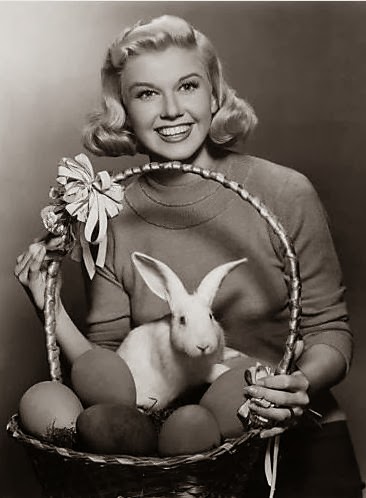
Doris Day


John Candy


Monday, February 1, 2021

THE HORRORS OF CLASSIC HOLLYWOOD

Hollywood isn’t all that glamorous, actors say all the time. There’s no privacy. The tabloids invent whatever sells. Sitting in makeup chairs every day. Getting ripped apart on social media.

But there’s no arguing, today’s celebrities face less stigma, get paid more, and have greater autonomy than film’s first stars — especially women.

In the early days of silent cinema, actors were ashamed to be seen in films. Movies were middle class, low-brow diversions, whereas theater was the respected art of the wealthy. But as more people ventured to the movies, they started demanding to know the people appearing on screen. Who was that woman trapped in a train car? Who was that handsome cowboy?

Movie producers didn’t have a good answer. Most of these actors didn’t have catchy names or dramatic backgrounds. They weren’t exactly marketable.

Then producer Carl Laemmle spread a rumor that actress Florence Lawrence had been killed in a streetcar accident. Shortly, he corrected the rumor and announced that, by the way, she would be starring in an upcoming film of his. He had promoted the first movie star.

Such a scheme formed the backbone of the industry’s new “star system,” the process of discovering, creating, and exploiting actors for profit. Women in particular got the brunt of the pressure; everything from their salaries to their bodies were tightly regulated.

In the 1920s major studios sent scouts to spot promising young talent and contract them for years of work. They would invent exciting actor backstories for the press, and mold their identities into roles that might define them for a lifetime. (Shirley Temple was the adorable pipsqueak before she was cast out.) Studios would even change actors’ names. (MGM held a contest to let the public vote on Joan Crawford’s name. She hated it, said it reminded her of crayfish. Later she was labelled “box office poison.”)

We know Judy Garland as leading lady in The Wizard of Oz, but for the most part her studio gave her girl-next-door parts. She was the yearning gal pal, the ugly duckling searching for love. She simply wasn’t as beautiful as her counterparts — Ava Gardner and Elizabeth Taylor.


Born Frances Ethel Gumm, she changed her name to Judy Garland while touring with her two older sisters in their vaudeville act. Then MGM spotted her in 1935.

Struck by her singing voice and stage presence, MGM offered her a contract and immediately put her to work. In 1937 they paired Garland with Mickey Rooney in a series of Andy Hardy teenage musicals; as planned, she played the girl next door.

With strict contracts, morality clauses, and minimal child labor laws, studio bosses were able to push child stars at breakneck pace. Garland worked six days per week, sometimes 18-hour shifts of constant singing and dancing to pump out as many movies as possible. To keep her energy up and force her weight down, studios plied her with “pep pills,” amphetamine uppers to keep her perky and alert all day. When she couldn’t sleep, they supplied sleeping pills.

“After four hours they’d wake us up and give us the pep pills again,” said Garland. She was using throughout the filming of Wizard of Oz.

In 1941, at age 19, Garland married composer David Rose. MGM did not approve, and ordered her back to work within 24 hours of the wedding. When she became pregnant, her mother Ethel worked with the studio to arrange for an abortion. She was innocent little Dorothy, after all. The public wasn’t ready to see her as a mother, a grown-up.

Meanwhile, MGM manipulated Garland’s publicity. When she gained weight, she was made to take more speed, while press reps told magazines she ate like a truck driver. Her persona was not her own, and she was given little time to discover herself outside the movies.

Hers was not an isolated case. The star system invented many leading stars, and subsequently dropped them when their popularity waned or left them for broke.


Child star Shirley Temple was discovered in 1932, after which she was cast in a series of sexually suggestive “Baby Burlesks,” in which babies act out flirtatious bar and dance scenes. When they misbehaved, studio employees would lock children in windowless sound rooms with nothing but a block of ice to sit on. In her autobiography Child Star, Temple wrote, “Its lesson of life, however, was profound and unforgettable. Time is money. Wasted time means wasted money means trouble.”

From 1935 to 1939, Temple was the most popular movie star in the country. She made a startling 23 films during the Depression.

But after her 1940 film The Blue Bird tanked, Fox dropped her from the studio at 12 years old. Months later, MGM picked her up. During her first visit, producer Arthur Freed invited her into his office, unzipped his pants, and exposed his genitals to Temple. She giggled and he threw her out.

When her golden hair turned brown as a teenager, she became, to the public, “an unremarkable teenager,” wrote historian David Thompson. She retired in 1950 after almost 50 films.

Remarkably, for a child actor under such pressure, Temple’s life was relatively stable. She died in 2014, aged 85.

Judy Garland was not so fortunate.

In 1944, Garland began work on Meet Me in St. Louis. By the end of filming she had called in sick 16 days. Her increasing reliance on “bennies,” amphetamines the studios had hooked her on, was becoming a problem. Her absence was costing the studio money.

They tightened her leash. “If Metro [MGM] had protected her and often catered to her, it had also imprisoned her. Inside those walls she would forever remain the ugly duckling of her early teens,” wrote Vanity Fair in 2000.


In 1947, work on The Pirate had to be postponed until February. The songs Garland had pre-recorded were scrapped — she sounded too feeble. When she did appear for filming, she seemed to be sleepwalking, staring off into space, like she didn’t know where she was. When she was on uppers, she acted paranoid or hallucinated.

“The studio became a haunted house for me,” Garland said later. “Every day when I went to work it was with tears in my eyes, resistance in my heart and mind.”

Meanwhile, MGM’s accountants were calculating every minute Garland called in sick or sought help at psychiatric clinics. Those filming delays would come out of her paycheck. At one point, she owed $100,000.

Studio head Louis B. Mayer flew Garland to Boston where she checked into a hospital and learned to eat and sleep again. MGM loaned her the money for the stay.

Three months and three meals per day later, Garland returned to Hollywood healthier and plump. Too plump for the studio. They ordered her to lose weight. So Garland turned to what she had been taught: fasting and more pills.

When she missed more days filming Summer Shock, she was suspended from MGM one last time. Later, Garland would slice her neck with a piece of glass. Though a minor flesh wound, the tabloids got a hold of the story. “JUDY GARLAND CUTS THROAT OVER LOST JOB,” headlined The Los Angeles Mirror. Garland was officially damaged goods.

Though she would make a brief comeback in the 1960s singing her most beloved songs on the publicity circuit, she was financially unstable and still reliant on the daily cocktail of uppers and downers. Garland ultimately died from a barbiturate overdose in 1969, at age 47.


Her one-time costar Mickey Rooney, who got hooked on the same drugs in the 1930s, said of Garland, “They seemed to want her to pass away, and no one wanted to heal her.” He called her “the greatest talent that ever trod the boards.”

Ultimately, the star system would be dismantled by a series of high-profile lawsuits. Actors like Bette Davis sued studios beginning in the 1930s, in attempts to free themselves from uncompromising contracts. Marilyn Monroe walked out on filming The Seven Year Itch until Fox fixed her contract demands. Finally, Shirley MacLaine’s successful 1959 lawsuit marked the end of the star system era.
 

By this time, the stigma around drugs, mental health, and women’s behavior was beginning to loosen. Actors began to market themselves as individuals and control their own image. If they found themselves the center of a scandal, it was due to paparazzi, a bad publicist, or these days, computer hackers.

In the past decade, Hollywood made an average of 300 to 400 films per year. In the studio era it was 700. The top earning actor in 1937 took home $370,000 per year ($6.2 million adjusted for 2016). Today’s highest paid actor, Dwayne “The Rock” Johnson, raked in $64 million.

Through it all, most Depression-era actors withstood the long studio hours and managed to avoid crippling addiction. Others were young victims who knew no alternative...

Sunday, November 1, 2020

PHOTOS OF THE DAY: CLASSIC HOLLYWOOD AND FOOTBALL

It is November now so there is one thing we are sure of - it is football season! Here are some great classic Hollywood football pictures. All of these photos are touchdowns...


SHIRLEY TEMPLE

ELVIS PRESLEY
BETTY GRABLE

RONALD REAGAN
THE THREE STOOGES

GREGORY PECK

Monday, February 10, 2020

A TRIBUTE TO SHIRLEY TEMPLE - SIX YEARS LATER

Here is a short tribute I did in memory of Shirley Temple. One of the shortest superstars, she has been gone for six years now...


Tuesday, February 13, 2018

MORE HARASSMENT IN CLASSIC HOLLYWOOD

In a story I posted last month, I took a look at the harassment that Judy Garland had to face at the hands of MGM head Louis B. Mayer. Judy Garland was not the only starlet that faced harrassment at the hands of powerful men. Judy was not the first and unfortunately she will not be the last.


In her memoir Child Star, actress Shirley Temple claimed that an MGM producer known to have an 'adventuresome casting couch' unzipped his trousers and exposed himself to her during their first meeting in 1940. She was 12. Being innocent of male anatomy, she responded with nervous laughter and he threw her out of his office. Fortunately, she had already signed her contract with MGM.

Joan Collins says she lost out on the lead role in Cleopatra because she wouldn't sleep with the studio head. 'I had tested for 'Cleopatra' twice and was the front-runner. He took me into his office and said, "You really want this part?" And I said, "Yes. I really do." "Well," he said, "then all you have to do is be nice to me." It was a wonderful euphemism in the Sixties for you know what. But I couldn't do that. In fact, I was rather wimpish, burst into tears and rushed out of his office.' The role went to Elizabeth Taylor.


Marilyn Monroe was no stranger to lecherous studio chiefs and filmmakers, and in her memoir, My Story, she didn't hold back: 'I met them all. Phoniness and failure were all over them. Some were vicious and crooked. But they were as near to the movies as you could get. So you sat with them, listening to their lies and schemes. And you saw Hollywood with their eyes - an overcrowded brothel, a merry-go-round with beds for horses.'

Hedren, one of Alfred Hitchcock's favorite leading ladies, came forward with sexual assault allegations against the famed director in October 2016, after keeping silent for over 50 years.

In her latest memoir, Hedren says Hitchcock assaulted her on multiple occasions, the first of which took place when they were working together on his 1963 film The Birds. According to Hedren, Hitchcock "threw himself" on top of her while they were in the back of a limo and attempted to kiss her. 


Later, on the set of 1964's Marnie, Hitchcock allegedly assaulted Hedren again, when she was alone in her dressing room. Hedren said she tried to fight him off, but he only became "more aggressive" and threatened to ruin her career. Afterward, Hedren said, Hitchcock refused to talk to her, even though they had to continue production on the film.

Hedren said her experiences with Hitchcock—and other men in Hollywood—came rushing back after the landslide of allegations against Weinstein.

"This is nothing new, nor is it limited to the entertainment industry," Hedren wrote in an October tweet. "I dealt with sexual harassment all the time, during my modeling and film career. Hitchcock wasn't the first."

Wednesday, April 27, 2016

WHERE ARE THEY NOW: TOTO

Contrary to popular belief, the little black Cairn terrier who played Toto in The Wizard of Oz was not named Toto. That is, until The Wizard of Oz became so popular that almost everyone forgot what her original name was! Like all the other cast members, she had a character name, Toto, and a real name: Terry. She may have been the best actor on the set, too, because without even the benefit of makeup or a costume, the girl dog played a boy dog.

Interestingly, Terry received incorrect billing in the closing credits. She is billed as "Toto" playing the role of "Toto." Her actual name, at the time of filming, was Terry.

Terry's owner and trainer was a man named Carl Spitz. He ran the Hollywood Dog Training School. Spitz adopted Terry in 1933, when she was just a year old. He had no plans for Terry to become a movie star. Her original owner had left Terry to be trained, but then never returned to pick her up.

Terry was to appear in 15 films altogether. The Wizard of Oz was the only one in which she actually got a screen credit. Her first appearance was in Ready For Love in 1934. This was just one month before her first major film with a big star. Later that year, Terry appeared with Shirley Temple in Bright Eyes, playing the role of "Rags."


In 1938, Terry was taken to a casting call looking for a dog that resembled Dorothy's black dog in the Wizard of Oz books. Terry was hired on the spot and immediately began living the high life. This meant living for two weeks at Judy Garland's house! Judy became quite fond of the dog and wanted to adopt Terry after filming ended, but Carl Spitz said no.

Terry received a $125 weekly salary (which was over twice as much as the Singer Midgets each received for playing the Munchkins). But life in the spotlight isn't always glamorous. Terry didn't like being in the basket when Miss Gulch took her away from Dorothy. She cowered when the set's wind machines were turned on to simulate the twister that swept her and Dorothy our of Kansas to the land of Oz.

She also suffered a sprained foot after accidentally being stepped on by one of the Wicked Witch's guards. But Terry recuperated and returned a few weeks later to finish her scenes. 


After her immortal role as Toto, Terry appeared in a half-dozen other films. In 1942, three years after The Wizard of Oz, Terry's name was officially changed to Toto.

Terry died in 1945 at the age of 13 (that's 91 in human years). She was buried in the pet burial area behind Carl Spitz's residence and kennel. But according to the Guinness Book of World Records, Terry was stuffed and auctioned in 1996 for $3,600!

Toto is alone early in the film when she escapes from Elvira Gulch's basket and later she escapes alone and runs to get the Tin Man, the Cowardly Lion, and the Scarecrow alone, in order to help rescue Dorothy from the Witch...


Friday, January 1, 2016

PHOTOS OF THE DAY: A NEW YEAR WITH CLASSIC HOLLYWOOD

Hard to believe it is another year! It does not seem right that it is 2016! One thing that does not change with each year is our love of classic movies. Here are some pictures of the classic stars celebrating the New Year...

Dorothy Lamour

Bette Davis

Clark Gable, Van Heflin, Gary Cooper, and Jimmy Stewart

Lucille Ball and Desi Arnaz

Betty Hutton

Shirley Temple

Saturday, February 7, 2015

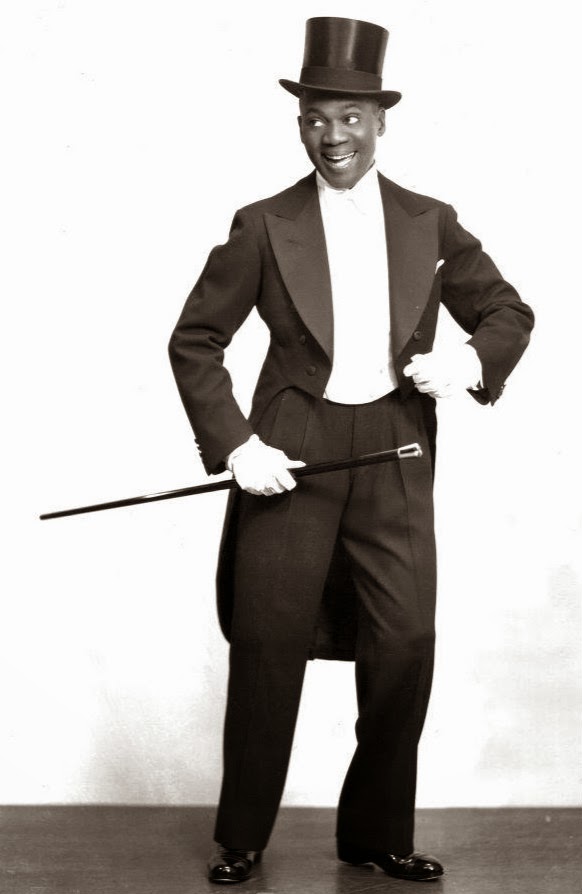
THE REAL MR. BOJANGLES

Many people do not truly know who Bill "Bojangles" Robinson was. He has been dead 65 years now, and most of his film roles were dated by the 1950s. However, Robinson was a gifted dancer, and like so many otherAfrican-American performers, he deserved to have been given better roles in the musicals. His long career though mirrored changes in American entertainment tastes and technology, starting in the age of minstrel shows, moving to vaudeville, Broadway, the recording industry, Hollywood radio, and television. 

Robinson was born in Richmond, Virginia on May 25, 1878. His parents were Maxwell, a machine-shop worker, and Maria Robinson, a choir singer. His grandmother raised him after both parents died in 1885 when he was 7 years old—his father from chronic heart disease and his mother from natural causes. Details of Robinson's early life are known only through legend, much of it perpetuated by Robinson himself. He claimed he was christened "Luther"—a name he did not like. He suggested to his younger brother Bill that they should exchange names. Eventually, the exchange between the names of both brothers was made. The brother subsequently adopted the name of “Percy” and under that name achieved recognition as a musician.
In 1890, at the age of 12, Robinson ran away to Washington, DC, where he did odd jobs at Benning Race Track and worked briefly as a jockey. He teamed up with a young Al Jolson, with Jolson singing while Robinson danced for pennies or to sell newspapers. In 1891 he was hired by Whallen and Martel, touring with Mayme Remington's troupe in a show titled The South Before the War, performing again as a pickaninny, despite his age. He traveled with the show for over a year before growing too mature to play the role credibly.

In 1898 he returned to Richmond where he joined an army unit as a drummer when the Spanish–American War broke out. He received an accidental gunshot wound from a second lieutenant who was cleaning his gun.

On March 30, 1900, Robinson entered a buck-and-wing dance contest at the Bijou Theater in Brooklyn, NY, winning a gold medal and defeating Harry Swinton, star of the show In Old Kentucky and considered the best dancer of his day. The resulting publicity helped Robinson to get work in numerous traveling shows, sometimes in a troupe, more frequently with a partner, though not always as a dancer (Robinson also sang and performed two-man comedy.


When the U.S. entered World War I, the War Department set up a series of Liberty Theaters in the training camps. The Keith and Orpheum Circuits underwrote vaudeville acts at reduced fees, but Robinson volunteered to perform gratis for thousands of troops, in both black and white units of the Expeditionary Forces, receiving a commendation from the War Department in 1918. Throughout the early 1920s, Robinson continued his career on the road as a solo vaudeville act, touring throughout the country and most frequently visiting Chicago, where Marty Forkins, his manager, lived. From 1919–1923 he was fully booked on the Orpheum Circuit, and was signed full-time by the Keith in 1924 and 1925. In addition to being booked for 50–52 weeks (an avid baseball fan, he took a week off for the World Series), Robinson did multiple shows per night, frequently on two different stages.

Robinson’s film debut was in the RKO Pictures 1930 musical Dixiana. RKO was formed in part by a merger of the Keith and Orpheum theater circuits, with whom Robinson had performed as a headliner for many years. He was cast as a specialty performer in a standalone scene. This practice, customary at the time, permitted Southern theaters to remove scenes containing black performers from their showings of the film. Dixiana was followed by Robinson’s first starring role, in Harlem is Heaven (1932), the first film made with an all-black cast. The movie was produced in New York and did not perform well financially, leading Robinson to focus on Hollywood-produced movies after that.

The idea for bringing a black dancer to Fox to star with Temple in The Little Colonel was actually first proposed by Fox head Winfield Sheehan after a discussion with D. W. Griffith. Sheehan set his sights on Robinson, but unsure of his ability as an actor, arranged for a contract that was void if Robinson failed the dramatic test. Robinson passed the test and was brought in to both star with Temple and to teach her tap dancing. They quickly hit it off, as Temple recounted years later:

“Robinson walked a step ahead of us, but when he noticed me hurrying to catch up, he shortened his stride to accommodate mine. I kept reaching up for his hand, but he hadn't looked down and seemed unaware. Fannie called his attention to what I was doing, so he stopped short, bent low over me, his eyes wide and rows of brilliant teeth showing in a wide smile. When he took my hand in his, it felt large and cool. For a few moments, we continued walking silence. "Can I call you Uncle Billy?" I asked. "Why sure you can," he replied... "But then I get to call you darlin.'" It was a deal. From then on, whenever we walked together it was hand in hand, and I was always his "darlin."


Robinson and Temple became the first interracial dance partners in Hollywood history. The scene was controversial for its time, however, and was cut out in the south along with all other scenes showing Temple and Robinson making physical contact. Robinson and Temple became close friends as a result of his dance coaching and acting with her. Robinson carried pictures of Temple with him wherever he traveled, and Temple considered him a lifelong friend, saying in an interview "Bill Robinson treated me as an equal, which was very important to me. He didn't talk down to me, like to a little girl. And I liked people like that. And Bill Robinson was the best of all.”

Robinson appeared opposite Will Rogers in In Old Kentucky (1935), the last movie Rogers made prior to his death in an airplane crash. Robinson and Rogers were good friends, and after Rogers’ death, Robinson refused to fly, instead travelling by train to Hollywood for his film work. Robinson’s final film appearance was a starring role in the 1943 Fox musical Stormy Weather. Lena Horne co-starred as Robinson’s love interest, and the movie also featured Fats Waller in his final movie appearance before his death, playing with Cab Calloway and his orchestra,. The Nicholas Brothers are featured in the film’s final dance sequence, performing to Calloway’s "Jumpin' Jive," in what Fred Astaire called "the greatest movie musical number he had ever seen".


Robinson’s final public appearance in 1949, a few weeks before his death, was as a surprise guest on a TV show, Ted Mack’s The Original Amateur Hour, in which he emotionally embraced a competitor on the show who had tap-danced for the audience. A friend remarked, “he was handing over his crown, like him saying, 'this is my good-bye. '”


Despite being the highest-paid black performer of the first half of the twentieth century, earning more than US$2 million during his lifetime, Robinson died penniless on November 25, 1949, at the age of 71 from heart failure. He was married numerous times, but never had any children. His funeral was arranged and paid for by longtime friend and television host Ed Sullivan, co-star Shirley Temple, and fellow dancer Fred Astaire. Robinson's casket lay in state at the 369th Infantry Regiment Armory in Harlem, where an estimated 32,000 people filed past his casket to pay their last respects. The schools in Harlem were closed for a half-day so that children could attend or listen to the funeral, which was broadcast over the radio. Bill Robinson might not have gotten the recognition he deserved due to race relations in the 1930s and 1940s, but his dancing inspired a generation and influenced countless dancers to this day…


Friday, April 18, 2014

PHOTOS OF THE DAY: CLASSIC HOLLYWOOD AND EASTER

I've written it before, and I will write it again - there is just something beautiful in the photographes of classic Hollywood. Were the stars more beautiful? Where the photographers more talented? Whatever it is, I never get tired of looking at these vintage pictures. Here are some pictures of classic Hollywood stars celebrating Easter...

DORIS DAY (BORN 1924)
VERA-ELLEN (1921-1981)

LILLIAN HARVEY (1906-1968)

SHARON TATE (1943-1969)


SHIRLEY TEMPLE (1928-2014)

IDA LUPINO (1918-1995)