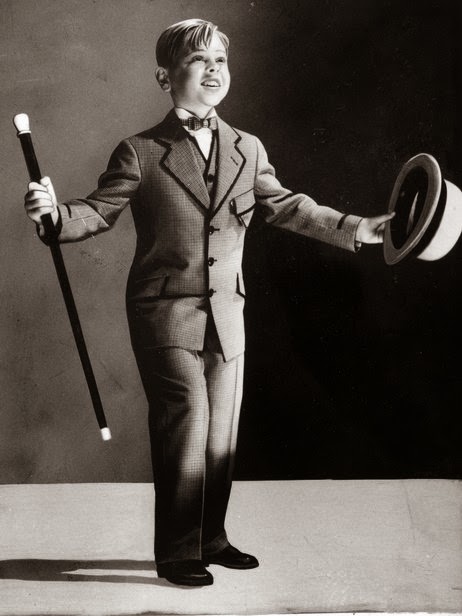
Showing posts with label Mickey Rooney. Show all posts

Wednesday, May 22, 2024

WAS MICKEY ROONEY MURDERED?

Mickey Rooney's family at war as his last wife accuses his stepson of faking his will - then KILLING him (and in final indignity, star's body will be exhumed) Eighth wife of the star, who died ten years ago alleges her stepson changed Rooney's will then poisoned him

Janice Rooney has filed court documents making the claims - with her other son Chris backing her case

They allege Mark Aber first faked the will - or forced Rooney to sign it - and poisoned him. Mother and son claim Mark had literature about poisoning and autopsies delivered to him They are poised to have body exhumed for new autopsy in hope of proving their case - but estate only amounts to $18,000

Mickey Rooney's stepson has been accused by his own mother - the star's eighth wife - of faking his will then poisoning him. A new lawsuit filed by Jan, the actor's widow, accuses Mark Aber of killing him.  Rooney died in April 2014, after nine decades in the Hollywood spotlight. Despite being at one time cinema's highest-earning star, he left just $18,000. Now a simmering feud between his widow and her stepson, who was Rooney's carer in his final years, has exploded into a court battle. It will also see Rooney's body exhumed for a fresh autopsy, in an attempt to prove Jan Rooney's claim that he was poisoned. Relatives have not stopped fighting since the actor died at the age of 93.

But this is a new low between the two camps - Jan and Chris versus Mark and Charlene, who looked after Rooney in the final few years of his life. Mickey's natural children are also against Mark and Charlene.


As early as 2015, Rooney's daughters Kelly and Kerry claimed that their father had been poisoned and demanded that the body should be exhumed for an autopsy.

As Rooney lay in his coffin, Kelly even clipped several strands of hair from her father's corpse, believing they would be the key forensic proof that will confirm he was poisoned, but she hasn't been able to afford for it to be examined. Nor had they the cash to hire an attorney to take on the case against the will.

A family source revealed Chris Aber and mom Jan believe Rooney was poisoned by Mark, who even had literature about how to poison someone and information on autopsies delivered in the post. Claims over the will lie at the heart of the dispute...


Sunday, October 8, 2023

THE EXPLOITATION OF JUDY GARLAND - PART TWO

According to Paul Donnelly’s remarkable 2007 biography, Garland was a lost child from an early age. When her beloved father Frank Gumm, a flagrant homosexual, died in 1935, the 13-year-old Garland lost her best friend and was left to the mercy of her despicable mother. “My father’s death was the most terrible thing that happened to me in my life,” she repeated over the years. The traumatic period created an unhealthy desire in the girl to seek out older men for love and marriage, many of whom turned out to be homosexual.

“I was always lonesome,” Garland later recalled. “The only time I felt accepted or wanted was when I was on stage performing. I guess the stage was my only friend; the only place where I could feel comfortable. It was the only place where I felt equal and safe.”

She certainly didn’t feel safe in the MGM offices of Louis B Mayer. “In our house the word of Louis B Mayer became the law,” Garland said later. He took to groping her in his offi ce, telling her as he put a hand on her left breast that she “sang from the heart”.

“I often thought I was lucky I didn’t sing from another part of my anatomy,” she once quipped. Blackmailed into a hectic work schedule by the constant fear that their contracts would be torn up, Garland, along with other young stars, were given adrenaline shots, followed by downers like Seconal.


Mayer even sent people to spy on her to see if she was sticking to her daily diet of chicken soup, black coffee and 80 cigarettes to curb her appetite. Cheating would result in a reprimand and a trip to a doctor to be given diet pills, which gave her insomnia.

When songwriter Arthur Freed approached Mayer with The Wizard Of Oz, the mogul immediately saw the potential of the book as a major musical. Although Garland was Freed’s fi rst choice for the role, Mayer preferred Shirley Temple, under contract to rival studio 20th Century Fox. When Fox refused to loan Temple to MGM, Garland won the part. While it was the break she (and Ethel) were waiting for, it was also to initiate the long slow decline that ended with Garland’s death at the age of 47 in 1969.

The child was forced to lose weight and was put on a special diet. Mayer’s spies followed her day and night to make sure she kept to it. Whenever she was caught in a soda fountain eaing one of her favourite sundaes she would be severely reprimanded. Even so, her breasts were bound with tape and she was made to wear a special corset to flatten out her curves and make her appear younger.

Worse still, much of the rest of the adult cast of The Wizard Of Oz resented the attention given to the teenager and were afraid she would upstage them in the movie. Instead of giving the insecure girl the support she desperately needed, she was shunned by the four male leads Bert Lahr (The Cowardly Lion), Ray Bolger (Scarecrow), Jack Haley (Tin Man) and Frank Morgan (Wizard of Oz). Ironically her one lifeline and adult friend on the set was Margaret Hamilton, who played the Wicked Witch of the West.

Although it seems incredible now, the song that was to make her famous, Somewhere Over The Rainbow, was nearly dropped from the film for being “too sentimental”. One can only imagine how Garland’s career might have progressed if the song had been removed.


Garland received a special juvenile Oscar at the 1940 Academy Awards for her performance in The Wizard Of Oz and her subsequent fi lm, Babes In Arms. It made her one of MGM’s most bankable stars and the most exploited.

Thanks to a deal struck by Mayer with her agent, a former bootlegger and pimp called Frank Orsatti, Garland was earning $500 a week. Her friend at MGM, Mickey Rooney, was on $5,000 a week. It was, as she remarked later, the beginning of the end.

At 17, Garland was a mess; her life was totally controlled by Mayer and Ethel. Even her love life, such as it was, was carefully monitored. Having lost her virginity at 15, Garland was in constant need of male companionship, especially after the death of her father. She had been linked with child stars Freddie Bartholomew, Jackie Cooper and Frankie Darro. Rooney was her best friend but when she began a putative romance with Tyrone Power, Mayer stepped in and scotched it.

Garland could not escape Mayer’s clutches even through a legitimate marriage. In May 1941 she got engaged to band leader David Rose. Despite planning a big wedding, the couple eloped to Las Vegas and married during the early hours of the morning on July 28, 1941, when Garland was 19, with just her mother Ethel and her stepfather Will Gilmore present.

When Garland discovered that she was pregnant in November 1942, Rose and MGM persuaded her to have an abortion in order to maintain her good-girl image. Her “inhumane actions” haunted for the rest of her life...


Thursday, October 14, 2021

MICKEY ROONEY AND HIS OFFENSIVE ROLE

At the age of 93, actor Mickey Rooney passed away in 2014. As his many lengthy eulogies had made abundantly clear, his was a life of stratospheric highs and humiliating lows. He was one of the biggest stars in the world as a teen; he fell into bankruptcy and irrelevancy as an adult. He reinvented himself and rebounded. He crashed and burned. Few lives have had as many epic twists and turns, making his obituaries obsessively engrossing reading.

But there's one thing the newspapers have generally danced past, and it happens to be the role that has cast the longest shadow out of a career of thousands: His performance as Mr. I.Y. Yunioshi in the classic 1961 film "Breakfast at Tiffany's."

In the decades since the film was released, Rooney's portrayal of Yunioshi — taped eyelids, buck teeth, sibilant accent and all — has become one of the persistent icons of ethnic stereotype, brought up whenever conversation turns to the topic of Hollywood racism. The depiction has prompted widespread protests whenever the film is screened; Paramount, the studio behind "Breakfast" has now acknowledged Yunioshi as such a toxic caricature that its canonical "Centennial Collection" DVD release of the film includes a companion documentary, "Mr. Yunioshi: An Asian Perspective," which features Asian American performers and advocates in conversation about the role's lasting cultural impact and the broader context of Asian and other racial stereotypes in entertainment.


Six before his death in 2008, after four decades of stolidly defending the role, even Rooney himself finally expressed some regrets, stating in an interview that if he'd known so many people would be offended, "I wouldn't have done it."

Would that he hadn't. The spectre of Yunioshi continues to haunt Hollywood and Asian America today. Rooney's broadly comic performance, repurposed from his early vaudeville days into the brave new world of the cinema, is the godfather of the "Ching-Chong" stereotype that continues to rear its yellow head today.

And even when laughed at for the right reasons, they're problematic. As many have pointed out in the wake of that campaign, the mainstreaming of these images has the unfortunate side effect of making them seem safe for public consumption…so long as their intent isn't to "harm." The danger of allowing intent to be the sole arbiter of whether something is acceptable can be seen most obviously in the depictions of another marginalized American population — the Native American Indians...


Friday, March 27, 2020

THE BOX OFFICE STARS: 1941

For this 1941 edition of the box office champs, we see Mickey Rooney staying on the list as the most popular star. It is very interesting to see who made the list...


BIGGEST STARS OF 1941:

1. MICKEY ROONEY
2. CLARK GABLE
3. ABBOTT/COSTELLO
4. BOB HOPE
5. SPENCER TRACY
6. GENE AUTRY
7. GARY COOPER
8. BETTE DAVIS
9. JAMES CAGNEY
10. JUDY GARLAND


Wednesday, January 29, 2020

THE BOX OFFICE STARS: 1940

I wanted to start a new feature where I spotlight and remember the top ten box office champs of each year. It was great to see some of my favorite stars on here.

For this edition we are spotlighting 1940. The box office champ for that year was none other than Mickey Rooney...


BIGGEST STARS OF 1940


1. MICKEY ROONEY
2. SPENCER TRACY
3. CLARK GABLE
4. GENE AUTRY
5. TYRONE POWER
6. JAMES CAGNEY
7. BING CROSBY
8. WALLACE BEERY
9. BETTE DAVIS
10. JUDY GARLAND


Saturday, August 31, 2019

BORN ON THIS DAY: BUDDY HACKETT

The great and underrated Buddy Hackett was born on this day some 95 years ago! Every role Buddy was a part of was funny and great. He was really an underrated comic. Hackett was born in Brooklyn, New York to Anna (née Geller) and Philip Hacker, an upholsterer and part-time inventor. He grew up on 54th and 14th Ave in Borough Park, Brooklyn, across from Public School 103. He graduated from New Utrecht High School in 1942.

While still a student, he began performing in nightclubs in the Catskills Borscht Belt resorts as "Butch Hacker". He appeared first at the Golden Hotel in Hurleyville, New York, and he claimed he did not get one single laugh.He enlisted in the United States Army during World War II and served for three years
in an anti-aircraft battery.

Hackett's movie career began in 1950 with a 10-minute "World of Sports" reel for Columbia Pictures called King of the Pins. The film demonstrated championship bowling techniques, with expert Joe Wilman demonstrating the right way and Hackett (in pantomime) exemplifying the wrong way. Hackett would not return to movies until 1953, after one of his nightclub routines attracted attention. With a rubber band around his head to slant his eyes, Hackett's "The Chinese Waiter" lampooned the heavy dialect, frustration, and communication problems encountered by a busy waiter in a Chinese restaurant: "No, we no have sprit-pea soup ... We gotta wonton, we got eh-roll ... No orda for her, juss orda for you!" The routine was such a hit that Hackett made a recording of it, and was hired to reprise it in the Universal-International musical Walking My Baby Back Home (1953), in which he was third-billed under Donald O'Connor and Janet Leigh.


Hackett was an emergency replacement for the similarly built Lou Costello in 1954. Abbott and Costello were set to make a feature-length comedy Fireman, Save My Child, featuring Spike Jones and His City Slickers. Several scenes had been shot with stunt doubles when Lou Costello was forced to withdraw due to illness. Universal-International salvaged the project by hiring Hugh O'Brian and Hackett to take over the Abbott and Costello roles, using already shot footage of the comedy duo in some long shots; Jones and his band became the main attraction.

Hackett became known to a wider audience when he appeared on television in the 1950s and '60s as a frequent guest on variety talk shows hosted by Jack Paar and Arthur Godfrey, telling brash, often off-color jokes, and mugging at the camera. Hackett was a frequent guest on both the Jack Paar and the Johnny Carson versions of The Tonight Show. According to the board game Trivial Pursuit, Hackett has the distinction of making the most guest appearances in the history of The Tonight Show Starring Johnny Carson.

Two of Buddy's greatest film roles were in The Music Man (1962) as Marcellus Washburn and in It's a Mad, Mad, Mad, Mad World (1963) as Benjy Benjamin. The two movies is what I remember Buddy Hackett from the most. Sadly he died of a stroke in 2003...


Friday, November 4, 2016

MY TIME WITH ANDY HARDY

Here is a great story about one man's experience with a living legend...


Flying as much as I do, it is really the only time I actually sit back and watch a movie. I recently watched a classic "Andy Hardy" film with Mickey Rooney on a flight to Las Vegas, and it reminded me of the time I got the privilege of spending time with the Hollywood icon.

Being in awe my entire life of classic Hollywood and those legendary performers on the silver screen, it was no accident that I acquired a 1926 vaudeville theater, The Arcada in St. Charles, 10 years ago. And as the theater has enjoyed tremendous success evolving into a top live-music venue the past few years, it has also been host to some of the biggest, most recognizable names in show biz. From Debbie Reynolds to Shirley MacLaine, Don Rickles to Joan Rivers and Hugh Jackman to Kevin Costner, many A-listers have appeared on the historic stage once graced by Edgar Bergan & Charlie McCarthy, George Burns & Gracie Allen, the Little Rascals, the Three Stooges, Duke Ellington and so many more.

But one figure stands out, who, ironically, was larger than life despite his famously small stature: Mickey Rooney.

Up until just a few years before his passing, Rooney was doing a multimedia musical career retrospective show with his eighth wife, Jan. When the opportunity to host his show was offered to me, I think it was exactly 12 seconds later when I signed on the dotted line committing to the booking. This was going to be truly something special … talk about Hollywood royalty!

What put the experience over the top was when his wife Jan called me and asked if she and Mickey could come in a few days earlier to do press. This guy was a true pro! Once the word got out that not only was he coming, but he was also taking requests from the press, it became complete craziness just managing the literally 200 interview requests from all over the world.

He was a bit standoffish when we first met. But I went down on one knee as if to kiss his ring, and he warmed up pretty quickly. He had this warm, grandpa-ish demeanor, with a 24-carat smile. Once in a while he would kind of venture off in another direction with either his conversation or his attention span, be he came back pretty quickly.

So we visited television studios, phoned into radio stations and lunched with journalists. It was a press junket frenzy! He was tired, but was tireless when it came to giving the people what they wanted.

"I never want to disappoint people. I've been in more major motion pictures than anyone else in history -- the only actor to have appeared in at least one film for eight straight decades, and that doesn't happen if you disappoint the fans," he proudly belted out.

"We were making a movie a month sometimes, especially during the Andy Hardy years" he said. "We were all exhausted, but we just kept going. We (young actors) were taught to stick it out and that stayed with me my whole life. So let's get going!"

After a while, I let my bold side take over and during dinner, I thought the time was right to cautiously bring up Judy Garland.


"The biggest loss of my life, of all of our lives," he said. "Such a tragedy. She really was the most marvelous entertainer in the history of show business."

I asked why she wasn't one of the eight women he ultimately married. "She was the sister I never had," Rooney said as he glanced up to the sky. "She had this major insecurity that frankly, endeared me to her. It was tough on all of us. I tried to be there for her as much as I could. But those early years were especially tough on her. We worked countless hours a week and slept when we could. Ya know, we barely made $5,000 each for most of our films! And we were the biggest stars of our time!"

Part of my promotion of his live show that we were presenting at the Arcada Theatre was to take him to visit a few special events and active senior communities. He loved it! It was hysterical because it was all impromptu. I would walk in with Mickey and he would just start shaking hands with the residents. Those people could not believe he was there! Many of them would have tears running down their faces as smiles were exchanged. But the disbelief factor was way off the charts.

One of my fondest memories was when I took him to a meeting of Italian American War Veterans. I went to pick him up at the hotel and he walked out of his room with an actual war veterans hat on. He actually traveled with it!

We arrived at the meeting to a hero's welcome. There were about 200 former soldiers, some in their 80s, who stood at attention and saluted Mickey as we walked in. It was very reverent and emotional.

The commander of the veterans' post welcomed Rooney and thanked him for his service in World War II. "Mickey, what you and your Hollywood friends did for the soldiers overseas, entertaining them and keeping up their morale, was nothing short of heroic," the commander said.

At that statement, Mickey jumped out of his seat. "Wait a minute," he said. "I served in the Army under Patton. I wasn't telling jokes and singing songs -- I was fighting, just like all you guys." He then folded back the lapel of his jacket to display his Bronze Star for Meritorious Service, which he received in the war. A quiet but very noticeable gasp filled the room.

"I lost friends and I saw a lot of death out there. That is why I am such a proud American. That is why I came here tonight. To thank all of YOU! You are the heroes, we veterans are who saved America."


So after a few days of these tremendous experiences, I thought I would host a dinner in honor of his 89th birthday. I had an upscale, Las Vegas-style supper club at the time, and it was packed. I reserved my biggest table, right in the center of the room. Nobody knew he was coming, so as we walked in, you could hear countless forks being dropped onto plates. "Holy cow, is that Mickey Rooney?" folks at each table whispered to one another. As he turned and smiled, the room burst into applause.

He and his wife, Jan, sat down, along with an entourage. I had steaks, lobster and my best pasta dishes locked and loaded, ready to be presented. But then his wife whispered to me that his favorite meal was Italian salami, cheeses and those little pepperoncini, so I brought out a platter fit for an Italian king.

I had these two brothers from Russia playing four-handed classical piano featured that night in the restaurant. It was truly amazing how their hands crossed over each other to create a complex sound from the piano not normally heard. Then I had a fabulous Three Tenors-style act enter the room, belting out songs while literally surrounding Mickey and Jan at their table.

I had remembered asking them earlier in the week what it was they liked to listen to, and they said the Three Tenors was their favorite. So I brought in this act as a gift to them. Both Mickey and Jan were in tears.

After the performance, I asked Mickey if he would come to the front of the room to answer a few questions for the guests. Per classic Mickey Rooney style, he not only answered questions for people but also asked if he could play the 100-year-old piano I had in the restaurant. He was masterful. We had all forgotten what a fine musician he was, often playing the drums in his earlier films.

What a night! The guests, who were unaware any of this was going to happen, mind you, walked out of the restaurant just shaking their heads in disbelief after what they had just witnessed (the food was incredible, too, I might add!).


He and Jan did the show. It was heartwarming and fun and tremendously cute. All week he kept thanking me for my hospitality, saying he wanted to give me something very valuable. "I can see you are a very good guy," he said. "I decided at the War Vets event that I was going to give you something special."

Would it be those vintage cuff links he was wearing? Maybe his personal pen? An autographed Andy Hardy tie?

He leans over to me and said: "I am going to give you something extremely valuable. You know the term 'The Best?' You go and copyright that term. Then you open up 'The Best" cleaners, 'The Best' grocery stores, 'The Best" clothing stores. You get the picture! You'll make millions!"

Jan looked at me, I looked at her. We both knew he wasn't kidding. There was a deafening silence. I thanked him profusely, and he sat back in his chair, with great pride. I shoved some salami from backstage in my mouth to keep me from bursting into laughter.

As we said our goodbyes the next day, he did present me with a personally autographed photo from "Boys Town," which I will always cherish. I am sure he is "Striking up the band" up there right now.

As sad as it is to see him go, I can only imagine just how happy Judy was to see him again, and what a show they must be doing up in Hollywood...

Friday, July 29, 2016

THE TRAGEDY OF BARBARA THOMASON ROONEY

Carolyn Mitchell was one of those girls who seemed destined to make headlines. And did she ever.

Born with stars in her eyes in Phoenix in 1937, she moved to Los Angeles as a teenager.

While still in high school in Inglewood, the curvy teen adopted a new name, Barbara Thomason, and began entering bathing suit beauty contests from Hermosa Beach to Palisades Park.

She got her first headline after a Santa Monica pageant in June 1954: “Blonde, 17, Chosen Muscle Beach Queen.” She was described as “a bouncy, blue-eyed blonde in a white bathing suit,” with hourglass measurements recorded down to the half-inch.

Thomason won a roomful of beach beauty trophies, and that led to pin-up modeling. But she dreamed of acting.

In 1955, she made her screen debut (as Carolyn Mitchell) in an episode of “Crossroads,” an ABC morality-play series.

A few years later, she won a small part in the biker flick “Dragstrip Riot,” with Fay Wray. Next came a marquee-topping role in Roger Corman’s cult film “Cry Baby Killer,” the debut of co-star Jack Nicholson.

As those two B-movies flickered on silver screens, Thomason/Mitchell made another headline, on Aug. 12, 1958: “Starlet Takes Sleeping Pills at Mickey Rooney’s Home.”

Red Doff, Rooney’s flack, said he had a perfectly reasonable explanation — even if it wasn’t.
Barbara Thomason passed out at Mickey Rooney's home in August 1958 after taking too many sleeping pills. They were married by the end of the year.

Thomason accidentally took some pills, he said. After she got woozy, she was stripped naked and dunked in Rooney’s pool by pals trying to revive her. Later they dumped her at a hospital, where she recovered.

And no one was surprised when Thomason became Mrs. Rooney No. 5 in a secret service in Mexico on Dec. 1, 1958.

The bride was 21, the groom 38.


The union wasn’t legal since Rooney’s fourth divorce wasn’t yet inked, but they fixed that detail with a do-over ceremony five months later in L.A.

Thomason gave up her budding career to become a full-time mommy. She delivered four babies in exactly four years, beginning with Kelly Ann on Sept. 13, 1959, and ending with Kimmy Sue on Sept. 13, 1963, with two in between.

Whatever joy the children brought was tempered by Rooney’s financial swoon. He was broke, despite earning $12 million in hundreds of film roles over 35 years. He went bankrupt in 1962 as Uncle Sam dunned him for $100,000 in back taxes.

When she married a movie star, Thomason must have expected a glamorous life. Instead, she was awash in diapers and on a tight budget, keenly aware that her husband had resumed another chronic bad habit: philandering.

In 1965, Rooney traveled to the Philippines to film Ambush Bay, a war drama costarring Hugh O’Brian. While Rooney was away, Thomason got cozy with a muscular young actor, a Yugoslav émigré named Milos Milosevic.

As their affair began, Milosevic’s movie career was taking off. He had a bit part in the “The Russians Are Coming, The Russians Are Coming,” and he played the title demon in “Incubus,” the William Shatner horror film done in the Esperanto language.

Rooney returned from the Philippines in November 1965 to discover that the demon had moved in while he was gone. Rooney retreated to a hotel and filed for divorce. Barbara had second thoughts when she learned that he wanted custody of their children.

The couple met on Jan. 30, 1966, in a hospital room where Rooney was being treated for an intestinal bug. Thomason swore she would dump Milosevic, and Rooney surprised everyone by agreeing to reconcile. Barbara then had to break the news to Milosevic, who was still shacked up in the Rooneys’ Brentwood home. The Yugoslav was known for a volcanic temper, and no one expected him to leave his lover meekly. But friends who accompanied Thomason home said Milosevic seemed to take the news calmly. They went into the master bedroom together at about 8:30 that night.

The next day, when Thomason didn’t respond to knocks on the locked bedroom door, her friend Wilma Catania used a screwdriver to break in. On the floor in the master bath, Milosevic was sprawled atop his lover. Thomason had been shot under the chin, Milosevic in the temple. Police judged it a murder-suicide at Milosevic’s hand, using a .38 pistol that Rooney kept for protection.

No one could explain why the shots were not heard, even though her children and a maid were in bedrooms just down the hall.

The tragedy created Thomason’s curtain-closer headline: “MICKEY ROONEY’S WIFE NO. 5 SLAIN.”

Her children were raised by Barbara’s mother. Rooney married three more times before he died in 2014 at the age of 93, and he never spoke of the murder. The tragedy is of course that Barbara was killed so young, but another tragedy is she is barely remembered at all...


Monday, November 16, 2015

THE LAST DAYS OF MICKEY ROONEY

Legendary actor Mickey Rooney appeared in over 300 films and before his death in 2014 was one of the last remaining stars of the silent film era. However, the last years of Mickey Rooney's life weren't peaceful or quiet, they were tragic and violent. The Hollywood Reporter's Gary Baum and Scott Feinberg report on Rooney's last years and how his family exploited and abused him until the end.

The alleged wrongdoing and how it went on for so long has been a mystery — until now. Five years after that interview, and more than a year after the star's death, an investigation by "The Hollywood Reporter" (uncovering legal documents, witness testimony and financial records that never before have been publicized) indicates Rooney's life was more abusive than he let on while he was alive. What's more, the trouble persisted until he died in April 2014 in a Studio City rental, with only $18,000 to his name. (Rooney's body rests at the Hollywood Forever Cemetery, where many legendary movie stars are buried.)

Just weeks after Chris was served with a restraining order on Valentine's Day in 2011 accusing him of financially exploiting Rooney as his business manager, the actor flew to Washington, D.C. Herb Kohl, chairman of the Senate Special Aging Committee, had read press reports that a conservator for Rooney was pursuing elder-abuse charges, and he invited Rooney to testify about what he'd been through. As a transcript of that hearing reveals, Rooney, without naming names, tearfully explained that he'd himself been a victim of the increasingly common crime, stripped "of the ability to make even the most basic decisions about my life," leading to an "unbearable" and "helpless" daily existence. In a process that began after Rooney confided in a Disney executive during filming of 2011's "The Muppets," Rooney's attorneys filed court papers in their petition for a conservator (to protect him and recover his assets) that revealed the extent of the control — he wasn't even allowed to buy food or carry identification. 


For her part, Jan, 76, who now lives with Chris at his house (and receives $100,000 a year from Rooney's SAG pension and Social Security benefits), insists that she has been falsely accused and characterizes her late husband's Senate testimony as coerced and unreliable. "Mickey was a 90-year-old man who was in and out of it mentally and was easily influenced by other people," she explains. Only now will the public learn that the alleged debasement was not just financial but physical, too. Numerous family members and others close to Rooney say the small-statured actor frequently was abused by Jan, his wife of 36 years, who weighed twice what he did. "THR" also has learned that she was struggling with mental health issues during this time. 

These close acquaintances also say Rooney — who himself was arrested in 1997 by the Ventura County Sheriff's Department on suspicion of hitting Jan during a fight (the case was dropped) — was bloodied and bruised in multiple altercations, in his final years emerging as a feeble man lying to his doctor about why he was being treated for this black eye or that missing tooth. While Rooney always denied spousal abuse, multiple sources tell "THR" that, when confronted, Jan herself acknowledged assaults. In a long interview with "THR" via email, Jan is adamant that "I never physically abused Mickey, but we had some minor pushing scuffles, tempers flared when we were angry. Sometimes it was his fault, sometimes mine. We always made up."


SOURCE

Friday, December 26, 2014

MICKEY ROONEY AND HIS LAST ROLE

Mickey Rooney was 93 when he shot his final scene as the diminutive night security guard Gus in Night at the Museum: Secret of the Tomb.

The former child star, who was the greatest box office draw of the 1930s and '40s, was far from his vibrant prime on the Vancouver set earlier this year.

"Yes, he was in a wheelchair, and yes, sometimes I had to cue a line for him," says director Shawn Levy. "But Mickey was so energetic and so pleased to be there. He was just happy to be invited to the party."

Six weeks later, on April 6, Rooney died.

Levy says Rooney never counted on his showbiz pedigree to earn the Gus role for the original Night at the Museum in 2006. He auditioned for the part.

"This is in an industry now where, if someone has a two-episode arc on a CW show, they don't want to ever audition," Levy says. "So the fact that this legend came in and actually showed what he could do to get the part, that's kind of remarkable and awesome. And it speaks to a love of the work. Mickey really wanted to be in this."

Rooney triumphed, and the part was written around him co-starring with fellow night guards played by Dick Van Dyke and Bill Cobbs. The trio also shot scenes for the franchise's second film, 2009's Night at the Museum: Battle of the Smithsonian, but that footage was cut.


Levy wanted to bring the three back for the final installment.

"When we told Mickey about the role in the third film, his face just lit up like it was Christmas morning," says his daughter-in-law Charlene Rooney. "He was so excited he immediately wanted to work on his lines."

It became clear on the Vancouver set, however, that Rooney was not going to be able to stand effectively for his part. Levy called for a wheelchair.

"Mickey was a proud guy. He was aware of his legendary status," Levy says. "But he was still a 93-year-old man for whom standing up and walking was really challenging. I wanted to make that part easy so he could focus on his performance. He was great as a result."

Levy assured Rooney the chair would make the scene even funnier, since he confronts lead actor Ben Stiller while still being vibrant and pugnacious
.
"Mickey was all of those things, but sitting in a wheelchair," Cobbs says. Rooney, he adds with a laugh, was the "sweetest man in the world," who could be "a real curmudgeon, there's no question about that."

But, at the end of his filming stint, Rooney called for silence on the set to poignantly thank everyone, from the director to the crew.

"From that wheelchair, he made this expression of appreciation to everyone there. It was like he wanted everyone to know how hard they all worked," Cobbs says. "It was very touching. Was that his goodbye? I think you could read that into that. If it was his final statement, it was a great final statement."


Thursday, December 4, 2014

MOVIES THAT HAVE CHANGED MY LIFE

Movies affect everyone in different ways. Casual movie viewers are different than movie buffs, because the movies do not seem to affect them as much as they do to the true movie lover. Every movie lover has watched movies that have changed their lives. I recently turned 40 (ugh), and I have almost been a movie lover since then. I have a lot of movies that have had a profound influence on my life. Here are five films off the top of my head that have remained me with through my growing up:


1.    THE FACE BEHIND THE MASK (1941)
This is a little known B-movie put out by Columbia Pictures. Starring the great Peter Lorre, the film tells the story of a meek immigrant that just wants to live the American dream. That American Dream for Lorre becomes a nightmare when the tenement he found a place to live in catches fire and severely deforms him. No one will help him as society views him as a monster. He joins a gang and rises in their ranks quickly. When Lorre becomes rich from his gangster dealings, he has a doctor construct a mask to hide his burn scares. As Lorre becomes movie involved in murder, stealing, and underhanded dealings – the little shy immigrant he once was disappears, until he meets a blind girl (played expertly by Evelyn Keyes).  Keyes makes Lorre come alive again, and he realizes she loves him for what is on the inside and not the outside. He tries to leave the gang, but he faces dire consequences. The movie is short, but the story of the shy immigrant has always tugged at my heart strings. I think about this movie at least once a month. It has never been released on DVD, but I have a great copy from TCM, who shows it maybe every other year. It is really a tender and sad story.
 

2.    JAWS (1975)
Although this movie is on the borderline of a classic and a modern movie, I grew up with the movie, and it has been a part of my life for a long time. This Steven Spielberg masterpiece is also my favorite movie of all-time. I have watched the movie 75-100 times, but I have to admit if I watch it in a dark room at the right time, it still scares me. When I first saw the movie as a child it terrified me. For a good five years or so after watching the movie, I could not have my arms or legs dangle off of my bed for fear that a shark would come and bite me! This film is a great example of the type of horror movies I love. I love a movie where you don’t see the monster – at least right away. The mechanical shark during film production kept on breaking, so Spielberg had to create scenes without the shark. Thank goodness is broke so much. Because of the problem with the production, the movie created the suspense and the terror without seeing the shark. The movie, the theme song, and the terror of the movie has never left me.


3.    ROOMMATES (1995)
Growing up, I had a close relationship with my Grandfather. For a long time, until I met my wife, he was my best friend. When my Parents were emotionally and physically not there – my Grandfather was. This little known 1995 film starring Peter Falk and DB Sweeney has affected me more than any other film. The movie is about a grandfather (played by Falk) who has to raise his grandson after his daughter and son in law are killed. The movie spans several years as the grandfather and grandson grow up together.The grandson gets older and never forgets his grandfather. When he gets married, his grandfather is right there. When the grandson’s wife (played by a young Julianne Moore) is killed, Peter Falk steps in to help with his great grandson. I remember seeing this movie with my Mom and Stepfather.   Whenever I would go to the movies with them, I would dissect and review the movies on the way home. At the end of this movie, I cried for fifteen minutes straight on the way home. When the movie came out on DVD, we had my Grandparents over and all watched it together. My Grandfather even had a tear in his eye. My Grandfather died in 2002, and although I have this movie on DVD I have only watched the movie those two times. It affected me that much. 

 
4.    THE COUNTRY GIRL (1954)
Anyone who knows me, know I am a huge Bing Crosby fan. My Grandfather instilled in me a love of the music and movies of the era of golden Hollywood. My Grandfather never liked this film, because he liked his Bing Crosby as a carefree crooner. I thought this film was amazing, because it showed Bing’s range as an actor. He was amazing in this role as the down on his luck entertainer who lets booze destroy his marriage and career after the death of his son (played by a young Jon Provost). Grace Kelly played his wife and won an Oscar for her role as the emotionally tired wife. The scenes with Bing and his son are touching, and I never fail to tear up after the scene where his son dies. He is walking happily with his son, when a photographer wants to take a picture of Bing. He lets go of his son’s hand to pose for a picture briefly, but his sons runs into traffic and is killed. It is amazing the pain Bing conveys in his eyes and the anguish he feels as he blames himself through the years. The movie has an optimistic ending, but in the back of my head I can’t keep thinking that the story was not over. I can’t picture ever being able to recover after the death of a young child. Seeing Bing in this film makes me hope I never have to.


5.    WORDS AND MUSIC (1948)
One of my favorite musicals is this so-called biography of composer Richard Rodgers and lyricist Lorenz Hart. It is not a great musical, and as a biography there is not much fact in the film, but the idea of the movie and the music has always stuck with me. The majority of my favorite songs were written by Rodgers and Hart like: “My Funny Valentine”, “Spring Is Here”, “You Are Too Beautiful”, “My Romance”, “My Heart Stood Still”, and “He Was Too Good To Be True” – among countless others. The film showcased the music as well as the lives of the composers. Rodgers was played by Tom Drake, and Lorenz Hart was played expertly by Mickey Rooney. In the movie, Hart is portrayed as a lonely and sad man who never finds love. In real life, Hart was an alcoholic who could not come to terms with his homosexuality, and he literally died in the gutter in 1943. I wish they would make a movie on Lorenz Hart’s life now, because they could show everything about Hart’s life that they were too afraid to show in 1948. The movie is not great, but the story and talent of Lorenz Hart is timeless...

Friday, April 11, 2014

MICKEY ROONEY: A LIFE IN PICTURES

The death of Mickey Rooney is the greatest blow to classic Hollywood since the death of Elizabeth Taylor. It is so hard to capture a career like Mickey Rooney's in a blog entry, but I wanted to capture his life in pictures. He was one of the greatest stars that Hollywood would ever know...


with Judy Garland

With Ava Gardner

With Elizabeth Taylor

With Spencer Tracy


With Sammy Davis Jr.


Wednesday, April 9, 2014

HOLLYWOOD REMEMBERS MICKEY ROONEY

Even though most of the late Mickey Rooney's contemporaries are gone like Judy Garland and Spencer Tracy, much of Hollywood is remembering the legendary actor at his passing. Here is what some of Hollywood had to say:


Margaret O' Brien:
Mickey was the only one at the studio that was ever allowed to call me Maggie. He was undoubtedly the most talented actor that ever lived. There was nothing he couldn't do. Singing, dancing, performing ... all with great expertise. Mickey made it look so easy. I was currently doing a film with him, The Strange Case of Dr. Jekyll and Mr. Hyde -- I simply can't believe it. He seemed fine through the filming and was as great as ever."

Rip Taylor:
"Mickey was such a friend and pro, that he even gave me advice, when I replaced him in Sugar Babies. .. As if it could ever be possible to replace Mickey. It was the treat of my life, to receive tips from the great Mickey Rooney."

Carol Channing:
"I loved working with Mickey on Sugar Babies. He was very professional, his stories were priceless and I love them all ... each and every one. We laughed all the time."

Mia Farrow:
"RIP Mickey Rooney. We can only be awed and grateful for so many great performances."

Piers Morgan:
"I remembered interviewing Mickey once and he told me to always get married in the morning. That way if it doesn't work out, you haven't wasted the whole day. Mickey Rooney RIP."

Tim Conway:
Back in 1970 Mickey Rooney was on my show The Tim Conway Comedy Hour; I enjoyed every minute we worked together. Not only was he a great actor but he made me look tall. RIP.


Ben Stiller:
"He was crazy and fun and a legend. I just worked with him on scenes for Night At The Museum 3. It was a honor to get to know him and even be in the same room with him."

Monday, April 7, 2014

RIP: MICKEY ROONEY


Mickey Rooney, the pint-size, precocious actor and all-around talent whose more than 90-year career spanned silent comedies, Shakespeare, Judy Garland musicals, Andy Hardy stardom, television and the Broadway theater, died Sunday at age 93.

Los Angeles Police Commander Andrew Smith said that Rooney was with his family when he died at his North Hollywood home.

Smith said police took a death report but indicated that there was nothing suspicious and it was not a police case. He said he had no additional details on the circumstances of his passing.

Rooney started his career in his parents' vaudeville act while still a toddler, and broke into movies before age 10. He was still racking up film and TV credits more than 80 years later — a tenure likely unmatched in the history of show business.

"I always say, 'Don't retire — inspire,'" he told The Associated Press in March 2008. "There's a lot to be done."

Among his roles in recent years was a part as a guard in the smash 2006 comedy A Night at the Museum.

Rooney won two special Academy Awards for his film achievements, and reigned from 1939 to 1942 as the No. 1 moneymaking star in movies, his run only broken when he joined the Army. At his peak, he was the incarnation of the show biz lifer, a shameless ham and hoofer whom one could imagine singing, dancing and wisecracking in his crib, his blond hair, big grin and constant motion a draw for millions. He later won an Emmy and was nominated for a Tony.

"Mickey Rooney, to me, is the closest thing to a genius I ever worked with," Clarence Brown, who directed his Oscar-nominated performance in The Human Comedy, once said.

Rooney's personal life matched his film roles for color. His first wife was the glamorous — and taller — Ava Gardner, and he married seven more times, fathering seven sons and four daughters.

Through divorces, money problems and career droughts, he kept returning with customary vigor.

"I've been coming back like a rubber ball for years," he commented in 1979, the year he returned with a character role in The Black Stallion, drawing an Oscar nomination as supporting actor, one of four nominations he earned over the years.

That same year he starred with Ann Miller in a revue called Sugar Babies, a hokey mixture of vaudeville and burlesque. It opened in New York in October 1979, and immediately became Broadway's hottest ticket. Rooney received a Tony nomination (as did Miller) and earned millions during his years with the show.


To the end, he was a non-stop talker continually proposing enterprises, some accomplished, some just talk: a chain of barbecue stands; training schools for talented youngsters; a Broadway show he wrote about himself and Judy Garland; screenplays, novels, plays.

Rooney was among the last survivors of Hollywood's studio era, which his career predated. Rooney signed a contract with MGM in 1934 and landed his first big role as Clark Gable as a boy in Manhattan Melodrama. A loanout to Warner Bros. brought him praise as an exuberant Puck in Max Reinhardt's 1935 production of A Midsummer Night's Dream, which also featured James Cagney and a young Olivia de Havilland.

Rooney was soon earning $300 a week with featured roles in such films as Riff Raff, Little Lord Fauntleroy, Captains Courageous, The Devil Is a Sissy, and most notably, as a brat humbled by Spencer Tracy's Father Flanagan in Boys Town.

The big break came with the wildly popular Andy Hardy series, beginning with A Family Affair.

"I knew A Family Affair was a B picture, but that didn't stop me from putting my all in it," Rooney wrote. "A funny thing happened to this little programmer: released in April 1937, it ended up grossing more than half a million dollars nationwide."

The critics grimaced at the depiction of a kindly small-town judge (Lionel Barrymore) with his character-building homilies to his obstreperous son. But MGM saw the film as a good template for a series and studio head Louis B. Mayer saw the series as a template for a model American home. With Barrymore replaced by Lewis Stone in subsequent films and Rooney's part built up, Andy Hardy became a national hero and the 15 Hardy movies became a gold mine.

Rooney's peppy, all-American charm was never better matched than when he appeared opposite his friend and fellow child star Garland in such films as Babes on Broadway and Strike up the Band, musicals built around a plot of "Let's put on a show!" One of them, the 1939 Babes in Arms, brought him his first Oscar nomination. He was also in such dramas as The Human Comedy, 1943, which gained Rooney his second Oscar nomination as best actor, and National Velvet, 1944, with Elizabeth Taylor.

But Rooney became a cautionary tale for early fame. He earned a reputation for drunken escapades and quickie romances and was unlucky in both money and love. In 1942 he married for the first time, to Gardner, the statuesque MGM beauty. He was 21, she was 19.

"I'm 5 feet 3, but I was 6 feet 4 when I married Ava," he said in later years. The marriage ended in a year, and Rooney joined the Army in 1943, spending most of his World War II service entertaining troops.

Rooney returned to Hollywood and disillusionment. His savings had been stolen by a manager and his career was in a nose dive. He made two films at MGM, then his contract was dropped.

"I began to realize how few friends everyone has," he wrote in his second autobiography. "All those Hollywood friends I had in 1938, 1939, 1940 and 1941, when I was the toast of the world, weren't friends at all."


His movie career never regained its prewar eminence. The Bold and the Brave, 1956 World War II drama, brought him an Oscar nomination as best supporting actor. But mostly, he played second leads in such films as Off Limits with Bob Hope, The Bridges at Toko-Ri with William Holden, and Requiem for a Heavyweight with Anthony Quinn. In the early 1960s, he had a wild turn in Breakfast at Tiffany's as Audrey Hepburn's bucktoothed Japanese neighbor and was among the fortune seekers in the all-star comedy It's a Mad Mad Mad Mad World.


Rooney's starring roles came in low-budget films such as Drive a Crooked Road, The Atomic Kid, Platinum High School, The Twinkle in God's Eye and How to Stuff a Wild Bikini.

But his later career proved his resilience: The Oscar nomination for Black Stallion. The Sugar Babies hit that captivated New York, London, Las Vegas and major U.S. cities. Voicing animated features like The Fox and the Hound, The Care Bears Movie and Little Nemo. An Emmy for his portrayal of a disturbed man in the 1981 TV movie Bill. Teaming with his eighth wife, Jan, off-Broadway in 2004 for a musical look back at his career called, fittingly, Let's Put On a Show.

Over the years, Rooney also made hundreds of appearances on TV talk and game shows, dramas and variety programs. He starred in three series: The Mickey Rooney Show (1954), Mickey (1964) and One of the Boys (1982). All lasted one season and a co-star from One of the Boys, Dana Carvey, later parodied Rooney on Saturday Night Live, mocking him as a hopeless egomaniac who couldn't stop boasting he once was "the number one star ... IN THE WOOORLD!"

In 1983, the Motion Picture Academy presented Rooney with an honorary Oscar for his "60 years of versatility in a variety of memorable film performances." That matched the 1938 special award he shared with Deanna Durbin for "bringing to the screen the spirit and personification of youth."

A lifelong storyteller, Rooney wrote two memoirs: i.e., an Autobiography published in 1965; Life Is Too Short, 1991. He also produced a novel about a child movie star, The Search for Sonny Skies, in 1994.

In the autobiographies, Rooney gave two versions of his debut in show business. First he told of being 1½ and climbing into the orchestra pit of the burlesque theater where his parents were appearing. He sat on a kettle drum and pretended to be playing his whistle, vastly amusing the audience. The theater owner kept him in the show.

The second autobiography told a different story: He was hiding under the scenery when he sneezed. Dragged out by an actor, the toddler was ordered to play his harmonica. He did, and the crowd loved it...