Monday, December 12, 2011
PHOTOS OF THE DAY: CHRISTMAS WITH OLD HOLLYWOOD
It is hard to believe that it is the Christmas season once again. There is nothing better to do at this season than to snuggle in with a good classic movie. Here are some unusual and different pictures of your favorite classic stars during the holidays...
DANNY KAYE AND NAT KING COLE
BUSTER KEATON
JOE E. BROWN
HUMPHREY BOGART AND LAUREN BACALL
GRACIE ALLEN
ESTHER WILLIAMS
Saturday, December 10, 2011
SEX SYMBOLS OF THE CINEMA: 1940s
Even though the 1940s saw horrific suffering with World War II, the movies tried to remaine wholesome and innocent. Soldiers were seeing lost limbs and blood and carnage, but they were not allowed to see much of a sexual nature in films. It was too shocking for them to see Jane Russell's cleavage or Betty Grable's stocking clad legs. Many of the films of the early 1940s had a patriotic tone to them, and what better way to show your patriotism than by showing off beautiful girls. The sex symbols of the 1940s, in my opinion were drop dead beautiful. During World War II, these sex symbols made the soldiers have something to fight for, and after the war it gave them something to come home to. There were countless beauties in the movies during the 1940s, but here are a few of the most popular:
RITA HAYWORTH (1918-1987)
My personal favorite beauty of classic Hollywood, Rita Hayworth started as a teenage dancer, whose partner was her father. In the 1930s, they were billed as a couple - which in itself is creepy, but it did get her noticed by studio executives. A complete make-over including plastic surgery, changed her from Margarita Cansino to Rita Hayworth. Her beauty was literally breath taking, and she became a favorite of soldiers during World War II. When her most famous movie, Gilda, came out in 1946 the movie poster was censored due to a slight hint of her cleavage in the picture. It is amazing what was censored then as compared to now. Rita's life was a difficult one - from failed marriages to genius Orson Welles and singer Dick Haymes to suffering from Alzheimer's disease, Hayworth did not have it easy. She deserved better.
BETTY GRABLE (1916-1973)
She herself said she could not sing and was not particularly beautiful, but Betty Grable was the ultimate pin up girl for soldiers during World War II. Her seductive picture looking over her soldier was one of the most popular images of the war years. Yes, she was not the best singer or dancer, but from 1943 to 1950 she was one of the most popular female box office draws. She not only had a beauty about her, but she also seemed like an average girl that you could take to a dance or have a beer with. I think that was more sexy than anything to the soldiers during the war and after when they were coming home. Betty Grable was America to these soldiers who were giving their lives for their country.
AVA GARDNER (1922-1990)
If Betty Grable was the girl next door, then Ava Gardner was the girl from the other side of the tracks. She started in movies for MGM in the early 1940s, but I feel she really made her mark in film noir movies of the late 1940s. Her come hither look heated up the screen as never before. Like Rita Hayworth though, she did not have a very happy life. She was married to such famous men as bandleader Artie Shaw and singer Frank Sinatra, and her later years were filled with many health problems. When she died in 1990, she was reportedly penniless, so ex husband Frank Sinatra paid for her whole funeral. However, to see Ava Gardner in a movie is to experience pure sexuality as never before.
LANA TURNER (1921-1995)
Another MGM alumni, Lana Turner was called "The Sweater Girl" because obviously she could fill a sweater better than anyone! During World War II, Turner became a popular pin-up girl due to her popularity in such films such as Ziegfeld Girl (1941), Johnny Eager (1942), and four films with Metro–Goldwyn–Mayer's "king of the lot", Clark Gable. The Turner-Gable films' successes were only heightened by gossip-column rumors about a relationship between the two. In 1957, Turner's daughter was accused of murdering Lana Turner's boyfriend, and it was actually believed that Turner was the one that killed him. Despite the scandal, Turner remained a huge star throughout the 1960s.
RITA HAYWORTH (1918-1987)
My personal favorite beauty of classic Hollywood, Rita Hayworth started as a teenage dancer, whose partner was her father. In the 1930s, they were billed as a couple - which in itself is creepy, but it did get her noticed by studio executives. A complete make-over including plastic surgery, changed her from Margarita Cansino to Rita Hayworth. Her beauty was literally breath taking, and she became a favorite of soldiers during World War II. When her most famous movie, Gilda, came out in 1946 the movie poster was censored due to a slight hint of her cleavage in the picture. It is amazing what was censored then as compared to now. Rita's life was a difficult one - from failed marriages to genius Orson Welles and singer Dick Haymes to suffering from Alzheimer's disease, Hayworth did not have it easy. She deserved better.
BETTY GRABLE (1916-1973)
She herself said she could not sing and was not particularly beautiful, but Betty Grable was the ultimate pin up girl for soldiers during World War II. Her seductive picture looking over her soldier was one of the most popular images of the war years. Yes, she was not the best singer or dancer, but from 1943 to 1950 she was one of the most popular female box office draws. She not only had a beauty about her, but she also seemed like an average girl that you could take to a dance or have a beer with. I think that was more sexy than anything to the soldiers during the war and after when they were coming home. Betty Grable was America to these soldiers who were giving their lives for their country.
AVA GARDNER (1922-1990)
If Betty Grable was the girl next door, then Ava Gardner was the girl from the other side of the tracks. She started in movies for MGM in the early 1940s, but I feel she really made her mark in film noir movies of the late 1940s. Her come hither look heated up the screen as never before. Like Rita Hayworth though, she did not have a very happy life. She was married to such famous men as bandleader Artie Shaw and singer Frank Sinatra, and her later years were filled with many health problems. When she died in 1990, she was reportedly penniless, so ex husband Frank Sinatra paid for her whole funeral. However, to see Ava Gardner in a movie is to experience pure sexuality as never before.
LANA TURNER (1921-1995)
Another MGM alumni, Lana Turner was called "The Sweater Girl" because obviously she could fill a sweater better than anyone! During World War II, Turner became a popular pin-up girl due to her popularity in such films such as Ziegfeld Girl (1941), Johnny Eager (1942), and four films with Metro–Goldwyn–Mayer's "king of the lot", Clark Gable. The Turner-Gable films' successes were only heightened by gossip-column rumors about a relationship between the two. In 1957, Turner's daughter was accused of murdering Lana Turner's boyfriend, and it was actually believed that Turner was the one that killed him. Despite the scandal, Turner remained a huge star throughout the 1960s.
Labels:
actress,
Ava Gardner,
Betty Grable,
Lana Turner,
Rita Hayworth,
sex symbols
Friday, December 9, 2011
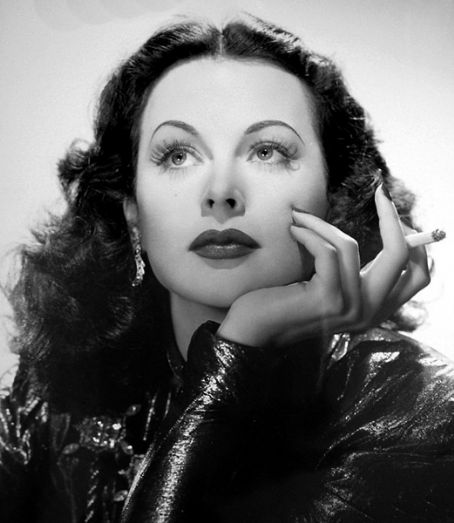
HEDY LAMARR: THE MOST BEAUTIFUL INVENTOR
Hedy Lamarr ,an old Hollywood beauty, had a brain. It's a fact that may be nearly as overlooked as the inventor's wartime creation: landmark technology that was a precursor to Bluetooth.
It's not surprising that she's known best for her sultry persona, given her film role that made everyone sit up and take notice. In 1933's "Ecstasy," a Czech film, she raised eyebrows and drew condemnation around the globe when she appeared nude in one part of the film and simulated an orgasm in another. Lamarr is seen going skinny-dipping and, still without a stitch on, chasing a runaway horse. The orgasm scene comes later, and, yes, she does smoke a cigarette afterward. "Ecstasy" is considered the first theatrically released movie to feature an actress simulating an orgasm on screen.
Take that, Meg Ryan.
Now, Richard Rhodes has revealed the nerdy side of this legendary beauty and superstar.
His new book, "Hedy's Folly: The Life and Breakthrough Inventions of Hedy Lamarr, the Most Beautiful Woman in the World," tells about the invention and how her role in its creation was long ignored.
In a recent interview on NPR's "All Things Considered," Rhodes said Lamarr was the type of person who "was constantly looking at the world and wondering how can that be fixed, how can that be improved."
During an early, unhappy marriage to an Austrian arms dealer (!), Rhodes said, Lamarr would sit at dinner parties given by her husband for Nazi generals, listening to them talk about weapons. With her interest in science, he said, she listened closely to the weapons talk.
Lamarr later escaped that marriage — although not by dressing up as one of her maids and jumping out a window. That story was a fabrication by Lamarr, the author said. She did, however, book passage on a ship with Louis Mayer of Metro-Goldwyn-Mayer, and by the time the ship reached its destination, she had a seven-year, $3,000-a-week contract with the film studio.
"Algiers" (1938), with Charles Boyer, followed soon after, and Lamarr became a huge star.
Lamarr's invention came about, Rhodes said, because "she was keenly aware of the coming war. She was glued to the newspaper, reading the stories. ... When German submarines began torpedoing passenger liners, she felt at that point, 'I've got to invent something that will put a stop to that.' "
Her idea involved making a radio signal "hop around from radio frequency to radio frequency," Rhodes said, to interfere with signal jamming. Thus, a torpedo could be radio guided with less fear of having the signal jammed.
She and a partner obtained a patent, then gave it free of charge to the U.S. Navy. Brilliant, yes?
The Navy "basically threw it into the file," Rhodes said. Later, however, the idea of frequency-hopping was resuscitated by the Navy, and "then the whole system spread like wildfire. The most well-known application today is Bluetooth."
So why isn't Hedy Lamarr the Inventor a famous name?
The patent had expired, Rhodes said, plus, during most of the device's life it was a military secret. By the time it came out, it had gone through many permutations with input from various sources.
"She was simply lost in the noise."
SOURCE
It's not surprising that she's known best for her sultry persona, given her film role that made everyone sit up and take notice. In 1933's "Ecstasy," a Czech film, she raised eyebrows and drew condemnation around the globe when she appeared nude in one part of the film and simulated an orgasm in another. Lamarr is seen going skinny-dipping and, still without a stitch on, chasing a runaway horse. The orgasm scene comes later, and, yes, she does smoke a cigarette afterward. "Ecstasy" is considered the first theatrically released movie to feature an actress simulating an orgasm on screen.
Take that, Meg Ryan.
Now, Richard Rhodes has revealed the nerdy side of this legendary beauty and superstar.
His new book, "Hedy's Folly: The Life and Breakthrough Inventions of Hedy Lamarr, the Most Beautiful Woman in the World," tells about the invention and how her role in its creation was long ignored.
In a recent interview on NPR's "All Things Considered," Rhodes said Lamarr was the type of person who "was constantly looking at the world and wondering how can that be fixed, how can that be improved."
During an early, unhappy marriage to an Austrian arms dealer (!), Rhodes said, Lamarr would sit at dinner parties given by her husband for Nazi generals, listening to them talk about weapons. With her interest in science, he said, she listened closely to the weapons talk.
Lamarr later escaped that marriage — although not by dressing up as one of her maids and jumping out a window. That story was a fabrication by Lamarr, the author said. She did, however, book passage on a ship with Louis Mayer of Metro-Goldwyn-Mayer, and by the time the ship reached its destination, she had a seven-year, $3,000-a-week contract with the film studio.
"Algiers" (1938), with Charles Boyer, followed soon after, and Lamarr became a huge star.
Lamarr's invention came about, Rhodes said, because "she was keenly aware of the coming war. She was glued to the newspaper, reading the stories. ... When German submarines began torpedoing passenger liners, she felt at that point, 'I've got to invent something that will put a stop to that.' "
Her idea involved making a radio signal "hop around from radio frequency to radio frequency," Rhodes said, to interfere with signal jamming. Thus, a torpedo could be radio guided with less fear of having the signal jammed.
She and a partner obtained a patent, then gave it free of charge to the U.S. Navy. Brilliant, yes?
The Navy "basically threw it into the file," Rhodes said. Later, however, the idea of frequency-hopping was resuscitated by the Navy, and "then the whole system spread like wildfire. The most well-known application today is Bluetooth."
So why isn't Hedy Lamarr the Inventor a famous name?
The patent had expired, Rhodes said, plus, during most of the device's life it was a military secret. By the time it came out, it had gone through many permutations with input from various sources.
"She was simply lost in the noise."
SOURCE
Wednesday, December 7, 2011
RIP: HARRY MORGAN
Harry Morgan, Colonel Potter on ‘M*A*S*H,’ Dies at 96
By MICHAEL POLLAK
Harry Morgan, the prolific character actor best known for playing the acerbic but kindly Colonel Potter in the long-running television series “M*A*S*H,” died Wednesday morning at his home in Los Angeles. He was 96. His son Charles confirmed his death, saying Mr. Morgan had been treated for pneumonia recently.
In more than 100 movies, Mr. Morgan played Western bad guys, characters with names like Rocky and Shorty, loyal sidekicks, judges, sheriffs, soldiers, thugs and police chiefs.
On television, he played Officer Bill Gannon with a phlegmatic but light touch to Jack Webb’s always-by-the-book Sgt. Joe Friday in the updated “Dragnet,” from 1967 to 1970. He starred as Pete Porter, a harried husband, in the situation comedy “Pete and Gladys” (1960-62), reprising a role he had played on “December Bride” (1954-59). He was also a regular on “The Richard Boone Show” (1963-64), “Kentucky Jones” (1964-65), “The D.A.” (1971-72), “Hec Ramsey” (1972-74) and “Blacke’s Magic” (1986).But to many fans he was first and foremost Col. Sherman T. Potter, commander of the 4077th Mobile Army Surgical Hospital unit in Korea. With a wry smile, flat voice and sharp humor, Mr. Morgan played Colonel Potter from 1975 to 1983, when “M*A*S*H” went off the air. He replaced McLean Stevenson, who had quit the series, moving into the role on the strength of his performance as a crazed major general in an early episode.
In an interview for the Archive of American Television, Mr. Morgan said of his “M*A*S*H” character: “He was firm. He was a good officer and he had a good sense of humor. I think it’s the best part I ever had.” Colonel Potter’s office had several personal touches. The picture on his desk was of Mr. Morgan’s wife, Eileen Detchon. To relax, the colonel liked to paint and look after his horse, Sophie — a sort of inside joke, since the real Harry Morgan raised quarter horses on a ranch in Santa Rosa. Sophie, to whom Colonel Potter says goodbye in the final episode, was Mr. Morgan’s own horse.
In 1980 his Colonel Potter earned him an Emmy Award as best supporting actor in a comedy series. During the shooting of the series’ final episode, he was asked about his feelings. “Sadness and an aching heart,” he replied
Harry Morgan was born Harry Bratsburg on April 10, 1915, in Detroit. His parents were Norwegian immigrants. After graduating from Muskegon High School, where he played varsity football and was senior class president, he intended to become a lawyer, but debating classes in his pre-law major at the University of Chicago stimulated his interest in the theater. He made his professional acting debut in a summer stock production of “At Mrs. Beam’s” in Mount Kisco, N.Y., and his Broadway debut in 1937 in the original production of “Golden Boy,” starring Luther Adler, in a cast that also included Karl Malden and Lee J. Cobb.
After moving to California in 1942, he was spotted by a talent scout in a Santa Barbara stock company’s production of William Saroyan’s one-act play “Hello Out There.” Signing a contract with 20th Century Fox, he originally used the screen name Henry Morgan, but changed Henry to Harry in the 1950s to avoid confusion with the radio and television humorist Henry Morgan.
Mr. Morgan attracted attention almost immediately. In “The Ox-Bow Incident” (1943), which starred Henry Fonda, he was praised for his portrayal of a drifter caught up in a lynching in a Western town. Reviewing “A Bell for Adano” (1945), based on John Hersey’s novel about the Army in a liberated Italian town, Bosley Crowther wrote in The New York Times that Mr. Morgan was “crude and amusing as the captain of M.P.’s.”
He went on to appear in “All My Sons” (1948), based on the Arthur Miller play, with Edward G. Robinson and Burt Lancaster; “The Big Clock” (1948), in which he played a silent, menacing bodyguard to Charles Laughton; “Yellow Sky” (1949), with Gregory Peck and Anne Baxter; and the critically praised western “High Noon” (1952), with Gary Cooper. Among his other notable films were “The Teahouse of the August Moon” (1956), with Marlon Brando and Glenn Ford, and “Inherit the Wind” (1960), with Spencer Tracy and Fredric March, in which he played a small-town Tennessee judge hearing arguments about evolution in the fictionalized version of the Scopes “monkey trial.” In “How the West Was Won” (1962), he played Gen. Ulysses S. Grant.
After a personable performance as Glenn Miller’s pianist, Chummy MacGregor, in “The Glenn Miller Story” (1954), starring James Stewart, he often played softer characters as well as his trademark hard-bitten tough guys. There were eventually a number of comedies on his résumé, among them “John Goldfarb, Please Come Home” (1965), with Shirley MacLaine and Peter Ustinov; “The Flim-Flam Man” (1967), with George C. Scott; “Support Your Local Sheriff!” (1969), with James Garner and Walter Brennan; and “The Apple Dumpling Gang” (1975), a Disney movie with Tim Conway and Don Knotts.
He returned as Bill Gannon, by now promoted to captain, in the 1987 movie “Dragnet,” a comedy remake of the series starring Dan Aykroyd and Tom Hanks.
Mr. Morgan’s television credits were prodigious. He once estimated that in one show or another, he was seen in prime time for 35 straight years. Regarded as one of the busiest actors in the medium, he had continuing roles in at least 10 series, which, combined with his guest appearances, amounted to hundreds of episodes. He reprised the role of Sherman Potter in “AfterMASH” (1983-85), a short-lived spinoff.
Among the later shows on which he appeared as a guest star were “The Love Boat, “ “3rd Rock From the Sun,” “You Can’t Take It With You,” “Murder, She Wrote” and “The Jeff Foxworthy Show.”
Mr. Morgan’s first wife, Eileen Detchon, died in 1985 after 45 years of marriage. He is survived by his wife, Barbara Bushman, whom he married in 1986; three sons from his first marriage, Christopher, Charles and Paul; and eight grandchildren. A fourth son, Daniel, died in 1989. Mr. Morgan lived in the Brentwood section of Los Angeles.
His son Charles, a lawyer in Los Angeles, said in a telephone interview that he would marvel at his father’s photographic memory. “My dad would read a script the way somebody else would read Time magazine and put it down and be on the set the next day,” he said.
But Harry Morgan never sat as a guest on a talk show, Charles Morgan said ; it did not seem appropriate or necessary. “Appearing on a talk show to focus on himself because he was Harry Morgan,” he said, “was not nearly as natural as appearing in a role as Pete Porter or Bill Gannon or Colonel Potter, or as the cowboy drifter who wandered into town with Henry Fonda and got wrapped up in a vigilante brigade in ‘Ox-Bow Incident.’ ”
SOURCE
By MICHAEL POLLAK
Harry Morgan, the prolific character actor best known for playing the acerbic but kindly Colonel Potter in the long-running television series “M*A*S*H,” died Wednesday morning at his home in Los Angeles. He was 96. His son Charles confirmed his death, saying Mr. Morgan had been treated for pneumonia recently.
In more than 100 movies, Mr. Morgan played Western bad guys, characters with names like Rocky and Shorty, loyal sidekicks, judges, sheriffs, soldiers, thugs and police chiefs.
On television, he played Officer Bill Gannon with a phlegmatic but light touch to Jack Webb’s always-by-the-book Sgt. Joe Friday in the updated “Dragnet,” from 1967 to 1970. He starred as Pete Porter, a harried husband, in the situation comedy “Pete and Gladys” (1960-62), reprising a role he had played on “December Bride” (1954-59). He was also a regular on “The Richard Boone Show” (1963-64), “Kentucky Jones” (1964-65), “The D.A.” (1971-72), “Hec Ramsey” (1972-74) and “Blacke’s Magic” (1986).But to many fans he was first and foremost Col. Sherman T. Potter, commander of the 4077th Mobile Army Surgical Hospital unit in Korea. With a wry smile, flat voice and sharp humor, Mr. Morgan played Colonel Potter from 1975 to 1983, when “M*A*S*H” went off the air. He replaced McLean Stevenson, who had quit the series, moving into the role on the strength of his performance as a crazed major general in an early episode.
In an interview for the Archive of American Television, Mr. Morgan said of his “M*A*S*H” character: “He was firm. He was a good officer and he had a good sense of humor. I think it’s the best part I ever had.” Colonel Potter’s office had several personal touches. The picture on his desk was of Mr. Morgan’s wife, Eileen Detchon. To relax, the colonel liked to paint and look after his horse, Sophie — a sort of inside joke, since the real Harry Morgan raised quarter horses on a ranch in Santa Rosa. Sophie, to whom Colonel Potter says goodbye in the final episode, was Mr. Morgan’s own horse.
In 1980 his Colonel Potter earned him an Emmy Award as best supporting actor in a comedy series. During the shooting of the series’ final episode, he was asked about his feelings. “Sadness and an aching heart,” he replied
Harry Morgan was born Harry Bratsburg on April 10, 1915, in Detroit. His parents were Norwegian immigrants. After graduating from Muskegon High School, where he played varsity football and was senior class president, he intended to become a lawyer, but debating classes in his pre-law major at the University of Chicago stimulated his interest in the theater. He made his professional acting debut in a summer stock production of “At Mrs. Beam’s” in Mount Kisco, N.Y., and his Broadway debut in 1937 in the original production of “Golden Boy,” starring Luther Adler, in a cast that also included Karl Malden and Lee J. Cobb.
After moving to California in 1942, he was spotted by a talent scout in a Santa Barbara stock company’s production of William Saroyan’s one-act play “Hello Out There.” Signing a contract with 20th Century Fox, he originally used the screen name Henry Morgan, but changed Henry to Harry in the 1950s to avoid confusion with the radio and television humorist Henry Morgan.
Mr. Morgan attracted attention almost immediately. In “The Ox-Bow Incident” (1943), which starred Henry Fonda, he was praised for his portrayal of a drifter caught up in a lynching in a Western town. Reviewing “A Bell for Adano” (1945), based on John Hersey’s novel about the Army in a liberated Italian town, Bosley Crowther wrote in The New York Times that Mr. Morgan was “crude and amusing as the captain of M.P.’s.”
He went on to appear in “All My Sons” (1948), based on the Arthur Miller play, with Edward G. Robinson and Burt Lancaster; “The Big Clock” (1948), in which he played a silent, menacing bodyguard to Charles Laughton; “Yellow Sky” (1949), with Gregory Peck and Anne Baxter; and the critically praised western “High Noon” (1952), with Gary Cooper. Among his other notable films were “The Teahouse of the August Moon” (1956), with Marlon Brando and Glenn Ford, and “Inherit the Wind” (1960), with Spencer Tracy and Fredric March, in which he played a small-town Tennessee judge hearing arguments about evolution in the fictionalized version of the Scopes “monkey trial.” In “How the West Was Won” (1962), he played Gen. Ulysses S. Grant.
After a personable performance as Glenn Miller’s pianist, Chummy MacGregor, in “The Glenn Miller Story” (1954), starring James Stewart, he often played softer characters as well as his trademark hard-bitten tough guys. There were eventually a number of comedies on his résumé, among them “John Goldfarb, Please Come Home” (1965), with Shirley MacLaine and Peter Ustinov; “The Flim-Flam Man” (1967), with George C. Scott; “Support Your Local Sheriff!” (1969), with James Garner and Walter Brennan; and “The Apple Dumpling Gang” (1975), a Disney movie with Tim Conway and Don Knotts.
He returned as Bill Gannon, by now promoted to captain, in the 1987 movie “Dragnet,” a comedy remake of the series starring Dan Aykroyd and Tom Hanks.
Mr. Morgan’s television credits were prodigious. He once estimated that in one show or another, he was seen in prime time for 35 straight years. Regarded as one of the busiest actors in the medium, he had continuing roles in at least 10 series, which, combined with his guest appearances, amounted to hundreds of episodes. He reprised the role of Sherman Potter in “AfterMASH” (1983-85), a short-lived spinoff.
Among the later shows on which he appeared as a guest star were “The Love Boat, “ “3rd Rock From the Sun,” “You Can’t Take It With You,” “Murder, She Wrote” and “The Jeff Foxworthy Show.”
Mr. Morgan’s first wife, Eileen Detchon, died in 1985 after 45 years of marriage. He is survived by his wife, Barbara Bushman, whom he married in 1986; three sons from his first marriage, Christopher, Charles and Paul; and eight grandchildren. A fourth son, Daniel, died in 1989. Mr. Morgan lived in the Brentwood section of Los Angeles.
His son Charles, a lawyer in Los Angeles, said in a telephone interview that he would marvel at his father’s photographic memory. “My dad would read a script the way somebody else would read Time magazine and put it down and be on the set the next day,” he said.
But Harry Morgan never sat as a guest on a talk show, Charles Morgan said ; it did not seem appropriate or necessary. “Appearing on a talk show to focus on himself because he was Harry Morgan,” he said, “was not nearly as natural as appearing in a role as Pete Porter or Bill Gannon or Colonel Potter, or as the cowboy drifter who wandered into town with Henry Fonda and got wrapped up in a vigilante brigade in ‘Ox-Bow Incident.’ ”
SOURCE
Labels:
actors,
deaths,
Harry Morgan,
news,
television
Monday, December 5, 2011
MOVIE REVIEW: SOLDIER IN THE RAIN
The film Soldier In The Rain is now available on Warner Brothers Vault series, but for many years the movie collected dust and was never seen. Many people who have seen the movie says it is corny, and fans of Steve McQueen do not like him playing a Gomer Pyle like character, but I think Soldier In The Rain is a charming movie, that I have always enjoyed. I got my DVD copy from a Steve McQueen fan, and it is one of my most cherished movie possessions.
Soldier in the Rain (1963), starring Jackie Gleason and Steve McQueen, is a comedy-drama film about the friendship between an aging Army Master Sergeant (Gleason) and a young country bumpkin buck sergeant (McQueen). Tuesday Weld also stars.
Produced and co-written by Blake Edwards, the screenplay is based on a 1960 novel by William Goldman, who was in the US Army from 1952-1954. The film was directed by Ralph Nelson, who had directed Gleason in Requiem for a Heavyweight the previous year and had a major success with his Lilies of the Field. The film was released five days after President John F. Kennedy's assassination, which didn't help its box office take.
Sergeant Eustis Clay (McQueen) is a peacetime soldier can't wait to finish his service and move on to bigger, better things. He is a personal favorite of Master Sergeant Maxwell Slaughter (Gleason), a military lifer who is considerably brighter than Eustis but enjoys his company and loyalty.
Eustis is involved in a number of schemes and scams, including one in which he will sell tickets to see an equally dim private named Meltzer run a three-minute mile. He inconveniences Slaughter more than once, including a traffic mishap that requires him being bailed out of jail.
Determined to tempt Slaughter with the joys of civilian life before his hitch is up, Eustis fixes him up on a date with the much-younger, not too bright Bobbi Jo Pepperdine. At first Slaughter is offended but gradually he sees another side of Bobbi Jo, including a mutual fondness for crossword puzzles. Eustis and Slaughter golf together and begin to enjoy the good life.
One night, Eustis is devastated to learn of the death of Donald, his dog. A pair of hated rivals wh use their status as Military Policemen to lure Eustis into a barroom brawl. He is beaten two-against-one and is nearly defeated when Slaughter angrily comes to his rescue. Together they win the fight, but the middle-aged, overweight Slaughter collapses from the effort.
Hospitalized, he delights Eustis by suggesting that they leave the Army together and go live on a tropical isle, surrounded by blue seas and beautiful girls. Slaughter dies, however, and Eustis, a changed man, re-enlists in the Army for another hitch.
Film critic Craig Butler wrote about the film's theme, "An absorbing film that deserves to be much better known, Soldier in the Rain is a sometimes uneasy blend of comedy and drama that doesn't always quite come off, but has so much going for it that one is glad to overlook its flaws. A buddy picture set in the peacetime Army, Soldier is concerned with how a strong friendship can develop between two people of differing personalities and aims. Jackie Gleason and Steve McQueen are different types, and the fact that they have such a strong bond may at first seem unlikely, but as the film progresses it somehow seems natural and inevitable. Blake Edwards and Martin Richlin have done an excellent job of adapting William Goldman's novel, and together with director Ralph Nelson have opted to emphasize the character aspects of the material over the plot."
MY RATING: 9 OUT OF 10
Soldier in the Rain (1963), starring Jackie Gleason and Steve McQueen, is a comedy-drama film about the friendship between an aging Army Master Sergeant (Gleason) and a young country bumpkin buck sergeant (McQueen). Tuesday Weld also stars.
Produced and co-written by Blake Edwards, the screenplay is based on a 1960 novel by William Goldman, who was in the US Army from 1952-1954. The film was directed by Ralph Nelson, who had directed Gleason in Requiem for a Heavyweight the previous year and had a major success with his Lilies of the Field. The film was released five days after President John F. Kennedy's assassination, which didn't help its box office take.
Sergeant Eustis Clay (McQueen) is a peacetime soldier can't wait to finish his service and move on to bigger, better things. He is a personal favorite of Master Sergeant Maxwell Slaughter (Gleason), a military lifer who is considerably brighter than Eustis but enjoys his company and loyalty.
Eustis is involved in a number of schemes and scams, including one in which he will sell tickets to see an equally dim private named Meltzer run a three-minute mile. He inconveniences Slaughter more than once, including a traffic mishap that requires him being bailed out of jail.
Determined to tempt Slaughter with the joys of civilian life before his hitch is up, Eustis fixes him up on a date with the much-younger, not too bright Bobbi Jo Pepperdine. At first Slaughter is offended but gradually he sees another side of Bobbi Jo, including a mutual fondness for crossword puzzles. Eustis and Slaughter golf together and begin to enjoy the good life.
One night, Eustis is devastated to learn of the death of Donald, his dog. A pair of hated rivals wh use their status as Military Policemen to lure Eustis into a barroom brawl. He is beaten two-against-one and is nearly defeated when Slaughter angrily comes to his rescue. Together they win the fight, but the middle-aged, overweight Slaughter collapses from the effort.
Hospitalized, he delights Eustis by suggesting that they leave the Army together and go live on a tropical isle, surrounded by blue seas and beautiful girls. Slaughter dies, however, and Eustis, a changed man, re-enlists in the Army for another hitch.
Film critic Craig Butler wrote about the film's theme, "An absorbing film that deserves to be much better known, Soldier in the Rain is a sometimes uneasy blend of comedy and drama that doesn't always quite come off, but has so much going for it that one is glad to overlook its flaws. A buddy picture set in the peacetime Army, Soldier is concerned with how a strong friendship can develop between two people of differing personalities and aims. Jackie Gleason and Steve McQueen are different types, and the fact that they have such a strong bond may at first seem unlikely, but as the film progresses it somehow seems natural and inevitable. Blake Edwards and Martin Richlin have done an excellent job of adapting William Goldman's novel, and together with director Ralph Nelson have opted to emphasize the character aspects of the material over the plot."
MY RATING: 9 OUT OF 10
Labels:
drama,
Jackie Gleason,
movie review,
Soldier In The Rain,
Steve McQueen
Saturday, December 3, 2011
SEX SYMBOLS OF THE CINEMA: 1930s
As a new decade approached in the movie industry - sound had taken over the movies. Now sex symbols on the screen needed to do more than bat an eye or looked seductive, they had to talk. It did not matter how beautiful they were, if they opened their mouths and sounded like a shrill Minnie Mouse, then they were out of a job.
In addition to sound in the movies, the industry was hit with a morality code in 1934. Movies of the 1920s and early 1930s were very risque, and the code was created to keep the movies pure and wholesome. That code would remain a part of the movie industry until the 1960s. The sex symbols of the 1930s had to be sexy without overtly sexual, and they had to use their voices to keep the audience's attention. These actresses of the 1930s fit the profile of what a 1930s starlet was:
GRETA GARBO (1905-1990)
Born in Sweden as the much less marketable Greta Gustafsson (a name more befitting a herring fisherman) this Viking beauty was pillaging the hearts of America as early as 1927. Although her Hollywood career was a short one, Garbo is still considered the quintessential movie star, not only for her looks but also her huskie voice. She left movies in 1941 - never to return. Even Bing Crosby tried to coax her out of retirement to make a movie with him. By the 1970s and 1980s, she was an elusive legend in New York - and she only longed to be alone.
JOAN CRAWFORD (1905-1977)
During the 1920s actress Joan Crawford (originally Lucille Fay LeSueur) Charlestoned her way into the public consciousness when she became known as America’s most famous flapper, which is something like a female hipster with a shred of dignity if you can believe such a thing. Opposite to her screen persona however, the real Crawford was a hard working Texas girl who had to flaunt her goods in male stage films before someone finally decided she wasn’t too monstrously ugly to star in a movie’s leading role. Her reputation is tarnished as "Mommie Dearest" now, but she was one of the screen's great sex symbols of the 1930s.
MARLENE DIETRICH (1901-1992)
Marlene Dietrich was another foreign import from Germany, brought over to America to rival Greta Garbo, because as far as movie producers back then were concerned, one Germanic actress with strong facial features was as good as the other. They were of course right, because pretty soon Dietrich became one of the most famous and best paid women of her era. Dietrich wore a crude face-lifting mechanism in most of her movies, composed of a set of hooks borrowing into her skin, hidden safely away under wigs and such. Like Garbo she lived many years a reclusive. However, Dietrich appeared on film as late as 1979 with David Bowie (of all people) to sing a sad version of "Just A Gigalo". Her personality was still there, but her looks had faded.
MAE WEST (1893-1980)
Mae West was not only an early cinematic sex symbol, she was also a crusader against censorship, and an activist fighting for the rights of homosexuals. Her movies not only were banned often but so were many of her radio broadcasts, namely a dirty radio sketch she did on Adam and Eve. West worked with many of the great actors of Hollywood like Cary Grant, WC Fields, and George Raft, but I do not feel the movies ever really captured the full personality that Mae West possessed. She made most of her best movies in the 1930s, and by the 1960s she basically became a caricature of herself. A rumor came out in the 1960s that she was actually a man, but despite the heavy make-up she wore to try to remain looking young, she was indeed a woman.
Even though Greta Garbo was considered odd for leaving movies in the 1940s, she might have been the smartest. The other starlets like Dietrich, Crawford, and West stayed in the industry too long. Garbo ended her career on a high note. As the decade of the 1930s ended, so did a lot of the innocence of a country as we got thrusted into World War II. The sex symbols played an important part in the morale of our soldiers and getting the country through tough times again...
In addition to sound in the movies, the industry was hit with a morality code in 1934. Movies of the 1920s and early 1930s were very risque, and the code was created to keep the movies pure and wholesome. That code would remain a part of the movie industry until the 1960s. The sex symbols of the 1930s had to be sexy without overtly sexual, and they had to use their voices to keep the audience's attention. These actresses of the 1930s fit the profile of what a 1930s starlet was:
GRETA GARBO (1905-1990)
Born in Sweden as the much less marketable Greta Gustafsson (a name more befitting a herring fisherman) this Viking beauty was pillaging the hearts of America as early as 1927. Although her Hollywood career was a short one, Garbo is still considered the quintessential movie star, not only for her looks but also her huskie voice. She left movies in 1941 - never to return. Even Bing Crosby tried to coax her out of retirement to make a movie with him. By the 1970s and 1980s, she was an elusive legend in New York - and she only longed to be alone.
JOAN CRAWFORD (1905-1977)
During the 1920s actress Joan Crawford (originally Lucille Fay LeSueur) Charlestoned her way into the public consciousness when she became known as America’s most famous flapper, which is something like a female hipster with a shred of dignity if you can believe such a thing. Opposite to her screen persona however, the real Crawford was a hard working Texas girl who had to flaunt her goods in male stage films before someone finally decided she wasn’t too monstrously ugly to star in a movie’s leading role. Her reputation is tarnished as "Mommie Dearest" now, but she was one of the screen's great sex symbols of the 1930s.
MARLENE DIETRICH (1901-1992)
Marlene Dietrich was another foreign import from Germany, brought over to America to rival Greta Garbo, because as far as movie producers back then were concerned, one Germanic actress with strong facial features was as good as the other. They were of course right, because pretty soon Dietrich became one of the most famous and best paid women of her era. Dietrich wore a crude face-lifting mechanism in most of her movies, composed of a set of hooks borrowing into her skin, hidden safely away under wigs and such. Like Garbo she lived many years a reclusive. However, Dietrich appeared on film as late as 1979 with David Bowie (of all people) to sing a sad version of "Just A Gigalo". Her personality was still there, but her looks had faded.
MAE WEST (1893-1980)
Mae West was not only an early cinematic sex symbol, she was also a crusader against censorship, and an activist fighting for the rights of homosexuals. Her movies not only were banned often but so were many of her radio broadcasts, namely a dirty radio sketch she did on Adam and Eve. West worked with many of the great actors of Hollywood like Cary Grant, WC Fields, and George Raft, but I do not feel the movies ever really captured the full personality that Mae West possessed. She made most of her best movies in the 1930s, and by the 1960s she basically became a caricature of herself. A rumor came out in the 1960s that she was actually a man, but despite the heavy make-up she wore to try to remain looking young, she was indeed a woman.
Even though Greta Garbo was considered odd for leaving movies in the 1940s, she might have been the smartest. The other starlets like Dietrich, Crawford, and West stayed in the industry too long. Garbo ended her career on a high note. As the decade of the 1930s ended, so did a lot of the innocence of a country as we got thrusted into World War II. The sex symbols played an important part in the morale of our soldiers and getting the country through tough times again...
Labels:
actress,
Greta Garbo,
Joan Crawford,
Mae West,
Marlene Dietrich,
sex symbols
Thursday, December 1, 2011
RIP: DAUGHTER OF LORETTA YOUNG DIES
Judy Lewis, a psychotherapist and former actress who wrote a book about her complicated heritage as the illegitimate daughter of Hollywood legends Loretta Young and Clark Gable, has died. She was 76.
A longtime resident of Los Angeles, Lewis died of cancer Friday in Gladwyne, Pa., according to her daughter, Maria Tinney Dagit.
Brought up in Bel-Air as Young's adopted daughter, Lewis was an adult when she learned that the glamorous leading lady and Gable, the dashing star of "Gone With the Wind," had conceived her during a brief affair in the 1930s.
Fearful of scandal, Young hid the pregnancy and later fabricated the adoption. Gable never acknowledged that Lewis was his daughter, although he visited her once when she was 15, an experience that Lewis tenderly recounted in her 1994 memoir, "Uncommon Knowledge."
Young was single and 22 and Gable married and 34 when they co-starred in "Call of the Wild" (1935), based on the classic novel by Jack London. The rest of their story unfolds like a B movie: The unmarried, devout Catholic known for playing wholesome roles discovers she is pregnant as she is set to star in legendary director Cecil B. DeMille's religious-themed film "The Crusades," goes abroad to avoid gossip, and returns to Los Angeles to give birth in secrecy. Then she turns the infant over to a home run by nuns, retrieves her daughter before she turns 2, fakes the adoption and raises the child under a cloud of lies.
"I had to write this book," Lewis told The Times in 1994 when her memoir was released. "I don't think anyone knows what it's like not to be acknowledged by your own parents."
She was born on Nov. 6, 1935, in a little house in Venice, where Young hid during the last weeks of the pregnancy. Lewis spent the first months of her life there. According to her memoir, Gable visited her there and was so appalled to find her sleeping in a drawer that he took $400 out of his pocket and told Young to "buy her a decent bed."
When she was eight months old, Young placed her in a Catholic orphanage in San Francisco, retrieving her when she was 19 months old. Her "adoption" was leaked to Hollywood columnist Louella Parsons.
When she was 5, her mother married radio producer Tom Lewis and had two sons with him. Although she had his last name, he never adopted her and treated her poorly. Young apparently never told him that Gable was her daughter's father, but it was an open secret in Hollywood — one that, amazingly, never reached young Judy's ears because all her friends had been instructed not to tell her.
The physical hints, however, were difficult to ignore. Lewis had Gable's broad smile and his famously prominent ears. She hid her ears under bonnets until she was 7, when she underwent surgery to pin them back.
One day in 1950 Lewis came home from Marymount Girls Catholic School to find the screen idol standing in her front hallway.
"I couldn't believe my eyes," she wrote in her memoir. "He was right in front of me, and he was smiling at me. His eyes were crinkled into smile lines at the corners and he was so tall that I had to look up. He was much more handsome than I remembered him from the movies.… What is he doing here? I wondered to myself. But I could say nothing. I was speechless."
She tried to escape upstairs to prepare for a dinner date, but her mother commanded her to stay. Over the next hour, Gable sat beside her on the sofa and engaged her in earnest conversation about herself. Before he left, he thanked her for a lovely visit. Then, she recalled, he "bent down and, cupping my face in his two big hands, kissed me lightly on the forehead."
She never saw him again.
Not until several years later did she begin to grasp the meaning of the mysterious visit. Two weeks before her wedding, she panicked and told her fiance, Joe Tinney, she could not marry him because "I don't know who I am." She said he told her, "Judy, don't worry about it. I know everything about you. You're Clark Gable's daughter." She was astounded.
It took her eight years, when she was 31 and appearing in the soap opera "The Secret Storm," to confront her mother. Young, after throwing up in the bathroom, told her that Gable indeed was her father. Then she made Lewis promise to tell no one.
In the 1980s, after a two-decade acting career that included appearances on Broadway and dozens of television shows, Lewis became a marriage and family therapist, working with foster children and pregnant teens.
Her marriage to Tinney ended in divorce in 1972. In addition to her daughter, she is survived by two grandsons and three half-brothers, including John Clark Gable, who was born after his famous father died of a heart attack while filming "The Misfits" in 1960.
When Lewis' book came out, her mother publicly denied Gable's paternity. Estranged for years, the two women reconciled shortly before Young died in 2000. Young's silence about the affair with Gable was not broken until a few months after her death in "Forever Young," an authorized biography by Joan Wester Anderson.
Lewis never had a chance to ask Gable the questions that swirled in her head for years: Did he want a child? What was he thinking that day they met? Would he have wanted to help raise her if her mother hadn't pushed him away? She said that whenever she watched Gable's loving scenes with his on-screen daughter in "Gone With the Wind," she cried.
"It's very sad to me," she told the London Telegraph in 2002, "because he's so dear with her. I pretend it's me."
SOURCE
A longtime resident of Los Angeles, Lewis died of cancer Friday in Gladwyne, Pa., according to her daughter, Maria Tinney Dagit.
Brought up in Bel-Air as Young's adopted daughter, Lewis was an adult when she learned that the glamorous leading lady and Gable, the dashing star of "Gone With the Wind," had conceived her during a brief affair in the 1930s.
Fearful of scandal, Young hid the pregnancy and later fabricated the adoption. Gable never acknowledged that Lewis was his daughter, although he visited her once when she was 15, an experience that Lewis tenderly recounted in her 1994 memoir, "Uncommon Knowledge."
Young was single and 22 and Gable married and 34 when they co-starred in "Call of the Wild" (1935), based on the classic novel by Jack London. The rest of their story unfolds like a B movie: The unmarried, devout Catholic known for playing wholesome roles discovers she is pregnant as she is set to star in legendary director Cecil B. DeMille's religious-themed film "The Crusades," goes abroad to avoid gossip, and returns to Los Angeles to give birth in secrecy. Then she turns the infant over to a home run by nuns, retrieves her daughter before she turns 2, fakes the adoption and raises the child under a cloud of lies.
"I had to write this book," Lewis told The Times in 1994 when her memoir was released. "I don't think anyone knows what it's like not to be acknowledged by your own parents."
She was born on Nov. 6, 1935, in a little house in Venice, where Young hid during the last weeks of the pregnancy. Lewis spent the first months of her life there. According to her memoir, Gable visited her there and was so appalled to find her sleeping in a drawer that he took $400 out of his pocket and told Young to "buy her a decent bed."
When she was eight months old, Young placed her in a Catholic orphanage in San Francisco, retrieving her when she was 19 months old. Her "adoption" was leaked to Hollywood columnist Louella Parsons.
When she was 5, her mother married radio producer Tom Lewis and had two sons with him. Although she had his last name, he never adopted her and treated her poorly. Young apparently never told him that Gable was her daughter's father, but it was an open secret in Hollywood — one that, amazingly, never reached young Judy's ears because all her friends had been instructed not to tell her.
The physical hints, however, were difficult to ignore. Lewis had Gable's broad smile and his famously prominent ears. She hid her ears under bonnets until she was 7, when she underwent surgery to pin them back.
One day in 1950 Lewis came home from Marymount Girls Catholic School to find the screen idol standing in her front hallway.
"I couldn't believe my eyes," she wrote in her memoir. "He was right in front of me, and he was smiling at me. His eyes were crinkled into smile lines at the corners and he was so tall that I had to look up. He was much more handsome than I remembered him from the movies.… What is he doing here? I wondered to myself. But I could say nothing. I was speechless."
She tried to escape upstairs to prepare for a dinner date, but her mother commanded her to stay. Over the next hour, Gable sat beside her on the sofa and engaged her in earnest conversation about herself. Before he left, he thanked her for a lovely visit. Then, she recalled, he "bent down and, cupping my face in his two big hands, kissed me lightly on the forehead."
She never saw him again.
Not until several years later did she begin to grasp the meaning of the mysterious visit. Two weeks before her wedding, she panicked and told her fiance, Joe Tinney, she could not marry him because "I don't know who I am." She said he told her, "Judy, don't worry about it. I know everything about you. You're Clark Gable's daughter." She was astounded.
It took her eight years, when she was 31 and appearing in the soap opera "The Secret Storm," to confront her mother. Young, after throwing up in the bathroom, told her that Gable indeed was her father. Then she made Lewis promise to tell no one.
In the 1980s, after a two-decade acting career that included appearances on Broadway and dozens of television shows, Lewis became a marriage and family therapist, working with foster children and pregnant teens.
Her marriage to Tinney ended in divorce in 1972. In addition to her daughter, she is survived by two grandsons and three half-brothers, including John Clark Gable, who was born after his famous father died of a heart attack while filming "The Misfits" in 1960.
When Lewis' book came out, her mother publicly denied Gable's paternity. Estranged for years, the two women reconciled shortly before Young died in 2000. Young's silence about the affair with Gable was not broken until a few months after her death in "Forever Young," an authorized biography by Joan Wester Anderson.
Lewis never had a chance to ask Gable the questions that swirled in her head for years: Did he want a child? What was he thinking that day they met? Would he have wanted to help raise her if her mother hadn't pushed him away? She said that whenever she watched Gable's loving scenes with his on-screen daughter in "Gone With the Wind," she cried.
"It's very sad to me," she told the London Telegraph in 2002, "because he's so dear with her. I pretend it's me."
SOURCE
Labels:
Clark Gable,
deaths,
Judy Lewis,
Loretta Young,
news
Subscribe to:
Posts (Atom)