Showing posts with label White Christmas. Show all posts

Sunday, December 7, 2025

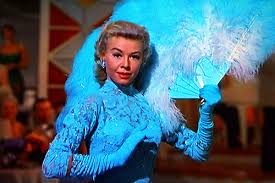
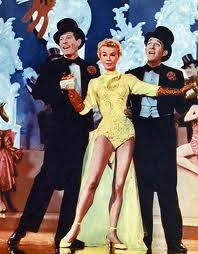
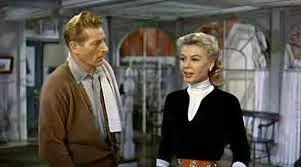
VERA-ELLEN AND HER DANCING INSTRUCTOR


 Famed MGM dancing instructor Joan Bayley died in 2022 - just shy of her 102nd birthday. Before she died, she gave an interview, which detailed her relationship with the beautiful and talented Vera-Ellen. When asked about Vera-Ellen,  Joan Bayley who worked with the Hollywood dancer on White Christmas if she was a nice girl. “Yes, she was,” replied Joan. “She was not an exciting personality, but she was friendly and sweet.”


I expressed my opinion that Vera-Ellen’s dancing is not my favorite, as something feels missing in her dancing. With exceptions, she never seems to fully put it together. To this, Joan replied,

“Her body was part of it. She was just so thin, it was distasteful to look at. Because, the femurs that go like this, she didn’t have enough muscles or flesh to fill in this part, so there was always this big space, you notice? her legs went like that. There was always that a big space (between her legs), she had these little fat cheeks, she hated it, she would even would suck in … Sometimes you see it on the screen that she would suck in.

“I would do always do a ballet barre with her in the morning, and I’d say to her, “Did you have breakfast?” She would say, “I had coffee.” Lunch would come; she wouldn’t eat lunch. She had a Frenchman who would come and give her French lessons. While we were all eating lunch she was in her trailer, having French lessons. And I’d say, what are you having for dinner? Steak and salad … And the steak was probably as big as my thumb. That woman could dance though...


Saturday, December 9, 2023

BEHIND THE SCENES: WHITE CHRISTMAS (1954)

I really love looking at some of these behind the scene photos from classic movies. Most of us have just viewed the end product, but here is some of the film making it took to make the beloved classic White Christmas. As you know this classic musical starred Bing Crosby, Danny Kaye, Rosemary Clooney, and Vera-Ellen...


Tuesday, December 24, 2019

MUSIC BREAK: BING CROSBY & DANNY KAYE - SANTA CLAUS

Here was a song that Irving Berlin wrote for Bing and Danny Kaye to sing in White Christmas. It was cut from the movie, but this unreleased track still exists!


Sunday, December 22, 2019

FIVE BEST COVERS OF WHITE CHRISTMAS

“White Christmas” is one of the most covered songs of all time. Some sources say it’s the most covered song, and it seems like every major artist has recorded it at some point. Since its first studio recorded was released in 1942, the tune has attracted everyone from Tony Bennett to Barbra Streisand, Tiny Tim, the Flaming Lips and Iggy Pop and Ringo Starr.

Although there are simply too many covers to, well, cover, we’ve compiled a list of seven of the best versions of “White Christmas” currently available through streaming services. They’re listed chronologically:


• The Drifters (1954) – The legendary doo-wop group the Drifters had crossover pop hits with “Under the Boardwalk,” “Up on the Roof” and “Save the Last Dance for Me,” but their take on “White Christmas” was mostly relegated to black radio stations when it was released in ’54. With its complex vocal arrangements, it’s one of the most spirited and distinct versions of the song, and its prominent placement on the “Home Alone” soundtrack (Macaulay Culkin actually lip synchs to it) later ensured its classic status.

• Frank Sinatra (1954)
– Ol’ Blue Eyes took on Berlin the same year that the Drifters did, and although his version is more traditional, it confidently announces itself as one of the best. This one might seem like an obvious choice – without even hearing it, you know Sinatra’s take on “White Christmas” is going to be great – but his voice marries so beautifully with Berlin’s music that it’s further proof that Sinatra could do no wrong in front of a mic.

• Ella Fitzgerald (1960) – Another of the greatest vocalists of all time, Ella Fitzgerald never met a song she couldn’t make her own. Her “White Christmas,” which appeared on 1960’s “Ella Wishes You a Swinging Christmas,” is no exception: It’s as effortlessly classy and lovely as you might expect, and the song’s jazzy percussion and swooning brass give you the impression you’re in the company of the world’s best lounge act.


• Darlene Love (1963) – Phil Spector’s “A Christmas Gift for You,” a holiday showcase for the infamous producer’s contracted artists, was a flop upon its first release (it came out the day John F. Kennedy was assassinated). It’s now frequently cited as the greatest of all holiday albums, and many of its 13 tracks, including the Crystals’ “Santa Claus Is Coming to Town” and the Ronettes’ “Sleigh Ride,” have become Christmas classics. Darlene Love’s soaring “White Christmas” opens the record in all its Wall of Sound glory, a slice of glossy L.A. pop that’s perfect for a snowy afternoon.

• Otis Redding (1968) – One of the most expressive vocalists in pop music history, Otis Redding tackles “White Christmas” with the same soulful power he did his other timeless R&B ballads. Redding’s arrangement is heavy with horns and an organ, giving the song a bluesy swagger while maintaining its inherent melancholy. That his version was released a year after his death imbues it with a bittersweet edge.

Sunday, December 15, 2019

MOVIE REVIEW: WHITE CHRISTMAS - PART TWO


The song "Snow" was originally written for Call Me Madam with the title "Free," but was dropped in out-of-town tryouts. The melody and some of the words were kept, but the lyrics were changed to be more appropriate for a Christmas movie. The song "What Can You Do with a General?" was originally written for an un-produced project called Stars on My Shoulders.

Trudy Stevens provided the singing voice for Vera-Ellen, who did not have a suitable singing voice. It was not possible to issue an "original soundtrack album" of the film, because Decca Records controlled the soundtrack rights, but Clooney was under exclusive contract with Columbia Records. Consequently, each company issued a separate "soundtrack recording": Decca issuing Selections from Irving Berlin's White Christmas, while Columbia issued Irving Berlin's White Christmas. On the former, the song "Sisters" (as well as all of Clooney's vocal parts) was recorded by Peggy Lee, while on the latter, the song was sung by Rosemary Clooney and her own sister, Betty.

Berlin wrote "A Singer, A Dancer" for Crosby and his planned co-star Fred Astaire but when he was unavailable, Berlin re-wrote it as "A Crooner – A Comic" for Crosby and Donald O'Connor, but when O'Connor left the project so did the song. Another song written by Berlin for the film was "Sittin' in the Sun (Countin' My Money)" but because of delays in production, Berlin decided to publish it independently.] Crosby and Kaye also recorded another Berlin song ("Santa Claus") for the opening WWII Christmas Eve show scene, but it was not used in the final film. Their recording of the song survives though, and the song is cute but not great.


One of the greatest moments of the film is a bit Bing and Danny Kaye did off the cuff. According to Rosemary Clooney, Bing and Danny’s “Sisters” performance was not originally in the script. They were clowning around on the set, and director Michael Curtiz thought it was so funny that he decided to film it. In the scene, Crosby’s laughs are genuine and unscripted, and he was unable to hold a straight face. Clooney said the filmmakers had a better take where Crosby didn’t laugh, but the version with Crosby laughing was one that they used.

I find myself always comparing White Christmas to Holiday Inn, and I think that is unfair. The movies were done a decade apart and movie musicals were much different in 1954 than 1942. I prefer Holiday Inn, but I have a much better appreciation for White Christmas now that I have seen the film in a move theater. From the understated performance of Dean Jagger as the retired general to the superb dancing of Vera-Ellen to the banter of Crosby and Kaye, White Christmas is really a great film. Yes, the film is sentimental and cheesy at times. While I went to see the film in a theater my wife and kids ran errands, and I am glad. I had tears in eyes at the end when the general was recognized and realized he was not forgotten. I think that is a sign of a great movie that a movie made more than 60 years ago can still evoke emotion in 2017. At the end of the movie screening, the audience stood up and applauded, and I smiled to myself and thought of what a great Christmas gift this film was and is. Thanks again Bing!

MY RATING: 10 OUT OF 10

Sunday, December 8, 2019

HISTORY OF A SONG: WHITE CHRISTMAS

"White Christmas" is a 1942 Irving Berlin song reminiscing about an old-fashioned Christmas setting. The version sung by Bing Crosby is the world's best-selling single with estimated sales in excess of 100 million copies worldwide. Other versions of the song, along with Crosby's, have sold over 50 million copies.

Accounts vary as to when and where Berlin wrote the song. One story is that he wrote it in 1940, in warm La Quinta, California, while staying at the La Quinta Hotel, a frequent Hollywood retreat also favored by writer-director-producer Frank Capra, although the Arizona Biltmore also claims the song was written there. He often stayed up all night writing—he told his secretary, "Grab your pen and take down this song. I just wrote the best song I've ever written—heck, I just wrote the best song that anybody's ever written!"

The first public performance of the song was by Bing Crosby, on his NBC radio show The Kraft Music Hall on Christmas Day, 1941; a copy of the recording from the radio program is owned by Crosby's estate and was loaned to CBS News Sunday Morning for their December 25, 2011 program. He subsequently recorded the song with the John Scott Trotter Orchestra and the Ken Darby Singers and for Decca Records in just 18 minutes on May 29, 1942, and it was released on July 30 as part of an album of six 78-rpm discs from the musical film Holiday Inn. At first, Crosby did not see anything special about the song. He just said "I don't think we have any problems with that one, Irving." The song established that there could be commercially successful secular Christmas songs —in this case, written by a Jewish-American songwriter.


The song initially performed poorly and was overshadowed by Holiday Inn's first hit song: "Be Careful, It's My Heart". By the end of October 1942, "White Christmas" topped the Your Hit Parade chart. It remained in that position until well into the new year. It has often been noted that the mix of melancholy—"just like the ones I used to know"—with comforting images of home—"where the treetops glisten"—resonated especially strongly with listeners during World War II. A few weeks after the attacks on Pearl Harbor, Crosby introduced "White Christmas" on a Christmas Day broadcast. The Armed Forces Network was flooded with requests for the song. The recording is noted for Crosby's whistling during the second chorus.

In 1942 alone, Crosby's recording spent eleven weeks on top of the Billboard charts. The original version also hit number one on the Harlem Hit Parade for three weeks,  Crosby's first-ever appearance on the black-oriented chart. Re-released by Decca, the single returned to the No. 1 spot during the holiday seasons of 1945 and 1946 (on the chart dated January 4, 1947), thus becoming the only single with three separate runs at the top of the U.S. charts. The recording became a chart perennial, reappearing annually on the pop chart twenty separate times before Billboard magazine created a distinct Christmas chart for seasonal releases.


In Holiday Inn, the composition won the Academy Award for Best Original Song in 1942. In the film, Crosby sings "White Christmas" as a duet with actress Marjorie Reynolds, though her voice was dubbed by Martha Mears. This now-familiar scene was not the movie makers' initial plan. In the script as originally conceived, Reynolds, not Crosby, would sing the song. The song would feature in another Crosby film, the 1954 musical White Christmas, which became the highest-grossing film of 1954. (Crosby made yet another studio recording of the song, accompanied by Joseph J. Lilley's orchestra and chorus, for the film's soundtrack album.)

The version most often heard today on the radio during the Christmas season is the 1947 re-recording. The 1942 master was damaged due to frequent use. Crosby re-recorded the track on March 19, 1947, accompanied again by the Trotter Orchestra and the Darby Singers, with every effort made to reproduce the original recording session. The re-recording is recognizable by the addition of flutes and celesta in the beginning. Although Crosby dismissed his role in the song's success, saying later that "a jackdaw with a cleft palate could have sung it successfully," he was associated with it for the rest of his career...


Sunday, December 1, 2019

MOVIE REVIEW: WHITE CHRISTMAS - PART ONE

I had the the great opportunity to see 1954’s White Christmas in a movie theater a couple of days before Christmas in 2017. I actually fulfilled one of my bucket list items by seeing a Bing Crosby movie in a theater. I had never had the pleasure of seeing one like that before. I have to admit that White Christmas has never been my favorite Crosby film. I thought the story was contrite, and I did not care for the pairing of Bing with funny man Danny Kaye. However, upon seeing this movie in the theater, I have a completely new appreciation for the film.

The beloved classic that everyone watches during the holiday season is a lot different from what was proposed in the beginning. At first, Bing Crosby turned down the role due to the recent death of his wife Dixie Lee. However, Bing knew working on a musical with Irving Berlin tunes was destined to be a hit so he signed. Bing had co-star approval, and had wanted Fred Astaire for the role of his Army buddy. Crosby and Astaire had previously starred in Holiday Inn (1942) and Blue Skies (1946) earlier. Astaire read the script, but he then turned it down. The last movie that Astaire had made for Paramount was the 1950 disastrous musical Let’s Dance with Betty Hutton, and by 1954 Astaire was really being choosy on what roles he was accepting at that point. Next Bing wanted to work with dancer Donald O’ Connor again. Donald had played Bing’s younger brother in an earlier Paramount musical Sing You Sinners in 1938, and Bing and Donald had work together on radio shows since then. O’Connor was all set to be in the film, until he broke his ankle right before film rehearsals were set to begin. This sent Paramount scrambling, and they came up with the idea of pairing Bing with comedian Danny Kaye.


Even though Kaye was third choice for the film, he had this to say about Bing:

"I loved to work with him. I had the feeling he was my close personal friend. The real truth is that everybody knows Bing, but no one knows him. Through the years, he has created a legendary character that is so vivid, no one knows where the legend begins and the real Crosby leaves off. I thought I knew Bing--thought I knew all about him until we started to make White Christmas. Then I realized I actually didn't know the man at all. The truth of the matter is, there isn't a lazy bone in Bing's body. He works harder than any man I've met--but he does it with an easy casualness that makes him look lazy." (The Danny Kaye Story pg 198).

The movie plot, as flimsy as it may be, does has some serious overtones. By 1954, World War II had been over for almost a decade, and the film touches on what happens to soldiers after the fighting is over. Like many of Irving Berlin’s movie musicals, the plot of White Christmas is basically a vehicle to move from song to song. Many of Berlin’s standards are present like “Blue Skies”, “Heat Wave”, “Abraham” and of course the title song that was sung in the first minutes of the movie by Bing, and then by the group at the end. The new songs that Berlin wrote for the film were good but not up to par with the songs he was writing two decades earlier. My favorite of these new songs was the torchy number “Love You Didn’t Do Right For Me” which was sung in the movie by Rosemary Clooney. Other new songs like “Snow” and “Sisters” have also become standards....  TO BE CONTINUED...

Sunday, November 24, 2019

COMING SOON: THE MONTH OF WHITE CHRISTMAS

Mark your calendars and make your cocoa with marshmallows, because during the month of December we are celebrating everything White Christmas. From the song to the movie, we are honoring songwriter's Irving Berlin's masterpiece, which was subsequently featured in three Bing Crosby movies.


Just us for the winter fun!

Monday, December 24, 2018

GUEST REVIEW: WHITE CHRISTMAS

Bruce Kogan is back with a review of the yuletide classic White Christmas...

By 1954 the song White Christmas had become such a timeless classic that it was inevitable that a film would be made around it. And of course the star would be none other than Bing Crosby. But who to star with him.

Originally this was to be the third Irving Berlin outing for Bing and Fred Astaire. Then Donald O'Connor was to co-star, but finally Danny Kaye teamed with Der Bingle. Proved to be a felicitous combination.

By then Rosemary Clooney had worked in a few films well and more importantly, she had clicked with Crosby on the radio. Bing had teamed with several girl singers over the years, like Connee Boswell, Frances Langford, Mary Martin, Trudy Erwin, Carole Richards, Peggy Lee and a trio of sisters named Andrews. But he always said Rosemary Clooney was it for him and besides Mary Martin, the only other one who did became a leading lady for him.

It's not remembered because of the success of her solo career, but Rosemary Clooney started as a duo with her sister Betty who retired early to raise a family. So with Vera-Ellen as her sister in the movie, that was an aspect of the plot Rosemary could handle with ease.


The plot such as it is involves Bing and Danny as a song and dance duo who've expanded into the production end of show business. Through a little bit of a con game worked by Vera Ellen, the two meet a singing sister act like the Clooney sisters were. The sisters turn out to be headed to Vermont to work at a resort and the smitten guys go along with them.

Problem is there ain't any snow there. It's an unheard of 68 degrees Fahrenheit in early December. And the place is owned by Crosby and Kaye's former commander from World War II, played by Dean Jagger. He's about to lose his shirt and his pride. So our intrepid quartet go to work.


Irving Berlin's score for White Christmas is about half new songs and the other half from previous scores. That's how it was when you got Irving to work for you. Listen carefully even to the background music. You will not hear one note of a non-Berlin song.

One of those songs was a personal favorite of mine, Count Your Blessings Instead of Sheep. I recall in grade school in Brooklyn it was a song that the teachers had us sing in the school assemblies. Little did I know that it was introduced by the guy who proved to be my favorite entertainer. It's a patented philosophical Bing Crosby song that he did best and it serves as a ballad to woo and win Rosie. Bing sings it and then Rosie joins him in the reprise.

Danny Kaye has two good numbers. The first The Best Things Happen While Your Dancing is clearly originally for Fred Astaire, though Kaye and Vera Ellen make a lovely couple on the dance floor. The Choreography number I think was also done for Astaire, but here dancer John Brascia does the complicated dance routine while Kaye sings. I'm sure Astaire would have handled both jobs had the film been made with him.

All the stars do the Minstrel Show/Mandy number, but Vera Ellen really shines in it. She was a great dancer, really sparkled in every film she did.


Besides Sisters, Rosemary Clooney has a grand torch ballad that sold a few platters for her in Love, You Didn't Do Right By Me. She had a wonderful singing voice and the most impeccable diction of any female singer ever. You don't miss one throbbing word on any of her ballads.

White Christmas was Paramount's first film done in their wide screen process called VistaVision. And of course it was proper that their number one star for over 20 years be in this film. Of course jokes about Bing's derrière and the wide screen got into the repertoire of a certain comedian named Hope.

Just like the song that inspired it, White Christmas has proved to be a timeless holiday classic and will remain so...


BRUCE'S RATING: 9 OUT OF 10
MY RATING: 10 OUT OF 10


Saturday, December 15, 2018

MY FIVE FAVORITE VERA-ELLEN FILMS

As a lifelong fans of movie musicals, I have always loved the dancing in movies. Vera-Ellen was never my favorite dancer growing up. (Eleanor Powell was always my favorite.) However as I get older I have come to really appreciate the movies of Vera-Ellen more. Here are my five favorite Vera-Ellen musicals...


5. THE BELLE OF NEW YORK (1952)
Set in turn-of-the-century New York, wealthy playboy Charles Hill (Fred Astaire) falls in love with Angela (Vera-Ellen) a Salvation Army worker. The plot is slight but the musical numbers are top notch. The highlights was the musical number "Baby Doll" , which was sung by Astaire and danced by Astaire and Vera-Ellen with much emphasis  on twirling motifs and platform work and "Naughty But Nice", which was sung by ghost singer Anita Ellis but danced beautifully by Vera. The film lost money in its initial release, but it is a cute movie.

4. THREE LITTLE WORDS (1950)
This film was a "biography" of songwriters Bert Kalmar and Harry Ruby. Fred Astaire played Kalmar and Red Skelton played Ruby. Vera-Ellen's role was not great, but he played Fred Astaire's wife in this fictional biography. The best number was 'Where Did You Get That Girl" which was danced by Astaire and Vera-Ellen. It was the highlight of the film and most of the other numbers went to Fred Astaire and Red Skelton. Another number not to miss was "Come On Papa". It was another high-kicking song and dance routine, this time for Vera-Ellen though!


3. WHITE CHRISTMAS (1954)
This film is the movie that Vera is most remembered for. It also was her last big movie musical appearance, which is a pity. Vera got the chance to perform some great Irving Berlin numbers, and she never looked lovelier dancing to Berlin songs like: "Abraham" and "Mandy". The film belonged to Bing Crosby, but Vera-Ellen was great as Rosemary Clooney's sister and Danny Kaye's love interest. Vera and Danny Kaye had a beautiful musical dancing to a newer Irving Berlin song "The Best Things Happen While You're Dancing". The movie was a great end to a short movie musical career.

2.WORDS AND MUSIC (1948)
This film was another musical biography that MGM was famous for. This time it was the life story of composers Richard Rodgers and Lorenz Hart. It is sad that Vera-Ellen is only in the movie for one number, but it was one of the greatest dances ever captured on film. Vera dances with Gene Kelly to the classic number "Slaughter On Tenth Avenue". The movie is basically fiction but the appearance that Vera makes in the film is definitely the best part of the film.


1. ON THE TOWN (1949)
Set in New York City, this classic movie musical probably featured Vera-Ellen the most. The whole film is spent with three soldiers (Gene Kelly, Frank Sinatra, and Jules Munshin) trying to find Miss Turnstiles (Vera). I am not a big ballet fan, but I love the "Miss Turnstiles Ballet" (an instrumental number from Leonard Bernstein's score). Vera's dance numbers in the movie tended to be more of a ballet orgin, but the dances were flawless. Although Vera appeared with Fred Astaire and Danny Kaye in a lot of movies, I think the screen chemistry of Vera and Gene Kelly were the best. Vera possessed that athletic and enthusiastic dancing ability that Gene Kelly possessed.

Monday, December 12, 2016

WHITE CHRISTMAS: A 1954 REVIEW

White Christmas is considered a holiday classic today, over 60 years after it was originally in movie theaters. I thought it would be interesting to see what critics thought of the film when it was new in 1954. Here is a review by Bosley Crowther that appeared in the New York Times of October 15, 1954...

IT was twelve years ago that Bing Crosby was in a place and a film called "Holiday Inn," wherein he sang a little number tagged "White Christmas," written—as was all the music in that picture—by Irving Berlin. The occasion was happily historic, for a reason we scarcely need recall: "White Christmas" and Mr. Crosby became like "God Bless America" and Kate Smith—so much so, indeed, that the notion of starring Mr. Crosby in a film that would have the title "White Christmas" was broached as long as six years ago.

Various obstructions beset it, but the purpose was ultimately achieved. "White Christmas," with Mr. Crosby, opened yesterday at the Music Hall. What's more, it is in Technicolor and VistaVision, which is Paramount's new wide-screen device, and it has Danny Kaye, Rosemary Clooney and Vera-Ellen in addition to its focal star. A new batch of Irving Berlin numbers comprises its musical score. Paramount, to put it simply, has done "White Christmas" up brown.

But, oddly enough, the confection is not so tasty as one might suppose. The flavoring is largely in the line-up and not in the output of the cooks. Everyone works hard at the business of singing, dancing and cracking jokes, but the stuff that they work with is minor. It doesn't have the old inspiration and spark.


For one thing, the credited scriptwriters—Norman Krasna, Norman Panama and Melvin Frank—have shown very little imagination in putting together what is sometimes called the "book." They have hacked out a way of getting two teams of entertainers—a pair of celebrated male hoofers and a singing sister act—to a ski lodge in New England (reminiscent of the Holiday Inn) which happens to be run by the good old general of the outfit the fellows Were in during the war. And to show their appreciation of the good old general and the difficult circumstances he appears to be in, they provide free entertainment and call in a big rally of comrades for the Christmas holidays.

It is a routine accumulation of standard romance and sentiment, blessed by a few funny set-ups that are usually grabbed with most effect by Mr. Kaye. And the music of Mr. Berlir is a good bit less than inspired Outside of the old "White Christmas," which is sung at the beginning and the end, there are only a couple of numbers that have a measure of charm. One of these is "Count Your Blessings," a song of reassurance that Mr. Crosby and Miss Clooney chant, and another is "The Best Things Happen While You're Dancing," which Mr. Kaye sings and to which he and Vera-Ellen cavort.


Three numbers are given over to the admiration of generals and Army life, which seems not alone an extravagance but a reckless audacity. Even the sweetness of Dean Jagger as the old general does not justify the expense. Someone's nostalgia for the war years and the U. S. O. tours has taken the show awry.

Fortunately, the use of VistaVision, which is another process of projecting on a wide, flat screen, has made it possible to endow "White Christmas" with a fine pictorial quality. The colors on the big screen are rich and luminous, the images are clear and sharp, and rapid movements are got without blurring—or very little—such as sometimes is seen on other large screens. Director Michael Curtiz has made his picture look good. It is too bad that it doesn't hit the eardrums and the funnybone with equal force...


SOURCE

Monday, December 28, 2015

RECENTLY VIEWED: WHITE CHRISTMAS

Can you believe it is Christmas again already? Well, I figured I would dust off my copy of 1954's White Christmas and watch it to get into the Christmas spirit! White Christmas is a 1954 American musical romantic comedy film directed by Michael Curtiz and starring Bing Crosby, Danny Kaye, Rosemary Clooney, and Vera-Ellen. Filmed in Technicolor, White Christmas features the songs of Irving Berlin, including the title song, "White Christmas". Produced and distributed by Paramount Pictures, the film is notable for being the first to be released in VistaVision, a widescreen process developed by Paramount that entailed using twice the surface area of standard 35mm film; this large-area negative was used to yield finer-grained standard-sized 35mm prints.

On Christmas Eve, 1944, somewhere in Europe, two World War II U.S. Army soldiers, one a Broadway entertainer, Captain Bob Wallace (Bing Crosby), the other an aspiring entertainer, Private Phil Davis (Danny Kaye), perform for the 151st Division. But word has come down that their beloved commanding officer, Major General Thomas F. Waverly (Dean Jagger), is being relieved of command. He arrives for the end of the show and delivers an emotional farewell. The men give him a rousing send-off ("The Old Man").

After the war, Bob and Phil make it big in nightclubs, radio, and then on Broadway, eventually becoming successful producers. They mount their newest hit musical titledPlaying Around. The same day they receive a letter from "Freckle-Faced Haynes, the dog-faced boy," their mess sergeant from the war, asking them to look at an act which his two sisters are doing.  When they go to the club to watch the act ("Sisters"), Phil notices that Bob is smitten with Betty (Rosemary Clooney), while Phil has eyes for her sister, Judy (Vera-Ellen). Betty and Judy join Bob and Phil at their table, and Phil dances with Judy so that Bob and Betty can get to know each other. Phil and Judy hit it off ("The Best Things Happen While You're Dancing").


When the train arrives in Pine Tree, there's not a snowflake in sight, and chances of it falling appear dim. Bob and Phil discover that the inn is run by their former commanding officer, General Waverly. Waverly has invested all of his savings into the lodge, which is in danger of failing because there's no snow and thus no guests. To bring business to the inn, Bob and Phil bring the entire cast and crew of their musical Playing Around, and add in Betty and Judy. Bob and Betty's relationship blooms ("Count Your Blessings") and they spend a good deal of time together. Meanwhile, Bob discovers the General's request to rejoin the army has been rejected. He decides to prove to the General that he isn't forgotten.

Mistakenly believing that her beloved boss will be portrayed as a pitiable figure in a nationwide broadcast, the housekeeper reveals what she heard to a shocked Betty. The misunderstanding causes Betty to grow suddenly cold toward a baffled Bob. Meanwhile, Judy becomes convinced that Betty will never take on a serious relationship until Judy is engaged or married. She pressures a reluctant Phil to announce a phony engagement, but the plan backfires when Betty abruptly departs for New York City to take a job offer.

Phil and Judy reveal to Bob that the engagement was phony, and Bob, still unaware of the real reason behind Betty's coldness, follows Judy to New York. Bob sees Betty's new act ("Love, You Didn't Do Right by Me") and reveals the truth about the engagement, but is called away by Ed Harrison before learning what is really bothering her. Back at the Inn, Phil fakes an injury to distract the General so he won't see the broadcast of Bob's announcement.


On the broadcast, Bob invites veterans of the 151st Division to come to Pine Tree, Vermont, on Christmas Eve ("What Can You Do with a General"). Betty catches Bob's televised pitch and realizes she was mistaken. She returns to Pine Tree in time for the Christmas Eve show. When the General enters the lodge, he is greeted by his former division, who sing a rousing chorus of "The Old Man." Just as the following number ("Gee, I Wish I Was Back in the Army") ends, he learns that snow is finally falling. In the finale, Bob and Betty declare their love for one another, as do Phil and Judy. The background of the set is removed to show the snow falling, everyone raises a glass, and toasts, "May your days be merry and bright; and may all your Christmases be white."

White Christmas is a beloved film these days, even with people who are not Bing Crosby or musical fans. However, Bing himself did not care for the finished film much, and Danny Kaye was the third choice for the film after Fred Astaire turned down the role (his wife was dying of cancer during the filming), Donald O'Connor broke his ankle. Bing and Danny Kaye seemingly meshed pretty good together, and with the age of rock n roll quickly approaching, this film was one of the final reminder of simpler times. For pure nostalgia and to get into the Christmas spirit, then this film is for you...

MY RATING: 7 OUT 10


Wednesday, December 23, 2015

WHITE CHRISTMAS AND THE DAY BING CROSBY CRIED


In 2014, the 70th anniversary ceremonies honoring the Allied Forces who served and died in Normandy in the summer of 1944 ended, but a small British village quietly observed its own sacrifice made to the ravages of World War II. The residents of Freckleton in northwest England on Saturday saluted the memories of 61 people killed Aug. 23, 1944, when an American bomber undergoing a test flight became entangled in severe weather and nose-dived into the village. Thirty-eight of the fatalities were children ages 4 to 6 who were attending their second day of school for the semester.

Bing Crosby was in England doing a tour with the USO and heard about the tragedy at the school and wanted to visit and talk with some of the surviving children.

One of the three children in the school's toddler wing to survive was Ruby Whittle Currell who was four at the time of the crash. She was taken to the base hospital, burned over 40 to 50 percent of her body.

Ruby was all wrapped up like a mummy, all in gauze and Bing Crosby started talking to her and he asked her, ‘What would you like me to sing?’ and all she knew was "White Christmas."

Crosby tried three times to sing the song by the burned child’s bedside but kept choking up. Finally he walked out into the hall and sang from there.

At first he just couldn’t look at her. After he sang "White Christmas", he came back into the room and apologized. He explained to her that he was not sad at how she looked but upset at what the war was doing. According to Ruby, he pulled out a pen and paper and wrote his address and personal phone number down. He also paid for her extensive hospital bills, which included various operations.

She survived though, and is now 75 years old, but she will never forget how touching and kind Bing Crosby was to her. He wrote to her off and on until his death in October of 1977...


SOURCE

Monday, December 21, 2015

FUN FACTS ABOUT WHITE CHRISTMAS

Even though I much prefer the earlier holiday themed musical Holiday Inn (1942), the musical White Christmas is remembered much more. Here are some fun facts about the 1954 movie that you might not know about...


1. White Christmas was intended to reunite Crosby and Fred Astaire for their third Irving Berlin showcase musical. Crosby and Astaire had previously co-starred in Holiday Inn (1942) (of which ‘White Christmas’ was a partial remake) and Blue Skies (1946). Astaire declined the project after reading the script and Danny Kaye would eventually take the role. Vera-Ellen and Rosemary Clooney starred as the leading ladies.

2. Produced by Paramount Pictures, filming took place between Sep. and Nov. 1953. The movie premiered in October of 1954 and Paramount introduced a new mountain in their logo. That mountain would be in use for all Paramount films until the end of 1986.


3. The choreography was directed by an uncredited Bob Fosse. Fosse appears in three dance numbers including a riveting performance in the Abraham number.

4. Vera-Ellen’s singing was dubbed by Trudy Stevens. Clooney’s and Steven’s voices are what is heard in the film. However, when the time came to record the soundtrack album, Rosemary Clooney’s contract with Columbia Records made it impossible for her to participate. Thus, Peggy Lee stepped in. A soundtrack with Crosby, Kaye, Clooney, and Stevens was never made!

5.  The photo Vera-Ellen shows of her brother Benny is actually a photo of Carl Switzer, who played Alfalfa in The Little Rascals, in an army field jacket and helmet liner.


6. At 18 Vera-Ellen was one of the youngest Rockettes at Radio City Music Hall, although she was not tall. During the 1950s, she was reputed to have the “smallest waist in Hollywood” and is believed to have suffered from anorexia nervosa. Rumours of her high necked, long sleeved costumes being designed to hide her neck and arms still run rampant. She retired from the screen in 1957 and became more reclusive when her 3 month old daughter Victoria died of Sudden Infant Death Syndrome in 1963.

7. White Christmas was enormously popular with audiences, taking in $12,000,000 at the box office, making it the top moneymaker for 1954 by a wide margin. Count Your Blessings Instead of Sheep won White Christmas an Academy Award nomination for Best Original Song...


Thursday, December 18, 2014

HOLLYWOOD URBAN LEGEND: VERA-ELLEN

URBAN LEGEND: Vera-Ellen neck had to be covered at all times in the film White Christmas because her neck was ravaged by the effects of anorexia.

STATUS: I would say false.
Vera-Ellen was a popular musical actress during the 1930s, 40s and 50s. She appeared in such legendary musicals as On The Town (1949) and White Christmas (1954).


As you might notice, Vera-Ellen’s neck is covered in many pictures. In fact, her neck is covered up in the entirety of White Christmas. Vera-Ellen was an extremely thin woman who died in 1980 (at the age of 61). While never officially diagnosed during her lifetime (heck, the term itself was barely around during her lifetime), Vera-Ellen is alleged to have suffered from anorexia nervosa.
Anorexia nervosa is a mental illness pertaining to a distorted view of how skinny a person is that results in many different effects in people, most specifically, the physical problems of having their body waste away due to their belief that they are too fat.

Vera-Ellen was an EXTREMELY skinny woman for the rest of her life, and biographers of her have made it pretty clear that she suffered from the disease (it was perhaps exacerbated by studio weight requirements, something that afflicted Judy Garland, as well).

While it has not been proven, I do agree that the circumstantial evidence is probably there enough that I would tend to agree that she had SOME sort of eating disorder.


Bill Dennington, a friend of Vera-Ellen, had the following to say on the matter:
"Vera-Ellen was a friend for 20 years until her death. I was in L.A. and had lunch with her 2 weeks prior to her death. If you’ve read David Soren’s book Vera-Ellen: The Magic and The Mystery you would have seen my personal photographs of Vera-Ellen. The photographs were taken in the 60’s and 70’s and she looked fine. All of her life she wore something around her neck, a necklace,a choker, a scarf, a collar, etc., etc. It was her “trademark” like Van Johnson wore red socks. I saw her neck many times it was lovely…..like Audrey Hepburns. Hate that people think of her as “the dancer with anorexia” and not just the FABULOUS DANCER WHO HAS BEEN SO OVERLOOKED !!!!!!!!!!!!"
In any event, to the matter at hand – the story is that Vera-Ellen’s neck had to be covered up in White Christmas because the costumes were designed to cover her neck, which was aged beyond her years due to her eating disorder. If you search around, you’ll get that basic story in lots of places.

However, while I would agree that it seems to be too much of a coincidence that they happened to cover her neck in EVERY shot in White Christmas, I differ about the reason behind it. It may be none of our business what Vera-Ellen was suffering from, but regardless what is not disputed is that she was a wonderful and talented dancer...


Monday, December 19, 2011

RECENTLY VIEWED: WHITE CHRISTMAS

Now my favorite Bing Crosby holiday movie is "Holiday Inn" (1942), there is no doubt about that. However, it seems every year I watch 1954's "White Christmas" more. It is a good movie, but in my opinion not the greatest movie for Bing or its songwriter Irving Berlin. Whereas "Holiday Inn" starred Bing and Fred Astaire, "White Christmas" had Bing teamed with comedian Danny Kaye. Kaye was a third choice actually. The producers originally sought Astaire for the role to be reunited with Bing, but Fred turned down the role because of the death of his wife. The second choice was Donald O'Connor, but he broke his ankle before shooting took place. Despite the casting changes and the corny plot "White Christmas" is a fun movie to watch. Unfortunately, I watched the version this year on AMC - with a ton of commercial interruptions.

The story is about two World War II U.S. Army buddies, one a former Broadway entertainer, Bob Wallace (Crosby), the other a would-be entertainer, Phil Davis (Kaye). It begins on Christmas Eve, 1944, somewhere in Europe. In a forward area, Captain Wallace is giving a show to the troops of the 151st Division with the help of Private Davis ("White Christmas"). Major General Thomas F. Waverly (Dean Jagger) arrives for the end of the show and has a field inspection prior to being relieved of command of the 151st by Brigadier General Harold G. Coughlan (Gavin Gordon). The men give him a rousing send-off ("The Old Man"). During an enemy artillery barrage, Davis saves Wallace's life by pushing him out of the way of a toppling wall, wounding his own arm slightly in the process. Using his "wounded" arm and telling Bob he doesn't expect any "special obligation", Phil convinces Bob to join forces as an entertainment duo when the war is over. Phil using his wound to get Bob to do what he wants becomes a running gag throughout the movie.


After the war, the pair make it big in nightclubs, radio, and then on Broadway. They become the hottest act around and eventually become producers. They subsequently have a big hit with their New York musical, Playing Around. In mid-December, after 2 years on Broadway, the show is in Florida. While at the Florida Theatre, they receive a letter from "Freckle-Faced Haynes, the dog-faced boy", a mess sergeant they knew in the war, asking them to audition his two sisters. When they go to the club to audition the act ("Sisters"), Betty (Rosemary Clooney) reveals that her sister, Judy (Vera-Ellen), sent the letter. Phil and Judy leave the table to dance ("The Best Things Happen While You're Dancing") so that Bob and Betty can get to know each other, though there is also an attraction between them. Bob and Phil help Betty and Judy escape their landlord and the local sheriff (the landlord claimed that the sisters had burned a $200 rug). The boys perform the girls' signature song "Sisters" from a record as the girls escape to the train. Phil gives Betty and Judy the train tickets that he and Bob were intending to use.

When Bob and Phil arrive on the train, they have no tickets. Using "his arm" again, Phil gets Bob to agree to travel with the girls to Vermont for the holidays ("Snow"). They discover that the Columbia Inn in Pine Tree, Vermont, is run by their former commanding officer, Major General Tom Waverly, and it's about to go bankrupt because of the lack of snow and consequent lack of patrons. The general has invested all his savings and pension into the lodge.

Deciding to help out and bring business to the inn, Wallace and Davis bring Playing Around with their entire Broadway cast up and add Betty and Judy where they can. Bob discovers the General's rejected attempt at rejoining the army, and decides to prove to the General that he isn't forgotten.


Bob calls Ed Harrison (Johnny Grant), an old army friend, now host of a successful variety show (intentionally similar to Ed Sullivan's). When Bob wants to make a pitch on the show to all the men under the command of the General in the war, Harrison suggests they go all out and put the show on television, playing up the "schmaltz" factor of the General's situation and generating lots of free advertising for Wallace and Davis. Overhearing only this, the housekeeper, Emma Allen (Mary Wickes), tells Betty. Bob tells Ed that isn't the idea and that he only wishes to make a pitch to get as many people from their division to Pine Tree for the show on Christmas Eve. The misunderstanding causes Betty to leave for a job at the Carousel Club in New York, after Phil and Judy fake their engagement in the hope of bringing Betty and Bob closer together.

On the Ed Harrison Show, Bob asks all the veterans of the 151st Division to come to Pine Tree, Vermont on Christmas Eve ("What Can You Do With A General"). All is set right when Betty sees Bob's pitch on the Ed Harrison show. She returns to Pine Tree just in time for the show on Christmas Eve. Believing all of his suits had been sent to the cleaners, General Waverly concludes that he'll have to appear in his old uniform. When the General enters the lodge where the show is to take place, he is greeted by his former division to a rousing chorus of "The Old Man", and moments later is notified that snow is falling.


In a memorable finale, Bob and Betty declare their love, as do Phil and Judy. The background of the set is removed to show the snow falling in Pine Tree. Everyone raises a glass, toasting, "May your days be merry and bright; and may all your Christmases be white"...

MY RATING: 7 OUT OF 10