Showing posts with label spotlight. Show all posts

Sunday, November 16, 2025

MOVIE SPOTLIGHT: THE ABOMINABLE DR. PHIBES

"The Abominable Dr. Phibes" is a 1971 British comedy horror film directed by Robert Fuest, written by James Whiton and William Goldstein, and starring Vincent Price and Joseph Cotten (had worked together in the 1930s with Orson Welles' Mercury Theater). Its art deco sets, dark humor, and performance by Price have made the film and its 1972 sequel "Dr. Phibes Rises Again" cult classics.

Peter Cushing was originally cast in Cotten's role of Dr. Vesalius, but he declined because his wife was in poor health at the time. Price said Cotten was very uncomfortable doing his scenes, so he intentionally made a lot of funny faces to make him laugh. He would often crack up during filming, wrecking his makeup in the process.

Joseph Cotten would grumble on the film's set that he had to remember and deliver lines, while Price's were all to be post-dubbed. Price responded, "Yes, but I still know them, Joe." In fact, Price was well-known in Hollywood for his ability to memorize all of the characters' lines in a given production, not just his own.

The film was originally advertised in the U.S. with the tagline "Love means never having to say you're ugly," a parody of a famous line from the film "Love Story" (1970), which had been released the previous year. However, that tagline was replaced after the first week due to disappointing opening box office numbers as it turned out audiences had no idea what sort of film this was supposed to be. A new advertising campaign made it clear it was a horror film, and afterwards it became a box office hit...


Saturday, July 22, 2023

SINGER SPOTLIGHT: MARTHA TILTON - PART TWO

It was while with the Goodman band that Martha Tilton met her second husband, Leonard Vannerson. Leonard was Goodman's manager and when he saw Martha he fell in love. It was not quite the same for Martha, for Leonard tipped the scale at a portly 200 pounds. She would kid him about his weight and before long he went on a strict diet, shed 50 pounds and won himself a wife.

The Tilton-Vannerson wedding was held in 1940 at the Wee Kirk of the Heather chapel in Forest Lawn. Her only attendant was sister Liz, while Benny Goodman stood as Leonard's best man.

Martha's next job was with Paul Whiteman's Philco radio show Hall of Fame at NBC. She also did dubbed the singing voices for film actresses like Barbara Stanwick, Maria Montez, Anne Gwynne and Martha O'Driscoll.

During the early 1940s, Martha got her own radio show on NBC; this is where the nickname "Liltin' Martha Tilton" was conjured up. The nickname stuck with her ever since. Martha also did a number of recordings for Standard Transcriptions in 1941. These were made to supply radio stations with music during a large ASCAP strike. She recorded 17 songs during this time and another seven later.

Martha also sang briefly with Artie Shaw, recording two sides with his band, "Dreamin' Out Loud " and " Now' We Know."

In 1942, Martha's career really took off, when she was contacted by Johnny Mercer to join Capitol Records; Mercer had just co-founded the new label with Buddy DeSylva and Glenn Wallichs and Martha became their first signed artist. Unlike working with Goodman, Martha got to choose many of the songs she recorded at Capitol. There, she produced many of her hit recordings: "I'll Walk Alone," "A Stranger In Town," "A Fine Romance." "Connecticut," "I'll Remember April" (Martha's favorite song), "The Angels Cried," and to my ears the best recording of "And The Angel Sings."

It was in 1943 that Martha's son Jonathan was born. But she wasn't slowed down much. During World War II, in the years 1943 and 1944, Martha traveled with Jack Benny's U.S.O. Show to the Atlantic and Pacific Theaters to perform for troop morale. Carol Landis accompanied her on these tours. Then during the Summer of 1945 Martha traveled again with Jack Benny's U.S.O. Show for a short tour of Germany. This tour included Martha, Jack, Ingrid Bergman, and Larry Adler.


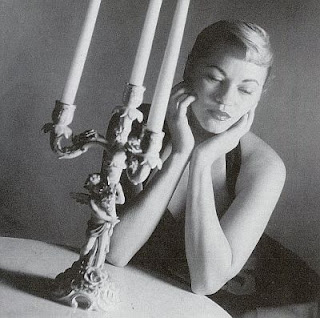
In the May 14, 1945 issue of Newsweek magazine, Martha was featured as the weekly pin-up, a feature added to the issues sent to servicemen. And what serviceman wouldn't fall in love with her after she sang, "I'll Walk Alone"? Unlike most pinups, who wore sexy attire, Martha was pictured in an evening gown and the warm beautiful smile she was famous for; a classic example of the "girl next door."

In 1947, Martha's marriage to Leonard Vannerson ended in divorce; Martha retained custody of her two sons. Martha and her sons formed a close-knit family from that point on.

Leaving Capitol in 1949, Martha continued to sing on radio shows like The Jack Benny Show, The Bob Hope Show, and many more. She also recorded on smaller record labels like Coral, Crown, and Majestic. These fine recordings are becoming hard to find.

In 1955, Martha played herself in "The Benny Goodman Story," recreating their 1938 Carnegie Hall concert. Hollywood took its usual liberties, having her sing "And The Angels Sing," which was not performed in the actual concert; in real life, they wouldn't perform it for another year.

In 1952, at a U.S. Treasury Bond drive at a local North American Aircraft plant in 1952, Martha met the love of her life; a 6 foot tall pilot named Jim Brooks. Jim had been a World War II ace and was now a test pilot for North American. He was given the job of showing Martha around the plant; at the end of their tour, he ask her to dinner that evening. She accepted and it just kept getting better after that.

Very important to Martha about her growing relationship with Jim was how her sons felt about it. Jerry was now 16 and John was 10 and the two indirectly asked if she was going to marry Jim. This put her in a bit of a predicament; what to tell them. With out really knowing how they might react, she asked them if they thought she should. The answer came back an overwhelming "yes."


Her concern now was how a bachelor would handle being the instant father of two boys. This proved no problem for Jim; he adapted to the challenge quickly, and what American boy wouldn't want a fighter ace and test pilot as their new father?

Shortly after marrying, the lovebirds found a house close to both their work places, on Mandeville Canyon Blvd. in Los Angeles. They have lived there ever since.

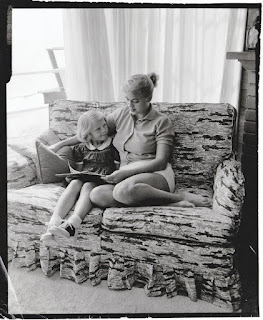
Martha gave birth to their daughter, Cathy, on Sept 13, 1955. From this point on, Martha devoted most of her time to her family and pretty much ceased performing. She also devoted time to charity work, appearing in several PBS big band programs and doing a few big band tours both overseas and in the States. Her last tour was to Australia and throughout the United States in the mid-1990s with John Gary and Horace Heidt. She was honored in the Big Band Academy of America's "Golden Bandstand" at their annual reunion in March 1997.

Martha and Jim Brooks, married for over 50 years, enjoyed a healthy life together in their home on Mandeville Canyon Blvd. Jim eventually retired as an Executive Director with North American Aviation and they enjoyed spending time with their five grandchildren (her son, Jon Vannerson's children Elise and Spenser; her daughter, Cathy Smith's children Maura, Virginia and Jimmy). Martha also kept busy with her dogs and enjoyed needlepoint as a hobby.

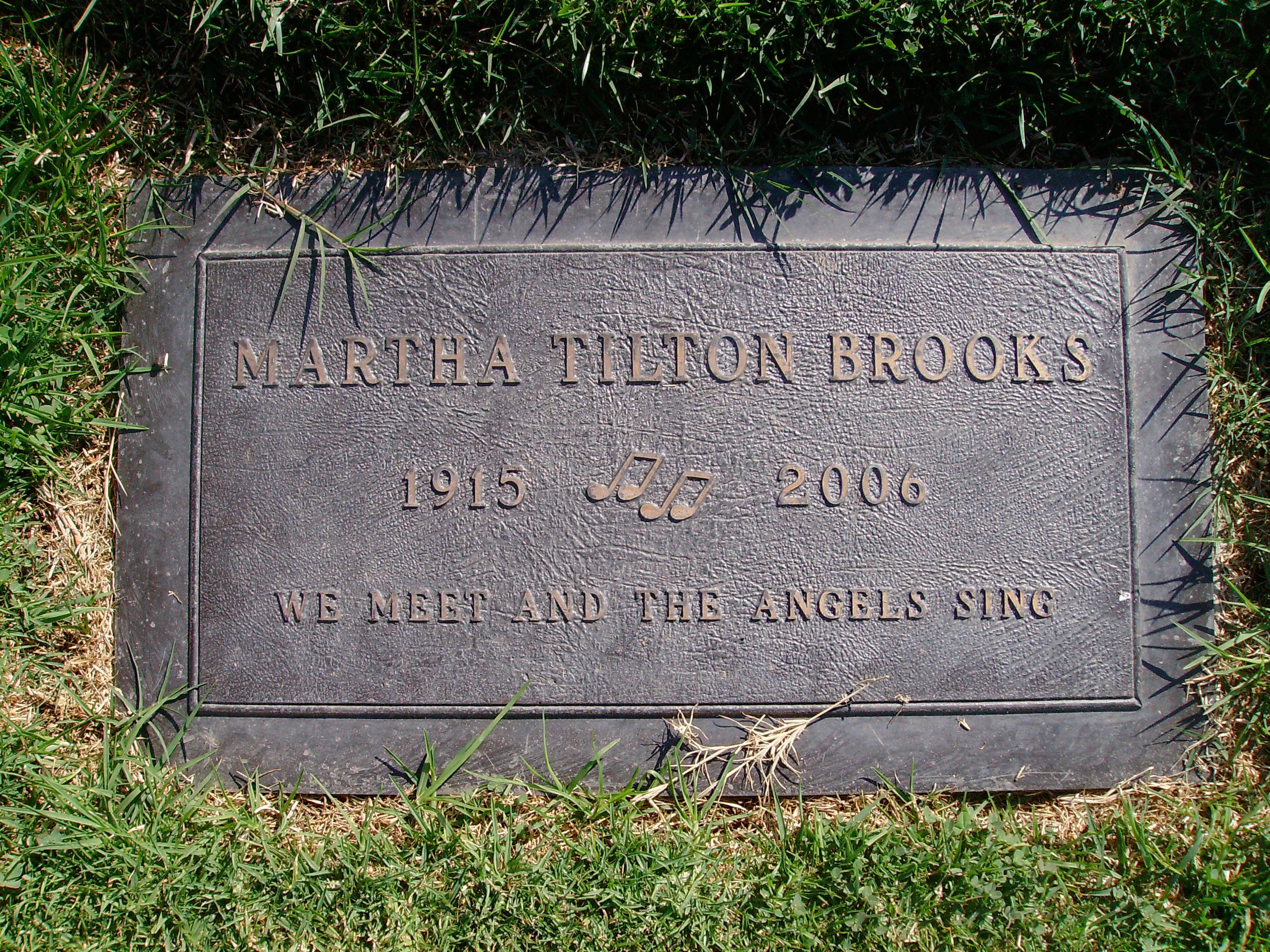
Martha passed away on December 8, 2006, peacefully and in her home.

Martha and Jim had a true love of life; their marriage held true to the 1953 article written about them, it was "... Happily Ever After." Martha said she enjoyed her years with the big bands and is proud of the contribution she made to those great organizations. While she considered the pop music of today "not very good" to her ears, she was "very happy" with the revival of Swing music that is in, if you'll pardon the word play, "full swing."


Sunday, July 16, 2023

SINGER SPOTLIGHT: MARTHA TILTON - PART ONE

One of the most beautiful of the musical songbirds was the great  Martha Tilton. This bio of the Liltin' Martha Tilton was taken from a website dedicated to her. A link to the great website is provided below...


Born on November 14th, 1915, her family moved to Edna, Kansas a short time after; then, in 1922, they settled on Laurel Avenue in Los Angeles. Her father worked as a banker in Los Angeles. and he did well (considering this was during the Great Depression), he soon moved his family to a nice home at 507 Highland Avenue in Los Angeles. This is the home Martha's parents lived in for the remainder of their lives and which Martha only recently sold.

The Tiltons were a close-knit family; aunts and uncles and grandparents all lived within a few blocks of each other. Martha's mother played piano and her father had a beautiful singing voice, and the whole extended family loved to sing whenever they got together. Some of Martha's favorite singers at the time were Ruth Etting and Connee Boswell.

Martha also had a younger sister named Liz who was born in 1918, whom Martha claims was even prettier then she (although it's hard to believe). Liz was also a talented singer, singing with Jan Garber's orchestra in the mid-1940s and also Bob Crosby's band; her recordings are rare, so we have included a few on this site for your enjoyment (see "Audio" page). When Liz's husband returned from WWII, Liz left the music business. Liz passed away a few years ago, in 2003.

While Martha attended Fairfax High School in Los Angeles, she met up with a girl friend who had an older sister dating a fellow from U.S.C. college. These fellows had a small band that performed on a local radio station. She went on to sing at the Ambassador Hotel's Coconut Grove with Sid Lippman's Band.

In 1937, Martha joined the Jimmy Dorsey Band and spent a few months with that organization. During that time Dorsey recorded many records, but none included Martha unfortunately.

Still in 1937, she appeared in her first movie, the Roland Young film "Topper," with Cary Grant and Constance Bennett. She had an uncredited part as a lounge singer, fronting the group "Three Hits and a Miss."

Besides appearing in the movie "Topper," Martha also appeared in the films "Irene," "You'll Never Get Rich," "Sunny," "Strictly In The Groove," "Crime Inc.," "Swing Hostess" and "The Benny Goodman Story." Her last film, "The Queen of the Stardust Ballroom," was made in 1975. Most of these movies are available for purchase online.

While with "Three Hits and a Miss," Martha was the first girl singer to sing four-part harmony with a pop group. About this time, Benny Goodman was in Hollywood filming "Hollywood Hotel" and became aware of Martha, and she was asked to audition to replace Helen Ward. Goodman seemed to be going through a lot of girl singers at this time. Martha later commented that the band worked 365 days straight for two years, with no breaks. With that kind of a schedule, one can see why some singers and band members might leave looking for easier work hours.


During her years with Goodman, Martha made over 80 recordings--some really great, some pretty bad. According to Martha, Benny would record anything that came along, knowing his established popularity would make them hits. Unfortunately, performers like Martha who sang with a popular big band got little recognition. While she lent her beautiful voice to a recording (and without her voice, a song may not have been nearly as popular), Benny Goodman got the credit.

Early in her career with the Goodman organization, Martha was singing at the SunnyBrook Ballroom in Pottstown, Pennsylvania. When it came time for Benny to introduce her, he gave her a big buildup: "Here is a pretty gal from Hollywood that's really going places." But Martha missed her cue. When she didn't appear on stage, after a moment Benny ad-libbed, "She's not going places, she's already gone."

One of the biggest hits Martha had with Goodman was the song "And The Angels Sing." This tune was recorded on the spur of the moment, after the band had just come off a road trip. Johnny Mercer was still working on the lyrics as they went into the recording studio. After each take, Johnny would make changes and they'd do it all over again. Ziggy Elman, trumpet player, had a lengthy solo in the second half of the record; needless to say, after so many takes, his lips had taken a pretty bad beating.


After the song was put to bed, Martha commented to Harry James that this particular tune would never be a hit. Much to her surprise, she was wrong. "And The Angels Sing" is one of those songs that will endure forever and no one has ever sang it as beautifully as Martha. Of the many different recordings of the song she made over the years, I prefer the one done in 1955 with Capitol Records.

January 16, 1938 was a very special day; not just for Martha, but also for the Goodman organization and the wonderful music they brought to the world. That evening, the Goodman band broke tradition when they played swing music to a packed house at Carnegie Hall. Martha was 23 years old and must have felt a strong sense of fulfillment when she sang "Lock Lomond" and received the longest ovation of the entire evening. She also sang "Bei Mir Bist Du Schon." I believe this solidly set Martha as one of the great swing vocalists.

Martha's career with Goodman ended in April 1939, when the band broke up. This was bound to happen considering the rigorous schedule Goodman worked under. Also a number of strong solo performers had started out by working for Benny: Lionel Hampton, Harry James, Teddy Wilson, Gene Krupa, to name a few; they were ready to make their own marks on the music world. The remaining members of the band were saddened by Martha's leaving. Louise Tobin, who was then married to Harry James, replaced her....

TO BE CONTINUED...

SOURCE


Sunday, April 2, 2023

SINGER SPOTLIGHT: JIMMY RUSHING

James Andrew Rushing, a vocalist in the Count Basie Band from 1935 to 1950, was born in Oklahoma City, August 26, 1901, to Andrew and Cora Rushing. Jimmy Rushing's father played the tuba in local bands. Jimmy learned to play violin by ear and also learned piano, against his parents' wishes (because of its association with nightclubs; they locked the keyboard when he was home alone). He also studied music at Oklahoma City's Douglass High School. He sang, cooked, and poured root beer at his father's lunchroom on Northeast Second Street or "Deep Deuce," the home of jazz.

Part of a musical family (his father played trumpet and his mother and brother were vocalists), Rushing played violin (reluctantly) and piano while growing up. He studied music theory in high school, attended college at Wilberforce University, and was a professional pianist for a time. After his singing became popular, he switched gears and became a full-time vocalist. Rushing toured the Midwest, worked with a variety of groups, and spent a period living in Los Angeles where he sang with Jelly Roll Morton.

In 1927 Jimmy Rushing moved to Kansas City where he joined Walter Page’s Blue Devils, the top jazz combo in the flourishing city. He was a member of the band for two years and made his recording debut on November 10, 1929, singing “Blue Devil Blues.” During his decade in Kansas City, Rushing also participated in many of the legendary after-hours jam sessions.


Pianist Bennie Moten led the most popular Kansas City big band of the 1920s. Over time he lured the top musicians of the Blue Devils away, including eventually bassist Walter Page himself. Rushing joined Moten in early 1930 and performed regularly with the orchestra for five years. He recorded ten numbers with Moten during 1930-32 including “Won’t You Be My Baby,” “Liza Lee,” “As Long As I Love You,” “Now That I Need You,” and “New Orleans.” Although his voice was higher than it would be during his prime years, Rushing was already quite recognizable and a masterful interpreter of blues and ballads. His singing voice always reminded me of Fats Waller, but Jimmy Rushing had a style all his own. 

When Bennie Moten unexpectedly passed away on April 2, 1935 after a botched tonsillectomy, it was not long before Rushing joined the nucleus of the band which was now led by Count Basie. He was with Basie for over 14 years and became famous as “Mr. Five By Five,” gaining that title due to his portly build. A song of the same name (which he apparently never sang) celebrated him without actually saying his name. It was a hit for both Ella Mae Morse with Freddy Slack and Harry James, containing the immortal lines “He’s five feet tall and he’s five feet wide. He don’t measure no more from head to toe than he does from side to side.”

Jimmy Rushing was a major attraction with the Count Basie Orchestra during its period in Kansas City and throughout its glory years when the band went East and achieved great success in New York. 

Jimmy Rushing, who recorded his first session as a leader in mid-1946 with the backing of much of the Basie band (arranged by Jimmy Mundy), had no desire to leave the Count Basie Orchestra. But when Basie had to break up the band at the end of 1949 due to financial problems, Rushing was out on his own. Unlike most of the other male band singers who faded away, he was able to flourish during the post-swing years simply by performing the mixture of blues, ballads, and standards that he loved.


At first Rushing led a septet but soon he simply became a freelancer. Everyone knew who Jimmy Rushing was and he remained in great demand, performing with Basie alumni and other top musicians in the mainstream swing scene of the 1950s. Rushing led some sessions for the Gotham, King, and Chess labels and hooked up with producer John Hammond (long a champion) for a series of highly enjoyable albums for Vanguard (1954-57) and Columbia (1956-60).

While jazz and the music world continued to evolve at a fast pace during the 1960s, Jimmy Rushing was never idle for long. He was not only considered a living legend but was still rated as one of jazz’s top singers. Often accompanied by big bands on recordings while performing nightly with combos, Rushing continued singing timeless music. He toured Australia and Japan with Eddie Condon in 1964, often utilized tenors Zoot Sims and Al Cohn in his New York club appearances (Dave Frishberg was his regular pianist), and in 1969 had a small role in the movie The Learning Tree, showing that he was a credible dramatic actor. Rushing also made a blues album with the Oliver Nelson big band and made guest appearances on an album with Earl Hines.

Jimmy Rushing’s final recording, 1971’s The You And Me That Used To Be, is perhaps most remarkable in how it was not at all unusual. The 69-year old singer, 42 years after his recording debut, performed in his unchanged style, singing mostly swing standards along with a couple of blues. He was joined by such notables as cornetist-violinist Ray Nance, Zoot Sims, tenor-saxophonist Budd Johnson, Dave Frishberg, bassist Milt Hinton, and drummer Mel Lewis. He was very much in prime form, his sidemen were clearly inspired by his singing, and the music is as swinging as one would expect.

Jimmy Rushing was still performing in New York clubs just weeks before his death. He passed away on June 8, 1972, at the age of 70 from cancer. He was a jazzman to the end...


Sunday, January 15, 2023

SINGER SPOTLIGHT: JERI SOUTHERN

Jeri Southern was the poster girl for a cool jazz voice. Born in 1926 as Genevieve Lillian Hering, Jeri Southern originally trained to be an opera singer and a classical pianist in her home state of Nebraska. But after she graduated high school in 1943, Southern (whose original name was Genevieve Hering) discovered jazz. She spent the next few years trying to emulate her new favorite singers-Ella Fitzgerald, Nat King Cole, and Sarah Vaughan. She had to completely transform her coloratura soprano voice into the deep, husky voice that we know of today.

She soon moved to Chicago to pursue a career in entertainment. Her intention was to become a jazz pianist, but an agent told her she'd make more money if she sang too, and if she changed her name. By 1949, the newly minted Jeri Southern found a steady gig at a Chicago club called the Hi-Note, performing in the intermission between headline acts. Southern's intimate and sultry way of performing jazz standards began to attract the attention of the club's famous clientele like Dizzy Gillespie, Miles Davis, and Peggy Lee. In fact, Lee was so impressed by Southern that she helped her secure a recording contract with Decca in 1951.

Her first single for Decca was the tune "You Better Go Now," by Bickley Reichner and Robert Graham. She was only 25 years old, although already sounding incredibly polished and self-assured. She even accompanied herself on the piano. Southern quickly became a critical darling, praised for her soft, intimate way of selling a torch song, and for her attention on the song's words. She became known for performing deep cuts from the Great American Songbook. These don't just include songs by unknown songwriters, but also rarely performed songs by popular songwriters, including Richard Rodgers and Jerome Kern.


She preferred performing slow ballads with moving stories. She was the first artist to perform the Victor Young and Edward Heyman standard "When I Fall In Love," later made famous by Nat King Cole. People noted that when they saw her live, they assumed she was unhappy, just because of her style and choice of song. But since her style tended towards the melancholy, she had a way of turning even the cheeriest tunes into torch songs.

Although Jeri Southern performed with an orchestra on many of her studio albums, she was arguably best when she herself was sitting at the piano. Southern was shy, but felt most at ease when she could accompany herself. Jeri Southern was also a songwriter. She wrote about half a dozen songs that she recorded over her career, most in collaboration with her second husband Ray Hutchinson, including "Autumn In My Heart" and "I Don't Know Where To Turn."

In 1958, Southern made the move from Decca records to Roulette Records, where she recorded a handful of albums. By the early 1960s, she made a brief stint on Capitol records before retiring from show business completely, saying she was growing tired of the business. One of her final albums was a live album recorded at the Crescendo Club in 1959 and 1960, showcasing Southern at her best: performing live, and accompanying herself at the piano.

She was always shy, and suffered from performance anxiety. She avoided the spotlight for the rest of her life, deciding instead to teach voice, write and arrange songs, and even publish a book on piano technique. When she retired, she said that she had performed all the songs she wanted to perform. She had planned to make a comeback in 1991, but sadly died that year before it could happen...


Sunday, July 3, 2022

SINGER SPOTLIGHT: HELEN MORGAN

There are a lot of singers who died young from Amy Winehouse to Elvis Presley and even further back. One of the early singers who died young was Helen Morgan. A quintessential torch singer, she made a big splash in the Chicago club scene in the 1920s. She starred as Julie LaVerne in the original Broadway production of Hammerstein and Kern's musical Show Boat in 1927, as well as in the 1932 Broadway revival of the musical, and appeared in two film adaptations, a part-talkie made in 1929 (prologue only) and a full-sound version made in 1936, becoming firmly associated with the role. She suffered from bouts of alcoholism, and despite her notable success in the title role of another Hammerstein and Kern's Broadway musical, Sweet Adeline (1929), her stage career was relatively short. Helen Morgan died of cirrhosis of the liver at the age of 41. She was portrayed by Polly Bergen in the Playhouse 90 drama The Helen Morgan Story and by Ann Blyth in the 1957 biopic based on the television drama.

She was born Helen Riggin in 1900 in Danville, Illinois. Her father, Frank Riggin, was a farmer in Davis Township, Fountain County, Indiana. After her mother, Lulu Lang Riggin, divorced and remarried, she changed her last name to Morgan. Her mother's second marriage ended in divorce, and she moved to Chicago with her daughter. Helen never finished school beyond the eighth grade, and worked a variety of jobs just to get by. She worked as an extra in films. By the age of 20, Morgan had taken voice lessons and started singing in speakeasies in Chicago. Her voice was not fashionable during the 1920s for the kind of songs in which she specialized; nevertheless, she became a wildly popular torch singer. A draped-over-the-piano look became her signature while performing at Billy Rose's Backstage Club in 1925. Morgan became a heavy drinker and was often reportedly drunk during these performances.

In 1927, Morgan appeared as Julie LaVerne in the original cast of Show Boat, her best-known role. She sang "Bill" (lyrics by P.G. Wodehouse, music by Jerome Kern) and "Can't Help Lovin' Dat Man" in two stage runs and two film productions of Show Boat over a span of 11 years.


During the run of Show Boat, however, Morgan's stardom led to difficulties. Her prominence in the world of New York nightclubs (actually illegal speakeasies in the era of Prohibition) led to her fronting a club called Chez Morgan, at which she entertained. On December 30, 1927, only days after the opening of Show Boat, she was arrested at Chez Morgan for violation of liquor laws. Charges were dropped in February 1928, and the club reopened as Helen Morgan's Summer Home, but she was arrested again on June 29 and this time indicted. A jury acquitted her at a trial held in April 1929.

Morgan starred in a radio program, Broadway Melodies, on CBS. The show, which featured light, popular, and semiclassical music, ran from September 24, 1933, to April 22, 1934. A later version, retitled Broadway Varieties and without Morgan, ran from May 2, 1934, to July 30, 1937.

Her last film appearance was in the 1936 version of Show Boat, often considered to be the better of the two film versions of the stage musical. It was remade in Technicolor in 1951. The 1929 film version was based on Edna Ferber's novel of the same name, from which the musical was adapted, rather than on the show.


In the late 1930s, Morgan was signed up for a show at Chicago's Loop Theater. She also spent time at her farm in High Falls, New York. Alcoholism plagued her, and she was hospitalized in late 1940, after playing Julie La Verne one last time in a 1940 Los Angeles stage revival of Show Boat. She made something of a comeback in 1941, thanks to her manager, Lloyd Johnston. However, the years of alcohol abuse had taken their toll. She collapsed onstage during a performance of George White's Scandals of 1942 and died in Chicago of cirrhosis of the liver on October 9, 1941.

Morgan was married three times. Her first husband was Lowell Army, a fan she had met at a stage door while she was performing in Sally. On May 15, 1933, she married Maurice "Buddy" Maschke III, the grandson of longtime Ohio Republican Party leader Maurice Maschke. Morgan ended up suing Buddy Maschke for divorce in 1935. Her third husband was Lloyd Johnston, whom she married on July 27, 1941. On June 25, 1926, in Springfield, Illinois, Morgan had a baby girl named Elaine Danglo who was adopted out of the family.

Sadly her voice was stilled on October 9, 1941 at he age of 41...


Saturday, May 29, 2021

SINGER SPOTLIGHT: JERRY VALE

Fifty-some years in one business is quite an accomplishment. Fifty-some years with one record label is almost unheard of, but those are some of the facts you will find in the story of Jerry Vale. The New York-born crooner with strong Italian roots has many a story to tell from that long career and tell them he did, to his biographer, Richard Grudens in the book “Jerry Vale: A Singer’s Life” published in November, 2000.

Although his birthday is listed occasionally as July 8, 1932, the singer told people once that he was born in 1930, in The Bronx to Louis and Fanny Vitaliano. Little Genaro, nicknamed Sonny, listened to his mother singing as she cleaned house and sometimes joined in, as did his father. The family occupied one floor of a three-flat. The other two floors housed Vale’s aunts and the home was owned by his grandmother.


Vale has seen his share of problems. When he was five, his then-three year old brother was killed, running across a street. Vale tells Grudens that his mother became overprotective of him from that point on, and that she eventually suffered a nervous breakdown. One aunt and Vale’s grandmother would later die on board the cruise ship The Andrea Doria when she collided with the Stockholm in the crowded New York shipping lanes.


But Vale’s life is filled with triumphs, too – success in the recording studio, on the charts, in concert and in his long marriage to wife Rita and their two children. He also established long-lasting friendships with many of the greats like Frank Sinatra, Nat King Cole, Perry Como and baseball legends Joe DiMaggio and Mickey Mantle.
Jerry’s Big Break

Vale began working in a barbershop around the age of 11, singing while he shined shoes. The barber liked the boy’s voice and sent him to a coach for lessons in voice and piano. Vale began peforming in musical productions in school. He soon won a singing contest at a local nightspot, the Club del Rio and this led to performances at other supper clubs in and around New York City.

One of these gigs paid off well. Guy Mitchell caught Vale’s act, Mitchell set Vale up making demo records. That’s how Mitch Miller heard Vale and signed him with Columbia in the early 50’s. He remained with the label throughout his career with recordings of his beautiful high-tenor voice selling consistently for the Legacy division in recent years.


Vale first hit the charts in 1953 with “You Can Never Give Me Back My Heart” and followed that up with “Two Purple Shadows”, “You Don’t Know Me” and “I Live Each Day”. Vale remained true to his Italian roots, recording “Innamorata (Sweetheart)” in 1956 and in 1962 he was able to persuade Miller to let him do an album of Italian songs. I Have But One Heart came out in August of that year, followed six months later by Arrivederci, Roma and The Language of Love in September of 1963. All three albums did well on the charts.


The late 50’s and early 60’s were times of change in American music, and many Pop singers struggled to stay on top, but Vale’s records continued to sell, landing him in the Top 40 album charts six times between 1963 and 1966. The hits included There Goes My Heart and It’s Magic and the single which became his signature song, “Al Di La”.
Vegas, TV and Carnegie Hall

Vale credits Sinatra with landing him his first job at a Las Vegas casino, The Sands, a two-week engagement that was extended to 22 weeks. It was the beginning of two beautiful relationships which would run for years – Vale and Sinatra and Vale and Vegas.


In the late 60’s, Vale did what many other singers of standards did… he began recording contemporary songs, like “Little Green Apples” and Paul Anka’s “Put Your Head on My Shoulder”. But if the albums recorded in the late 60’s and early 70’s didn’t do as well as his earlier efforts, that fact did little to diminish his popularity with crowds in Vegas and with television audiences. Vale appeared frequently on TV shows, particularly Ed Sullivan.


The Vale Songbook is huge. Vale has recorded such classics as “Volare”, “Non Dimenticar” and “Pretend You Don’t See Her” as well as “Moonglow”, “More” and the Burt Bacharach/Hal David composition “Promises, Promises” among many, many others. He has done tribute albums to Nat King Cole, Buddy Clark and Russ Colombo. And in recent years, Hollywood has dipped into Vale’s discography, featuring his recordings on movie soundtracks for GoodFellas, Casino, and the Eddie Murphy film The Klumps.


In later years, Vale and his wife Rita lived in the Palm Desert area of California. Vale remained an active performer through early 2002, but a stroke later in the years resulted in Vale retiring. Jerry Vale died of natural causes in his sleep on May 18, 2014, at his home in Palm Desert, California. Vale was 83 years old. He and his wife had two children, Robert Vale and Pamela Vale Branch. He is interred at Forest Lawn Cemetery, in Cathedral City, California. His voice is now silenced, but his music and talent lives on through his recordings...


Monday, January 25, 2021

SINGER SPOTLIGHT: JACK LEONARD

One of the top male vocalists of the late 1930s, Jack Leonard was rivaled only by Bing Crosby in popularity. Leonard got his start singing at a roadside stand on Long Island and worked on the government relief team that built New York’s Jones Beach in the early 1930s. He was singing in Bert Block’s orchestra in 1935 when Tommy Dorsey hired him away. Dorsey also took trumpeter Joe Bauer and arranger Axel Stordahl, then known as Odd Stordahl. Together the men formed a vocal group call the Three Esquires. It was as a soloist, though, that Leonard would achieve stardom, singing on such classics as “Marie,” “All the Things You Are,” “Our Love,” and “Indian Summer.”

Leonard was a shy, handsome man who was liked by all. He was very near-​sighted but refused to wear glasses in public so as not to spoil his romantic image. His departure from Dorsey’s orchestra in November of 1939 was a surprise to his bandmates. The rumor was that Dorsey had grown suspicious of Leonard’s intentions, fearing that he was going to leave soon for a solo career, and had forced him out, though Leonard himself tried to dispel it at the time, saying he just needed a break and would return soon. He never did. He was replaced in the band by Allan DeWitt, who failed to work out and was replaced after only one month by Frank Sinatra.


Leonard’s popularity kept him busy after leaving Dorsey. Readers selected him as among the top three male singers in Billboard’s college polls for both 1939 and 1940. He worked on radio, on stage and in the recording studio for Okeh Records until May 1941, when he received his draft notice. His draft board proposed putting him in an Army entertainment unit, though Leonard refused. He ended up leading a band anyway, at Fort Dix, New Jersey.

Discharged in 1945, Leonard continued singing professionally throughout the 1940s and into the 1950s, though he never achieved the level of recognition he had during the late 1930s. He signed a two-​year deal with Majestic Records in December 1945 and made three minor silver screen appearances in the late 1940s. He also had his own television program in 1949 and appeared as one of the hosts for Broadway Open House in 1951. He made a brief return to the recording studio with Tommy Dorsey’s orchestra in 1951, and in 1956, he performed at the memorial concert in tribute to the late bandleader.

Leonard also served as Nat King Cole’s business manager and later worked in music publishing before retiring in the 1970s. He made a brief return to singing and appeared on PBS's "Jukebox Saturday Night" special in 1983. Jack Leonard died from cancer in 1988, age 75....


SOURCE

Wednesday, July 29, 2020

SINGER SPOTLIGHT: JOHNNIE JOHNSTON

Here is a great story that was originally published on The Vintage Bandstand blog. It is much better than anything I could write...

Forgotten crooner Johnnie Johnston was born in St. Louis in 1915 (he was just a few days older than Frank Sinatra, and so 2015 marks the centenary of his birth as well), Johnnie Johnston had a beautiful light baritone voice, which, together with his attractive looks, made him a natural to pursue a career as an entertainer. In the 1930s he began a short tenure as the vocalist with the sweet band of Art Kassel, but it was actually his radio and nightclub appearances that would make Hollywood and the record industry beckon. Therefore, Johnston—whose first name was occasionally spelled "Johnny"—soon found himself appearing in low-budget musicals such as Sweater Girl, Incendiary Blonde, and You Can't Ration Love. He was also cast in more important productions, notably Star-Spangled Rhythm, with Bing Crosby and Bob Hope, and This Time for Keeps, alongside Esther Williams and Xavier Cugat. In time he would even appear in one of the first and most popular rock'n'roll movies, Rock Around the Clock (1956), but by then his star had pretty much waned.


In 1942, Johnston became one of the first artists to be signed to the fledgling Capitol Records label and scored hits with "Spring Will Be a Little Late This Year," "(All of a Sudden) My Heart Sings," and "One More Dream." In 1945, his version of the haunting David Raksin and Johnny Mercersong, "Laura" peaked at number 5 on the Billboard charts for five weeks, and suddenly it seemed that Johnston had come to stay. Being slated to sing a couple of songs in the star-studded 1946 Jerome Kernbiopic, Till the Clouds Roll By, with Sinatra, Lena Horne, and Judy Garland, among many others, certainly could not hurt, but here is where the Johnston story starts going awry. After filming two medleys with his future wife, Kathryn Grayson, Johnston seems to have gotten into a serious row with studio mogul Louis B. Mayer, which ultimately led to the deletion of his scenes from the final cut of the movie. Just why this argument came about is unclear seventy years later; Edward Chase, who wrote the liner notes for the only CD release of Johnston's recordings currently available, describes it in rather vague

"Then, so the story has it, Louis B. Mayer came onto the set, where Johnston, perhaps carried away with his incipient success, proceeded in a jocular way, and with coarse language, to humiliate him. The upshot was that Mayer, unforgiving, summarily dismissed him from the film, and ordered the actor's two completed scenes to be deleted from the final cut."


It is unclear why a newcomer like Johnston would feel that it was a good idea to "humiliate" a powerful man like Mayer, but whatever actually happened that day on the set, this run-in with the studio boss definitely hurt Johnston's career. Not only was he cut from the movie, but his subsequent recordings for MGM after leaving Capitol did not sell well, and Johnston never recaptured the momentum he had gained with "Laura" and his previous hit records. In 1947, following their meeting on the set of Till the Clouds Roll By, Johnston and Kathryn Grayson married, but their marriage only lasted until 1951. That same year Johnston starred in the Broadway production A Tree Grows in Brooklyn, a very promising show based on a novel by Betty Smith and with a score by none other than Arthur Schwartz and Dorothy Fields. The show, however, was a flop from which Johnston's career would never recover, and other than his appearance in Rock Around the Clock, his work would be limited to occasional television spots and a few nightclub dates. According to his New York Times obituary, Johnston had come out of retirement very seldom (for instance, to perform at Capitol Records' fortieth-anniversary party), and by the time of his death in 1996 in Cape Coral, Florida, he had been married six times...


Monday, April 6, 2020

SINGER SPOTLIGHT: THE FOUR ACES

The 1950s were full of singing groups. There was something about a group of women or men singing together that really appealled to audiences in that decade. One of my favorite singing groups of that era were The Four Aces. Over the last half-century, the group amassed many gold records. Its million-selling signature tunes include "Love is a Many-Splendored Thing", "Three Coins in the Fountain","Stranger in Paradise", "Tell Me Why", and "(It's No) Sin". Other big sellers included "Shangri-La", "Perfidia", and "Sincerely". The original members, responsible for every song made popular by the group, included Al Alberts, Dave Mahoney, Lou Silvestri, and Rosario "Sod" Vaccaro.

Alberts went to South Philadelphia High School and Temple University, and served in the United States Navy, where he met Mahoney. Originally, Alberts sang with Mahoney playing behind him, and later they added Vaccaro on trumpet and Silvestri on drums. They played locally in the Philadelphia area, and Alberts started his own record label, Victoria Records, when they could not find a distributor to release their first record, "(It's No) Sin". It sold a million copies, and Decca Records soon signed the group, billing them as The Four Aces featuring Al Alberts.


Alberts left the group in 1958 to try to make it as a soloist, but never made the charts. He was replaced as lead singer by Fred Diodati, who had attended South Philadelphia High School a few years after Alberts. After Alberts had left the group, Mahoney and Vaccaro also left. Silvestri never left the group, but led three new members: Diodati, Tony Alesi, and Joe Giglio. The Original Aces later asked Silvestri to rejoin the original group, and he did.

It was then that Diodati led a new line-up, which consisted of Diodati, Alesi, Giglio, and Harry Heisler. After almost 19 years with the group, Alesi developed a medical condition that forced him to leave the group. As of 2013the Four Aces members are Diodati, Giglio, Heisler, and Danny Colingo. These members sing all the songs the original Four Aces had made popular at one time.


In 1975, Diodati, Alesi, Giglio, and Heisler were awarded the right to the name in a court suit in which the original members tried to re-establish their right. The court allowed the founding members to tour as "The Original Four Aces, Featuring Al Alberts", which they did, finally retiring the act in 1987. Diodati, Giglio, Heisler, and Colingo continue to legally use the name of the Four Aces and perform the songs made popular by the Original Four Aces.

The founding lead singer, Alberts, died of natural causes on November 27, 2009 at age 87. Mahoney died on July 12, 2012 of complications from Alzheimer's Disease at age 86. Silvestri died on January 27, 2013 at age 86. Vaccaro (born in 1922) died on April 5, 2013 at age 90...


Wednesday, October 10, 2018

SINGER SPOTLIGHT: KITTY KALLEN

While she was best known for her wistfully romantic 1954 chart-topper “Little Things Mean a Lot,” singer Kitty Kallen had previously enjoyed a long and distinguished career as a swing-era, big band vocalist.

A gifted child with an expressive voice, Kallen had her own radio show on Philadelphia‘s WCAU at age 11 and within a few years, when she was just 14, was featured as a vocalist for bandleader Jan Savit. By 16, she had graduated to a spot with the great clarinetist Artie Shaw.

Billed as “Pretty Kitty” Kallen, she was far more than just easy on the eyes. As a band vocalist, Kallen was compelled to hold her own against the best girl singers in the business, giants like Ella Fitzgerald, Helen Forrest and Anita O’Day, and demonstrated more than a few times that she had the pipes and chops to compete. Her resume included stints with the biggest and most artistically progressive units in the field: Jimmy Dorsey, Jack Teagarden, Harry James and Shaw, with whom she recorded a highly regarded version of the steamy standard “My Heart Belongs to Daddy.” Replacing Helen O’Connell in Dorsey’s aggregation, Kallen’s arresting vocals propelled his 1944 version of “Besame Mucho” to No. 1 on the pop chart.

By the early 1950s, the heyday of the great swing bands was ending and Kallen concentrated on radio and nightclub work. She was sidelined temporarily in the early '50s when her voice gave out but, but by 1954 Kallen’s throat and drive were again in top condition. Recording for Decca, her “Little Things Mean a Lot” was a smash that Billboard magazine designated as the year’s top disk, and ably characterizes Kallen’s impressive, and graceful, transition from classic big band swing to modern post-war pop.


Her first marriage, to Clint Garvin, a clarinetist in Teagarden’s band, was annulled. In 1947, at the Copacabana in New York, Frank Sinatra’s first wife, Nancy, introduced Ms. Kallen to Budd Granoff, a press agent who represented Sinatra, Jimmy Durante, Dean Martin, Jerry Lewis, Doris Day and many other entertainers. Mr. Granoff was instantly smitten and told a companion that he had just met the girl he would marry. They did marry, in 1948, and Mr. Granoff soon gave up his other clients to manage Ms. Kallen’s career full time.

The couple and Jonathan, their only child, lived most of the time in Englewood, except for a few years in the Los Angeles area, when Mr. Granoff worked in television. Jonathan Granoff said he was 12 or so before he realized that not everyone’s mother sang on “The Ed Sullivan Show” or had strange, loud, funny friends like Carl Reiner, Mel Brooks and Zero Mostel.

She went on to spend five “lost” years “in the clutches of psychoanalysts,” she told The American Weekly in 1960. One therapist urged divorce (she refused) and dragged her back through painful childhood memories of her mother’s death and of being called homely and nicknamed Monkey.


Another therapist, she said, thought everything was based on sex and had an office full of “strange contraptions.” Expected to undress for psychotherapy sessions, she quit. Yet another talked mostly about himself but also counseled divorce, she said. A fourth hypnotized her.

Finally, in 1959, she began to recover — no thanks, she said, to her therapists. The turning point came when her son, then 11, found her weeping over her mother-in-law’s death and tried to comfort her by saying that everything was in God’s hands. It was what she needed to hear, she said. Those words inspired a new degree of religious faith and enabled her to return to work. She retired in the mid-1960s.

At some point after retirement, her son said, several women in different parts of the country tried to pass themselves off as Kitty Kallen, showing up to sing at retirement homes and other places. His father, he said, would call them and say: “Stop it. You’re crazy,” but they were incorrigible.


In 1978, Ms. Kallen and her family were startled to hear reports of her death. One of her impersonators had checked into a hospital in a Los Angeles suburb and died there. The hospital announced Kitty Kallen’s death, and the news spread.

Frank Sinatra called to offer his condolences, Mr. Granoff recalled. His father said: “She’s here. She’s just sleeping.” But Sinatra would not desist until his father finally put Ms. Kallen on the phone.

In 2008, Kallen joined artists Patti Page, Tony Martin, Dick Hyman, Richard Hayman and the estates of Count Basie, Benny Goodman, Sarah Vaughan, Woody Herman, Les Brown, the Mills Brothers, Jerry Murad, Frankie Laine, and the gospel singer Sister Rosetta Tharpe in a suit against the world's then largest music label, Universal Music Group, alleging the company had cheated them on royalties.

In 2009, Kallen was inducted into the Hit Parade Hall of Fame.

Kallen died on January 7, 2016 at her home in Cuernavaca, Mexico, at the age of 94. The beautiful songbird was survived by her son, her three grandsons, and millions of fans...


Monday, December 19, 2016

SINGER SPOTLIGHT: GLORIA WOOD


Gloria Wood was born on September 8, 1923 in Medford, Massachusetts, USA into a musical family. Her father was Robert E. Wood, a Boston radio singer in the 1920's, who with wife Gertrude Anderson-Wood, were the influence which pushed Gloria into singing, straight out of high school in 1941. Gloria's sister, Donna Wood, who sang with both The Horace Heidt Orchestra and The Kay Kyser Orchestra, sadly passed away in 1947 of a heart ailment at just 29 years old.

In 1958 Time Magazine wrote: The most pervasive voice in radio or television belongs neither to Bing Crosby nor Perry Como, but to a pretty, twinkly, auburn-haired girl named Gloria Wood. Blessed with a four-octave range and a gift for mimicry, Gloria can sing high or low, squeaky or sweet, on demand and to order. And the demand for such special talents is tremendous. In just the past three years, Gloria has recorded for more than 2000 singing commercials.

She is the voice of the impish Tinker Bell orbiting around a jar of Peter Pan peanut butter, of Walt Disney's Minnie Mouse, and (on records) of Rudolph the Red-Nosed Reindeer. One firm planned a commercial featuring an eight-year-old boy, a nine-year-old girl, their mother and grandmother. Gloria did all four characters.

With her four-octave range, which she claims matches the eerie range of Peruvian Vocal Acrobat Yma Sumac, she can take off from low C below middle C and soar to C above high C. But this endowment also drives Gloria to despair: nobody wants to hear her sing straight. Her mother, a pop singer on Boston radio back in the mid-'20s thrust Gloria into big-band singing straight out of high school in 1941.

Gloria did solid hitches with Horace Heidt and Kay Kyser, in 1953 made a Capitol record called "Hey Bellboy" (its only words), which sold nearly 1000000 copies. The movies have called on her to provide the voice of many a non-singing star. She sang for Marilyn Monroe in "River of No Return", for Vera-Ellen in "White Christmas" "I like making money", she admits. "But I'd like to beknown for all the things I've done. Nobody knows Gloria Wood."


Wood had other solo tracks on Capitol and did a number of sides for other smaller labels such as Mastertone, Coral and Zephyr.In the mid 1950's she did an entire LP of romantic ballads for Columbia. In the late 1950s did a record with Rick Nelson and also headed up a choir featured on a Disney record and was a character voice in a number of advertisements (along with Stan Freberg), and in cartoons and on record albums.

Gloria passed away on March 4, 1995 in Los Angeles, California from complications of Diabetes. At that time, she was known as Gloria Wood-McGeorge. No mention of her career as a vocalist is made on her headstone, it simply says Beloved Wife...