Friday, January 31, 2014
JERRY LEWIS TO BE HONORED AT TCM FESTIVAL
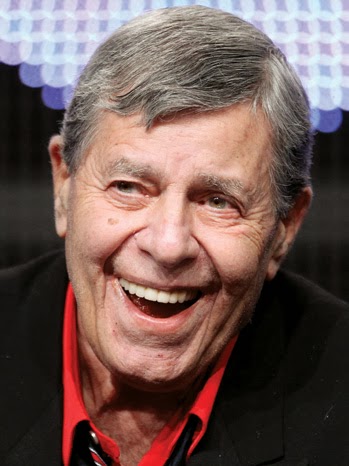
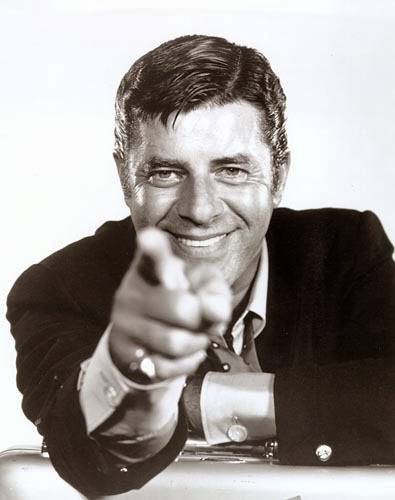
Legendary actor, filmmaker and humanitarian Jerry Lewis will take center stage in April at the fifth annual TCM Classic Film Festival in Hollywood.
Lewis, 87, will participate in a hand and footprint ceremony in front of refurbished TCL Chinese Theatre on Hollywood Boulevard on Saturday, April 12, and attend a screening of The Nutty Professor (1963), which he starred in and directed.
As a prelude to the classic comedy, Lewis will join actress Illeana Douglas onstage for an interview, then take questions from the audience.
"Jerry Lewis is a very important name whenever movie comedy is discussed and enjoyed," TCM host Robert Osborne, who also serves as the official host of the TCM Classic Film Festival, said in a statement. "Jerry has provided the world with great merriment and laughter, while also showing, in such films as Martin Scorsese's The King of Comedy, what an exceptional dramatic actor he can be.
"Add to that his many credits as a popular director, producer and writer, and you see the reasons we are pleased to be able to honor him for his more than 60 years of contributions to the world of motion pictures."
Lewis' celebrated films also include The Bellboy (1960), Cinderfella (1960), The Errand Boy (1961), The Disorderly Orderly (1964), The Family Jewels (1965) and 16 Dean Martin & Jerry Lewis films between 1949 and 1956. He received an honorary Oscar in 2012.
For more than 60 years, Lewis also has been the driving force behind the fight against muscular dystrophy, raising more than $2 billion for patient care and research.

Wednesday, January 29, 2014
NATALIE WOOD'S CAR FOR SALE
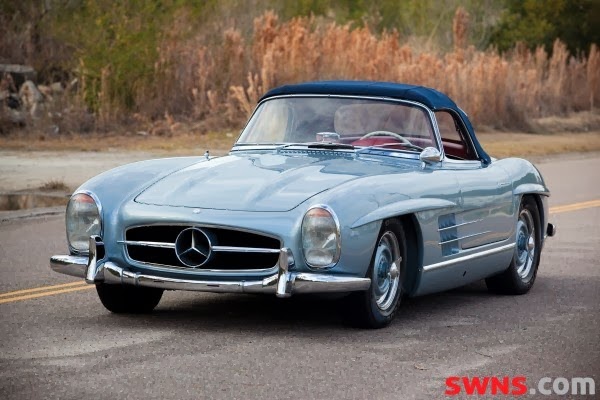
A stunning Mercedes originally owned by tragic Hollywood beauty Natalie Wood is expected to sell for £1 million at auction.
Wood was just 19 when she bought the brand-new Mercedes 300 SL Roadster in January 1958. Her 300 SL Roadster was one of the most sought after and exclusive cars of the day thanks to its looks and stunning performance.
And the young starlet made it one of the most unmistakable motors in Hollywood after she had it repainted PINK.
The Roadster, which is a convertible version of the iconic 300 SL ‘Gullwing’, is powered by a 3-litre engine developing 220bhp.This gives the Mercedes a top speed of more than 150mph – making it one of the fastest cars of its day.
Wood’s car, which has a red interior, also had the benefit of having the desirable Rudge wheels, with just 25 fitted by the factory. The car was later resprayed back to its original silver blue and has undergone an award-winning restoration.
It is going to be sold by its current owner at RM Auctions’ Amelia Island sale in Florida on March 8. Experts at RM expect the car to sell for around £1 million ($1.75m) when it crosses the auction block.
Gord Duff, car specialist at RM Auctions, said: “The 300 SL market is hungry for high-quality restorations with desirable factory options.
Monday, January 27, 2014
WHERE ARE THEY NOW: TUESDAY WELD

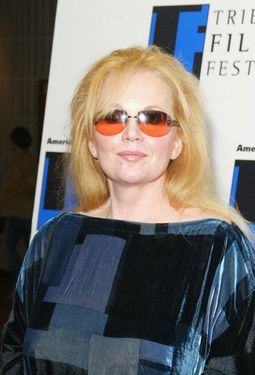
Weld made her acting debut on television at age 12 and her feature film debut the same year in a bit role in the 1956 Alfred Hitchcock crime drama, The Wrong Man. The pressures of her career, however, resulted in a nervous breakdown at age nine, alcoholism by age 12, and a suicide attempt around the same time. In 1956, Weld played the lead in Rock, Rock, Rock, which featured record promoter Alan Freed and singers Chuck Berry, Frankie Lymon, and Johnny Burnette. In the film, Connie Francis performed the vocals for Weld's singing parts. In 1959, having appeared as "Dorothy" in The Five Pennies, she was cast as Thalia Menninger in the CBS television series The Many Loves of Dobie Gillis. Although Weld was a cast member for only a single season, the show gave her considerable national publicity, and she was named a co-winner of a "Most Promising Newcomer" award at the Golden Globe Awards.

She was put under contract to Twentieth Century-Fox and appeared in feature films and episdodes of Fox-produced TV series. In 1960, she appeared as Joy, a free-spirited university student in High Time, starring Bing Crosby and Fabian. She also guest-starred that season on NBC's The Tab Hunter Show. On November 12, 1961, she played a young singer, Cherie, in the seventh episode of ABC's television series Bus Stop, with Marilyn Maxwell and Gary Lockwood. This was the same role Marilyn Monroe had played in the 1956 film Bus Stop, based on William Inge's play. Kim Stanley played Cherie on Broadway.
Weld's mother was scandalized by her teenage daughter's affairs with older men, such as actor John Ireland, but Weld resisted, saying, "'If you don’t leave me alone, I’ll quit being an actress — which means there ain’t gonna be no more money for you, Mama.' In 1961, when Weld was 18, she had an off-screen romance with Elvis Presley, her costar in Wild in the Country.

She was well received for her portrayal of an abuse victim in Return to Peyton Place, the sequel to the 1956 film Peyton Place, but the film was less successful than its predecessor. Weld appeared with Jackie Gleason and Steve McQueen in the 1963 comedy Soldier in the Rain; her performance was well received, but the film was only a minor success. That same year she and former co-star Dwayne Hickman appeared in Jack Palance's circus drama, The Greatest Show on Earth on ABC, but in separate episodes. Later in her career, she turned down roles in films that became great successes, such as Bonnie and Clyde, Rosemary's Baby, True Grit, and Bob & Carol & Ted & Alice.
In her thirties, Weld performed in Looking for Mr. Goodbar (1977), for which she was nominated for an Academy Award for Best Supporting Actress; Who'll Stop the Rain (1978) opposite Nick Nolte; and Michael Mann's acclaimed 1981 film Thief, opposite James Caan. In 1984, she appeared in Sergio Leone's gangster epic Once Upon a Time in America, playing a jeweler's secretary who is in on a plan to steal a shipment of diamonds. While the robbery is happening she goads Robert De Niro's character, David "Noodles" Aaronson, into "raping" her with her complicity.
Weld has also appeared in a number of television movies, including a remake of the much-filmed tearjerker Madame X (1981), Circle of Violence (1986), Reflections of Murder (1974) (an American remake of the French film Les Diaboliques), and A Question of Guilt, in which she plays a woman accused of murdering her children. In 1993, she played a police officer's neurotic wife in Falling Down, starring Michael Douglas and Robert Duvall.
Weld and her demanding stage mother were definitively on the outs in the mid 1980s, and she began telling people that her mother was dead even though she was still alive. “I hated Mama,” Weld told The New York Times. “She took my childhood away from me. I was expected to make up for everything that had gone wrong with Mama’s life. She became obsessed with me, pouring out all her pent-up love—alleged love—on me. It’s been heavy on my shoulders ever since. I didn’t feel really free until she died. Otherwise her death didn’t really affect me much.” Tuesday’s mother retorted to the press, “I didn’t like being called dead." In reality Tuesday's mom was very much alive. (She did pass away in 2001 at the age of 90).

Weld was married to conductor Pinchas Zuckerman from 1985 to 1998. When he divorced her, Zuckerman complained that she had stopped caring about his career: “Why do I have to go to another concert when I’ve heard the piece before?” she would ask him. In Ethan Hawke’s dorm-roomy Chelsea Walls (2001), Weld’s unpredictability has gone to such an extreme that there’s almost a total disconnection between her oddball reactions and what Hawke has given her to say. Since 2001, Weld has lived quietly in Aspen, Colorado, and not much has been heard from her, but she knows full well that silence is much more intriguing than any further work might be. Since the ‘70s, she’s been rumored to have occult interests and connections, but her main project has always been her own ravenous mind, and at this point she just wants to be alone with it. “I like to be alone in general,” she once said. “I have a hunger for it. I eat up silence".
It is reported that Weld suffers from bipolar disorder, and as she turns 70 she is being cared for by her daughter. However, that report has not been fully proven or disproven. In recent years she has been scheduled to appear at movie fan shows and film festivals, but often she will cancel the appearance at the last minute. Despite having the demanding stage mother, Weld resisted the fame and still does late in her life. Even though she is not seen much these days, hopefully she is at peace with her life and knows how many fans she still has...
Friday, January 24, 2014
RECENTLY VIEWED: MISSISSIPPI

Commodore Jackson (W. C. Fields) is the captain of a Mississippi showboat in the late nineteenth century. Tom Grayson (Bing Crosby) is engaged to be married and has been disgraced for refusing to fight a duel with Major Patterson (John Miljan).
Accused of being a coward, Grayson joins Jackson's showboat. Over the duration of the film, the behaviour of the meek and mild Tom Grayson alters as a consequence of the constant representation of him, by Commodore Jackson, as "The Notorious Colonel Steele", "the Singing Killer", and the constant attribution, by Jackson, of duelling victories by Grayson to unrelated corpses freshly dragged from the river beside the showboat as "yet another victim of the notorious Colonel Steele, the Singing Killer".
The film provides sufficient opportunities for Crosby to sing the Rodgers and Hart songs, including the centerpiece number, "Soon", while Fields gets to tell some outlandish stories.

Crosby and Fields worked well together and there is one memorable scene in which Fields tries to tell Crosby how to act tougher. In the film, Crosby does a number of brilliantly engineered sight gags involving a chair and a bowie knife. Another highlight is Fields' remarkable story about his exploits among one notorious Indian tribe.
The score by Richard Rodgers and Lorenz Hart is good, but not great as compared to their Broadway score. Supposedly Bing did not like the many of the songs that the team had written, and many of them were cut. My personal favorite number though is "Down By The River". Bing in 1935 had such a strong voice that he sang it in nearly the operatic range. I am so glad this film is finally out on DVD, because you can tell by the print in some parts that the film was not saved properly through the years. The plot and the roles that the African-American actors had in the film is quite dated by today's standards, but the film was made in 1935. I enjoyed it immensely here in 2013...
MY RATING: 8 OUT OF 10

Wednesday, January 22, 2014
WHAT A CHARACTER: VICTOR GARBER

Born in London, Ontario in 1949, Garber is of Russian Jewish descent; his parents were Joe Garber (died 1995), and wife, Hope Wolf (an actress, singer, and the host of At Home with Hope Garber). He has a brother, Nathan, and a sister, Alisa. When Garber was twelve, he was diagnosed with Type 1 Diabetes. He attended Ryerson Elementary School. He also was enrolled in the children's program of the Grand Theatre, and at age 16 he was accepted at a six-week summer theatre training program at the University of Toronto taught by Robert Gill.
In 1967, after a period working as a folk singer, he formed a folk band called The Sugar Shoppe with Peter Mann, Laurie Hood and Lee Harris. The group enjoyed moderate success, breaking into the Canadian top 40 with a version of Bobby Gimby's song "Canada" in 1967. Three other Sugar Shoppe songs made the lower reaches of the Canadian top 100 in 1967 and '68, and the band even performed on The Ed Sullivan Show and The Tonight Show Starring Johnny Carson before breaking up.
He is most well known for his portrayal of Jack Bristow on ABC's show, Alias, for which he earned three Emmy nominations. He recently appeared on the now-canceled television series Justice on Fox and ABC's Eli Stone. His most recent TV appearance is as a mysterious character named "Olivier Roth" in 4 episodes of the Canadian science drama ReGenesis. He appeared in the third episode of the Fox series Glee as Will's father.

He appeared on Broadway in the original productions of Deathtrap, Sweeney Todd and Noises Off, and in the original Off Broadway cast of Assassins, as well as the 1990s revival of Damn Yankees. He has been nominated for four Tony awards and opened the Tony Awards program in 1994 (the year he was nominated for the Tony Award for Damn Yankees).
In 1998, he co-starred on Broadway in the Tony Award-winning play Art with Alan Alda and Alfred Molina. He continues to be a sought-after theatrical performer in musicals, comedies and dramatic productions. In 2005, he played the role of Frederic in the LA Opera's production of Sondheim's A Little Night Music. He played the male lead in a critically hailed Encores presentation of Follies in 2007, with Donna Murphy. In mid-2007, he played the role of Garry Essendine in a production of Noel Coward's Present Laughter at Boston's Huntington Theatre. He reprised the role in the Roundabout Theatre's New York production which opened in January 2010 to generally favorable reviews.
Victor Garber last appeared in 2012's Argo, and he is currently shooting two more movies. Garber prefers to keep his personal life private and has largely stayed out of the tabloids. He is close friends with director JJ Abrams, Jennifer Garner, and Ben Affleck and often appears with them offscreen as well as on screen. Garber referred publicly to his homosexuality in 2012. In 2013, he said "I don't really talk about it but everybody knows." As of 2013, he lives in New York with his partner of almost 13 years. Despite what role Victor Garber has - whether big or small - he always adds one thing to the role and that is character...

Monday, January 20, 2014
FUN FACTS ABOUT BLAZING SADDLES
I was ready to go to bed the other night, but I figured I'd flip through the channels one more time. Almost ready to give up, I stumbled on Blazing Saddles (1974) on one of the channels - I think it was Encore. Now I have seen the movie countless times, and I am one of the many people that think that director Mel Brooks was a genius in the 1970s. The film is nearly perfect, and I was not sure to write about - the movie has been reviewed countless times, and people are still talking about the movie almost 40 years after it came out. What I thought would be interesting would be to take a look at some of the fun facts about Blazing Saddles that many people may now know...

1. Blazing Saddles, originally titled Tex X, began as a story outline written by Andrew Bergman (Honeymoon in Vegas, The Freshman, Soapdish). After Mel Brooks (Robin Hood: Men in Tights, Spaceballs, High Anxiety) became involved, the film script was written by Bergman, Brooks, Norman Steinberg (Johnny Dangerously, My Favorite Year), Alan Uger (“Family Ties, Champs”) and Richard Pryor (Bustin’ Loose, Jo Jo Dancer, Your Life Is Calling).

2. “The whole movie cost about $2.6 million—nobody got anything.” Brooks said he hardly made much himself, around $50k to write, direct, for everything. The remaining writers (after those that left for financial reasons) held in there and finished writing. They’d write every day until around midnight, then walk to Chinatown where there was a restaurant they liked—they’d have beef and broccoli and a Pepsi, then walk back. Brooks spoke of working hard to get the script done, it had to be completed by July.
3. Liam Dunn (Young Frankenstein, Silent Movie), who played Reverend Johnson, was described by Brooks as “very weird.” The actor had emphysema and when he would finish a scene, they’d ask him “Do you want water? Do you want orange juice? Do you want a cigarette?” Dunn would always choose the cigarette; he’d take a few puffs of smoke, then a few puffs of oxygen.

4. Brooks wanted actor Dan Dailey (It’s Always Fair Weather, The Getaway, My Blue Heaven [1950]) for The Waco Kid, calling him the best civilian horse rider around, but Dailey said he couldn’t do it, he was blind (wore “Coke bottle glasses”). Brooks later ran into John Wayne in the commissary and asked him to read the script. Wayne told Brooks he would read it that night and that Mel should meet him back at the commissary at noon the next day. When they met again, the actor said it was too dirty; “I can’t do it, I’m John Wayne.” Wayne did love the script and told Brooks he was up all night screaming, he loved it and would be first in line to see it.
5. Instead of background music, Brooks wanted foreground music—it had never been done. He brought in Count Basie (“the sweetest guy”) and his band to play April in Paris out in the desert. A composer himself, Brooks wrote I’m Tired and The French Mistake. Composer John Morris and Mel Brooks were both nominated for the title song which was performed by Singer/Songwriter/Actor Frankie Laine. (They lost to The Towering Inferno’s We May Never Love Like This Again.) Brooks said Laine sang with all his heart and tears in his eyes—they didn’t tell him the film was a comedy—Mel thought it worked beautifully.
6. Actress Hedy Lamar (Samson and Delilah, The Strange Woman sued the production for unauthorized use of her name; the case was settled out of court for “not a lot of money, a few thousand dollars. Brooks apologized for “almost using her name.”

SOURCE

1. Blazing Saddles, originally titled Tex X, began as a story outline written by Andrew Bergman (Honeymoon in Vegas, The Freshman, Soapdish). After Mel Brooks (Robin Hood: Men in Tights, Spaceballs, High Anxiety) became involved, the film script was written by Bergman, Brooks, Norman Steinberg (Johnny Dangerously, My Favorite Year), Alan Uger (“Family Ties, Champs”) and Richard Pryor (Bustin’ Loose, Jo Jo Dancer, Your Life Is Calling).

2. “The whole movie cost about $2.6 million—nobody got anything.” Brooks said he hardly made much himself, around $50k to write, direct, for everything. The remaining writers (after those that left for financial reasons) held in there and finished writing. They’d write every day until around midnight, then walk to Chinatown where there was a restaurant they liked—they’d have beef and broccoli and a Pepsi, then walk back. Brooks spoke of working hard to get the script done, it had to be completed by July.
3. Liam Dunn (Young Frankenstein, Silent Movie), who played Reverend Johnson, was described by Brooks as “very weird.” The actor had emphysema and when he would finish a scene, they’d ask him “Do you want water? Do you want orange juice? Do you want a cigarette?” Dunn would always choose the cigarette; he’d take a few puffs of smoke, then a few puffs of oxygen.
4. Brooks wanted actor Dan Dailey (It’s Always Fair Weather, The Getaway, My Blue Heaven [1950]) for The Waco Kid, calling him the best civilian horse rider around, but Dailey said he couldn’t do it, he was blind (wore “Coke bottle glasses”). Brooks later ran into John Wayne in the commissary and asked him to read the script. Wayne told Brooks he would read it that night and that Mel should meet him back at the commissary at noon the next day. When they met again, the actor said it was too dirty; “I can’t do it, I’m John Wayne.” Wayne did love the script and told Brooks he was up all night screaming, he loved it and would be first in line to see it.
5. Instead of background music, Brooks wanted foreground music—it had never been done. He brought in Count Basie (“the sweetest guy”) and his band to play April in Paris out in the desert. A composer himself, Brooks wrote I’m Tired and The French Mistake. Composer John Morris and Mel Brooks were both nominated for the title song which was performed by Singer/Songwriter/Actor Frankie Laine. (They lost to The Towering Inferno’s We May Never Love Like This Again.) Brooks said Laine sang with all his heart and tears in his eyes—they didn’t tell him the film was a comedy—Mel thought it worked beautifully.
6. Actress Hedy Lamar (Samson and Delilah, The Strange Woman sued the production for unauthorized use of her name; the case was settled out of court for “not a lot of money, a few thousand dollars. Brooks apologized for “almost using her name.”

Friday, January 17, 2014
SINGER SPOTLIGHT: ELLA MAE MORSE

In 1943, Morse began to record solo. She reached #1 in the R&B chart with "Shoo-Shoo Baby" in December for two weeks. In the same year she performed "Cow Cow Boogie" in the film Reveille with Beverly and starred in Universal's South of Dixie and The Ghost Catchers with Olsen and Johnson and How Do You Dooo? with radio's Mad Russian, Bert Gordon. She sang in a wide variety of styles, and she had hits on both the U.S. pop and rhythm and blues charts. However, she never received the popularity of a major star because her versatility prevented her from being placed into any one category of music.
In 1946, "House of Blue Lights" by Freddie Slack and Morse, (written by Slack and Raye) saw them perform what was one of many of Raye's songs picked up by black R&B artists. Her biggest solo success was "Blacksmith Blues" in 1952, which sold over one million copies, and was awarded a gold disc. The same year her version of "Down the Road a Piece" appeared on Capitol with Slack again on piano accompaniment. Morse also recorded a version of "Oakie Boogie" for Capitol which reached #23 in 1952. Her version was one of the first songs arranged by Nelson Riddle.

Morse ceased recording in 1957, but continued performing until the early 1990s at such clubs as Michael's Pub in New York, Ye Little Club in Beverly Hills, the Hollywood Roosevelt Hotel's Cinegrill and the Vine St. Bar and Grill. She appeared regularly at Disneyland for several years with the Ray McKinley Orchestra, and did a successful tour of Australia shortly before her final illness.
Her music career was profiled in Nick Tosches' 1984 book, The Unsung Heroes of Rock 'N' Roll: The Birth of Rock in the Wild Years Before Elvis. She has a star on the Hollywood Walk of Fame at 1724 Vine Street. Her entire recorded body of work was issued in a deluxe box set by Bear Family Records. As Morse's musical style blended jazz, blues, and country, she has sometimes been called the first rock 'n' roll singer. A good example is her 1942 recording of the song "Get On Board, Little Chillun", which, with strong gospel, blues, boogie, and jive sounds as a genuine precursor to the later rockabilly/ rock 'n roll songs. Her records sold well to both Caucasian and African-American audiences. As she was not well known at the time of her first solo hits, many people assumed she was African-American because of her 'hip' vocal style and choice of material.
Ella Mae Morse passed away in Bullhead City Arizona on October 16th, 1999 at 8:58 PM. The former Capital Records Gold Record recording star, and "Dallas Dark Horse", died from complications due to cancer. She is survived by her husband of 40 years, Jack Bradford, her six children, Laura Bradford of Bullhead City, AZ., Dan Bradford of Lomita, CA., Kenny Kendall, Marcia Mar of Sacramento, Anne Prewitt of Bellevue, WA, Dick Gerber of Prescott Arizona, plus several grandchildren and great grandchildren. Sadly, Ella Mae and her sister Flo were estranged and never spoke to one another since the 1960's. It's always sad to hear about family estrangment, but one good thing is Ella Mae Morse was never estranged from her fans. Generations of music lovers are discovering and rediscovering her, and I am happy I am one of them..

Subscribe to:
Posts (Atom)