Showing posts with label silent. Show all posts

Thursday, April 16, 2026

JACKIE COOGAN: THE ORIGINAL CHILD STAR

Charlie Chaplin discovered Jackie Coogan in the Orpheum Theatre, a vaudeville house in Los Angeles, on the stage doing the shimmy, a then-popular dance. Coogan's father was also an actor, as was his younger brother, Robert. Coogan was a natural mimic and delighted Chaplin with his abilities. Chaplin cast him in a small role in "A Day's Pleasure" (1919). The following year, Chaplin cast Coogan as the abandoned child raised by his Tramp character in the silent comedy-drama "The Kid" (1921). In 1922, Coogan was cast in the title role in "Oliver Twist", directed by Frank Lloyd. Coogan was one of the first stars to be heavily merchandised. Peanut butter, stationery, whistles, dolls, records, and figurines were among the Coogan-themed merchandise on sale. He was tutored until the age of 10, when he entered Urban Military Academy and other prep schools.


As a child star, Coogan earned an estimated $3 to $4 million. When he turned 21 in October 1935, his fortune was believed to be well intact. His assets had been conservatively managed by his father, who had died in the car accident five months earlier. However, Coogan found that the entire amount had been spent by his mother and stepfather, Arthur Bernstein, on fur coats, diamonds and other jewelry, and expensive cars. Bernstein had been a financial advisor for the family and married Coogan's mother in late 1936. Coogan's mother and stepfather claimed Jackie enjoyed himself and simply thought he was playing before the camera. She insisted, "No promises were ever made to give Jackie anything," and claimed he "was a bad boy." Coogan sued them in 1938, but after his legal expenses, he received just $126,000 of the $250,000 remaining of his earnings. When he fell on hard times and asked Charlie Chaplin for assistance, Chaplin handed him $1,000 without hesitating.

The legal battle focused attention on child actors and resulted in the 1939 enactment of the California Child Actor's Bill, often referred to as the "Coogan Law" or the "Coogan Act". It required that a child actor's employer set aside 15% of the earnings in a trust (called a Coogan account), and specified the actor's schooling, work hours, and time off.

Coogan continued to act throughout his life, later earning renewed fame in middle age portraying a bumbling Uncle Fester in the 1960s television series "The Addams Family". After suffering from heart and kidney ailments, Coogan died of heart failure on March 1, 1984, at the age of 69, in Santa Monica, California. Coogan had a long history of heart trouble and hypertension and had previously suffered several strokes. He had been undergoing kidney dialysis when his blood pressure dropped. Coogan was taken to Santa Monica Hospital, where he died from cardiac arrest.At Coogan's request, his funeral was open to the public and was attended by several fans. John Astin, Coogan's co-star from The Addams Family, delivered the eulogy...


Wednesday, July 1, 2020

GUEST REVIEW: FEEL MY PULSE

Our guest reviewer Bruce Kogan is back for his usual excellent review. This time around he reviews a silent film...

Feel My Pulse casts Bebe Daniels. as a rich girl who because of her parents' fear of germs has been raised like a hothouse geranium. Howard Hughes or television's Adrian Monk has nothing on her.

Because of some 'excitement; it's decided that Daniels needs a rest cure and the family has endowed a sanitarium located on an an offshore island. But the mental health field just ain't that lucrative and the one they put in charge of the place has turned it over to William Powell and a gang of rum runners. Remember this is the time of Prohibition.

One of Powell's gang is roughneck Richard Arlen and while Daniels may have led a sheltered life she sure knows what she likes in men. Though the two don't hit it off at first she comes around.


The film is directed by Gregory LaCava and he would go on to direct William Powell in one of his greatest films My Man Godfrey. When he decides to play along with Daniels and treat her like a patient in her own sanitarium notice his body language. It really does look like Godfrey Park in My Man Godfrey.

The climax is hysterical as Daniels shrugs off all the inhibitions her hot house upbringing has given her. Can't say any more, you have to see it.

Glad this silent film has not been lost...

BRUCE'S RATING: 6 OUT OF 10


Saturday, September 10, 2016

BORN ON THIS DAY: BESSIE LOVE

I have to admit I know very little about silent screen actress Bessie Love, so when I saw her birthday was coming up, I figured it would be a perfect time to do some research on her. Bessie Love was born Juanita Horton in Midland, Texas on September 10, 1898. She attended school in Midland until she was in the eighth grade, when her chiropractor father moved his family to Arizona, New Mexico, and then to Hollywood.

On actor Tom Mix's recommendation that she "get into pictures", Love's mother sent her to Biograph Studios, where she met pioneering film director D.W. Griffith. Griffith, who introduced Bessie Love to films, also gave the actress her screen name. He gave her a small role in his film Intolerance (1916). Love dropped out of Los Angeles High School to pursue her film career, although she completed her degree many years later.

Her "first role of importance" was in The Flying Torpedo; she later appeared opposite William S. Hart in The Aryan and with Douglas Fairbanks in The Good Bad Man,Reggie Mixes In, and The Mystery of the Leaping Fish (all 1916). In her early career, she was often compared to Mary Pickford, even called "Our Mary" by D.W. Griffith.

Love took an active role in the management of her career, upgrading her representation to Gerald C. Duffy, the former editor of Picture-Play Magazine, and publicizing herself by playing the ukulele and dancing for members of the military. Even glowing reviews of her films criticized the venues in which they were shown, citing this as a reason she was not a more awarded actress.


Love was able to successfully transition to talkies, and in 1929 she was nominated for the Academy Award for Best Actress for The Broadway Melody. She appeared in several other early musicals, including The Hollywood Revue of 1929 (1929), Chasing Rainbows (1930), Good News (1930), and They Learned About Women (1930).

However, by 1932, her American film career was in decline. She moved to England in 1935 and did stage work and occasional films there. Love briefly returned to the United States in 1936 to seek divorce.

During World War II in Britain, when Love found acting work hard to come by, she was the "continuity girl" on the film drama San Demetrio London (1943), an account of a ship badly damaged in the Atlantic but whose crew managed to bring her to port. 


After the war, she resumed work on the stage and played small roles in films—often as an American tourist. Stage work included such productions as Love in Idleness (1944) and Born Yesterday (1947). She wrote and performed in The Homecoming, a semiautobiographical play, which had its opening in Perth, Scotland in 1958. Film work included The Barefoot Contessa (1954) with Humphrey Bogart, Ealing Studios' Nowhere to Go (1958), and The Greengage Summer (1961) starring Kenneth More. She also played small roles in the James Bond thriller On Her Majesty's Secret Service (1969) and in Sunday Bloody Sunday (1971). In addition to playing the mother of Vanessa Redgrave's titular character in Isadora (1968), Love also served as dialect coach to the actress.

Her film work continued in the 1980s with roles in Ragtime (1981), Reds (1981), Lady Chatterley's Lover (1981), and—her final film—The Hunger (1983). She died in London, England from natural causes on April 26, 1986...


Monday, June 27, 2016

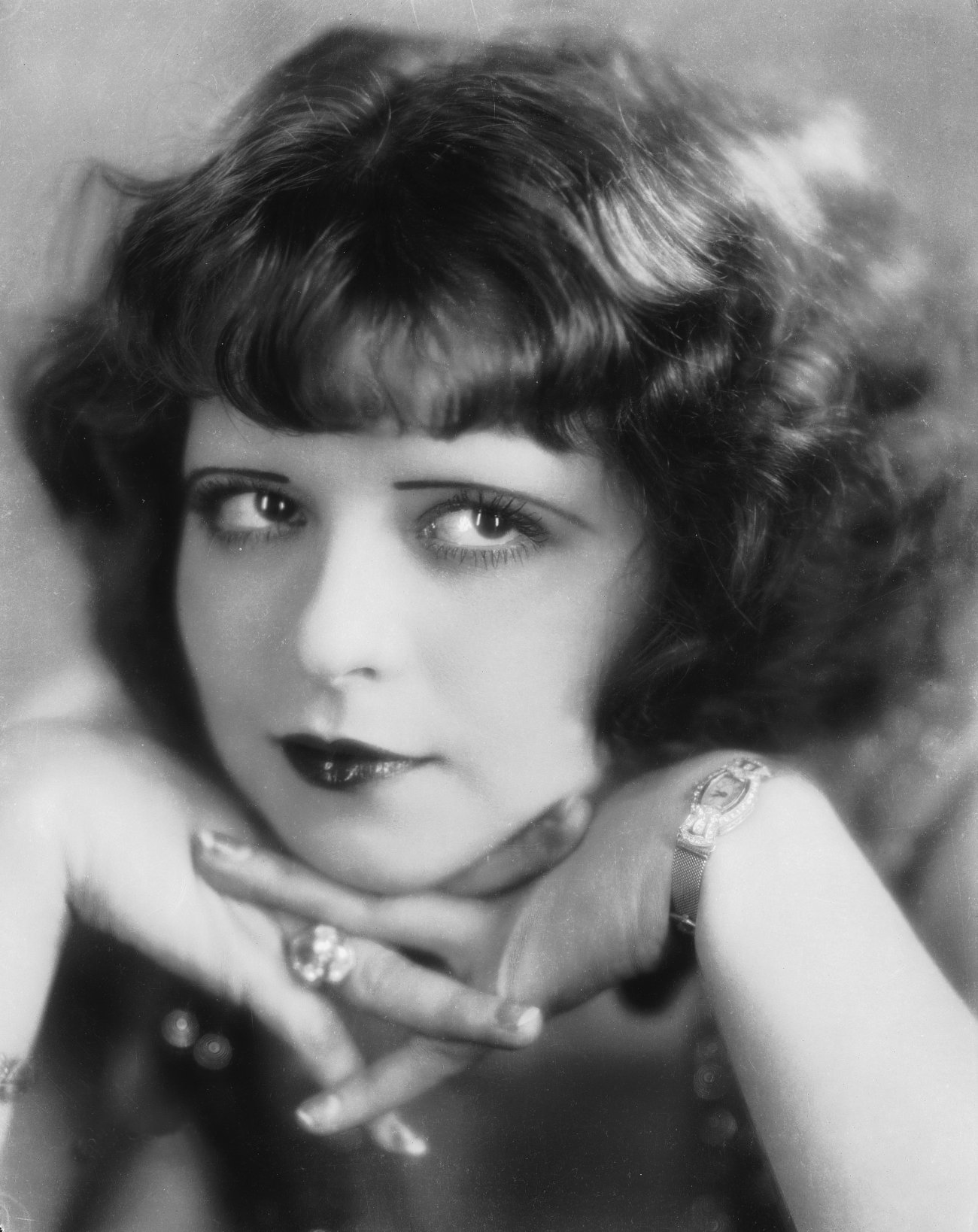
FINAL RESTING PLACES: CLARA BOW

 
Known as the 'It Girl,' she is considered America's first "Sex Symbol". Born to poverty in Brooklyn, New York, she won a photo beauty contest that launched her film career in 1922. She was "discovered" while working at a Coney Island Hot Dog stand run by Nathan Handwerker, who would later find fame in his own right as the founder of Nathan's Franks. 

The silent movie, "It" (1927), made her a household name ("It" refers to "sex appeal"). She often played a young, frisky, openly sensual, rebellious girl in many of her movies, yet this role probably defined the attitude of society at that time, and it made her a star. She was the definitive "Flapper" of the 1920s. Probably one of the more overworked and underpaid actresses in the industry, she made 58 films between 1922 and 1933. Unlike many Hollywood stars, she did not flaunt her wealth, but lived on par with the middle class, living in a small 7 room house in Beverely Hills. 


Her sexual liaisons and extremely public private life were legendary, and in 1928 she had a torrid affair with director Victor Fleming that made headlines continuously. In 1927, she had the female lead role in Wings the first Oscar winning "Best Picture." With the coming of sound movies in 1929, her thick Brooklyn accent lost her many fans, and her career waned. 

Adding to her problems were gambling debts, unpaid IRS taxes, embezzlement by her secretary, and several sensational public court battles involving divorce and alienation of affection between several husbands and wives. In 1931, she married film cowboy Rex Bell, and retired from making films in 1934. She became a doting mother of two boys, settling down and never making another movie. She died at age 60 of a heart attack, in Los Angeles, California. The marker on her crypt marker her birth year as 1907, but she was born in 1905...


Monday, August 24, 2015

THE SILENCE AFTER SOUND: HOLLYWOOD'S LAST SILENT MOVIES

Here is an excellent story I found about the death of silent movies. It is much better than anything I could write...


October 6, 1927 remains one of the most decisive days in the history of pop culture. It changed the course of an industry, the expectations of the public, and forever altered the form of an art.The event was the first public presentation of Warner Bros.’ The Jazz Singer starring Al Jolson—which was the first film to feature talking sequences. While experiments with sound dated back to the earliest days of cinema, it wasn’t until the introduction of Vitaphone (in which sound was recorded on a disc and then synchronized with the projector for proper playback) in 1926 that sound seemed a distinct possibility. Vitaphone’s trial run was synchronized musical accompaniment to the otherwise silent Don Juan, as well as several short subjects that featured lip-synced dialogue. Don Juan proved that a huge orchestra was no longer necessary to provide a symphonic score to a motion picture: now even the smallest theaters had the potential to wow audiences with the sounds of a full orchestra. The days of the silent picture accompanist were now numbered. But it was The Jazz Singer that really spelled the end of an era. Even though the movie was still only part-talkie and was largely silent with intertitles, it showed exhibitors and producers that audiences craved talking and singing and crying and laughing. They wanted sound pictures.

It was now up to the industry to catch up, and decide how to make “talkies” an economically viable reality. Fox’s introduction of Movietone (a sound-on-film process that replaced the necessity of synchronizing projection with a disc) only further cemented the industry’s investment in sound picture production. However, as historian Lewis Jacobs describes, there was still plenty to work out.

The entire industry, now in a panic, rushed into the production of sound pictures, hoping to make up for lost time… Major companies at first tried to play the game from all sides. Their production schedules included part-talkies, all-talkies, sound films, and silent films, the common supposition being that eventually the talkie would merely share the screen with the silent movie. But as time went on and more theaters were wired for sound, it became apparent that the talkies were entirely supplanting the “silents.”


The switchover from silent to sound in the American film industry, which began in late 1927, was primarily complete by 1929 (though even in that year silent pictures continued to be produced, though at a heavily reduced rate). And while the transition took longer overseas (as late as 1936 Yasujrio Ozu was still making silent films in Japan), the dominance of Hollywood in the world market assured that sound would soon become an international phenomenon.

All of which begs to ask, what happened on American screens in 1928? It was a pivotal year in the transition, an entire year in which silent and sound pictures shared theater marquees, and when both were viable commercial artforms. Though silents would still exist in 1929, their era was not just numbered—it was practically over. And while Charlie Chaplin would continue to make two silent films in the 1930s (City Lights and Modern Times), both are certainly anomalies and do not represent the dominant trends in the industry (and were also produced by his independent company and not by major Hollywood studios). Thus 1928 was truly a special year, in which the innovators of an art were able to continue making pictures with a clear end in sight.

How did filmmakers – actors, directors, writers, and all the other professionals that comprise a movie crew – respond to the silent screen’s last call? One thing is for certain: the silent cinema was far from dead. It was thriving with innovation, artistry, and entertainment. Moreover, the artform was still continuing to grow. With the influx of German émigrés such as F.W. Murnau and Paul Leni, expressionism was reinvigorating Hollywood and cinematography. Filmmakers as varied as Frank Borzage, John Ford, King Vidor, and Paul Fejos, were taking expressionism and, more than just giving it their own spin, were turning it into an fully American style that would come to dominate Hollywood production for the next several decades.

1928 also marks a division, of sorts, between two different eras of Hollywood idols. Many of the craftsmen behind the scenes continued to have successful careers well into the sound era, particularly directors such as Ford, Vidor, and Borzage. Sadly, Murnau and Leni suffered untimely deaths – Leni in 1929 of blood poisoning, and Muranu in 1931 in a car accident – that cut short their careers. As it is, we can only speculate of the heights they could have attained, had they the opportunity to continue making movies.


The faces of the silent screen, however, would be noticeably different. Lillian Gish, Douglas Fairbanks, Mary Pickford, Louise Brooks, and even Charlie Chaplin—these were the first generation of Hollywood royalty. But after the coming of sound, their careers would be severely diminished, at least on-screen. Chaplin’s productivity halted to a couple films per decade; Gish worked mainly on the stage, and later on television, returning to the cinema only on rare occasions; Pickford and Brooks gave up after a few sound picture, as did Fairbanks. Comedians such as Buster Keaton, Harold Lloyd and Harry Langdon were still active into the talking era, however their status was marginal compared their hay days in the 1920s. Other actors, however, such as Greta Garbo, Joan Crawford, and Gary Cooper (to name only a few) would continue successfully into the sound era.

Did the “talkies” kill the “silents”? In some ways, yes, the rivalry is as simple as that. Hollywood has always been an industry, and it always goes in the direction of profit. When “talkies” promised increased revenue, that’s where producers invested their time and money. But in other ways, the “talkies” never killed the “silents” because silent cinema never truly died. While some of the personnel were not able to make the transition, others certainly did. And while it took some years for sound technology to catch up to the sophistication of the camera, once it became a tool rather than a hindrance, the camera began to move with the same grace it did during the silent era. But most important, silent cinema never died because we still have the films. That so many are still lost and will never be recovered is an undeniably tragedy, but those do survive continue to astound, entertain, and inspire viewers some eighty years later…


SOURCE


Monday, July 27, 2015

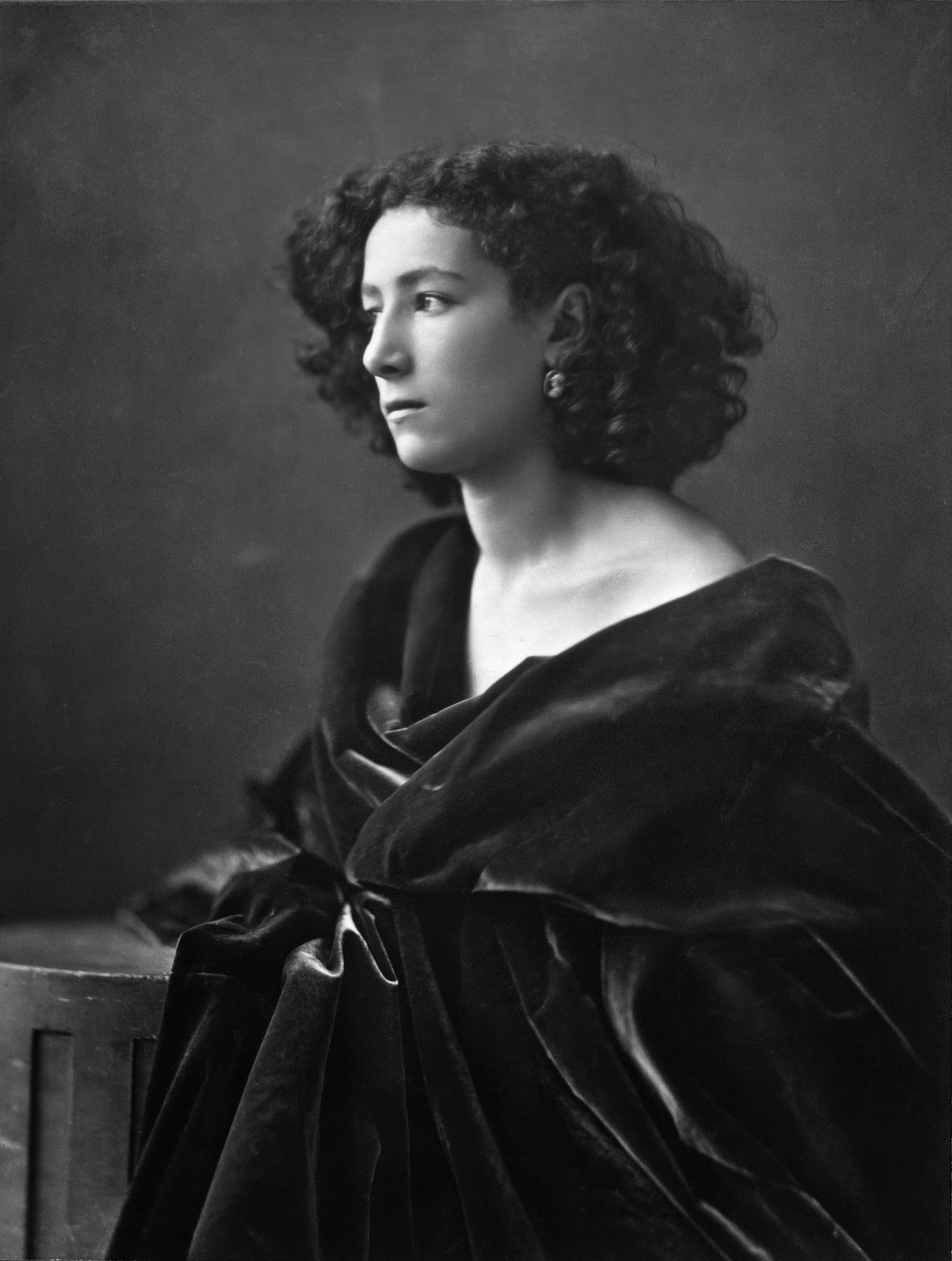
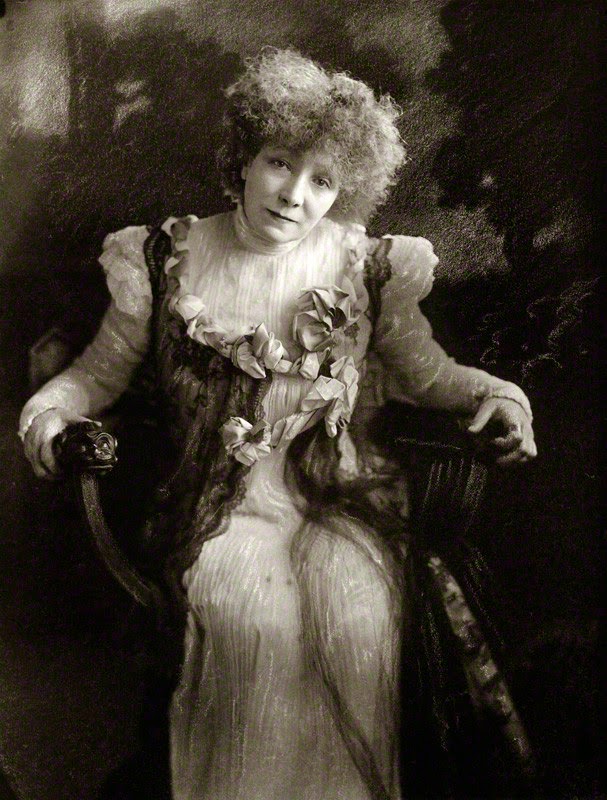
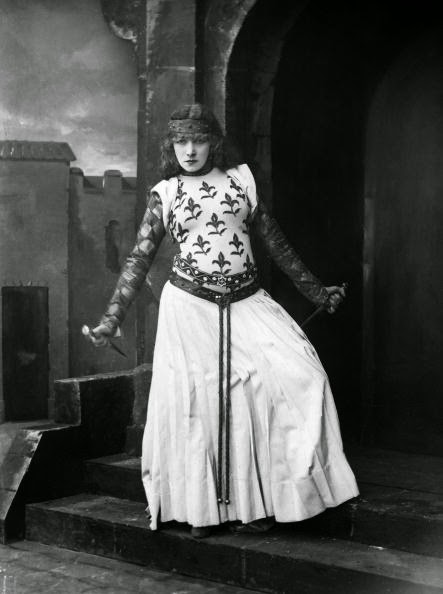
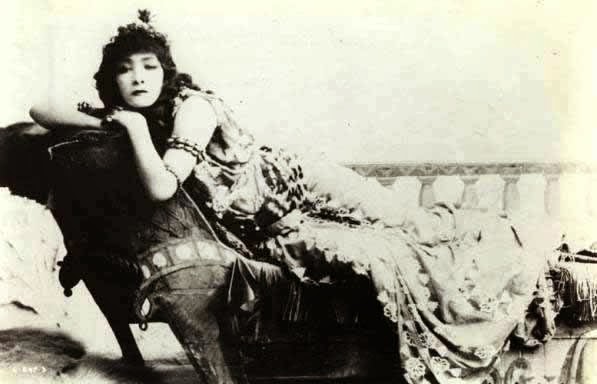
THE LAST DAYS OF SARAH BERNHARDT

Sarah Bernhardt had an affair with a Belgian nobleman, Charles-Joseph Eugène Henri Georges Lamoral de Ligne (1837–1914), son of Eugène, 8th Prince of Ligne, with whom she bore her only child, Maurice Bernhardt (1864–1928). Maurice did not become an actor but worked for most of his life as a manager and agent for various theaters and performers, frequently managing his mother's career in her later years, but rarely with great success. Maurice and his family were usually financially dependent, in full or in part, on his mother until her death. Maurice married a Polish princess, Maria Jablonowska (see Jablonowski), with whom he had two daughters, Simone (who married Edgar Gross, son of a wealthy Philadelphia soap manufacturer) and Lysiana (who married the playwright Louis Verneuil ).

Bernhardt's close friends included several artists, most notably Gustave Doré and Georges Clairin, and actors Mounet-Sully and Lou Tellegen, as well as the famous French author Victor Hugo. Alphonse Mucha based several of his iconic Art Nouveau works on her. Her friendship with Louise Abbéma (1853–1927), a French impressionist painter, some nine years her junior, was so close and passionate that the two women were rumored to be lovers. In 1990, a painting by Abbéma, depicting the two on a boat ride on the lake in the bois de Boulogne, was donated to the Comédie-Française. The accompanying letter stated that the painting was "Peint par Louise Abbéma, le jour anniversaire de leur liaison amoureuse" (loosely translated: "Painted by Louise Abbéma on the anniversary of their love affair.")


In 1905, while performing in Victorien Sardou's La Tosca in Teatro Lírico do Rio de Janeiro, Bernhardt injured her right knee when jumping off the parapet in the final scene. The leg never healed properly. By 1915, gangrene set in and her entire right leg was amputated; she was required to use a wheelchair for several months. Bernhardt reportedly refused a $10,000 offer by a showman to display her amputated leg as a medical curiosity. (While P.T. Barnum is usually cited as the one to have made the offer, he had been dead since 1891.)

She continued her career, sometimes without using a wooden prosthetic limb, which she did not like. She carried out a successful tour of America in 1915, and on returning to France she played in her own productions almost continuously until her death. Later successes included Daniel (1920), La Gloire (1921), and Régine Armand (1922). According to Arthur Croxton, the manager of London's Coliseum, the amputation was not apparent during her performances, which were done with the use of an artificial limb. Her physical condition may have limited her mobility on the stage, but the charm of her voice, which had altered little with age, ensured her triumphs.

Sarah Bernhardt died from uremia following kidney failure in 1923. Newspaper reports stated she died "peacefully, without suffering, in the arms of her son." She is believed to have been 78 years old. She was the Meryl Streep of her generation even before Meryl Streep was even a thought...


Monday, July 20, 2015

SARAH BERNHARDT: THE RISE TO FAME

Sarah Bernhardt's stage career started in 1862 while she was a student at the Comédie-Française, France's most prestigious theater. She decided to leave France, and soon ended up in Belgium, where she became the mistress of Henri, Prince de Ligne, and gave birth to their son, Maurice, in 1864. After Maurice's birth, the Prince proposed marriage, but his family forbade it and persuaded Bernhardt to refuse and end their relationship.

After being expelled from the Comédie Française, she resumed the life of courtesan to which her mother had introduced her at a young age, and made considerable money during that period (1862–65). During this time she acquired her famous coffin, in which she often slept in lieu of a bed – claiming that doing so helped her understand her many tragic roles.

Bernhardt then reverted to the theater, securing a contract at the Théâtre de L’Odéon where she began performing in 1866. Her most famous performance there was her travesty performance as the Florentine minstrel in François Coppé's Le Passant (January 1869). With the outbreak of the Franco-Prussian war performances were stopped and Bernhardt converted the theatre into a makeshift hospital where she took care of the soldiers wounded on the battlefield. She made her fame on the stages of Europe in the 1870s and was soon in demand all over Europe and in New York. In between tours Bernhardt took over the lease of the Théâtre de la Renaissance, which she ran as producer-director-star from 1893 to 1899.


In 1899 Bernhardt took over the former Théâtre des Nations on the Place du Châtelet, renaming it the Théâtre Sarah-Bernhardt and opening on 21 January in one of her most admired parts, the title role in Victorien Sardou's La Tosca. This was followed by revivals of Racine's Phèdre (24 February), Octave Feuillet's Dalila (8 March), Gaston de Wailly's Patron Bénic (14 March), Edmond Rostand's La Samaritaine (25 March), and Alexandre Dumas fils's La Dame aux Camélias on 9 April. On 20 May, she premiered her most controversial part, the title role in Shakespeare's Hamlet, in a prose adaptation which she had commissioned from Eugène Morand and Marcel Schwob. The play was greeted with rave reviews despite its running time of four hours. She developed a reputation as a serious dramatic actress, earning the title "The Divine Sarah"; arguably, she was the most famous actress of the 19th century.

Bernhardt also participated in scandalous productions such as John Wesley De Kay's "Judas." It performed in New York’s Globe Theatre for only one night in December 1910 before it was banned there, as well as in Boston and Philadelphia. In New York’s art scene of 1910 the story line of the play was nothing short of scandalous. Mary Magdalene, who at first became a lover of Pontius Pilate, then of Judas Iscariot, got involved with Jesus. Judas, after realizing that Mary Magdalene had given herself to Jesus, decided to betray his friend to the Romans. To top the provocation of New York’s theater lovers, Judas was played by the voluptuous Sarah Bernhardt.

In Paris, Bernhardt continued to direct the Théâtre Sarah-Bernhardt until her death, when her son Maurice took over. After his death in 1928, the theatre retained the name Sarah Bernhardt until the Occupation by the Germans in World War II, when the name was changed to Théâtre de la Cité because of Bernhardt's Jewish ancestry...


Monday, July 13, 2015

SARAH BERNHARDT: THE EARLY YEARS

For some reason the name Sarah Bernhardt has been sticking in my head. She was one of the first "superstars" of acting. I have never seen an early movie she made, but I did a little research to learn more about her.

Sarah Bernhardt was a French stage and early film actress, and was referred to as "the most famous actress the world has ever known." Bernhardt made her fame on the stages of France in the 1870s, at the beginning of the Belle Epoque period, and was soon in demand in Europe and the Americas. She developed a reputation as a serious dramatic actress, earning the nickname "The Divine Sarah."

Bernhardt was born on October 22, 1844 in Paris as Rosine Bernardt, the daughter of Julie Bernardt (1821, Amsterdam – 1876, Paris) and an unknown father. Julie was one of six children of an itinerant Jewish spectacle merchant, "vision specialist" and petty criminal, Moritz Baruch Bernardt, and Sara Hirsch (later known as Janetta Hartog; c. 1797–1829). Five weeks after his first wife's death in 1829, Julie's father married Sara Kinsbergen (1809–1878). He had abandoned his five daughters and one son with their stepmother by 1835. Julie, together with her younger sister Rosine, left for Paris, where she made a living as a courtesan and was known by the name "Youle." Julie had five daughters, including a twin who died in infancy in 1843.

Sarah Bernhardt changed her first name and added an "h" to her surname. Her birth records were lost in a fire in 1871. To prove French citizenship—necessary for Légion d'honneur eligibility—she created false birth records, in which she was the daughter of "Judith van Hard" and "Édouard Bernardt" from Le Havre, in later stories either a law student, accountant, naval cadet or naval officer.


When Sarah was young her mother sent her to Grandchamp, an Augustine convent school near Versailles. In 1860 she began attending the Conservatoire de Musique at Déclamation in Paris and eventually became a student at the Comédie Française where she would have her acting debut (11 August 1862) in the title role of Racine's Iphigénie to lackluster reviews. Her time there was short lived; she was asked to resign after slapping another actress across the face for shoving her younger sister during a birthday celebration for Molière.

Much of the uncertainty about Bernhardt's life arises because of her tendency to exaggerate and distort. Alexandre Dumas, fils, described her as a notorious liar...


Tuesday, September 16, 2014

MARY PICKFORD: THE LATER YEARS

If you are talking about the pioneers of the film industry, many people would have to talk about Charlie Chaplin or D.W. Griffith. In that early era of American film, as was the norm in society as a whole, women were not allowed to be the leaders. However, one of the first woman pioneers in film was silent screen star Mary Pickford. Known as "America's Sweetheart", Pickford was so powerful in Hollywood that she could dictate her roles, her movies, and everything about her career. It was very rare for a woman to have that power in the early days of Hollywood. Mary Pickford, however, disappeared from film, and left the business at the height of her fame to become an elusive legendary figure.

When she retired from acting in 1933, Pickford continued to produce films for United Artists, and she and Chaplin remained partners in the company for decades. Chaplin left the company in 1955, and Pickford followed suit in 1956, selling her remaining shares for three million dollars. On June 24, 1937, Pickford married her third and last husband, actor and band leader Charles 'Buddy' Rogers. They adopted two children: Roxanne (born 1944, adopted 1944) and Ronald Charles (born 1937, adopted 1943, a.k.a. Ron Pickford Rogers). As a PBS American Experience documentary noted, Pickford's relationship with her children was tense. She criticized their physical imperfections, including Ronnie's small stature and Roxanne's crooked teeth. Both children later said that their mother was too self-absorbed to provide real maternal love. In 2003, Ronnie recalled that "Things didn't work out that much, you know. But I'll never forget her. I think that she was a good woman."

 After the love of her life, Douglas Fairbanks Sr, died in 1939 Mary withdrew and gradually became a recluse, remaining almost entirely at Pickfair and allowing visits only from Lillian Gish, her stepson Douglas Fairbanks, Jr., and a few select others. The Political Graveyard reports that Mary Pickford Rogers was a candidate for presidential elector on the Republican ticket of Dewey-Bricker in 1944. She did appear in court in 1959, in a matter pertaining to her co-ownership of North Carolina TV station WSJS-TV. In the mid-1960s, Pickford often received visitors only by telephone, speaking to them from her bedroom. Buddy Rogers often gave guests tours of Pickfair, including views of a genuine western bar Pickford had bought for Douglas Fairbanks, and a portrait of Pickford in the drawing room. A print of this image now hangs in the Library of Congress. In addition to her Oscar as best actress for Coquette (1929), Mary Pickford received an Academy Honorary Award for a lifetime of achievements in 1976. The Academy sent a TV crew to her house to record her short statement of thanks - offering the public a very rare glimpse into the fabled Pickfair Manor. On May 29, 1979 Pickford passed away at the age of 87. She was a forgotten icon of a legendary era in Hollywood history...

Monday, September 1, 2014

BORN ON THIS DAY: RICHARD ARLEN

One of my favorite articles to write for my blog is the “Born On This Day” stories.  I not only get to celebrate some of the great stars of classic Hollywood, but I also get the opportunity to revisit some of the stars that I have forgotten. One such star was Richard Arlen, who was born on this day on September 1, 1899.  Born Sylvanus Richard Van Mattimore in St. Paul, Minnesota, he attended the University of Pennsylvania. He served in Canada as a pilot in the Royal Flying Corps during World War I. His first job after the war was with St. Paul's Athletic Club. Then he went to the oilfields of Texas and Oklahoma and found work as a tool boy. He was thereafter a messenger and sporting editor of a newspaper before going to Los Angeles to star in films, but no producer wanted him. He was a delivery boy for a film laboratory when the motorcycle which he was riding landed him a broken leg outside the Paramount Pictures lot.

Impressed by his good looks, executives also gave him a contract after he had recovered. Starting as an extra in 1925, Arlen soon rose to credited roles, but the quality of his work left much to be desired. However, this was the silent era, which was more about looks than substance, and he continued on. His big break came when William A. Wellman cast him as a pilot in the silent film Wings (1927) with Charles 'Buddy' Rogers and Clara Bow. The story of fighter aces would win the Oscar for Best Picture and Arlen would continue to play the tough, cynical hero throughout his career. Arlen appeared in three more pictures directed by Wellman, Beggars of Life (1928), Ladies of the Mob (1928) and The Man I Love (1929). In Wings he had a scene with a young actor named Gary Cooper. In 1929, he again worked with Cooper in the western The Virginian (1929), only this time Cooper was the star and Arlen was the supporting actor. While Arlen moved easily into sound, his career just bumped along.

At the age of 34, he was cast as a college student in the Bing Crosby musical College Humor (1933). The film did nothing to further Arlen’s career, but it was Bing’s second movie, and it made him a star. By 1935 he was working in such "B" pictures as Three Live Ghosts (1936). It was in 1935 that he became a freelance actor and his freelance career soon waned. In 1939, he signed with Universal and began working in its action films. In 1941 he moved to the Pine-Thomas unit at Paramount, where he appeared in adventure films. With the war on, most of his earlier films included war scenarios. By the end of the 1940s Arlen was becoming deaf and this seemed to signal the end of his career. However, he had an operation in 1949 that restored his hearing and he went on making a handful of adventures and westerns through the 1950s and working more in the 1960s. He made 15 westerns for producer A.C. Lyles, who worked with the old western stars.

Besides movies, Arlen also appeared on television and in commercials. After leaving the business in the late 1960s, he was coaxed back to the screen for three small roles in films that were released the same year that he died. Married three times, Arlen only had a son who also appeared in movies. Richard Arlen died on March 28, 1976 of emphysema in Hollywood… 


Monday, January 6, 2014

FORGOTTEN ONES: EUGENIE BESSERER

Who the heck is Eugenie Besserer you may ask? No one born in the last fifty years probably knows. Eugenie Besserer is an actress that was born during the Johnson administration. Not Lyndon Johnson, but Andrew Johnson. I have only seen one movie she was in, and it probably her best remembered role. She played Al Jolson's mother in The Jazz Singer in 1927.

Born in Watertown, New York on Christmas 1868 to French-Canadian parents, she was taken by her parents to Ottawa, Ontario, Canada as a girl and spent her childhood there. She was left an orphan and escaped from her guardians at the age of twelve. She came to New York City and arrived at Grand Central Station with only 25 cents (Canadian currency) in her pocket. She managed to locate a former governess, with the assistance of a street car conductor, who helped Eugenie locate an uncle, with whom she lived. She continued her education.

Besserer's initial theatrical experience came with McKee Rankin when the producer had for a star, Nance O'Neill. Soon she appeared with stage luminaries like Frank Keenan and Wilton Lackaye. As a youth she played a juvenile part with Maurice Barrymore. She performed a season at Pike's Opera House in Portland Oregon. Another season Eugenie acted in a drama opposite Henry Kolker. The actress came to Hollywood in 1910 when films were just starting to be made there. The illness of her sister brought her to the west coast. In motion pictures Eugenie was usually cast in mother roles, most famously as mother of the Al Jolson character in The Jazz Singer ("Mammy"). Jolson famously sings "Blue Skies" to her. She was 59 when she made that film.


She shared a home with her husband, Albert W. Hegger, an art dealer, from the time she came to Los Angeles. They lived in a hilltop home above Silver Lake, and had one daughter, only known to us as Mrs. R.F. Ulrich.

Her last movie was To the Last Man, a 1933 Western starring Randolph Scott. In the film she played Granny Spelvin. On May 28, 1934 Eugenie Besserer at the age of 65, from a heart attack at her home. Having married Hegger when she was a teenager, the couple were due to celebrate their golden wedding anniversary in 1935. A funeral mass was held at St. Theresa's Church, with a rosary service at Edwards Brothers Colonial Mortuary, Venice Boulevard, in Los Angeles, California. She is buried in Calvary Cemetery, East Los Angeles. She mostly played motherly roles, but the roles she did play were important to the early days of film making...

Friday, December 6, 2013

THE DISAPPEARANCE OF SILENT MOVIES

In what now looks like a prescient move, silent screen legend Mary Pickford paid for the preservation of her films, ensuring that most of them endured. The effort spared 40 of her movies from being among the casualties of time and neglect that are represented in a new survey by the Library of Congress. The report, The Survivial Of American Silent Films: 1912-1929, has found that 70% of feature-length silent films made in America have been completely lost. During the period the study covers, 10,919 silent feature films of U.S. origin were released and only 14% of those still exist in their original 35mm format. Of those, 5% are incomplete and 11% are only available in foreign versions or lower-quality formats. Librarian of Congress James H. Billington called the state of America’s silent film heritage an “alarming and irretrievable loss to our nation’s cultural record.” Martin Scorsese weighed in about the findings, saying the report was “invaluable because the artistry of silent film is essential to our culture.” Scorsese’s Hugo was a tribute to the silent era, incorporating Georges Méliès’ Le Voyage Dans La Lune, which the Cannes Film Festival screened in an impressively restored version a few years back. It was also at Cannes that eventual Best Picture Oscar winner The Artist began its career, a throwback to the time before the talkies.

Contributing factors to the staggering loss of silent films are the vulnerability of nitrate film stock to fire and deterioration, and the industry’s practice of neglecting or destroying prints and negatives, the Library of Congress says. Among some of the notable films considered lost in their complete form are Lon Chaney’s London After Midnight (1927); The Patriot (1928); Cleopatra (1917); The Great Gatsby (1926), and all four of Clara Bow’s feature films produced in 1928, including Ladies Of The Mob. Meanwhile, only five of Will Rogers’ 16 silent features survive and 85% of films by Hollywood’s first cowboy star, Tom Mix, are lost.

“Any time a silent picture by some miracle turns up, it reminds us of the treasures we’ve already lost. It also gives us hope that others may be discovered. The research presented in this report serves as a road map to finding silent films we once thought were gone forever and encourages creative partnerships between archives and the film industry to save silent cinema,” Scorsese added.

SOURCE

Friday, November 8, 2013

FORGOTTEN ONES: FLORENCE LAWRENCE

 I have to admit that before I cam across Florence Lawrence's name, I had no clue who she was. She was definitely forgotten to me. However, it seems like she was very popular in the earlier days of Hollywood. Even though I have never seens a movie with her, like anyone who gave their life for tinsel town, she deserves to be remembered.

Florence is often referred to as "The First Movie Star." When she was popular, she was known as "The Biograph Girl", "The Imp Girl", and "The Girl of a Thousand Faces". She appeared in almost 300 films for various motion picture companies. Born Florence Annie Bridgwood in Hamilton, Ontario in 1886, she was the child of Charlotte A. Bridgwood, a vaudeville actress known professionally as Lotta Lawrence, who was the leading lady and director of the Lawrence Dramatic Company.

She was one of several Canadian pioneers in the film industry who were attracted by the rapid growth of the fledgling motion picture business. In 1906, at age 20, she appeared in her first motion picture. The next year, she appeared in 38 movies for the Vitagraph film company. During the spring and summer of 1906, Lawrence auditioned for a number of Broadway productions, with no success. However, on December 27, 1906, she was hired by the Edison Manufacturing Company to play Daniel Boone's daughter in Daniel Boone; or, Pioneer days in America. She got the part because she knew how to ride a horse. Both she and her mother received parts, and were paid five dollars a day for two weeks of outdoor filming in freezing weather.

In 1907 she went to work for the Vitagraph Company in Brooklyn, New York acting as Moya, an Irish peasant girl in a one-reel version of Dion Boucicault's The Shaughraun. She returned briefly to stage acting, playing the leading role in a road show production of Melville B. Raymond's Seminary Girls. Her mother played her last role in this production. After touring with the road show for a year, Lawrence resolved that she would "never again lead that gypsy life". In 1908 she returned to Vitagraph where she played the lead role in The Dispatch Beare. Largely as a result of her equestrian skills, she received parts in eleven films in the next five months.

Also at Vitagraph was a young actor, Harry Solter, who was looking for 'a young, beautiful equestrian girl' to star in a film to be produced by the Biograph Studios under the direction of D.W. Griffith. Griffith, the head of Biograph Studios, had noticed the beautiful blonde-haired woman in one of Vitagraph's films. Because the film's actors received no mention, Griffith had to make discreet enquiries to learn she was Florence Lawrence and to arrange a meeting. Griffith had intended to give the part to Biograph's leading lady, Florence Turner, but Lawrence managed to convince Solter and Griffith that she was the best suited for the starring role in The Girl and the Outlaw. With the Vitagraph Company, she had been earning $20 a week, working also as a costume seamstress over and above acting. Griffith offered her a job, acting only, for $25 a week.


After her success in this role, she appeared as a society belle in Betrayed by a Handprint and as an Indian in The Red Girl. In total, she had parts in most of the 60 films directed by Griffith in 1908. In 1912, Lawrence and Solter made a deal with Carl Laemmle, forming their own company. Laemmle gave them complete artistic freedom in the company, called Victor Film Company, and paid Lawrence five hundred dollars a week as the leading lady, and Solter two hundred dollars a week as director. They established a film studio in Fort Lee, New Jersey and made a number of films starring Lawrence and Owen Moore before selling out to the new Universal Pictures in 1913. With this new prosperity, Florence was able to realize a 'lifelong dream,' buying a 50-acre (200,000 m2) estate in River Vale, New Jersey. In August 1912, she had a fight with her husband, in which he "made cruel remarks about his mother-in-law". He left and went to Europe. However, he wrote "sad" letters to her every day, telling her of his plans to commit suicide. His letters "softened her feelings" and they were re-united in November 1912. Lawrence announced her intention to retire.

Lawrence was induced to return to work in 1914 for her company (Victor Film Company), which was later acquired by Universal Studios. During the filming of Pawns of Destiny, a staged fire got out of control. Lawrence was burned, her hair singed, and she suffered a serious fall. She went into shock for months. She returned to work, but collapsed after the film's completion. Blaming Solter for making her do the stunt in which she was injured, the two were divorced. To add to her problems, Universal refused to pay her medical expenses, leaving Lawrence to feel betrayed.

In the spring of 1916, she returned to work for Universal and completed another feature film, Elusive Isabel. However, the strain of working took its toll on her and she suffered a serious relapse. She was completely paralyzed for four months. By the time she returned to the screen in 1921, few people remembered her. In 1921 she traveled to Hollywood to attempt a comeback. However, she had little success, and received a leading role in a minor melodrama (The Unfoldment), and then two supporting roles. All of her screen work after 1924 would be in uncredited bit parts. During the 1920s she and her husband Charles began to manufacture a line of cosmetics, which they continued in partnership after their divorce.


Although only 29 years old, she never regained her stature as a leading film star after taking time off to recover from her injuries. The following year she married automobile salesman Charles Byrne Woodring, but they were divorced in 1931. In 1933 she got married for the third time to Henry Bolton, who turned out to be abusive and beat Lawrence severely. The union lasted only five months.

When Lawrence's mother died in 1929, she had an expensive bust sculpted for her mother's tomb. By then, in her mid-forties, demand for her in films had long since disappeared and the stock market crash and the ensuing Great Depression saw Lawrence's fortune decline. She returned to the screen in 1936, when MGM began giving small parts to old stars for seventy-five dollars a week. Alone, discouraged, and suffering with chronic pain from myelofibrosis, a rare bone marrow disease, she was found unconscious in bed in her West Hollywood apartment on December 27, 1938 after she had ingested ant paste. She was rushed to a hospital but died a few hours later.

Just nine years after she had paid for an expensive memorial for her mother, Lawrence was interred in an unmarked grave 1,000 feet from her mother in the Hollywood Cemetery, which is now Hollywood Forever Cemetery, in Hollywood, California. She remained forgotten until 1991, when actor Roddy McDowall, serving on the National Film Preservation Board, paid for a memorial marker that reads: "The Biograph Girl/The First Movie Star...


Friday, October 25, 2013

THE LAST DAYS OF FATTY ARBUCKLE

No one seems to remember the comedic genius of Fatty Arbuckle. The poor man was completely framed for the murder of Vriginia Rappe. After three trials Arbuckle was finally acquitted on April 12, 1922 but not until his reputation was destroyed and his movies were banned. In November 1923, Arbuckle's estranged wife Minta Durfee filed for divorce, charging grounds of desertion. In January 1924, the divorce was granted. They had been separated since 1921, though Durfee always claimed he was the nicest man in the world, and that they were still friends. After a brief reconciliation, Durfee again filed for divorce, this time from Paris, in December 1924. Arbuckle married Doris Deane on May 16, 1925.

Arbuckle tried returning to filmmaking, but industry resistance to distributing his pictures continued to linger after his acquittal. He retreated into alcoholism. In the words of his first wife, "Roscoe only seemed to find solace and comfort in a bottle".

Buster Keaton attempted to help Arbuckle by giving him work on his films. Arbuckle wrote the story for a Keaton short called Daydreams (1922). Arbuckle allegedly co-directed scenes in Keaton's Sherlock Jr. (1924), but it is unclear how much of this footage remained in the film's final cut. In 1925, Carter Dehaven made the short Character Studies. Arbuckle appeared alongside Buster Keaton, Harold Lloyd, Rudolph Valentino, Douglas Fairbanks, and Jackie Coogan.

Eventually, Arbuckle was given work as a film director under the alias William Goodrich. According to author David Yallop in The Day the Laughter Stopped (a biography of Arbuckle with special attention to the scandal and its aftermath), Arbuckle's father's full name was William Goodrich Arbuckle. A persistent but unsupported legend credited Keaton, an inveterate punster, with suggesting that Arbuckle become a director under the alias "Will B. Good". The pun being too obvious, Arbuckle adopted the more formal pseudonym "William Goodrich".

During the middle and late 1920s and early 1930s, Arbuckle directed a number of comedy shorts under the pseudonym for Educational Pictures, which featured lesser-known comics of the day. Louise Brooks, who played the ingenue in Windy Riley Goes Hollywood (1931), told Kevin Brownlow:

"He made no attempt to direct this picture. He sat in his chair like a man dead. He had been very nice and sweetly dead ever since the scandal that ruined his career. But it was such an amazing thing for me to come in to make this broken-down picture, and to find my director was the great Roscoe Arbuckle. Oh, I thought he was magnificent in films. He was a wonderful dancer—a wonderful ballroom dancer, in his heyday. It was like floating in the arms of a huge doughnut—really delightful."

In 1929, Doris Deane sued for divorce in Los Angeles, charging desertion and cruelty.[33] On June 21, 1931 Roscoe married Addie Oakley Dukes McPhail (later Addie Oakley Sheldon, 1905–2003) in Erie, Pennsylvania.


In 1932 Arbuckle signed a contract with Warner Bros. to star under his own name in a series of two-reel comedies, to be filmed at the Vitaphone studios in Brooklyn. These six shorts constitute the only recordings of his voice. Silent-film comedian Al St. John (Arbuckle's nephew) and actors Lionel Stander and Shemp Howard appeared with Arbuckle. The films were very successful in America, although when Warner Bros. attempted to release the first one (Hey, Pop!) in the United Kingdom, the British Board of Film Censors cited the 10-year-old scandal and refused to grant an exhibition certificate.

Roscoe Arbuckle had finished filming the last of the two-reelers on June 28, 1933. The next day he was signed by Warner Bros. to make a feature-length film. He reportedly said, "This is the best day of my life." He suffered a heart attack later that night and died in his sleep. He was 46. His body was cremated and his ashes scattered in the Pacific Ocean. The unhappy and tortured clown could finally rest at last...

Friday, July 26, 2013

MAY MCAVOY: HER SILENCE WAS GOLDEN

For a younger movie fan, it is hard to get into a silent movie. We are so used to the movies "talking" and doing all of the work for us. However, there is nothing like watching a silent movie. One of the great actresses to come out of that "silent" era was May McAvoy.

May was born at the turn of the century on September 8, 1899 in New York City. Her beauty was such that she dropped out of high school at the age of 17 to star in her first film Hate. Her well-to-do family owned and operated a large livery stable situated where the Waldorf-Astoria now stands. She initially wanted to be a teacher but became intrigued with show business after watching a friend rehearse a show at a nearby vaudeville theater. A model whose first job was a commercial for Domino Sugar, she moved into extra work in films and received her first major break with The Devil's Garden (1920) co-starring Lionel Barrymore. Stardom was hers, however, as the lead in Sentimental Tommy (1921), which led to a Paramount contract. A unassuming brunette, her petite frame and sweet-natured looks belied a surprisingly feisty, independent nature. When Cecil B. DeMille put a halt on her career in 1923 as punishment for refusing a role that required partial nudity, May assertively bought out her contract and freelanced for the next six years.

May's most well known silent film role today is as "Esther" in the 1925 Ramon Novarro version of  Ben-Hur, the most expensive silent film ever made. I first discovered May McAvoy in what is considered the first "talkie" movie, The Jazz Singer in 1927. May had the distinction of playing opposite Al Jolson although she did not have any speaking lines in that ground-breaking film. She did speak, however, in Warner's fourth part-talkie The Lion and the Mouse (1928) again working with Lionel Barrymore. May also starred in England's first all-talkie The Terror (1928).

There was a rumor that  May had quit Hollywood when talkies came about due to a speech impediment, but clearly this was false because she did appear in a handful of talkies. May was only married once, to the treasurer of United Artists, Maurice Cleary. They were married from 1929 until his death in 1973. They had one son named Patrick. It was Cleary who actually preferred that she not work.    

May McAvoy returned to minor film work for MGM in the 1940s and 1950s, but unfortunately she did not appear in anything memorable. It is a sad example of how little minded Hollywood is. May McAvoy made the movie industry a lot of money during the silent era - but the industry was pretty much silent when she tried to come back to movies. She made her last movie appearance in 1957. May McAvoy died in quiet retirement on April 26, 1984 from the side effects of a heart attack suffered the previous year. Petite at only four feet, eleven inches tall, weighing in at only eighty-nine pounds, the silent movie star May McAvoy never let her small stature interfere with her professional ambitions...

Wednesday, April 10, 2013

THE LAST DAYS OF LON CHANEY SR.


Lon Chaney Sr was truly a man of a thousand faces like the title of his 1957 film biography states. Chaney elevated the horror genre in the 1920s to a whole new level, and I believe his films paved the way for future horror stars like Boris Karloff and Bela Lugosi to emerge. Some of Chaney's best movies were silent films like: "The Hunchback Of Notre Dame" (1923) and "The Phantom Of The Opera" (1925), and he resisted the sound era much like Charlie Chaplin did with his comedies.


Lon Chaney was among the last few big stars who held out from making the transition to sound films. He had witnessed the careers of long-standing silent film stars get wiped out almost overnight. While a few like Greta Garbo and Ronald Colman were able to make the change over to sound films (achieving greater stardom in the process), others, such as John Gilbert - once the idol of millions - were ruined once they opened their mouths. Chaney had dedicated too many years to his art to chance watching his own career fizzle. Although he initially frowned on this new innovation of sound in motion pictures, he was aware that he either had to make the change over to "talkies", or announce his retirement at the relatively young age of 46. When he finally made his decision in early 1930, Lon was quoted: "No, retirement is the bunk. And, yes…I am going into talkies! I'll tell you frankly that my first talking picture is going to make - or break me! Inside. I mean…in here…" as he tapped on his chest.

Chaney immersed himself in technical research around the sound rooms; studying the art of recording and learning about the recording devices of the era. He spent hours inside the mixing stages, not only to observe the mixers at work, but to occasionally mix and experiment himself. Chaney was making a study of sound recording techniques with the same intensity and discipline that he'd previously applied when studying the intricacies of physical and facial make-up.

Chaney's first sound film would be a remake of one of his greatest box-office successes, "The Unholy Three", which also re-teamed him with Tod Browning. There were delays in the production of the film though, as Chaney was apparently still ill from shooting his last film Thunder. He was far more ill than even he thought so at the time. Unable to fully recover from complications resulting from bronchitis and a throat infection, Chaney underwent a tonsillectomy. Still weak and considerably ill, he continued to shoot The Unholy Three, although there were reports of a few occasions where he could not summon up enough strength to leave his own dressing room. After completing the film, Chaney immediately went to New York to undergo medical tests. After consulting with several leading specialists, he returned to his mountain retreat situated in the High Sierras of Inyo National Forest.


The Unholy Three would be Lon Chaney's last film. Released in July of 1930, the film was an instant success. Old and new fans alike were anxious to hear Chaney talk for the first time. He proved his versatility once again by imitating the voice of an old lady, in addition to performing three other parts in the film. The film received glowing reviews, and exceeded everyone’s expectations of Lon Chaney, as it was now being pronounced that the "Man Of A Thousand Faces is also The Man Of A Thousand Voices!" The studios were already bus lining up new productions for him. Projects such as Cheri Bibi, The Sea Bat, The Bugle Sounds, and Dracula were being groomed for him. There were even rumors of Chaney being considered for Universal's Frankenstein.

His strength failing rapidly, Chaney was brought into a Hollywood hospital on August 1, 1930 for what was being diagnosed as "acute anemia". After a number of blood transfusions, Chaney seemed to be improving and was even removed from the critical list, having safely gotten through a 10-day struggle. By the morning of August 25th, he was reported in better condition; he had displayed an appetite and was even reported to be somewhat talkative. At midnight, he suffered from a lung hemorrhage that occurred so suddenly and unexpectedly - the physicians failed to reach him before he passed away at 12:55 A.M. He was only 47. On the day of his funeral, Thursday, August 28th, all work ceased throughout the Hollywood film industry for five minutes. At that time a genuis of the silent era was indeed silenced...


Friday, January 11, 2013

CLARA BOW RETROSPECTIVE

Long before Marilyn Monroe became a sex symbol in the 1950s, actress Clara Bow changed the image of women on screen when she burst upon the cinematic landscape in the 1920s.

"She was the first sex symbol," said David Stenn, author of "Clara Bow: Runnin' Wild." "I think more than that, Clara was the first female star whose appeal was 50-50," he noted. "She could pull the male audience who wanted her and the female audience who wanted to be her."

Bow's winsome appeal is on display in the UCLA Film & Television Archive's new retrospective "Call Her Savage: Clara Bow Hits the Screen." It opens in January at the Billy Wilder Theater with her last two films, 1932's "Call Her Savage" and 1933's "Hoop-La," both of which were recently restored. Stenn, who has also funded restorations of Bow's films, will introduce the screenings.

Other films in the retrospective include the 1927 romantic comedy "It," which lead to Bow's nickname, the "It" girl; 1927's "Wings," which won the first best picture Oscar; 1929's "The Wild Party," which was her first talkie; and the rarely seen 1931 film "Kick-In."

When Bow began in films, female stars such as Gloria Swanson, Mary Pickford and Lillian Gish ruled the box office. Unlike today, where Hollywood mostly caters to boys and young men, "the whole star system was created for female audiences," noted Jan-Christopher Horak, head of the archive.

"Empirically, more young women went to the movies than young men, and once they had families, they made the decision and they catered to that audience," said Horak. "If you look at the ratio between male and female stars, it is almost the opposite of what it is now. "

With her short, wavy hair, big expressive eyes and abundant spunk, Bow embodied the spirit of the carefree, uninhibited Jazz Age flapper. Bow's popularity paralleled the enormous inroads women were making post-World War I, beginning with finally getting the right to vote in 1920, getting rid of their corsets and entering the workforce in larger numbers.

"There is much more gender equality and Clara Bow epitomizes the 'It' girl — someone who is single, young and loves sex and is not afraid of it," said Horak. "That is completely different from the Victorian image that D.W. Griffith is propagating in the teens and even until the '20s."

Bow was "extremely refreshing to the working-class public," said Elaina B. Archer, producer and co-writer of the documentary "Clara Bow: Discovering the 'It' Girl."

"Everyone loved her across societal borders," Archer said. "Clara allowed them to relax. She wasn't ashamed of her sexuality — she embraced it."

By the late 1920s, said Stenn, "she was the No. 1 box office attraction. Clara Bow was such a huge draw at Paramount she was contracted to do four movies a year. They were simply known as 'Winter Bow,' 'Spring Bow,' 'Summer Bow' and 'Fall Bow.'"


Behind her mask of sauciness and vitality, though, Bow was dealing with a lot of demons.

Just like Monroe, Bow had a poor, Dickensian childhood. "She was literally born in a one-room cold-water flat above a Baptist church in Brooklyn to a mother who tried to kill her," said Stenn. And though her father abused her, Bow protected him all of his life.

Her behavior off-screen was unconventional. There were scandals and highly publicized love affairs. "The sad thing was the studios were very hypocritical," said Archer. "When it came to Clara, they expected her to be free on the screen and then reined her in off screen," Archer said. "I think in a lot of ways, they used her up. She was hurt by what she went through."

By the early '30s, she was physically and mentally exhausted. She had made 45 films in six years. Bow had a nervous breakdown after "Kick-In" and was admitted into a sanitarium. During this time, she met and married cowboy actor Rex Bell. Two years later, she retired and moved with Bell to a ranch in Nevada and had two children.

But she never was free of her mental distress. There was a suicide attempt in 1944, followed in 1949 by a stay at a mental institution. After Bell's death in 1962, she moved back to Hollywood, where she died in seclusion of a heart attack at age 60 in 1965...


SOURCE