Showing posts with label music review. Show all posts

Tuesday, December 7, 2021

MUSIC REVIEW: LOUIS PRIMA & LILY ANN CAROL - OH MARIE!

I had the pleasure of getting a copy of this new CD from Jasmine, and it is one of the best CD issues in years. I am familiar with Louis Prima and his time with Keely Smith in the 1950s, but this whole era with Lily Ann Carol is new to me. Lovingly put together by Alan Eichler, this new CD is a must for anyone who is a Louis Prima, and a fan of good music in general!


Here are notes from the CD:

Before Keely Smith, there was Lily Ann Carol. When Louis Prima abandoned Dixieland and formed his first big band, the beautiful New York native was signed to be his star vocalist, and for more than six years - from 1940-1946 they were one of the most popular attractions in clubs and theatres across the country.

Here gathered together for the first time are nearly all of their recordings and this is the very first collection to throw a spotlight on Lily Ann, who up until now has been something of a mystery figure.

Among their wartime hits are 'Bell Bottom Trousers', 'I'll Walk Alone', 'A Fellow on a Furlough', 'Hitsum-Kitsum-Bumpity-Itsum' 'The Lip' and of course 'Oh Marie'

All tracks have been restored here in sparkling sound on a jam-packed Jasmine CD, with Lily Ann not only singing beautifully, but keeping up with Louis in the humour department as well.
Track Listing

1. DANCE WITH A DOLLY
2. DAYDREAMS COME TRUE AT NIGHT
3. PLEASE HAVE MERCY
4. TICA-TEE, TICA-TA
5. I'LL WALK ALONE
6. THERE'S A LOT OF MOONLIGHT BEING WASTED
7. A FELLOW ON A FURLOUGH
8. OH MARIE
9. BELOVED
10. THIS HEART OF MINE
11. LET'S TAKE THE LONG WAY HOME
12. HITSUM-KITSUM-BUMPITY-ITSUM
13. RUM AND COCA COLA
14. I WANNA GET MARRIED
15. BELL BOTTOM TROUSERS
16. I WAS HERE WHEN YOU LEFT ME
17. SENTIMENTAL JOURNEY
18. THERE! I'VE SAID IT AGAIN
19. I DON'T WANT TO BE LOVED (By Anyone Else But You)
20. THERE'S A BROKEN HEART FOR EVERY LIGHT ON BROADWAY
21. ON THE ATCHISON, TOPEKA AND THE SANTA FE
22. HOW DEEP IS THE OCEAN
23. JUST A LITTLE FOND AFFECTION
24. EVERYBODY KNEW BUT ME
25. THE LIP
26. I'LL BE WITH YOU IN APPLE BLOSSOM TIME
27. PORGY

You can purchase this CD on Amazon or any supplier of great music or you can contact Jasmine Records HERE


Sunday, October 14, 2018

MUSIC REVIEW: BING CROSBY - SEASONS

Bing Crosby died 41 years ago today. It is amazing how the years are passing by. To commemorate this sad day, I wanted to take a look at Bing's final original album he recorded. It was a fitting end to a mammoth career. Seasons is a 1977 vinyl album by Bing Crosby which was issued by Polydor Records under catalogue No. 2442 151. The album is particularly significant in that it was the final studio album completed before Crosby's death on October 14, 1977; it was released posthumously, and was marketed with the tagline "The Closing Chapter". Crosby was backed by Pete Moore and his Orchestra and the Johnny Evans Singers. Moore also did all the arrangements for the album, which was recorded at CBS Studios, Whitfield Street, London on September 12,13 & 14 1977 - except for one song "Spring Will Be a Little Late This Year" which was recorded at United Western Recorders, Sunset Boulevard, Hollywood on January 19, 1976. This song was also produced by Ken Barnes and arranged by Pete Moore.

The album entered the UK album charts in December 1977 and remained there for seven weeks with a peak position of #25.

Variety commented: "If it were merely that this is the last recording Bing Crosby ever made, it would be more than enough reason to run and buy it. But it also happens to be a marvelous representation of the later Crosby years."

Billboard reviewed it and said: "This album is billed as the last commercial recording by the beloved crooner, who died one month after recording these tracks. This is a concept album in that it contains 12 songs which either deal with a specific time of the year or more generally on the passing of time. Excellent mix of rousing sing-along numbers like “June Is Bustin’ Out All Over” and “Sleigh Ride” (which feature some high-stepping female background singers) with more sophisticated, elusive melodies like “Autumn in New York."


Song Listing:
1. "Seasons"
2. "On the Very First Day of the Year"
3. "June in January"
4. "Spring Will Be a Little Late This Year"
5. "April Showers"
6. "June Is Bustin' Out All Over"
7. "In the Good Old Summer Time"
8. "Summer Wind"
9. "Autumn in New York"
10. "September Song"
11. "Sleigh Ride"
12. "Yesterday When I Was Young"


All of the songs we well sung. I think Bing could have picked a better song to record than the ancient "In The Good Old Summertime", but the marjority of the songs are spot on. My favorite songs are "Seasons" (the title song - written especially for the album) and the fitting "Yesterday When I Was Young". Bing's voice was a little weak on "Autumn In New York", but again it is not a song that needs to be sung powerful.

For the album cover, Bing was supposed to be captured in different seasonal poses, but in typical style Bing came in one day and told the photographer to take a picture as he was. The result again is very fitting. The "Seasons" album is widely available on CD with many special tracks, so I highly recommend this album. It was the end of Bing Crosby's recording career, but it was not the end of the enjoyment he gave to millions of fans...

MY RATING: 9 OUT OF 10


Tuesday, September 26, 2017

MUSIC REVIEW: DON CICCONE SINGS BRIAN GARI

Anyone who knows me, knows I don't buy much new music. The last album I bought was a Count Basie CD featuring his hits from 1939.

However, I had the fortune to scrape some pennies together and treat myself to Don Ciccone Sings Brian Gari. A treat it definitely was. Every track, even the radio interviews and audio outtakes, was great to hear.

Don Ciccone was the lead singer and songwriter of The Critters.Ciccone wrote the group’s hit, “Mr. Dieingly Sad,” which reached the Billboard Top 25 in 1966. He later joined Frankie Valli’s Four Seasons from 1973 through 1981 before becoming the musical director and bassist for Tommy James and the Shondells. Don Ciccone had a fabulous voice that was sadly silenced on October 8, 2016 at the young age of 70.

The songs that Don sang were written by Brian Gari. Brian has been in the industry for fifty plus years has written almost 900 songs. He had his first song published at 15 and recorded at 17. He signed with Vanguard Records in 1975 recording for them through 1976. For the next few years he performed his songs in New York comedy and cabaret clubs such as the Ballroom, Reno Sweeney, Catch a Rising Star, the Improv, the Comic Strip and the Copa. All along he was writing what was to become his first Broadway musical, LATE NITE COMIC , which debuted in October of 1987 at the Ritz Theatre (now the Walter Kerr.) The album made Top 10 for film and show albums at Tower Records. His songs have been performed and/or recorded by such artists as Margaret Whiting, the Tokens, Jana Robbins , Kaye Ballard, Lesley Gore., Andrea Marcovicci, and now the late great Don Ciccone.

Don recorded the musical gems over a period of time from 1971 to 1990. Despite the twenty year period, what is great is that Don's voice aged so well. As for the songs, it makes me happy that someone like Brian Gari is continuing to write great compositions. My favorite recording is a surprisingly upbeat - "Where Did The Music Go", but there really isn't a bad song on the album. Other high points of the CD are songs like "Bicycle Ride", "Happy Thoughts", and "I Just Had To Say My Last Goodbye" - which is another favorite of mine. 

An added feature is a great radio interview that Don Ciccone had with a young Alan Colmes. Colmes sadly died last year as well. You can see the admiration that Brian Gari had for Ciccone as this CD is lovingly put together. You can also see the admiration that Don had for Brian as he really sang all of the songs here with love and respect. The world is seemingly in chaos now, but this CD shows that beauty and creativity is not dead. The late Don Ciccone would be proud...

MY RATING: 10 out of 10

If you would like to buy a copy of this CD, please order through this link for the $14.99 price:


Thursday, December 10, 2015

THE BEST ALBUM FRANK SINATRA EVER RECORDED

I did not write this article. It was much too good. However, I agree with the author that this was the best album that Frank Sinatra ever made...

Frank Sinatra's "In the Wee Small Hours" (1955) is the finest vocal album of American popular songs ever recorded. This thought is not original with me. Some people prefer his "Only the Lonely" (1958), but what do they know? "In the Wee Small Hours" came first and set the standard. With it, Sinatra invented the concept album.

Sinatra's comeback after a precipitous fall is one of the best known showbiz legends. The former teen idol had lost his voice in 1950 and his Columbia recording contract. With the help of his second wife, Ava Gardner, he got a part in "From Here to Eternity" and won the 1953 Academy Award as Best Supporting Actor. He got a low-ball contract with a new record company, Capitol, and made two light-and-easy 10-inch LP collections, "Songs for Young Lovers" (1953) and "Swing Easy" (1954), later released as a single 12-inch record.

Then came "In the Wee Small Hours." The radio personality Jonathan Schwartz, whose father, Arthur, wrote, with Howard Dietz, "I See Your Face Before Me," which appears on the album, has called it "a vast cathedral of a work." It contains 16 songs, each one about loss and loneliness. It lasts for 50 minutes. Sometimes -- in the wee small hours -- it can be almost unbearable to listen to. No one, not even Frank Sinatra, ever made a better record.

Only one of the songs was new, the one that gives the album its title, and that became an immediate classic. The rest are prime examples from what has become known as the Great American Song Book, of which Sinatra was the curator-in-chief. He created a song cycle from the work of several different composers bound together by a single theme. This was made possible by the 12-inch LP.

Sinatra's other technical tool was the microphone. A singer like Al Jolson had to be presentational, had to reach the back of the house. With a microphone, a singer like Bing Crosby could be intimate, conversational. Sinatra took this one step further. Crosby made you think he was singing to you; Sinatra made you think he was singing about himself. He took other people's lyrics and turned them into autobiography, making himself the link between Crosby and singer-songwriters like Bob Dylan and Joni Mitchell.


Nelson Riddle, who wrote the arrangements for "In the Wee Small Hours," once said of Sinatra and his difficult second marriage: "Ava taught him how to sing a torch song. She taught him the hard way." She broke his heart more than once and kept him wildly jealous. She never suppressed her fierce independence when she became Mrs. Sinatra. So when he sang about "wishing that you were there again to get into my hair again," he meant it. He knew what he was singing about.

Sinatra's diction was immaculate. He got that from Mabel Mercer, the queen of the supper-club art song; they shared a friend, Alec Wilder, whose lovely "I'll Be Around" is on the album. He also learned from Billie Holiday. That influence is not so apparent, but something he told the writer Pete Hamill makes it clear: "What she did was take a song and make it hers. She lived in the song. It didn't matter who wrote the words or the music....She made it her story."


That's what Sinatra does here. The composers and lyricists include Duke Ellington, Richard Rodgers and Lorenz Hart, Jimmy Van Heusen, Howard Dietz and Arthur Schwartz, Harold Arlen and Yip Harburg, and Hoagy Carmichael, whose "I Get Along Without You Very Well" elicits Sinatra's most wrenching performance.

The arranger, Mr. Riddle, was suggested to Sinatra by Alan Livingston, who was head of Artists and Repertoire at Capitol. Mr. Riddle, who is the subject of a fine biography by Peter J. Levinson, came out of swing bands like Sinatra himself, could be spare and lean, could be, like the singer, both tough and tender. To fully appreciate his contribution, listen to what sometimes happened when Sinatra allowed himself to be set awash in a sea of Gordon Jenkins's strings.

He took us -- still takes us, every time we listen to "In the Wee Small Hours" -- to the place in the heart where it happened, to the place in memory where it keeps us from sleep. Blessed with an exceptional natural instrument, and using every technical trick of tone and pace and phrasing at his command -- learned from such diverse models as the classical violinist Jascha Heifetz and the band leader and trombonist Tommy Dorsey -- he makes us, in his company, glad to be unhappy...

Sunday, August 30, 2015

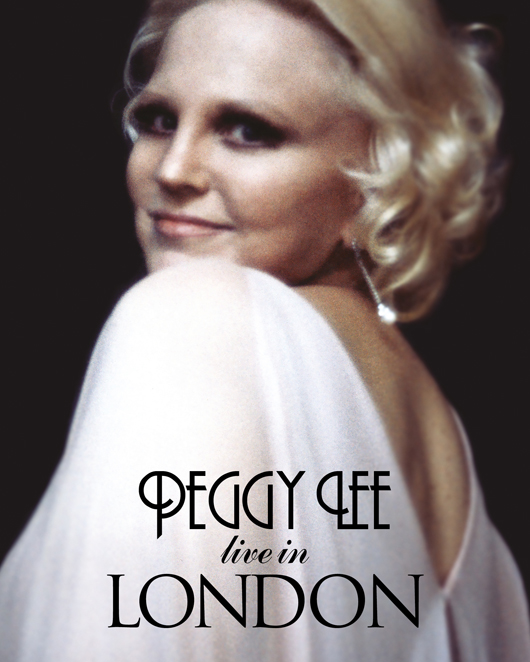
NEW RELEASE: PEGGY LEE - LIVE IN LONDON

The great jazz vocal stylist Peggy Lee will be celebrated by USM’s release of the 3CD/1DVD package ‘Peggy Lee – Live In London’ on December 4.

The set captures the landmark recordings by Miss Lee in the British capital, including her full live show at the London Palladium in March 1977. This recording includes outtakes, rarities and rehearsals, while the first disc is the studio album ‘Peggy,’ which like the concert itself is being released in full on CD for the first time. The DVD features the full BBC show ‘Peggy Lee Entertains’ from 1981. The set forms a comprehensive record of the only recordings Peggy ever made outside of the US.

The masterful musicality of Peggy Lee, born Norma Egstrom in Jamestown, North Dakota in 1920, made her one of the great names in both the jazz and pop worlds for many decades. Known for such signature songs as ‘Fever,’ ‘Mr. Wonderful,’ ‘Is That All There Is’ and her vocals for the soundtrack of such classic films as ‘Pete Kelly’s Blues’ and Walt Disney’s ‘The Lady and the Tramp,’ she won a Grammy Award for Lifetime Achievement in 1995.

Lee was uniformly admired by her peers, including Louis Armstrong, who described her as “the greatest ever since I heard her chirp the first note.” Tony Bennett called her “the female Frank Sinatra,” while Sinatra himself said “her regal presence is pure elegance and charm.”

‘Peggy Lee – Live In London’ is dedicated to the memory of her producer Ken Barnes, who produced the original recordings, compiled the new set and wrote the accompanying liner notes. The British-born Barnes, who was a film-maker, songwriter and musicologist among his other talents, also worked with Bing Crosby, Fred Astaire and many other great names. He sadly died on August 4 at the age of 82...

Wednesday, March 5, 2014

GUEST REVIEW: JO STAFFORD

Here is an excellent music review from one of the best albums my favorite female singer, Jo Stafford made. While I do not agree with everything the author writes, it is a great review of a great artist...


Jo Stafford: "Jo + Jazz" (Corinthian 108)
by Thomas Cunniffe

When remembering Jo Stafford, many musicians cite her purity. The term not only refers to Stafford’s clear voice, but to the musical mind that controlled it. Stafford’s advanced harmonic knowledge and precise intonation allowed her to sing passages that would defeat a lesser vocalist (and to hear her satirize lesser vocalists, check out the hilarious recordings she made under the names Cinderella G. Stump and Darlene Edwards). In one of his last interviews, Lester Young included her among his favorite singers, and while she never claimed to be a jazz vocalist, Stafford showed her affinity to jazz in her albums “Once Over Lightly” (with Art Van Damme), “Ballad of the Blues” and “Do I Hear A Waltz” (both with her husband, Paul Weston) and in a wonderful jam session with Ella Fitzgerald from Benny Goodman’s first “Swing Into Spring” television special.

However, Stafford’s finest jazz album was the 1960 Columbia LP, “Jo + Jazz”. Surrounded by an all-star band which combined stars from the Ellington band (Johnny Hodges, Ben Webster, Harry Carney, Lawrence Brown and Ray Nance) and the West Coast jazz scene (Jimmy Rowles, Don Fagerquist, Conte Candoli, Russ Freeman, Joe Mondragon, Shelly Manne and Mel Lewis), Stafford sings in a light, attractive tone, swinging gently, and creating definitive performances. The band was arranged and conducted by Johnny Mandel, and the play list includes three gems from the Ellington book (“Just Squeeze Me”, “Day Dream” and “I Didn’t Know About You”), big band era classics (“For You”, “Dream of You”, “S’posin’” and “What Can I Say After I Say I’m Sorry”), standards (“You’d Be So Nice To Come Home To”, “I’ve Got The World On A String” and “The Folks Who Live on the Hill”) and jazz-inspired songs (“Midnight Sun” and “Imagination”).

The joys of this album come in the small details: the way Stafford gently imitates Hodges’ scooping sound on “Just Squeeze Me”, the creamy sound of her voice on “Day Dream”, the sincerity as she sings the long lines of “For You”, her lazy, reflective rendition of “I Didn’t Know About You”, and her seemingly effortless reading of the descending chromatic line on “Midnight Sun”. One senses the respect Stafford has for her material. She can perform a song like “Folks Who Live on the Hill” with an elegant simplicity and let the message of the lyrics carry the listener along. On the other hand, she creates a soaring melodic variation on “What Can I Say” that represents a distinct improvement over the original. Webster played on several vocal albums during this period, and his big breathy sound is present on nearly every cut. Rowles and Fagerquist perform delightful solos as well, but my favorite touch is another small detail—the rumbling bass clarinet of Harry Carney that spices several of Mandel’s arrangements. (This might be the best place to note Tim Weston’s superb re-mixing of the album for the Corinthian CD release, which offers a better mix of instrumental colors and vocals than the original Columbia LP).

We could have had many more albums like “Jo + Jazz”. By the end of the 1960s, Stafford’s pitch was starting to fail her (no doubt exacerbated by her long addiction to cigarettes) and she effectively retired from singing. A few years later, Carl Jefferson of Concord Records offered Stafford a contract, but the singer decided not to accept it due to her personal dissatisfaction with her voice and her reluctance to tour again (the same offer was accepted by Rosemary Clooney). “Jo + Jazz” stands as one of the finest vocal jazz albums ever recorded. It is also a fascinating glimpse of what Jo Stafford might have been, but rarely was: a true jazz singer....

MY RATING: 10 OUT 10
AUTHOR'S RATING: NOT GIVEN


SOURCE

Monday, May 6, 2013

MUSIC REVIEW: PERRY COMO


Here is a review I did online way back in 2001 - seems like only yesterday...

I bought this excellent CD only weeks before Perry Como passed away in May of 2001. Whether you're a big fan of Perry Como, like msyelf, or just a casual listener. This CD collection is jam packed with gems of Perry's career. Firstly, you get to hear Como's standard's like "Prisoner Of Love","If","Because", and "Til The End Of Time". Secondly, you get some lesser known Como recordings like "Black Moonlight" (first recorded by Perry's idol Bing Crosby in 1933) and "Over The Rainbow" (Of course a Judy Garland standard. He makes every song he sings his very own, and not many performers could do that. That is why Perry Como was truly one of the best crooners, next to Bing Crosby.

Another moving and touching song on the set, especially since Mr. Como's death is "Last Night When We Were Young". It is moving and powerful. Now Perry never had the most powerful voice, but he could instill drama into a serious song that makes him sound like an opera singer. The CD's sound is faultless, and I can find no flaws in this issue. The only gripe I have is that Mr. Perry Como is no longer with us anymore...

MY RATING: 10 OUT OF 10


Thursday, December 27, 2012

MUSIC REVIEW: MAXENE ANDREWS - AN ANDREWS SISTER


Maxene Andrews had the extraordinary good fortune to be one third of the "Andrews Sisters" singing act. She also had the distinct misfortune to be in the shadow of that "Andrews Sisters" act and her sister Patty's splendid center-stage persona and showbiz brilliance. However, Maxene emerged in the later years of her career as a vibrant singer in her own right.

The Andrews Sisters broke up in the late 1960s after Laverne Andrews died in 1967. In 1970 Maxene became dean of women at Tahoe Paradise College of Fine Arts, Lake Tahoe, Nev., and she eventually became its vice president.Following the reunion of Patty and Maxene in the 1974 Broadway musical, "Over Here!", Maxene blossomed into a terrific solo performer as she aged with grace and beauty and made many appearances as a solo performer to the end of her life in 1995. I had the pleasure of seeing Maxene perform in person around 1988, and she truly had the voice to be a great solo artist.

This studio album contains recordings from her solo concert material that she recorded in 1985.  I enjoyed many of the tracks on the CD, but a few of them I listened to and began to miss the other two sisters. The Andrews Sisters medley was too short, and the echo that was used with Maxene's voice made it sound like they were trying to recapture the trio's sound. I have to be honest that I did not care for it much. However, a full version of Ïn Apple Blossom Time" was truly beautiful. One great song from "Over Here!" is revived: "Where Did the Good Times Go?" The finest moments are probably the exquisite versions of two Irving Berlin songs, "Remember" and "How Deep is the Ocean?" The ballads Maxene sang the best. In my opinion though the recording that I looked foward to hearing most, "Fascinating Rhythm" was probably the worst arranged of the whole album, and the biggest letdown.

All in all, this was a very good album for someone who lived in the shadows of a singing group for close to forty years. I would have liked to have heard Maxene as a solo artist in the 1950s and 1960s, but her voice was surprisingly vibrant on the recordings. With hindsight, this is a poignant farewell of twelve solo tracks from this Andrews Sister.

TRACKS:
1. I Suppose
2. Mama Llama
3. Where Did The Good Times Go?
4. Medley: Bei Mir Bist Du Schoen/Don't Sit Under The Apple Tree/Pennsylvania Polka /Beer Barrel Polka
5. How Deep Is The Ocean?
6. Show Me The Way To Go Home
7. In Apple Blossom Time
8. You're My Everything 
9. Sweet And Slow
10. Nature's Toys
11. Remember
12. Fascinating Rhythm

my rating: 7 out of 10

Wednesday, September 5, 2012

MUSIC REVIEW: BING IN DIXIELAND


For the past four years now, Bing Crosby Enterprises, run by Bing's widow Kathryn Crosby, has issued some pretty rare and amazing work that Bing has done. I always think I have most of the recordings by Bing, but I am amazed at this new CD issue. It is one of the best issues I have seen in a couple of years.

The album Bing In Dixieland, contains some tremendous Dixieland music that Bing did on his radio show in the 1950s. There is not a bad recording in the bunch and some of the recordings are completely new to me like Bing's renditions of "Strike Up The Band", "I'd Climb The Highest Mountains", and "The Object Of My Affection" to name a few. The standout for me is "I'd Climb The Highest Mountain", which is a favorite song of mine. I have a jazz instrumental version by Mugsy Spanier, a vocal version by Connee Boswell from the 1950s, and a swinging version by Jo Stafford in the 1960s, but Bing's recording is tops.

Bing was influenced by the Dixieland sound in the 1920s, and you can hear it in his recordings here. He never sounded more at home or happier. If you like great music or Bing Crosby or Dixieland then this is the music for you! You can only buy this CD from the Bing Crosby website: here.

Here is a track listing:
1. AT THE JAZZ BAND BALL
2. SOMETIMES I'M HAPPY
3. MUSKRAT RAMBLE
4. WAY DOWN YONDER IN NEW ORLEANS
5. STRIKE UP THE BAND
6. THAT'S A PLENTY
7. MY BABY JUST CARES FOR ME
8. I'D CLIMB THE HIGHEST MOUNTAIN
9. SMILES
10. JUST AROUND THE CORNER
11. THE BANJO'S BACK IN TOWN
12. WHEN MY BABY SMILES AT ME
13. THE OBJECT OF MY AFFECTION
14. I GOT RHYTHM
15. MARGIE
16. YES SIR! THAT'S MY BABY
17. OH HOW I LAUGHED WHEN I THINK HOW I CRIED ABOUT YOU
(written by George Jessel!!!)
18. EVERYBODY LOVES MY BABY
19. BETWEEN THE DEVIL AND THE DEEP BLUE SEA
20. FIVE FOOT TWO, EYES OF BLUE
21. BLUES MY NAUGHTY SWEETIE GIVES TO ME
22. MEMPHIS BLUES (with Ella Fitzgerald)
23. NOW YOU HAS JAZZ (with Louis Armstrong)

my rating: 10 out of 10

Friday, October 28, 2011

MUSIC REVIEW: BOBBY DARIN AND JOHNNY MERCER

I am trying to get my son, who is going on two years old, into the music that I love - the great standards. So far, he shows some promise! Anyways, last night he picked a CD from my collection to listen to. It was a great duet album - Bobby Darin and Johnny Mercer: Two Of A Kind!

Two of the all-time giants of American popular music come together in this delightful album originally released in the early sixties on Atlantic. According to the liner notes, written by Stanley Green, it was Bobby Darin's idea to undertake this project, and Mercer "was excited about the idea right from the start." Listening to the finished product, there is no doubt about that. The two are really enjoying themselves in the studio, which means that we, as listeners, are allowed to share in the fun. Johnny Mercer, who was one of the few songwriters who could sing, was in fine voice on this record. I personally think it was one of his best singing efforts.


As Green notes, there are hardly any standards in the album: "For this recital, both men decided that though the accent would be on the old-timers, the all-too-familiar warhorses would be kept carefully locked up in the stable." Thus, Darin and Mercer go through a great selection of old tunes, from "Indiana" to "East of the Rockies" to "Jellyroll," all delivered with a casualness that makes them irresistible. They also unearth a couple of obscure gems like "My Cutie's Due at Two to Two," "Paddlin' Madelin' Home," or "Caretaker's Daughter," and they even have time to throw in a classic written by Harry Barris and originally performed by Bing Crosby with the Rhythm Boys, "Mississippi Mud."

Some of Johnny Mercer's own compositions are also highlighted in this project, proving once more (as though it were really necessary!) that he is one of the most gifted, poetic songwriters of all time. For instance, "If I Had My 'Druthers" is given an enjoyable, laid-back treatment, while the reading of "Bob White" is among the best ever committed to wax.


Finally, the title track, "Two of a Kind," a tale of friendship and camaraderie, is a splendid collaboration by Bobby and Johnny, complete with ad-libbed asides that remind us of the timeless comic tradition of Bing Crosby and Bob Hope. Just like Bing and Bob, Johnny Mercer and Bobby Darin are, indeed, two of a kind...

MY RATING: 10 OUT OF 10

Monday, August 22, 2011

MUSIC REVIEW: BROOK BENTON AND DINAH WASHINGTON


I recently was browsing at our local used CD/book store and came across an excellent CD. It was the compact disc version of the Brook Benton and Dinah Washington collaborative album called "The Two Of Us". The dislike that Brook Benton and Dinah Washington had for each other is now remembered more than the album, so I had to do some research on this interesting pairing.

In February 1959, Dinah Washington recorded one of the biggest jazz-pop crossover hits by a female jazz vocalist to date. Backed by shimmering strings, a small choir and a rhythm section, Dinah leaned into the studio microphone and sang What a Difference a Day Makes for Mercury Records.

Produced by Clyde Otis, the easy-listening, bluesy ballad was meant to be just another moody jazz vocal track. But in 1959, with Elvis Presley in the army and a vacuum in the rock world created by the sudden death of Buddy Holly in February, pop began to make a mini comeback with young audiences. Within weeks of its release in the spring, the height of prom season, What a Difference a Day Makes entered Billboard's Hot 100 chart in May and soared to #8. The song would remain on the chart for 20 weeks and transform Dinah almost overnight from a jazz-blues singer to a jukebox pop star.

But the song's success also inflated Dinah's diva side. After laboring for years under enormous pressure, cranking out jazz and blues hits, Dinah by early 1959 had still not achieved as much recognition or pay as Nat King Cole, Ella Fitzgerald and other better-known jazz singers. With What a Difference a Day Makes, Dinah viewed her 1959 hit as belated confirmation of her ability to kill in the pop market and become a bankable mainstream star.


Brook Benton was another hot property at Mercury Records in early 1959. The smooth-voiced r&b baritone had recently recorded It's Just a Matter of Time, which entered the Hot 100 chart in January and rocketed to No. 3. Benton followed the single with Endlessly, which hit the chart in April and climbed to No. 12. Both songs were written by Benton and Clyde Otis.

Benton's magic touch gave Otis an idea. He called Dinah and told her he wanted to pair the two of them for a single. For producer Otis, the single had a shot at becoming a hit on virtually every chart. But Dinah was suspect. She was a star now, a singer who had paid her dues since the mid-1940s. If she was going to be lined up with another singer on a recording date, she didn't understand why someone of her stature should have to work with a relatively green Benton.

Dinah also didn't see how exactly the union could help her career. After all, Benton's reputation could only be elevated by his association with Dinah. By contrast, how could her link to him make her any more popular than she already was? Clyde Otis' response to Dinah was that Benton's masculine, relaxed sound would give her a sexier image and further extend her appeal with younger audiences who listened less and less to jazz and pure blues.


When Dinah entered Mercury's studio in late 1959, she was apprehensive and concerned about being out-gunned by Benton. Benton, who had the looks, voice and hits behind him, arrived as a go-getter who had the world by the tail. Dinah thought Benton was out of her league. Benton felt she was a bit over the hill. Unfortunately for Benton, he was a little too cavalier, either because he was nervous appearing with Dinah or woefully unprepared.

When the red light went on, the orchestra's strings played a skippy downbeat and intro to Baby (You Got What It Takes), with the guitar, bass and drums coming in with a rock boogie beat. Benton took the first chorus, with Dinah following. But instead of playing it straight, Benton started to showboat, ad-libbing soulful "Oh, yeahs" around Dinah's vocal. You can hear the tension build until finally, at 2:03 into the song, Benton made a fatal mistake. He got carried away and accidentally sang the first words of Dinah's part. At that moment, they vocally collided, with both singing the word "because."

Dinah opened up with both barrels. As the song winds down, we hear Dinah taunt, "You're back in my spot again, honey." Hoping to go with the flow, Benton replies cockily, "I like that spot." Over the remaining 40 seconds, you hear Benton push back and Dinah going all out. As the song starts to fade, Dinah lectures Benton: "Don't say it again" and "One more time, Brook."

It's unclear how many takes were made of Baby. We do know that the B-side, I Do, a slow-dance ballad, was recorded next and went off without a hitch. Fairly tame, its wedding-day theme worked beautifully for both singers and was sure to fuel rumors that Dinah and Benton were an item.

Publicly, Benton laughed off Dinah's snappishness. "She could be difficult," he said, but insisted they got along "very well in the studio...The goof wasn't intentional," he went on. "We were playing around really, you know, testing as we went along. Frankly, some of the time we didn't even know they were taping. We were like having a dry run."

Whether the sniping was real or not, the flawed song was released in January 1960. The single was an immediate success, reaching No. 5 on Billboard's Hot 100 chart. For chart purposes, Mercury had to change the song's name to Baby, since United Artists had just released a record by Marv Johnson called You Got What It Takes, a completely different song.

By Easter of 1960, Dinah and Benton were booked into the Brooklyn Paramount Theater for a 10-day show. They clicked so well that many observers thought they might be having an affair.

Convinced that the Dinah-Benton pairing was a gold mine, producer Otis decided to record them together for an entire album of duets. But when the duo got together in the studio in early 1960, the competitive friction off-mike surfaced almost immediately. On the first tune, A Rockin' Good Way (to Mess Around and Fall in Love), Dinah was again caught on tape hammering Benton for making mistakes. According to Queen, Otis remembered the session this way:

"[Dinah] had no respect for him, no respect for him personally. She kept saying, 'You're a dumb so and so'...and he didn't like having her chastise him. According to Shelby Singleton, another Mercury executive, Dinah told Benton she was 'tired of making you a star' and didn't want to make any more records with him."

Otis halted the session after they recorded the B-side and sent Dinah home. He had Benton then record the remaining tracks they had planned to do together.

While you hear the carping on the track, I believe it was staged to recapture the hit-making bickering of the first single. Aside from Benton's ad-libbing, which had to have been pre-arranged, there really isn't much error or misfire and little reason for Dinah to be upset. My guess is that Otis called for Dinah to complain toward the fade out, and Dinah viewed this as a cheap, gimmicky trick for someone of her stature and that she walked as a result of Otis, not Benton.

In early May, Mercury released A Rockin' Good Way backed by the I Do-like ballad I Believe, the only single from the planned duet LP. A Rockin' Good Way actually was a cover of a Priscilla Bowman hit and had a pecking rock beat similar to Baby (You've Got What I Takes).


After the song hit, Mercury released a more traditional solo album by Dinah called Unforgettable to mixed reviews. But Dinah's new image and success as a jazz crooner, pop-rock vocalist and early rock star was already established. Unfortunately, Dinah and Benton would never record again. Dinah died in December 1963. As for Benton, he recorded a string of unforgettable r&b songs. Finally in 1970, he had a hit with Rainy Night in Georgia, which reached No. 4. Benton died in 1988.

The album is an excellent pairing of two very dynamic personalities. However, I think Dinah Washington came off as the better of the two on the album. I absolutely love Dinah's solo take on "Love Walked In", and her duets with Brook Benton are memorable. However, I personally think the solo numbers by Benton were sort of dull. If you are a fan of great music and excellent vocalists, then I recommend this album and/or CD...

my rating: 7 out of 10