Showing posts with label A Star Is Born. Show all posts

Wednesday, January 28, 2026

A STAR IS BORN: A FLAWED MASTERPIECE

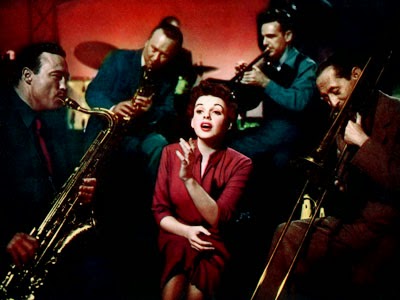
George Cukor’s A Star Is Born (1954) is often hailed as a landmark in Hollywood musical drama, celebrated for Judy Garland’s powerhouse performance and its emotionally resonant narrative. Yet, despite its acclaim, the film is not without significant problems—both in its production history and in its final form. These issues have sparked debate among critics and cinephiles for decades.

Perhaps the most glaring issue with A Star Is Born is the infamous studio interference that led to the mutilation of Cukor’s original vision. The film was initially released at a running time of 182 minutes, but Warner Bros. quickly cut nearly 30 minutes after its premiere to allow for more daily screenings. These cuts were made without Cukor’s input and resulted in the loss of key character development and narrative cohesion. In 1983, a restoration effort attempted to reconstruct the original version using surviving footage and production stills, but the damage was already done. The missing scenes—especially those that deepened Norman Maine’s tragic arc—left the film feeling uneven and emotionally rushed in places.
 
While Judy Garland’s performance is rightly celebrated, the film’s portrayal of her character, Esther Blodgett, reflects problematic gender dynamics. Esther’s rise to fame is framed almost entirely through the lens of her relationship with Norman Maine, a fading star whose alcoholism and self-destruction dominate the narrative. Esther’s success is constantly overshadowed by her emotional labor in supporting Norman, culminating in a finale that reinforces the idea that a woman’s ultimate role is to sacrifice for the man she loves. This dynamic, while emotionally powerful, reinforces outdated tropes about women’s roles in both relationships and the entertainment industry.


Even in its restored form, A Star Is Born suffers from pacing issues. The first act is rich with musical numbers and character development, but the second half becomes increasingly melodramatic and rushed. The tonal shift from vibrant musical to somber tragedy is jarring, and the film struggles to maintain narrative momentum. This imbalance is partly due to the missing footage, but also reflects a structural flaw in the screenplay. The film devotes significant time to Esther’s rise, but Norman’s decline—arguably the emotional core of the story—feels compressed and underexplored.

Judy Garland’s performance is undeniably magnetic, but the film leans heavily on her real-life struggles to enhance its emotional impact. Her personal history with addiction and career setbacks mirrors Esther’s journey, blurring the line between performance and autobiography. While this adds a layer of poignancy, it also raises ethical questions about how much the film exploits Garland’s vulnerabilities for dramatic effect. The result is a performance that feels both transcendent and uncomfortably self-referential.

A Star Is Born (1954) remains a powerful and influential film, but its legacy is complicated by production woes, gendered storytelling, and structural flaws. It is a film of breathtaking highs and frustrating lows—a flawed masterpiece that continues to inspire admiration and critique in equal measure...


Saturday, December 13, 2025

SEVENTY YEARS AGO: A STAR IS BORN

On this date in 1955, at the 27th Academy Awards, Grace Kelly won Best Actress for "The Country Girl" (1954) over Judy Garland, who was heavily favored to win for "A Star Is Born" (1954). Garland could not attend the ceremony, having recently given birth to her third child, son Joey Luft.

Reluctant to miss the chance to capture Garland’s postnatal victory, NBC promptly invaded her maternity ward. “They built a tower for the TV cameras outside my hospital window,” Garland told the United Press two weeks later. “There were cameras, people, microphones all over the place.”

More details spilled out as the legendary entertainer retold the story over the years: the furry bed jacket she used to cover up her mic wires, the makeshift Venetian blind entrusted to the terrified nurse, the friend who happened to be visiting and was promptly ordered to get on the floor.

But much to Hollywood’s surprise, William Holden announced that the Oscar for Best Actress in a Leading Role was Kelly. In a haze of manically applied powder and hairspray, Garland watched as the NBC crew packed their equipment and left the building.

Groucho Marx later sent her a telegram expressing that her loss was "the biggest robbery since Brink's."
Ever the professional, however, Garland took it in stride, turning the whole incident into a funny anecdote to open her songs. When she recapped the story on her variety show eight years later, she pulled the same furry bed jacket out of a trunk, draped it over her shoulders and sighed, “This reminds me of the Academy Award that I lost.”

Ironically, in "A Star is Born," Garland's character wins the Oscar, and, in the middle of her acceptance speech, her character's husband (played by James Mason) interrupts her speech, rambling and pacing back and forth in front of her. While begging for work from the assembled and embarrassed Hollywood community, he accidentally strikes Garland in the face...


Tuesday, June 17, 2014

MY FIVE FAVORITE JUDY GARLAND MOVIES

My mother is a much bigger Judy Garland movie fan than I am, but being a lover of classical movies I have definitely seen almost every film Judy has made. She was a good actress, much better than she was given credit for, and I came up with my list of my five favorite Judy Garland films. Again, this is only my opinion and personal preference, and it is not based on anything else…


5. A STAR IS BORN (1954)
After Judy was fired from MGM in 1950, she never really was a movie star again. After 1950, Garland did continue to make movies, but she made quality and not quantity. One of her best acting of her career was done in 1954’s A Star Is Born. Co-starring with James Mason, Judy played a rising star who gets involved with a fading star (Mason). Garland was nominated for an Oscar, but she unfortunately lost. The famous song from the film was “The Man That Got Away”, but my personal favorite number was “Lose That Long Face”. When the movie came out Warner Brothers edited the film to death, and key scenes were lost, but I believe it has recently been completely restored.

4. EASTER PARADE (1948)
By the time Judy made Easter Parade in 1948, her drug problems were really beginning to come to a head. Her weight went up and down during the filming, and it showed in many of her scenes. However, Judy pulled it together to make this musical classic. with Fred Astaire as her leading man and a boatload of Irving Berlin songs. Even though the age difference between Astaire and Garland was 23 years, they make a great song and dance team. Evergreen Irving Berlin songs included the title song, “I Love A Piano”, and “Shakin The Blues Away”, but Berlin also wrote some new songs like: “A Fella With An Umbrella” and “Better Luck Next Time” – the latter of the songs Garland sang brilliantly.


3. THE WIZARD OF OZ (1939)
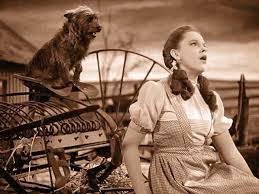
No list of Garland films would be complete without “The Wizard Of Oz”. Judy was the second choice to play Dorothy, after MGM could not get Shirley Temple. The film was not a success when it came out in 1939 – and it would not be until it was shown on television in the 1950s that it would become the classic it is viewed as today. It is hard to add more about this classic, but it was the role that made Judy a star. Sadly, it was reported that Garland began her drug usage while this movie was being made. I am a grown man with children now, but when I watch the scene of Judy singing “Over The Rainbow” on her Kansas farm…I cry like a baby every time.

2. SUMMER STOCK (1950)
MGM ended their relationship with Garland after 1950’s Summer Stock, and it was a big mistake. Again, Garland’s weight fluctuated greatly throughout the movie, but Garland sounded great. She was teamed with Gene Kelly for the third and last time in this film, and like Astaire did in Easter Parade, Kelly helped Garland get through her scenes. Supporting the dynamic duo of musicals were great character stars like: Phil Silvers, Eddie Bracken, and Marjorie Main. The plot of putting on a show at a farm was corny, but the musical numbers made the film great. This movie is one of the first Garland musicals I ever watched on video, so I have a soft spot for the film. Seeing Judy perform “Get Happy” makes the movie worth it alone.


1. FOR ME AND MY GAL (1942)
Judy was going on 20 when she made For Me And My Gal, and it was billed as her first adult role. She was done playing Dorothy and hanging out with Andy Hardy now. Garland played a rising vaudeville star who meets up with a vaudeville ham (played by Gene Kelly in his first movie role). The story takes place during the first World War, so all of the songs are from that era. You would think it would make the movie corny hearing those songs, even in 1942 when the film was made, but it adds some great realism to the movie. For a 1942 musical, there is some real drama in the movie showing some of the horrors of war. The main attraction is Garland who looks and sounds great singing standards like “After You’ve Gone”, “Ballin The Jack”, and “Oh You Beautiful Doll”. Again, the film has a special place in my heart, because I remember my Grandfather telling me it was the first movie he saw in the movie theater was a 13 year old boy. The ending of the movie, is a tearjerker as well, at least to me. For me not being a huge Garland movie fan, a lot of her movies make me cry!