Showing posts with label Vivien Leigh. Show all posts

Monday, March 2, 2020

HIGHEST GROSSING FILMS: THE 1930s

TOP FILMS OF 1930s (unadjusted domestic gross totals)


1. Gone With The Wind (1939)
2. Snow White and the Seven Dwarfs (1937)
3. The Wizard of Oz (1939)
4. Frankenstein (1931)
5. Tom Sawyer (1930


6. King Kong (1933)
7. Mr. Smith Goes to Washington (1939)
8. Hell's Angels (1930)
9. Cavalcade (1933)
10. Saratoga (1937)


11. Mutiny on the Bounty (1935)
12. A Star Is Born (1937)
13. Modern Times (1936)
14. Ingagi (1930)
15. The Adventures of Robin Hood (1938)


16. San Francisco (1936)
17. Shanghai Express (1932)
18. All Quiet on the Western Front (1930) (tie)
19. City Lights (1931) (tie)
20. Three Smart Girls (1936)

Monday, September 28, 2015

BORN ON THIS DAY: PETER FINCH

One of those actors I am aware about but I have never seen much of his work is the actor Peter Finch. Since on this day he was born in 1918, I figured it would be a great opportunity to learn about the great actor, especially his early days.

Peter Lynch was born Frederick George Peter Ingle Finch in London. George gained custody of Peter and he was taken from his mother and brought up by his paternal "grandmother" Laura Finch (formerly Black) in Vaucresson, France.  In 1925 Laura took Peter with her to Adyar, a Theosophical community near Madras, India for a number of months, and the young boy lived for a time in a Buddhist monastery. Undoubtedly as a result of his childhood contact with Buddhism Finch always claimed to be a Buddhist. 

In 1926 he was sent to Australia to live with his great-uncle Edward Herbert Finch at Greenwich Point in Sydney. He attended the local public school until 1929, then North Sydney Intermediate High School for three years. At age 19 Finch toured Australia with George Sorlie's travelling troupe. This, along with continuous stage work, led to the attention of Australian Broadcasting Commission radio drama producer Lawrence H. Cecil, who was to act as his coach and mentor throughout 1939 and 1940. He was "Chris" in the Children's Session and the first Muddle-Headed Wombat. He later starred with Neva Carr Glyn in an enormously popular series by Max Afford as husband-and-wife detectives Jeffery and Elizabeth Blackburn as well as other ABC radio plays.


Finch's first screen performance was in a 1935 short film, The Magic Shoes, an adaptation of the fairy tale Cinderella. He made his feature film debut in 1938 with a supporting role in Dad and Dave Come to Town for director Ken G. Hall, who went on to cast Finch in a larger role supporting Cecil Kellaway in Mr. Chedworth Steps Out (1939).

After the war, Finch continued to work heavily in radio and established himself as Australia's leading actor in that medium, winning Macquarie Awards for best actor in 1946 and 1947. He also worked as a compere, producer and writer.


In 1946, Finch co-founded the Mercury Theatre Company, which put on a number of productions in Sydney over the next few years, as well as running a theatre school. A 1948 performance of The Imaginary Invalid on the factory floor of O'Brien's Glass Factory in Sydney brought him to the attention of Laurence Olivier and Vivien Leigh, then touring Australia with the Old Vic Company. Olivier encouraged Finch to move to London, and he left Australia in 1948.

He did not reach international stardom until the success of The Nun's Story (1959). Although he never worked in Hollywood for an extended period of time, preferring to base himself in London.

At the time of Finch's death, he was doing a promotional tour for the 1976 film Network in which he played the television anchorman Howard Beale  who develops messianic pretensions. He was nominated for a Best Actor Oscar for that role, posthumously winning the award, which was accepted by his widow, Eletha Finch. Although James Dean, Spencer Tracy and Massimo Troisi were also posthumously nominated for a Best Actor Oscar, Peter Finch was the first actor to have won the award posthumously, as well as the first Australian actor to win a Best Actor award...


Monday, February 16, 2015

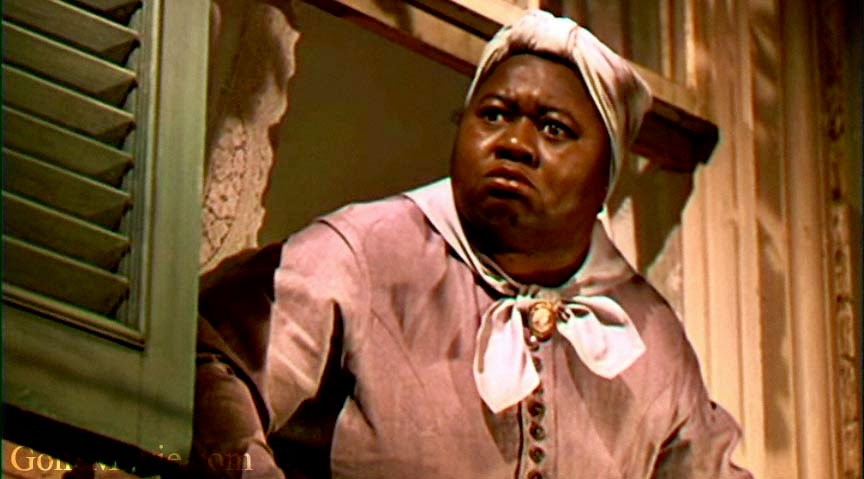
HATTIE MCDANIEL AND GONE WITH THE WIND

The competition to play Mammy in Gone with the Wind (1939) had been almost as stiff as that for Scarlett O'Hara. Eleanor Roosevelt wrote to film producer David O. Selznick to ask that her own maid, Elizabeth McDuffie, be given the part. McDaniel did not think she would be chosen because she had earned her reputation as a comic actress. One source claims that Clark Gable recommended the role go to McDaniel; in any case when she went to her audition dressed in an authentic maid's uniform, she won the part.

Upon hearing of the planned film adaptation, the NAACP fought hard to require the film's producer and director to delete racial epithets from it (in particular the offensive "n-word") and to alter scenes that might be incendiary and that, in their view, were historically inaccurate. Of particular concern was a scene from the novel in which black men attack Scarlett O'Hara, after which the Ku Klux Klan, with its long history of provoking terror on black communities, is presented as a savior. Throughout the South, black men were being lynched based upon false allegations they had harmed white women. That attack scene was altered, and some offensive language was modified. But another epithet, "darkie", remained in the film, and the film's message with respect to slavery remained essentially the same. Consistent with the book, the film's screenplay also referred to poor whites as "white trash," and it ascribed these words equally to characters black and white.


The Loew's Grand Theater on Peachtree Street in Atlanta, Georgia, was selected by the studio as the site for the premiere of Gone with the Wind, Friday, December 15, 1939. As the date of the premiere approached, all the black actors were advised they were barred from attending, excluded from being in the souvenir program, and banned from appearing in advertisements for the film in the South. Studio head David Selznick asked that Hattie McDaniel be permitted to attend, but MGM advised him not to because of Georgia's segregation laws. Clark Gable threatened to boycott the Atlanta premiere unless McDaniel was allowed to attend, but McDaniel convinced him to attend anyway.

Most of Atlanta's 300,000 citizens crowded the route of the seven-mile motorcade that carried the film's other stars and executives from the airport to the Georgian Terrace Hotel, where they stayed. While Jim Crow laws kept McDaniel from the Atlanta premiere, she did attend the film's Hollywood debut on December 28, 1939. Upon Selznick's insistence, her picture was also featured prominently in the program.

It was McDaniel's role as the house slave who repeatedly scolds her owner's daughter, Scarlett O'Hara (Vivien Leigh), and scoffs at Rhett Butler (Clark Gable), that won McDaniel the 1939 Academy Award for Best Supporting Actress, making her the first black American to win an Oscar.

 
She had also been the first black American to be nominated. "I loved Mammy," McDaniel said when speaking to the white press about the character. "I think I understood her because my own grandmother worked on a plantation not unlike Tara." Her role in Gone with the Wind had alarmed some whites in the Southern audience; there were complaints that in the film she had been too "familiar" with her white owners. But at least one author pointed out that McDaniel's character does not significantly depart from Mammy's persona in Margaret Mitchell's book, and that in both the film and the book the much younger Scarlett speaks to Mammy in ways that would be deemed inappropriate for a Southern teen of that era to speak to a much older white person, and that neither the book nor the film hint of the existence of Mammy's own children (dead or alive), her own family (dead or alive), or her desires to have anything other than a life at Tara, serving on a slave plantation.

The Twelfth Academy Awards took place at the Cocoanut Grove Restaurant of the Ambassador Hotel in Los Angeles. It was preceded by a banquet in the same room. Louella Parsons, an American gossip columnist, wrote about Oscar night, February 29, 1940:

"Hattie McDaniel earned that gold Oscar by her fine performance of 'Mammy' in Gone with the Wind. If you had seen her face when she walked up to the platform and took the gold trophy, you would have had the choke in your voice that all of us had when Hattie, hair trimmed with gardenias, face alight, and dress up to the queen's taste, accepted the honor in one of the finest speeches ever given on the Academy floor"...


Hattie McDaniel's acceptance speech:
"Academy of Motion Picture Arts and Sciences, fellow members of the motion picture industry and honored guests: This is one of the happiest moments of my life, and I want to thank each one of you who had a part in selecting me for one of their awards, for your kindness. It has made me feel very, very humble; and I shall always hold it as a beacon for anything that I may be able to do in the future. I sincerely hope I shall always be a credit to my race and to the motion picture industry. My heart is too full to tell you just how I feel, and may I say thank you and God bless you."

Tuesday, January 27, 2015

HOLLYWOOD URBAN LEGEND: CLARK GABLE

URBAN LEGEND: Matinee idol and movie heartthrob Clark Gable had horrible bad breath.

STATUS: This foul mouthed rumor is 100% TRUE.


By the time he was 32 years old, William Clark Gable had almost a full set of dentures. The pin-up actor and star of Gone with the Wind suffered with gum problems when he was young and a serious bout of pyorrhea in 1933 led to his dentist extracting most of his teeth. After being hospitalised for several days, Gable retreated to Canada to rest and to allow his gums to recover enough for dentures. After being fitted with a dental plate, the infection returned and Gable was again hospitalised. This time he had his gall bladder removed. Out of action for a month, the star’s illness caused delays to the filming of Dancing Lady and the movie went $150,000 over budget. MGM’s Louis Mayer was so annoyed that he withheld a fortnight’s pay from Gable and loaned him out to the struggling Columbia Pictures studio to teach him a lesson. Although this move turned out well for Gable, with his appearance in It Happened One Night winning him his only Oscar, it left a lot of ill-feeling between him and Meyer.

Gable’s mouthful of dentures left him with persistent halitosis and he became known throughout Hollywood for his bad breath, particularly among his leading ladies. His Gone with the Wind co-star, Vivien Leigh, complained about his breath on more than one occasion over the course of filming...

Saturday, November 2, 2013

CLASSIC HOLLYWOOD NEWS: NOVEMBER 2013

Hard to believe another month has passed, and we are headed into the final innings of 2013. Here is some of the classic Hollywood news that has made its way on to my desk...


British actress Vivien Leigh had that undefinable star quality. For 30 years, the exquisitely beautiful Leigh captivated film and theater audiences with her well-crafted, magnetic performances. In fact, Leigh won lead actress Oscars for creating two of the most indelible characters in screen history — the strong-willed, manipulative Southern belle Scarlett O'Hara in the beloved 1939 Civil War epic, Gone With the Wind, and Tennessee Williams' fragile, faded Southern beauty Blanche DuBois in 1951's A Streetcar Named Desire. Her accomplishment is all the more remarkable because Leigh, who died at age 53, made only 19 movies. A new book is out on the interesting actress called "Vivien Leigh: An Intimate Portrait" by film scholar Kendra Bean. The recently published, lavishly illustrated biography commemorating the actress' centenary combines historical material, including documents from the archives of her second husband, Laurence Olivier, as well as interviews with those who knew her.
 
 
 The eve before Halloween is known as Mischief Night. A few days ago it marked 75 years ago that on Oct. 30, 1938, a 23-year-old Orson Welles caused more than a bit of mischief with his landmark radio broadcast of "War of the Worlds." Most of the 6 million who tuned into Welles' "Mercury Theater on the Air" innovative adaptation of H.G. Wells' sci-fi classic about a Martian invasion realized it was drama. But because of its realistic news bulletin format, some believed aliens from the Red Planet had actually landed and overrun the small town of Grover's Mill, N.J., and were on the move through the rest of the country. Even in this pre-Twitter and Facebook era, the reaction was instantaneous. Listeners called into Chicago newspapers in a panic during the broadcast, while in San Francisco people fretted that the Martians were heading West. And in New Jersey, National Guardsmen were calling their armories to find out if they needed to report.

 
 Broadway legend Angela Lansbury has made a lot of movies, but she never won an Oscar. Lansbury has received three Academy Award nominations for her supporting performances in 1944's Gaslight, 1945's The Picture of Dorian Gray and 1962's The Manchurian Candidate. Her other credits include Blue Hawaii, The World of Henry Orient and Mr. Popper’s Penguins. She also did voice work for the first animated feature to receive a best picture nomination, Beauty and the Beast. Finally though it was announced that Ms. Lansbury will receive an Honorary Oscar at next year's Academy Award ceremony. It is about time... ...and that's the classic Hollywood news for this month!

Sunday, December 25, 2011

MY FIVE FAVORITE CLASSIC MOVIES I SAW IN 2011

For as long as I have been watching classic movies, I am amazed at the amount of movies I still haven't seen. Turner Classic Movies is one of the most prized things in my life (next to my wife and child), and the channel is constantly introducing me to new classic movies that I have never seen before. Here are the best classic movies I saw in 2011:


5. HERE IN MY HEART (1934)
For the longest time, this Bing Crosby movie was the Holy Grail of his movies. It was nearly impossible to get a copy of the film - other than than a fifth generation or so video copy. MCA/Universal recently released the elusive film as part as a five film release of Bing's movie. The movie is not great, but Bing is in fine voice and this was the second time Crosby was paired up with opera singer Kitty Carlisle. All of Bing's films in the early 1930s were light on plot but still enjoyable to watch.

4. BIG BOY (1930)

It is rare to see an Al Jolson movie on television, for the most part they are not even readily available on DVD. However, TCM surprised me when they showed this film in 2011. The movie is 81 years old but it looks about 100 years old. Jolson appeared in the whole movie in blackface. He plays a farm hand who becomes a jockey. The film may be offensive to some people because of the blackface, but to see Jolson perform even on film is to see a real genius work. He was one of the greatest entertainers of all time.


3. SHIP OF FOOLS (1965)
This movie I caught on TCM one day when I was home sick. I am not a huge Vivien Leigh fan, but I could not stop watching the film. Directed by the great Stanley Kramer, he weaves the stories of the passengers that all on this boat together very effortlessly. Joining Leigh on this voyage was the great Jose Ferrer and almost equally talented Lee Marvin. The movie would mark the last screen appearance of Viven Leigh, and she died two years after the film was made. This is the perfect movie to watch on a lazy afternoon. The movie starts slow, but it is engrossing until the end.

2. SINNER'S HOLIDAY (1930)
This film I caught by accident when I set my DVD recorder to the wrong time. Even though the film is over 80 years old, it was really an interesting movie to watch. The stars of the film were forgotten stars Grant Withers and Evalyn Knapp but the true stars of the film were young actors by the name of James Cagney and Joan Blondell. The story goes that Al Jolson saw the broadway show of this film and immediately bought the rights. He sold the rights back to Warner Brothers - only if they cast Cagney and Blondell in the roles they originated on broadway. The rest they say is history.


1. THE LAST TIME I SAW PARIS (1954)
Here is another movie I caught on TCM by accident. I am a huge fan of Van Johnson, but I always shied away from this movie thinking it was a typical 1950s soap opera film. However, the movie caught my attention, and even though it was like a soap opera at some parts, there were some definite surprises that I did not see coming. In addition to Van Johnson the cast boasted some great stars like Elizabeth Taylor, Donna Reed, Eva Gabor, and a young Roger Moore in his film debut. I never expected to pick this film as my personal find of 2011, but it is a great movie that I would love to see again.