Friday, October 5, 2012

MOVIE REVIEW: AARON SLICK FROM PUNKIN CRICK

Dinah Shore was one of television greatest personalities in the 1950s and 1960s. However, throughout her career Dinah wanted to be an actress as well. She made some cameo appearances and supporting roles in musicals but never really made it as an actress. She tried desperately to get a role in MGM's Show Boat but they passed on her in favor of more opular MGM stars like Kathryn Grayson and Ava Gardner. However, Dinah was not discouraged and instead went to Paramount Pictures to make a strange forgotten musical called Aaron Slick from Punkin Crick (aka Marshmallow Moon in the UK). The film was made in 1952 and starred Shore and Alan Young (a decade before Mr. Ed fame). It was directed by Claude Binyon and produced by William Perlberg and George Seaton.

The film was based on a 1919 play by Walter Benjamin Hare. The cinematography was by Charles Lang and the costume design by Edith Head. The movie is sort of a poor man's Lil Abner. The whole thing revolves around the title character, Aaron Slick, a farmer in mid-west America and his neighbor and would-be fiancé, Josie Berry. Aaron loves the farm but Josie dreams of the big city. She wants to sell her farm and travel while Aaron wants her to marry him and settle down but he is too shy to ask her. When a show visits the town Josie agrees to let two of the performers, William Merridew and his partner Gladys, stay at her house.


Merridew pretends that Gladys is his cousin while she is, in reality, his accomplice in crime. The two are confidence artists who are on the run after pulling a land sale scheme in Chicago and are looking for a place to hide out. While walking in the pasture on Josie's farm Merridew steps in some mud near a spring and discovers oil on his foot. Convinced that there is oil on the property he schemes to cheat Josie and offers to buy her land. Aaron, who has an idea what is going on, makes a counter-offer. Merridew thinks that Aaron is after the oil as well so he offers Josie $20,000. Josie sells her farm and goes to Chicago to "live it up". After a short time she finds that the "good life" is not what she really wants. She is homesick for the farm and she misses Aaron. Eventually she goes back to the farm. Eleven songs were written for the film by Jay Livingston and Ray Evans, but all of them were pretty much forgettable.

Opera star Robert Merrill rounds out the cast, and actually broke his contract with the Metropolitan Opera in order to make this film. Dinah Shore and Alan Young are a very likeable couple but this precursor to Green Acres does not work. I blame the screenplay as well as the songs. Dinah Shore deserved better in this movie. The movie pretty much flopped and as a result Shore was never cast again in movie in any major role. Luckily, Dinah Shore had more success in records and televisions, because that songbird definitely had talent...

 MY RATING: 4 out of 10


Wednesday, October 3, 2012

BILLIE ROGERS: BIG BAND PIONEER

The big band era was an exciting time in the music industry. Never before or since has music been as dynamic and exciting. However, it was mostly a white man's industry in the 1930s and 1940s. A few of the band leaders were brave enough to hire black artists like Benny Goodman hiring Lionel Hampton and Teddy Wilson or Artie Shaw hiring vocalist Billie Holiday.

However, for the most part the big bands were segregated. It was nearly unheard of for a woman to be a part of a band unless she was the vocalist. Band leader Woody Herman broke down that barrier when he hired female Billie Rogers to not only sing for the band but play a mean trumpet.

Billie Rogers was born on May 31, 1917 North Plains, Oregon. She was a member of the trumpet section and featured soloist with Woody Herman from 1941 to 1943. She led her own band in 1943, then at the end of that year, joined the Jerry Wald band and remained a member until October 1945, when she left to form her own sextet. Rogers is credited as being the first woman to hold a horn position in a major jazz orchestra.

Woody Herman discovered Rogers in August 1941. After his band had finished for the evening at the Palladium Ballroom Cafe in Hollywood, Herman had gone to a small Los Angeles night club where Rogers was singing and playing trumpet. Impressed, he asked for an introduction. Sammy Cahn, the songwriter, did the honors and, within a few minutes, Herman hired her to be a member of his "Blues on Parade" band. She made her debut with Woody's band at the Panther Room of Chicago's Sherman Hotel.

Rogers grew up in Washington state, then in Missoula, Montana. She was raised in a family of musicians. Her father, William Cody Smith (1885–1970), played banjo. Her mother, Bertha Emde (née Fleming; 1892–1976), played seventeen instruments, proficiently – predominantly ragtime piano and accordion. Her older brother and mentor, Lester Smith (1913–1936), was proficient on many instruments. According to Billie, his sudden death affected her for years to come. Her younger brother, Kenneth Gaylord Smith (1920–2005), played sax. She also had a younger sister, Alice V. (Mrs. Olaf Hemnes; 1924–1996). And, she played in vaudeville and theater bands. Billie is reputed to have perfect pitch. Rogers studied music at the University of Montana.

Rogers met Jack Archer (1909-1962) while performing with Woody Herman. She and Jack married on April 21, 1944, in Chicago. Jack built a career as a booking agent, initially for big bands in the one-nighter category, but in the 1950s while with Shaw Artists, he moved into promoting R&B - which was a new genre of music at the time.


When Rogers met Jack, he had recently received an honorable discharge from the U.S. Army (1943) and, that same year, had become the road manager of the Woody Herman Orchestra. Billie left the Herman band on October 27, 1943, to form her own band. Jack, who at that time was engaged to marry Billie, also left Herman to manage her band, which he did from July 22, 1944 until the end of 1944, when the group disbanded. Overlapping with his responsibilities managing the Billie Rogers Orchestra, Archer was handing bookings for Mills Music, staying on until January 8, 1944, when he then became head of the one-night band department at General Amusement Corporation, a position he held until July 22, 1944.

When his wife's band broke up, he went back to booking bands at Frederick Bros. Archer was responsible for booking a strong R&B line-up, which included The Platters, Dinah Washington, and The Drifters. Archer suffered a slight heart attack in April of 1958 and he passed away of heart problems four years later. Billie Rogers basically retired in 1947 to raise a family, and she has not looked back at show business. Amazingly Billie is still doing well and recently moved to be closer to her family. I got in touch with her via email, and just by our communication back and forth I can tell how much life Billie Rogers is full of. Retired for over sixty years now, Billie is probably not even aware of what a pioneer among women in entertainment she was and is...

UPDATE: Sadly, Billie Rogers passed away on January 18, 2014. I wish I would have gotten to know her more...

Monday, October 1, 2012

BORN ON THIS DAY: JAMES WHITMORE

On this day, October 1st in 1921 great character actor James Whitmore was born. In my opinion, especially as he aged, he bore a striking resemblance to Spencer Tracy. Like Tracy, Whitmore was a truly great actor whose career spanned decades.

Born in White Plains, New York, to Florence Belle (née Crane) and James Allen Whitmore, Sr., a park commission official, Whitmore attended Amherst Central High School in Snyder, New York, before graduating from The Choate School (now Choate Rosemary Hall) in Wallingford, Connecticut. He went on to study at Yale University, where he was a member of Skull and Bones and had his first taste of radio drama as part of other broadcasting experience as a member of the student-run WOCD-AM, later renamed WYBC-AM. He later was commissioned a Second Lieutenant and served in the United States Marine Corps in the Panama Canal Zone during World War II.

Following World War II, Whitmore appeared on Broadway in the role of the Sergeant in Command Decision. MGM hired Whitmore on contract, but his role in the film adaptation was played by Van Johnson. Whitmore's first major picture was Battleground, in a role that was turned down by Spencer Tracy, and for which Whitmore was nominated for the Academy Award for Best Supporting Actor. Other major films included Angels in the Outfield (1951 film), The Asphalt Jungle, The Next Voice You Hear, Above and Beyond, Kiss Me, Kate, Them!, Oklahoma!, Black Like Me, Guns of the Magnificent Seven, Tora! Tora! Tora!, and Give 'em Hell, Harry!, for which he was nominated for the Academy Award for Best Actor for his portrayal of former U.S. President Harry S Truman. Whitmore never one the Academy Award, but he did win an Emmy and a Tony.


My personal favorite movie he appeared in was in the prison drama The Shawshank Redemption in 1994. His last movie was made in 2002, although he did appear as a security job in the comedy Fun With Dick And Jane (2005). Unfortunately, all of his scenes were cut. In April 2007, he also appeared in C.S.I. in an episode titled "Ending Happy" as Milton, an elderly man who provides a clue of dubious utility. Whitmore was married four times to three women, and he had three sons. He died of cancer on February 6, 2009 at his Malibu home in California. He was 87. His ashes were scattered into the Pacific Ocean, and although he is gone now on this his birthday I hope he can be remembered for the countless memories he left for us on film...


Friday, September 28, 2012

MY FIVE FAVORITE FILMS OF THE 1980S

Even though I love the classic films that Hollywood used to make, I have a soft spot for the movies of the 1980s. After all, the 1980s was my childhood – when life was seemingly so much simpler. I remember going to see a lot of movies with my uncles at the time as well, so this was a particularly hard list to make. What is also interesting is that three of the five movies I picked came out in 1980:


5. BACK TO THE FUTURE (1985)
Sure, I was going to pick a movie that was deeper or more profound, but Back To The Future was such a fun movie to watch. Michael J. Fox, who was and is an very underrated actor was perfect as the time traveler Marty McFly. The story was basically about Marty going back in time and fixing what he eventually messed up. It was great to see 1980s America colliding with 1950s America. Again, the film did not receive any acting awards but it did not need to. It was a favorite childhood movie of mine, and it was worth the $2.75 it cost to see a movie in 1985!


4. THE KING OF COMEDY (1983)
Director Martin Scorsese is best remembered for his gangster dramas like Goodfellas, Casino, and The Departed and rightfully so. However, Scorsese made a little movie in 1983 that is just an underrated gem. The film stars Robert DeNiro as a stalker who sets his sight on a late night talk show host (played surprisingly well by Jerry Lewis). He eventually kidnaps the house and becomes an overnight sensation. Lewis was not Scorsese’s first choice to play the host. He actually campaigned for Johnny Carson to take the role and then Dean Martin before choosing Lewis. Sure there are better Scorsese movies out there, but the chemistry of Robert DeNiro and Jerry Lewis worked for me, and the film has been a critic favorite for almost three decades now.


3. THE SHINING (1980)
I never could make it through the book of The Shining, which was written by Stephen King. When I was younger, I could not make it through the movie as well. However, after I realized that there were no monsters under my bed, I became a huge fan of horror movies. What is scarier than a mentally disturbed Jack Nicholson! Nicholson and Shelley Duvall play husband and wife who take their young child to a secluded hotel to become caretakers through the winter months. Nicholson is a writer, and he figures the solitude would give him time to write his new novel. What happens is he goes crazy…bottom line. Stephen King himself does not like this movie version of his novel, but I think the movie works well still. It is a longer film, but the way the film was shot really makes you feel as if you are in the middle of the action. This movie is worth watching just to see Jack Nicholson’s evil look while he exclaims “Here’s Johnny!”


2. RAGING BULL (1980)
This is my second Martin Scorsese film to make this list, and I am really shocked when I talk to fellow film fans, and they have not seen the film. For those who haven’t have the pleasure to see the film, Raging Bull an American biographical sports drama art film directed by Martin Scorsese, and adapted by Paul Schrader and Mardik Martin from Jake LaMotta's memoir Raging Bull: My Story. It stars Robert De Niro as Jake LaMotta, an Italian American middleweight boxer whose sadomasochistic rage, sexual jealousy, and animalistic appetite destroyed his relationship with his wife and family. I am not a huge boxing fan, but you do not even have to be a fan of the sport to get engrossed in this engaging film. The film won Robert DeNiro an Oscar and deservedly so for Best Actor. As an odd footnote, President Ronald Reagan was shot the day of the Oscars, by a crazed fan of Jodie Foster. Foster appeared in the Scorsese film Taxi Driver years earlier, and Martin Scorsese had to go to the Oscar ceremonies with armed guards out of fear.


1. THE EMPIRE STRIKES BACK (1980)
Like the movie Back To The Future, the Star Wars trilogy was a big part of my childhood. All three movies are worth anyone’s top list of films, but I think “The Empire Strikes Back” (the second film) is the best of all of the movies. I have watched this film countless times, and I have to say that although CGI was not thought of in 1980, the movie is pretty advanced looking and well made. It is not a movie that would win any acting awards, but again it is not meant to be. The film is set three years after the original Star Wars. The Galactic Empire, under the leadership of the villainous Darth Vader, is in pursuit of Luke Skywalker and the rest of the Rebel Alliance. While Vader chases a small band of Luke's friends—Han Solo, Princess Leia Organa, and others—across the galaxy, Luke studies the Force under Jedi Master Yoda. But when Vader captures Luke's friends, Luke must decide whether to complete his training and become a full Jedi Knight or to confront Vader and save his comrades. If you have no idea what I just wrote, then you did not watch movies in the 1980s or you lived under a rock…


Here are some films of the 1980s that are great as well and deserve to at least be honorable mentions: Caddyshack (1980), Scarface (1983), Return Of The Jedi (1983), The Breakfast Club (1985), and Stand By Me (1986).

Wednesday, September 26, 2012

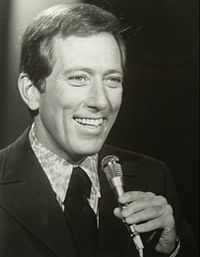
RIP: ANDY WILLIAMS

 ST. LOUIS - With a string of gold albums, a hit TV series and the signature "Moon River," Andy Williams was a voice of the 1960s, although not the '60s we usually hear about.

"The old cliche says that if you can remember the 1960s, you weren't there," the singer once recalled. "Well, I was there all right, but my memory of them is blurred — not by any drugs I took but by the relentless pace of the schedule I set myself."

Williams' plaintive tenor, boyish features and easy demeanor helped him outlast many of the rock stars who had displaced him and such fellow crooners as Frank Sinatra and Perry Como. He remained on the charts into the 1970s, and continued to perform in his 80s at the Moon River Theatre he built in Branson, Mo.

In November 2011, when Williams announced that he had been diagnosed with bladder cancer, he vowed to return to performing the following year: His 75th in show business.

Williams died Tuesday night at his home in Branson following a yearlong battle with the disease, his Los Angeles-based publicist, Paul Shefrin, said Wednesday. He was 84.

He became a major star the same year as Elvis Presley, 1956, with the Sinatra-like swing "Canadian Sunset," and for a time he was pushed into such Presley imitations as "Lips of Wine" and the No. 1 smash "Butterfly."


But he mostly stuck to what he called his "natural style," and kept it up throughout his career. In 1970, when even Sinatra had given up and (temporarily) retired, Williams was in the top 10 with the theme from "Love Story," the Oscar-winning tearjerker. He had 18 gold records and three platinum, was nominated for five Grammy awards and hosted the Grammy ceremonies for several years.

Movie songs became a specialty, from "Love Story" and "Days of Wine and Roses" to "Moon River." The longing Johnny Mercer-Henry Mancini ballad was his most famous song, even though he never released it as a single because his record company feared such lines as "my huckleberry friend" were too confusing and old-fashioned for teens.

The song was first performed by Audrey Hepburn in the beloved 1961 film "Breakfast at Tiffany's," but Mancini thought "Moon River" ideal for Williams, who recorded it in "pretty much one take" and also sang it at the 1962 Academy Awards. Although "Moon River" was covered by countless artists and became a hit single for Jerry Butler, Williams made the song his personal brand. In fact, he insisted on it.

"When I hear anybody else sing it, it's all I can to do stop myself from shouting at the television screen, 'No! That's my song!'" Williams wrote in his 2009 memoir, titled, fittingly, "Moon River and Me."


"The Andy Williams Show," which lasted in various formats through the 1960s and into 1971, won three Emmys and featured Williams alternately performing his stable of hits and bantering casually with his guest stars.

It was on that show that Williams — who launched his own career as part of an all-brother quartet — introduced the world to another clean-cut act — the original four singing Osmond Brothers of Utah. Their younger sibling Donny also made his debut on Williams' show, in 1963 when he was 6 years old. Four decades later, the Osmonds and Williams would find themselves in close proximity again, sharing Williams' theater in Branson.


Williams did book some rock and soul acts, including the Beach Boys, the Temptations and Smokey Robinson. On one show, in 1970, Williams sang "Heaven Help Us All" with Ray Charles, Mama Cass and a then-little known Elton John, a vision to Williams in his rhinestone glasses and black cape. But Williams liked him and his breakthrough hit "Your Song" enough to record it himself.

Williams' act was, apparently, not an act. The singer's unflappable manner on television and in concert was mirrored offstage.

"I guess I've never really been aggressive, although almost everybody else in show business fights and gouges and knees to get where they want to be," he once said. "My trouble is, I'm not constructed temperamentally along those lines".

His wholesome image endured one jarring interlude. In 1976, his ex-wife, former Las Vegas showgirl Claudine Longet, shot and killed her lover, skiing champion Spider Sabich. The Rolling Stones mocked the tragedy in "Claudine," a song so pitiless that it wasn't released until decades later. Longet, who said it was an accident, spent only a week in jail. Williams stood by her. He escorted her to the courthouse, testified on her behalf and provided support for her and their children, Noelle, Christian and Robert.

Also in the 1970s, Williams was seen frequently in the company of Ethel Kennedy, Robert Kennedy's widow. The singer denied any romantic involvement.

He was born Howard Andrew Williams in Wall Lake, Iowa, on Dec. 3, 1927. In his memoir, Williams remembered himself as a shy boy who concealed his insecurity "behind a veneer of cheek and self-confidence." Of Wall Lake, Williams joked that it was so small, and had so little to do, that crowds would gather just to watch someone get a haircut.

Williams began performing with his older brothers Dick, Bob and Don in the local Presbyterian church choir. Their father, postal worker and insurance man Jay Emerson Williams, was the choirmaster and the force behind his children's career.

When Andy was 8, Williams' father brought the kids for an audition on Des Moines radio station WHO's Iowa Barn Dance. They were initially turned down, but Jay Emerson Williams and the young quartet kept returning and they were finally accepted, their show bringing them attention from Chicago, Cincinnati and Hollywood. Another star at WHO was a young sportscaster named Ronald Reagan, who would later praise Williams as a "national treasure."


The brothers joined Bing Crosby in recording the hit "Swinging on a Star" in 1944 for Crosby's film "Going My Way," and Andy, barely a teenager, was picked to dub Lauren Bacall's voice on a song for the film "To Have and Have Not." His voice stayed in the film until the preview, when it was cut because it didn't sound like Bacall's.

Later the brothers worked with Kay Thompson of eventual "Eloise" fame, then a singer who had taken a position as vocal coach at MGM studios, working with Judy Garland, June Allyson and others. After three months of training, Thompson and the Williams Brothers broke in their show at the El Rancho Room in Las Vegas to a huge ovation. They drew rave reviews in New York, Los Angeles and across the nation, earning a peak of $25,000 a week.

Williams, analyzing their success, once said: "Somehow we managed to work up and sustain an almost unbearable pitch of speed and rhythm."

After five years, the three older brothers, who were starting their own families, had tired of the constant travel and left to pursue other careers.

Williams initially struggled as a solo act and was so broke at one point that he resorted to eating food intended for his two dogs.
"I had no money for food, so I ate it," he recalled in 2001, "and it actually was damned good."

A two-year TV stint on Steve Allen's "Tonight Show" and a contract with Cadence Records turned things around. In the 1960s. Williams later formed his own label, Barnaby Records, which released music by the Everly Brothers, Ray Stevens and Jimmy Buffett.

Williams was a lifelong Republican who once accused President Obama of "following Marxist theory." But he acknowledged experimenting with LSD, opposed the Nixon administration's efforts in the 1970s to deport John Lennon, and, in 1968, was an energetic supporter of Robert Kennedy's presidential campaign. When Kennedy was assassinated in Los Angeles in June 1968, just after winning the California Democratic primary, Williams sang "The Battle Hymn of the Republic" at his funeral.
"We chose that song because he used it on the campaign trail," Williams later said of Kennedy, who had been a close friend. "He had a terrible voice but he loved to sing that song. The only way I got through singing in church that day was by saying, 'This is my job. I can't let emotion get in the way of the song.' I really concentrated on not thinking about him."

After leaving TV, Williams headed back on the road, where his many Christmas shows and albums made him a huge draw during the holidays. One year in Des Moines, however, a snowstorm kept the customers away, and the band's equipment failed to reach Chicago in time for the next night's show, forcing the musicians to borrow instruments from a high school band.

"No more tours," Williams decreed.

He decided to settle in Branson, the self-proclaimed "live entertainment capital of the country," with its dozens of theaters featuring live music, comedy and magic acts.


When he arrived in 1992, the town was dominated by country music performers, but Williams changed that, building the classy, $13 million Andy Williams Moon River Theater in the heart of the city's entertainment district and performing two shows a night, six days a week, nine months of the year. Only in recent years did he begin to cut back to one show a night.

Not surprisingly, his most popular time of the year was Christmas, although he acknowledged that not everyone in Hollywood accepted his move to the Midwest.

"The fact is most of my friends in L.A. still think I'm nuts for coming here," he told The Associated Press in 1998.

He and his second wife, the former Debbie Haas, divided their time between homes in Branson and Palm Springs, where he spent his leisure hours on the golf course when Branson's theaters were dark during the winter months following Christmas.

Retirement was not on his schedule. As he told the AP in 2001: "I'll keep going until I get to the point where I can't get out on stage."

Williams is survived by his wife, Debbie, and his three children, Robert, Noelle and Christian...


SOURCE

Tuesday, September 25, 2012

GEORGE CUKOR: THE LATER YEARS

Director George Cukor was one of the most profilic directors in Hollywood history. In his early 30s he was directing some of the greatest classic stars of all time and making some of the most beloved movies Hollywood has ever produced. His career flourished at RKO when David O. Selznick, the studio's Head of Production, assigned Cukor to direct several of RKO's major films including What Price Hollywood? (1932), A Bill of Divorcement (1932), "Our Betters" (1933), and Little Women (1933). When Selznick moved to MGM in 1933 Cukor followed and directed Dinner at Eight (1933) and David Copperfield (1935) for Selznick and Romeo and Juliet (1936) and Camille (1936) for Irving Thalberg. I was curious about Cukor's later years though when the industry was changing, and whether or not Cukor changed with the times.

In December 1952, Cukor was approached by Sid Luft, who proposed the director helm a musical remake of the 1937 film A Star is Born with his then-wife Judy Garland in the lead role. Cukor had declined to direct the earlier film because it was too similar to his 1932 What Price Hollywood?, but the opportunity to direct his first Technicolor film, first musical, and work with screenwriter Moss Hart and especially Garland appealed to him, and he accepted. Getting the updated A Star Is Born to the screen proved to be a challenge. Cukor wanted Cary Grant for the male lead and went so far as to read the entire script with him, but Grant, while agreeing it was the role of a lifetime, steadfastly refused to do it, and Cukor never forgave him. The director then suggested either Humphrey Bogart or Frank Sinatra tackle the part, but Jack Warner rejected both. Stewart Granger was the front runner for a period of time, but he backed out when he was unable to adjust to Cukor's habit of acting out scenes as a form of direction. James Mason ultimately was signed, and filming began on October 12, 1953. As the months passed, Cukor was forced to deal not only with constant script changes but a very unstable leading lady, who was plagued by chemical and alcohol dependencies, extreme weight fluctuations, and real and imagined illnesses.


In March 1954, a rough cut still missing several musical numbers was assembled, and Cukor had mixed feelings about it. When the last scene finally was filmed in the early morning hours of July 28, 1954, Cukor already had departed the production and was unwinding in Europe. The first preview the following month ran 210 minutes and, despite ecstatic feedback from the audience, Cukor and editor Folmar Blangsted trimmed it to 182 minutes for its New York premiere in October. The reviews were the best of Cukor's career, but Warner executives, concerned the running time would limit the number of daily showings, made drastic cuts without Cukor, who had departed for India to scout locations for Bhowani Junction. At its final running time of 154 minutes, the film had lost musical numbers and crucial dramatic scenes, and Cukor called it "very painful." He was not included in the film's six Oscar nominations, all of which were lost.

Over the next ten years, Cukor directed a handful of films with varying success. Les Girls (1957) won the Golden Globe Award for Best Motion Picture – Musical or Comedy, and Wild Is the Wind (1957) earned Oscar nominations for Anna Magnani and Anthony Quinn, but neither Heller in Pink Tights nor Let's Make Love (both 1960) were box office hits.


His most notable project during this period was the ill-fated Something's Got to Give, an updated remake of the 1940 screwball comedy My Favorite Wife. Cukor liked leading lady Marilyn Monroe but found it difficult to deal with her erratic work habits, frequent absences from the set, and the constant presence of her acting coach, Paula Strasberg. After thirty-two days of shooting, the director had only 7½ minutes of usable film.Then Monroe travelled to New York to appear at a birthday celebration for John F. Kennedy at Madison Square Garden, where she famously serenaded the President. Studio documents released after Monroe's death confirmed that her appearance at the political fundraising event was approved by Fox executives. The production came to a halt when Cukor had filmed every scene not involving Monroe and the actress remained unavailable. 20th Century Fox executive Peter Levathes fired her and hired Lee Remick to replace her, prompting co-star Dean Martin to quit, since his contract guaranteed he would be playing opposite Monroe. With the production already $2 million over budget and everyone back at the starting gate, the studio pulled the plug on the project. Less than two months later, Monroe was found dead in her home.


Two years later, Cukor achieved one of his greatest successes with My Fair Lady. Throughout filming there were mounting tensions between the director and designer Cecil Beaton, but Cukor was thrilled with leading lady Audrey Hepburn, although the crew was less enchanted with her diva-like demands. Although several reviews were critical of the film – Pauline Kael said it "staggers along" and Stanley Kauffmann thought Cukor's direction was like "a rich gravy poured over everything, not remotely as delicately rich as in the Asquith-Howard 1937 Pygmalion" — the film was a box office hit which won him the Academy Award for Best Director, the Golden Globe Award for Best Director, and the Directors Guild of America Award after having been nominated for each several times.

Following My Fair Lady, Cukor became less active. He directed Maggie Smith in Travels with My Aunt in 1972 and helmed the critical and commercial flop The Blue Bird, the first joint Soviet-American production, in 1976. He reunited twice with Katharine Hepburn for the television movies Love Among the Ruins (1975) and The Corn Is Green (1979). He directed his final film, Rich and Famous (1981) with Jacqueline Bisset and Candice Bergen, at the age of eighty-two.


By the 1980s, the Hollywood industry that George Cukor grew up with and thrived with was long since gone. Not only had the industry changed but movies themselves had changed. True acting as an art form was pretty much replaced by special effects, violence, and sex. Cukor died relatively forgotten at the age of 83 of a heart attack on January 24, 1983 He was interred in an unmarked grave at the Forest Lawn Memorial Park Cemetery in Glendale, California. The later years of Cukor might not have been his most prolific, but the movies he did as a whole through his prolifiic career is an amazing assortment of celluloid gold...

Sunday, September 23, 2012

WHERE ARE THEY NOW: ERIN FLEMING

Not many people will know who Erin Fleming is - I would guess hardly anyone. I just know the name from reading biographies of Groucho Marx and the Marx Brothers. Fleming's story is a sad one that I discovered ended equally sad.

Erin Fleming, born on August 13, 1941, was a Canadian actress who was best known as the companion and "secretary" to Groucho Marx in his final years.
She appeared in minor roles in five films between 1965 and 1976, during which time she became acquainted with Marx and moved into his house.

Fleming's influence on Marx was controversial. Many close to him admitted that she did much to revive his popularity; these efforts included a series of one-man shows, culminating in a sold-out performance at Carnegie Hall which was released on a best-selling record album and an honorary Academy Award he received in 1974. Also, some observers felt the apparent relationship with a young starlet boosted Groucho's ego, adding to his vitality. Others, including Marx's son, Arthur, described her in Svengali-esque terms, accusing her of exploiting an increasingly senile and frail Marx in pursuit of her own stardom.


In the years leading up to Marx's death in August 1977, his heirs filed several lawsuits against Fleming. One allegation leveled against Fleming was that she was determined to sell Marx's favorite car, a Cadillac, against his wishes. When Marx protested, it was said, Fleming threatened, "I will slap you from here to Pittsburgh." Many people close to Marx believed Fleming was abusive towards him. Arthur wanted temporary conservatorship of his father, and took Fleming to court. According to the book Raised Eyebrows by Groucho's secretary Steve Stoliar, Fleming had several personal problems; he stated in his book that she used drugs, had mood swings, and was given to inappropriate outbursts, both in public and in private.

The court battles dragged into the early 1980s, but judgments were eventually reached in favor of Arthur Marx, ordering Fleming to repay $472,000 to the Marx estate.

Fleming's mental health deteriorated in the 1990s. She was arrested once in the Los Angeles area on a weapons charge, and spent much of the decade in and out of commitments to various psychiatric facilities. She was also reportedly impoverished and homeless in her final years, living on the streets of Hollywood and Beverly Hills. Erin Fleming committed suicide in 2003 by shooting herself...