Sunday, April 1, 2012

COMING SOON: DARK SHADOWS

I have never seen one episode of the 1970s gothic soap opera Dark Shadows. The campy soap opera was my mother's favorite show of all time. The new movie version stars Johnny Depp, and it seems pretty interesting enough...


There seems to be something in Tim Burton's upcoming Dark Shadows that reminds fans of his earlier work. Everything contributes: from the film's melding of the classic and the modern a la Sleepy Hollow, to star Johnny Depp's Edward Scissorhands-esque fingernails. With his muse Depp in tow, there is simply an underlying force that is branding Dark Shadows with the style of Golden Era Burton — a man who melted our hearts with the somehow unforgettable Pee-Wee's Big Adventure, and then froze them again (for safekeeping) with the perfectly jagged Beetlejuice.

Depp stars as Barnabas Collins, an 18th Century vampire revived in the 1970s by the lovestruck witch who buried him (Eva Green). Once awakened, Collins discovers that all that's left of his once supreme lineage is a dysfunctional, loathsome family (made up of promising cast members Michelle Pfeiffer and Chloƫ Grace Moretz). Disappointment be damned, Collins must come to defend his family against the wrath of the witch, all the while struggling to understand what electricity is...

SOURCE

Saturday, March 31, 2012

MY NEW BLOG NAME HAS BEEN CHOSEN!

Well the votes have been cast, and the new name of my blog will be A TRIP DOWN MEMORY LANE! The new title received 34% of the vote. I am actually very pleased that this title won, because A TRIP DOWN MEMORY LANE was the name of the magazine I made for my grandfather when I was a young writer with a little electric typewriter from 1984 to 1993.

Over the next week, you will see some changes to my blog. The address of course will be the same, but we hope the new title - while sounding nostalgic will also be the beginning of an exciting new era for my blog.

Thanks for all or your continued support as we take a trip down memory lane...

Friday, March 30, 2012

RARE MOVIE POSTERS BRING IN OVER $500K

A collection of rare movie theater posters found in a northeastern Pennsylvania attic has fetched a total of $503,000 at auction.

The sale of 33 posters from the Golden Age of Hollywood ended Friday at Heritage Auctions in Texas.

The auction house said a rare 1931 poster for the movie "Dracula" topped the list with a selling price of $143,400. It sold to an anonymous overseas buyer.

A surprise of the auction was the $101,575 price paid for the rare poster of the 1931 movie "Cimarron," the first Western to win the Best Picture Academy Award.

The posters were stuck together with wallpaper glue when they were purchased for around $30,000 at a country auction last fall in Berwick. The rare find was revealed as they were steamed apart...

SOURCE

Wednesday, March 28, 2012

PHOTOS OF THE DAY: FINAL PICTURES OF THE STARS

This is a morbid idea for an article, but I thought it was an interesting enough topic for a collection of some of the final pictures of our favorite stars. If any of these pictures offend you, I do apologize...

Here is the great actress Jane Wyman leaving President Reagan's funeral in 2004. She died in 2007 at the age of 90:


Here is Eddie Cantor receiving an award from Governor of California Pat Brown in January of 1964. He died in October of that year at the age of 72:


Here is legendary actor James Cagney with a young Michael J. Fox from 1985. Cagney died the following year at the age of 86:


Here is the blonde bombshell Betty Hutton, celebrating her 86th birthday. Sadly, she died of cancer a month later:


Here is the last known picture of popular President Franklin D. Roosevelt a few days before he died on April 12, 1945. He was only 63:


Here is probably the saddest picture of the bunch. Actor Tyrone Power suffered a heart attack on the set of "Solomon and Sheba"(1958). He died on route to the hospital. He was only 44:

Monday, March 26, 2012

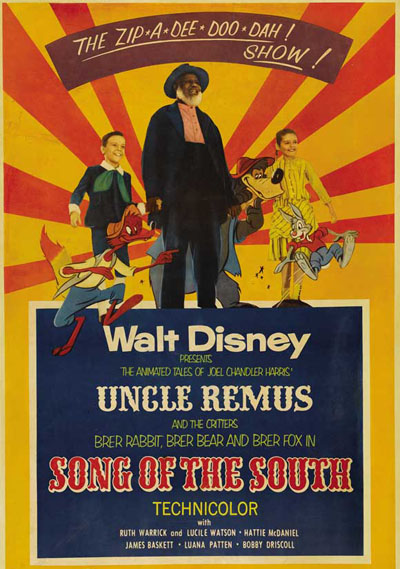
IS THERE A PLACE FOR SONG OF THE SOUTH

This is one of the best articles I have ever read on films. It was written by Gary Cahall. I wanted to share it with you as the film Song Of The South is still one of the hardest to find movies made...

Of the many motion pictures never made available on home video in the U.S, none has been a source of contention and controversy, with impassioned speakers on both sides and entire websites devoted to the film, as has Song of the South. The ongoing question of whether it should be released matches debates that met the film upon its 1946 debut, when picketers, newspaper editorials, and scholars criticized its depiction of African-American life, and upon subsequent theatrical re-showings from the mid-'50s to its final go-round in 1986.

Since some of you out there may be too young to have seen the film in theaters (I was in junior high when I caught it during its 1972 run) and thus may be familiar with it solely through its cartoon segments or the song "Zip-a-Dee-Doo-Dah," here's a brief synopsis. Shortly after the Civil War (no actual time frame is given), young Johnny (ill-fated child star Bobby Driscoll) is taken to live with his mother and grandmother on the older woman's Georgia plantation while Johnny's father returns to Atlanta. It's not really clear if Johnny's folks are actually separating, or if the father is merely finishing business regarding unspecified writings of his. A heartbroken Johnny intends to run away and follow his dad to Atlanta, but his journey is interrupted when he sees Uncle Remus (James Baskett), a jovial, elderly black man, telling stories to the plantation workers and their children. Uncle Remus finds Johnny sitting on a log and takes him back to his cabin, where he feeds him and tells him about a similar incident that happened to Brer (early African-American slang for "Brother") Rabbit, leading to the first of three animated Brer Rabbit tales in the film. Remus convinces Johnny to return home and takes him back to the mansion, but is scolded by the grandmother (Lucille Watson) for keeping the boy out so late.


Johnny eventually comes to enjoy his time on the plantation, befriending a black boy named Toby (Glenn Leedy) and a "poor white" neighbor girl named Ginny (Disney live-action regular Luana Patten) whose brothers harass both her and Johnny. The three spend every spare moment at Uncle Remus' cabin, where he spins more fables about rascally Brer Rabbit's run-ins with scheming Brer Fox and the oafish Brer Bear, tales that help the youngsters deal with Ginny's bullying siblings. Meanwhile, Johnny's mom (Ruth Warrick) is not happy with her son's behavior, and--after one such visit keeps Johnny from attending a birthday party she arranged for him--she tells Remus to stop the storytelling sessions. A dejected Remus packs up and prepares to move away, until a life-threatening incident with a bull eventually brings Johnny''s father back home and leads to a happy reunion (and a final rendition of "Zip-a-Dee-Do-Dah") for Johnny, his parents and his new friends, including Uncle Remus.

Audiences and critics generally agreed that the animated sequences (about 25 minutes in all) and the soundtrack that included, along with "Zip-a-Dee-Do-Dah," "Uncle Remus Said" and "Everybody's Got a Laughing Place" were Song of the South's best features. And while most found the story a touch on the cloying side, the performances of Driscoll, Patten and, in particular, Baskett (who was presented with a honorary Academy Award "for his able and heart-warming characterization") were praised. What was not praised--and what Disney and his studio should have been better prepared for--was the film's portrayal of everyday life on an "Old Dixie" plantation. A 1946 NAACP statement decried "the impression it gives of an idyllic master-slave relationship which is a distortion of the facts," while the National Urban League described the film as "another repetition of the perpetuation of the stereotype casting of the Negro in the servant role."


On the other side, a leading black newspaper, The Pittsburgh Courier, said that, even with its faults, the movie could in fact "prove of inestimable good in the furthering of interracial relations." The scenes of Johnny befriending Toby are, after all, fairly progressive for 1940s Hollywood; Our Gang and the East Side Kids were integrated, but everything there was played strictly for laughs (By the way, for a much more offensive family film set during the Civil War, check out the sole Our Gang feature, 1937's General Spanky, sometime). One gets the impression that the displeasure Johnny's mother feels over who he's with is as much about class (as with Ginny's family) as it is race. Moreover, Uncle Remus and another servant, Aunt Tempy (Oscar-winning Gone with the Wind alumna Hattie McDaniel), are shown to be sympathetic characters rather than the out-and-out caricatures that African-American actors were often relegated to at the time...although they're the only workers who get this treatment in Song of the South.

Had the film's makers put in some sort of explanation that its events took place after the Civil War and that Uncle Remus and his fellow workers were not slaves (a slave couldn't have decided to up and leave, as he does at one point), some of the negativity might--might--have been mitigated. Regardless of when in the 19th century Song of the South is set, however, the overall impression remains one of contented and subservient blacks whose lives revolve around working for and finding favor with their white bosses. Even the movie's title works against it; A name like "Tales of Uncle Remus" or "Uncle Remus and Brer Rabbit" would have emphasized the person behind the story, but "Song of the South" to this day conjures up demeaning and racist images and a yearning for those bygone days when minorities "knew their place," as in Gone with the Wind.


Ah, you might say, but Gone with the Wind has been out on home video since the mid '80s, from VHS to DVD to Blu-ray, and there's been little complaint about its portrayal of slavery. It's true, Gone with the Wind--and much worse movies like The Birth of a Nation--are available for purchase, but Song of the South's case is unique because it is a Disney picture and is intended for children and families. Shouldn't parents, you might then say, be allowed to decide for themselves if the film is appropriate for their kids to watch? That may also be true, but what sort of statement would Song of the South's release--even with an explanatory statement tacked on before the opening or a documentary examining the film's origins and setting--make to minority audiences?

As journalist Hollis Henry put it in a 2005 article for the Black Commentator website, "Imagine a film about an old Jewish storyteller, living contentedly in Nazi Germany. He develops a deep bond with the grandson of the owner of the munitions factory in which he works. The sun shines brightly as he strolls along singing, back to his home in the prescribed ghetto, Star of David sewn onto his coat. No mention is made of his people’s ordeal. In fact, there is no ordeal. Such a depiction would be repellant not only to Jewish people, but to most people." From the point of view of a white male who saw the movie as a pre-teen decades ago, however, while there seemed to me to be an underlying message of racial tolerance, even at that age I could recognize the inequality that was being glossed over on the screen. And I'm certainly not going to pretend that I can fully appreciate how black viewers, especially young people, might feel insulted about it.


Song of the South was the fulfillment of a decade-long dream for Walt Disney to film the writings of Joel Chandler Harris, the illegitimate son of an Irish immigrant who abandoned the family shortly after Joel's birth in 1845. Apprenticed at a plantation, the outcast young Harris was fascinated by stories told in the slaves' quarters--tales linked to traditional African folklore that served as parables for coping with lives of oppression--and created the Uncle Remus character as a composite of several real people so that he could capture their experiences in book form (Uncle Remus has been compared to Ancient Greece's Aesop, who may or may not have been real, and may have also been a slave of African descent). There were good intentions all around, it seems, but looking at the movie's racially anachronistic tone with 21st-century eyes only draws attention to its many hurtful failings. For this reason, the folks at Disney seem to be resigned to leaving the film locked away in the vault.

Don't feel bad for the House of Mouse, though, if Song of the South never finds its way onto home video. The studio still makes money from the film's soundtrack, and Brer Rabbit and his animal cohorts are still seen in costume at the company's theme parks and as the (unofficial) mascots of the popular Splash Mountain ride. Oh, and James Baskett, the man who was in essence Song of the South's star and who would eventually be given an Oscar for his work on it? He couldn't attend the movie's screening or take part in any of the premiere festivities in the still-segregated city of Atlanta, because no hotel in the vicinity of the theater would give him a room. For Disney's Uncle Remus, there was no "Laughing Place" to be had in the real-life South.

SOURCE

Sunday, March 25, 2012

HOLLYWOOD TIDBITS: GLORIA LLOYD

Sadly I missed this death from February of 2012...

Gloria Lloyd, daughter of Harold Lloyd, dies
by Shalini Dore

Gloria Lloyd, daughter of silent film star Harold Lloyd, died Feb. 10 in Santa Monica. She was 87.

An actress and a model, she appeared in 1946's "Temptation" with Merle Oberon, and as herself in "American Masters"' "Harold Lloyd: The Third Genius," and "This Is Your Life: Harold Lloyd."

Cari Beauchamp, who interviewed her for a book on Greenacres, Harold Lloyd's estate, said, "At her wedding in Greenacres, Hedda Hopper and Louella Parsons both came. And for that one day they called a truce."

Survivors include a daughter, Susan, chairman of Harold Lloyd Entertainment.

Services will be private, although a public memorial is being planned, Beauchamp said...


SOURCE

Friday, March 23, 2012

SINGER SPOTLIGHT: DINAH SHORE

This is taken directly from the Dinah Shore fan club website, which was founded in 1952 and still in existance today:

Dinah Shore was born Frances Rose Shore on February 29, 1916 in Winchester, Tennessee. Her parents, Solomon and Anna Stein Shore were Russian Jewish immigrants. Her sister Bessie was several years older. Solomon owned a dry goods store. When Dinah was almost two years old she contracted polio, the dreaded disease of the time. Fortunately her family was able to obtain excellent care and she recovered, though left with a slightly deformed foot and limp. Through extensive therapy and encouragement from her mother she eventually lost the limp. As a small child she loved to sing encouraged by her mother a contralto with operatic aspirations. Her father would often take her to his store where she would do impromptu songs for the customers.

When Fanny was about eight years old the family moved to Nashville, where her father opened a department store. Shy because of her limp she began to participate in sports and other activities. Fanny Rose developed a strong will to succeed and be the best in everything. She attended Hume Fogg High School where she continued in music, sports, cheerleading and dramatics. Her love for singing became her focus. She even tried to perform at a night club as an early teen. She hung out at the "Grand Ol' Opry" and eventually got a job on the local radio station WSM. During this time her mother died suddenly of a heart attack. Her sister Bessie who had married Maurice Seligman by this time stepped in to help her in this trying time. Solomon wanted her to forget about singing and pursue her education. She entered Vanderbilt University where she continued her many activities. She graduated in 1938 with a degree in sociology.

Fanny Rose's determination to become a singer led her to New York where she auditioned for orchestras and radio stations. She was hired to sing on radio station WNEW along with another upcoming young singer, Frank Sinatra. In the course of her auditions she sang the song, "Dinah". Martin Block, a New York disc jockey, couldn't remember her name and called her the "Dinah girl" and the name stuck. She sang with Xavier Cugat's orchestra and recorded with him. Soon Dinah had a recording contract of her own with RCA Victor records on their Bluebird label. Her first hit recording was "Yes, My Darling Daughter."


Dinah's singing came to the attention of Eddie Cantor and he signed her as a regular on his popular radio show, "Time to Smile" in 1940. Dinah credits him for teaching her self-confidence comedic timing, and the ways of connecting with an audience.

With her recording and radio career taking off Dinah soon became a popular favorite. In 1943 she was signed to host her own radio show, "Call to Music." That same year her first movie, "Thank Your Lucky Stars" starring Eddie Cantor with guest appearances by many Warner Brothers stars, was released.

By this time the nation was well into World War II and Dinah became a popular favorite of the troops. Along with stars like Bing Crosby and Bob Hope, she did many Command Performances for the armed forces radio network. Her records rose to the top of the charts. "Blues in the Night" was her first #1 hit. Dinah traveled to Europe to entertain the troops enduring the many hardships and making fans of the troops everywhere. A bridge in France was named for her. She entertained at the Hollywood Canteen of the USO. There she met a young actor about to go into the service, George Montgomery. They married December 5, 1943.

When George returned from service they settled in the San Fernando Valley. On Jan. 4, 1948 their daughter Melissa was born. In March of 1954 they adopted a son, John David.

Dinah's popularity continued with her radio shows and recordings such as "Shoofly Pie and Apple Pan Dowdy", "The Gypsy", "Buttons and Bows". She became a regular with Jack Smith on the CBS "Oxydol Show" (later the "Tide Show". She made a few more movies and moved to the Columbia Record label.

In 1950 Dinah made her television debut on the Ed Wynn Show and a guest appearance on Bob Hope's first show. It wasn't long before Dinah was signed to host her own television show. On Nov. 27, 1951 Dinah began her shows for Chevrolet on NBC, two fifteen minute shows a week. She became immensely popular and won her first Emmy in 1955.In 1956 she did two hour Shows for Chevrolet which led to a regular spot on Sunday nights with the Dinah Shore Chevy Show, a musical variety show with many famous guests. These continued until 1960 for that sponsor and two more years for other sponsors. Many honors and awards including more Emmys and the Peabody Award came her way.


In the 60's Dinah did various TV specials and guest appearances. She also continued playing nightclubs in Las Vegas and Lake Tahoe as well as concerts in cities across the country. She changed to the Capitol Record label and made many albums. Her marriage ended in divorce in 1962.
In 1970 Dinah returned to regular television with a daytime half hour on NBC called "Dinah's Place. Besides her music Dinah had guests talking and singing, did cooking, offered homemaking hints and fun. She won another Emmy for this show. This show continued until 1974 when NBC canceled. Later that year she returned to a 90 minute daily show called "Dinah!" for CBS. Continuing the basic format with talk, music and cooking she continued her popularity with the audience. This show ended in 1980.

Dinah's many interests included photography, painting, cooking. She became well known among friends for cooking and entertaining. This led to her writing three cookbooks, Someone's in the Kitchen with Dinah, The Dinah Shore Cookbook, and Dinah Shore's American Kitchen.

From childhood Dinah had a love for sports and for many years was a popular celebrity participant in charity tennis tournaments. When Colgate approached her about hosting a golf tournament for lady golfers, Dinah accepted with enthusiasm and took up the game in earnest. The Colgate (and now Nabisco) Dinah Shore Tournament has been held at Mission Hills in Rancho Mirage, California near Palm Springs since 1972.

Dinah returned to television in 1989 with "Conversation with Dinah" on The Nashville Network cable. Again she was hostess to many top celebrities who came to interesting conversations with her.

In 1992 Dinah was inducted into the TV Hall of Fame of the Academy of Television Arts and Sciences in Orlando, Florida. She continued to do concerts and charity appearances as well as host her golf tournament.
Dinah Shore passed away on February 24, 1994 after a brief battle with cancer. Her resting spot is marked with these words. "Dinah Shore - loved by all who knew her and millions who never did"...


SOURCE