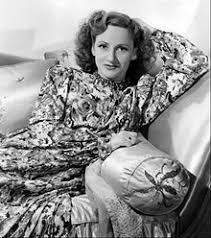
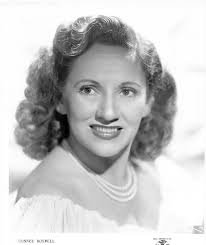
Showing posts with label Connee Boswell. Show all posts

Wednesday, June 17, 2026

STAR FRIENDS: BING CROSBY AND CONNEE BOSWELL

The year was 1937, and the airwaves were alive with the sound of swing. Bing Crosby, already a household name with his warm, easygoing baritone, was redefining popular singing. Across the country, Connee Boswell—formerly the heart of the Boswell Sisters—was stepping into her own spotlight. Her voice carried a jazz-inflected elegance, a playful lilt that could turn even the simplest melody into something unforgettable.

When Bing and Connee first met in a Los Angeles studio, it wasn’t just another session. Bing, ever the gentleman, greeted her with that trademark grin and a casual, “Ready to make some magic?” Connee, seated in her wheelchair—her disability never dimming her spirit—shot back with a mischievous smile: “Only if you can keep up.”

The microphone crackled to life, and the band struck up the opening bars of “Bob White (Whatcha Gonna Swing Tonight?)”. What followed was pure chemistry. Bing’s voice flowed like a calm river, steady and reassuring, while Connee’s danced around his lines—syncopated, teasing, full of swing. The duet soared to #2 on the charts, and listeners couldn’t get enough of their playful banter woven into melody.

Over the next few years, their partnership blossomed. They recorded “Alexander’s Ragtime Band”, a spirited Irving Berlin classic that hit #1 and even raised funds for polio research—a cause close to Connee’s heart. Then came “An Apple for the Teacher”, a cheeky tune that had audiences grinning from coast to coast. Each song was more than a recording; it was a conversation between two artists who understood each other’s rhythms.


Offstage, Bing often spoke of Connee as one of his favorite female vocalists. “She’s got something no one else has,” he told a reporter. “That phrasing—she swings without trying.” Connee, in turn, admired Bing’s generosity in the studio. He never overshadowed her; instead, he created space for her artistry to shine.

Their collaborations weren’t confined to records. Radio listeners tuned in to hear them on programs like Kraft Music Hall, where their duets brought warmth and wit into American homes during uncertain times. For many, those broadcasts were a lifeline—a reminder that joy could still be found in harmony.

As the 1940s dawned and musical tastes shifted, Bing and Connee’s paths diverged. Yet their recordings remain timeless, echoing an era when music was intimate, playful, and profoundly human. Today, when you hear “Basin Street Blues” or “Between 18th and 19th on Chestnut Street”, you’re not just listening to notes—you’re hearing a friendship, a shared love of song, and a moment in history that still swings...


Monday, November 22, 2021

MY FIVE FAVORITE FEMALE SINGERS

 Nothing relaxes me more than one of the great songbirds from the golden age of singing. Whenever I am feeling stressed out, I love going to my music room and just listen to golden voices in the dark and get lost in the audio aspirins. I made a list of my five favorite female singers in 2013 and 2019 so I figured I was due to update my list. There are so any great female singers out there...


5. BILLIE HOLIDAY (1915-1959)
People either love or hate Billie's voice, and I love her singing. From her early recordings in the mid 1930s with Benny Goodman to her said and weakened voice in the 1950s, Billie had a way to sell a song. Billie's best recording was "God Bless The Child". "God Bless the Child" became Holiday's most popular and most covered record. It reached number 25 on the charts in 1941 and was third in Billboard's songs of the year, selling over a million records. Billie died tragically too young but her voice lives on in so many vocal masterpieces. (rank in 2013: 9, rank in 2019: 6)


4. JUDY GARLAND (1922-1969)
Like Billie, Judy Garland conveyed so much in her voice. Judy became an icon for the gay movement, but she also was a great recording star. Her records I feel were even better than her movies. At a young age she was signed to Decca and recorded some great numbers there like "Figaro", "Over The Rainbow", "No Love No Nothin", and "This Heart Of Mine". She only recorded soundtracks afterwards at MGM Records, but once she signed with Capitol in the 1950s, she made some terrific albums. Again, like Billie, Judy died way too young. (rank in 2013: 10, rank in 2019: 8)


3. CONNEE BOSWELL (1907-1976)
If you need an audio aspirin, then please listen to Connee Boswell. Connee herself is widely considered one of the greatest jazz female vocalists and was a major influence on Ella Fitzgerald. After breaking up with her sisters in 1936, she made some great solo records for Decca for the next 20 years. Some of my favorite of these records are: "I Let A Song Go Out Of My Heart", "Sand In My Shoes", and "Why Don't You Fall In Love With Me" to just name a few. She made an excellent album for Decca in 1956 simply titled "Connee" with Sy Oliver and his Orchestra. Connee's last chart hit was "If I Give Myself To You" in 1954, and in my opinion I don't think she recorded enough. (rank in 2013: 2, rank in 2019: 3)

2. DINAH SHORE (1917-1994)
There is nothing finer than Dinah! After failing singing auditions for the bands of Benny Goodman, and both Jimmy and Tommy Dorsey, Shore struck out on her own. She became the first singer of her era to achieve huge solo success. She had a string of 80 charted popular hits, spanning 1940–1957. Eddie Cantor helped to discover her, and she got a contract to Bluebird in 1939 where she recorded such recordings as "Sleepy Lagoon" and "Yes, My Darling Daughter". She then went to Columbia and scored some mega hits like "Lavender Blue" and "Button And Bows". In the 1950s she also sang for Capitol Records for a time. Dinah became more widely known for her television shows by the 1960s, and her voice was not what it was, but she is still one of my favorite songbirds out there.(rank in 2013: 3, rank in 2019: 2)


1. JO STAFFORD (1917-2008)
Like Bing Crosby on my favorite male singer list, Jo Stafford has also been number one on my list for decades. In addition to her recordings with the Pied Pipers, Stafford featured in solo performances for Dorsey. After leaving the group in 1944, she recorded a series of pop standards for Capitol Records and Columbia Records. Many of her recordings were backed by the orchestra of Paul Weston. In the 1950s, Stafford had a string of popular hits with Frankie Laine, six of which charted. Their duet of the Hank Williams song "Hey Good Lookin'" made the top 10 in 1951. She had her best-known hits—"Jambalaya", "Shrimp Boats", "Make Love to Me", and "You Belong to Me"—around this time."You Belong to Me" was Stafford's biggest hit, topping the charts in the United States. Jo retired in 1970, and although she retired so young, she left us with such a great recording songbook. There was no one like Jo! (rank in 2013:1 rank in 2019: 1)

There are many other singers that I love too so here is my list of runners up to round out the top ten: Margaret Whiting (1924-2011), Peggy Lee (1920-2002), June Christy (1925-1990, Jeri Southern (1926-1991), and Kate Smith (1907-1986).

Saturday, November 2, 2019

THE SOLO SIDE OF CONNEE BOSWELL

The Boswell Sisters were one of the most popular singer groups in the 1930s. They had a sound that was like liquid gold. Only sister Connee had great ambition to stay in the group. Connee and manager Harry Leedy were married in New York on December 14th 1935. Since all three sisters married that year, new brides Martha and Vet decided to retire, leaving Connie to embark on a solo career. It was a move that would raise her to new heights of popularity and musical innovation, prompting no less than Irving Berlin to call her "the best ballad singer in the business." As a highly sought after radio personality, Connie continued to appear with Bing Crosby and was regularly featured on such popular shows as Camel Caravan, Good News and The Ken Murray Show. Film work included Artists & Models in 1937.

During the peak years of her career, Connee hired (then) unknown musicians such as Artie Shaw, Benny Goodman and Jimmy Dorsey, to provide instrumentation for her recordings. During one session, all three added a clarinet background. Connie also gave Glenn Miller his first opportunity to arrange. The onset of WW II meant touring and signing autographs for troops. The loss of dexterity from the lingering affect of polio made it difficult to dot the "i" in her name, making Connee a more practical alternative; by 1942, she legally changed the spelling. She volunteered to perform overseas, but she remained stateside due to her handicap, which restricted travel. Her V-Disc recordings and song dedications on Command Performance were favorites with the troops.


Connee's live performances had an innate power to make people take a closer look at their own lives. The sight of a cheerful young woman being wheeled on stage, propped atop an elevated platform with a long gown covering her crippled legs, was sometimes too much for an audience to handle. But Connee, with her pleasant temperament, "which was as breezy as the beat of her music" weathered well her own personal storm.

Connee appeared in the 1941 film, Kiss the Boys Goodbye. On radio, she hosted her own Connee Boswell Show in 1944. In 1946, she appeared in the film Swing Parade and sang "Stormy Weather," which had become one of her signature songs. Syndicated author Elsie Robinson described Connee singing Stormy Weather in a Listen World column: "A roar greeted her. Here was valiant Connie Boswell, beloved by the radio world; tears on her face, hands trembling; singing Stormy Weather; and in that song was the hurt of humanity; in every heart that heard her."


Television emerged in the early 1950s and Connee made regular appearances with Ed Sullivan and Perry Como. In 1955, she was a guest on Person to Person, hosted by Edward R. Murrow. What did Connee think of rock 'n' roll? "Believe it or not, I like Elvis Presley - So sue me. The basic beat of rock 'n' roll isn't too far from the jazz of the old days." A sapient Connee added: "Nothing will ever destroy jazz. It will be around for a long time."

In 1959, a television version of Pete Kelly's Blues premiered and Connee signed on to play lounge singer Savannah Brown. The drama, set in the 1920s, was originally a radio entry in 1951. UPI Hollywood interviewed Connee before production and she remarked: "There's a lot of nostalgia for me about the '20s. My sisters and I were just getting our start as the old Boswell Sisters act." Connee continued: "I'll be singing the way I always have. It's natural for me to belt out songs as they come to my mind, and I never sing a song the same way twice."

Connee worked tirelessly on behalf of the March of Dimes and regularly visited hospitalized children during her travels around the country; the visits were always unannounced and never publicized. Despite her handicap, Connie believed regular exercise was essential to good health and maintaining her throaty contralto voice. A stationary bike and rowing machine were standard equipment on road trips. She enjoyed baseball, football, horse racing and hockey.

In March of 1955, Connee was one of 66 passengers aboard a flight from Los Angeles to New York. The DC-7 developed engine trouble and was forced to make an emergency landing in Chicago. Connee noting the tension among nervous passengers impetuously started singing "Coming in on a Wing and a Prayer" to comfort frazzled nerves; she was later praised for her heroic action.


A planned visit to Chicago took place a couple of months later when Connee attended the 50th anniversary convention of Rotary International. A caption below the entertainer's photo in The Rotarian magazine stated: "Singer Connee Boswell stars too in the book of personal courage." The eradication of polio would later become Rotary's signature project.

A devoted couple, Connee and Harry Leedy were married almost 40 years, when Harry quietly passed away in his sleep on New Years Day 1975. Early in 1976, Connee became ill and was diagnosed with stomach cancer. She underwent surgery in February and started chemotherapy. By October, she requested that all treatment stop to "let me die in peace and dignity." She passed away at Mt. Sinai Hospital in New York on October 11th 1976, with her sister Vet by her side.

News of her passing brought accolades from the world of entertainment. Bing Crosby called her "a great lady with boundless courage and divine talent." Patty Andrews added: "If it weren't for the Boswell Sisters, there would never have been the Andrews Sisters." Ella Fitzgerald stated: "When I was young I wanted to sing like Connie Boswell." Frank Sinatra called her "the most widely imitated singer of all time....

Wednesday, May 8, 2019

MY FIVE FAVORITE FEMALE SINGERS

Since I just updated my favorite male singer list recently, I figured I better give the favorite female singers an update. There are so many great songbirds out there that have left their mark, but these are currently my five favorite...


5. ELLA FITZGERALD (1917-1996)
Ella Fitzgerald had a way with a song that no other vocalist, man or woman, had. She started out with Chick Webb and his band in the 1930s, but went out on her own after Webb died. She was with Decca Records in the 1940s, but I think my personal favorite era of her records in when she was with Verve and recorded those Great Songbook series in the 1950s and 1960s. 2013 ranking: 7

4. PEGGY LEE (1920-2002)
The smoky quality of Peggy Lee's voice always appealed to me. Peggy started out with Benny Goodman and his band in the early 1940s, and she became one of the truly great vocalists. She not only was a singer but an actress and songwriter as well. My person favorite recording of hers is "Where Can I Go Without You" on the Decca label. 2013 ranking: 11


3. CONNEE BOSWELL (1907-1976)
Even though she suffered from polio and was handicapped, Connee was one of the great voices of our times. She started out with her sisters, the Boswell Sisters, but went on her own in 1936 when her sisters got married and retired. She could sing jazz like no other woman. Her duets with Bing Crosby were legendary, and she continued to make great records through the 1950s. She did an album with Sy Oliver in 1956 that is one of the best things put on vinyl. 2013 ranking: 2

2. DINAH SHORE (1917-1994)
For the few people that remember Dinah Shore, they might think of her just from her television show of the 1970s. She was so much more, and a wonderful singer. She was discovered by Eddie Cantor, and she had countless hit records like: "Lavender Blue", "Jim", and one of my favorites
Shoo Fly Pie And Apple Pan Dowdy". She started out with RCA Victor, but would also record with Columbia and Capitol. Her voice is audio gold. 2013 ranking: 3

1. JO STAFFORD (1917-2008)
Jo Stafford has been my favorite female singer nearly as long as Bing Crosby has been my favorite male singer. I am also honored to have gotten an autographed picture of Jo Stafford in the late 1990s. Jo started out as a member of the Pied Pipers in the Tommy Dorsey Orchestra, but she became a solo artist in 1943, and she was one of the first acts signed to Capitol Records. There is not enough room to list all her hits but a few include: "You Belong To Me", "Shrimp Boats", and "Make Love To Me". Jo retired from performing in 1970 while she was on top, but she had nearly perfect pitch. I have a lot of favorites by Jo, but check out her recordings of "Always True To You In My Fashion", "A Ghost Of A Chance", and "Best Things In Life Are Free" to just name a few. 2013 ranking: 1


Again, this is just my opinion as of 2019 and not a complete list. I have dozens of singers that I love and listen to. Here are five more runners up that I love as well: Billie Holiday (1915-1959), Kate Smith (1907-1986), Lee Wiley (1908-1975), Mildred Bailey (1903-1951) and Judy Garland (1922-1969)...

Friday, January 10, 2014

CONNEE BOSWELL: THE LATER YEARS

Connee Boswell, I feel is one of the most important voices in the history of female vocalists. Along with her sisters, Connee had a slew of hits in the 1930s before the sister group broke up in 1936. Connee stayed with Decca Records for the next twenty years, inspiring a generation of female voices. Much is written about her time as a Boswell Sisters and early solo efforts, but I thought Connee's later work from the mid 1950s and on deserved to be spotlighted.

In 1954, Connee recorded her last charted hit, “If I Give My Heart to You.” The song was a smash hit for Kitty Kallen but Boswell’s version rose to the #10 spot in September, 1954, and spent 11 weeks on the charts. After almost 25 years of chart topping hits - it was a great end to a momumental recording career. However, I wish more of her later work would have charted, because it saw her in great form.

On March 20, 1955 Connee and her husband Harry Leedy boarded a non-stop flight from Los Angeles to New York for a recording session. The American Airlines DC-7 made a crash landing in Chicago due to an engine failure. During the emergency landing, Connee puts on an in-flight performance from her wheelchair to help calm everyone on board. She sang "Comin' In on a Wing and a Prayer". All 66 people on board escape any serious injury after the plane lost it's nose gear and landed virtually tail up. Connee was praised for heroism by the media.

In August of 1955, the Boswell Sisters performed for the last time publicly. Vet and Martha go to see Connee perform at Jimmy Fazios Supper Club in Milwaukee. Connee persuaded her sisters to join her onstage. After a couple of false starts they performed the song they would also start a show with for good luck: “Heebie Jeebies.”

In April of 1956 Connee was back in Decca’s recording studios in NYC with Sy Oliver and His Orchestra. The subsequent recordings were issued as her second album, simply named “Connee.” This is her last recording session with Decca records, ending a twenty-five year collaboration that had yielded many hit recordings. If you have an opportunity to listen to one album - listen to this one. It is one of my favorite records of all-time. Connee sings some great numbers like "Stardust" and my personal favorite "I'd Climb The Highest Mountain".


On July 2, 1958 Connee's sister Martha Boswell Lloyd died in Peekskill, NY after a lengthy illness. At the same time Connee appeared in her last film. I is a low-budget picture called “Senior Prom,” which briefly features her singing “When The Saints Go Marchin’ In.”  Also in 1958 Connee unfortunately made her last album "Connee Boswell Sings The Rodgers & Hart Songbook" on the Design Record label. It is unfortunate that Verve never signed Connee as they did Ella Fitzgerald. Connee still had an amazing voice in the 1950s.

Connee moved on to more causes that are dear to her heart by the 1960s. Connee was on the board of an organization called, “Comeback, Inc,” whose focus is rehabilitation of the chronically ill, aged and handicapped. By 1962 she decided to limit her performances to some occasional television work and club dates and stays much closer to home to care for Harry.

In radio interviews (and perhaps on television interviews as well), there was some talk about making a comeback, recording an album of Broadway tunes, and even that she had been working on her autobiography. There was also rumor of her talking with Hollywood studios about making a bio-pic of her life story, but these plans never materialized. She continued in her humanitarian work and volunteer appearances at children’s hospitals, and in her hobby of training dogs.


On January 1, 1975 After nearly forty years of marriage, Harry Leedy died in New York City. Connee later said that he came to bed, kissed her goodnight and the next morning when she woke up, he was gone. Connee beggan to make more frequent appearances in clubs and even appears with Benny Goodman in an anniversary concert. However, before long, it is clear to all that Connee was also ill. She has always had a very healthy appetite, saying herself that she could “eat like a horse.” She experienced severe stomach pain so she sought medical attention. On February 11, 1976 Connee underwent surgery at Mount Sinai Hospital in NYC to remove a tumor from her stomach. Doctors were optimistic that they could remove the tumor successfully.

Sometime afterward though, they discovered that the cancer had returned and began chemotherapy. By the early fall, she was confined to her hospital room at Mt Sinai and finally asked doctors to stop all treatments. On October 12, 1976 Constance Foore Boswell Leedy died at Mount Sinai Hospital in New York City. She was 68 years old. She was buried in Ferncliff Cemetery, Hartsdale, New York, next to her husband Harry.

She wrote the following poem just five days before her death:

“My days are numbered and it’s just as well.
Just how soon no one can tell.
I hope that it’s soon for the pain is vile,
A face filled with frowns instead of a smile.
When the end comes I’ll be at rest,
And just remember, it’s all for the best,
And when I’m gone remember me when
The sun shone brightly.
And now, Amen.”


Friday, October 4, 2013

MY FIVE FAVORITE FEMALE SINGERS

I figured since I did a list of my favorite male singers, I should do one on my five favorite songbirds. Surprisingly it was harder to do this list than the male counterpart list. My top three favorite female singers have stayed the same through the years, but the other two spots are up for grabs. It varies depending on my mood, so don't get too upset with this list. It is changes weekly...


5. ALICE FAYE (1915-1998)
I know people will find it shocking that I rank Alice Faye higher than such polished singers as Doris Day and Margaret Whiting or than some jazz songbirds like Ella Fitzgerald and Billie Holiday, but I feel that Alice could sing anything. She did not have much or a recording output, and it was a crime because she had a wonderful voice. Faye recorded a little in the 1930s and then her studio boss Daryl Zanuck at 20th Century Fox would not let her make an more commercial recordings. She sang some nice number on her radio show with husband Phil Harris in the early 1950s and then she made one album for Reprise Records in the 1960s. Again it is a crime against musical lovers that she did not record more.

4. KATE SMITH (1907-1986)
Eddie Cantor once said that Kate Smith had such a huge frame to hold a heart so big. It is definitely true, because I do not think there was a nicer person in the musical business. A sign of a good singer is the ability to adapt to changing times and song styles. Kate Smith sang every genre from classic pop to country to rock from the 1920s to the 1970s. I love Kate's old vintage recordings from the early 1930s like "Too Late" and "River Stay Away From My Door". I also love some of her later work like "Kisses Sweeter Than Wine", "Yesterday", and "More". Of course I have three words why Kate should be on anyone's top list - "God Bless America". We were robbed of Kate's voice when she suffered a diabetic stroke in 1976 and for the next ten years she suffered greatly. Her recordings I have are among my prized possessions.


3. DINAH SHORE (1917-1994)
In later years Dinah Shore became more known as a television personality than a singer, but throughout the 1940s and 1950s I think she had one of the most pleasant voices on record. She was discovered by Eddie Cantor, and was a long time contract singer for RCA records. Her early 1940s records like "Skylark", "Sophisticated Lady", and "Smoke Gets In Your Eyes" showed that Dinah was vocally pretty advanced for her age. In the 1950s she moved to Capitol and then to Reprise for a bit, and I think her recordings suffered. However, she would still make a good record like "Mississippi Mud", "Carolina In The Morning", and even her version of the Frank Sinatra hit "Love And Marriage" was almost better than Sinatra's version. Dinah pretty much stopped recording or even singing for that matter in the 1970s, but her personality was like a beautiful song, and I was a fan until the sad day I heard she had passed away.

2. CONNEE BOSWELL (1907-1976)
Like most of the women on this list, Connee Boswell really did not make a bad recording. Even her horrible recording on Decca of the song "Mommy" is still worth listening to. Connee began her recording career with her sisters in 1925, and soon they were the most popular sister group in the country. The trio recorded some true masterpieces of music like: "42nd Street", "Heebie Jeebies", and "That's How Rhythm Was Born". By 1936, the sisters were all getting married, and Connee's two sisters - Vet and Martha wanted to retire. Connee signed with Decca Records and continued to make recordings for them for the next twenty years. Her best recordings were later in her career though. She recorded her final record on the Decca label with Sy Oliver in 1956 titled simply "Connee". The record is a masterpiece in my opinion. Her version of "I'd Climb The Highest Mountain" among others is one of my favorite recordings. She also made a great album with the Original Memphis Five a year later on the RCA label. With the change in music, Connee slowly withdrew from the scene, but again we are lucky for the wonderful music she left behind.


1. JO STAFFORD (1917-2008)
One of the true sadnesses in my adult years was that I never got to talk or meet Jo Stafford. I am lucky to have gotten her autograph, but in later years she did not appear much in public but was devoted to her family and fans. Jo started out singing with her sister in the late 1930s, and then she joined the Pied Pipers and worked with Tommy Dorsey. Unlike Frank Sinatra's recordings with Dorsey, Jo Stafford did not do any real great solo work with the band. However, Stafford was one of the first artists signed to the new Capitol Recordings in 1943. Her solo work made her one of the great voices of all time. In the 1940s her recordings included: "The Trolley Song", "Candy", and others - but one of her greatest recordings came in 1953. Her version of "You Belong To Me" is among my favorite records of all time, and the record is an example of the perfect pitch that Jo Stafford had. In the 1950s she moved over to Columbia Records and then to Reprise for a bit. Every album she made or song she sang was worth listening to, and like the other singers she retired from the musical scene way too soon. Jo Stafford stopped recording around 1970, but many of her recordings are among the best that were ever put on record.

Of course, this top five list does not include all of the great female singers out there - they are only my five favorites. Here are five more than deserve to be on anyone else's best of list as well: Margaret Whiting (1924-2011), Ella Fitzgerald (1917-1996), Judy Garland (1922-1969), Billie Holiday (1915-1959), and Doris Day (born 1924). Again, this list is not a definitive list by any means. Who would you have on your top five...