Showing posts with label Walter Matthau. Show all posts

Monday, November 13, 2023

BARBRA STREISAND VS GENE KELLY

Barbra Streisand is opening up about her experience working with Gene Kelly. In one chapter of the Academy Award winner's new memoir My Name Is Barbra, Streisand peels back the curtain on her impressions of Kelly when he directed her in 1969's Hello, Dolly!

In the memoir, Streisand, 81, recalls that she felt a disconnect between herself and Kelly, himself a Hollywood star famous for his roles in Singin' in the Rain, among other Golden Age of Hollywood films.

Streisand, who describes Kelly as a childhood celebrity crush, writes that she did not spend any significant amount of time discussing her character Dolly Levi with her director, though she notes she later discovered the filmmaker felt the whole project was pressed for time, while researching her new memoir.


"I was disappointed when the reality of the man didn’t live up to the fantasy I had from watching him on‑screen," Streisand writes. "One day he was so rude to a female dancer that I asked him privately, 'Why were you so mean to her?' And he basically laughed it off and said, 'Yeah, I was pretty tough on her, but that’s okay. I used to yell like that at another dancer, and she became my wife.' "

Streisand writes that Hello, Dolly!'s co-screenwriter and producer Ernest Lehman "was always receptive" to her ideas and questions on-set. She considered Lehman, who died in 2005 at 89, one of her few allies on the 20th Century Fox production.

"I don’t think I’m paranoid, but I felt as if Gene and Walter [Matthau] had an attitude toward me, and it was not positive . . . especially on Walter’s part," she writes in the memoir. "In fact, he was overtly hostile, and I couldn’t figure out why."


"He closed his eyes and yelled, 'Who the hell does she think she is? I’ve been in this business thirty years, and this is only her second movie . . . the first one hasn’t even come out yet . . . and now she’s directing?' " Streisand recalls Matthau saying. "And then he looked at me with pure venom and said, 'You may be the singer in this picture, but I’m the actor! I have more talent in my farts than you have in your whole body!' "

Streisand writes that she was "stunned" by his comments. "I had no defense," she writes. "I had no words. I just stood there and was so humiliated that I ran off the set, crying. I’m not proud of that."

"I wish I could have answered him back. But I never want to be mean or malicious," Streisand adds in the memoir. "That’s not who I am. I want to be strong, not unkind."

Hello, Dolly! went on to win three Academy Awards at the 1970 Oscars (Best Art Decoration-Set Decoration, Best Sound and Best Score). The film was also nominated for Best Picture, Best Cinematography, Best Costume Design and Best Film Editing.

My Name Is Barbra is now available for purchase...


Thursday, April 21, 2022

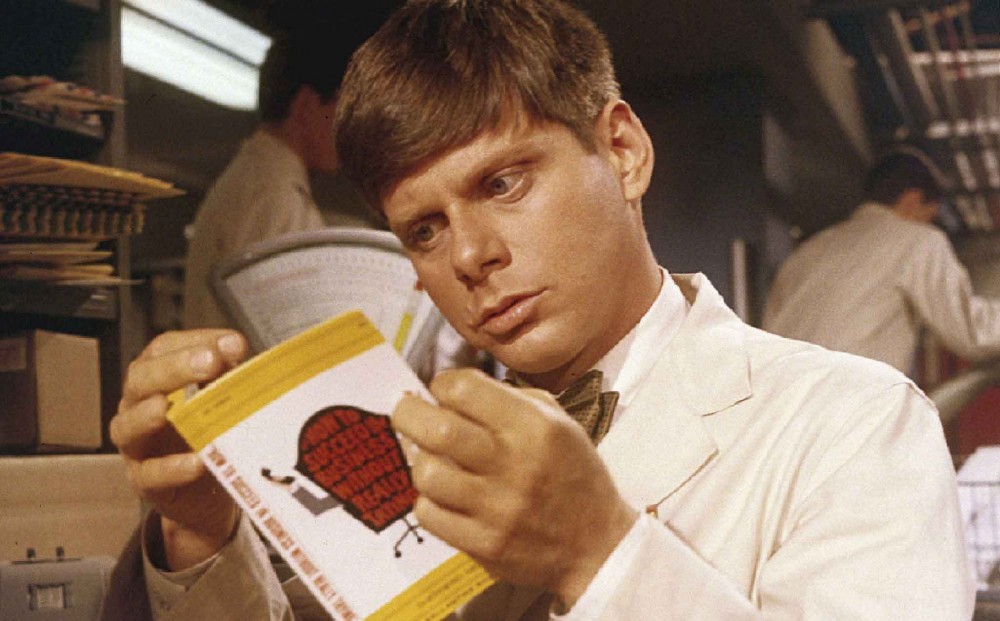
RIP: ROBERT MORSE

Robert Morse, who translated Broadway stardom into a film career in the 1960s, then re-emerged decades later as one of the stars of “Mad Men,” has died. He was 90.

Writer-producer Larry Karaszewski, who serves as a VP on the board of governors for the Academy of Motion Picture Arts and Sciences, tweeted news of Morse’s death on Thursday.

“My good pal Bobby Morse has passed away at age 90,” he wrote. “A huge talent and a beautiful spirit. Sending love to his son Charlie & daughter Allyn. Had so much fun hanging with Bobby over the years – filming People v OJ & hosting so many screenings (How To Succeed, Loved One, That’s Life).”

Morse was Emmy nominated five times for playing the sage Bertram Cooper, the senior partner at the advertising firm that was the focus of AMC’s prestigious series “Mad Men,” from 2007 to 2015. In 2010, he shared the SAG Award that “Mad Men” won for outstanding performance by an ensemble in a drama series.

The eccentric Bert Cooper was known for his bow ties and his collection of Japanese art and architecture; while at times he seemed indifferent to the business affairs at Sterling Cooper, he could be crafty and manipulative when necessary. Cooper died the night of the first moon landing — and that 2014 episode afforded Morse the opportunity to show off his singing and dancing skills in a fantasy number, imagined by Jon Hamm’s Don Draper, to the tune of “The Best Things in Life Are Free.”


“The opportunity to shine in the spotlight that Matt Weiner gave me — it was an absolute love letter. Christmas and New Year’s, all rolled into one,” Morse told the New York Times.

Morse also won an Emmy in 1993 for a PBS “American Playhouse” adaptation of Morse’s one-man show “Tru,” about Truman Capote.

Morse, known for his impish, gap-toothed grin, became a star on Broadway in the musical comedy “How to Succeed in Business Without Really Trying,” for which he won his first Tony, as best actor in a musical, in 1962. The enormous hit ran for more than 1,400 performances and was adapted for the big screen in a 1967 film in which Morse reprised his starring role of J. Pierpont Finch.


Reviewing the movie, Variety said: “Plot concerns window-washer Morse who, by superior instinct for advancement and survival, becomes a top exec in (Rudy) Vallee’s company in a matter of days. He becomes so big that former well-wishers plot his downfall. The pixie-like Morse is excellent, with both voice and facial expressions right on target all the time.” Morse not only sang but danced in the musical; later, in reviewing the actor’s performance in “Tru,” Frank Rich of the New York Times said, “Mr. Morse kicks a loose-limbed leg as high and friskily as he did when joining Bob Fosse’s hoedown for the ‘Brotherhood of Man’ finale in ‘How to Succeed.’ “

The actor won his second Tony for the one-man show “Tru,” in which he played Truman Capote, appearing on Broadway for 297 performances in 1989-1990. Makeup man Kevin Haney, whose credits include the movies “Altered States” and “Wolfen,” turned Morse into the bloated mass that Capote became before he died in 1984.

“With his mad shopping-bag woman’s cackle and darting lounge lizard’s tongue, Mr. Morse so eerily simulates the public Capote of the pathetic waning years that he could be a Capote robot,” wrote Frank Rich. “One is glad to have met up with this actor again, is impressed by his command of his technique and his audience, and is moved by the courage that has allowed him to return to a Broadway stage in so unlikely a vehicle.”

Morse appeared in a number of other movies in the 1960s, including Tony Richardson’s satire of the funeral industry “The Loved One” (1965), also starring Jonathan Winters. Variety said: “Robert Morse as the poet who falls in love with the lady cosmetician (later promoted to embalmer) while making arrangements for his uncle’s interment, plays it light and airy, like a soul apart.”


In 1967, in addition to the “How to Succeed” adaptation, Morse starred with Walter Matthau in the comedy “A Guide for the Married Man,” in which Morse’s character tries to convince Matthau’s married man to keep an affair secret from his wife, and his points are illustrated in skits that featured a large number of celebrities.

(According to a 2014 article in Playbill, “How to Succeed in Business Without Really Trying” and “A Guide for the Married Man” served as inspirations for Matthew Weiner when he created “Mad Men.”)

Morse starred opposite Doris Day in the 1968 film comedy “Where Were You When the Lights Went Out?”

In 1968-69 Morse starred with E.J. Peaker in the innovative ABC musical comedy series “That’s Life,” in which the story of how a young couple met, fell in love, and married was told through a series of monologues, sketches, and song and dance routines. He earned his first Emmy nomination for his work on the series.

The actor starred in the Disney comedy “The Boatniks” (1970), and made a few guest appearances on series including “Love, American Style” and “Fantasy Island” during the 1970s; in the 1980s he guested on shows including “The Dukes of Hazzard” and “Murder, She Wrote.”


Morse was among the performers on Marlo Thomas’ celebrated “Free to Be … You and Me” children’s album in 1972.

In 1987 he starred in a Cannon Films version of “The Emperor’s New Clothes,” with Sid Caesar as the Emperor and Morse playing the Tailor.

He was featured in ABC’s 1993 series “Wild Palms” and was a series regular on Steven Bochco’s brief-running CBS hospital drama “City of Angels,” starring Blair Underwood, in 2000.

Morse was born in Newton, Massachusetts. He served in the U.S. Navy during the Korean War. A drama teacher in high school inspired him to become an actor, and after graduating he headed to New York City’s prestigious Neighborhood Playhouse, where his older brother, Richard, was already studying acting. He also studied with Lee Strasberg. He made his stage debut in 1949 production of “Our Town” in New Hampshire.

He made his Broadway debut in 1955 in “The Matchmaker,” the Thornton Wilder play that would serve as the basis for the musical “Hello, Dolly!” (Ruth Gordon starred as Mrs. Dolly Gallagher Levi); he played Barnaby Tucker. After appearing in an uncredited role in the 1956 film “The Proud and Profane,” starring William Holden and Deborah Kerr, the young actor made his credited big-screen debut two years later in the film adaptation of “The Matchmaker,” starring Shirley Booth. The New York Times said, “Robert Morse does a fine stint in re-creating his stage role as his wide-eyed, fellow adventurer.”

In 1959 he earned his first Tony nomination, for best featured actor in a play, for the original hit comedy with music “Say, Darling,” in which he spoofed the director Harold Prince. The next year he earned another Tony nomination, for best actor in a musical, for “Take Me Along,” which was also nominated for best musical and drew nominations for Jackie Gleason and Walter Pidgeon.


After “How to Succeed in Business Without Really Trying,” which ran from 1961-65, Morse starred in the original musical comedy “Sugar,” based on the classic Billy Wilder comedy “Some Like It Hot.” It ran for 505 performances in 1972-1973. In 1976, he appeared in the musical “So Long, 174th Street,” whose source material was a book by Carl Reiner.

Morse did not return to Broadway until he appeared in “Tru” in 1989-90, and he did not appear on the Rialto again after that. In 1995, however, he starred in a Canadian production of “Show Boat”; in 2002 he played the Wizard in the San Francisco run of the musical “Wicked” but was replaced by Joel Grey when it opened on Broadway; in 2014, he appeared onstage at Vassar’s Powerhouse Theater as part of the cast of Christopher Gattelli’s dance ensemble piece “In Your Arms.”

Morse was twice married, the first time to “West Side Story” actress Carole D’Andrea from 1961 until their divorce in 1981.

He is survived by second wife Elizabeth Roberts, whom he married in 1989; three daughters by D’Andrea, Andrea Doven, Hilary Morse and Robin Morse, all actresses; and two children by Roberts, son Charles Morse and daughter Allyn Morse...


Wednesday, September 16, 2020

WALTER MATTHAU VS BARBRA STREISAND

During the 1960s, even with the changing music scene, big movie musicals were being made. One of the biggest Broadway hits of that decade was "Hello, Dolly!", starring Carol Channing. Channing was not a movie actress so Barbra Streisand was brought in to star. Her co-star Walter Matthau did not like her and a feud commenced.

Once filming began, it didn’t take long for Walter Matthau and Barbra Streisand, who were separated in age by 22 years, to start arguing. Streisand was known for requesting retakes on Funny Girl, and when she started doing it on Hello, Dolly!, Matthau, who had just won an Oscar for The Fortune Cookie, was annoyed and then outraged. He called her “Miss Ptomaine.” As things deteriorated further, he refused to be in the same room with the actress who was supposed to be his love interest, except when they were filming a scene.


“I have more talent in my smallest fart than she does in her entire body,” Matthau was quoted as saying.

And that was not all. Matthau also said, “The trouble with Barbra is that she became a star long before she became an actress. Which is a pity, because if she learned her trade properly, she might become a competent actress instead of a freak attraction–like a boa constrictor.”


As for Streisand, she loathed him just as much, calling him “old sewer mouth.” When it came time for the two to kiss at their wedding, Matthau refused to do it, and a variety of camera angles were used to create the impression that their lips touched without actually meeting.

No less a writer than Nora Ephron, profiling Streisand for Good Housekeeping magazine, reported on the personality clashes, and took Streisand’s side. Wrote Ephron: “People who worked on Hello, Dolly! insisted that Matthau was to blame for the difficulty. ‘It’s a very simple story,’ said a friend of mine who was there. ‘She’s twenty-six years old and she’s the biggest star in town. Can you imagine how a big spoiled crybaby like Matthau reacts to playing second fiddle to that?’ Matthau reportedly became so upset he went to complain to Richard Zanuck, the head of 20th Century-Fox. ‘Do I need a heart attack?’ asked Matthau. ‘Do I need an ulcer?’ Zanuck listened politely until Matthau finished whining. ‘I’d like to help you out,’ he replied, ‘but the film is not called Hello, Walter.’ ”

The film was a box office flop...


Saturday, August 11, 2012

RECENTLY VIEWED: HANGING UP

Lately it seems like I have been watching more cartoons for my son, and more "chick flicks" for my wife to keep them both happy. I was surprised when my wife had never seen the moving Hanging Up. I actually saw it years ago when I was home for some reason. The movie was on again on one of the cable channels, and we rewatched it.

Hanging Up is a 2000 American comedy-drama film about a trio of sisters who bond over their ambivalence toward the approaching death of their curmudgeonly father, to whom none of them were particularly close. This film features Diane Keaton (who also directed), Meg Ryan, and Lisa Kudrow as the three sisters, and Walter Matthau (in his final film appearance) as the father. In very poor health throughout filming, he was diagnosed with colon cancer for the second time in his life in November 1999 shortly after filming ended. He died over seven months later, four months after the film's release.

Georgia Mozell, Eve Marks and Maddy Mozell are adult sisters. Georgia is the editor of her own wildly successful self-titled women's magazine. She strives for publicity at any cost. Party planner Eve is the mother hen of the group, not only of her own family, but also of her siblings and father as their mother, Pat, not only emotionally left their father when they divorced, but her daughters as well. And Maddy is a vacuous soap opera actress who has always struggled for her own identity. Despite being as busy with her own life as the others, Eve is the only one of the three who deals with the long term hospitalization of their cantankerous seventy-nine year old father, Lou Mozell, when he enters the early stages of dementia, and the associated outcomes of that hospitalization. Eve's caring for Lou is despite an especially hurtful incident with him seven years earlier. As the emotional aspect of looking after Lou becomes more and more stressful, Eve has to figure out how to maintain her own sanity, while dealing with her sisters, who believe they too are part of their father's care while they don't lift a finger to help.


Hanging Up was released in United States on February 18, 2000, to relatively negative to average reviews. It made just over $15.7 million opening weekend, over the Presidents' Day weekend, opening at #2 behind The Whole Nine Yards. Hanging Up opened in 2,618 theatres at an average of exactly $6,000. It lasted eight weeks in domestic release before dropping out of the top 10 in its third week of release. Domestically grossing $36,050,230 with an extra $15,829,814 (from worldwide audiences) brought its international total to $51,880,044. Hanging Up ultimately fell $9 million short of recuperating its budget of $60 million.

If you want to see a better movie about children coming to grips with a dying parent I would recommend Nothing In Common (1986) and Big Fish (2003) much more than Hanging Up. However, the acting is great in Hanging Up, and as a fan of Walter Matthau I recommend seeing him in his last movie role. It's a tearjerker - just not the best terjerker...


MY RATING: 6 OUT OF 10

Monday, July 23, 2012

HELLY DOLLY AND THE DEATH OF THE MOVIE MUSICAL

The age of the movie musical died when rock n roll took hold of the young people in the late 1950s. Hollywood was the last one to admit its death, and studios kept on making big budgeted and overblown musicals. For the most part, Hollywood in the 1960s and 1970s got their ideas for musicals from broadway. Broadway still produced the musicals of high quality that used to be the speciality for the movie musicals. When the musical "Hello Dolly" debuted on broadway in 1964, it was only a matter of time before this blockbuster show was given the Hollywood treatment. Unfortunately, the Hello Dolly that was made on film was not the Hello Dolly on broadway. It was expensive, unsuccessful, and cost 20th Century Fox a lot of money that they did not have.

The film grew out of a massive attempt by 20th Century Fox to duplicate its earlier, unprecedented success with The Sound of Music by producing three expensive, large-scale musicals over a period of three years, Doctor Dolittle and Star! being the others. Unfortunately, film attendance as a whole was down and all three films' box-office performance reflected this. All were released amid massive pre-release publicity and all lost equally massive amounts of money for the studio (though "Dolly" was in the box office top 5 for the year of its release). The result was that several top studio executives lost their jobs, and the studio itself went into such dire financial straits that it only produced one picture for the entire calendar year of 1970. In truth, Fox would never recoup its losses until a highly successful theatrical reissue of "The Sound of Music" in early 1973.

The key problem that many people express with “Hello, Dolly!” was the unlikely casting of Barbra Streisand in the eponymous role of the 1890s matchmaker Dolly Levi. The role, of course, was conceived for a late-middle-aged woman – Carol Channing famously originated the part on Broadway, while Mary Martin starred in the West End premiere. A skein of old-time movie queens played the role in the post-Channing Broadway run and in various touring companies, including Ginger Rogers, Martha Raye, Betty Grable, and Dorothy Lamour. Offbeat casting included Pearl Bailey in an all-black Broadway version plus comic actresses Phyllis Diller, Dora Bryan and Molly Picon in other stage versions.


Streisand, however, was 27 when Ernest Lehman signed her for the film version. Lehman would later state he initially considered Channing for the film, but he was concerned about her spotty track record as a film performer. After viewing Channing’s performance in the 1967 film “Thoroughly Modern Millie,” he felt that the star’s stage-bound vivacity could not translate into a motion picture. Ironically, Streisand had even less film experience than Channing – her one film at that point was the adaptation of her Broadway hit “Funny Girl,” but that was still in post-production when she was signed to play Dolly Levi.

For her part, Streisand was surprised at the offer – oddly, she thought the role would be best suited for Elizabeth Taylor, even though the two-time Oscar-winner was years removed from late middle age and possessed no musical abilities (a fact that was cruelly confirmed a decade later with the film of “A Little Night Music”).


Streisand reportedly did not get along with her co-star Walter Matthau, who was cast as the curmudgeonly “half-a-millionaire” Horace Vandergelder that Dolly recklessly pursues. Whatever friction took place off-screen may have helped fuel their respective performances. A critical eye can dissect their joint scenes and witness how they try to upstage each other – a Matthau grimace is met with a Streisand eye roll, met in turn by a Matthau scowl, and so forth. Not surprisingly, the film shows slight signs of lethargy whenever either star is not present. During filming, Barbra Streisand and Walter Matthau fought bitterly. He disliked her so intensely that he refused to be around her except when required to do so by the script. He is famously quoted as telling Barbra that she "had no more talent than a butterfly's fart".

“Hello, Dolly!” came at the tail end of an era where studios spared no expense in putting on an extravaganza. In this pre-CGI era, the recreation of 1890s New York was achieved by actually recreating the city’s downtown skyline. The song “Before the Parade Passes By,” takes the metaphoric link between fading opportunities and an expiring march, and visualizes it with a magnificent display of colorful floats and period-clad marchers and spectators. The film was shot in the wide screen 65mm Todd-AO format, and much of its original visual pizzazz is lost when viewed in today’s letterboxed DVD screen. The director, Gene Kelly was a tremendous dancer and choreographer as everyone knows, but his directing style is seemingly overblown and a little bit too elaborate for 1969 audiences.


What we also forget is that while today’s film scholars would peg “Bonnie and Clyde” or “Easy Rider” as symbolizing their era, the audiences of four decades ago actually sought out the traditional productions – the so-called groundbreaking efforts could be counted on fingers, and the top grossing U.S. film of 1969 was not “Easy Rider,” but was Disney’s non-cutting edge romp “The Love Bug.”

Indeed, detractors love to insist out that “Hello, Dolly!” was not a commercial success at the time of its release. Indeed, it only earned back $18 million of its $24 million budget (quite a princely sum for 1969). What is not mentioned, however, is that when the film was in wide release during 1970, it was among the year’s top ten grossing films; it later recouped its costs through international theatrical, television and home video sales.


There were some good moments in "Hello, Dolly!" though. Louis Armstrong, who had the biggest hit of the title song, joined Streisand for the performance of the title song. He was only on the screen for a few minutes, and he did it all in one take, but it was the best part of the film. Streisand's voice is very vibrant and appealing, which makes up for a twentysomething actress playing the older matchmaker Dolly Levi. The film did not hurt Streisand's career, but it did hurt 20th Century Fox, the directing career of Gene Kelly, and movie musicals as a whole. With "Hello, Dolly" a big upcoming young star and an overblown lavish budget did not spell box office success...

Saturday, October 1, 2011

BORN ON THIS DAY: WALTER MATTHAU

Everyone remembers Walter Mathhau from the series of comedies he made with Jack Lemmon in the 1990s which capped his long career. However, Matthau was a great actor, and he was born on this day! Matthau was born Walter John Matthow in New York City's Lower East Side on October 1, 1920, the son of Rose (née Berolsky; from Lithuania), who worked in a sweatshop, and Milton Matthow, an electrician and peddler (from Russia), both Jewish immigrants. His surname has often incorrectly been listed as Matuschanskayasky (see below for a detailed discussion). As a young boy, Walter attended a Jewish non-profit sleepaway camp, Tranquillity Camp, where he first began acting in the shows the camp would stage on Saturday nights. He also attended Surprise Lake Camp. His high school was Seward Park High School.

During World War II, Matthau served in the U.S. Army Air Forces with the Eighth Air Force in England as a B-24 Liberator radioman-gunner, in the same 453rd Bombardment Group as James Stewart. He reached the rank of staff sergeant and became interested in acting. He took classes in acting at the Dramatic Workshop of The New School in New York with the influential German director Erwin Piscator. He often joked that his best early review came in a play where he posed as a derelict. One reviewer said, "The others just looked like actors in make-up, Walter Matthau really looks like a skid row bum!" Matthau was a respected stage actor for years in such fare as Will Success Spoil Rock Hunter? and A Shot in the Dark. He won the 1962 Tony Award for Best Featured Actor in a play.

In 1952, Matthau appeared in the pilot of Mr. Peepers with Wally Cox. For reasons unknown he used the name Leonard Elliot. His role was of the gym teacher Mr. Wall. In 1955, he made his motion picture debut as a whip-wielding bad guy in The Kentuckian opposite Burt Lancaster.


Matthau appeared as a villain in subsequent movies, such as 1958's King Creole (in which he is beaten up by Elvis Presley). That same year, he made a western called Ride a Crooked Trail with Audie Murphy and Onionhead starring Andy Griffith and Erin O'Brien, which was a flop. Matthau had a featured role opposite Griffith in the well received drama A Face in the Crowd, directed by Elia Kazan. Matthau also directed a low-budget 1960 movie called The Gangster Story. In 1962, he was a sympathetic sheriff in Lonely are the Brave, which starred Kirk Douglas. He appeared opposite Audrey Hepburn in Charade, which also starred Cary Grant.

Appearances on television were common too, including two on ABC's police drama, Naked City, as well as the 1963 episode "A Tumble from a Tall White House" of The Eleventh Hour. He appeared eight times between 1962 and 1964 on The DuPont Show of the Week and as Franklin Gaer in 1964 in the episode "Man Is a Rock" on Dr. Kildare. Lastly, he starred in the syndicated crime drama Tallahassee 7000, as a Florida-based state police investigator, in the 1961-1962 season.

In 1965, a plum comedy role came Matthau's way when Neil Simon cast him in the hit play The Odd Couple playing the slovenly sportswriter Oscar Madison opposite Art Carney as Felix Unger. Matthau would later join Jack Lemmon in the movie version. Also in 1965, he played detective Ted Casselle in the Hitchcockian thriller Mirage, with Gregory Peck and Diane Baker, a film directed by Edward Dmytryk, based on a novel by Howard Fast.

He achieved great film success in a 1966 comedy as a shyster lawyer called "Whiplash Willie" Gingrich starring opposite Lemmon in The Fortune Cookie, the first of numerous collaborations with Billy Wilder, and a role that would earn him an Oscar for Best Supporting Actor. Filming had to be placed on a five-month hiatus after Matthau suffered a heart attack.

Matthau was visibly banged up during the Oscar telecast, having been involved in a bicycle accident, nonetheless he scolded actors who had not bothered to come to the ceremony, especially the other major award winners that night: Elizabeth Taylor, Sandy Dennis and Paul Scofield.

Oscar nominations would come Matthau's way again for 1972's Kotch, directed by Lemmon, and 1975's The Sunshine Boys, another Simon vehicle transferred from the stage, this one about a pair of former vaudeville stars. For the latter role he won a Golden Globe award for Best Actor in a Musical or Comedy.

Sadly, Matthau passed away on July 1, 2000...