Showing posts with label Charles Durning. Show all posts

Thursday, November 19, 2015

REVISITING HOME FOR THE HOLIDAYS

The Thanksgiving film is a bit of a tricky wicket, as the Brits like to say. And to be honest I’m not sure why. The points of drama are pretty obvious: who among us, trapped in a car with parents who are starved for our attentions, has not seen the potential for an angsty comedy about the return home? But there aren’t actually that many Thanksgiving films of this kind — I guess they get overwhelmed by the Christmas releases, every year — and the ones that do pop up tend to be small indie efforts like The Myth of Fingerprints (I am always the only person who knows this one, but surely out there is another Noah Wyle completist who hears me). And no, I don’t count Hannah and Her Sisters as a Thanksgiving movie, because the element crucial to the Thanksgiving movie, it seems to me, is that people leave their big city lives behind, not simply transpose the holiday onto their cosmopolitan Upper West Side classic-six existences.

One of those small movies was Jodie Foster’s second directorial effort, Home for the Holidays. It was released in 1995 to little fanfare — the “directorial debut” publicity push having already been expended on Little Man Tate. I think I must have been so enamored of it because, at the time, I was deep in the throes of a Claire Danes obsession; My So-Called Life had recently gone off the air. Unfortunately for teenage me, she was only in the movie for about five minutes. Still, though I hadn’t (until this weekend) seen it since roughly the year 2000, I’ve always referred to it as my “favorite Thanksgiving movie.” I decided to revisit this opinion.

Well, it turns out that Home for the Holidays hasn’t aged well, which perhaps explains why it’s very hard to obtain. (Your intrepid reporter may or may not have watched it on YouTube.) The premise is this: Holly Hunter is an art restorer who has just been fired from her job as she heads home to Charles Durning and Anne Bancroft. Her brother, Robert Downey, Jr., arrives with his friend Dylan McDermott. Robert Downey, Jr., is clearly gay but the family prefers not to discuss it, particularly not sister Cynthia Stevenson, who is a Republican fond of Peter-Pan collared dresses. Dinner gets served, and grease-laden hijinks ensue.


I had somehow forgotten, in the intervening years, that the chief point of crisis in this film comes when Cynthia Stevenson makes a long speech about how disgusting it is that her brother married his lover. And I realize, in 1995, that wasn’t such an odd position for a family member to take. In fact, around that time I had a friend who came out and his terror at the rejection of his family seemed to us not only rational, but logical. Moreover, I’m quite aware that Jodie Foster, who apparently collaborated quite closely with the screenwriter, was not examining this particular kind of conflict from an abstract place. Even if she hadn’t experienced this kind of rejection personally, she was working from a place of knowing people who had.

But watching it now, it feels false, somehow, for the sister to quite literally complain that her brother kissed another man in public, and that she’s disgusted by it. I am fully prepared to own up to the privilege of that. But it’s a film-ruiner all the same.

We tend to think of the best movies as having a timeless quality. That belief is, in fact, pure bullshit; Gone With the Wind, To Kill a Mockingbird, and even Casablanca all bear pretty clear timestamps. They rely on time and place to flesh out the attitudes of the characters, and to elicit particular reactions from the audience. So Home for the Holidays is no different in that regard, I guess. It’s just that a Thanksgiving movie can only succeed if it manages, between all the family infighting and turkey throwing, to give you some flavor of just why we all engage in the ritual anyway. We want the sentiment of Thanksgiving — the ideal of the loud, noisy, boisterous-but-still-loving family to come through. And Home for the Holidays lacks it because it lets that one sister’s sourness ruin the whole. I guess that might be the truth, but it certainly doesn’t make me ever want to go home again...

Tuesday, December 25, 2012

RIP: CHARLES DURNING

Charles Durning, the versatile character actor whose friendly face and full form was recognizable to movie audiences since the mid-'70s, died of natural causes at his Manhattan home Dec. 24, his agent confirmed. He was 89.

Among his roles: The corrupt cop in The Sting, the show-stopping Governor in Best Little Whorehouse in Texas (for which he was nominated for a Best Supporting Actor Oscar), Jessica Lange's father and Dustin Hoffman's love-smitten suitor in Tootsie, a buffoon of a German officer in To Be Or Not to Be (another Oscar nod) and Warren Beatty's law-enforcement boss in Dick Tracy.

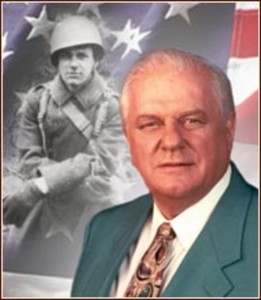
His range of real-life roles was even broader. Durning, a genuine World War II hero with the Purple Hearts to prove it, worked in a button factory, taught ballroom dancing, sung on radio, trained as a stockbroker and painted bridges. His first job in showbiz was in Buffalo, N.Y., where he landed a job as an usher in a burlesque house and became fascinated by the comics. Filling in for a comedian who was often too drunk to go on and winning the laughs himself convinced Durning he wanted to perform.

In 1944 Durning enlisted in the Army, landing in Normandy on D-Day. He was the only member of his patrol to come back alive from the Battle of the Bulge, and the war's end found him in the hospital recovering from his wounds and a mental breakdown.


"There's only so much you can witness," said Durning, who received three Purple Hearts. "Before the war I was very quiet and happy-go-lucky. I still hold a lot of resentment."

But as Burt Reynolds, a frequent costar with Durning, told PEOPLE in 2005: "He and my father were 15 yards apart at Normandy Beach. That was quite a night when they both realized that. I was told to go outside. I said, 'Why sir?' He says, 'Because you weren't there." So I peaked in the window and watched the two of them head to head talking."

Healthy again and living in Manhattan. Durning enrolled at the American Academy of Dramatic Arts, where classmates included Jason Robards. Colleen Dewhurst and Grace Kelly. Deciding to forge ahead with a career, he joined a modern dance troupe, sang in nightclubs, fronted a dance band.

Off Broadway roles followed, as did marriage to Carol, a fellow dance instructor at Fred Astaire Dance Studios. They had three children, but Durning began traveling with road companies of plays – which all but destroyed his family life. The couple divorced in 1972.

By then, Durning's stage career was taking off, thanks to the New York Shakespeare Company production of Jason Miller's That Championship Season. This led to his role in The Sting, and from then on his movie career was off and running.

In 1974, he married his high school sweetheart, Mary Ann Amelio, who survives him, as do his children, Michele, Douglas and Jeannine. The family planned to have a private family service and burial at Arlington National Cemetery, reports the Associated Press...


SOURCE