As we bid this year a fond farewell, we can not help but also say goodbye to the entertainers and icons that we have lost in 2022...
 |
| Angela Lansbury |
Entertainer ANGELA LANSBURY died at the age of 96 on October 11th. She was a star of stage, screen, and television for 80 years. To escape the Blitz, she moved to the United States in 1940, studying acting in New York City. Proceeding to Hollywood in 1942, she signed to MGM and obtained her first film roles, in Gaslight (1944), National Velvet in 1944, and The Picture of Dorian Gray (1945), earning her two Academy Award nominations and a Golden Globe Award. She appeared in eleven further MGM films, mostly in minor roles, and after her contract ended in 1952 she began supplementing her cinematic work with theatrical appearances. Although largely seen as a B-list star during this period, her role in the film The Manchurian Candidate (1962) received widespread acclaim and is often cited as one of her career-best performances, earning her a third Academy Award nomination. Moving into musical theatre, Lansbury finally gained stardom for playing the leading role in the Broadway musical Mame (1966), which won her her first Tony Award. She reached a new audience as Jessica Fletcher on TV's Murder She Wrote from 1984 to 1996. She also moved into voice work, contributing to animated films like Disney's Beauty and the Beast (1991) and Don Bluth's Anastasia (1997). She toured in a variety of international productions and continued to make occasional film appearances such as Nanny McPhee (2005) and Mary Poppins Returns (2018). Her last work was a cameo appearance in Rian Johnson's 2022 detective drama Glass Onion: A Knives Out Mystery.
Singer LORETTA LYNN died at the age of 90 on October 4th. In a career which spanned six decades in country music, Lynn released multiple gold albums. She had hits such as "You Ain't Woman Enough (To Take My Man)", "Don't Come Home A-Drinkin' (With Lovin' on Your Mind)", "One's on the Way", "Fist City", and "Coal Miner's Daughter". In 1980, the film Coal Miner's Daughter was made based on her life. Loretta suffered a stroke in 2017 and broke her hip in 2018. She released her last album in 2021.
Actress ESTELLE HARRIS died on April 2nd at the age of 93. She was best known as George Costanza's mother on the television show Seinfeld from 1992 to 1998. Estelle also provided the voice of Mrs. Potato Head in the Toy Story cartoon franchise. She did not start acting until her children was grown up, and her first role was in 1977. Her last role was in 2019's Toy Story 4.
Singer
BOBBY RYDELL died at the age of 79 on April 5th of pneumonia. He was a singer and actor who mainly performed rock and roll and traditional pop music. In the early 1960s he was considered a teen idol. His most well-known songs include "Wild One" and "Volare". In 1963 he appeared in the musical film
Bye Bye Birdie as Ann-Margret's love interest. In the 1980s, he joined a trio called The Golden Boys with fellow former teen idols Frankie Avalon and Fabian Forte and he continued to tour up until his death.
Comedian LOUIE ANDERSON died of cancer at the age of 68 on January 21st. Anderson created the cartoon series Life with Louie and wrote four books, including Hey Mom: Stories for My Mother, But You Can Read Them Too, which was published in 2018. He was the initial host of the third revival of the game show Family Feud from 1999 to 2002. For his performance on the FX comedy television series Baskets, Anderson received three consecutive Primetime Emmy Award for Outstanding Supporting Actor in a Comedy Series nominations and won once in 2016. Anderson performed a stand-up show called Louie: Larger Than Life in Las Vegas, Nevada, from 2003 through 2012.Louie's last role was in 2021's Coming 2 America with Eddie Murphy.
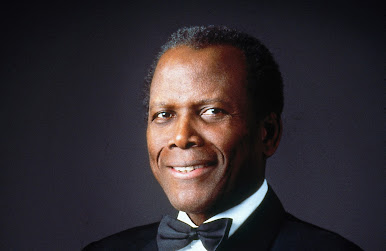 |
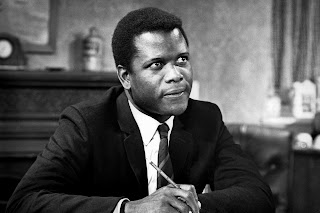
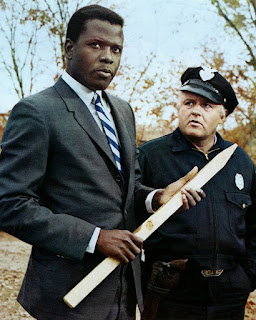
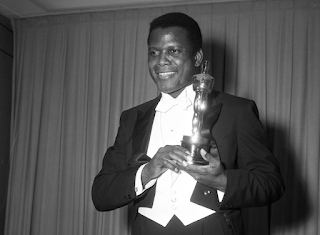
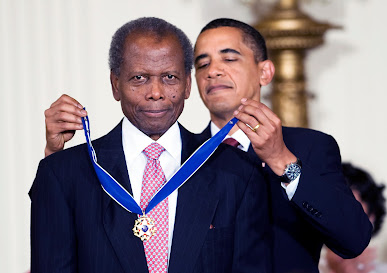
| Sidney Poitier |
Actor SIDNEY POITIER died on January 7th at the age of 94. In 1964, he won the Academy Award for Best Actor, becoming the first Black male and Bahamian actor to win the award. He received two further Academy Award nominations, ten Golden Globes nominations, two Primetime Emmy Awards nominations, six BAFTA nominations, eight, and one Screen Actors Guild Awards nomination. Poitier was one of the last surviving major stars from the Golden Age of Hollywood cinema, and after the death of Kirk Douglas in 2020, was the oldest living and earliest surviving male Academy Award winner until his own death in 2022. He continued to break ground in three successful 1967 films which dealt with issues of race and race relations: To Sir, with Love; Guess Who's Coming to Dinner, and In the Heat of the Night. He retired from acting in 1997, but continued to be involved in the cinema and in his homeland of the Bahamas.
Actor
CARLTON CARPENTER died on January 31st at the age of 95. Carpenter signed with MGM in 1950, where he starred in a bunch of supporting roles. He he made eight films in three years:
Father of the Bride, Three Little Words, Summer Stock, Two Weeks With Love, Vengeance Valley, Fearless Fagan (his one-of-two leading roles there),
Sky Full of Moon (his other leading role there) and
Take the High Ground!. He gained fame when teamed in 1950 with Debbie Reynolds in
Three Little Words and
Two Weeks with Love. In a guest sequence in Three Little Words, they perform “I Wanna Be Loved by You” as vaudeville players Dan Healy and Helen Kane, with Reynolds dubbed by Kane. In
Two Weeks with Love, where they have featured roles, their duet "Aba Daba Honeymoon" was the first soundtrack recording to become a top-of-the-chart gold record, reaching number three on the Billboard chart. He worked as a stage actor through 2015.
Actress
PAT CARROLL died of pneumonia on July 30th at the age of 95. She was known for voicing Ursula in
The Little Mermaid and for appearances in CBS's The Danny Thomas Show, ABC's Laverne & Shirley, and NBC's ER. Carroll was an Emmy, Drama Desk, and Grammy Award winner, as well as a Tony Award nominee. She largely retired from acting in 2014.
Child star and voice actor PETER ROBBINS died at the age of 65 on January 25th of suicide. At the age of nine, Robbins provided the voice of Charlie Brown, whom he considered to be his childhood hero, in one television documentary, six Peanuts television specials and one movie from 1963 to 1969, including the film A Boy Named Charlie Brown and the television specials A Charlie Brown Christmas and It's the Great Pumpkin, Charlie Brown. At the age of fourteen, Robbins was replaced by younger child actors in the Peanuts specials produced after the 1960s, but his trademark scream of "AUGH!!", first used in It's the Great Pumpkin, Charlie Brown, continued to be used in later specials for Charlie Brown and other Peanuts characters. Peter suffered from mental illness and was arrested numerous times and jailed from 2015 to 2019.
Actor RAY LIOTTA died at the age of 67 on May 26th. His best-known roles include Shoeless Joe Jackson in Field of Dreams (1989), Henry Hill in Goodfellas (1990) and Tommy Vercetti in the video game Grand Theft Auto: Vice City (2002). His other roles included Ray Sinclair in Something Wild (1986), for which he received a Golden Globe nomination, as well as starring in Unlawful Entry (1992), Cop Land (1997), Hannibal (2001), Blow (2001), John Q (2002), Identity (2003), Observe and Report (2009), Killing Them Softly (2012), The Place Beyond the Pines (2012), and Marriage Story (2019), as well as the drama series Shades of Blue (2016–2018). Ray was currently shooting a movie in the Dominican Republic when he passed away in his sleep.
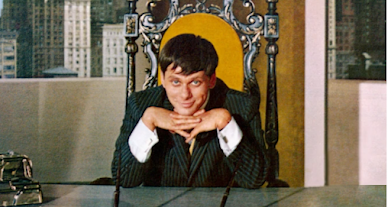 |
| Robert Morse |
Actor ROBERT MORSE died at the age of 90 on April 20th. He best known as the star of both the 1961 original Broadway production, for which he won a Tony Award, and the 1967 film adaptation of How to Succeed in Business Without Really Trying, and as Bertram Cooper in the critically acclaimed AMC dramatic series Mad Men (2007–2015). He won his second Tony Award for playing Truman Capote in the 1989 production of the one-man play Tru. He reprised his role of Capote in an airing of the play for American Playhouse in 1992, winning him a Primetime Emmy Award. Robert made his last movie and television appearances in 2019.
Singer JONI JAMES died on February 20th at the age of 91. Signed at MGM records in the early 1950s, James had numerous hit records like: "Why Don't You Believe Me?" (No. 1 in 1952) "Have You Heard?" (No. 4 in 1953) "Your Cheatin' Heart" (No. 2 in 1953) "Almost Always" (No. 9 in 1953) "My Love, My Love" (No. 8 in 1953) "How Important Can It Be?" (No. 2 in 1955) and "You Are My Love" (No. 6 in 1955) as well as sixteen other Top 40 hits from 1952 to 1961. She left the music scene in the mid 1960s, but returned to performing in the 1990s.
Actress LOUISE FLETCHER died at the age of 88 on September 23rd. She was best known for her portrayal of Nurse Ratched in One Flew Over the Cuckoo's Nest (1975), which earned her an Academy Award for Best Actress, a BAFTA Award, and a Golden Globe Award. She was also well-known for her recurring role as the Bajoran religious leader Kai Winn Adami in the television series Star Trek: Deep Space Nine (1993–99), as well as for her role as Helen Rosemond in the movie Cruel Intentions (1999). She was nominated for two Emmy Awards for her roles in the television series Picket Fences (1996) and Joan of Arcadia (2004). Her final role was as Rosie in the Netflix series Girlboss (2017).
Comedian BOB SAGET died at the age of 65 on January 9th. His acting roles included Danny Tanner on the sitcom Full House (1987–1995), its sequel Fuller House (2016–2020), and the voice of narrator Ted Mosby on the sitcom How I Met Your Mother (2005–2014). From 1989 to 1997, he was the original host of America's Funniest Home Videos. Saget was also known for his adult-oriented stand-up comedy, and his 2014 album That's What I'm Talkin' About was nominated for the Grammy Award for Best Comedy Album. He passed away in his hotel room where he was performing in Orlando, Florida.
Actress MARSHA HUNT died on September 7th at the age of 104. She was blacklisted by Hollywood film studio executives in the 1950s during McCarthyism. She appeared in many films, including Born to the West (1937) with John Wayne, Pride and Prejudice (1940) with Greer Garson and Laurence Olivier, Kid Glove Killer (1942) with Van Heflin, Cry 'Havoc' (1943) with Margaret Sullavan and Joan Blondell, The Human Comedy (1943) with Mickey Rooney, Raw Deal (1948) with Claire Trevor, The Happy Time (1952) with Charles Boyer, and Dalton Trumbo's Johnny Got His Gun (1971). She appeared in a documentary of her life that was made in 2014.
 |
| Olivia Newton-John |
Actress and singer
OLIVIA NEWTON-JOHN died of cancer at the age of 73 on August 8th. She was a four-time Grammy Award winner whose music career included five number-one hits and many other Top Ten hits on the Billboard Hot 100, and two number-one albums on the Billboard 200. In 1978, Newton-John starred in the musical film
Grease, which was the highest-grossing musical film at the time and whose soundtrack remains one of the world's best-selling albums. It features two major hit duets with co-star John Travolta: "You're the One That I Want"—which is one of the best-selling singles of all time—and "Summer Nights". She made a handful of movies, and she is considered one of the great recording artists of the 2nd half of the 20th century.
Actor WILLIAM HURT died of prostate cancer on March 13th at the age of 71. Hurt garnered three consecutive nominations for the Academy Award for Best Actor, for Kiss of the Spider Woman (1985), Children of a Lesser God (1986), and Broadcast News (1987), winning for the first of these. After playing character roles in the following decade, Hurt earned his fourth Academy Award nomination for his supporting performance in David Cronenberg's crime thriller A History of Violence (2005). His later career films roles include turns in A.I. Artificial Intelligence (2001), The Village (2004), Syriana (2005), The Good Shepherd (2006), Mr. Brooks (2007), Into the Wild (2007), Robin Hood (2010), and the Marvel Cinematic Universe films, in which he portrayed Thaddeus Ross.
Comedian
GILBERT GOTTFRIED died on April 12th of muscular dystrophy at the age of 67. His persona as a comedian featured an exaggerated shrill voice and emphasis on crude humor. His numerous roles in film and television include voicing the parrot Iago in the
Aladdin animated films and series, Digit LeBoid in Cyberchase, Kraang Subprime in Teenage Mutant Ninja Turtles, and the Aflac Duck. He appeared in the critically panned but commercially successful
Problem Child in 1990. Gottfried hosted the podcast Gilbert Gottfried's Amazing Colossal Podcast (2014–2022), which featured discussions of classic movies and celebrity interviews, most often with veteran actors, comedians, musicians, and comedy writers.
Actor JAMES CAAN died at age of 82 on July 6th. After early roles in Howard Hawks's El Dorado (1966), Robert Altman's Countdown (1967) and Francis Ford Coppola's The Rain People (1969), he came to prominence playing Sonny Corleone in Coppola's The Godfather (1972) – a performance which earned him Academy Award and Golden Globe nominations for Best Supporting Actor. He reprised his role in The Godfather Part II (1974). Caan gained acclaim for his portrayal of Brian Piccolo in the 1971 television movie Brian's Song for which he received a Primetime Emmy Award for Outstanding Lead Actor in a Limited Series or Movie nomination. Caan received Golden Globe Award nominations for his performances in the drama The Gambler (1974), and the musical Funny Lady (1975). He remained a popular actor in films like Misery (1989) and Elf (2003). He continued making movies until the end of his life.
Actor
LESLIE JORDAN died on October 24th at the age of 67 in a car crash. Leslie was on countless TV shows and movies. His television roles included Lonnie Garr on Hearts Afire (1993–1995), Beverley Leslie on Will & Grace (2001–2006, 2017–2020), for which he won the Primetime Emmy Award for Outstanding Guest Actor in a Comedy Series in 2006, several characters in the American Horror Story franchise (2013–2019), Sid on The Cool Kids (2018–2019), and Phil on Call Me Kat (2021–2022). In theater, he played Earl "Brother Boy" Ingram from Sordid Lives, and also portrayed the character in the popular cult film of the same name.
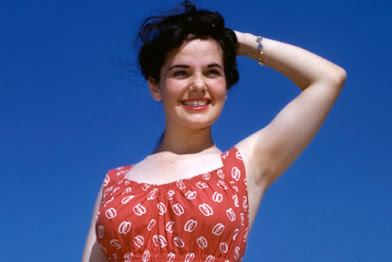 |
| Louise Tobin |
Big band singer
LOUISE TOBIN died at the age of 104 on November 26th. She appeared with Benny Goodman, Bobby Hackett, Will Bradley, and Jack Jenney. Tobin introduced "I Didn't Know What Time It Was" with Goodman’s band in 1939. Her biggest hit with Goodman was "There'll Be Some Changes Made", which was number two on Your Hit Parade in 1941 for 15 weeks. Tobin was the first wife of trumpeter and bandleader Harry James, with whom she had two sons. She helped to discover Frank Sinatra in the late 1930s.
Actor TONY DOW died of cancer at the age of 77 on July 27th.Tony was an actor, film producer, director and sculptor. He portrayed Wally Cleaver in the iconic television sitcom Leave It to Beaver from 1957 to 1963. From 1983 to 1989, Dow reprised his role as Wally in a television movie and in The New Leave It to Beaver. He largely retired from acting in the 1990s, but he directed many TV shows.
Actress KIRSTIE ALLEY died on December 5th at the age of 71 of cancer. Her breakout role was as Rebecca Howe in the NBC sitcom Cheers (1987–1993), for which she received an Emmy Award and a Golden Globe in 1991. From 1997 to 2000, she starred as the lead in the sitcom Veronica's Closet, earning additional Emmy and Golden Globe nominations. Throughout the 1980s and 1990s, Alley appeared in various films, including Look Who's Talking (1989) and its two sequels (1990–1993), It Takes Two (1995), Deconstructing Harry (1997), For Richer or Poorer (1997), and Drop Dead Gorgeous (1999). She won her second Emmy Award in 1994 for the television film David's Mother. Her last appearance was on TV's "The Masked Singer" in 2022.