Saturday, April 6, 2013

MOVIE REVIEW: HIGH TIME

 
Early on in Bing Crosby's movie career, he made a film called College Humor in 1933. Even in 1933, Bing was a little old for college antics at the age of 30. However, over 25 years later Crosby filmed another college movie. The movie High Time used the fact that Bing was aging to its advantage in its storyline. The film is told from the perspective of a middle-aged man who enters the world of a new generation of postwar youth. In the years since its release, High Time has come to be viewed as a comedic study of the slowly emerging generation gap between the music and mores of an older generation and postwar youth, as well as an inadvertent time capsule of American adolescents and lifestyles in 1960.

Wealthy restauranteur Harvey Howard (Bing Crosby), a self-made man, widower and owner of "Harvey Howard Smokehouses", decides to go back to college at the age of 51 and earn a bachelors degree. He faces opposition from his grown snobbish children, as well as a generation gap between himself and his much-younger fellow students. The first day in school he finds that just convincing older students, faculty and the admin personnel is a humorous task. He enrolls and receives freshman rooming, and is up front about his determination to be "just another freshman". Being assigned a quad rooming arrangement, this sets the standard for the upcoming years. Dealing with the student press, the dorm adviser and making that first toast with sauerkraut juice to seal their bond to complete their four years together.

The President's welcoming speech sets the tone for the effort facing the freshman class. Harvey has to convince the Physical Ed coach that he has what it takes to compete by doing ten plus one pull ups to the cheers of his fellow younger frosh, only to collapse on his face upon finishing his set. Another frosh challenge is the bonfire that must exceed the height of the prior years. Harvey meets the French professor, Helen Gauthier when removing a supporting wooden chair from her porch. The bonfire's total height comes up a foot short, Harvey climbs to the summit and deposits his three-foot chair, a very brave and daunting achievement. Having two brilliant roommates and jock Gil Sparrow (Fabian), the academic rigors are always fuel for comedy and camaraderie. Science Professor Thayer, is haphazard, and suffers numerous comedic moments, chemicals that take on a life of their own, pairs of wires that should never be brought near each other during a storm, zap, and improving one's skating skills except on thin ice.


Sophomore year again has Harvey being berated by his children, the school's beat reporter is there to welcome him and puts up with the snobby kids. Harvey is off to meet his last year's roommates and the requisite toast to success. He is asked to join their fraternity and has the usual hazing period to endure, polishing shoes, washing floors and the most challenging, dressing in drag and getting a retired colonel to sign his dance card at a costume ball. The elderly southern gentleman is suffering a gout attack and his social climbing children are attending the same event. While dancing with his son, he so discombobulates him that his dress is torn in half, and while having it fixed in the ladies lounge he floors his daughter. Back on the floor, Harvey bribes the band leader to play "Dixie", the colonel stands, Harvey pounces into his arms dancing the length of the floor, deposits the sputtering Colonel on his easy chair has him autograph his dance card, throws his wig into his lap and rushes the exit. The rest of the year is full of great football by Gil, academic pressure and more antics by Prof. Thayer.


Junior year starts with Harvey arriving in a red Mercedes convertible, and meeting the group at a "Harvey Howard Smokehouse" for a toast of goat milk, which only T.J. Padmanagham likes. The Smokehouse maitre D' at Harvey Howard's, super-snob Burdick doesn't like one bit of this. His first task is to rudely challenge the group to order their meals which is fine with Harvey who orders Harvey Burgers with special sauce for the lot. Burdick sneers back that it's too early for the special sauce, Navy Brat, Bob Bannerman chimes in with " . . . it's later than you think". The burgers arrive and are dry, carbonized and inedible. Harvey, who stands behind all burgers served in his Smokehouses, calls Burdick over to "take them back", Burdick challenges Harvey to do better, which he does. Burdick watching Harvey jump to it at the grill catches Harvey Howard's full name and faints. Burdick completes eating a burger prepared by Harvey and becomes a transformed Harvey employee, hilarious. Over the summer prior to Junior Year Harvey had hired Professor Gauthier to tutor him at Nags-head, his children in turn complain to the college and it appears that Gauthier has to resign to save face. The students protest and the President delays any action until the next Spring.

Senior Year, Harvey shows up in a taxi, the group gathers and toast their final year, both Harvey and Gil are still hitting the books hard, with some success. Hay rides with phone booth body jams and a smooth procession towards graduation. Harvey is in denial about his love of Professor Gauthier and she coyly asks him would he like to marry her, he stammers, but the gauntlet is cast. Harvey is the Class of 1960 Valedictorian and his speech covers all the bases, why he challenged himself to find a greater purpose, put up with the struggle, his growing admiration and acceptance of his adult children and his friends own accomplishments. One final challenge is for them to never quit and say something like " I could no sooner do that, than I could fly ", a perfect entry into Harvey being hoisted above the audience on cables to fly around the auditorium. A wink to Professor Gauthier, a smile to all, the end.

High Time was scripted by Garson Kanin, Frank Waldman and Tom Waldman. It was originally titled "Big Daddy", with the starring role to be played by Gary Cooper. When Cooper's terminal illness forced him to turn down the role, Bing Crosby was signed as lead, and the script was revised to his requirements. It was filmed in Stockton, California, at the University Of The Pacific, Stockton Junior High School, Amos Alonzo Stagg Senior High School and other locations in Stockton. Bing had control over who would be his co-star and he campaigned for Nicole Maurey who had played Bing's wife earlier in Little Boy Lost (1953). Crosby also would introduce the song "The Second Time Around" in the film. It would be the last Crosby song to be nominated for an Oscar, and it has since become a musical standard.


I have always enjoyed this later Bing Crosby effort, even though I have some complaints about the film. It seems like during their junior and senior years the film is kind of rushed or cut, like there was more the director wanted to show. I am not sure if that was the case or not, or maybe the editing was just more abrupt than it should be. I am sorry for you Fabian fans out there, but I wish there would have been less Fabian in the movie. I know he was the big draw in 1960, but he was no Der Bingle. Also, I know this is a comedy and not really a musical, but I wish Bing would have been given more chance to sing. All in all this 1960 comedy farce is really worth seeing. If you haven't seen this Bing film yet don't you think it is "high time" that you do?


MY RATING: 8 out of 10

Thursday, April 4, 2013

BORN ON THIS DAY: CRAIG T. NELSON


On this day April 4th, I wanted to take a look at a celebrity's birthday not just because we were do for an article on it, but it is my birthday! No presents please. For this article I picked a star who is not really a classic Hollywood star but I respect and have followed his work for years. On this day in 1944, accomplished actor Craig T. Nelson was born. Nelson was born in Spokane, Washington, the son of Vera Margaret (née Spindler), a dancer, and businessman Armand Gilbert Nelson. Nelson has a brown belt in karate and attended the University of Arizona and Central Washington University.

His father, Armand Nelson, played the drums in Bing Crosby's high school band before giving up music to work in an aluminum plant, while his mother, Vera Nelson, was a professional dancer. A towering 6'3" with a muscular frame, Nelson excelled at golf, football, basketball, and baseball in high school. Despite his athletic prowess, it was Nelson's acting talent that earned him a scholarship to study drama at the University of Arizona.

In 1969, after meeting a "drunken and insane so-called producer" who wanted Nelson to co-star in a film with Wally Cox, Nelson dropped out of college and moved to Hollywood. Around this time, Nelson changed his middle name to Theodore—he had discovered that there was already a Craig Richard Nelson (The Paper Chase; Honey I Shrunk the Kids) registered in the Screen Actors Guild. Upon arriving in Los Angeles, Nelson worked briefly as a security guard in a soap factory until he found work as a comedy writer. In 1970, he was hired to write material for legendary radio comedians Al Lohman and Roger Barkley and for the comedy TV series The Tim Conway Show. Nelson then made his acting debut in the 1971 vampire horror sequel The Return of Count Yorga. He landed several other minor acting gigs during this period, including a guest spot on The Mary Tyler Moore Show in 1973.

By that time Nelson and his wife Robin already had two children (Tiffany and Christopher) and were struggling to pay the bills, so Nelson decided to quit acting and move his family to rural Mount Shasta in northern California. During his time off from acting, Nelson cycled through a variety of professions. He worked as a carpenter, logger, plumber and teacher, but without formal training in any of these professions he again struggled to make ends meet. By 1977, Nelson's family was on welfare and receiving food stamps.

In 1978, Nelson and his wife divorced and he moved back to Hollywood to try his luck with acting once again. He quickly landed a role in Al Pacino's 1979 film And Justice For All, which was nominated for two Academy Awards. Nelson got his big break three years later when he starred in the 1982 horror classic, Poltergeist. Produced by Steven Spielberg, Poltergeist was both critically acclaimed and widely popular, establishing Nelson as a Hollywood notable. Fueled by the success of Poltergeist, Nelson enjoyed steady work in television and film throughout the 1980s and beyond.


He played Tom Cruise's football coach in the 1983 film All the Right Moves, then earned critical praise for his portrayal of Air Force Colonel Raynor Sarnac in the 1984 TV series Call to Glory. Impressed by his depiction of a football coach in All the Right Moves, in 1989 ABC tapped Nelson to play Hayden Fox on the TV series Coach. Nelson's particular brand of deadpan humor proved a perfect fit for the tough but good-humored Coach Hayden. Coach ran for eight seasons and earned Nelson the 1992 Emmy Award (outstanding lead actor in a comedy series).
Since Coach went off the air in 1997, Nelson has landed several other major leading roles. From 2000-2004, he starred as police Chief Jack Mannion in the CBS police drama The District. Nelson then moved into voice acting, playing the voice of Bob Parr (Mr. Incredible) in Disney's highly acclaimed 2004 animated film The Incredibles. Nelson is currently starring in the NBC drama Parenthood, after turning down the lead role in the ABC comedy Modern Family. No matter what Nelson does, he does it with style and talent. Even the worst shows or movies, Nelson has helped to make better and continues to as he reaches another birthday...

Wednesday, April 3, 2013

ELAINE STRITCH AT 88

Ms. Stritch, the husky-voiced actress who, with a Tony Award and three Emmys to her credit, became a beloved cabaret star in recent years at the Carlyle Hotel, said on Wednesday that she was giving up her apartment there and returning to her home state, Michigan. But not before she performs one last show, “Elaine Stritch at the Carlyle: Movin’ Over and Out,” from April 2 to 6.

Mere mention of the word “retirement” drew a gasp and flat denial from Ms. Stritch, who is 88. “What actor would ever say they’re done?” she fairly shouted over the telephone.

Still, in fragile shape after two recent falls and a hip replacement, she said she knew it was the end of an era.

She arrived in New York 71 years ago from Detroit, eager to become a star, and enrolled in finishing school on the Upper East Side — not far from where she lives today — while studying acting. Within four years she was making her Broadway debut, in the 1946 flop play “Loco” and soon after appeared in her first Broadway musical, “Angel in the Wings.”

In the decades since, she became an interpreter of Stephen Sondheim, earning a Tony nomination for singing “The Ladies Who Lunch” in “Company,” and battled alcoholism and diabetes while embodying the grittiest of gritty broads on television (including on “30 Rock,” as the mother of Alec Baldwin’s character) and in her one-woman show “Elaine Stritch at Liberty.” Her last turn on Broadway was in 2010, as Madame Armfeldt in the revival of the Sondheim-Hugh Wheeler musical “A Little Night Music.” A film documentary on Stritch is also nearing completion.

“I loved being on Broadway, but performing has become exhausting, and I just don’t want to live in New York anymore,” Ms. Stritch said from her home of 10 years, Room 309 of the Carlyle. “I’m just sick of the competition in New York, the feeling that I always have to rehearse to keep up my performance. I don’t feel like rehearsing, even though it should be my favorite thing in the world to do.


“I just don’t have the energy, darling. I’m 88! I don’t look or always feel it, but I’m 88!”

Ms. Stritch has bought a three-bedroom condo in Birmingham, Mich., not far from where she grew up, and close to several nieces and nephews. Her two older sisters from Michigan have died; her husband, the writer and actor John Bay, died in 1982.

One published report said Ms. Stritch had paid $1.5 million for the condo, but on Wednesday she didn’t have the exact price on the tip of her tongue. “It’s much too expensive, much beyond my means, but who cares?” she said.

While Ms. Stritch’s previous engagements at Café Carlyle have been heavy on Sondheim and other standards, she said she hadn’t settled on a set list — and wasn’t sure how much she would sing during the hourlong act.

“Sondheim is a devil, with those lyrics to keep straight, and part of me just wants to tell stories,” Ms. Stritch said. “I’d love to just tell jokes that my dad kept in his wallet.”

In a warm review of her Carlyle show in 2011, Stephen Holden of The New York Times noted that “the obstacle facing Ms. Stritch is her failing memory for lyrics and for patter.” On Wednesday she said her memory had declined further; she hit her head and eye in one of her recent falls. She said the farewell show was a mutual decision by herself and the Carlyle...


SOURCE

Monday, April 1, 2013

MARTIN AND LEWIS: THE END OF THE LAUGHTER

The end for one of the greatest teams in show business happened very quietly on July 25, 1956. The place was the Copacabana nightclub in New York City. Dean Martin and Jerry Lewis were scheduled to go onstage for their 2:30am show. It was to be their last of three shows that night and also the final appearance of the most popular comedy team in Hollywood history.

After ten years together Martin and Lewis were calling it quits, and even today some 56 years later we are still wondering why they broke up. The common perception was that Dean Martin was the lazy one. He wanted to take it easy and play golf. Jerry Lewis was the fiercely driven workaholic, who never wanted to stop performing. There may be some truth to those rumors but through the research I have done I think there was something much deeper.

Dean Martin was the one who initiated the split, although Jerry Lewis knew it was happening. Dean was sick and tired of being knwon as the "straight man" and even "stooge" for his partner. The performing the team did was okay but Dean had grown to hate the Martin and Lewis films, claiming he played an "idiot"in all of them. By 1956, the plots had become pretty much the same. Dean sang two songs in the film and got the pretty girl, but Jerry got all the laughs and best scenes and storylines. The reviews for the boys'movies were becoming startlingly similar as well. While all of the critics raved over Jerry's brilliant comedy, Dean was mostly looked upon as a mediocre singer who was an afterthought in the film.

So after filming their final picture picture together Hollywood Or Bust the previous June, Dean and Jerry announved to a shocked public that they were going to split up and go their separate ways. (Supposedly during the filming of this final film, Martin and Lewis did not even speak to each other unless they were filming. The anger was also evident in their performances. During the last engagement at the Copa, during one of their comedy routines, Dean slammed his foot down on Jerry's foot with the force of a piledriver, and Jerry had to peform in bedroom slippers for the next several performances. Dean told the press it was an unfortunate accident though.


During their final engagement at the Copa, every celebrity possible was there such as Frank Sinatra, Sammy Davis Jr, and Jackie Gleason - to just name a few. The showgirls who performed with Martin and Lewis had tears in their eyes, and all eyes were on the comedy duo for this last performance. They did their usual act - Dean singing a few songs, and Jerry clowning around. Their final bit singing the title song from their movie Pardners, and they walked off of the stage. Jackie Gleason jumped up on the stage ,and yelled "Folks, this can't be allowed to happen!"-but after ten years together it was the end.

The general consensus was that Jerry rellat was devastated by the split, but that Dean was actually relieved. Martin was anxious to move on to a solo phase of his career. On that night, Lewis supposedly had to be sedated, but Martin went home and had fried egg sandwiches with his wife.

Jerry Lewis would gone on to be one of the most popular movie comedians of the 1960s, and he directed many of his own movies he made for Paramount. Everyone predicted that Dean would fade away, but for the next two decades Dino was one of the most popular television and recording stars of his generation.


Mutual friend Frank Sinatra would orchestrate a reunion exactly twenty years after their split when he brought Dino out during Jerry Lewis' MDA telethon show. They had not spoke to each other in twenty years. Lewis was moved by the reunion. He claimed that he and Dean kept in touch after that reunion, but from what I know about Lewis he is a history revisionist, and his versions of events often are told as to make him look better. Publicly they would be seen together one more time. For Dino's 75th birthday in 1992, Jerry Lewis brought out a cake during one of Dean's performances. It was one of Dean's last performances, and it was a final end to an association that only lasted ten years, but it has entertained audiences for nearly six times that amount. Dean Martin died on Christmas Day in 1995, and Jerry Lewis is still making appearancesand even working on a movie, despite failing health. I like to remember the two as great entertainers, great performers, and as the song says "best pardners, buddies, and pals"...


Friday, March 29, 2013

EDEN AHBEZ: SONGWRITER AND NATURE BOY


There was a boy - a very strange enchanted boy...anyone who is a fan of classic popular music is probably familiar with those lyrics from the song "Nature Boy". The song, written in 1948, was very different compared to the other music being put out of the day. However, what is even more unusual than the song is the mysterious songwriter. Eden Ahbez was born George Alexander Aberle on April 15, 1908. He is often considered the first American hippie, whose lifestyle in California was very influential on the hippie movement. He was known to friends simply as Ahbe.

Living a bucolic life from at least the 1940s, he traveled in sandals and wore shoulder-length hair and beard, and white robes. He camped out below the first L in the Hollywood Sign above Los Angeles and studied Oriental mysticism. He slept outdoors with his family and ate vegetables, fruits, and nuts. He claimed to live on three dollars per week.

Though born in Brooklyn, New York to a Jewish father and a Scottish-English mother, he was adopted in 1917 by a family in Chanute, Kansas and raised under the name George McGrew. During the 1930s, McGrew lived in Kansas City, where he performed as a pianist and dance band leader. He probably also lived in New York City for some time, although little is known of that period of his life.

In 1941, he arrived in Los Angeles and began playing piano in the Eutropheon, a small health food store and raw food restaurant on Laurel Canyon Boulevard. During this period, he adopted the name "eden ahbez," choosing to spell his name with lower-case letters, claiming that only the words God and Infinity were worthy of capitalization. He is also said to have desired the A and Z (alpha and omega), the beginning and the end, in his surname. During this period, he married Anna Jacobsen and had a son. Sadly Anna died of leukemia in 1963, and his son drowned mysteriously at the age of 22 in 1971.

In 1947, at the prompting of Johnny Mercer, Ahbez approached Nat "King" Cole's manager backstage at the Lincoln Theatre in Los Angeles and handed him the music for his song, "Nature Boy." Cole began playing the song for live audiences to much acclaim, but needed to track down its author before releasing his recording of it. Ahbez was discovered living under the Hollywood Sign and became the focus of a media frenzy when Cole's version of "Nature Boy" shot to #1 on the Billboard charts and remained there for eight consecutive weeks during the summer of 1948. Ahbez was covered simultaneously in Life, Time, and Newsweek magazines. Frank Sinatra and Sarah Vaughan later released versions of the song. The melody was also featured in the background of the film The Boy With The Green Hair (1949) which starred Pat O' Brien and Dean Stockwell.


Ahbez continued to supply Cole with songs, including "Land of Love (Come My Love and Live with Me)", which was also covered by Doris Day and The Ink Spots. He also worked closely with jazz musician Herb Jeffries, and, in 1954, the pair collaborated on an album, The Singing Prophet, which included the only recording of Ahbez's four-part "Nature Boy Suite." The album was later reissued as Echoes of Eternity on Jeffries' United National label. In the mid 1950s, he wrote songs for Eartha Kitt, Frankie Laine, and others, as well as writing some rock-and-roll novelty songs. In 1957, his song "Lonely Island" was recorded by Sam Cooke, becoming the second and final ahbez composition to hit the Top 40.

After his only solo record was released in 1960, he began to fade away from the music scene. After the death of his wife and son, Ahbez completely wtihdrew from the public. He hung out in the California desert near Indio and would wander into town for supplies and company, sharing his poems and philosophy. Ahbez kept writing new music and even kept a piano at a local music studio. From the late 1980s until his death, he worked closely with Joe Romersa, an engineer/drummer in Los Angeles. The master tapes, photos, and final works of eden ahbez are in Romersa's possession.

Sadly he died on March 4, 1995, of injuries sustained in a car accident, at the age of 86. Another album, Echoes from Nature Boy, was released posthumously. The music industry in the 1940s and 1950s did not know what to do with Eden Ahbez, but his song "Nature Boy" is as haunting and mysterious in 2012 as it was when it became a surprise hit in 1948. Sometimes the most beautiful music comes out of the strangest places...


Wednesday, March 27, 2013

NICOLE KIDMAN AS GRACE KELLY


More than three decades after her untimely death at the age of 52, movie fans are still in love with Grace Kelly. And the Weinstein Company seems certain that love could add up to some serious box office returns and awards season recognition.

The Weinstein Company announced Monday that they have secured American distribution rights to "Grace Of Monaco," in which Nicole Kidman plays the luminously beautiful movie star who became a real-life princess after marrying Prince Rainier III of Monaco (played in the film by Tim Roth). The film was directed by Olivier Dahan, whose 2007 picture "La Vie En Rose" (about the life of the great French singer Edith Piaf) won international acclaim and earned leading lady Marion Cotillard an Academy Award as Best Actress.

In a statement, TWC co-chairman Harvey Weinstein said, "More than thirty years after her death, Grace Kelly’s story continues to be one of insurmountable allure, and we are so happy Olivier Dahan has brought it new life. As always, Nicole Kidman’s commanding performance is the perfect portrait of a woman who was not only royalty but who also remains a legend of the silver screen and fashion icon."


Weinstein has a reputation for shrewd campaigning for his movies during Oscar season, and during his tenure as head at Miramax, he helped promote "The English Patient," "Shakespeare In Love," and "Good Will Hunting" into Best Picture winners. After co-founding TWC, Weinstein helped do the same for "The King's Speech" and "The Artist." With "Grace Of Monaco" scheduled for a late-December release, Weinstein may well believe this project has just the sort of allure that will add another Oscar to his trophy case (and a few bucks to the studio's bank account).

"Grace In Monaco" depicts an episode in Grace's life during the 1960s in which both her marriage and the stability of Monaco were hanging in the balance, as differences with her husband coincided with a standoff between France and Monaco. Prince Albert II of Monaco has been critical of the film's screenplay, and Monaco's royal family released a statement reading in part, "It recounts one rewritten and needlessly glamorized page in the history of Monaco and its family with both major historical inaccuracies and a series of purely fictional scenes."

"The royal family wishes to stress that this film in no way constitutes a biopic," they added.

Kidman responded in an interview, saying, "This is not a biopic or a fictionalized documentary of Grace Kelly, but only a small part of her life where she reveals her great humanity as well as her fears, and weaknesses."


Director Dahan also weighed in. "I am not a journalist or historian," he said in response to the royal family's statement. "I am an artist. I have not made a biopic. I hate biopics in general. I have done, in any subjectivity, a human portrait of a modern woman who wants to reconcile her family, her husband, her career. But who will give up her career and invent another role. And it will be painful." Dahan added, "I understand their point of view. After all, it is their mother. I do not want to provoke anyone. Only to say that it's cinema."
Regardless of how Monaco's royal family feels, with Kidman in the lead and Roth, Parker Posey, Frank Langella, Paz Vega, and Milo Ventimiglia in the supporting cast, "Grace of Monaco" should be a fascinating look into the life of an international icon, and there's no doubt TWC will see to it we hear plenty about it before the movie opens in December...


SOURCE

Monday, March 25, 2013

WHERE ARE THEY NOW: THE SINGING NUN


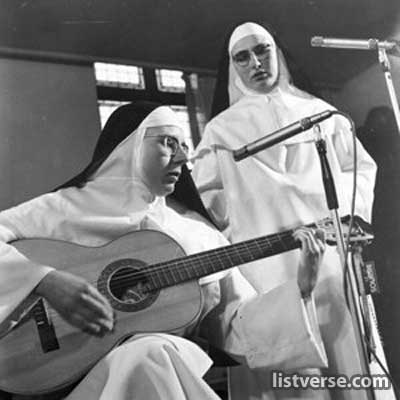
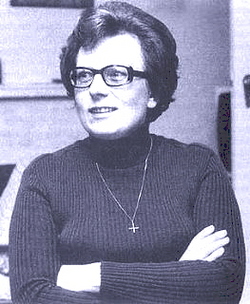
Remember that song from the 60s "Dominique"? The woman who sang that was Sister Jeanne Decker - better known as "The Singing Nun." She was living in a Belgian convent when her song became a hit, and in 1966 a movie about her life was made, called (oddly enough) The Singing Nun, starring Deborah Reynolds. The following year a TV series spoofing the movie was made. It was called The Flying Nun, and it starred a young actress named Sally Field.

She was born Jeanne-Paule-Marie Deckers on October 17, 1933 and in September 1959 entered the Missionary Dominican Sisters of Our Lady of Fichermont, headquartered in the city of Waterloo, who had been founded to provide assistance to the Dominican friars in their missions in the Belgian Congo. While in the convent, she wrote, sang and performed her own songs, which were so well received by her fellow Sisters and by visitors, that her religious superiors decided to let her record an album, which visitors and retreatants at the convent would be able to purchase.

In 1963, the album was recorded in Brussels at Philips. The single "Dominique" became an international hit. Many radio stations in the U.S. played it and other softer hits more often in the wake of the John F. Kennedy assassination. Overnight, the Dominican Sister was an international celebrity, with the stage name of Sœur Sourire (Sister Smile).  "Dominique" was the first Belgian song to be a number one hit single in the United States. In 1966, a movie called The Singing Nun was made about her, starring Debbie Reynolds in the title role. Deckers rejected the film as "fiction". My grandfather loved that corny film, and for a long time it was hard to find on video.

Deckers did not gain much from this international fame, and her second album, Her Joys, Her Songs, did not get much attention and disappeared almost as soon as it was released. Most of her earnings were in fact taken away by Philips, her producer, while the rest automatically went to her religious congregation. She left the convent in 1967, planning to continue her musical career under the name Luc Dominique and to pursue social work, which she had studied at the Louvain, becoming a lay Dominican. She moved in with a childhood friend, Anne Pecher, a physiotherapist who was also a former member of the Dominican Sisters. She could not keep her initial professional name of Sœur Sourire, as the Dominican Sisters owned the rights and refused permission.


Deckers released an album entitled I Am Not a Star in Heaven. Her repertoire consisted of religious songs and songs for children. Despite her renewed musical emphasis, Deckers gradually faded into obscurity, possibly because of her own disdain for fame. She was never able to duplicate the success of her one hit.

Her musical career over, Deckers opened a school for autistic children. In the late 1970s, the Belgian government claimed that she owed $63,000 (approximately the equivalent of some $275,000 as of 2012) in back taxes. Deckers countered that the royalties from her recording were given to the convent and therefore she was not liable for payment of any personal income taxes. As her former congregation refused to take any responsibility for the debt, claiming both that they no longer had any responsibility for her and that they did not have the funds, Deckers ran into heavy financial problems. In 1982, she tried, once again as Sœur Sourire, to score a hit with a disco synthesizer version of "Dominique", but this last attempt to resume her singing career failed.

The song - and the singer - turned out to be a bit of a one-day wonder. By the 1980s, she had many problems - with money, with the Roman Catholic Church, and with her own sexuality. On March 29,1985 , she and her longtime companion, Anna Peche, had a few drinks, a bunch of barbituates, and died. The double suicide made headlines at the time, but today, very few people remember either The Singing Nun, or the song that made her famous.

Despite the fact that they had committed suicide, she and Pécher were granted their request for a church funeral. They were buried together in Cheremont Cemetery in Wavre, Walloon Brabant, the town where they died. The inscription on their tombstone reads "I saw her soul fly across the clouds", a line from Decker's song "Sister Smile is dead"...