Wednesday, October 14, 2020

Monday, October 12, 2020
Saturday, October 10, 2020
Wednesday, October 7, 2020
RIP: TOMMY RALL

His family moved to Los Angeles in the 1940s, and Rall began to appear in small movie roles. His first film appearance was a short MGM film called Vendetta. He began taking tap dancing lessons and became a member of the jitterbugging Jivin' Jacks and Jills at Universal Studios.
Rall joined Donald O'Connor, Peggy Ryan and Shirley Mills in several light wartime Andrews Sisters vehicles including Give Out, Sisters (1942), Get Hep to Love (1942) and others. He appeared in the films The North Star and Song of Russia (1944).
He was best known for his acrobatic dancing in several classic musical films of the 1950s, including Kiss Me, Kate as "Bill" (1953), Seven Brides for Seven Brothers as "Frank" (1954), Invitation to the Dance (1956), Merry Andrew as "Giacomo Gallini" (1958),and My Sister Eileen as "Chick" (1955).

Rall's film career waned as movie musicals went into decline. He had a role in the movie Funny Girl, as "The Prince" in a parody of the ballet Swan Lake. On Broadway he danced to acclaim as "Johnny" in Marc Blitzstein and Joseph Stein's 1959 musical Juno (based on Seán O'Casey's play Juno and the Paycock). Ken Mandelbaum wrote: "DeMille provided two fine ballets: her second act 'Johnny' in which Tommy Rall danced out Johnny's emotions...was the evening's highlight."
Rall was highly respected by his contemporaries—including dance greats Gene Kelly and Donald O'Connor—with the latter describing Rall as one of the “greatest dancers living...above Astaire and Kelly...

Rall was highly respected by his contemporaries—including dance greats Gene Kelly and Donald O'Connor—with the latter describing Rall as one of the “greatest dancers living...above Astaire and Kelly...

Saturday, October 3, 2020
ADELE ASTAIRE: FRED'S GREATEST PARTNER

While in London, she became a favorite with Britain's royalty, and in 1932, after starring with her brother in the Broadway play "The Band Wagon" she retired from the stage to marry British Lord Charles Arthur Cavendish, the second son of the 9th Duke of Devonshire.

The couple lived in Lismore Castle in Ireland, where she gave birth to three children, a daughter and twin sons. Following Lord Cavendish's death in 1944, three years later she married Colonel Kingman Douglass, an American Air Force officer and Investment Banker, who later became Assistant Director of the Central Intelligence Agency. While her brother achieved fame and success in Hollywood during the 1930s, in 1936, she gave serious consideration to making a musical film there with her brother, but changed her mind after visiting him and feeling intimidated by his overwhelming reputation.
So, in 1937, she began filming in England with Maurice Chevalier, but after just two days, she withdrew from the film project, feeling that the film would not work for her. An outgoing person, she made numerous friends and was often in Hollywood society. In 1971, she and her brother Fred were both inducted into the Theater Hall of Fame. Adele Douglass died in Tucson, Arizona from a stroke at the age of 84. Just prior to her death, she had donated her papers and memorabilia to the Howard Gotlieb Archival Research Center.

Wednesday, September 30, 2020
COMING SOON: BING CROSBY WEEK
On October 14, it will mark 43 years since Bing Crosby died on the golf course in Spain. It is amazing how the years have flown by. To commemorate his sad passing, we are going to have a week of music breaks in his honor from October 10 through October 16.
On October 14, we will play the last song Bing ever recorded - the touching Once In A While. Join me and let's pay tribute to the greatest entertainer of the modern age - Bing Crosby...

On October 14, we will play the last song Bing ever recorded - the touching Once In A While. Join me and let's pay tribute to the greatest entertainer of the modern age - Bing Crosby...

Tuesday, September 29, 2020
RIP: HELEN REDDY

Her children, Traci Donat and Jordan Sommers, confirmed her death in a statement on Reddy's official Facebook page on Wednesday morning.
"It is with deep sadness that we announce the passing of our beloved mother, Helen Reddy, on the afternoon of September 29th 2020 in Los Angeles," they wrote.
"She was a wonderful Mother, Grandmother and a truly formidable woman. Our hearts are broken. But we take comfort in the knowledge that her voice will live on forever."
Earlier, Sommers posted a picture with his mother captioned with three purple hearts.
The Melbourne-born Reddy, whose trailblazing life was dramatised in the recent bio-pic I Am Woman, was regarded as the queen of 1970s pop with her hits including Delta Dawn, Angie Baby, Leave Me Alone (Ruby Red Dress) and Ain't No Way To Treat A Lady.
After arriving in New York as a 24-year-old single mother of a three-year-old with just over $US200 to her name, she overcame years of struggle in the US to become the world's top-selling female singer in 1973 and 1974.
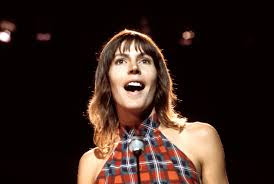
She won a Grammy for I Am Woman, had her own weekly prime-time television variety show and branched into an acting career on screen and stage that included a Golden Globe nomination for Airport 1975.
Reddy was born into a show business family in 1941 and began performing as a child. In 1966, she won a singing competition on the television show Bandstand to travel to New York and audition for a recording contract. When that opportunity vanished on arriving, she stayed - after a brief diversion to Canada for visa reasons - in the US.
After marrying Jeff Wald, who was her manager, Reddy's recording career initially took off with the B-side to her second single - a cover of I Don't Know How To Love Him from the musical Jesus Christ Superstar - becoming a moderate chart success.
She went on to have three number one hits and another dozen songs in the US top 40.
It was 1972's I Am Woman - she wrote the empowering lyrics ("I am woman, hear me roar/ In numbers too big to ignore") with Australian singer-songwriter and friend Ray Burton providing the music - that became her enduring legacy.
At a time when a woman could not get a credit card or a mortgage in her own name, Reddy emerged to become one of the world's highest paid entertainers.
Diagnosed with dementia in 2015, she had been living in a nursing home for retired Hollywood talents in Los Angeles...

Subscribe to:
Posts (Atom)